Marshall Islands code makes stability a resale item
The survey behind your yacht's value
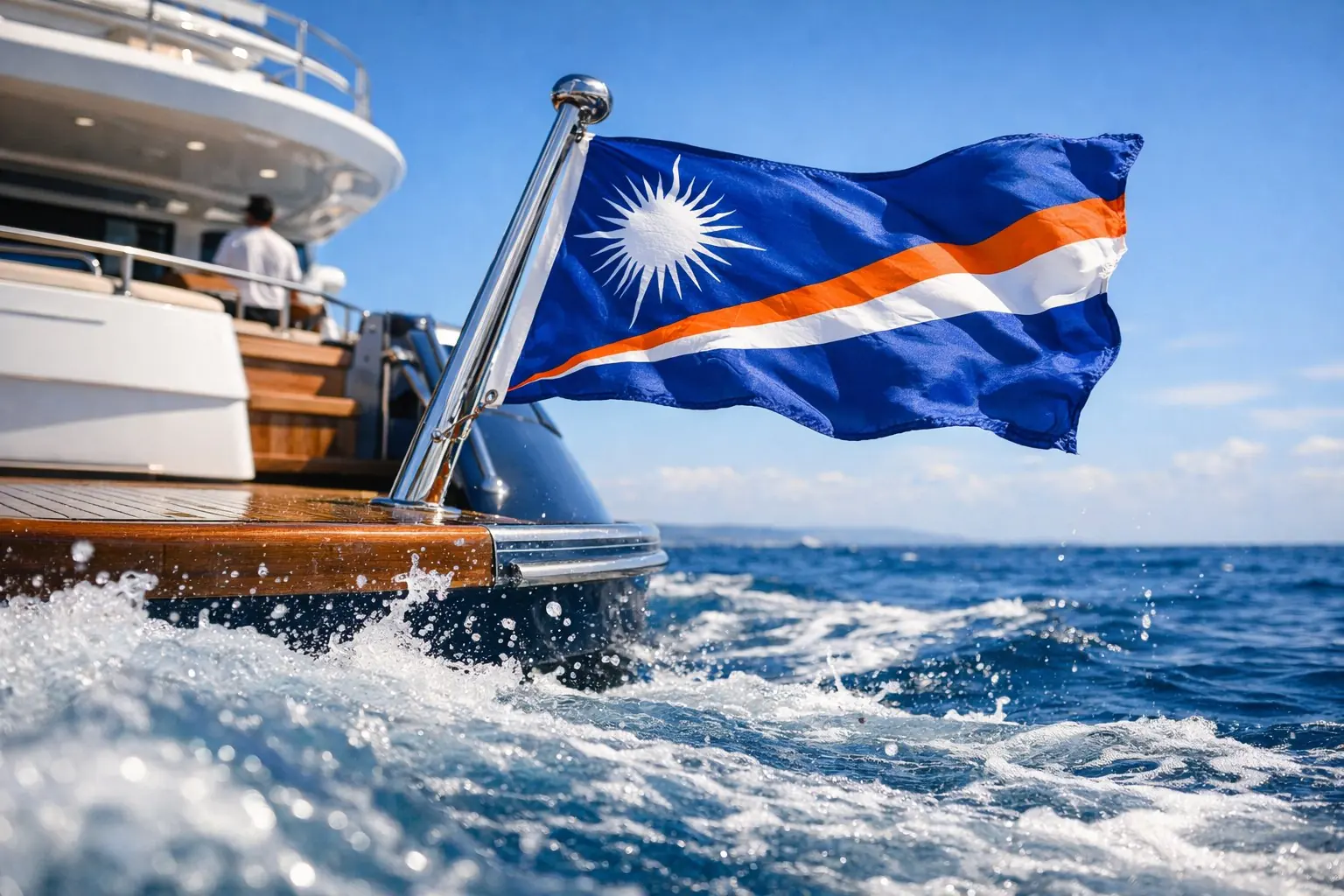
The Republic of the Marshall Islands Yacht Code 2026, designated MI-103, took effect on 1 January 2026 and replaces the 2021 edition amended through 2023. International Registries, which runs the flag, released the text in October 2025 after an April 2025 consultation that drew 161 comments from yards, designers, classification societies and managers. The structural core was reworked, with hull construction, watertight integrity, subdivision and stability criteria all revised, the last updated to account for alternative materials and current design trends. The headline is a mandatory lightweight survey at least every five years, with a re-inclining test required when recorded weight changes pass predetermined limits.
A flag is often treated as a passive stamp, and this is the code reminding an owner it is not. The recurring weight check is aimed at the creep a hull gathers over its life, from refits and added tenders to heavier interiors, the same creep that quietly erodes stability. For an owner it means a scheduled cost and a documented record. For a buyer it means a current stability picture should sit behind any RMI-flagged hull, and a missed survey is something to price into the offer.
The toys you keep now shape the rules
MI-103 introduces specific rules for spaces that store or charge the lithium-ion toys and tenders now filling a yacht's garage, the eFoils, seabobs and electric chase boats, and the registry ties the change to high-profile superyacht fires. Above 500 GT, yachts take on more comprehensive safety-equipment obligations, including updated remote monitoring, improved detection and tightened evacuation routes. For hybrid, LNG or other alternative-fuel yachts, the code points to the IMO IGF Code for gas and low-flashpoint fuel systems.
Owners have loaded more battery into the toy store every season, and the code follows that reality. The 500 GT line is where the cost lands hardest, since detection, monitoring and escape-route work all reach the drawings. The IGF reference is the quieter signal, a flag readying itself for methanol and hybrid builds without forcing anyone there yet, which keeps an RMI registration credible for an owner planning a greener next hull.
What it means for your flag choice
The Marshall Islands sits among the largest registries for big yachts and competes directly with the Cayman Islands under the Red Ensign Group code and with Malta inside the EU. The 2026 rewrite aligns the code with revised IMO instruments, and the registry framed the work as a pragmatic, chapter-by-chapter review rather than a change of philosophy. The yards and managers who operate the boats were in the consultation, which is how the lightweight survey and lithium provisions reached the final text.
For an owner weighing a flag, the codes are converging, so the choice turns less on headline permissiveness and more on how a registry handles surveys, alternative fuels and safety day to day. For anyone buying an RMI-flagged yacht this season, due diligence now includes checking lightweight survey status and lithium stowage, because a missed survey or a non-compliant garage is a real defect with a real number attached. The rule is not aimed at grounding fleets. It is aimed at knowing what each hull actually weighs before it leaves the dock.
Questions this story answers
What happened?
The Marshall Islands, one of the largest flags for big yachts, brought its rewritten Yacht Code, MI-103, into force on 1 January 2026. It puts stability at the centre of the flag's requirements, the ground on which large-yacht rules have tightened after recent losses, and every hull now faces a lightweight survey at least every five years. For an owner the record that survey builds is worth keeping clean, because a lapsed one is a defect a buyer will price.
Who reported this?
International Registries (Marshall Islands Registry, IRI), Rosemont International, Maritimes, Hansa Yachts, Cyprus Shipping News.
We do this for everyone who loves this world. The people who have spent their lives in it, and the people just discovering it. Yotters exists so that what we learn belongs to all of them.
Nobody pays us for this. No ads, no sponsors, nothing for sale. We just believe the world is a little better when knowledge is shared instead of kept.
If it gave you something today, tell us to keep going. Follow us, leave a like, or write a positive comment. We read every one, and they are what keeps us going.