Superyacht Watch Puts the Med Fleet at EUR 10m a Day
What does the EUR 10 million-a-day figure actually track?
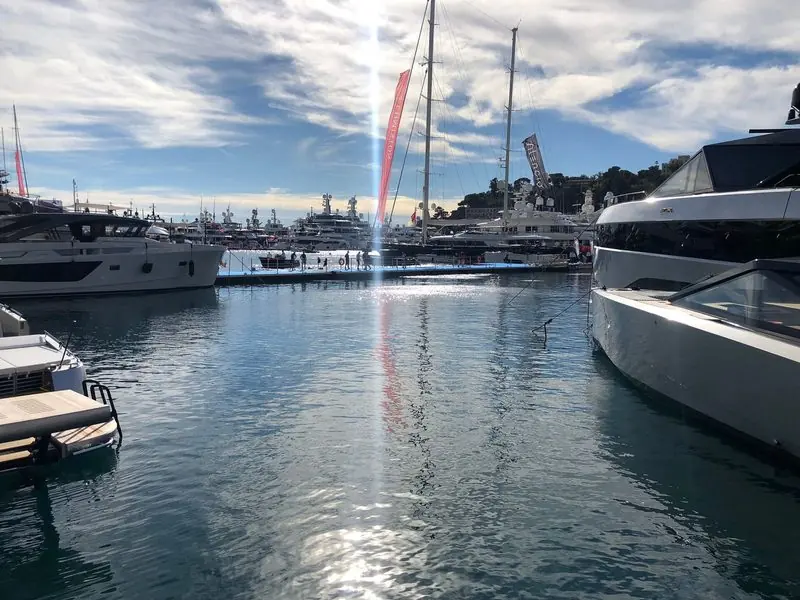
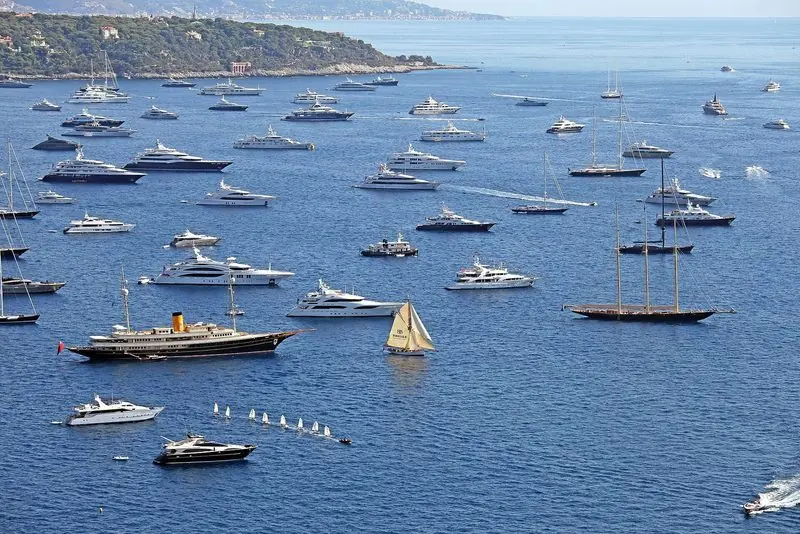
Superyacht Watch's tracker recorded 519 yachts inside its Western Mediterranean monitoring area on 15 September 2026, and modelled their combined running spend at roughly EUR 10 million a day. The service tracks 30-metre-and-over yachts by AIS across the Cote d'Azur, the Balearics, Corsica and Sardinia, and updates through the day.
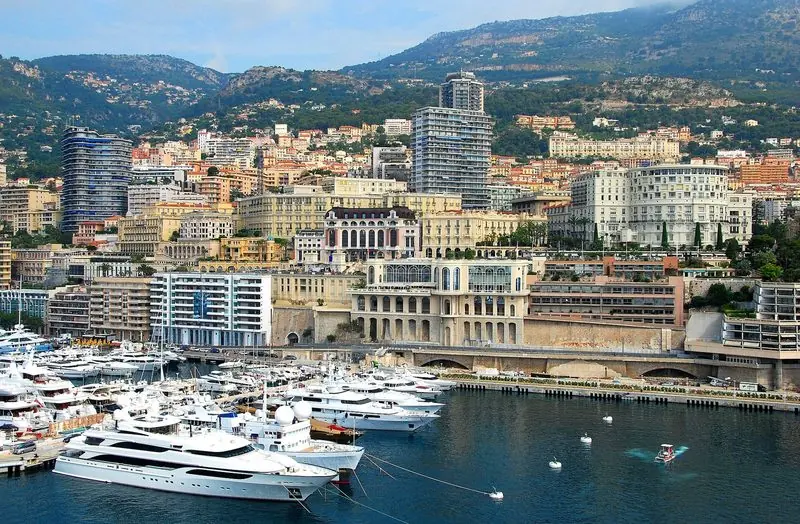
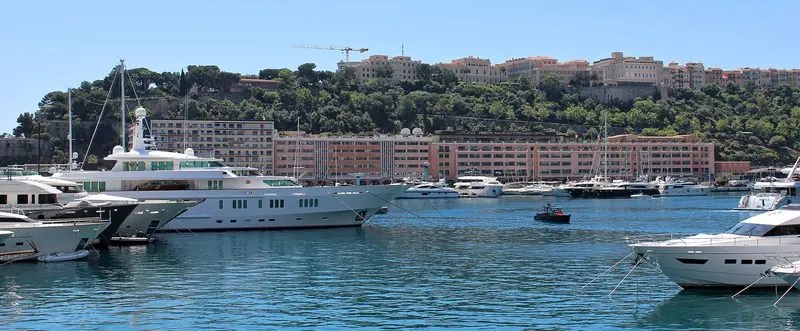
The tracker holds 1,164 yachts on record across its four regions, of which 519 were inside the monitored area at the time of the snapshot: 181 in port, 244 at anchor and 123 under way. Port Hercule in Monaco was the busiest single location, with 75 yachts recorded alongside on the day, ahead of any other harbour, anchorage or yard the service covers. Across the 21 locations it monitors, the tracker logged 52 arrivals and 59 departures in the preceding 24 hours, a level of turnover consistent with the tail end of the Mediterranean season rather than its August peak.
A comparable snapshot published on 12 September by tourism-industry outlet Rust Tourism News, drawn from Superyacht Watch data taken on 10 September, recorded 457 yachts in the monitored area and a running-spend estimate of EUR 8.9 million a day. The five-day gap between the two snapshots covers more than a tenth of the headline total, and the service itself is explicit that the figure moves with whichever yachts happen to be inside AIS range at the moment it is read, not with any underlying change in how much owners are spending.
How does Superyacht Watch calculate a yacht's daily running cost?
The site applies a single public formula, length in metres divided by ten, cubed, times EUR 100 a day, so cost rises with a yacht's underlying volume rather than its length alone. A 30-metre yacht models at EUR 2,700 a day; an 80-metre yacht at EUR 51,200; a 120-metre yacht at EUR 172,800.
The published methodology states plainly why the relationship is cubic and not linear: a yacht's running costs track its volume, and volume scales with the cube of length for vessels of broadly similar proportions. That is the site's own explanation for why a 60-metre yacht costs roughly eight times as much to run each day as a 30-metre one, not twice as much, and it is the detail that separates this tool from a simple per-metre rule of thumb. The EUR 100 coefficient inside the formula is not arbitrary: Superyacht Watch says it was calibrated against real expense reports shared by several yachts and cross-checked against a 2026 Deloitte study and a Genoa port study, both of which it says produced figures within a few percentage points of the formula's output.
The estimate covers five categories: crew, berthing, fuel, maintenance and provisioning. It explicitly excludes insurance, refit spending, depreciation and the cost of financing the purchase itself, all of which sit outside what the site defines as day-to-day operating spend. Results are rounded to two significant figures and the site is careful to describe each one as indicative for a length class, never an account of what a specific yacht actually spent that day.
Does the cube-law figure match what brokers tell owners to budget?
It lands in the same range. Ocean Independence's published cost guide puts a 50-metre yacht's total annual running cost at USD 2.3 million to 4.1 million, which converts to roughly EUR 6,000 to 10,500 a day and sits close to the cube-law model's EUR 12,500 figure for the same length.
Ocean Independence, a yacht brokerage and management firm, frames the same question from the ownership side rather than the fleet-tracking side: it puts total running costs at 10 to 20 percent of a yacht's value each year, and breaks a first-year budget for a 50-metre yacht valued at USD 15 million to 25 million into crew salaries of USD 1 million to 2 million, fuel of USD 250,000 to 500,000, maintenance and refit of USD 700,000 to 1.2 million, insurance of USD 100,000 to 250,000, berthing of USD 150,000 to 350,000, and tenders and toys of USD 100,000 to 300,000. That range, USD 2.3 million to 4.1 million a year, works out close to EUR 6,000 to 10,500 a day once converted and annualised, a figure in the same order of magnitude as Superyacht Watch's EUR 12,500 for a boat of the same length, even though the two organisations arrived at their numbers by entirely different routes: one from AIS-tracked fleet behaviour and a cube-law formula, the other from brokerage-managed budgets.
The gap between the two is itself informative. Ocean Independence's figure excludes only insurance from the categories Superyacht Watch counts, yet still runs lower, which points to the cube-law model erring toward the high end of what a well-run 50-metre yacht actually costs to operate on a given day, rather than the low end. For a buyer comparing the two, the honest reading is that either number is close enough to be useful for sizing a decision, and neither is precise enough to replace a real budget built around a specific boat, her crew size, her cruising ground and her age.
What does the EUR 10 million-a-day estimate not capture?
The model excludes insurance, refit spending, depreciation and acquisition financing, all of which are frequently the largest annual line items an owner actually faces, and it says nothing about any individual yacht's real accounts.
Refit and maintenance alone can run to 10 percent of a yacht's value in a given year under Ocean Independence's guidance, a figure that dwarfs the daily provisioning and berthing costs the cube-law model is built to estimate, and a boat mid-refit at a yard for weeks at a time will show none of the running spend the tracker assumes for a yacht under way or at anchor. Depreciation, which typically erodes several percent of a superyacht's value each year in the first decade, does not appear in either model, and neither does the interest or the amortisation on however the purchase itself was financed. An owner reading a EUR 10 million-a-day fleet total should treat it as a live estimate of visible, in-season operating activity across the tracked fleet, not as a stand-in for the real annual cost of ownership, which for most yachts above 50 metres will run several times higher once refit, insurance and depreciation are added back in.
Superyacht Watch's own caution matters here: the site states the figure is never an account of any particular yacht's actual spending, and it does not publish owner names or berth-precise positions, by design. That restraint is consistent with how the rest of the tool works, coarse harbour-level positioning rather than exact coordinates, and it is also why the daily total should be read as a fleet-wide indicator of activity and scale rather than a bill any single owner could recognise as their own.

Why does this snapshot matter now rather than at the height of summer?
The tracker's 15 September reading falls in the final stretch of the Mediterranean cruising season, after the Cannes Yachting Festival closed on 13 September and before the Monaco Yacht Show opens on 23 September, a window when the fleet consolidates toward Port Hercule and the show's build-up rather than spreading across the wider cruising ground.
Port Hercule's 75-yacht count on the day is itself a seasonal signal: Monaco draws boats ahead of its show every year, and a harbour that size holding that many yachts more than a week before the event opens points to early arrivals staging for berths, crew changeovers and the pre-show charter business that runs alongside it. The 52 arrivals and 59 departures logged across all 21 monitored locations in a single 24-hour period show a fleet still very much in motion this late in the season, even as the raw monitored count points to the summer crowd having thinned from its peak.
For an owner or a charter guest weighing a late-season Mediterranean booking, the practical read is that availability improves and rates typically soften as the fleet redeploys toward the Atlantic, the Caribbean or lay-up yards for the winter, while Monaco itself tightens up again as show week approaches. The daily running-cost model does not change with the season, a yacht at anchor off Sardinia in September costs the same to crew and fuel as one off Cannes in July under the formula, but where in the Mediterranean that cost is actually being spent shifts hard toward Monaco for the next two weeks.
What is good, and what to watch
Strong points
- The methodology is published, not just the numberSuperyacht Watch shows the formula and names its calibration sources rather than issuing a bare headline figure, which is unusual for this kind of estimate.
- The order of magnitude matches independent broker guidanceOcean Independence's 10 to 20 percent of value rule implies a daily figure for a 50-metre yacht in the same range as the cube-law model's EUR 12,500, despite the two using entirely different methods.
What to watch
- It models a class of yacht, not any yacht's real accountsSuperyacht Watch states the figure is indicative for a length bracket and never an account of a particular vessel's actual spending, and excludes insurance, refit, depreciation and financing, often an owner's largest annual costs.
- The headline total moves with fleet position, not spending519 monitored yachts on 15 September against 457 on 10 September lifts the daily total by more than a tenth in five days, a shift that reflects which boats happen to be in AIS range as much as any change in what owners spend.
Practical detail
| 30m yacht, modelled daily running cost | EUR 2,700 (crew, berthing, fuel, maintenance, provisioning) |
|---|---|
| 50m yacht, modelled daily running cost | EUR 12,500 |
| 80m yacht, modelled daily running cost | EUR 51,200 |
| 120m yacht, modelled daily running cost | EUR 172,800 |
| What the model excludes | Insurance, refit spending, depreciation and purchase financing are not counted |
| Where the EUR 100 coefficient comes from | Calibrated against real expense reports and cross-checked against a 2026 Deloitte study and a Genoa port study, Superyacht Watch says |
| Independent cross-check | Ocean Independence puts a 50m yacht's total annual running cost at USD 2.3m to 4.1m, close to the same order of magnitude once converted to a daily figure |
Questions this story answers
What happened?
A live AIS tracker puts the Mediterranean's superyacht fleet at close to EUR 10 million a day in running spend, and it publishes the formula behind that number. For an owner or a buyer sizing up a boat, the model is a rare public benchmark for what a given length actually costs to keep moving.
What is good about it?
The methodology is published, not just the number. Superyacht Watch shows the formula and names its calibration sources rather than issuing a bare headline figure, which is unusual for this kind of estimate.
What should an owner or buyer watch?
It models a class of yacht, not any yacht's real accounts. Superyacht Watch states the figure is indicative for a length bracket and never an account of a particular vessel's actual spending, and excludes insurance, refit, depreciation and financing, often an owner's largest annual costs.
Who reported this?
Superyacht Watch, Rust Tourism News, Ocean Independence.
We do this for everyone who loves this world. The people who have spent their lives in it, and the people just discovering it. Yotters exists so that what we learn belongs to all of them.
Nobody pays us for this. No ads, no sponsors, nothing for sale. We just believe the world is a little better when knowledge is shared instead of kept.
If it gave you something today, tell us to keep going. Follow us, leave a like, or write a positive comment. We read every one, and they are what keeps us going.