Glacier Bay allows 25 boats a day, and Alaska drew the fleet
Which large yachts have been cruising Alaska this summer?
Launchpad, a 118-metre Feadship delivered in 2024, has anchored in Auke Bay outside Juneau since early July alongside her 80-metre support vessel Wingman, with Zen reported bound for the same water.
Launchpad, the 118 metre Feadship delivered in 2024, has been lying in Auke Bay outside Juneau since the first week of July. Alongside her sits Wingman, the 80 metre Damen support vessel converted from an offshore platform to carry the helicopter, the tenders and the diving gear a guest boat cannot swallow. The pair came north from the Seattle area, where they were seen through the end of May. They lie at anchor rather than alongside, the normal condition on this coast.
Zen, another large yacht that passed through Seattle this season, was reported bound for the same water. Megayacht News treats Alaska as a shift rather than a novelty, and Northrop and Johnson now runs a standing Alaska charter page with a fleet on it. This is not a rush. It is a handful of very large boats choosing the same alternative in one summer, which is how a cruising ground usually changes hands.
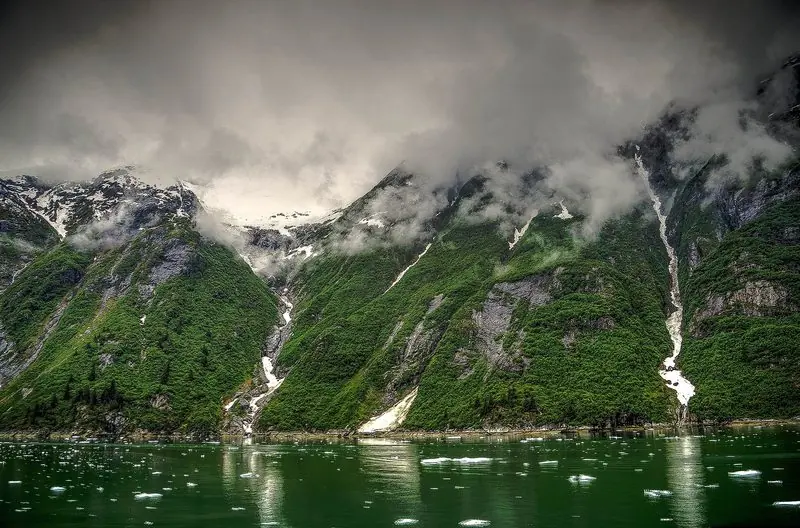
How many yachts can enter Glacier Bay National Park each day?
The park issues exactly 25 private vessel permits a day between 1 June and 31 August - 15 advance-notice and 10 short-notice - and each permit is tied to the vessel, not the owner.
The centrepiece of an Alaskan itinerary is Glacier Bay National Park, and access to it is rationed. The park issues 25 private vessel permits a day between 1 June and 31 August, split into 15 advance notice permits and 10 short notice. A permit belongs to the vessel, not the owner, and cannot be handed to another boat. The maximum stay is five days and four nights, extended to seven days for a boat that cannot exceed seven knots.
The advance permits are drawn in two lotteries, the first running through January, the second from 1 to 15 March. A vessel may hold two permits at once, only one of them advance notice, and no more than 14 days' worth in any 21 day period. For an owner used to rearranging a season with a phone call in June, that is the number that matters: the best fortnight of an Alaskan summer is allocated in the middle of winter.
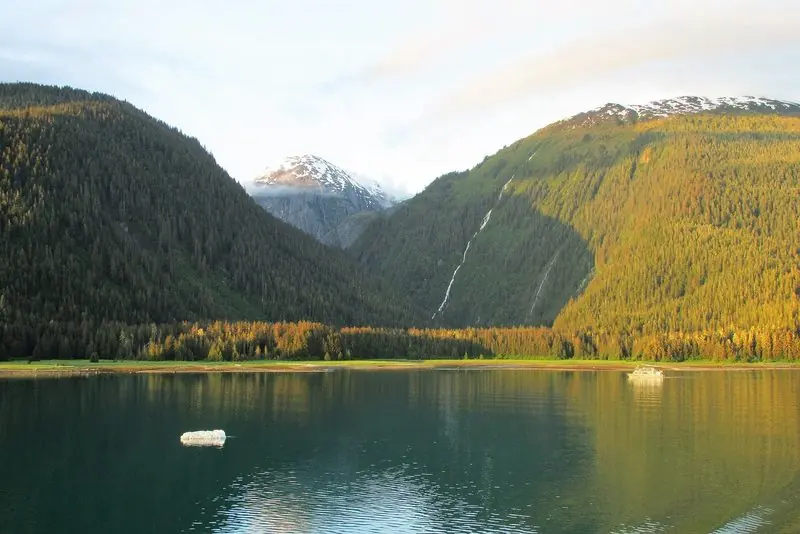
What does an Alaska charter cost compared to the Mediterranean this summer?
Sea Owl, a 62-metre Feadship, lists Alaska for 2026 at USD 515,000-530,000 a week for 12 guests, while Mediterranean summer charter bookings are running 20-30% behind last year on broker estimates.
Sea Owl, the 62 metre Feadship of 2013 with an Andrew Winch interior, lists Alaska as her summer ground for 2026 at USD 515,000 to USD 530,000 a week plus expenses, for 12 guests. Unbridled, at 58.2 metres, is working the Inside Passage, and her captain, Liam Devlin, describes Tracy Arm as a place to shut the engines down and listen to the ice calve. Chasing Daylight at 50 metres and Triton at 49.7 metres sit on the same page.
The push comes from the Mediterranean. Summer charter there is running 20 to 30 per cent behind last year on broker estimates, and western Med bookings in May trailed 2025 by 40 per cent. American clients, who carry the large end of the market, have been slower to cross the Atlantic. A boat billing half a million dollars a week off Juneau is having a better August than one discounting off Sardinia.
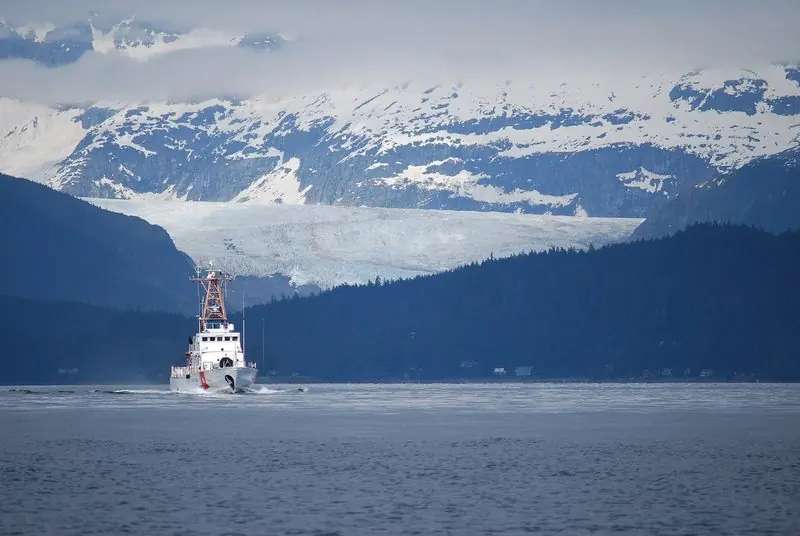
What does a yacht need to actually work in Alaska?
With no marina infrastructure on the Inside Passage - fuel off commercial docks, provisioning through Juneau and Sitka, and the nearest serious repair yard back in the Pacific Northwest - range, tender capacity and cold-water glazing and heating matter in ways a Mediterranean-specified yacht rarely tests.
The Inside Passage has no yachting infrastructure worth the name. Fuel comes off commercial docks, provisioning runs through Juneau and Sitka, and the nearest yard that can take a serious repair is back in the Pacific Northwest. Range matters, tender capacity matters, and glazing and heating specified for a Mediterranean August matter differently at 58 degrees north. It is why the two boats in Auke Bay travel as a pair.
This is where a cruising fashion touches the value of a hull rather than the pleasure of it. The yards have been selling long range boats into exactly this demand: Numarine reached a 21st explorer sale this year, Amer launched its first steel explorer with 8,900 nautical miles of range, and Cantiere delle Marche delivered the 35 metre Octopus. An owner specifying a build now is choosing between a yacht that works one ocean and one that works several.
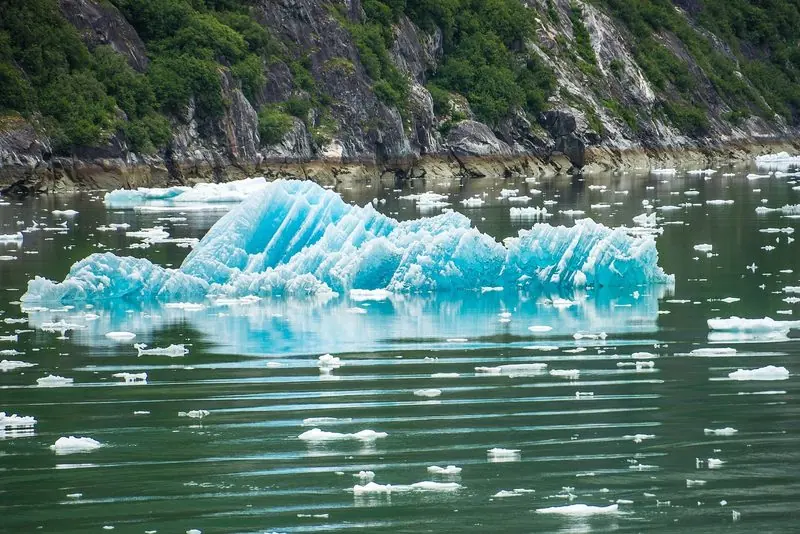
Is Alaska's yacht traffic a lasting shift or a one-season blip?
The charter arithmetic is likely temporary and should recover as the Mediterranean rate card does, but the structural pull toward long-range, self-sufficient yachts - from Alaska to Greenland to Raja Ampat - is widening independent of any single season.
Two things are worth keeping apart. The first is the charter arithmetic, and it is temporary: American clients stayed closer to home, the Med discounted to fill weeks, and a few boats found a better rate somewhere colder. That can reverse in a season, and the Mediterranean rate card will recover faster than Alaska can build capacity. Nobody relocates a fleet on one soft August.
The second is structural, and it reaches a valuation. The grounds that pay off long range, self sufficiency and a support vessel keep widening, from Alaska to Greenland to Raja Ampat. A yacht built to sit in a Riviera berth for 11 weeks a year is a narrower asset than one that can leave. If the January lottery is going on the calendar for 2027, the boat that gets through it is a different specification from the 2019 default.
What owners and crew report
Tracy Arm rewards shutting the engines down
Liam Devlin, captain of the 58.2-metre Unbridled, describes Tracy Arm as a place to cut the engines and listen to the ice calve - a working captain's own account of the Inside Passage, not a broker's pitch.
Liam Devlin, captain of Unbridled
What is good, and what to watch
Strong points
- A genuinely different asset class of cruising groundGlacier Bay's rationed access and the Inside Passage's total absence of marina infrastructure reward exactly the long-range, self-sufficient specification - support vessel, extended tankage, cold-climate glazing and heating - that the Mediterranean rarely tests.
- The charter economics are real, not speculativeSea Owl's USD 515,000-530,000 weekly rate and a full Alaska page at Northrop and Johnson show brokers have already built a standing product around the ground, not just a one-off relocation.
What to watch
- The permit system punishes anyone who plans lateThe advance lottery closes in mid-March for a summer that will not start for another two and a half months, so an owner used to booking a Mediterranean week by phone in June has no equivalent option - miss the window and the fallback is one of only 10 daily short-notice permits.
- This season's numbers may be a one-off, not a trendThe article's own reporting treats the Med's 20-30% charter shortfall as temporary - American clients staying closer to home and Mediterranean discounting to fill weeks - which means the Alaska surge could partly reverse as soon as the Med rate card recovers.
Practical detail
| How to get a Glacier Bay permit | Apply through the advance-notice lottery, drawn in two rounds (January, then 1-15 March), or request one of the 10 daily short-notice permits closer to the visit. The permit itself carries no fee. |
|---|---|
| How long you can stay | 5 days and 4 nights per permit, extended to 7 days for a vessel that cannot exceed 7 knots; a boat may hold two permits at once (only one of them advance-notice) and no more than 14 permit-days in any 21-day period. |
| What a season on the Inside Passage costs to charter | Sea Owl (62m Feadship) lists USD 515,000-530,000 a week plus expenses for 12 guests; Unbridled (58.2m), Chasing Daylight (50m) and Triton (49.7m) work the same ground. |
| What infrastructure is actually there | No dedicated yachting infrastructure - fuel comes off commercial docks, provisioning runs through Juneau and Sitka, and the nearest yard for a serious repair is back in the Pacific Northwest. |
| What is not published | Neither the park service nor the brokers publish how many of the 25 daily permits large private yachts actually take versus the day-tour and small-boat fleet, so the real odds of clearing the January lottery for a 50-metre-plus yacht are not a public number. |
Questions this story answers
What happened?
Some of the largest private yachts in North American water this summer are not in the Mediterranean at all. Launchpad, Sea Owl and Unbridled are working the Inside Passage while Med charter runs 20 to 30 per cent behind last year. Alaska rewards the owner who planned it in January, because Glacier Bay issues only 25 private vessel permits a day.
What is good about it?
A genuinely different asset class of cruising ground. Glacier Bay's rationed access and the Inside Passage's total absence of marina infrastructure reward exactly the long-range, self-sufficient specification - support vessel, extended tankage, cold-climate glazing and heating - that the Mediterranean rarely tests.
What should an owner or buyer watch?
The permit system punishes anyone who plans late. The advance lottery closes in mid-March for a summer that will not start for another two and a half months, so an owner used to booking a Mediterranean week by phone in June has no equivalent option - miss the window and the fallback is one of only 10 daily short-notice permits.
What do owners and crew report?
Liam Devlin, captain of the 58.2-metre Unbridled, describes Tracy Arm as a place to cut the engines and listen to the ice calve - a working captain's own account of the Inside Passage, not a broker's pitch. (Liam Devlin, captain of Unbridled)
Who reported this?
Megayacht News, The Alaska Story, US National Park Service, Glacier Bay National Park and Preserve, Northrop and Johnson, BOAT International, CNBC.
We do this for everyone who loves this world. The people who have spent their lives in it, and the people just discovering it. Yotters exists so that what we learn belongs to all of them.
Nobody pays us for this. No ads, no sponsors, nothing for sale. We just believe the world is a little better when knowledge is shared instead of kept.
If it gave you something today, tell us to keep going. Follow us, leave a like, or write a positive comment. We read every one, and they are what keeps us going.