The group that holds 1,000 of your Med berths has changed hands
The transaction
InfraVia Capital Partners has agreed to buy D-Marin from CVC Capital Partners at a price reported at more than EUR 1 billion, in a deal covered by SuperyachtNews on 7 July 2026. CVC had held the business for six years, having bought it from Turkey's Dogus Group in 2020 and expanded it heavily since. Vincent Levita is chief executive of InfraVia and Athanasios Zoulovits is the partner on the transaction, with Istvan Szoke managing partner at CVC. Oliver Dorschuck continues as D-Marin's chief executive.
Goldman Sachs and Clifford Chance advised CVC. Morgan Stanley and White & Case advised InfraVia. The shift that matters is from buyout capital to infrastructure capital, which invests over a longer horizon and expects steadier returns from assets that behave like utilities.
What the business actually is
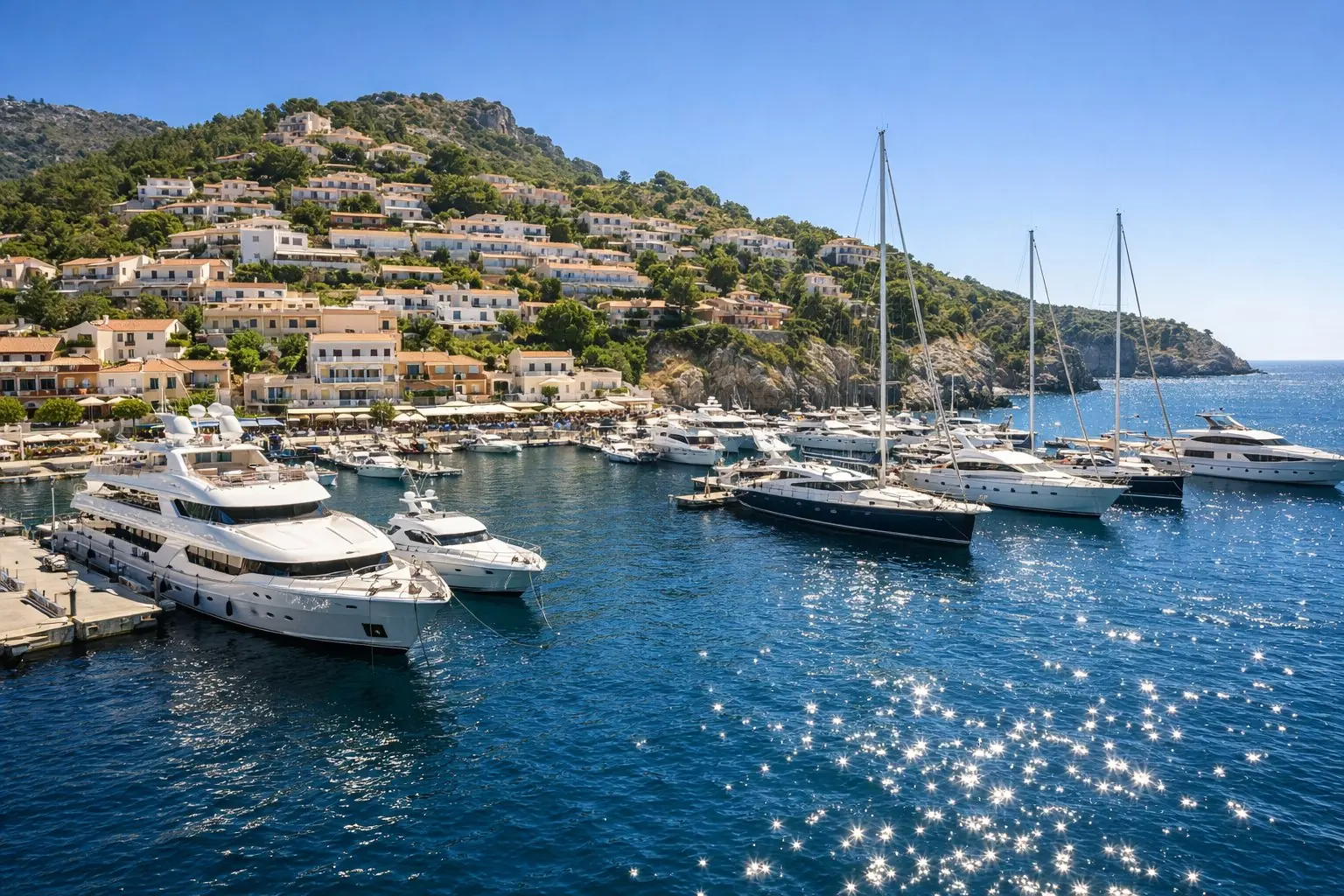
D-Marin operates 28 marinas across nine countries, with more than 14,300 berths in total and over 1,000 of them dedicated to superyachts. The footprint runs through Turkey, Croatia, Greece, the United Arab Emirates, Spain, Italy, France, Malta and Albania. Alongside the marinas sit 12 boatyards, which between them service around 2,500 yachts a year.
That is not one marina an owner might use. It is a network that covers most of the eastern Mediterranean season and reaches the Adriatic, the Balearics and the Gulf. An owner cruising Croatia and Greece in the same summer is quite likely to lie in this group's berths twice without noticing that they are the same company.
Why the ownership change matters to a berth holder
Marina groups under private equity are run to a defined exit, which tends to reward pricing discipline and visible upgrades over long build-outs. Infrastructure funds hold for longer and are more willing to spend on dredging, quay strengthening and shore power, the unglamorous work that determines whether a 90-metre yacht can actually berth somewhere.
InfraVia has said it intends to accelerate expansion in what it describes as a fragmented market, deploying long-term capital and modernising the estate. Consolidation on that scale gives a single operator meaningful pricing power in ports where there is no comparable alternative for a large yacht. Berth tariffs in the Mediterranean are already priced by length and season, and are among the highest in the world at the top of the size range.
The pattern behind it
This is the second Mediterranean superyacht marina to change hands in a fortnight. On 29 June 2026 the Monaco-based investment firm Mirazur Capital acquired a 52 per cent stake in Marina Port Vell in Barcelona from the Qatari bank QInvest, taking control of a facility with a 400-metre quay that can accommodate yachts up to 190 metres. Mirazur is buying through a closed-end vehicle launched in late 2025 with a declared buy-and-build strategy aimed at Mediterranean superyacht facilities.
Two deals do not make a trend on their own. They do indicate that capital has decided large-yacht berths are a scarce, income-producing asset class with a long runway, which is exactly the view that historically precedes higher prices for the people who use them.
What to do with the information
If the yacht holds annual or multi-year berthing contracts within the D-Marin network, this is the moment to check the renewal and escalation terms and when they next come up. Contracts written under one owner are honoured by the next, and the negotiating posture at renewal is a different matter.
For owners without a long-term berth in the eastern Mediterranean, the calculation has shifted slightly towards securing one. Capacity is being added in the Adriatic and Albania, and the largest new schemes there are dated 2027 and later. The berths that exist for yachts over 60 metres this season and next are the ones already built.
Questions this story answers
What happened?
D-Marin, which runs 28 marinas across nine countries and more than a thousand dedicated superyacht berths, has been sold by CVC to the infrastructure investor InfraVia in a deal reported at over EUR 1 billion. The buyer's stated plan is consolidation of a fragmented market. For owners, the question is what that does to berth availability and tariffs across an entire cruising season.
Who reported this?
SuperyachtNews, InfraVia Capital Partners, CVC Capital Partners, D-Marin, Mirazur Capital, Marina Port Vell.
We do this for everyone who loves this world. The people who have spent their lives in it, and the people just discovering it. Yotters exists so that what we learn belongs to all of them.
Nobody pays us for this. No ads, no sponsors, nothing for sale. We just believe the world is a little better when knowledge is shared instead of kept.
If it gave you something today, tell us to keep going. Follow us, leave a like, or write a positive comment. We read every one, and they are what keeps us going.