What Gross Tonnage Thresholds Actually Change for an Owner
Does anything change before a yacht reaches 500 GT?
Yes: at 300 GT a yacht already needs a formal stability study, an assigned load line, and STCW-certificated officers, well before the widely quoted 500 GT line arrives.
Most coverage of gross tonnage treats 500 GT as the only number that matters, but a yacht crosses a real regulatory line well before that. At 300 GT, a vessel needs a formal stability study on file and a load line assigned by a recognised classification society, both of which set hard limits on how the boat can be loaded and where it can operate. The captain, mate and engineer all need STCW-certificated tickets rather than the more relaxed qualifications a smaller private yacht can run on, and the crew's living spaces have to meet the Maritime Labour Convention's accommodation rules rather than whatever the yard's original layout happened to provide.
None of that is optional and none of it is widely reported, because 300 GT sits well inside what most owners still think of as a mid-size yacht. MARPOL's pollution rules on waste and sewage discharge also apply from this point, governing how the yacht handles bilge water, garbage and sewage in different waters. An owner shopping in the 35 to 45 metre range, where 300 GT is a routine outcome of a fairly ordinary layout, is buying into this framework whether or not the brokerage particulars ever mention it.
What actually changes for an owner once a yacht reaches 500 GT?
A yacht at or above 500 GT comes fully under SOLAS, the ISM Code and the ISPS Code, needs a shore-based safety manager and fire protection throughout the vessel, and Boat International puts the added running cost at roughly USD 150,000 to 160,000 a year.
500 GT is where the picture changes completely rather than incrementally. A yacht at or above that figure comes fully under SOLAS, the International Safety Management Code and the International Ship and Port Facility Security Code, and under the Maritime Labour Convention's fuller obligations rather than the lighter version that applies below 300 GT. In practice that means a shore-based Designated Person Ashore has to be appointed to oversee the yacht's safety management system, fire insulation and sprinkler or high-fog protection has to run throughout the vessel rather than just the engine room, escape routes need to meet a stricter fire-proofing standard, and officers need additional certification beyond what a smaller yacht requires.
Boat International's Marilyn Mower, reporting in March 2026, put a figure on what that adds up to: naval architect Gregory C Marshall estimates the extra regulatory burden costs an owner roughly USD 150,000 to 160,000 a year in running costs once a yacht crosses 500 GT, on top of more frequent and more demanding classification society surveys and higher insurance premiums that reflect the added complexity. It is this single jump, more than any other number in yachting, that decides how a 45 to 55 metre yacht ends up being designed.

Why is it harder to crew a yacht above 3000 GT?
Until 2026 the highest yacht-specific qualification was Master (Yachts) less than 3000 GT, so commanding a larger yacht meant leaving the yacht track for merchant-marine certificates on cargo ships, which left owners of the biggest yachts drawing from a genuinely smaller pool of captains.
A separate ceiling sits at 3000 GT, and it is about who can be hired to run the yacht rather than what equipment it must carry. For years, the highest yacht-specific qualification available was Master (Yachts) less than 3000 GT: an officer holding it could command any yacht up to that tonnage, but taking a job on anything larger meant leaving the yacht track altogether and working through merchant-marine certificates on cargo ships to earn an unlimited Master's ticket, a detour of years that many working yacht officers were never going to make.
The UK Maritime and Coastguard Agency addressed this directly in 2026 with a new Yacht Unlimited Certificate of Competency, letting an experienced Master (Yachts) less than 3000 GT holder progress to command any size of yacht through further seagoing service on yachts alone, without the merchant-ship detour. Until that route existed, an owner ordering a yacht comfortably over 3000 GT, a bracket that now includes plenty of boats in the 70 to 90 metre range, was drawing from a smaller and more specialised pool of qualified captains than an owner buying a 45 metre yacht, and paying for that scarcity in the wage the job commanded.

Why do so many new yachts measure just under 500 GT?
Because crossing 500 GT triggers the full regulatory and cost jump, yards and naval architects increasingly draw yachts to finish at 499 GT on purpose, a practice now common enough to cover most of the sub-500 GT order book.
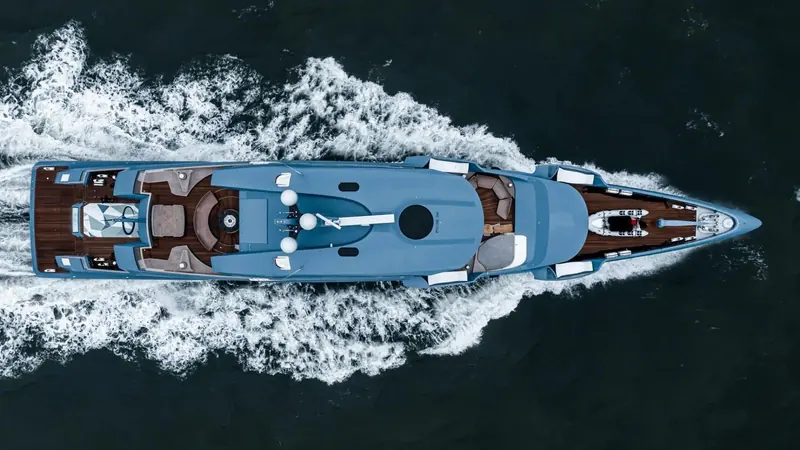
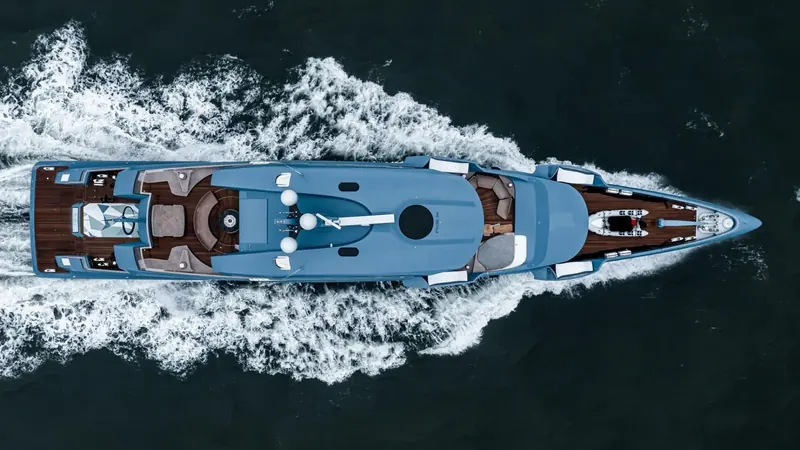
Because crossing 500 GT is expensive in the way the previous section describes, a large share of the current order book is designed to avoid it on purpose. Boat International's count of the 2026 Global Order Book found 932 yachts under construction below 500 GT, and 156 of those, 86.7 percent of that bracket's volume, were specifically targeted to finish at 499 GT: a margin of one gross ton, deliberately engineered. Royal Huisman's 58.5 metre Phi, delivered in 2021, is the clearest proof the practice works: Yacht Harbour and Royal Huisman itself both describe her as the longest motor yacht ever built under the 500 GT threshold, alongside Royal Huisman's own 52 metre six-deck sportsfisher Special One, Sanlorenzo's fuel-cell-powered 50 metre Almax, Benetti's 50 metre B.Now and Mangusta's Oceano 50, all drawn to the same target.
Naval architects describe the effort in specific terms, not vague ones. Gregory C Marshall told Boat International that roughly 20,000 hours a year across the industry go into squeezing yacht designs to measure under 500 GT, and that he now steers clients toward 42 metre designs at 499 GT rather than the 50-plus metre hulls he says push the exercise past what is sensible; he has drawn a 55 metre yacht under 500 GT twice and calls it a mistake both times. Perry van Oossanen, whose firm drew Phi's hull, credits her narrow, efficient form for hitting the target, while noting plainly that the volume restriction this demands changes usability and lifestyle aboard, not just the numbers on the certificate.

What does an owner give up by building a yacht under 500 GT?
Naval architects name the tradeoffs specifically: headroom capped around 2.15 metres on a five-stateroom yacht, a compressed tender garage, and hull-depth compromises that push machinery air intakes closer to the waterline.
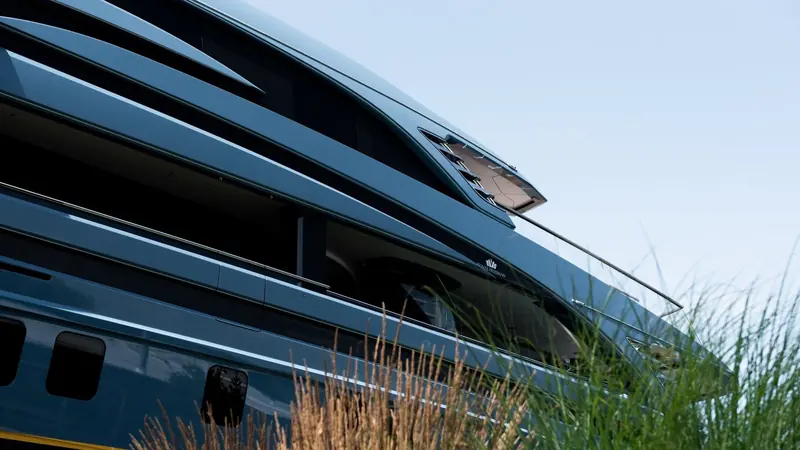
The tradeoffs are documented by name, not left vague. Marshall cites a maximum interior headroom around 2.15 metres on a five-stateroom yacht built to stay under 500 GT, a real ceiling on a deck that would otherwise run higher. Sergio Cutolo of Hydro Tec warns that compressing hull depth to save volume pushes the main deck, and with it the machinery air intakes, closer to the waterline than he considers ideal. Tender garages are commonly reduced to what an open grillwork exemption allows rather than a fully enclosed space, and Heesen's Thom Conboy notes that a 1990s or 2000s-era 50 metre yacht, measured under today's rules, would come out around 700 to 750 GT: the same size hull now has to give up more to fit under the same number.
Class societies themselves acknowledge the measurement is contested enough to need fresh guidance: Lloyd's Register, RINA, DNV, Bureau Veritas and ABS formed the Yacht Safety and Environmental Consortium at the Monaco Yacht Show in September 2024 specifically to work on shared guidelines for tonnage calculation and load line assignment, an acknowledgement that the exclusions different yards lean on to hit 499 GT are not applied with perfect consistency across the industry. For an owner, the honest way to read a 499 GT yacht is as a real, working trade: a lower running cost and an easier path through survey and insurance, bought with headroom, tender storage and hull depth that a slightly larger sister yacht built past the line would not have had to sacrifice.
What is good, and what to watch
Strong points
- A documented, working way to cut running costsStaying under 500 GT avoids the full SOLAS, ISM Code, ISPS Code and MLC regime and the Designated Person Ashore requirement, saving an estimated USD 150,000 to 160,000 a year according to naval architect Gregory C Marshall.
- Proven at real length, not just on paperRoyal Huisman's 58.5 metre Phi shows a yacht can stay under 500 GT without giving up serious length, and is now cited across the industry as the reference case for the practice.
- Simpler survey and insurance profileFewer and less demanding classification society surveys and lower premiums follow directly from staying under the SOLAS threshold.
What to watch
- It can cost more to build small than to build bigMarshall estimates compressing a 50-plus metre yacht under 500 GT can add up to USD 5 million to the build, which can outweigh the running-cost saving depending on how long the owner keeps the yacht.
- Real interior volume is sacrificedHeadroom on a five-stateroom yacht built to the limit can be capped around 2.15 metres, and tender garages are commonly reduced to what an open grillwork exemption allows.
- Hull-depth compromises carry an engineering cost of their ownSergio Cutolo of Hydro Tec warns that the reduced hull depth needed to save volume pushes machinery air intakes closer to the waterline than he considers ideal.
- The measurement itself is inconsistently appliedFive major classification societies formed a joint consortium in 2024 specifically to standardise tonnage calculation guidelines, an acknowledgement that different yards read the same rules differently.
Practical detail
| 300 GT | Formal stability study and load line assignment required; captain, mate and engineer need STCW certificates; MLC crew accommodation rules and MARPOL discharge rules apply |
|---|---|
| 500 GT | Full SOLAS, ISM Code and ISPS Code apply; a shore-based Designated Person Ashore must be appointed; fire insulation and sprinklers required throughout, not just the engine room; more frequent class surveys and higher insurance premiums |
| 3000 GT | Historic ceiling of the yacht-specific Master (Yachts) less than 3000 GT certificate; commanding a larger yacht meant a merchant-marine detour until the MCA's Yacht Unlimited CoC opened a yacht-only route past it in 2026 |
| Estimated extra running cost at 500 GT and above | Roughly USD 150,000 to 160,000 a year, per naval architect Gregory C Marshall's estimate as reported by Boat International |
| Cost of engineering a yacht to stay under 500 GT | Can add millions to the build depending on length; Marshall estimates as much as USD 5 million on a yacht pushed past what he considers a sensible size for the exercise |
| Share of the order book built under 500 GT | 932 yachts in the 2026 Global Order Book measure under 500 GT; 156 of those, 86.7 percent, are specifically targeted at 499 GT |
| What is not published | Shipyards do not publish which specific volume exclusions, such as tender garage grillwork or enclosed bridge deck treatment, a given hull uses to shave its measured tonnage; that detail stays between the naval architect and the classification society |
Questions this story answers
What happened?
Trade press treats 500 GT as the only number that matters, but a yacht crosses real regulatory lines at 300 GT and 3000 GT too, and each one changes what an owner has to pay for or hire. Understanding all three explains why so many recent yachts measure exactly 499 GT and not a ton more.
What is good about it?
A documented, working way to cut running costs. Staying under 500 GT avoids the full SOLAS, ISM Code, ISPS Code and MLC regime and the Designated Person Ashore requirement, saving an estimated USD 150,000 to 160,000 a year according to naval architect Gregory C Marshall.
What should an owner or buyer watch?
It can cost more to build small than to build big. Marshall estimates compressing a 50-plus metre yacht under 500 GT can add up to USD 5 million to the build, which can outweigh the running-cost saving depending on how long the owner keeps the yacht.
Who reported this?
Boat International (Marilyn Mower), Southern Right Yachting, UK Maritime and Coastguard Agency, Yacht Harbour, Royal Huisman, Lloyd's Register.
We do this for everyone who loves this world. The people who have spent their lives in it, and the people just discovering it. Yotters exists so that what we learn belongs to all of them.
Nobody pays us for this. No ads, no sponsors, nothing for sale. We just believe the world is a little better when knowledge is shared instead of kept.
If it gave you something today, tell us to keep going. Follow us, leave a like, or write a positive comment. We read every one, and they are what keeps us going.