AI collision-avoidance is now standard on every Privilege catamaran
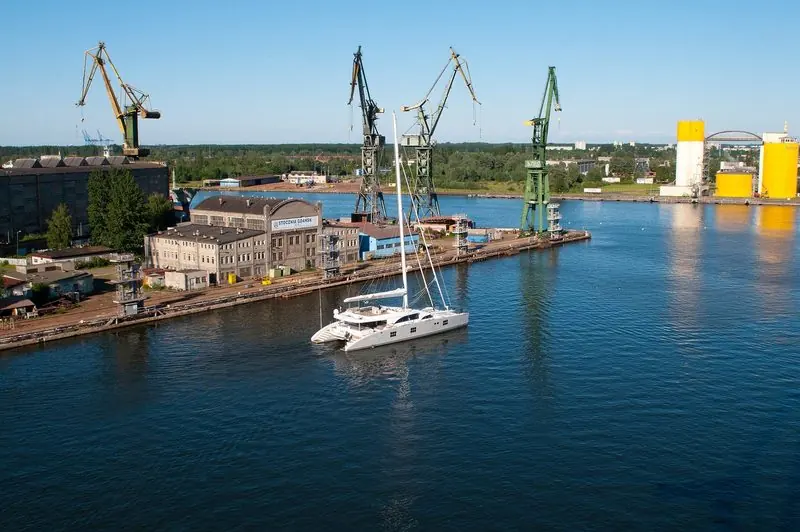
A catamaran yard makes the safety AI standard
Privilege Marine confirmed this spring that SEA.AI's collision-avoidance system is now standard equipment on every boat it builds, making it the first multihull shipyard to take that step. The French yard has built long-range cruising catamarans for more than 40 years across models such as the 510, 600 and 650, and it fits the Watchkeeper 320 as standard with the longer-range Watchkeeper 1024 offered as an upgrade. The hardware and software come from SEA.AI, the Austrian company formerly known as OSCAR.
The load-bearing word here is standard. Optical collision-avoidance has been on the market for years as an aftermarket unit that an owner selects and pays for on top of the boat. Building it into the base specification of a whole range moves it from accessory to expected equipment, the way radar and AIS stopped being optional. When a builder puts its own name behind the system as a default, brokers and surveyors begin to read its absence on a rival hull as a gap.
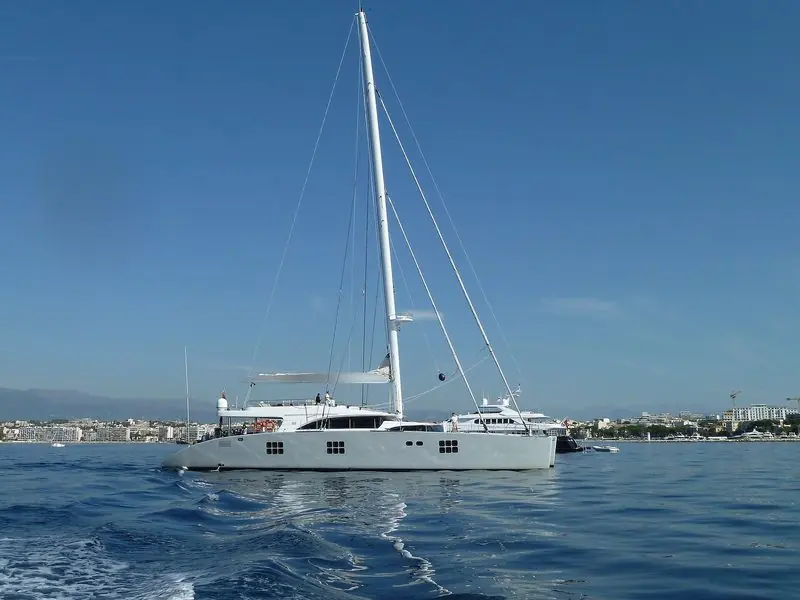
What it sees that radar and AIS miss
The Watchkeeper pairs ultra-wide 4K low-light optics with thermal imaging and runs the feed through AI trained on a database of millions of marine objects. It flags unlit vessels, navigation buoys, floating debris, part-submerged containers and a person in the water, then marks them on the display. It runs entirely on board with no internet link and works day and night, with the standard 320 unit reaching close to 3,000 feet and the optional 1024 extending detection to just over a nautical mile. Entry hardware in the range starts around 5,800 US dollars.
Radar handles low, non-metallic targets poorly, and AIS only shows vessels that carry a transponder and keep it switched on. A drifting container, an unlit tender or a swimmer returns little to either instrument. By SEA.AI's own account, collisions are the first event in more than half of boating accidents that cause injury, which is why the gap between what the instruments report and what is actually in the water carries weight. An optical layer that does not tire is aimed at the night watch and at the short-handed passage, where a lapse in the human lookout is most likely.
Why the next spec sheet should care
Privilege is not alone in the direction of travel. SEA.AI has also worked with Nautitech Catamarans to fit its systems across that builder's line, and it launched the entry-level Watchkeeper at the 2025 Cannes Yachting Festival to widen the market below its larger Sentry units. In the same period Avikus pushed autonomous docking and vessel-control systems into production for boats over 40 feet, so the pieces of a vision-assisted helm are arriving across several yards at once.
For a buyer the question shifts from whether to add collision-avoidance to why a given yard has not. Standard-fit safety equipment tends to hold value at resale and simplifies the insurance conversation, since underwriters increasingly ask what mitigations are aboard. It also raises the floor for the wider cruising-catamaran segment, because once one respected long-range builder makes optical AI a default, rivals face pressure to match the base specification rather than charge for it. The result is a concrete line owners can compare across yards, and one more piece of the helm that watches the water on its own.
Questions this story answers
What happened?
The catamaran builder Privilege Marine has made SEA.AI's machine-vision collision-avoidance system standard across its entire range, the first multihull yard to do it. The kit uses 4K low-light and thermal cameras to spot floating containers, debris and a person in the water that radar and AIS routinely miss. For owners it means a safety layer usually sold as a costly optional extra now comes fitted from the yard, and that quietly resets what a serious cruising catamaran is expected to carry.
Who reported this?
Privilege Marine, Ocean News & Technology, SEA.AI, Cruising World, Yachting Magazine.
We do this for everyone who loves this world. The people who have spent their lives in it, and the people just discovering it. Yotters exists so that what we learn belongs to all of them.
Nobody pays us for this. No ads, no sponsors, nothing for sale. We just believe the world is a little better when knowledge is shared instead of kept.
If it gave you something today, tell us to keep going. Follow us, leave a like, or write a positive comment. We read every one, and they are what keeps us going.