Croatia found 182 violations in a day; 30m yachts must hold 300m
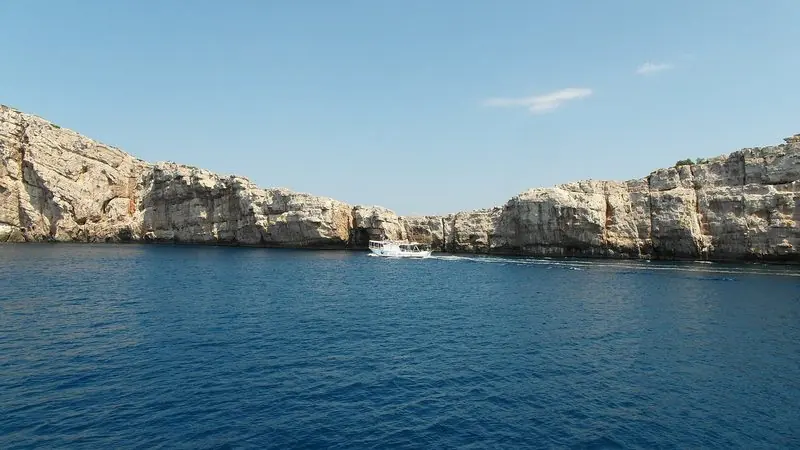
One working day, and every harbour master office at once
The operation was called Sigurna Plovidba 2026, Safe Navigation 2026, and it ran on 29 July between 10:00 and 18:00. Croatia put 115 harbour authority officers and 35 patrol vessels on the water across all eight harbour master offices, and covered 1,441 nautical miles inside those eight hours. The day returned 382 inspections and 182 violations. Fines came to EUR 79,208.49, of which EUR 44,884.24 was collected on the spot rather than billed. Croatia Week published the totals on 30 July.
What the officers actually looked at matters more to an owner than the headline number. The checks covered vessel document validity, crew numbers and qualifications, overcrowding on passenger excursion boats, mandatory CIMIS reporting, charter vessel operations, and black and grey water discharge. That is a documentation and compliance audit rather than a speed trap, and it is the kind of sweep that finds a paperwork gap aboard a yacht whose navigation was never in question. Just under half of everything inspected ended in a recorded violation. For a fleet that largely believes itself compliant, that is a high strike rate.
The distances that bind a 30 metre yacht
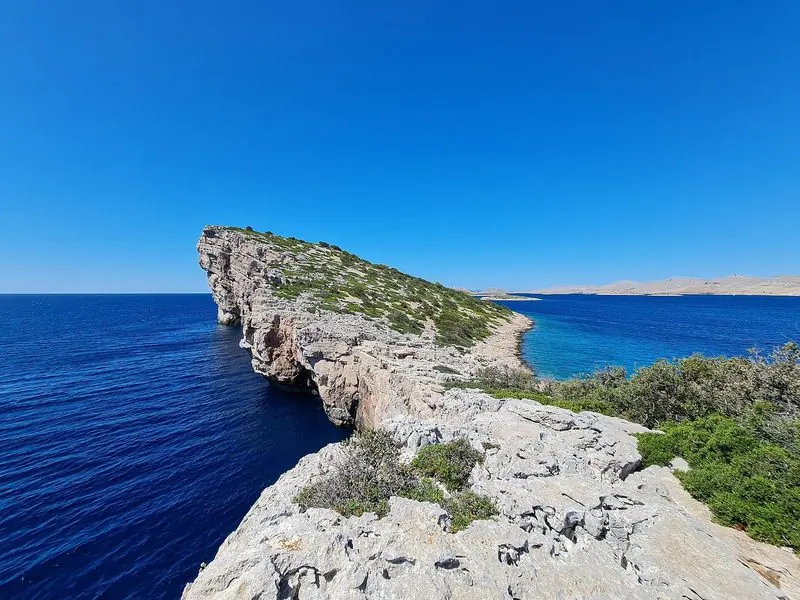
The underlying rules come from the SSVO ordinance, the Croatian regulation on the safety of shipping in inland sea waters and the territorial sea, in force since April 2025. It sets two separate distance tables, and the gap between them is where most crews get caught. For general coastal navigation, a vessel of 30 metres or more, and any seaplane, must stay at least 300 metres off the shore. Between 15 and 30 metres the figure is 150 metres. Below 15 metres it is 50 metres.
Approaching an organised swimming area, the table changes. Anything of 30 metres or more still owes 300 metres, and anything under 15 metres still owes 50, but the middle band drops from 150 metres to 100. A separate 50 metre minimum applies around a diving flag. For a yacht over 30 metres the practical answer is the same everywhere, which is at least a simple instruction to give: 300 metres, from the beach and from the swim zone alike. In a Dalmatian August that puts a meaningful share of the coast beyond the mother ship and hands the last 300 metres to the tender.
Where the anchor may not go
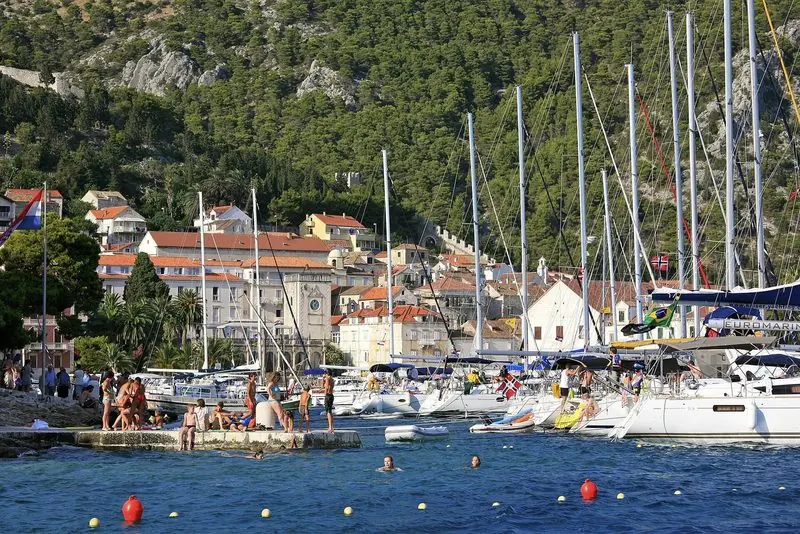
The anchoring bans are drawn separately from the navigation distances, and they are tighter than most summer cruising plans assume. An anchor may not be dropped within 50 metres of the marked boundary of an organised swimming area, within 150 metres of the shore of a natural bathing beach, or within 50 metres of underwater cables and pipelines. Declared no-anchor zones and any area the local port authority has restricted are closed outright. Mooring inside organised and natural swimming areas is banned altogether, not merely discouraged.
One rule moved in the owner's favour this year. The coastal mooring and anchoring zone widened from 50 metres to 70, and, more usefully, the measurement was finally defined: it is taken to the point where the anchor chain enters the water, not to where the anchor lies on the bottom and not to the outer edge of the swing circle. That removes the one part of the old rule nobody could comply with confidently, since a swinging yacht cannot know her own radius to the metre. SeaHelp reported the change on 15 April and updated it on 5 May, attributing it to the ten-point plan of the transport minister, Oleg Butkovic.
What the fines run to, and who is writing them
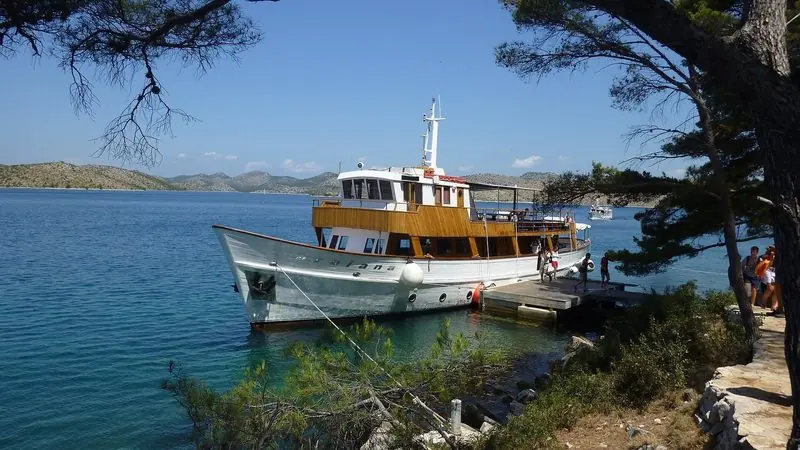
The July sweep was not an isolated show of force. Earlier the same month the maritime police around Rijeka recorded more than 50 boating offences in a single week, with penalties issued running about 40 per cent ahead of the same period a year earlier. The offence they catch most often is running at speed closer than 300 metres to the coast. The published range for that one starts at EUR 400 and reaches EUR 7,000.
The areas named were the water beneath the Krk Bridge and the coasts of Krk and Rab. Darko Bilic, who commands a maritime police patrol vessel, made the point that crews treat 300 metres as a comfortable margin and then close it at speed, without registering what that does to swimmers, divers and paddlers who are already outside the marked zone. Drazen Sarcevic, assistant chief for maritime policing at the Primorje-Gorski Kotar Police Administration, was quoted in the same account. Alongside speed, the recurring findings were missing vessel or personal documents, no proof of insurance, and anchoring or mooring too close in.
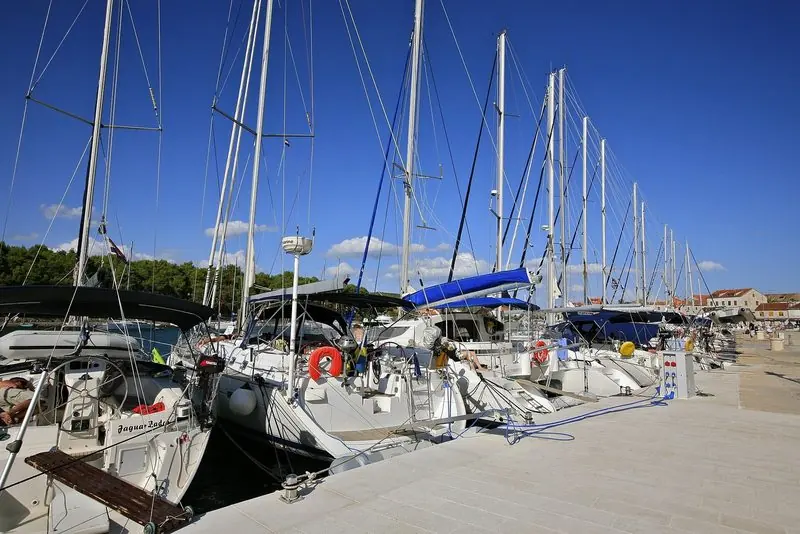


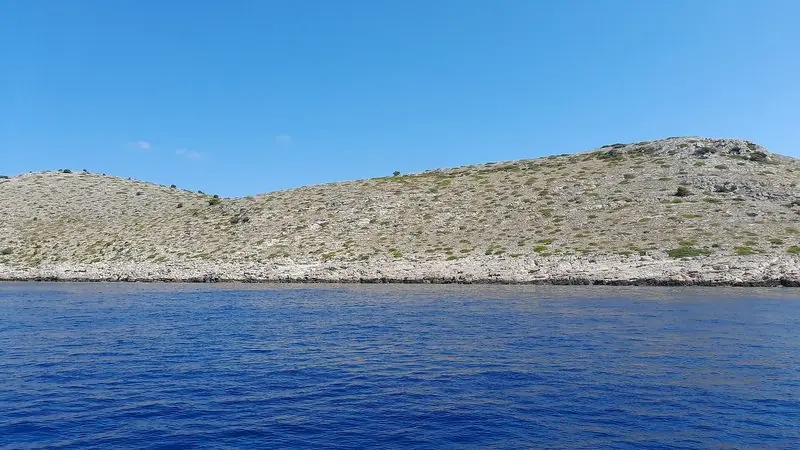
What it changes for an owner in the Adriatic
For a yacht above 30 metres the operational answer is a single standing order and a tender plan: hold 300 metres, work the last stretch in the tender, and treat every marked swim zone as a 300 metre exclusion regardless of how empty it looks at eight in the morning. The paperwork side deserves equal attention this season, because that is what the 29 July sweep was built to test. A non-EU flagged yacht over 40 metres needs a Croatian charter licence before she may charter in Croatian waters, and the commercial permit route runs about four to six weeks, which is not a lead time that survives a change of plan in August.
The honest limit on all of this is the penalty side. The per-offence figures quoted publicly come from police briefings to media rather than from a published tariff in English, and the ordinance itself is a Croatian-language instrument. An owner can price the compliance work precisely and cannot price the exposure precisely, which argues for local agency rather than for reading a summary and assuming it is the statute. The 70 metre measurement is also only a few months old, and this is its first full season under enforcement of this intensity.
What owners and crew report
Speed inside 300 metres is the offence they catch most
Maritime police say fast running closer than 300 metres to the coast is the single most common violation, and that crews read 300 metres as a comfortable margin while closing it at a speed that leaves nothing for swimmers, divers and paddlers already outside the marked zone.
Darko Bilic, maritime police patrol vessel commander, via Croatia Week (16 July 2026)Penalties are running about 40 per cent ahead of last year
More than 50 boating offences were recorded in a single week in the Rijeka area, with fines issued up roughly 40 per cent against the same period a year earlier, alongside missing documents and absent insurance proof.
Drazen Sarcevic, assistant chief for maritime policing, Primorje-Gorski Kotar Police Administration, via Croatia Week (16 July 2026)The national sweep was a compliance audit, not a speed trap
The 29 July operation checked documents, crew numbers and qualifications, CIMIS reporting, charter operation and wastewater discharge alongside navigation, so a yacht with faultless navigation can still be written up on paperwork.
Croatian harbour master office operation figures, reported by Croatia Week (30 July 2026)No independent account yet of how the 70 metre zone is being applied
The measurement change is only a few months old and we have found no published report from an owner, captain or agent describing how harbour masters are interpreting it in practice this season. Treat the concession as untested rather than settled.
Yotters desk, 3 August 2026
What is good, and what to watch
Strong points
- The rule is a number, not a judgement300 metres is unambiguous. A captain can comply without negotiating with a boarding officer, and an owner can write it into standing orders once and stop thinking about it.
- The 2026 measurement change is a real improvementMeasuring to where the chain enters the water ends the swing-circle argument, which was the part of the old rule a moving yacht could never satisfy with confidence.
- Enforcement is announced and quantifiedCroatia publishes the operations and the totals afterwards. Visible, scheduled enforcement is far easier to plan around than discretion nobody can observe.
- The standoff suits a well-run tender operationPushing the mother ship 300 metres out is where a competent tender programme already lands guests, so the cost falls mostly on yachts that were using the big boat as a beach club.
What to watch
- 300 metres removes a lot of DalmatiaOn a coast built of narrow channels and tight coves, a 300 metre standoff takes away a large share of the anchorages a 30 metre-plus yacht actually wants in August.
- Two tables invite exactly one mistakeGeneral navigation and swimming areas use different figures in the 15 to 30 metre band, 150 against 100. A crew that memorises a single number will be wrong half the time.
- The penalty schedule is opaque in EnglishPublished fine figures come from police briefings rather than a tariff, so an owner can budget the compliance work but cannot price the downside in advance.
- The strike rate is not reassuring182 violations from 382 inspections says the fleet does not understand these rules. Believing you are compliant is evidently poor evidence that you are.
- They look hardest when you are thereThe sweep ran on 29 July. Enforcement effort is concentrated into precisely the weeks the yacht is on the coast.
Practical detail
| Yachts of 30 metres and over | 300 metres off the shore in general navigation, and 300 metres off any organised swimming area. The same figure applies to seaplanes. |
|---|---|
| Yachts of 15 to 30 metres | 150 metres off the coast in general navigation, but 100 metres off an organised swimming area. The two numbers differ and the smaller one is the swim zone. |
| Craft under 15 metres | 50 metres in both tables. |
| Diving flag | 50 metres minimum, in addition to everything above. |
| Anchoring, prohibited | Within 50 metres of a marked organised swimming area boundary, within 150 metres of the shore of a natural bathing beach, within 50 metres of underwater cables or pipelines, and inside any declared no-anchor or port-authority restricted zone. |
| The 2026 concession | The coastal mooring and anchoring zone moved from 50 to 70 metres, measured to the point where the chain enters the water rather than to the anchor or the swing circle. |
| Unregistered tenders | May not operate more than 500 metres from the mother vessel. |
| Speeding penalty | EUR 400 minimum and EUR 7,000 maximum, per the maritime police account of July 2026. |
| One day of enforcement | 382 inspections, 182 violations, EUR 79,208.49 issued and EUR 44,884.24 paid on the spot, on 29 July 2026, using 115 officers and 35 patrol boats over 1,441 nautical miles. |
| Non-EU flag over 40 metres | Requires a Croatian charter licence before chartering in Croatian waters. |
| Commercial charter permit lead time | About four to six weeks. |
| What is NOT published | There is no single English-language schedule of fines by offence. The SSVO ordinance is published in Croatian, and the penalty figures quoted here come from police statements to media rather than from a tariff. Do not treat an English summary, including this one, as the statutory text. |
| What we could NOT verify | Croatia's VAT treatment of yacht charter is quoted inconsistently across broker sources. We found no two independent sources that agreed, so no rate is given here. |
Questions this story answers
What happened?
Croatia swept its entire coast in a single working day on 29 July and came back with 382 inspections, 182 violations and EUR 79,208 in fines. The rules being enforced are the ones that decide where a 30 metre yacht may run and where she may lie, and one of them was quietly loosened for 2026. If your boat is in the Adriatic this month, the exposure sits in your captain's standing orders rather than in the harbour master's mood.
What is good about it?
The rule is a number, not a judgement. 300 metres is unambiguous. A captain can comply without negotiating with a boarding officer, and an owner can write it into standing orders once and stop thinking about it.
What should an owner or buyer watch?
300 metres removes a lot of Dalmatia. On a coast built of narrow channels and tight coves, a 300 metre standoff takes away a large share of the anchorages a 30 metre-plus yacht actually wants in August.
What do owners and crew report?
Maritime police say fast running closer than 300 metres to the coast is the single most common violation, and that crews read 300 metres as a comfortable margin while closing it at a speed that leaves nothing for swimmers, divers and paddlers already outside the marked zone. (Darko Bilic, maritime police patrol vessel commander, via Croatia Week (16 July 2026))
Who reported this?
Croatia Week, Safe Navigation 2026 operation figures (30 July 2026), Croatia Week, maritime police enforcement report (16 July 2026), SeaHelp, SSVO ordinance briefing on navigation and anchoring distances (9 April 2025), SeaHelp, 70 metre coastal anchoring zone update (15 April 2026, updated 5 May 2026), Navi Croatia, new maritime safety rules briefing (30 June 2025).
We do this for everyone who loves this world. The people who have spent their lives in it, and the people just discovering it. Yotters exists so that what we learn belongs to all of them.
Nobody pays us for this. No ads, no sponsors, nothing for sale. We just believe the world is a little better when knowledge is shared instead of kept.
If it gave you something today, tell us to keep going. Follow us, leave a like, or write a positive comment. We read every one, and they are what keeps us going.