Laurie I's Captain Fined EUR 90,000, Barred From France 3 Years
What did the Marseille Maritime Court rule against Laurie I's captain?
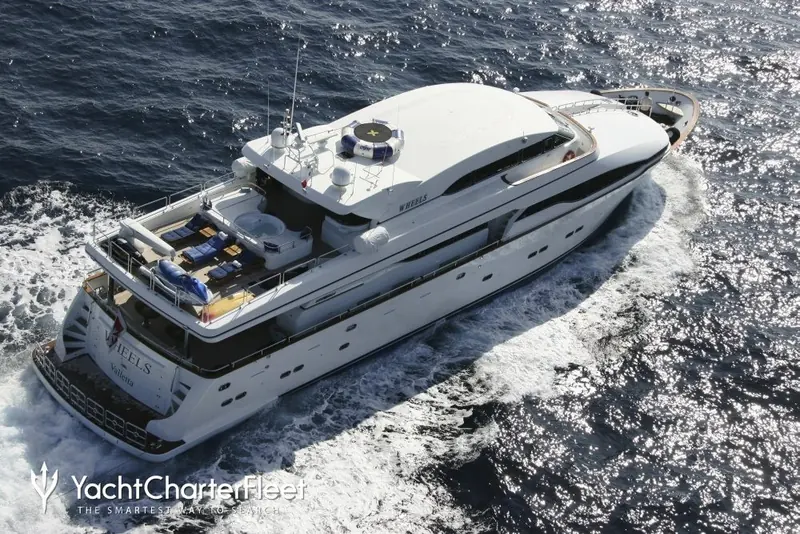
The Marseille Maritime Court, ruling at first instance, fined the captain of the 36-metre Laurie I EUR 90,000 and banned him from navigating in French waters for three years. The ruling, reported on 24 August 2026, followed an anchoring violation the yacht committed in July 2025.
The offence was anchoring the 267 GT Laurie I directly over protected Posidonia oceanica seagrass inside the Cap Corse and Agriate Marine Natural Park, on Corsica's north coast, in July 2025. Park rangers identified the yacht at anchor inside the restricted zone; France's coastal anchoring rules, in force since 2019, ban vessels of 24 metres and above from anchoring on Posidonia meadows in listed Mediterranean protected areas, and Laurie I, at 35.56 metres, clears that threshold by more than 11 metres. YachtBuyer and Newsbook.com.mt both reported the fine and the ban at the same figures, and SuperyachtNews.com's own coverage of the wider enforcement pattern places this case among what French authorities describe as one of the first major judicial rulings under the 2019-plus framework.
The fine was levied against the captain personally rather than against Laurie I's owner or the vessel as an asset, and no separate ecological-damage compensation was reported alongside it, unlike two of the precedent cases below. This was a first-instance ruling, which under French procedure normally carries a right of appeal; none of the three sources this desk checked reported whether an appeal has been filed, and the captain has not been named in any report found. The owner has not commented publicly.
Why is Posidonia seagrass protected, and what threshold did Laurie I cross?
Posidonia oceanica is a slow-growing, endemic Mediterranean seagrass that anchors and chain-drag from a single large yacht can strip out in minutes and take decades to recover, which is why France treats it as a protected habitat rather than an ordinary seabed.
The Cap Corse and Agriate Marine Natural Park covers a stretch of Corsica's exposed north coast that is popular with exactly the size of yacht the rule targets: sheltered coves, clear water and good holding ground, all sitting over meadows the park exists to protect. France's national framework, layered on top of park-specific rules since 2019, sets the anchoring ban at 24 metres and above for any Posidonia-covered seabed inside a listed protected area, with the maximum fine set at EUR 150,000. Laurie I's EUR 90,000 penalty sits at three-fifths of that ceiling, which is a meaningful signal from a court applying a rule that is still relatively new.
Enforcement in practice relies on rangers and, increasingly, satellite and drone monitoring of anchor-chain scarring, which is difficult for a captain to argue away after the fact: the seabed itself is the evidence. Real-time compliance tools exist, including France's own zoning charts and third-party chartplotter overlays that flag Posidonia beds before the anchor goes down, and captains of yachts over 24 metres are expected to consult them as a matter of course in French waters. Laurie I's case is a reminder that ignorance of a specific meadow's boundary is not a defence the court accepted.
Is this fine unusual, or part of a wider crackdown?
Laurie I's EUR 90,000 penalty is the largest Posidonia anchoring fine reported in France since a EUR 100,000 case in Saint-Tropez in 2021, and it dwarfs the two most recent precedents on record.
In 2023 the Marseille Maritime Court fined the captain of a 26-metre yacht EUR 20,000 and imposed a 12-month French-waters ban, after he anchored illegally on Posidonia three times, twice off Cannes in 2021 and once off Saint-Tropez in 2022; that ruling also ordered ecological-damage compensation to fund a Posidonia replanting project, separate from the fine itself. In 2024 the same court fined the captain of the 51-metre Benetti Falcon EUR 15,000 plus EUR 22,423 in ecological compensation for an illegal anchoring near Cannes in 2023. Laurie I's EUR 90,000, with no compensation reported on top, is roughly four times the Falcon penalty and more than four times the 2023 case, on a yacht that is smaller than the Falcon by 15 metres.
Read together, the four cases published since 2021 show a court willing to escalate the headline fine even as the underlying rule has not changed, which is the pattern regulators use when they conclude smaller penalties were not changing captains' behaviour. Malta's own Ranger Unit, whose flag Laurie I flies, posted publicly about the French ruling rather than staying silent on a case involving one of its registered vessels, calling it, in its own words, a prime example of ample fines and efficient deterrence of illegal activity. The unit also signalled it intends to address enforcement gaps for comparable violations closer to home in Maltese waters, which reads as an acknowledgement that flag states are now watching how other jurisdictions punish their own registered yachts.
What does a three-year ban from French waters mean for an owner's cruising plans?
The ban attaches to the captain, not to Laurie I herself, so a change of captain could in principle bring the yacht back into French waters well before 2029, but for as long as this particular captain remains aboard, the entire French Riviera and Corsica are off the map.
That is a bigger practical loss than it sounds. France's Mediterranean coast runs from the Spanish border past Marseille, Saint-Tropez and Cannes to the Italian border, and it wraps Monaco on three sides by sea, so a yacht barred from French waters effectively also loses the easy sea approach to Monaco even though Monaco itself is a separate sovereign state outside the ban. Corsica, the specific park where Laurie I was caught, is French territory in its own right and is fully covered. For an owner used to a summer season that strings together the Cote d'Azur, Corsica and a Monaco Yacht Show call, the realistic replacement itinerary runs to Italy's Ligurian and Tuscan coasts, Sardinia, or the Balearics and mainland Spain instead, none of which is a like-for-like substitute for the specific ports this ban removes.
The more durable cost is what this does to the yacht as a charter or resale asset. A widely reported three-year France ban attached to a captain who may or may not remain with the vessel is exactly the kind of detail a prospective charter client's insurer or a buyer's due-diligence broker now asks about by name, and it will keep coming up in conversation for the life of the ban whether or not a new captain has since taken over. Owners who cruise France regularly, or who let their captains choose anchorages with minimal oversight, have a direct and practical reason to confirm their own vessel carries the anchoring-zone charts and that their captain treats Posidonia boundaries as a hard limit rather than local knowledge to be worked around.
What is the Laurie I, and who owns her?
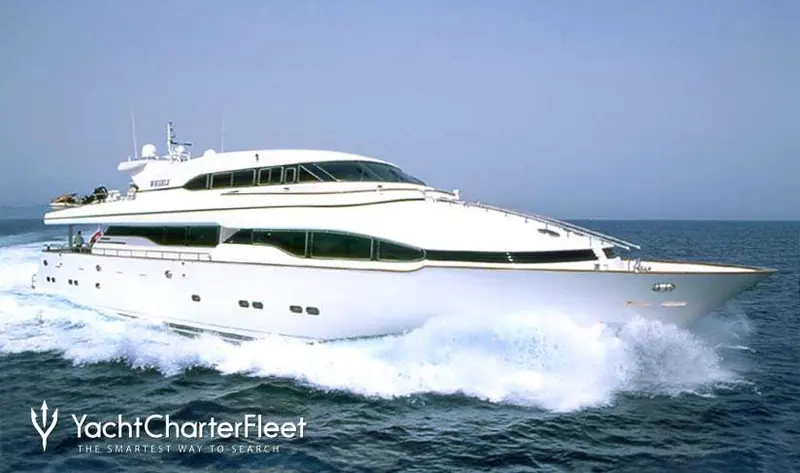
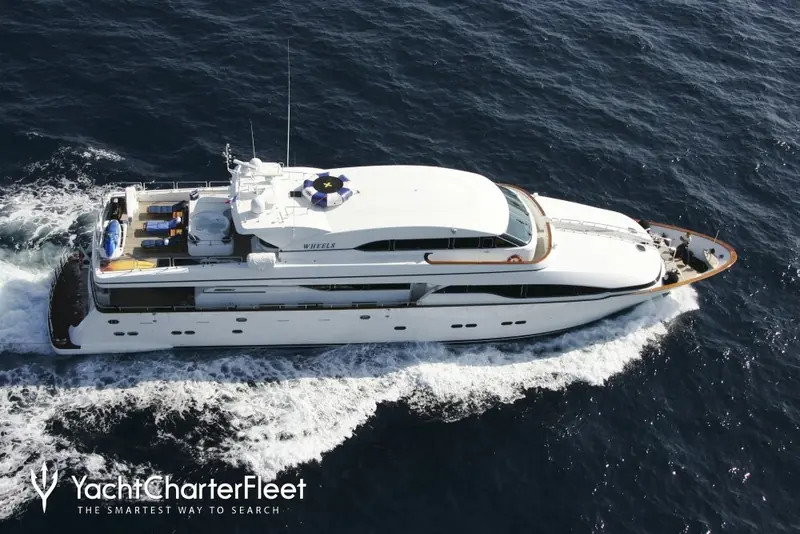
Laurie I is a 2002-built, 2017-refitted Horizon motor yacht flying the Malta flag, with her owner and captain both undisclosed in every report this desk found.
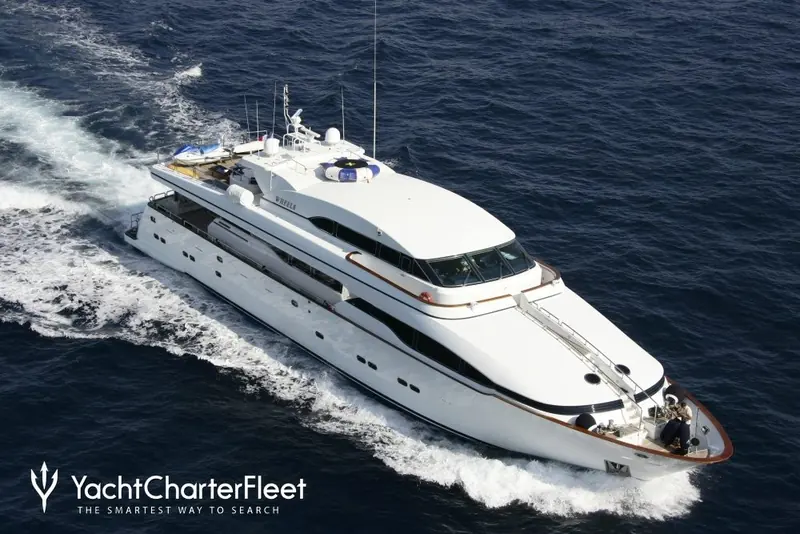
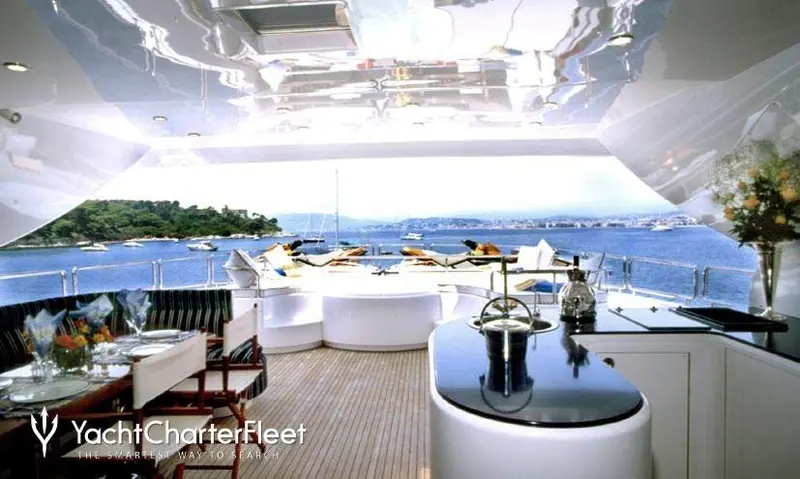
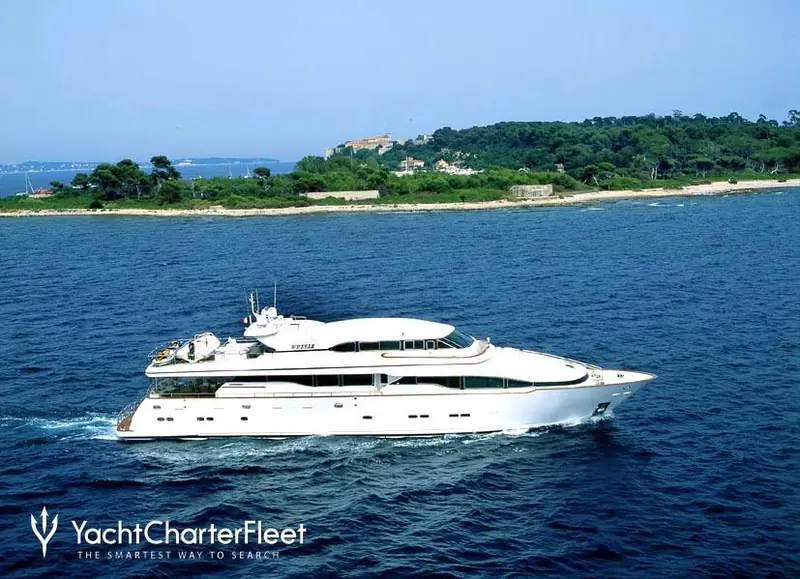
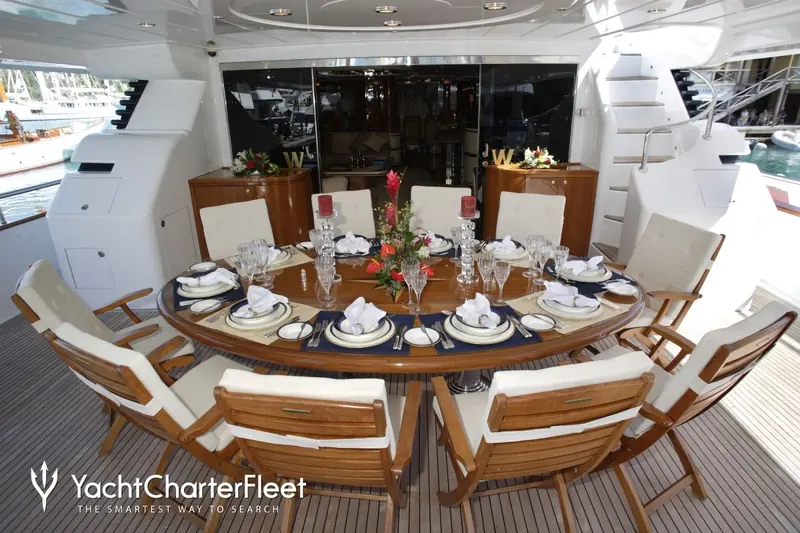
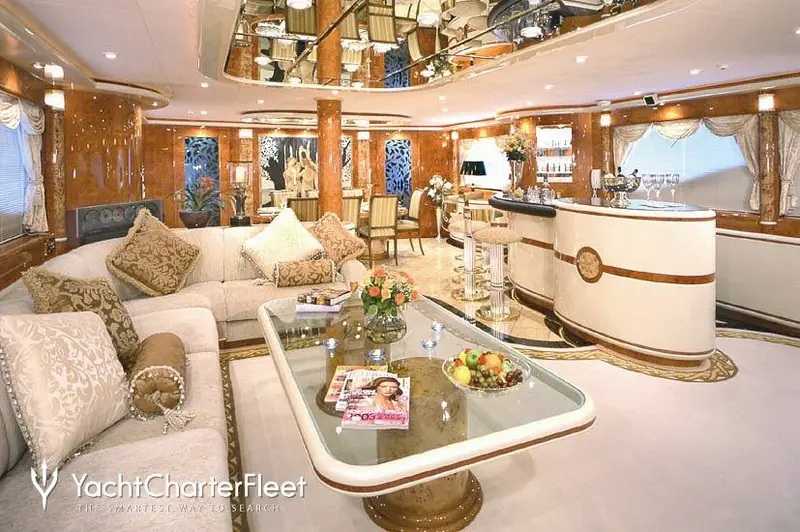
Horizon built Laurie I at its Kaohsiung yard in Taiwan in 2002; she was refitted in 2017 and carries exterior and naval-architecture work by Design Studio Spadolini with interiors by British designer Evan K Marshall. She measures 35.56 metres at 267 GT, sleeps 10 guests across 5 cabins and carries a crew of 6. Twin MTU 16V2000 M90 diesels rated at 1,826hp each give her a 12-knot cruise, a 16-knot top speed and roughly 3,000 nautical miles of range from a 39,000-litre fuel capacity. Her name has changed before: she carried the names Wheels and Wheels I earlier in her life, a detail that usually points to at least one change of ownership since her 2002 build.
What is not published matters here as much as what is. No report this desk checked names Laurie I's owner, her captain, or her current management or brokerage house, and the desk found no listing showing her currently for sale or open for charter. Malta remains one of the most common flag choices for privately owned yachts in this size range, largely for its EU registration status and VAT treatment, which is also why the flag's own Ranger Unit had a direct interest in publicising how a French court handled one of its registered vessels rather than leaving the story to run without comment.
What owners and crew report
Malta's flag authority treated the ruling as a deterrence success story
The Ranger Unit called the French court's fine and ban a prime example of ample fines and efficient deterrence of illegal activity and prioritised conservation, in a public statement about a vessel flying its own flag.
Malta Ranger Unit (public statement, August 2026)No owner, captain or broker connected to Laurie I has spoken on the record
The desk found no statement from Laurie I's owner, her captain, or any management or brokerage house named in connection with her, in any of the reports checked for this story.
Yotters desk
What is good, and what to watch
Strong points
- The penalty is a real deterrent, not a cost of doing businessAt EUR 90,000 and three-fifths of the legal maximum, this is not a fine a captain or owner can shrug off as the price of a convenient anchorage, and it is the largest reported since 2021.
- The rule and the evidence are hard to argue withThe 24-metre threshold is unambiguous, Laurie I clears it by 11 metres, and anchor-chain scarring on Posidonia is physical evidence rather than a judgment call, which is likely why this case reached a ruling rather than a settlement.
- Flag states are now watching each other's enforcementMalta's Ranger Unit publicising a French court's treatment of a Malta-flagged yacht is a genuinely new dynamic, and it suggests owners can no longer assume a lenient flag state insulates them from another jurisdiction's courts.
What to watch
- The ban's real scope is genuinely unclearEvery report frames this as a ban on the captain rather than the vessel, which leaves open whether Laurie I herself could return to France under new command well inside the three years, and none of the three sources this desk checked resolved that ambiguity.
- No ecological compensation was reported this timeThe 2023 and 2024 precedent cases both added a separate ecological-damage payment on top of the fine; its apparent absence here is either an inconsistency in enforcement or simply unreported, and this desk could not confirm which.
- Appeal status is unknownThis was a first-instance ruling. French procedure ordinarily allows an appeal, and if the captain appeals, the fine and ban as reported today may not be the final word.
- Malta's own enforcement record is still an open questionThe Ranger Unit's statement that it plans to address enforcement gaps in Maltese waters is, by its own framing, an admission that comparable violations closer to home have not drawn comparable penalties yet.
Practical detail
| The fine | EUR 90,000, levied against the captain personally, no ecological-damage compensation reported on top. |
|---|---|
| The ban | 3 years, barring the captain from navigating in French territorial waters. Attaches to the captain, not confirmed to attach to the vessel itself. |
| The offence | Anchoring over protected Posidonia oceanica seagrass inside the Cap Corse and Agriate Marine Natural Park, Corsica, in July 2025. |
| The rule | France bans yachts of 24 metres and above from anchoring on Posidonia meadows in listed Mediterranean protected areas, in force since 2019. Maximum fine: EUR 150,000. |
| Prior cases | 2021, Saint-Tropez: EUR 100,000 (reported figure, not independently verified by this desk). 2023, 26m yacht: EUR 20,000 plus ecological compensation, 12-month ban. 2024, 51m Benetti Falcon: EUR 15,000 plus EUR 22,423 ecological compensation. |
| The yacht | Laurie I, 35.56m / 267 GT, Horizon, built 2002, refitted 2017, Malta-flagged. Twin MTU 16V2000 M90 (1,826hp each), 12kn cruise / 16kn max, approx 3,000nm range. |
| What is not published | The captain's name, the owner's name, whether an appeal has been filed, and whether Laurie I is currently listed for charter or sale. |
Questions this story answers
What happened?
The Marseille Maritime Court has fined the captain of the 36-metre Laurie I EUR 90,000 and barred him from French waters for three years, after the Malta-flagged yacht anchored over protected Posidonia seagrass in Corsica's Cap Corse and Agriate marine park. It is one of the largest anchoring penalties France has handed down since its 2019 rules took effect, and the practical result lands on the owner: the whole French Riviera and Corsica come off the itinerary for as long as that captain is aboard.
What is good about it?
The penalty is a real deterrent, not a cost of doing business. At EUR 90,000 and three-fifths of the legal maximum, this is not a fine a captain or owner can shrug off as the price of a convenient anchorage, and it is the largest reported since 2021.
What should an owner or buyer watch?
The ban's real scope is genuinely unclear. Every report frames this as a ban on the captain rather than the vessel, which leaves open whether Laurie I herself could return to France under new command well inside the three years, and none of the three sources this desk checked resolved that ambiguity.
What do owners and crew report?
The Ranger Unit called the French court's fine and ban a prime example of ample fines and efficient deterrence of illegal activity and prioritised conservation, in a public statement about a vessel flying its own flag. (Malta Ranger Unit (public statement, August 2026))
Who reported this?
YachtBuyer, SuperyachtNews.com, Newsbook.com.mt, Malta Ranger Unit.
We do this for everyone who loves this world. The people who have spent their lives in it, and the people just discovering it. Yotters exists so that what we learn belongs to all of them.
Nobody pays us for this. No ads, no sponsors, nothing for sale. We just believe the world is a little better when knowledge is shared instead of kept.
If it gave you something today, tell us to keep going. Follow us, leave a like, or write a positive comment. We read every one, and they are what keeps us going.