EP150
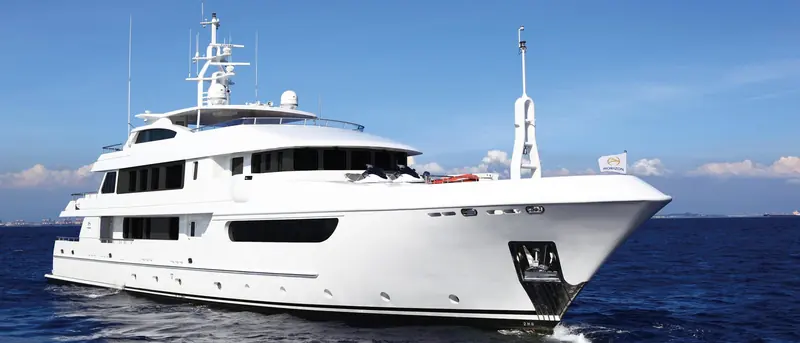
| 45.00 m LOA, 40.60 m waterline length, 8.93 m beam, 2.80 m draft | |
| Steel hull and aluminum superstructure to BV Ice Classification | |
| 474 t displacement with bulbous bow and optimized hull form | |
| MTU 12V main engines rated 1,770 hp, twin ZF 7641 gearboxes | |
| Twin 150 kW Caterpillar generators | |
| 65,000 L fuel and 11,500 L fresh water capacity | |
| Seven guest cabins and three crew quarters listed, tri-deck layout | |
| Exterior styling by J.C. Espinosa with the Horizon design team |
A volume builder goes full explorer
Horizon announced the EP Series to the press in 2016, and the EP150 stood as a finalist for Best Explorer Yacht at the 2017 Asia Boating Awards while the model was still fresh on the market. The move made commercial sense. Explorer buyers were asking for range and robustness at a delivered price the Northern European yards struggle to reach, and Horizon had three decades of big-boat engineering and a steel-capable yard to draw on.
The EP150 is built at Premier Shipyard, the Horizon Group facility reserved for the largest projects alongside the RP series and the coming FD130. In June 2025 the group completed a 1,800 ton shiplift there after two years of construction, capable of launching and retrieving yachts up to 60 meters, a clear measure of how seriously Horizon takes the top end of its range.
Small-ship numbers
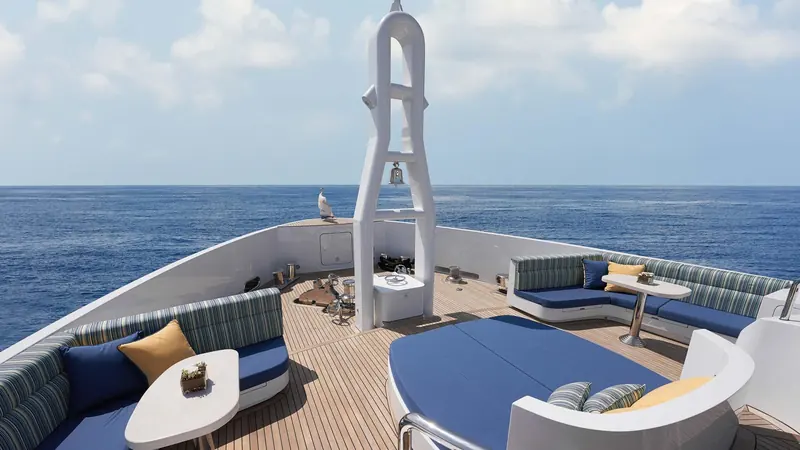
The specification reads like commercial tonnage. Length overall is 45.00 meters on a 40.60 meter waterline, the beam is 8.93 meters and the hull draws 2.80 meters at a full-load displacement of 474 tons. A bulbous bow and an optimized hull form, rare equipment on anything from a semi-custom builder, are there for one purpose: to keep fuel burn low and motion easy on long open-water passages.
Tankage follows the same logic. The EP150 carries 65,000 liters of fuel and 11,500 liters of fresh water, with MTU 12V main power rated at 1,770 hp driving through twin ZF 7641 gearboxes and a pair of 150 kW Caterpillar generators carrying the hotel load. This is a yacht sized to cross oceans on its own bottom and stay out for weeks at a time without support.
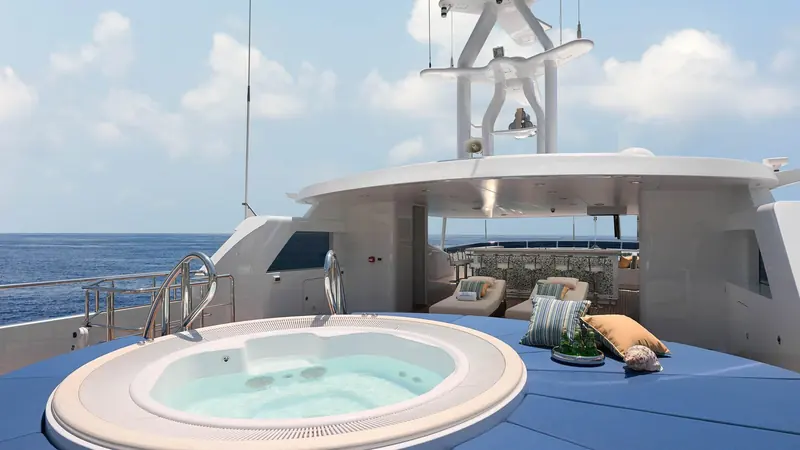
A classed steel explorer with 65,000 liters of fuel under the warranty of Asia's biggest yacht-building group.
What ice class buys
BV Ice Classification is the line in the specification that separates the EP150 from most yachts wearing an explorer label. Class-approved ice strengthening means heavier plating and framing forward, protected appendages and machinery standards proven for cold-water operation, all certified by Bureau Veritas. On a 474 ton steel hull that is a commitment of engineering, weight and cost that cosmetic explorers never make.
For an owner the payoff is a wider map. High-latitude seasons in Alaska, Norway or southern Chile stop being theoretical, and insurers, captains and future buyers read a classed steel hull very differently from a composite one. The bulbous bow and deep forefoot also earn their keep in ordinary conditions, holding a steady, comfortable ride through the long ocean legs that make up most of any expedition.
Seven cabins listed, layouts to suit
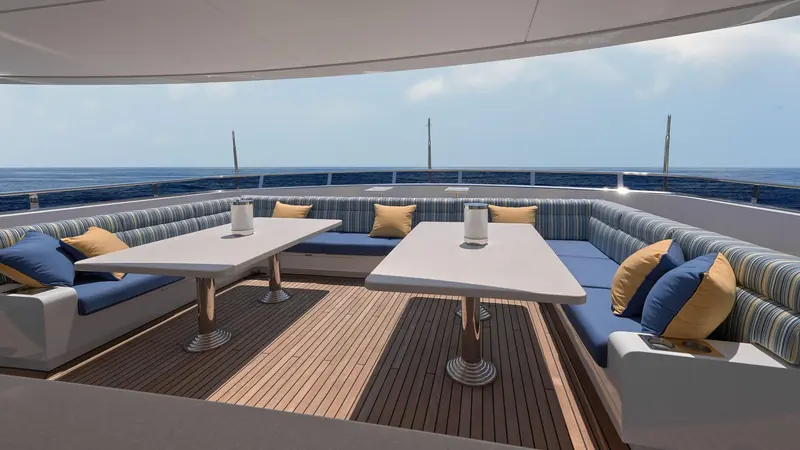
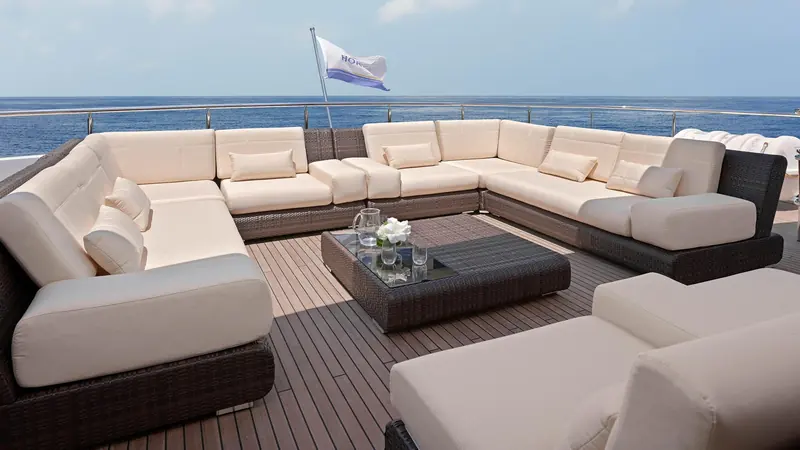
Horizon's specification sheet lists seven guest cabins and three crew quarters across a tri-deck arrangement, while published layouts show configurations for ten guests in five larger suites. That spread is the point. The EP150 is sold as a semi-custom platform, and the yard expects each owner to settle the cabin count, the crew routing and the balance between guest accommodation, storage and working spaces before the interior is frozen.
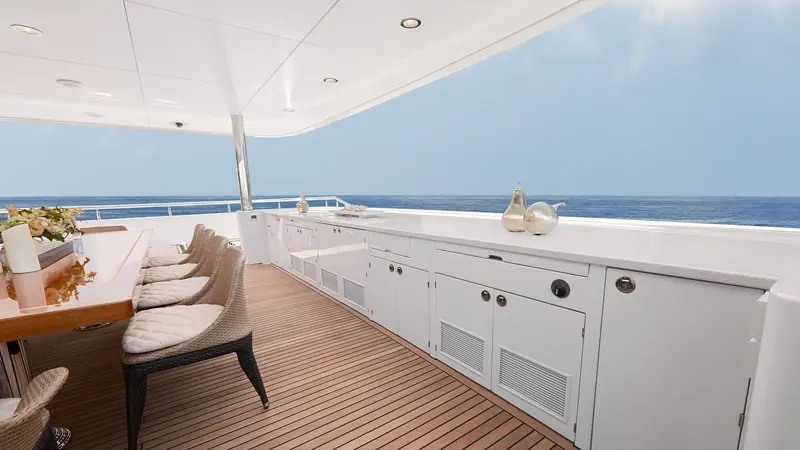
Horizon builds its interiors in-house, with a joinery operation that has furnished more than nine hundred yachts, and it is equally comfortable executing an outside designer's scheme when an owner brings one. On a hull with an 8.93 meter beam and a 40.60 meter waterline there is volume for a dive center, a proper laundry, cold stores and the workshop spaces that genuine long-range cruising consumes.
The case for a Taiwanese explorer
The obvious comparison is with the Dutch and German yards that dominate the explorer conversation, and the honest answer is that the EP150 competes on delivered value. Horizon is the only SYBAss member builder in the Far East, its group launches more yachts than any other Asian yard, and its cost base lets an owner redirect serious money into fuel, tenders and years of actual operation.
The right buyer already knows this. The EP150 suits an owner who has done the Mediterranean loop, wants the Pacific or the high latitudes next, and would like a classed steel expedition yacht from a builder with factory support on both sides of that ocean. Few semi-custom explorers of this displacement come from a group with Horizon's production depth and delivery record.
Motoren und Technik
| Engines | twin MTU 12V 4000 M60 diesels, about 1,770 hp each, on twin ZF 7641 gearboxes |
|---|---|
| Cruise / top speed | about 12 knots cruise, 15 knots maximum |
| Range | up to 4,000 nautical miles at economical cruising speed |
| Fuel / water tankage | 64,500 to 65,000 litres fuel (sources vary by hull spec), 11,500 litres fresh water |
| Generators | twin 150 kW Caterpillar gensets |
| Stabilisation | zero-speed and underway stabilisation to keep roll down at anchor as well as under way |
| Classification | Bureau Veritas Ice Classification, steel hull with aluminium superstructure |
Was Eigner und Crew berichten
Too specialized a build for independent owner reports to exist yet
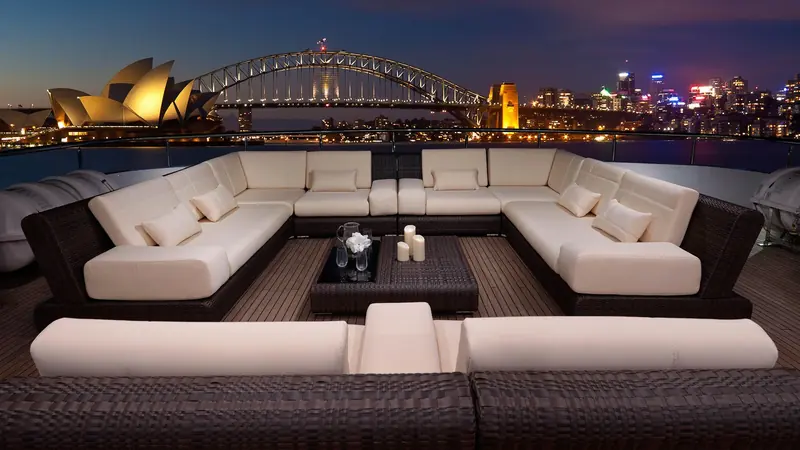
The EP150 is a low-volume, semi-custom explorer flagship; brokerage listings for the hull Sunone note gallery photography is of a sister ship rather than the vessel itself, and no build year or owner commentary is published for that listing - a sign of how little independent operating history is public for this model.
Yotters desk research, cross-checking Romeo United Yachts' Sunone listing
Was gut ist und worauf zu achten ist
Stärken
- A genuinely classed steel explorer, not a composite yacht dressed as oneBV Ice Classification and a steel hull with a bulbous bow are real engineering commitments most 45-metre 'expedition-style' yachts from composite builders do not make.
- Range and tankage support real distance cruising4,000 nautical miles from roughly 65,000 litres of fuel puts destinations like Alaska, the Pacific islands or southern Chile within a single leg, not a multi-stop itinerary.
- Backed by the operating scale of Asia's largest yacht groupHorizon's 940-plus deliveries give an owner a builder with deep warranty and parts infrastructure behind a comparatively small-run explorer model.
Worauf zu achten ist
- Cruising speed is modest for the categoryA 12-knot cruise and 15-knot maximum are slow next to fast-displacement rivals in the same size bracket, which trades speed for range and sea-keeping - a real choice a buyer must accept, not a flaw to be fixed.
- Public operating history is thinWith few hulls delivered and none carrying a published independent owner or captain account yet, a buyer has to rely on the yard's own figures rather than a fleet of comparable reports.
Praktische Angaben
| Asking price (example hull) | the delivered hull Sunone has been listed at USD 20,000,000 |
|---|---|
| Crew | about 9 crew for up to 10 guests across 5 or 7 cabins depending on layout |
| What is not published | individual hull build years, running costs and refit history are not disclosed in current brokerage listings |
Für wen: An owner graduating from coastal seasons to real distance, the Pacific, Alaska, southern Chile, who wants classed steel explorer capability with semi-custom freedom and the cost base of Asia's largest yacht group.