Sirena 60
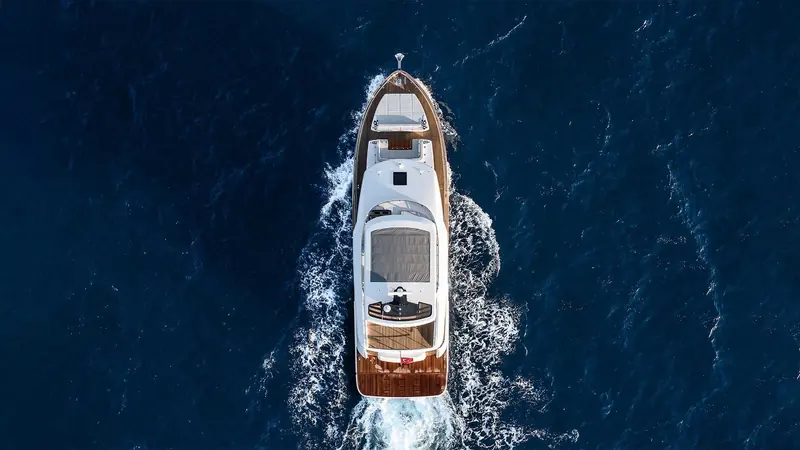
| LOA 19.45 m, beam 5.36 m | |
| Frers semi-displacement hull, CE Category A | |
| Twin Volvo D11 670 hp, D13 900 hp optional | |
| Top speed 23.5 to 25.8 knots | |
| Range about 800 nm at 10 knots | |
| Fuel 3,600 litres | |
| 3 en suite cabins plus optional crew cabin | |
| GRP and carbon hybrid lamination |
Replacing the boat that built the brand
The Sirena 58 made its world debut at Cannes in 2018, reached the water in 2019 and went on to become the yard's best seller, with hull numbers climbing well into the double digits and a particularly strong following in the United States. Replacing a boat like that is delicate work, and Sirena chose evolution, keeping the Frers naval architecture that made the 58 what it was and redrawing the details around it with its own studio.
The 60 launched in July 2025 and premiered at the Cannes Yachting Festival two months later. BOAT International previewed the project as the evolution of a best seller, and the market treated it exactly that way, with nine hulls reported sold by the time the show wrapped. A United States show debut at Palm Beach followed on the 2026 calendar, aimed squarely at the 58's most loyal audience.
The familiar hull, and the numbers
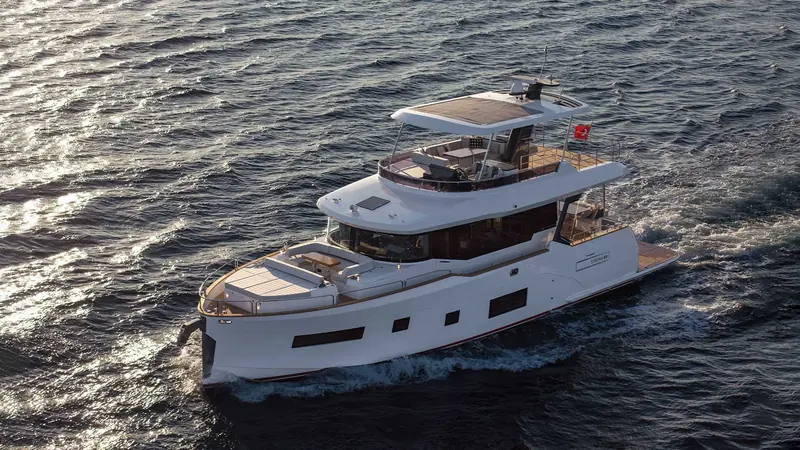
Underneath, the 60 is classic Sirena. The Frers semi-displacement hull carries twin 670 hp Volvo D11s as standard for 23.5 knots flat out, with optional 900 hp D13s lifting that to 25.8. Drive is through V-drives, certification is CE Category A, the ocean class, and the superstructure uses the yard's GRP and carbon hybrid lamination to keep weight out of the top of the boat and hold loaded displacement around 35 tonnes.
The number owners will quote is the range. At ten knots the 60 stretches its 3,600 litres of fuel across roughly 800 nautical miles, comfortably the longest leg of a Mediterranean season with margin left over, and a hybrid propulsion package sits on the options list for owners who want silent harbour running. The combination is the range's signature, trawler economy at ten knots with genuine pace held in reserve.
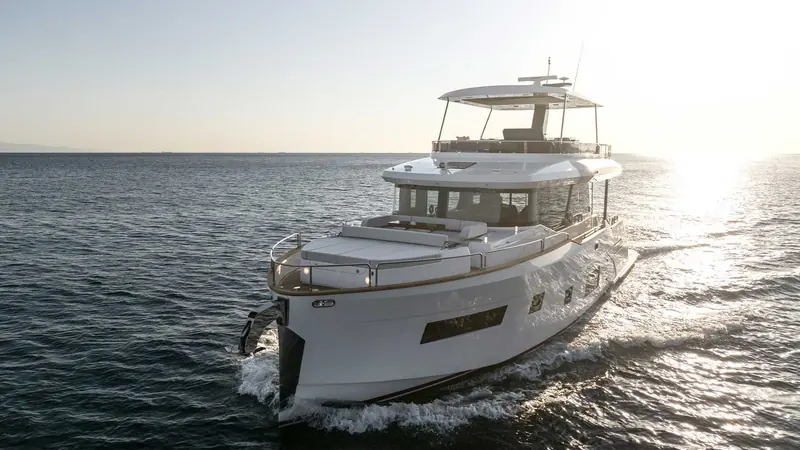
Eight hundred miles at ten knots, from a boat one couple can still run themselves.
What the redesign actually changed
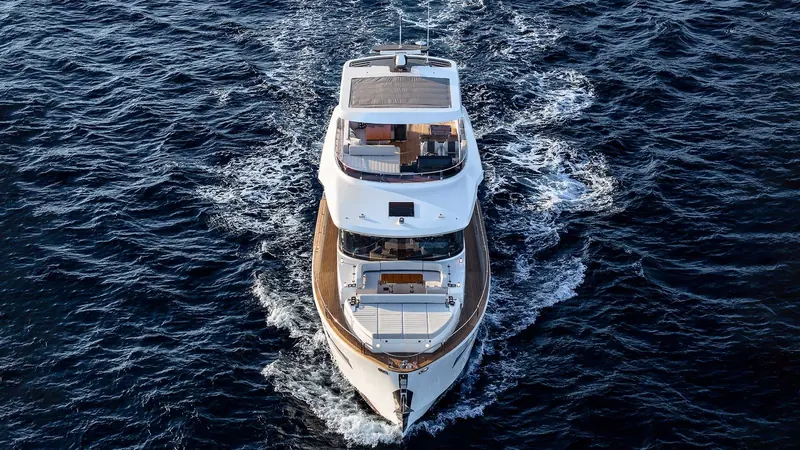
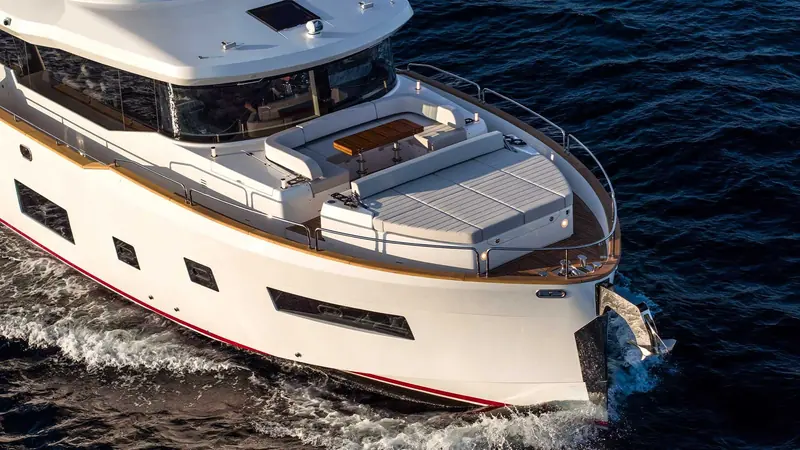
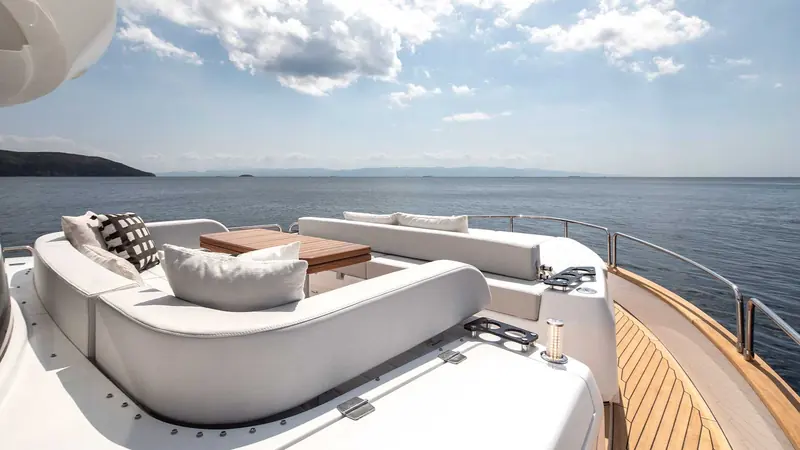
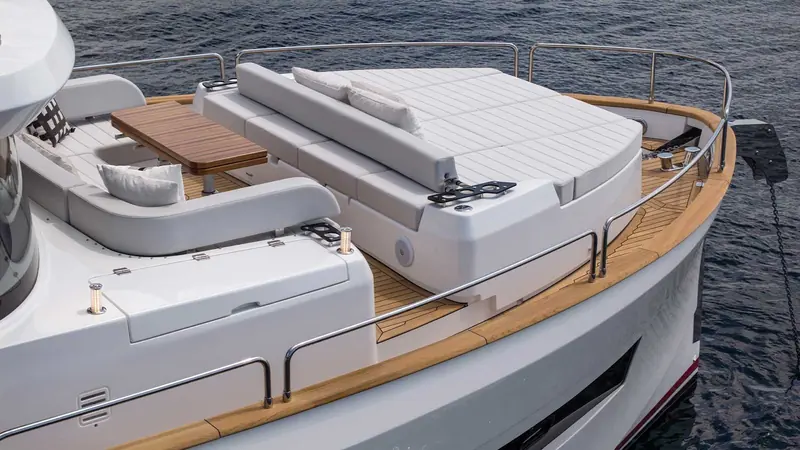
Frers rethought the stern completely, with a new transom profile that yields a larger swim platform and a more contemporary look, and the in-house team enlarged the stowage lockers and improved the cockpit bulwark openings. Forward, a proper foredeck lounge with a folding table joins the programme, and the flybridge gains a retractable sunroof and a bar worktop in Corian, upgrades pointed directly at how these boats are used at anchor.
Inside, the galley grew by nearly 20 percent to around five square metres, a change aimed at owners who actually cook aboard, and the saloon glazing got larger again. The indoor helm station was redrawn around ergonomics with a pantograph door to the side deck, so one person can work lines and helm during a short-handed marina arrival without running the length of the boat.
Three cabins, six berths, one optional crew
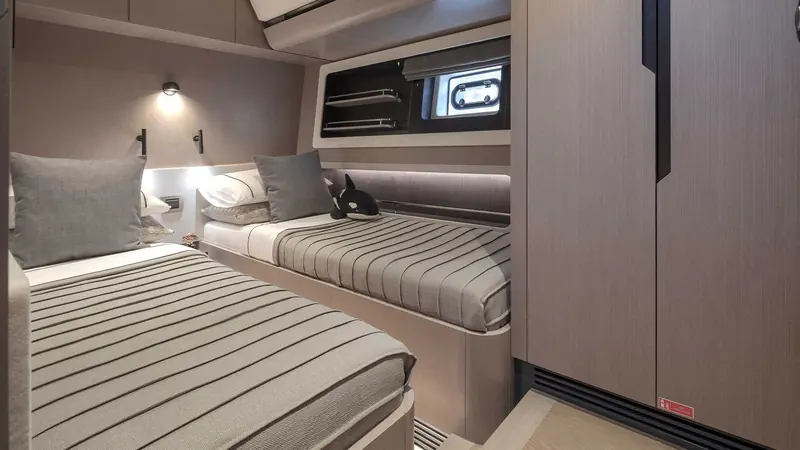
Accommodation follows the layout the 58 proved. A full-beam master suite sits amidships with hullside glazing, a VIP double occupies the bow, and the third cabin runs sliding beds that convert between a double and twin singles, exactly the flexibility a rotating cast of family and guests demands. All three cabins are en suite, with separated heads and shower compartments.
A transom crew cabin is optional, and its presence or absence describes the two ways a 60 gets used, owner-run entirely, or with a single deckhand who doubles as everything else. Interiors come from Sirena's own studio in a choice of darker and lighter schemes, keeping the palette calm and the surfaces durable enough for a boat that lives outdoors all season with children and wet towels aboard.
The gateway boat
In the range the 60 sits below the 68 as the point of entry to the three-en-suite-cabin, long-range Sirena idea, while the 48 below it plays a different, more coastal game. For owners moving up from a production flybridge in the mid 50 foot band, this is the first Sirena size where ocean certification, carbon lamination and the Frers pedigree all arrive together in a boat one couple can still run themselves.
The commercial logic is inherited too. The 58 built a large installed base and a dealer network on both sides of the Atlantic, and the 60 steps into that infrastructure from day one, which matters for resale every bit as much as for service. Nine hulls sold at the debut show suggests the succession has been accepted, and the first boats deliver into a market that already knows the type.
Motoren und Technik
| Main engines | Standard twin Volvo Penta D11 diesels at 670 hp each; optional twin D13s at 900 hp, per Passagemaker and Yachting sea trial reports. |
|---|---|
| Hull and build | German Frers semi-displacement hull carried over from the 58; GRP and carbon-fibre hybrid lamination in the superstructure to keep weight out of the top of the boat. |
| Stabilisation | Seakeeper gyrostabilizer fitted for sea trials (reported as a Seakeeper 10 by Yachting's tester and a Seakeeper 9 by SuperYacht24's tester on a different hull - plausibly different customer spec rather than a conflict, this research could not confirm which is standard). |
| Drive | V-drives, CE Category A (ocean) certified. |
| Fuel and range | 3,600 l (950 US gal) fuel; approximately 850 nm at 10 knots with 10 percent reserve, roughly 300 nm at a 16-knot cruise, per Passagemaker's tested figures. |
Was Eigner und Crew berichten
Sea trial in rough water
Tested in roughly 2-metre seas with strong wind and 16 people aboard, conditions that would normally cancel a trial. The tester reported the impact with waves stayed gentle with no violent jolts, though the boat does bounce heading straight into swell and the windscreen wipers were needed often for spray.
Giuseppe Orru, SuperYacht24Ride comfort
"The ride is comfortable across the rpm spectrum," helped by the Seakeeper gyrostabilizer run throughout, and the carbon-fibre build was credited with lowering the centre of gravity for a more seakindly feel.
Patrick Sciacca, YachtingDelivered top speed against the brochure figure
Recorded 23.7 knots flat out on the D13 option against the yard's claimed 25.8-knot maximum, a shortfall the tester attributed to sea state and load (16 people aboard) rather than the boat itself.
Giuseppe Orru, SuperYacht24
Was gut ist und worauf zu achten ist
Stärken
- Real upgrade on the boat that built the brandThe full-beam master, a galley enlarged by nearly 20 percent, and a redrawn transom for a bigger swim platform were the changes reviewers pointed to as the tangible gains over the bestselling 58.
- Stabilised, seakindly rideTwo independent testers, in different conditions, both reported a controlled ride with the gyrostabilizer engaged, one of them in weather that would usually cancel a trial.
- Genuine long-range legsAbout 850 nm at a 10-knot cruise is real passage-making range for a 60-footer, not a brochure number pared down by testers.
Worauf zu achten ist
- Spray at the helm heading into swellThe SuperYacht24 trial needed frequent wiper use driving into waves - a minor point, but a real one from an actual sea trial rather than a marketing shoot.
- No multi-year ownership record yetDelivered from July 2025 and only shown at Cannes that September, so there is no owner-forum or multi-season track record to draw on yet, only launch-window sea trials.
- Top speed trails the brochure figure under load23.7 knots recorded against a claimed 25.8-knot maximum in one trial - plausibly load and sea state, but not yet independently confirmed in flat water.
Praktische Angaben
| Price | Not published by Sirena in primary sources found; list pricing was not confirmed and should be checked with a dealer before comparing to the 58. |
|---|---|
| What it replaces | Successor to the Sirena 58 (debuted 2018, delivered from 2019), the yard's best seller with hull numbers well into the double digits, especially in the United States. |
| Order book at launch | Nine hulls reported sold by the close of the Cannes Yachting Festival debut in September 2025. |
| Show calendar | Launched July 2025, world premiere at Cannes September 2025, United States debut at the 2026 Palm Beach show. |
| Options worth checking | 900 hp D13 engine upgrade over the standard 670 hp D11s, and a hybrid propulsion package for silent harbour running. |
Für wen: An owner stepping up from a production flybridge in the mid 50 foot band who wants three en suite cabins, ocean certification and 800 mile legs without committing to permanent crew.