Azure Yacht Design & Naval Architecture
| Haarlem, the Netherlands | |
| Founded by Erik Spek and Onne Logger, c. 2003 | |
| Naval architecture, marine engineering |
Two Childhood Friends From a Yacht-Building Family
That background matters for how Azure positions itself against the rest of this directory: most studios here are led by people trained as stylists, whether in car design, architecture or interior design, who then learned enough naval architecture to talk to an engineering team. Spek and Logger came from the opposite direction, into the trade through hands-on boatbuilding and engineering, and built a firm whose stated services, yacht development, exterior design, naval architecture and building supervision, put naval architecture and structural work first rather than as an add-on to styling.
The firm celebrated twenty years in business in 2023, which places its founding at roughly 2003, and it is now led day to day by Spek and Logger as the two main shareholders, alongside part-time directors, according to the firm's own reporting on its history. From that base it has grown to more than thirty yacht specialists, according to its own site, operating out of Haarlem in the Netherlands rather than one of the more traditional Dutch yacht-design hubs.
What 'Naval Architecture' Actually Means Here
This is the clearest way to understand what makes Azure different from almost every other entry in this directory: a stylist decides what a yacht looks like and how its interior volumes feel, while a naval architect decides whether the resulting shape actually floats correctly, moves through water efficiently, meets stability and class-society rules and survives its own structural loads at sea. Azure's own naval-architecture page states plainly that the firm has extensive experience across an array of hull shapes, construction materials and propulsion types, language that describes an engineering discipline rather than a styling one.
That split explains why a reader will rarely see Azure named as 'the designer' of a yacht in general press coverage, which usually credits the stylist by name in a headline; Azure's credit instead tends to appear further down a specification sheet, or on the firm's own reference list, rather than in the story's lede. It is a genuinely important role, but a less visible one, and a buyer researching 'who designed this yacht' needs to ask specifically which part of the question they mean.
The Reference List: A Run of Oceanco Flagships
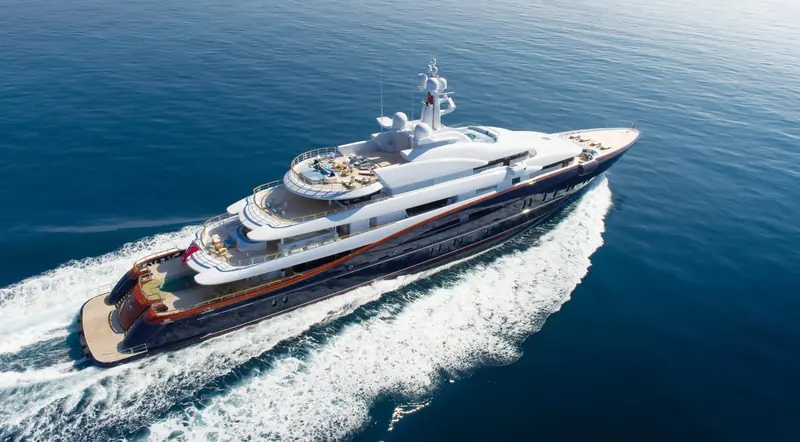
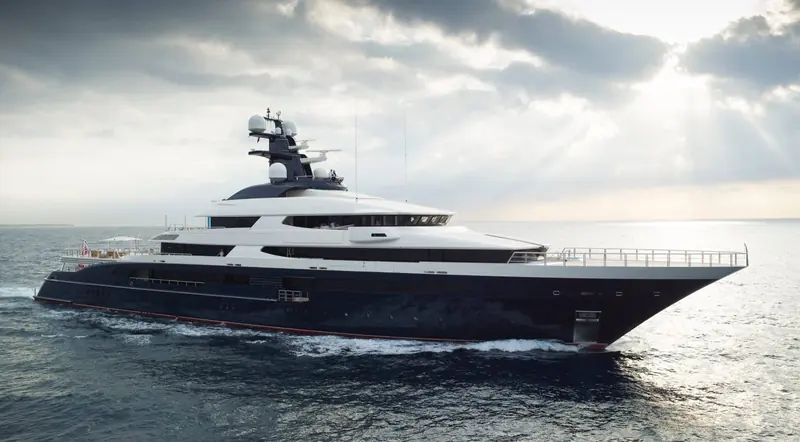
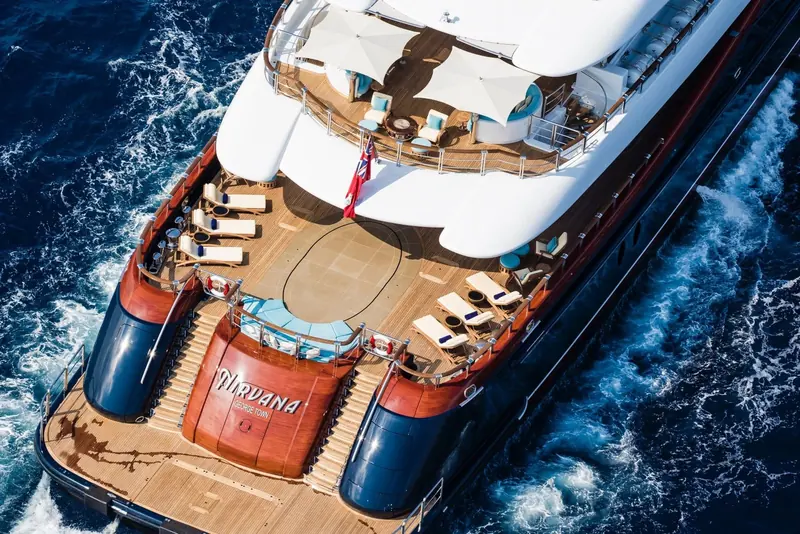
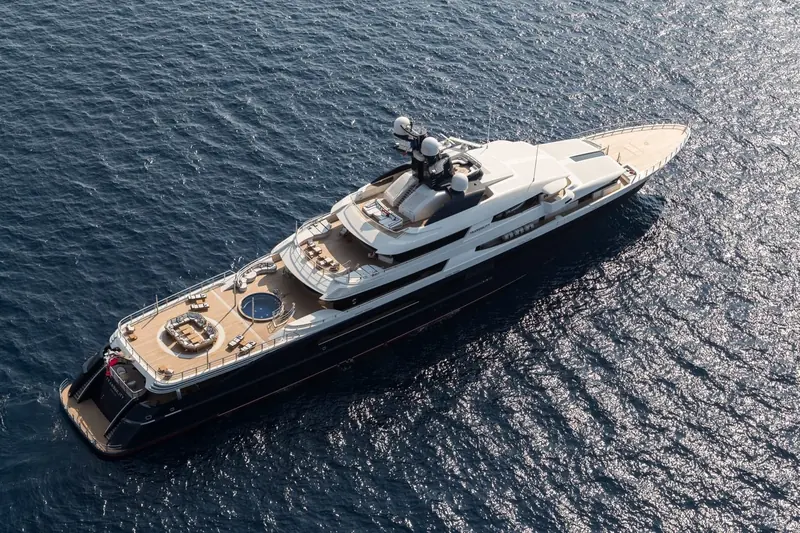
That is an unusually long, unusually large-scale reference list for a firm of roughly thirty staff, and the concentration with one yard, Oceanco, is striking: of the twenty-odd projects the firm names on its own site, the overwhelming majority are Oceanco-built. Several of these are among the most photographed superyachts afloat: Tranquility, later rebuilt and renamed Draak under new ownership, and Alfa Nero, which drew wide press coverage during international sanctions proceedings in 2022, both carry real public name recognition well beyond the yachting trade press.
A handful of non-Oceanco names also appear on Azure's list, including the 86 metre ketch Aquijo, built jointly by Vitters and Oceanco, and the 38 metre Jongert Lucia-M. Yacht-press coverage of Aquijo specifically, including Boat International's own feature on her, credits her naval architecture to the American designer Bill Tripp rather than to Azure; this research could not confirm from Azure's side what portion of Aquijo's engineering work, if any, the firm actually carried, and the exact division of labour between the two offices is not published anywhere this research found. Where Azure's own claim and outside press coverage disagree, that disagreement is recorded here rather than resolved by picking one side. Jubilee, at 110 metres, is the largest yacht on the list and one of the largest Oceanco has ever built, which gives a sense of the upper end of the scale Azure's engineers are working at; the firm's own site states no size limit on its naval-architecture work, citing projects from 9 to 120 metres.
Alfa Nero: When a Reference-List Yacht Becomes World News
That sale price is a fraction of what a boat of Alfa Nero's scale and profile would normally command; Boat International's own coverage of the sanctions saga put her pre-seizure value far higher, and press coverage through the two-year detention repeatedly called the case one of the most complicated superyacht ownership disputes to come out of the sanctions period, involving Antigua's port authority, the crew's unpaid-wages claims and multiple false starts before a sale finally closed. None of that history touches Azure's naval-architecture work directly, but it is the kind of second-life story that shows a yacht's design credits usually far outlast the circumstances of its build, and it is worth a reader knowing when they see Alfa Nero named on a firm's project list without the context of what happened to her afterward.
The episode is also a useful check on how reference lists like Azure's should be read: being named as the naval architect of a famous or newsworthy yacht is a statement about a project delivered years or decades earlier, not a live relationship with whoever owns or operates the boat today. Alfa Nero's crew were awarded unpaid wages during the detention according to Boat International's reporting, a reminder that a yacht's engineering pedigree and the commercial and legal drama that can follow it are entirely separate stories.
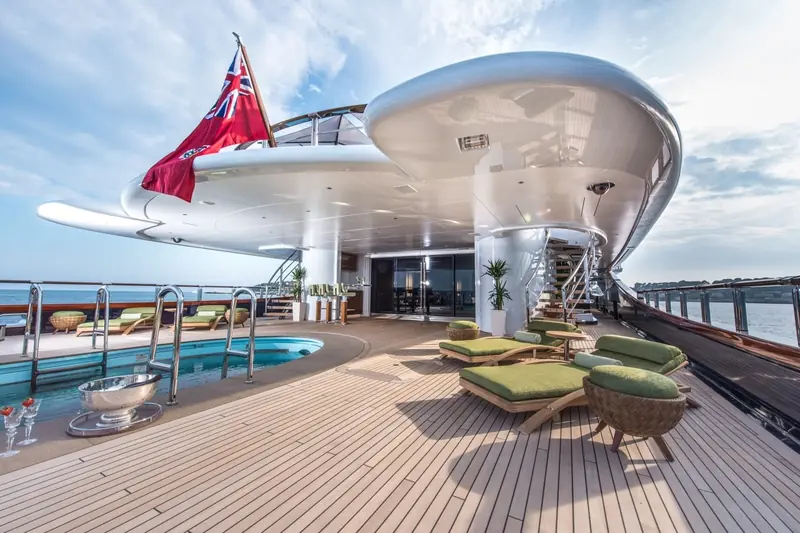
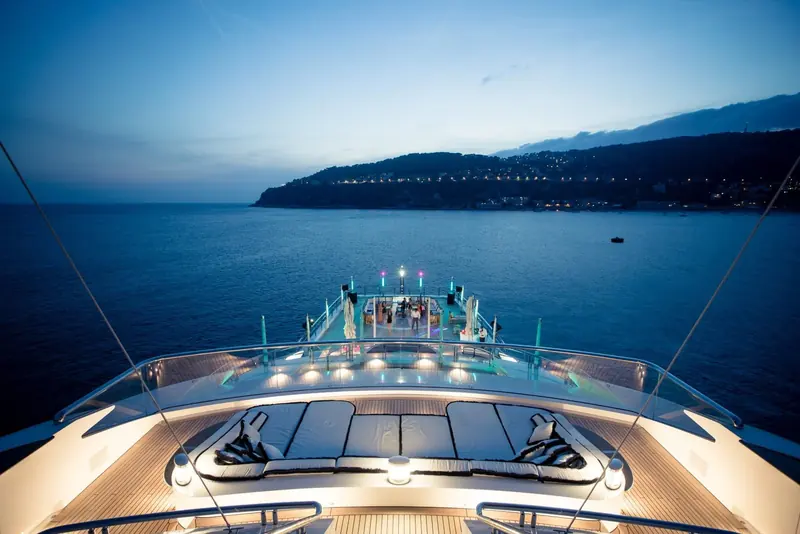
Beyond Oceanco: Feadship and Damen's SeaXplorer
The SeaXplorer relationship is the clearest evidence that Azure's business is not only about one-off superyacht flagships for the ultra-wealthy: it is a production programme, delivering multiple hulls to a repeatable design, in the fast-growing expedition and explorer-yacht category. Industry directory RUYachts credits Azure with naval architecture on two further Feadship flagships, the 94 metre VIVA, which won recognition on the awards circuit, and the 75 metre Kensho, though this research treats that specific pairing as single-sourced, since it could not be independently corroborated against a second, dedicated feature on either yacht. Superyachts.com's own interview coverage of the explorer category quotes both Azure founders directly on what the shift toward explorer yachts has actually changed in their engineering brief.
Co-director Erik Spek told Superyachts.com that clients now ask for a higher level of safety in explorer yachts, adding that people are not really looking for a touch-and-go helipad any more, since there is no backup from local governments in the remote areas these yachts actually visit. Co-director Onne Logger, in the same piece, said explorer clients like the idea of taking boats to private locations with higher range and ice-breaking capability while still wanting a beautiful yacht with full systems, and noted these vessels end up more bulky than a conventional yacht of the same length because owners can bring toys onboard rather than needing a separate shadow boat to carry them.
What It Costs and How to Commission
That routing matters for how a reader should think about the firm's pricing: naval-architecture and marine-engineering fees are conventionally scoped against technical deliverables, stability books, structural calculations, class-society submissions, rather than against the more subjective, harder-to-quote work of exterior styling, and general marine design-cost guides such as Cad Crowd and DraftXL put full design-and-engineering scope on a custom superyacht at roughly 10 to 20 per cent of build cost in total, without breaking out naval architecture's specific share of that figure.
No Azure-specific fee figure, day rate or percentage was found anywhere in this research. A prospective client, whether a private owner's project manager or a shipyard assembling a design team, should expect a bespoke, negotiated scope of work rather than a published rate, and should be clear from the outset about which discipline, styling or engineering, they are actually commissioning, since Azure's own history shows it is almost always the latter.
Practical detail
| Design fee | not published; naval-architecture and marine-engineering scope is conventionally quoted against technical deliverables rather than a flat design fee, and no Azure-specific figure was found; general industry design-and-engineering guides cite roughly 10 to 20 per cent of build cost for full custom scope, not broken out by discipline |
|---|---|
| Studio base and size | Haarlem, the Netherlands; more than thirty yacht specialists per the firm's own site, founded roughly 2003 by Erik Spek and Onne Logger |
| Typical role on a project | naval architecture, marine engineering and construction supervision, usually alongside a separately commissioned exterior and interior stylist rather than as the visible designer of record |
| Confirmed current production programme | Damen Yachting's SeaXplorer expedition-yacht range, alongside continued custom work for Oceanco and Feadship |
| What is not published | any project-specific fee, the exact split of engineering work on projects credited to more than one naval architect (Aquijo), and a full, independently verified project list beyond the firm's own reference page |
What owners and crew report
Explorer-yacht clients are now driving Azure's safety brief, according to co-director Erik Spek
Spek told Superyachts.com that clients ask for a higher level of safety in explorer yachts, specifically noting that owners are no longer looking for a touch-and-go helipad because there is no government backup available in the remote locations these boats actually cruise.
Erik Spek, Azure Yacht Design & Naval Architecture (interview with Superyachts.com)Explorer-yacht clients want range and toy capacity, according to co-director Onne Logger
Logger told Superyachts.com that clients like being able to take a boat to private locations with higher range and ice-breaking capability while still wanting a fully systemed, beautiful yacht, and that this is why explorer designs run more bulky than a conventional yacht of the same length, since owners can carry their own toys rather than needing a separate shadow vessel.
Onne Logger, Azure Yacht Design & Naval Architecture (interview with Superyachts.com)No independently reported owner or captain commentary specific to Azure's own engineering work was found in this research
public coverage of Nirvana, Tranquility and the other named flagships focuses on the visible stylist's work (Sam Sorgiovanni, Winch Design and others); this research found no owner or captain quoted specifically about the hull's engineering, stability or seakeeping as distinct from its styling.
Yotters research desk
What is good, and what to watch
Strong points
- An exceptionally large, checkable reference list of real delivered flagshipsJubilee, Tranquility, Nirvana, Infinity, Alfa Nero and more, most of them independently verifiable through the individual yacht's own listing, not just Azure's own marketing
- A production programme, not only one-off flagshipsthe Damen SeaXplorer expedition-yacht range gives the firm relevance to a repeatable, growing category, not just the ultra-bespoke one-off market
- Named, on-record engineering philosophy from both foundersboth Erik Spek and Onne Logger are quoted directly, by name and title, in trade press explaining the firm's actual engineering priorities on explorer yachts
- A founding team with hands-on shipbuilding credentialsErik Spek's background as a yacht carpenter's son and a Feadship shipyard mechanic intern is a genuinely different pedigree from the styling-first background of most studios in this directory
What to watch
- Credit for the firm's own reference list is not always cleanoutside press coverage of the 86 metre ketch Aquijo, which Azure's own site lists as a recognised project, credits her naval architecture to a different designer, Bill Tripp, and this research could not resolve or confirm what Azure's actual role was
- Naval-architecture credit is frequently shared with a yard's own in-house teamon Nirvana specifically, the naval architecture is credited to Oceanco's in-house team working WITH Azure, not to Azure alone, and a reader should not assume sole authorship from a single reference-list entry
- No public fee schedule or per-project pricing anywhereas an engineering partner rather than a consumer-facing stylist, Azure's commercial terms are entirely unpublished, and a first-time client has nothing to benchmark against before the first conversation
- No independently reported owner or captain testimony about the engineering itselfpress coverage of Azure's flagship projects focuses almost entirely on the visible stylist's work; nobody in this research was found praising or criticising the hull, stability or seakeeping specifically and attributing it to Azure by name
Who it is for: shipyards and owner's project-management teams assembling an engineering partner for a large custom or expedition yacht, and buyers researching who actually engineered a famous Oceanco flagship's hull