Nuvolari Lenard
| Founders | Carlo Nuvolari, naval architect and mechanical engineer, and Dan Lenard, stylist and designer |
|---|---|
| Founded | 1990, just outside the old town of Venice |
| Based | Venice, Italy, with a team put at around 16 people |
| Interior lead | Valentina Zannier, partner and head of interior design |
| Disciplines | concept, naval architecture, exterior styling, interior design and architecture |
| Range | roughly 25 to 185 metres, across about 250 projects |
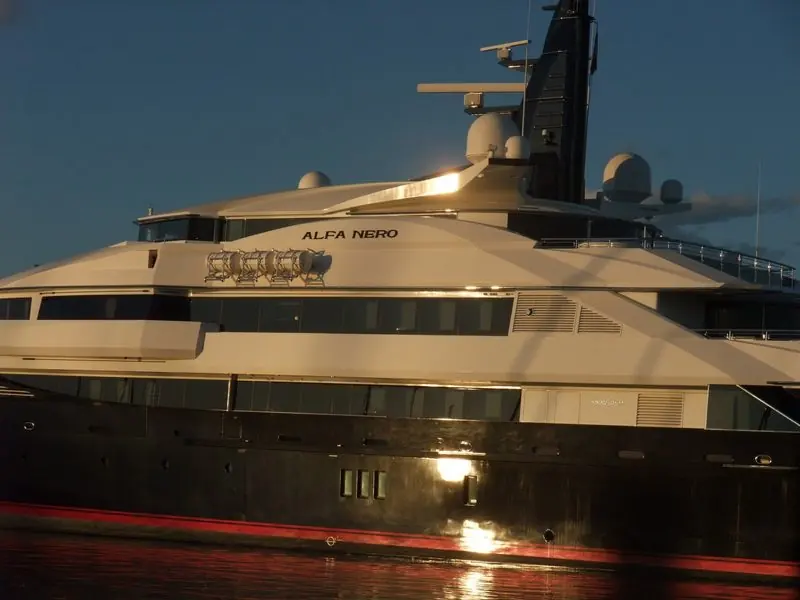
| Breakthrough | Alfa Nero, 81 m, Oceanco, 2007, exterior and the aft pool, interior by Alberto Pinto |
| Largest delivery | Nord, 141.6 m, Lurssen, 2021, exterior and interior by the studio |
| Kismet, 122 m, Lurssen, 2024 | exterior by the studio, interior by Reymond Langton Design |
| Black Pearl, 106.7 m, Oceanco, 2018 | exterior styling shared with Ken Freivokh Design, interior by the studio |
| Series work | Monte Carlo Yachts for Beneteau, and from 2025 every Silent Yachts model up to 24 metres |
| Recognition | Designer of the Year at the 2022 World Yachts Trophies |
| Design fee | not published. Market band 1 to 5 per cent of build cost, project management 2 to 4 per cent, both outside the yard price (SuperYachtReview 2026 price guide, updated March 2026) |
| The styling premium is a build cost, not a design cost. Compound surfaces are paid for in yard labour and should be quoted separately at tender | |
| Alfa Nero, 81 m Oceanco 2007 with this studio's exterior, sold in a distressed private treaty at about USD 40 million in July 2024 and was relisted in August 2025 at EUR 88.5 million after refit | |
An engineer and a stylist
Nuvolari trained as a naval architect and mechanical engineer. Lenard came to the work as a stylist. They founded the practice in 1990 in a building just outside the old town of Venice, where it still sits, and they have both stayed in it for thirty-five years. Valentina Zannier is now a partner and heads the interior side.
The team is around sixteen people, which is small for a studio credited with roughly 250 projects. Both founders sail. In January 2019 Lenard left southern Spain alone for Miami in a 33 foot boat he had built himself out of materials salvaged from five abandoned hulls, a self-funded voyage he mounted to draw attention to ocean plastic. That is not marketing. It is an unusual thing for the co-owner of a business drawing 140 metre yachts to spend a winter doing.
The unusual thing about the scope
Most studios in this directory sell one or two of the four disciplines. Nuvolari Lenard sells all of them. The office takes the concept, the naval architecture, the exterior styling and, since Zannier built the interior department, the inside as well. On a large project it will still work alongside a yard's own naval architects or a specialist office.
For an owner the consequence is that a single firm is answerable for the shape and for how the boat behaves. A profile with too much glass high up is a stability problem before it is an aesthetic one, and here the person who wants the glass and the person who has to justify it sit in the same room. The counterargument is real too. Some owners deliberately appoint an independent naval architect so that somebody with no stake in the styling is checking the numbers.
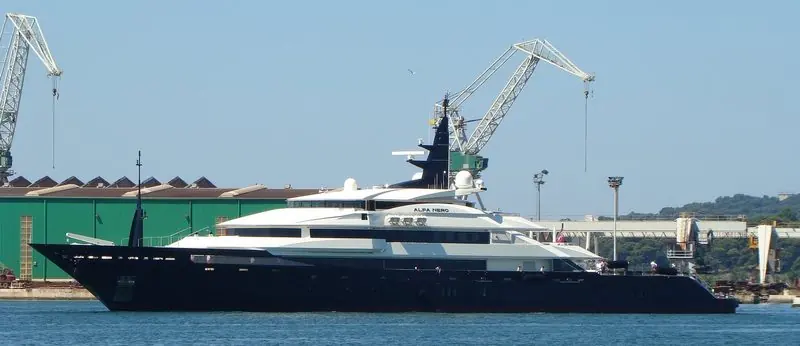
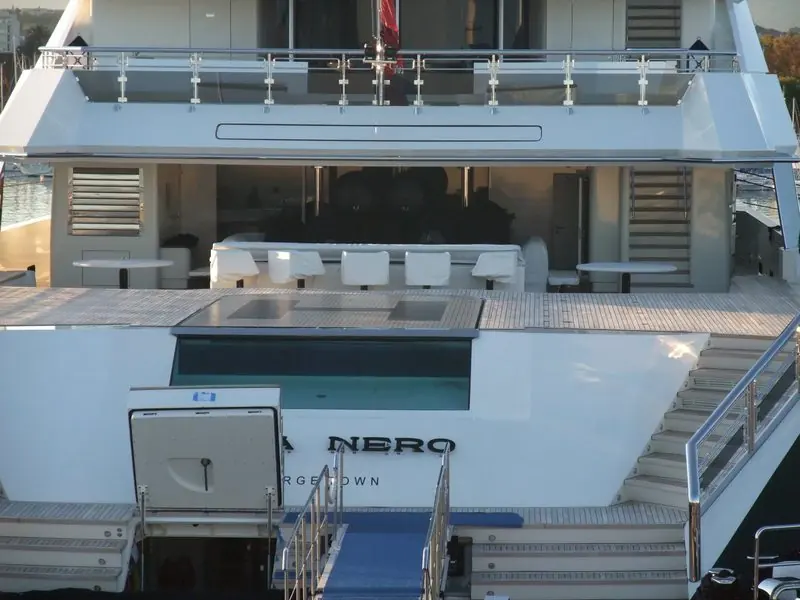
The infinity pool with a lifting floor started on Alfa Nero in 2007 and is now close to standard above 70 metres.
What the boats look like
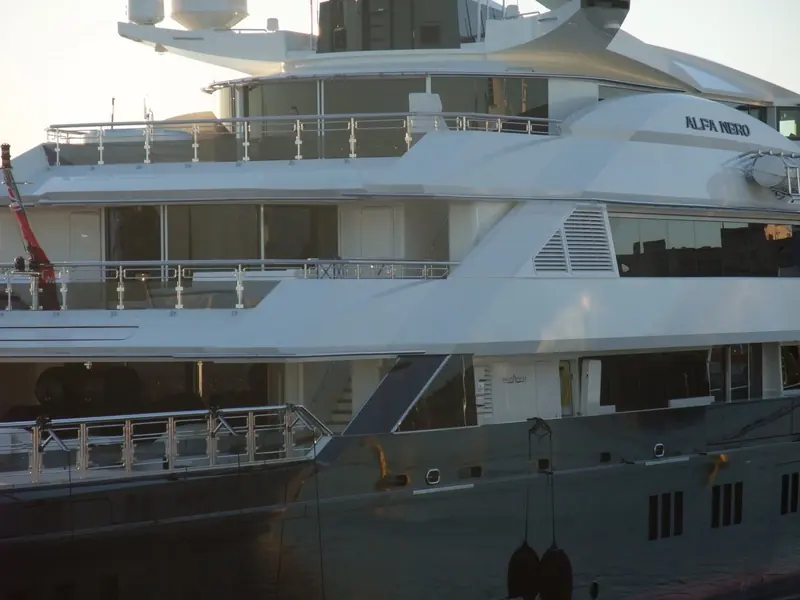
The recognisable move is curvature. Where most large yachts are drawn as stacked horizontal slabs, these hulls carry surfaces that roll and taper along their length, and the window openings are cut as shapes in their own right instead of continuous bands. Vibrant Curiosity, 85.5 metres from Oceanco in 2009, runs a vertical flow of glazing down through the decks. Quattroelle, 86.1 metres from Lurssen, uses scooped window forms that read as one gesture across three tiers.
Ahpo, 115 metres from Lurssen in 2021, is the clearest recent statement, with an exterior the studio and the yard both describe in terms borrowed from supercars and an interior by the same office. The compound surfaces cost money. A yard has to form them in three dimensions and fair them by hand, which is precisely why the profile reads as expensive from a distance. Owners should understand they are buying labour as much as line.
Alfa Nero, and the pool that moved
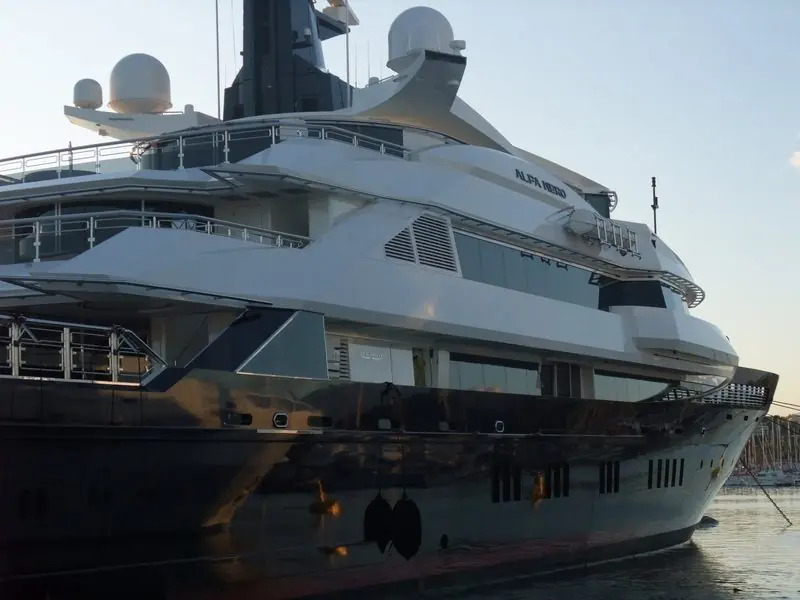
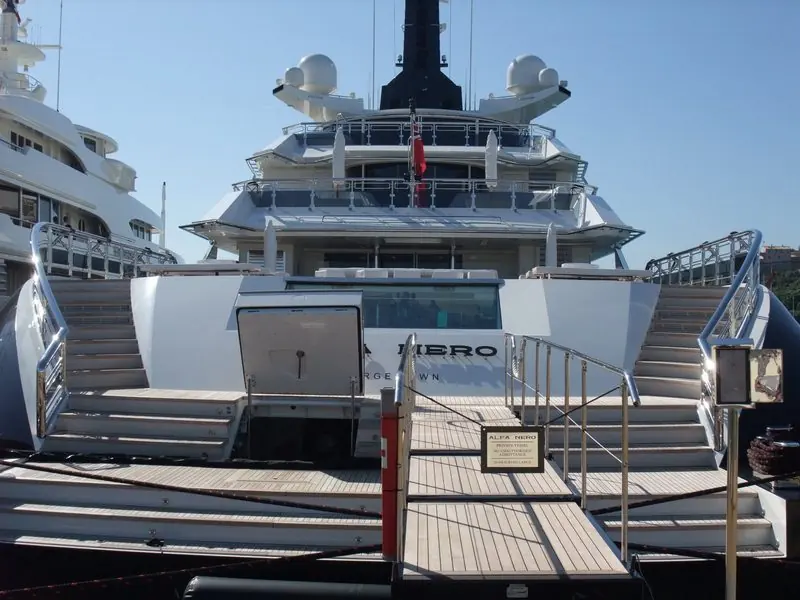
Alfa Nero was delivered by Oceanco in 2007 at 81 metres, with the studio responsible for the exterior and the aft deck, and Alberto Pinto for the interior. Her stern carried what is generally described as the first infinity pool on a superyacht, sitting flush with the deck edge so the water appears to run into the sea behind. The pool floor lifts, turning the same space into a flat deck for a helicopter or for entertaining.
That single feature changed what owners asked for. Within a decade the aft-deck pool with a rising floor had become close to standard on custom yachts above 70 metres. It also created a real engineering problem the studio had to solve first, since several hundred tonnes of water sitting high and aft affects trim, stability and structure. An owner reading a brochure sees a pool. The reason it works is a naval architect who was in the room when it was drawn.
The Lurssen run
The German relationship has produced the studio's largest work. Nord, 141.6 metres, was delivered in 2021 with Lurssen naval architecture and both the exterior and the interior from Venice. Ahpo followed at 115 metres in the same year. Kismet, 122 metres, was handed over in 2024 with a Nuvolari Lenard exterior over an interior by Reymond Langton Design.
Getting repeat work from Lurssen at that scale is a specific credential. The yard engineers to a standard that leaves no room for a designer who cannot answer a technical question, and it does not repeat with studios that make its life difficult. For an owner choosing between two names of similar reputation, a run of deliveries at one serious yard is more informative than any number of published concepts.
Black Pearl, and sharing a hull
Black Pearl came out of Oceanco in 2018 at 106.7 metres, the largest DynaRig sailing yacht ever built. The rig and naval architecture were Dykstra's. The exterior styling was a shared effort between Ken Freivokh Design and Nuvolari Lenard, and the interior was drawn by the Venice office under Zannier. Sailing work is not a sideline here, and the studio also drew the exterior of the 64 metre Perini Navi Spirit of the C's.
Shared credits of this kind are common at the top of the market and worth understanding before commissioning. A yacht can carry three design houses and a separate naval architect, each responsible for a defined slice. It works when the boundaries are written down at the start and it goes wrong when they are not. An owner should ask any studio, in the first meeting, exactly which drawings it will sign.
Series work, and why a giant-yacht studio bothers
The office has drawn the Monte Carlo Yachts range for Beneteau, including the MCY 105 at 32 metres, and it has designed Palmer Johnson sportsyachts and CRN customs such as the 54.8 metre Atlante. Amels and Perini Navi have both built to its drawings. In 2025 Silent Yachts announced that every model up to 24 metres in its solar-electric range would be drawn by the studio, with the first inside-and-out design expected around 2026.
Series design is a different discipline. A production yard needs a shape that can be tooled, repeated and built to a price, and a designer who cannot work inside those limits is no use to it. The benefit for a custom client is indirect but genuine. A studio that has to justify every curve to a production accountant develops a good instinct for which expensive decisions actually improve a boat.
How a commission runs, and what it costs
A project moves from the owner's brief through concept sketches, general arrangement and preliminary naval architecture, which is the package a yard prices, and because the studio also takes the interior an owner can run the whole design through one contract. The design agreement is signed and paid before any build contract exists, in tranches tied to those stages. The commitment ladder has three rungs. Stopping after concept costs an owner the concept fee. A letter of intent reserves a slot at a yard. The yacht building agreement is the point at which the price and the delivery date become real obligations, and after it the design is effectively frozen except at a penalty.
The studio does not publish a fee scale and neither does any of its peers. The market band for a designer's fee is 1 to 5 per cent of build cost, with project management a further 2 to 4 per cent, both outside the yard's quoted price, per the SuperYachtReview guide updated March 2026. Taking naval architecture, exterior and interior from one office puts a project at the top of that band. The second number is the one owners miss. The compound surfaces this studio favours push the yard's own labour cost up, and that sits in the build price, not the design fee. The styling premium should be priced separately at tender stage so it can be seen.
Recognition, and who it does not suit
The studio took Designer of the Year at the 2022 World Yachts Trophies, and its yachts have collected awards steadily since Alfa Nero. Recognition at this level is a reasonable filter and helps a little at resale. It tells an owner the finish met a standard a panel would defend in public. It says nothing about how the studio behaves when a yard is running late.
This is the wrong office for an owner who wants his yacht to disappear in an anchorage. The work is emphatic by design, and buyers looking for the quiet, timeless end of the market are better served by the British studios. It does not suit an owner who wants an independent naval architect checking the stylist's homework, since both jobs sit here. Anyone building below about 25 metres outside the production ranges will not find a route in.
The drawings, and a studio built on two names
Copyright normally stays with the designer. The professional default, set out in the ITIC standard trading conditions for naval architects dated 8 July 2025, gives the client only a non-exclusive royalty-free licence for the purposes of the agreement, and superyacht contracts usually improve on that to an exclusive, irrevocable, assignable licence, which is the clause Federico Santini describes in Barche magazine in August 2018. The difference is not academic here. This office also draws production ranges, and an owner who has paid for a distinctive hull will want it written down that a version of it cannot appear at a boat show two years later. Where reuse is agreed, published naval architecture practice prices further hulls at a royalty of roughly 1 to 1.5 per cent of each boat.
Carlo Nuvolari and Dan Lenard founded the practice in 1990 and it is named after them, in an office of about 16 people. No marine standard form says what a design contract does if one of two principals is gone in year three, and the ITIC conditions are silent on it. The clauses to ask for are the ones commercial consultancy uses as a matter of course: death or long incapacity of a named individual as a termination event, an obligation to propose a replacement of equal standing subject to the owner's approval, and a right to the drawing set in native format if the practice ceases. None of this is unusual to request. It is simply never offered.
A strong profile is the one thing a refit cannot fix
This is the studio in the directory where resale deserves the bluntest answer. An emphatic exterior is an asset while it is current and a liability once it is not, and unlike an interior it cannot be replaced. Alfa Nero, the 2007 Oceanco that made the studio's name, is the public case study. Seized and laid up in Antigua, a June 2023 auction bid of USD 67.6 million was blocked by litigation, the boat was eventually sold in a distressed private treaty at about USD 40 million in July 2024, and after a refit it was back on the market in August 2025 at EUR 88.5 million. The distress explains the low number. What it does not explain is that an 81 metre Oceanco has been offered for sale three times in three years.
The fair reading is that a sculptural profile narrows the buyer pool rather than lowering the price. Someone will love it, and there are fewer of them. Denison Yachting recorded an average 487 days on market and a median of 277 for the 470 yachts of 24 metres and over sold in 2025, and boats with strong authorship sit at the long end of that distribution. The counterweight is real: Nord, Kismet and Black Pearl are recognised on sight, and recognition is liquidity of a kind. An owner who wants the shape should have it and should plan to keep the boat. An owner planning an exit in five years is buying the wrong kind of authorship.
Practical detail
| Design fee | not published by the studio; market band is 1 to 5 percent of build cost plus 2 to 4 percent for project management, both outside the yard's quoted price, per the SuperYachtReview price guide updated March 2026 |
|---|---|
| Contract structure | concept fee, then a letter of intent that reserves a build slot at a yard, then the yacht building agreement, the point at which price and delivery date become binding and the design is effectively frozen except at a penalty |
| The real cost of the curves | the studio's compound surfaces raise the yard's own labour cost, which lands in the build price rather than the design fee; ask for the styling premium to be quoted separately at tender so it is visible |
| Copyright and reuse | the ITIC standard trading conditions for naval architects, dated 8 July 2025, default to a non-exclusive royalty-free licence for the client; superyacht contracts usually upgrade this to an exclusive, irrevocable, assignable licence, and an agreed reuse on a further hull is typically priced at roughly 1 to 1.5 percent of that boat |
| Continuity risk | no marine standard form addresses what happens to an in-progress design if one of the two named principals dies or is incapacitated; owners should ask for a termination-on-incapacity clause, a replacement-of-equal-standing clause and rights to the drawing set in native format |
| Resale timeline | Denison Yachting recorded an average 487 days and a median 277 days on market across 470 yachts of 24 m and over sold in 2025; boats with strong, sculptural authorship tend to sit at the long end of that range |
What owners and crew report
No independently attributable owner testimony found
press coverage of Nord, Kismet, Black Pearl and Alfa Nero repeats praise from the studio's own principals and from yard executives such as former Palmer Johnson president Mike Kelsey, but this research found no on-the-record quote from a private yacht owner describing what it was like to commission the studio
Yotters research desk
What is good, and what to watch
Strong points
- One office is accountable for the whole shapeconcept, naval architecture, exterior and increasingly interior come from the same firm, so the person who wants more glass and the person who has to justify it structurally sit in the same room
- A proven run at the most demanding yard in the businessLurssen repeats with a studio that cannot answer a technical question, and Nord, Ahpo and Kismet at 115 to 142 metres are a credential no published concept can match
- A history of features that become the market standardthe rising-floor infinity pool the studio drew for Alfa Nero in 2007 was close to standard on custom yachts above 70 metres within a decade
What to watch
- A sculptural profile narrows the resale buyer poolAlfa Nero, the 2007 Oceanco that made the studio's name, has been offered for sale three times in three years, and the fair reading is fewer buyers rather than a lower price
- No independent check on the stylingan owner who wants a separate naval architect auditing the stylist's numbers does not get that separation here, since both jobs sit in the same office
- Succession and IP terms are thinner than a commercial consultancy'sthe standard naval-architecture trading conditions are silent on what happens if a named principal is gone mid-project, and the protective clauses have to be requested rather than offered
Who it is for: Owners who want a yacht with a strong, sculptural profile and are content for the styling and the naval architecture to come from the same firm.