Zuccon International Project
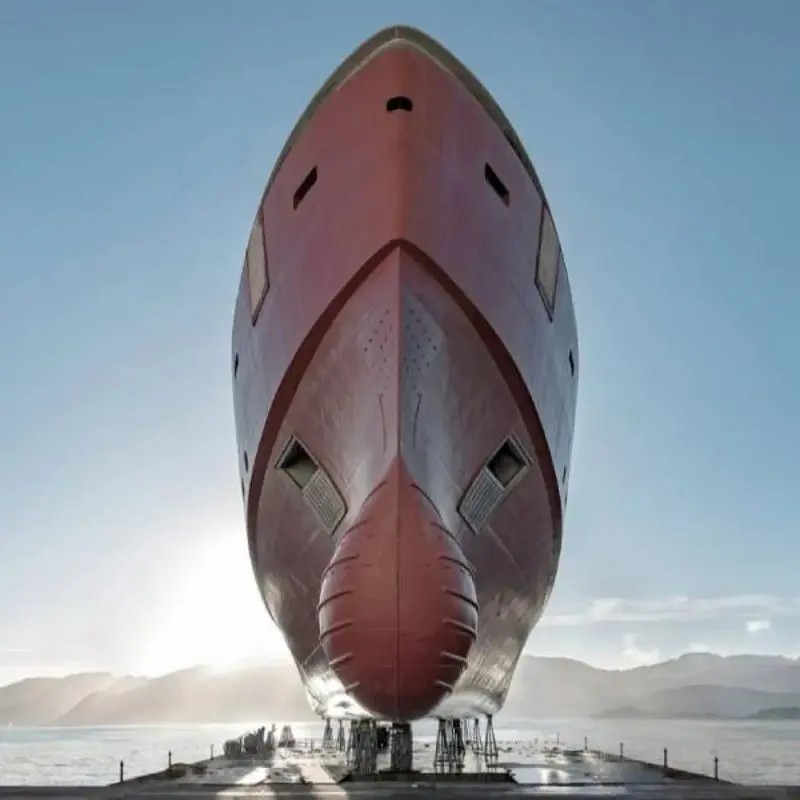
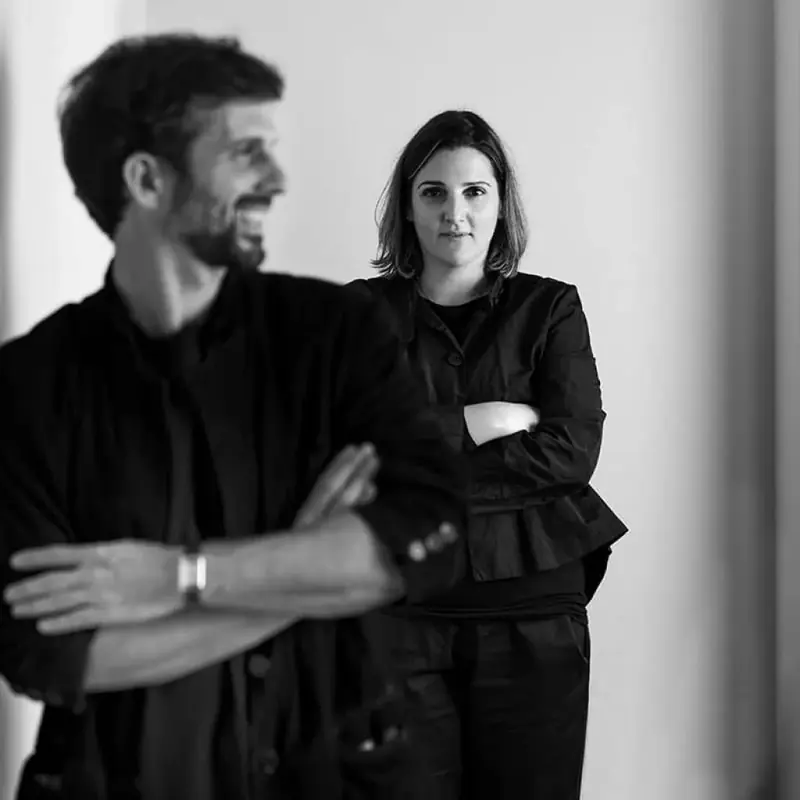
| Founders | Gianni Zuccon and Paola Galeazzi, working together in Rome from 1972 |
|---|---|
| Name | the practice became Zuccon International Project in 1984 |
| Based | Rome, Italy |
| Led today by | Bernardo Zuccon and Martina Zuccon, the founders' children |
| Superyacht division | A dedicated superyacht design division was formed in 2013 |
| Disciplines | exterior design, interior design, architecture and product design, with naval architecture normally left to the yard |
| Studio's own count | more than 500 semi-custom and custom yachts built to its designs |
| Yard relationships | the Ferretti Group brands CRN, Custom Line and Ferretti Yachts, plus Sanlorenzo and Bluegame |
| Largest yacht | Chopi Chopi, 80 m, CRN, 2013, exterior by Zuccon over an interior by Studio Laura Sessa |
| Cloud 9, 74 m, CRN, delivered May 2017 | exterior styling by Zuccon, exterior guest areas and interior decoration by Winch Design |
| Sanlorenzo SL102 Asymmetric, 2018 | the first asymmetrical motor yacht, exterior and interior by the studio |
| Recognition | Bernardo and Martina Zuccon took the Compasso d'Oro in 2024 for the Sanlorenzo SP110 |
| Team | around 20 people at the Rome studio, in a villa the practice restored and moved into around 2021 (BOOTE, Norman Kietzmann, 11 November 2023) |
| On yard models the design fee sits inside the boat price and further hulls are covered by a royalty, put at roughly 1 to 1.5 per cent of each boat under published naval architecture practice (Marsh Design and Sponberg Yacht Design terms, read 28 July 2026) | |
| For an owner's own commission the market band is 1 to 5 per cent of build cost, with project management a further 2 to 4 per cent, both outside the yard price (SuperYachtReview 2026 price guide, updated March 2026) | |
Rome, 1972
Gianni Zuccon and Paola Galeazzi were architects who started working together in Rome in 1972 and took their first boat commissions almost immediately. The practice was formally named Zuccon International Project in 1984. It has never been a marine-only office, and it still does buildings, interiors and product design alongside the yachts, including a long-running relationship with the European Space Agency and more recent property work in Miami.
That mixed diet is unusual in this field and it shows in the output. An architect asks how a person enters a space, where the light comes from and how high the ceiling needs to be, and only then how the outside reads. The studio has said as much repeatedly. The order of those questions is the difference between this office and a studio that starts with a profile sketch and works inwards.
A family practice, and the succession that already happened
Bernardo and Martina Zuccon now lead the studio. They are the founders' children, they grew up in the practice, and the handover happened progressively over years instead of in a single announcement. A dedicated superyacht design division was formed in 2013 as the custom work grew past what the general studio could carry.
For an owner signing a design contract that will run three years, the question of what happens to a studio if its principal stops working is not academic. Several of the strongest names in yacht design are one person and a small team. Here the answer was settled a decade ago. The founders' vocabulary is also still visible in the current work, which is what an owner buying into a house style is actually paying for.
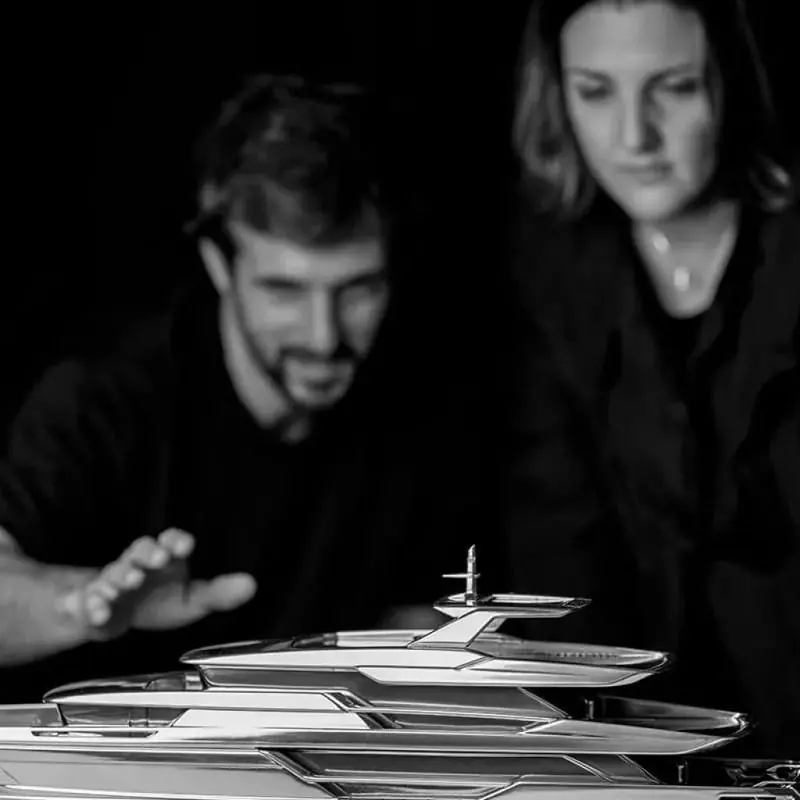
One side deck instead of two, and the saloon gains 25 square metres and a window where a corridor used to be.
Where the studio's responsibility starts and stops
Zuccon draws exteriors, interiors and general arrangements. Naval architecture is normally the yard's job, which is standard practice among Italian builders, because CRN, Sanlorenzo and Ferretti all run their own engineering departments and their own hull platforms. On Chopi Chopi the naval architecture was CRN's.
The consequence is worth understanding before signing. Speed, range, fuel burn and sea-keeping are the yard's numbers and they appear in the build contract, not the design contract. An owner should read the performance guarantees carefully and not assume the designer stands behind them. On a semi-custom hull much of this is already fixed before the designer opens a sketchbook, and the real negotiation is about volume, layout and openings.

Architecture applied to a hull
The visible Zuccon habits are large uninterrupted glass, deck heights that feel generous for the length of the boat, and a strong preference for connecting the interior to the water at eye level instead of from a flybridge. The exteriors are elegant and unaggressive. Profiles carry long horizontal emphasis with the superstructure set back so the hull reads as the dominant form.
The most radical single move is the Sanlorenzo SL102 Asymmetric, presented at Cannes in 2018 and billed as the first asymmetrical motor yacht. It carries a side deck on one side only. The other side becomes wide-body, which hands roughly 25 square metres of extra living space to the main deck saloon and lets it have a proper window instead of a corridor outside it. The crew still get a protected passage for mooring on the deck that remains.
The CRN customs
Chopi Chopi, 80 metres, was delivered by CRN in Ancona in 2013 and remains the largest yacht the studio has drawn. The exterior is Zuccon, the interior is Studio Laura Sessa and the naval architecture is CRN's. Cloud 9 followed at 74 metres in May 2017, with exterior styling by Zuccon and the exterior guest areas, interior decoration and owner's supply handled by Winch Design.
J'Ade, also from CRN, is the boat non-specialists remember, because her tender garage floods to become a swimming pool with the tender floated out first. Palatial, 42.6 metres, came from the same yard in 2013. A run of customs at one Italian yard is worth something concrete to an owner, since the studio knows which details that yard's yard actually enjoys building and which ones will come back priced as an extra.
Custom Line, and design at volume
The deeper commercial relationship is with the Ferretti Group. The studio has drawn the Custom Line range, including the Navetta models, along with boats for Ferretti Yachts. These are semi-custom and production hulls built in numbers, where the platform is fixed and the buyer chooses layout, finish and equipment.
Series work imposes a discipline that custom work does not. A shape has to be tooled, repeated and built to a price, and a designer who cannot work inside those limits is no use to a production yard. The benefit runs back the other way for a custom client, because a studio that has justified every curve to a production accountant tends to have a clear view of which expensive decisions actually improve a boat. It also means the Zuccon hand is on a very large number of hulls afloat, most of whose owners could not name the studio.
Sanlorenzo, Bluegame and the Compasso d'Oro
The Sanlorenzo relationship has become the centre of the studio's recent work, alongside Bluegame. Beyond the SL102 Asymmetric, the studio has drawn a long list of Sanlorenzo deliveries including the 43.89 metre Annabella in 2021 and Lady Lu in 2023. In June 2024 Bernardo and Martina Zuccon took the Compasso d'Oro for the Sanlorenzo SP110, on which they drew the exterior and Lissoni and Partners the interior.
The Compasso d'Oro is worth explaining, because it is not a yachting prize. It is Italy's oldest and most serious industrial design award, judged against furniture, cars and consumer products, and boats very rarely win it. For an owner it is a more meaningful signal than most trade trophies, since the jury has no commercial relationship with the marine industry at all.
How a commission runs, and what it costs
Most projects arrive one of two ways. Either an owner has chosen a yard and brings the studio in, or the yard is developing a model and appoints the studio to draw it. Those two routes have completely different commercial shapes. On a yard model the design fee is inside the boat price, negotiated between the studio and the builder and never seen by the buyer, and further hulls are normally covered by a royalty, which published naval architecture practice puts at roughly 1 to 1.5 per cent of each boat's price. On a private commission the owner signs and pays a design contract of his own, in stages, before any build contract exists.
Neither route has a published scale. The market band for an owner's own designer is 1 to 5 per cent of build cost, plus 2 to 4 per cent for project management, both outside the yard's quoted price, per the SuperYachtReview guide updated March 2026. On a semi-custom Italian boat an owner is at the bottom of that or outside it entirely, because he is buying a platform someone else paid to design. The expensive number is change. Every revision to the general arrangement after the yard has begun engineering is paid twice, once in drawings and once in yard time, and Italian yards price late changes without sentiment.
Recognition, and who it does not suit
Beyond the Compasso d'Oro, the SL102 Asymmetric was included in the ADI Design Index in 2019, which is the shortlist that award is drawn from. The studio's standing inside Italy is very high and its name carries less weight with buyers outside it. Awards help modestly at resale and confirm a standard of finish. They say nothing about how a studio behaves in the second year of a build.
This office does not suit an owner who wants a designer with his own naval architecture team and control over the hull. It is not the place for a hard, aggressive profile or for someone who wants his boat to be the loudest thing in the anchorage. Owners commissioning above 80 metres will find the portfolio stops there. Anyone building outside Italy will also be taking the studio away from the yards it knows best.
What the Zuccon name does at resale, which is less than the yard's
On a semi-custom Italian boat the honest answer is that the designer's name makes almost no difference. Buyers and valuers price the yard, the year, the volume and the condition. Ocean Independence, writing on 11 May 2026, lists builder pedigree, accommodation, technical specification, paint condition and maintenance history as what moves a valuation, and does not list the studio at all. A CRN or a Sanlorenzo sells as a CRN or a Sanlorenzo. What the studio contributes is indirect and real: ceiling height, daylight and the movement between decks are the things a viewer notices in ten minutes aboard without being able to name them.
The exception is the asymmetric. The SL102 removed a side deck to gain interior beam, which is a genuine gain and a genuine narrowing of the buyer pool, because a boat that is unlike its comparables is harder to value and easier to argue about. Ocean Independence also warns that yachts positioned above realistic market levels lose momentum rather than gaining leverage, and an unusual layout is exactly where a seller talks himself into an unrealistic number. Anyone buying an asymmetric hull should treat the extra beam as something bought for use, not for resale.
Practical detail
| Two different commercial routes | On a yard model (CRN, Custom Line, Sanlorenzo) the design fee sits inside the boat price and is never itemised to the buyer; further hulls are typically covered by a royalty of roughly 1 to 1.5 per cent of each boat's price to the studio |
|---|---|
| A private commission | An owner appointing the studio directly pays a separate design contract, market band 1 to 5 per cent of build cost plus 2 to 4 per cent for project management, both outside the yard's price (SuperYachtReview 2026 price guide) |
| What is not included | Naval architecture is normally the yard's own department, CRN, Sanlorenzo and Ferretti all run their own engineering. Performance figures belong to the build contract, not the design contract |
| The expensive mistake | Changes to the general arrangement after the yard begins engineering are paid twice, once in drawings and once in yard time. Italian yards price late changes without sentiment |
| Where the studio works | Rome, Italy, around 20 people, in a villa the practice restored and moved into around 2021 |
| Portfolio ceiling | Largest delivered yacht is Chopi Chopi at 80 metres (CRN, 2013); an owner building above that size is outside the studio's track record |
What owners and crew report
The asymmetry disappears from normal viewing angles
Sea-trial reviewers needed two SL102s side by side to see the missing side deck at all. The extra saloon space reads as a bigger boat, not a visibly lopsided one.
Yachting Magazine
What is good, and what to watch
Strong points
- Succession already happenedBernardo and Martina Zuccon took over from their parents progressively over years, not in a single handover. Unlike several one-person studios in this directory, the key-person risk here is already settled.
- Volume experience feeds the custom workDrawing production Custom Line and Ferretti hulls at scale gives the studio a cost-tested view of which expensive design decisions actually improve a boat.
- An award judged outside yachtingThe 2024 Compasso d'Oro for the Sanlorenzo SP110 is Italy's oldest industrial design prize, judged against furniture and cars by a jury with no commercial tie to the marine industry. That is a rarer signal than a yachting trophy.
- Genuine innovation, not just stylingThe SL102 Asymmetric's single side deck is a real functional trade, about 25 square metres of extra saloon space, and it reads as balanced rather than lopsided from normal viewing angles.
What to watch
- No naval architecture of its ownSpeed, range, fuel burn and sea-keeping are the yard's numbers on the build contract; an owner should not assume the designer stands behind performance guarantees.
- The name adds little at resale on semi-custom hullsBuyers and valuers price the yard, the year, the volume and the condition. Ocean Independence's 11 May 2026 valuation factors don't list the studio at all.
- The asymmetric layout narrows the buyer poolA hull that doesn't match its comparables is harder to value and easier to argue down; the extra beam should be bought for use, not resale.
- Portfolio stops at 80 metresOwners building above that size, or outside Italy, are outside both the studio's track record and its closest yard relationships.
Who it is for: Owners building at an Italian yard who want daylight, ceiling height and the movement between decks settled before the profile is.