Espen Oeino International
| Founder | Espen Oeino, born and raised in Oslo, Norway |
|---|---|
| Training | naval architecture and offshore engineering, University of Strathclyde, Glasgow |
| Early career | eight years in the Antibes office of the designer Martin Francis |
| Own studio | opened 1994 in Antibes, company Espen Oeino International formed 2006 |
| Based | Monaco, with a team the studio put at around 30 people of nine nationalities in 2024 |
| Disciplines | naval architecture and exterior design, with interiors normally by a separate house |
| Studio's own count | more than 50 yachts delivered, eight of them among the 25 largest afloat |
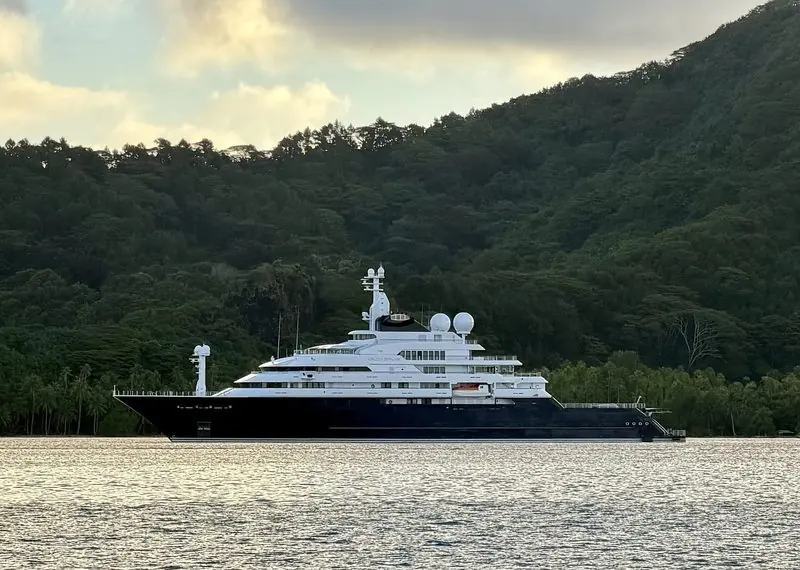
| The explorer that started it | Octopus, 126.2 m, Lurssen, 2003, ice class 1A, range 12,500 nm |
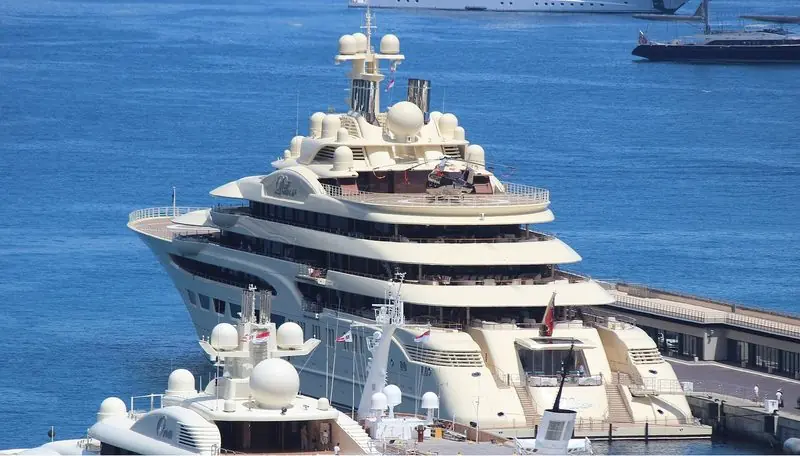
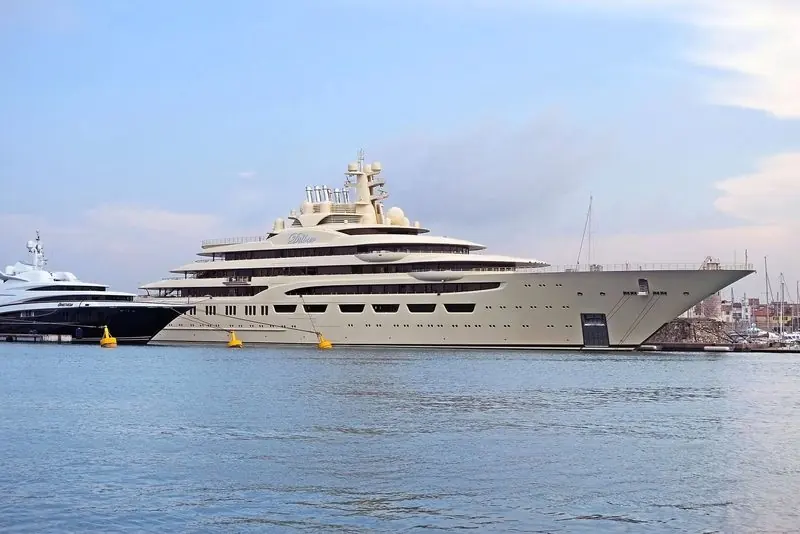
| Largest by volume | Dilbar, 156 m, Lurssen, 2016, at 15,917 GT the greatest interior volume ever delivered |
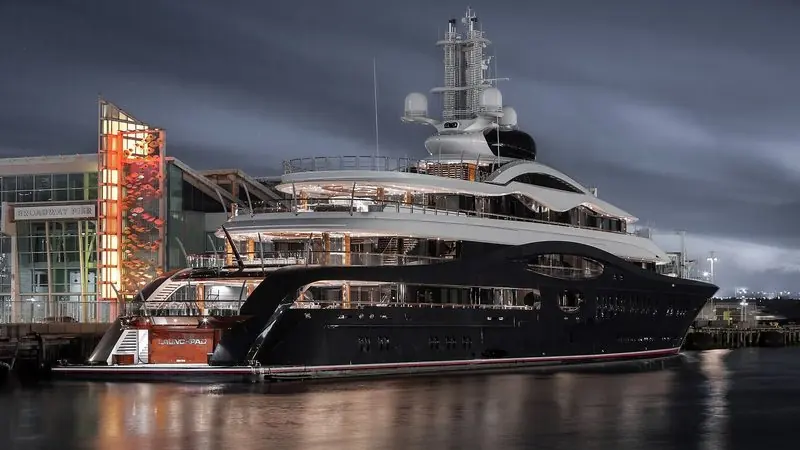
| Recent deliveries | Luminance (138.8 m, Lurssen, 2024), Launchpad (118.9 m, Feadship, 2024), DreAMBoat (111 m, Oceanco, 2025) |
| Series work | exteriors for the Amels 60 and Amels 80 Limited Editions |
| Beyond yachts | REV Ocean, a 194.9 m research and expedition vessel built by Vard |
| Design fee | no published scale from any studio in this class. The current market band is 1 to 5 per cent of build cost, with project management a further 2 to 4 per cent, both excluded from a yard's quoted price (SuperYachtReview 2026 price guide, updated March 2026) |
| Drawings | professional default is that the studio keeps copyright and the owner licenses one hull. ITIC standard trading conditions for naval architects, 8 July 2025, give the client only a non-exclusive royalty-free licence unless the contract says otherwise |
| Construction supervision | billed in addition to the design fee, by the hour and by named role. No studio or professional body publishes a day rate (checked 28 July 2026) |
Oslo, Glasgow, Antibes
Oeino grew up in Oslo and took his degree at the University of Strathclyde in Glasgow, in naval architecture and offshore engineering. That is a shipbuilding qualification, not an art school one, and it explains a good deal about the office he went on to build. The degree got him into the Antibes studio of the designer Martin Francis, where he stayed eight years. He opened his own practice in Antibes in 1994.
The business took its present form as Espen Oeino International in 2006, by which time the office had moved to Monaco. Oeino has since served as vice-president of the Monaco Yachting Cluster. The studio put its own headcount at around thirty people of nine nationalities in 2024, covering naval architecture, exterior design and engineering under one roof. Measured against the size of the boats it draws, that is a small office.
What the office actually sells
This is a naval architecture and exterior design practice. It takes the hull form, the structure, the general arrangement and the profile, and on a number of projects it has carried the naval architecture as well as the styling. Serene, the 133.9 metre Fincantieri, is one of those. Interiors go to a separate house appointed by the owner.
The pattern repeats across the fleet. Dilbar was fitted out to a Winch Design interior, Flying Fox to one by Mark Berryman, Cloudbreak to Christian Liaigre and Serene to Reymond Langton. For an owner the benefit is that the shape and the physics are argued out by the same people, so a styling move that would cost speed, stability or fuel gets killed at sketch stage instead of month twenty. The cost is a second appointment, a second fee and the job of keeping two offices working to one general arrangement.
Octopus put ice class and 26 guests in the same hull, and every long-range yacht with a hangar since has been drawn in her shadow.
What an Oeino boat looks like
The studio's yachts carry their volume openly. Superstructures step back deck by deck in clear horizontal layers, with long unbroken bands of glass running the length of each tier, so a 130 metre hull reads as a series of stacked lines instead of one tall block. Bows are tall and often raked hard. On the explorer boats the foredeck is left as a working deck, with cranes and a helicopter landing area treated as part of the design instead of equipment parked on top of it.
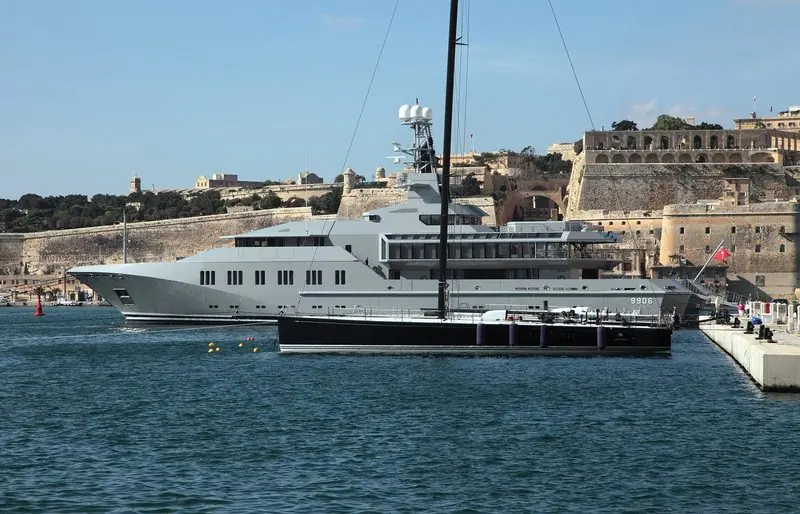
Launchpad, the 118.9 metre Feadship delivered in 2024, shows the more recent hand. She has a midnight blue hull carrying elongated oval portholes that run vertically from the bow and then turn horizontal to mark the covered side deck aft, under a white superstructure raked back above the main deck. Skat, from Lurssen in 2002, sits at the other end of the range and is deliberately stark and military in its massing. Both are recognisably from the same office, which is unusual across a twenty year gap.
Octopus, and the invention of a category
Octopus was delivered by Lurssen in 2003 at 126.2 metres, with an Oeino exterior over an interior by the Seattle designer Jonathan Quinn Barnett. She was built to ice class 1A with a range of 12,500 nautical miles and a top speed of around 19 knots. She carried a helipad forward, a larger landing deck aft with a hangar for two aircraft, a float-in tender bay in the stern, a submarine and a dive centre. She accommodated 26 guests in 13 staterooms.
Before her, a vessel that could work in ice and a vessel that could carry two dozen guests in comfort were separate things. Octopus put both in one hull and was easily the largest explorer yacht in the world when she was handed over. Every long-range yacht with a hangar and a submarine built since has been drawn in her shadow. She also fixed Oeino's reputation with the German yards at a point when the studio was less than a decade old.
The very large yachts
Serene followed from Fincantieri in 2011 at 133.9 metres, with Oeino responsible for both the exterior and the naval architecture. She has seven decks, two helicopter landing areas, a sea-water pool and a tender garage sized to take a submarine, and she is run by a crew of around 52. Dilbar came out of Lurssen in 2016 at 156 metres and remains the greatest interior volume ever delivered in a yacht, at 15,917 GT. Her swimming pool is 25 metres long and holds 180 cubic metres of water.
The run has continued. Amadea, 106.1 metres, arrived from Lurssen in 2017, Flying Fox at 136 metres in 2019, Infinity at 117 metres from Oceanco in 2022 and Luminance at 138.8 metres from Lurssen in 2024. Holding a resolved profile across that length is the whole difficulty. A 150 metre hull with the wrong proportions looks like a ferry from a mile away, and no amount of interior money corrects it afterwards.
Lurssen, and the yards that can build this
The deepest relationship is with Lurssen, which built Skat, Octopus, Titania, Starfire, Dilbar, Amadea, Flying Fox and Luminance to Oeino drawings. Abeking and Rasmussen built the 72.5 metre Cloudbreak in 2016, Fincantieri built Serene, Oceanco built Infinity and the 111 metre DreAMBoat, and Feadship built Launchpad. Amels builds the Limited Editions range to his exteriors. Vard, a commercial shipbuilder, built REV Ocean.
That spread is worth something specific to an owner. A designer who has already been through a German yard's engineering review knows which drawings will come back marked up and which will not, and he knows how differently a Dutch yard and an Italian one price a compound curve. It also means the studio can be brought to a builder the owner has already chosen instead of steering him towards a favourite. At this end of the market only a handful of yards can take the work at all, and the designer is often the person who tells an owner which of them is honest about its order book.
The Amels route, for owners who will not wait five years
Oeino drew the exteriors for the Amels 60 and the Amels 80 in the Dutch yard's Limited Editions programme. The Amels 80 was developed over roughly two years with tank testing and computational fluid dynamics behind it and a hybrid propulsion package. The first Amels 60 was scheduled for delivery in May 2025. The hulls are built to a fixed platform, so the naval architecture, the engineering and much of the structure are settled before a buyer appears.
What the buyer still chooses is the layout below, the finishes, the tender package and a great deal of detail. What he gets in return is a delivery date measured in months instead of years and a price that is known at signature. The trade is that the exterior is the exterior, and it will be shared with other hulls in the series. For a first large yacht, or for an owner who has watched a friend endure a four year custom build, that is often the better deal.
Efficiency, and the work that is not a yacht
Silver Fast, delivered in 2015 by the Australian yard now trading as SilverYachts, is 77 metres of aluminium on a semi-displacement hull with a draft of 2.6 metres and a top speed above 27 knots. She was billed as the largest and fastest aluminium motor yacht with conventional propulsion. The Silver series as a whole was built around a long, slim, light hull that needs far less power for its length. Oeino drew all of them.
REV Ocean is the other outlier, a 194.9 metre research and expedition vessel built by Vard in Romania to an Oeino design, with an interior by H2 Yacht Design and a gross tonnage of 19,235. It is a working ship carrying laboratories and scientific equipment, and it was announced at a smaller 181.6 metres before growing. An owner ordering a long-range yacht benefits from that work directly, because the arithmetic on hull resistance and fuel burn is the same on a research ship as on a private one.
What the commission costs, and the point of no return
The design contract is a separate document from the build contract and it is signed first, so the studio is engaged and being paid months before a yard is. Work runs concept, then preliminary naval architecture and general arrangement, then contract design, which is the package yards quote against, then construction support. No studio in this directory publishes a fee scale. The one current market figure that puts a number on it is the SuperYachtReview 2026 price guide, updated March 2026, which lists the designer's fee at 1 to 5 per cent of build cost and project management at a further 2 to 4 per cent, both outside the price a yard quotes. On a build costed at EUR 100 million that band is EUR 1 million to EUR 5 million. Naval architecture and exterior without an interior sits in the lower half of it.
The gates matter more than the total. Concept and preliminary are bought in stages and can be stopped between them. A letter of intent reserves a build slot, and the yacht building agreement is the document that commits an owner to the yard and the price, as Oceanco sets out in its owner's guide published by BOAT International on 10 June 2024. The real lock-in is later and quieter. Once the yard has begun engineering to these drawings, changing studio means paying twice for the same hull form. This office does not suit an owner who wants one firm to hand over a finished boat including the interior, it is not the place for a sailing yacht, and it is not the place for a first boat under about 40 metres.
Who owns the drawings, and what happens without Oeino
The default across the profession is that the studio keeps the copyright and the owner buys a licence to build one hull. The ITIC standard trading conditions for naval architects, in the version dated 8 July 2025, put it plainly: all intellectual property created under the agreement is owned by the consultant, with the client receiving a non-exclusive royalty-free licence for the purposes of that agreement. Eric Sponberg, writing on the same point, notes that the owner of a custom yacht buys the right to build one boat and that a second hull attracts a royalty of about 1.5 per cent of its price. Superyacht practice is usually better than that, with the designer keeping title and granting an exclusive, irrevocable and assignable licence, which is what Federico Santini describes as the standard clause in Barche magazine, August 2018. An owner planning a second hull or a heavy refit should have that word exclusive in the contract, and the drawings released in native format.
The practice carries the founder's name and has done since 1994. Nothing in the ITIC conditions, and nothing in any marine standard form, says what happens if the named designer becomes unavailable in year three of a four-year build. Commercial practice elsewhere treats death or incapacity of a key person as a termination trigger and obliges the consultant to offer a replacement of equal standing for the client's approval. That clause has to be asked for. So does an escrow or step-in right over the drawing set, because a licence is worth nothing if the office that holds the files has closed. A studio of around 30 people with a formed company behind it is a better bet here than a two-person practice, and that is a real reason to prefer it.
What a name on the profile is worth at resale
Resale is the question owners are too polite to ask and it has a plain answer here. An Oeino profile helps, marginally, for a reason that has nothing to do with taste. More than 50 delivered hulls means a broker has comparables, and a comparable is what a valuation is built from. Ocean Independence, writing on 11 May 2026, puts builder pedigree at the top of the list of things that hold value and names the Northern European yards this studio works with. The exterior is also the part of a yacht that cannot be refitted away. An interior can be gutted in a season. A hull form and a superstructure profile are what the second owner inherits, which is why a heavy, purposeful shape that was never fashionable does not become unfashionable.
The offsetting truth is scale. Above 100 metres the buyer pool is a few dozen people worldwide and it thins further for ice class and long range, because those are expensive capabilities to maintain and only a certain kind of programme uses them. Denison Yachting counted 470 yachts of 24 metres and over sold in 2025, at an average 487 days on market and a median of 277, and the large end sits well above those averages. The Amels Limited Editions exteriors are the exception in this portfolio. A series boat has dense comparables and a known specification, and that is the single strongest resale position available in yachting short of a Feadship.
Practical detail
| Design fee | not published; market band is 1 to 5 per cent of build cost plus 2 to 4 per cent project management, both outside the yard's quoted price (SuperYachtReview 2026 price guide, updated March 2026) |
|---|---|
| Contract structure | concept, then preliminary naval architecture and general arrangement, then contract design (the package yards quote against), then construction support; the early stages are bought separately and can be stopped between them |
| The real lock-in point | not the letter of intent but the yacht building agreement with the yard; once the yard has begun engineering to these drawings, changing studio means paying twice for the same hull form |
| Copyright and reuse | the ITIC standard trading conditions for naval architects, dated 8 July 2025, default to a non-exclusive royalty-free licence for one hull; ask for the word exclusive in the licence and for the drawings in native format |
| Faster, fixed-price route | Amels 60 and Amels 80 Limited Editions, Oeino exteriors on a fixed platform developed with tank testing and CFD; first Amels 60 was scheduled for delivery in May 2025 |
| Yards that build to his drawings | Lurssen (Skat, Octopus, Titania, Starfire, Dilbar, Amadea, Flying Fox, Luminance), Fincantieri (Serene), Oceanco (Infinity, DreAMBoat), Feadship (Launchpad), Abeking and Rasmussen (Cloudbreak), Amels (Limited Editions), Vard (REV Ocean) |
What owners and crew report
No independently attributable owner testimony found
press coverage of Octopus, Serene, Dilbar and Launchpad repeats quotes from Oeino himself, from Lurssen's own sales director and from the interior designer Jonathan Quinn Barnett, but this research found no on-the-record quote from a private owner or a named captain describing how one of these yachts actually handles; owners at this size operate under strict NDAs, as was the case on Octopus from 1998
Yotters research desk
What is good, and what to watch
Strong points
- Proven at a scale almost nobody else has reachedmore than 50 delivered hulls and eight of the 25 largest yachts afloat by the studio's own count, a credential no comparably sized office in this class can match
- Naval architecture and exterior settled by one officea styling move that would cost speed, stability or fuel is killed at sketch stage rather than twenty months into a build, because the same people argue physics and shape
- Working relationships across every yard that can actually build this sizeeight hulls with Lurssen alone, plus Fincantieri, Oceanco, Feadship and Abeking and Rasmussen, meaning the studio can tell an owner which yard's order book is honestly quoted
- A faster, fixed-price route through the Amels Limited Editionsexteriors for the Amels 60 and 80 on a fixed platform, delivering in months rather than the years a full custom build takes, with the price known at signature
What to watch
- No interior designan owner must appoint and fund a second studio and coordinate two offices against one general arrangement
- No published fee scalethe only public figure is the market-wide SuperYachtReview band of 1 to 5 per cent of build cost, which is not specific to this studio
- A narrow remitnot the office for a sailing yacht or for a first boat under about 40 metres
- Key-person risk is real and has to be asked forthe practice carries the founder's name, and the standard ITIC trading conditions say nothing about what happens if he becomes unavailable mid-build; a replacement and step-in clause has to be negotiated in, not assumed
- A very thin resale pool at the top of the rangeabove 100 metres the buyer pool is a few dozen people worldwide, and it thins further for the ice-class and long-range boats this studio is best known for
Who it is for: Owners commissioning above roughly 60 metres who want the naval architecture and the profile settled in the same office and will appoint a separate interior house.