De Voogt Naval Architects
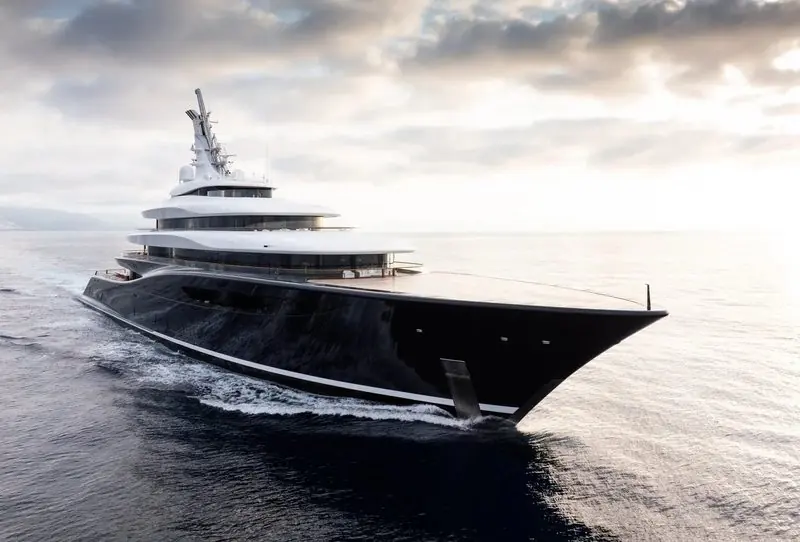
| Origins | Henri Willem de Voogt, born 1892, opened the Haarlemsche Jachtwerf on the river Spaarne at Haarlem in 1913 |
|---|---|
| Early pedigree | the 6.5 metre Oranje, from the same yard, took gold at the 1920 Olympic Games |
| Feadship | Feadship was formed in 1949 as an export association, with De Voogt supplying the naval architecture |
| Feadship today | three parties, De Voogt Naval Architects with the yards Royal Van Lent (1849) and Koninklijke De Vries (1906) |
| Frits de Voogt | Frits de Voogt, 1927 to 2023, led the design office for close to four decades |
| Based | Hoofddorp, in the Amsterdam area, and now trading as Studio De Voogt |
| Team | around 180 people |
| Disciplines | naval architecture and engineering, plus exterior design on more than half the Feadship fleet |
| Largest Feadship | Breakthrough, 118.8 m, launched May 2024, with exterior and interior by RWD |
| Anna, 110 m, delivered 5 October 2018 and listed since as Ambassador: De Voogt naval architecture under a Michael Leach Design exterior | |
| Savannah, 83.5 m, 2015 | exterior by De Voogt with CG Design, and Feadship's first hybrid yacht |
| Savannah's package | one medium-speed main engine on a single centreline shaft, three generators, batteries and a contra-rotating azimuthing stern thruster, with a claimed 30 per cent fuel saving |
| No separate design fee. The naval architecture is inside the Feadship build price and is not negotiated by the owner | |
| The owner still appoints and pays the exterior and interior studios himself, at a market band of 1 to 5 per cent of build cost for a designer, plus 2 to 4 per cent for project management, both outside the yard price (SuperYachtReview 2026 price guide, updated March 2026) | |
| Ocean Independence names Feadship first among the Northern European yards that hold market confidence on build quality, engineering pedigree and long-term support (11 May 2026) | |
A yard on the Spaarne, 1913
Henri Willem de Voogt was born in 1892 and opened the Haarlemsche Jachtwerf on the river Spaarne at Haarlem in 1913. He built boats and raced them, which is the oldest and still the most reliable way of learning what a hull actually does. The 6.5 metre Oranje came out of that yard and took gold at the 1920 Olympic Games.
He moved from building to naval architecture and spent the interwar years drawing large motor yachts for export. The office has been in continuous operation ever since, which makes this the longest unbroken lineage in the field by a considerable margin. Frits de Voogt, who died in 2023 at 96, ran the design side for close to four decades and set much of the language the yard still uses.
1949, and how Feadship actually works
Feadship was created in 1949 as an export association, formed to sell Dutch-built yachts into the American market. It is still a partnership of three parties, and it is worth an owner knowing which is which. Royal Van Lent, founded in 1849, and Koninklijke De Vries, founded in 1906, are the two building yards. De Voogt Naval Architects is the design and engineering office.
That structure is the single most unusual thing about Feadship. Everywhere else in this directory, the designer and the builder are separate businesses with separate interests, and a large part of an owner's project management effort goes into refereeing between them. Here the naval architects sit inside the same organisation as the shipwrights. Drawings are checked against what the shop floor can actually deliver before they reach an owner.
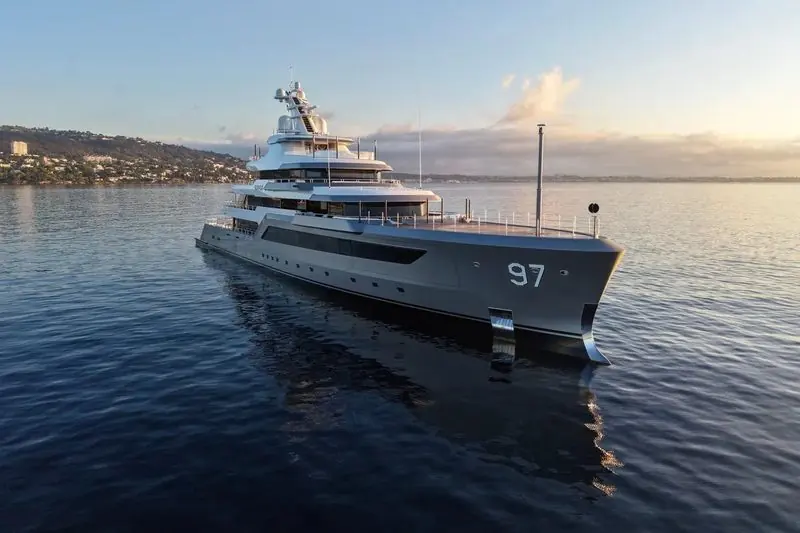
A hull form is fixed on the day it is built, which is why the least visible part of a yacht is the one an owner cannot afford to get wrong.
What the office draws
The core product is naval architecture and engineering. That means the hull lines, the structural arrangement, the stability calculations, the systems layout and everything required to satisfy a classification society and a flag state. It is the part of a boat that is fixed on the day it is built. A hull form cannot be improved in refit.
The office also draws exteriors, and more than half the Feadship fleet carries a De Voogt profile. On the rest, an outside studio takes the styling while De Voogt provides the platform underneath it. Michael Leach drew Anna, Tim Heywood drew Symphony, RWD drew Breakthrough, Sinot drew Drizzle and Winch drew Madame Gu. Interiors are almost always somebody else's work.
Savannah, and the argument for hybrid
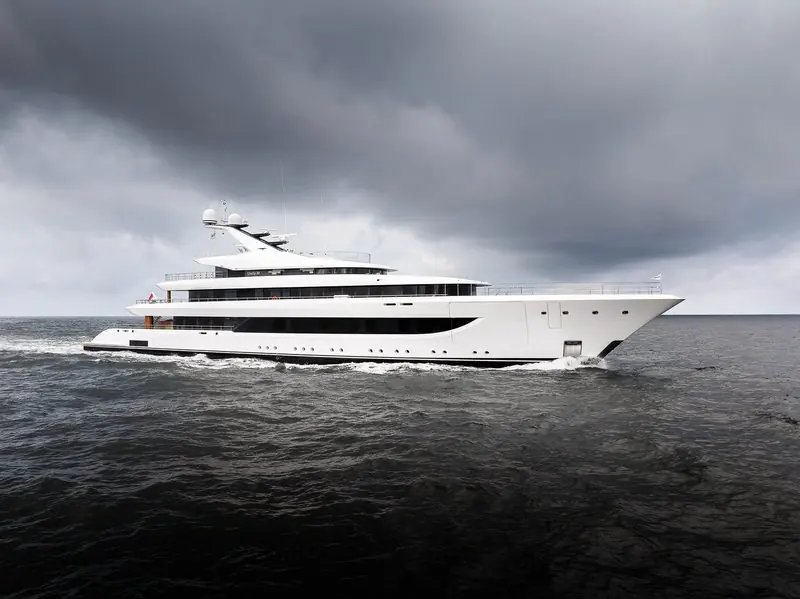
Savannah was delivered in 2015 at 83.5 metres, with the exterior by De Voogt working with CG Design, and she is generally regarded as the first true hybrid superyacht. She runs one medium-speed main engine on a single centreline shaft instead of the conventional pair of higher-revving diesels, with three generators, a battery bank and a large contra-rotating azimuthing thruster mounted just aft of the main propeller. That thruster provides the redundancy the single shaft would otherwise lack.
Feadship quoted a fuel economy of around thirty per cent against a conventional yacht of the same size, and Savannah has collected more awards than almost any boat the yard has built. The relevant point for an owner is that the saving came from the naval architecture and not from a bolt-on. A very fine entry, a single efficient engine and a hull optimised around it are decisions taken at lines stage, years before anyone chooses a fabric.
Anna, and the size race
Anna's keel was laid on 2 March 2015 and she was delivered on 5 October 2018 at 110 metres, the largest Feadship at the time and the second largest yacht ever built in the Netherlands. The naval architecture is De Voogt's, the exterior is by Michael Leach Design, and the interior was done by the same studio with a New York decorator. She is listed since as Ambassador.
For a decade she was the reference point for what the yard could do. Building at that length in the Netherlands is constrained by things most owners never consider, including bridge clearances, lock dimensions and the depth of the channels a hull has to be floated down before it reaches open water. Those constraints sit on the naval architect's desk long before they sit on anybody else's.
Breakthrough
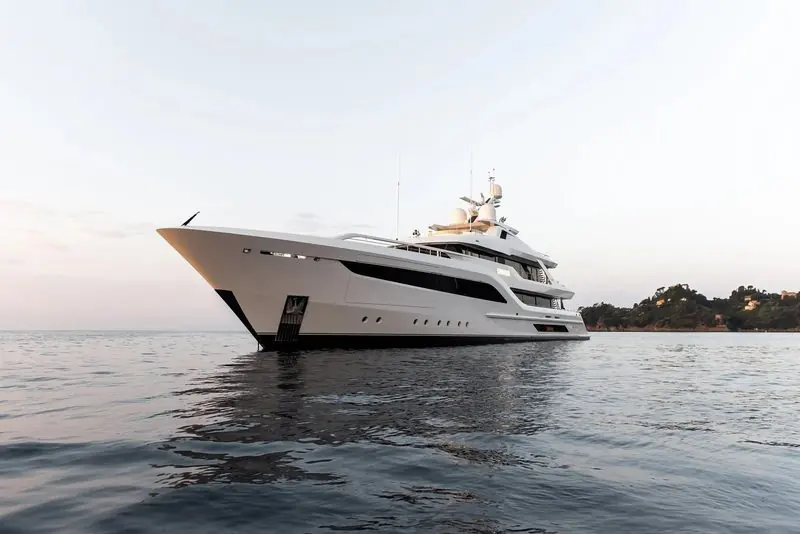
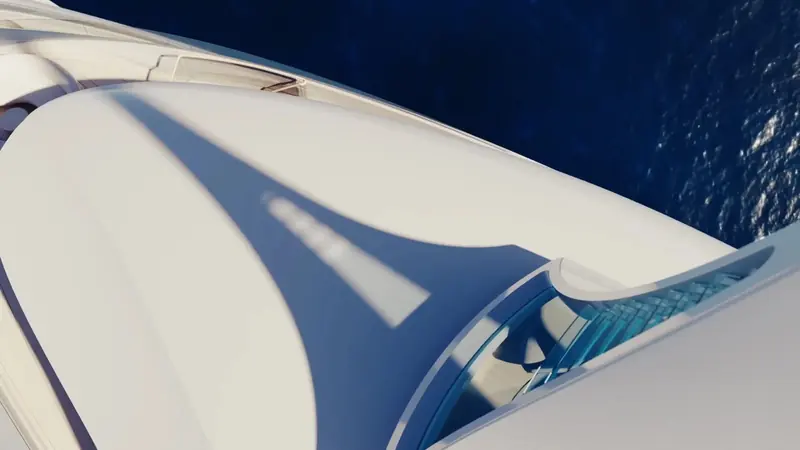
Feadship launched Breakthrough on 4 May 2024 at 118.8 metres and 7,247 GT, taking the yard's size record from Anna and becoming the largest superyacht ever launched in the Netherlands. RWD drew both the exterior and the interior. Her power comes from a 3.2 megawatt fuel-cell system running on cryogenic liquid hydrogen, with a hybrid arrangement allowing conventional diesel-electric operation as well.
The engineering problem was not the fuel cells. It was the hydrogen, which has to be stored at minus 253 degrees Celsius and occupies far more volume than diesel for the same energy, inside a hull that also had to carry fourteen balconies and seven unfolding platforms. Getting that arrangement past a classification society with no precedent to point at is naval architecture in its purest form. Five years of development went into it.
Where the naval architect's responsibility begins and ends
An owner should be clear about what this office guarantees. Speed, range, fuel consumption, noise and vibration levels and sea-keeping behaviour are the numbers that live in a build contract, and they rest on the naval architecture. Interior joinery, artwork and finish do not. If a yacht is loud at 12 knots or wet in a following sea, that is a hull and systems problem and the responsibility lies here.
The corresponding limitation is that De Voogt cannot fix a poor layout or an ugly profile chosen by somebody else. Where an outside studio holds the styling, the boundary between the two offices runs through the window line, the deck edge and the superstructure profile. On a Feadship that boundary is managed inside one project team, which removes the most common source of build disputes elsewhere in the industry.
How an owner meets De Voogt, and what it costs
There is no independent commission here. An owner does not appoint De Voogt. He orders a Feadship, and the naval architecture arrives as part of the yard's proposition, with the engineering fee inside the build price and not separately negotiated. That is a genuinely different commercial arrangement from every other studio in this directory, and it is worth pricing. On a custom project elsewhere the owner carries a designer's fee of 1 to 5 per cent of build cost and project management at a further 2 to 4 per cent, both outside the yard's number, per the SuperYachtReview guide updated March 2026. Here the first of those two lines is already inside the price for the engineering half of the job.
What an owner still chooses, and still pays for separately, is the exterior and interior studios, and Feadship is comfortable working with whoever he appoints. The sequence runs through a letter of intent, which reserves a slot, to the yacht building agreement, which is the commitment to price and delivery, as Oceanco describes the same industry practice in its owner's guide published by BOAT International on 10 June 2024. A yacht of 100 metres and above is commonly four to five years from first sketch to handover. The owner deals with the yard's project team once building starts, with De Voogt continuing through engineering, trials and delivery, which is attendance an outside naval architect would bill by the hour.
Standing, and who it does not suit
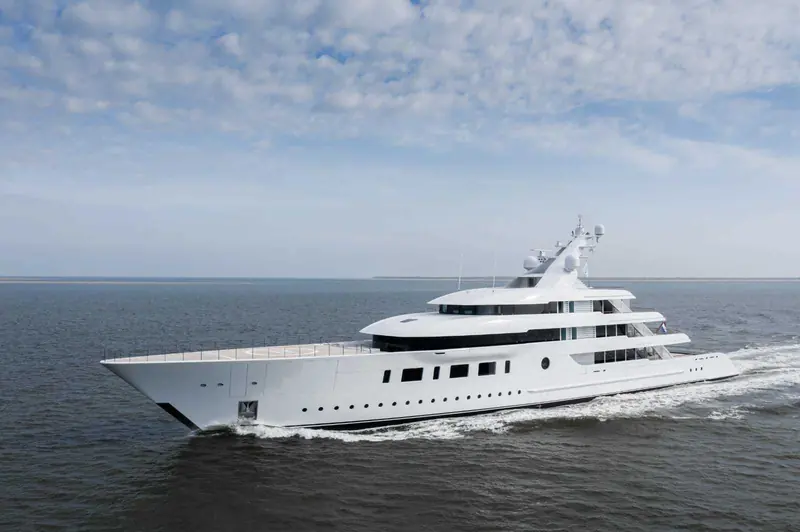
De Voogt's reputation is inseparable from Feadship's, and Feadship is generally placed at or near the top of any serious ranking of build quality. More than a century of continuous naval architecture is a record nobody else in yachting can claim. The office's contribution is invisible in photographs and decisive in ownership, which is why it is chronically underrated by buyers and never by captains.
This is not an option for an owner building anywhere other than Feadship, which rules it out for most of the market on price alone. It does not do interiors and it is not the place to go for a decorative brief. Owners who want a designer they can hire, argue with and take to a different yard should look elsewhere entirely, because that is not what this office is.
The engineering is the part the second owner pays for
A Feadship is the strongest resale position available in yachting, and the naval architecture is a larger part of that than the styling. Ocean Independence, writing on 11 May 2026, states that yachts from established Northern European yards, naming Feadship first, continue to command strong market confidence on build quality, engineering pedigree and long-term support. A buyer inspecting a fifteen-year-old boat is buying noise levels at 12 knots, fuel burn on a crossing, the condition of the steel and the quality of the systems drawings he will need at every refit. All of those are this office's work, and none of them can be improved later at a sensible price.
The consequence is that the exterior and interior studios an owner appoints move the number at the margin while the yard and the engineering set the range. That cuts both ways. A dated interior on a Feadship is a discount and a refit. A dated interior on a boat with weak engineering is a reason not to bid. It is also why the drawings matter at resale in a way they do not on a series boat. A complete, current, native-format engineering set makes a refit yard's quotation cheaper and faster, and a buyer who has been through one refit without the drawings will pay for the boat that has them.
Practical detail
| Design fee | no separate fee; the naval architecture is inside the Feadship build price and is not negotiated by the owner |
|---|---|
| What the owner still pays for | the exterior and interior studios he appoints himself, at the market band of 1 to 5 per cent of build cost plus 2 to 4 per cent project management, both outside the yard price (SuperYachtReview 2026 price guide, updated March 2026) |
| Contract sequence | letter of intent to reserve a build slot, then the yacht building agreement, which commits price and delivery date, the same sequence Oceanco describes in its owner's guide published by BOAT International on 10 June 2024 |
| Timeline | commonly four to five years from first sketch to handover at 100 metres and above |
| Where responsibility runs | speed, range, fuel burn, noise, vibration and sea-keeping sit with De Voogt and are written into the build contract; interior joinery, artwork and finish do not |
| Notable exteriors by outside studios on a De Voogt platform | Michael Leach Design (Anna), Tim Heywood (Symphony), RWD (Breakthrough), Sinot (Drizzle), Winch Design (Madame Gu) |
What owners and crew report
No independently attributable owner testimony found
Feadship owners rarely speak on the record about hull performance, and coverage of Savannah, Anna and Breakthrough draws on the yard's own engineers rather than on owners or captains; this research found no on-the-record quote from anyone who has run one of these yachts describing her sea-keeping or systems
Yotters research desk
What is good, and what to watch
Strong points
- The longest unbroken naval architecture lineage in yachtingcontinuous operation since 1913, a record no other office in this directory can claim, carried through Frits de Voogt's near four decades at the head of the design side
- Naval architect and shipwright inside one organisationdrawings are checked against what the yard's own shop floor can build before they reach an owner, removing the referee role an owner normally has to play between separate design and build businesses
- Engineering that becomes the industry's reference pointSavannah's single-shaft hybrid drivetrain and Breakthrough's cryogenic hydrogen fuel-cell system were both solved at naval-architecture stage, years before either yacht's interior was chosen
- The strongest resale position the market offersOcean Independence names Feadship first among Northern European yards holding market confidence on build quality, engineering pedigree and long-term support
What to watch
- Not an independent hirean owner cannot appoint De Voogt directly; the naval architecture only comes as part of ordering a Feadship, which prices out most of the market before design even starts
- No interior, and exterior only on part of the fleeton more than half the fleet De Voogt also draws the exterior, but on the rest an owner appoints and funds a separate studio, and interiors are almost always somebody else's work
- Not for owners who want to shop the design elsewherethe naval architecture is bound to Feadship's yards; it cannot be taken to a different builder if an owner later changes his mind
- Long build times at the largest sizesa yacht of 100 metres and above is commonly four to five years from first sketch to handover
Who it is for: Owners committed to building a Feadship, who want engineering pedigree stretching back to 1913 and will appoint their own exterior and interior studios.