Francesco Paszkowski Design
| Founder | Francesco Paszkowski, born 1963 in Milan, raised in Florence |
|---|---|
| Studio founded | 1992, Florence |
| First project | a 29 metre open yacht for Baglietto |
| Training | architecture, then four years at Spadolini Design, with early work in Athens and Singapore |
| Interior department | added in 1996 |
| Key collaborator | architect Margherita Casprini, working with the studio on interiors since 2006 |
| Team | a small core of around five collaborators plus Paszkowski |
| Portfolio | in the region of 220 to 250 yacht designs, from 24 to 72 metres |
| Yards | Baglietto since 1992, Sanlorenzo since 2005, Tankoa, CRN, Heesen, Cantiere delle Marche, ISA, Custom Line, Turquoise |
| Landmarks | Suerte (69.3 m, Tankoa, 2015), Casino Royale (72 m, Tankoa, 2018), Attila (64.25 m, Sanlorenzo, 2019), Saramour (61.3 m, CRN, 2014) |
| Awards | World Superyacht Awards, and a Compasso d'Oro reported in 2016 for a 44 metre Baglietto |
| Disciplines | exterior design, interior design and general arrangement |
| Design fee | not published. Market band 1 to 5 per cent of build cost for the designer, plus 2 to 4 per cent project management, both outside the yard price (SuperYachtReview 2026 price guide, updated March 2026) |
| On yard models the fee is inside the boat price, with further hulls normally covered by a royalty of roughly 1 to 1.5 per cent of each boat under published naval architecture practice | |
| No marine standard form covers the unavailability of a named principal in a studio of this size. The clause has to be negotiated into the design agreement | |
Florence, 1992
Paszkowski was born in Milan in 1963 and moved to Florence at three. He studied architecture with a side interest in car design and yachts, then spent four years at Spadolini Design, the Florentine practice that shaped a generation of Italian yacht designers. He has called those four years the foundation of his career. Work in Athens and Singapore on boats of 30 to 42 metres followed.
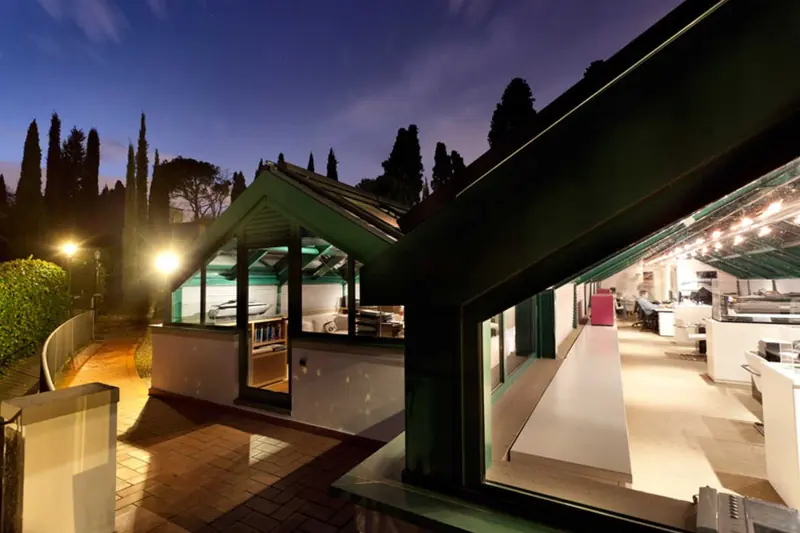
He opened his own studio in Florence in 1992. The first commission was a 29 metre open yacht for Baglietto, a yard he has now worked with for more than three decades. The office has stayed in Florence and has stayed small. It is still run from a house on Via di Santa Maria a Marignolle, well away from any waterfront showroom.
Two disciplines in one office
Paszkowski added an interior department in 1996, four years after opening. Since 2006 the architect Margherita Casprini has worked with the interior team on most of the studio's projects. Paszkowski himself concentrates on the exteriors and hands the interior lead to others inside the office.
That structure matters more than it sounds. On most large yachts the exterior comes from one studio and the interior from another, and the owner ends up refereeing where the two meet at a window line, a deck edge or a stair. Here both sides are drawn under one roof to one general arrangement. The saving is not only in fees. It is in the months of a build that are otherwise spent reconciling two sets of drawings.
One office draws the outside and the inside, which removes the argument most owners never see coming.
What the boats look like
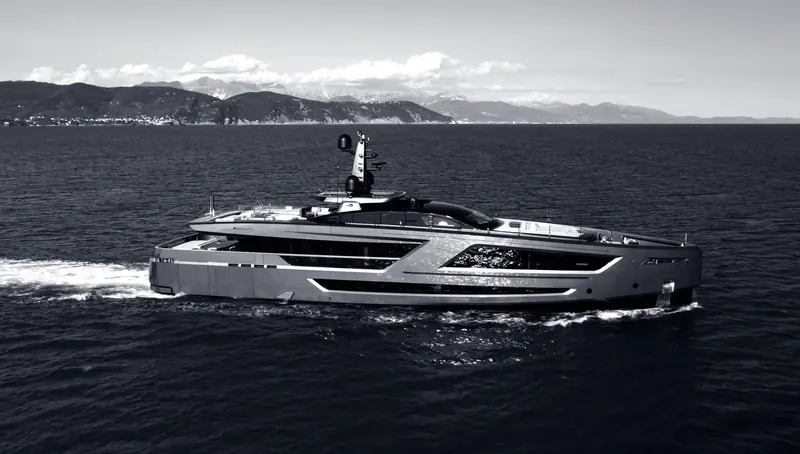
Paszkowski still begins with freehand drawing. The result is a horizontal, calm profile with long unbroken bands of glass and a superstructure that reads as one piece. He has been explicit about avoiding fashions that date, which is why boats he drew fifteen years ago do not look fifteen years old.
Inside, the studio works in light woods, natural stone and restrained colour, with an emphasis on connecting the interior to the water through large openings and terraces. The Italian yards he works with are the ones that pushed fold-down balconies and full-beam beach clubs into the mainstream. An owner gets an interior designed by the people who drew the hole in the hull that lets the light in.
Baglietto, three decades on
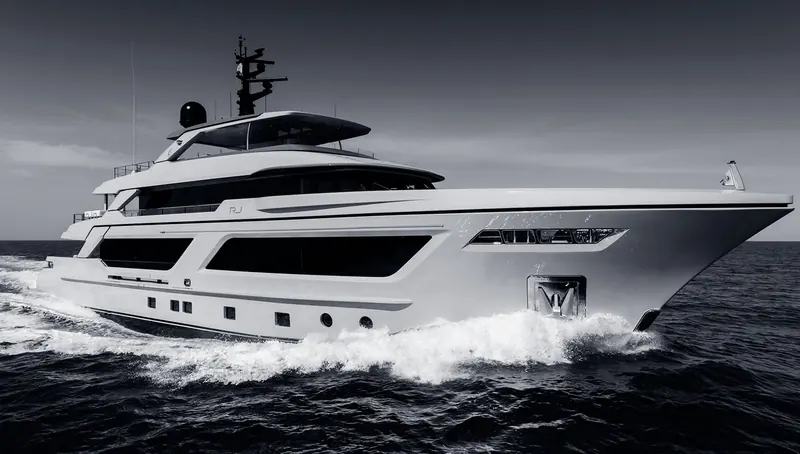
Baglietto has been the constant. Mischief at 54 metres in 2006, Blanca at 53 metres in 2008, Burkut at 53 metres in 2009, Unicorn at 54 metres in 2016 and Severin's at 55 metres in 2019 all came from the studio. Ark of Fate, 52 metres, followed in 2023 from the yard's T52 line and took a World Superyacht Award, and Kinda II at 60.6 metres is a 2026 delivery.
For an owner, a designer with that depth of history at one yard is a practical advantage. He knows the yard's engineering habits, its subcontractors and what it can actually build in the time it promises. He is also in a position to push back on the yard on the owner's behalf without the relationship collapsing. That is worth a great deal in the second year of a build.
The Tankoa fleet
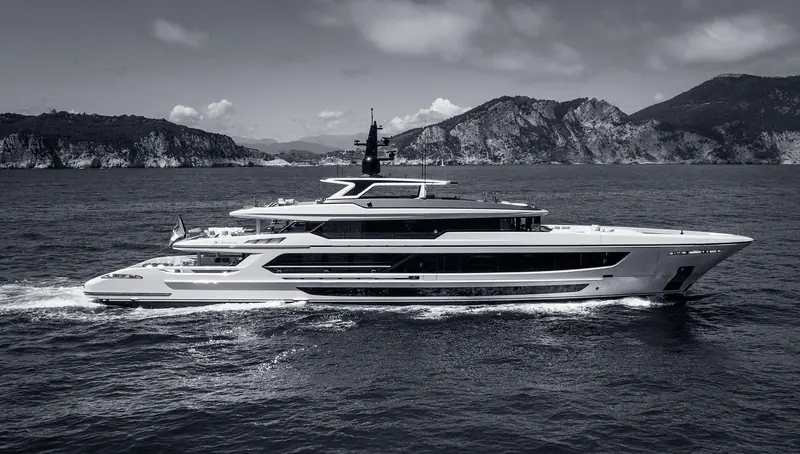
Tankoa Yachts in Genoa is the other close partner. Suerte, 69.3 metres, was delivered in 2015 as the yard's first yacht at that size and carried both the exterior and interior by the studio. Casino Royale, 72 metres, followed in 2018 and remains the largest boat Paszkowski has drawn. Olokun, 50 metres, arrived in 2020 and Diamond Binta, 58 metres, in 2024.
The Tankoa boats show the studio's range within one house style. The 50 metre platform has been sold repeatedly with different layouts and different interior treatments. An owner buying into an established Tankoa hull gets a shorter build programme and a designer already familiar with every system on the boat. The exterior does not give away that the hull has been built before.
Sanlorenzo, CRN and the rest
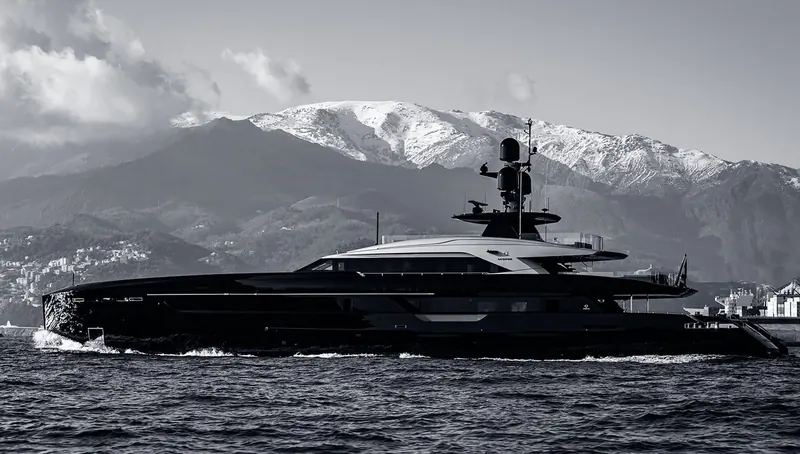
The studio has worked with Sanlorenzo since 2005. Attila, 64.25 metres, was delivered in 2019, Rose d'Or at 61.87 metres in 2023 and KD at 64 metres in 2024. Saramour, 61.3 metres, came from CRN in Ancona in 2014. Baraka, 58.2 metres, was built by Turquoise Yachts in Istanbul in 2010.
Heesen in the Netherlands, Cantiere delle Marche, ISA, Custom Line and Canados have all built to Paszkowski drawings. The explorer end of the market is covered through Cantiere delle Marche. The spread means an owner is not being pushed towards a single builder and can bring the studio to a yard he has already chosen.
Where the studio's work starts and stops
Paszkowski delivers exterior design, interior design and the general arrangement. Naval architecture is normally the yard's responsibility, which is standard practice among the Italian builders he works with, since most of them have their own engineering departments and their own hull platforms. On a semi-custom project the hull is already fixed before the designer is appointed.
That division suits an owner who is building at an established yard and does not suit one who wants a hull developed from nothing. It also means the studio's leverage over range, fuel burn and sea keeping is limited. Those numbers come from the yard. An owner should read the performance guarantees in the build contract and not assume the designer stands behind them.
How a commission runs, and what it costs
Most projects start either with an owner who has chosen a yard or with a yard developing a new model and bringing the studio in, and those two routes are commercially unalike. On a yard model the fee sits inside the boat price, is negotiated between studio and builder, and further hulls are normally covered by a royalty, which published naval architecture practice puts at roughly 1 to 1.5 per cent of each boat. On a private commission the owner signs and pays a staged design contract of his own, before any build contract exists. Concept can be bought and stopped. The yacht building agreement is the commitment, and after the yard starts engineering, a general arrangement change is paid for twice.
There is no published scale. The superyacht market band for an owner's own designer is 1 to 5 per cent of build cost, with project management a further 2 to 4 per cent, both outside the yard's quoted price, per the SuperYachtReview guide updated March 2026. On a 60 metre Italian build taking exterior and interior from one studio, that is a genuine saving against two appointments and it removes the interface between them, which is where schedule slippage usually starts. An owner buying into an existing Baglietto, Sanlorenzo or Tankoa model is at the bottom of the band or outside it entirely, because the platform was drawn and paid for before he arrived.
Recognition, and who it does not suit
The studio has taken World Superyacht Awards and a Compasso d'Oro was reported in 2016 for a 44 metre Baglietto, which is an Italian industrial design prize, not a yachting one, and is unusual for this industry. Awards help a boat at resale and tell an owner the finish met a standard specialists would defend. They do not tell him whether the studio will answer the phone in month thirty of a build.
This studio does not suit an owner commissioning at 90 metres or above, since the portfolio stops at 72. It does not suit an owner who wants a designer with his own naval architecture team and control over the hull. Anyone chasing a profile that looks radically unlike anything else on the water should also look elsewhere, because the studio has spent thirty years deliberately avoiding that.
A studio of six, and the drawings behind it
A small core of around five collaborators plus Paszkowski is what an owner is buying, and on a three-year build that concentration deserves a clause. Nothing in the marine standard forms addresses it. The ITIC standard trading conditions for naval architects, dated 8 July 2025, cover intellectual property and cap liability at ten times the consultant's charges or GBP 100,000, whichever is higher, and stop there. Ordinary commercial consultancy treats death or prolonged incapacity of a named individual as a termination event and requires a replacement of equal standing subject to the client's approval. That clause has to be requested. So does a right to the complete drawing and specification set in native format if the practice ceases trading.
Ownership of the drawings matters more here than at a purely custom office because so much of the portfolio is yard work. Copyright normally stays with the designer, with the client licensed for one hull, and superyacht contracts usually convert that into an exclusive, irrevocable and assignable licence, the clause Federico Santini describes in Barche magazine in August 2018. An owner commissioning a one-off should establish in writing that the general arrangement he paid to develop will not appear as a yard model two years later. A buyer of a yard model should understand that it will, because that is the arrangement, and it is the reason the design costs him nothing visible.
Restraint sells, the yard's badge sells harder
A yacht carrying this studio's name sells no differently from an equivalent boat by another good Italian office, and that is not a criticism. On a Baglietto, a Sanlorenzo or a Tankoa the marque does the work at resale. Ocean Independence, writing on 11 May 2026, lists builder pedigree, accommodation, technical specification, paint condition and maintenance history as the things that move a valuation, and does not list the designer. The studio's contribution shows up in a longer time frame. Thirty years of deliberately avoiding a radical profile means a Paszkowski boat from 2015 does not announce 2015, and a shape that never chased a fashion has none to fall out of.
The narrower judgement is about scale rather than taste. The portfolio stops at 72 metres, and inside the 40 to 72 metre band the Italian market is deep, competitive and well supplied with comparables, which is exactly the condition in which a boat sells at a sensible number rather than at a negotiated one. Denison Yachting recorded 470 sales of 24 metres and over in 2025 at an average 487 days on market and a median of 277, and this segment sits at the busy end of that distribution. An owner here is buying liquidity he will not notice until he sells.
Practical detail
| Design fee | Not published. Market band 1 to 5 percent of build cost for the designer, plus 2 to 4 percent project management, both outside the yard price, per the SuperYachtReview 2026 guide updated March 2026. |
|---|---|
| On a yard model | The fee sits inside the boat price, and further hulls are normally covered by a royalty of roughly 1 to 1.5 percent of each boat under published naval architecture practice. |
| Drawing ownership | Copyright normally stays with the designer and the client is licensed for one hull; on yard work that licence is usually exclusive, irrevocable and assignable to the builder, the structure Federico Santini describes in Barche magazine. |
| Key-person risk | No marine standard form covers a named principal's unavailability in a studio this size; request a replacement-of-equal-standing clause and a right to the full drawing set in native format if the practice ceases trading. |
| Scale ceiling | The portfolio tops out at 72 metres; nothing larger has been built to a Paszkowski general arrangement. |
| What is not published | The studio's own fee, and any performance guarantee for range, fuel burn or sea keeping, which sit in the yard's build contract, not the design agreement. |
What owners and crew report
Kinda II, the studio's largest Baglietto yet, was delivered in August 2026 as the yard's largest boat in its history
Robb Report and Boat International both confirm the 60.6 metre T60 flagship, the largest yacht Baglietto has built in 172 years, launched in March 2026 and delivered to her owner in August 2026 with exterior and interior by the studio.
Boat InternationalOcean Independence names builder pedigree, not the designer, as what actually moves a resale valuation in this segment
Writing on 11 May 2026, the brokerage lists accommodation, technical specification, paint condition and maintenance history alongside builder pedigree as the factors buyers weigh, and does not list the designer by name.
Ocean IndependenceThe ITIC standard trading conditions for naval architects, the closest published marine template, stop at intellectual property and a liability cap
Dated 8 July 2025, the standard terms cap liability at ten times the consultant's charges or GBP 100,000, whichever is higher, and do not address the unavailability of a named principal in a small studio, confirming that clause has to be negotiated separately.
ITIC
What is good, and what to watch
Strong points
- One office draws the outside and the insideOn most large yachts the exterior and interior come from two studios and the owner referees where they meet at a window line or a deck edge; here both are drawn under one roof to one general arrangement.
- Three decades of engineering familiarity at his core yardsMore than thirty years at Baglietto and twenty at Sanlorenzo means the studio knows what each yard can actually build in the time it promises, and is positioned to push back on the owner's behalf without the relationship collapsing.
- A profile that has deliberately avoided datingThe studio has been explicit about avoiding passing fashions, which is why a Paszkowski hull from 2015 does not read as a 2015 boat, a real advantage against a 2025 median resale window of 277 days.
What to watch
- The portfolio stops at 72 metresAn owner commissioning at 90 metres or above, or one who wants a hull developed from first principles by the same office, is outside what this studio has ever delivered.
- No design fee is published anywhereThe only figures available are the general SuperYachtReview market band, 1 to 5 percent of build cost plus 2 to 4 percent project management, not a number specific to this studio.
- A studio of six carries concentration risk the marine standard forms do not addressThe ITIC standard trading conditions cover intellectual property and a liability cap and say nothing about the unavailability of a named principal, so a replacement-of-equal-standing clause has to be requested, not assumed.
Who it is for: Owners building between 40 and 72 metres at an Italian or Dutch yard who want a single studio responsible for how the whole boat looks.