Harrison Eidsgaard
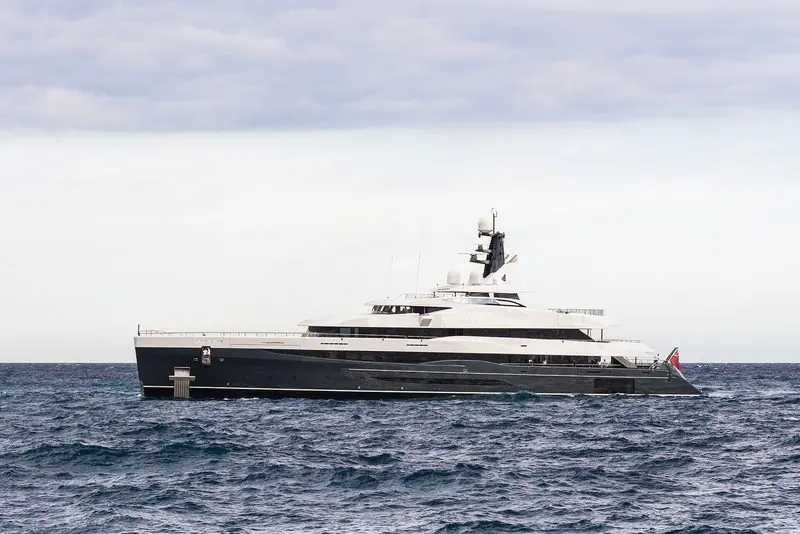
| Founded | 2005 by Ben Harrison, Peder Eidsgaard and Ewa Tasior Eidsgaard |
|---|---|
| Based | Thames Wharf Studios, Hammersmith, on the river in west London |
| Team | around ten people, with all three directors on every concept |
| Disciplines | yacht exterior and interior design, plus aviation and residential work |
| Naval architecture | not offered, and normally handled by the yard or by De Voogt |
| Range | yachts from roughly 40 to 95 metres, mostly motor yachts under 100 metres |
| Largest project | Madsummer, 95 m, Lurssen, 2019, since renamed CC-Summer |
| Feadship work | Tango (77.7 m, 2011), the 2016 Vanish (66.25 m, now Hampshire) and the 71.5 m Vanish of 2021 |
| Abeking and Rasmussen | Elandess, 74.5 m, 2018, listed since as M'Brace |
| Heesen | Irisha, 51 m, 2018, aluminium, under 500 GT, with a top speed around 26 knots |
| Yards worked with | Feadship, Lurssen, Abeking and Rasmussen, Heesen, Wally |
| Typical programme | three to four years from concept to delivery |
| Design fee | not published. Market band 1 to 5 per cent of build cost, plus 2 to 4 per cent project management, both outside the yard price (SuperYachtReview 2026 price guide, updated March 2026) |
| Site attendance through construction is charged separately from the design fee and billed by time | |
| Copyright normally stays with the studio and the owner licenses one hull, so a second boat to the same design has to be negotiated and priced | |
Three directors and ten people
Ben Harrison, Peder Eidsgaard and Ewa Tasior Eidsgaard set up the studio in 2005. It works from Thames Wharf Studios in Hammersmith, on the north bank of the river in west London. The team is around ten people. Peder decided at twelve that he was going to design superyachts and has done nothing else since.
The three split the work by discipline. Peder and Ben handle exteriors and general arrangements. Ewa takes interior architecture and decoration. All three sit in on the concept phase of every project, and one of the two men then leads the individual job through to delivery. For an owner that means the people who sold him the idea are the people who defend it in the yard's meeting room three years later.
What the studio sells
This is an exterior and interior practice. It does not do naval architecture. On the Feadship boats the hull lines and engineering come from De Voogt Naval Architects, and on the German projects the yard's own engineers carry that load. An owner appointing Harrison Eidsgaard is buying how the yacht looks and how it lives. The numbers in the specification belong to somebody else.
The studio also works in aviation and residential design under the Eidsgaard name. That is more useful to an owner than it first appears. A client fitting out an aircraft, a house and a yacht within a few years can run all three through one office and get a consistent result without briefing three sets of strangers. Several owners have done exactly that.
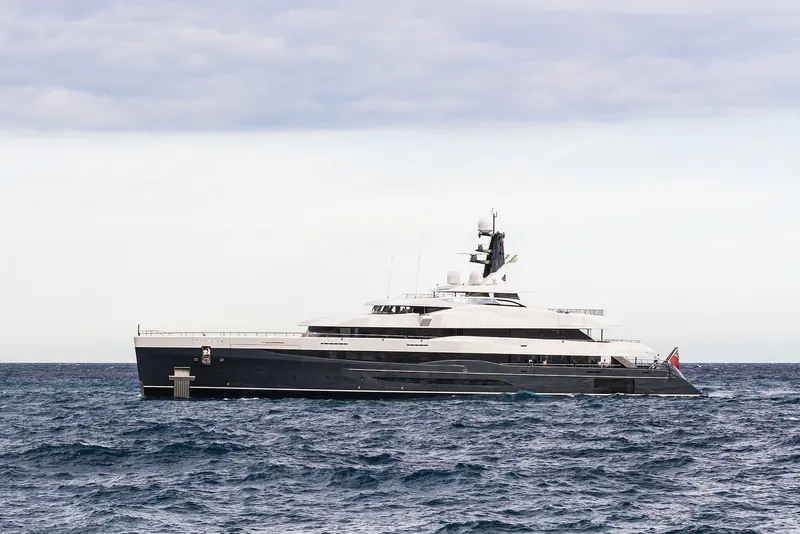
Ten people in Hammersmith, and all three directors sit in on the first sketch of every boat.
Glass, and interiors that are not hotels
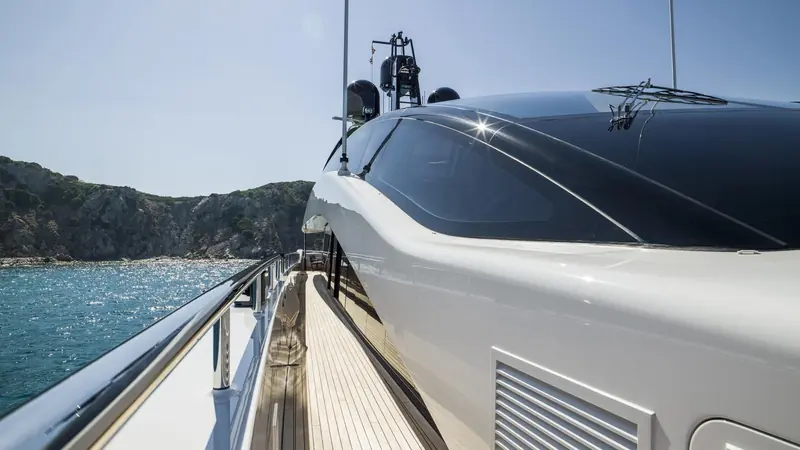
The recognisable move is glazing. Irisha carries curved glass panels that wrap the superstructure and give her a profile the yard compared to a fighter jet. Vanish was built around outdoor living, with the volume pushed outwards to the rail and the interior opened to it. The studio has a reputation for getting usable space out of small hulls, which is the harder end of the job.
Inside, the directors have been explicit that they are trying to build homes and not, in their own words, soulless hotels. Interiors tend towards texture and warmth with rooms that read as rooms. The studio keeps referring back to the first concept sketch through the whole build to stop the idea being diluted by a thousand small decisions. Owners are pushed to put personal things into the boat.
The Feadship run
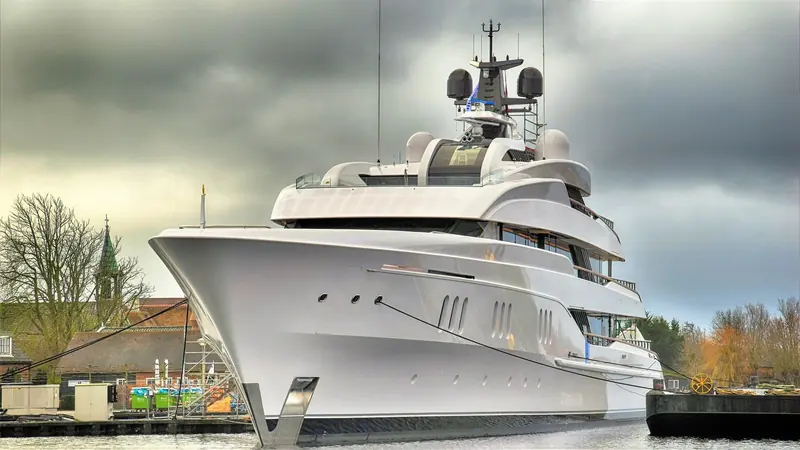
Tango, 77.7 metres, was delivered by Feadship in 2011 with both exterior and interior by the studio and naval architecture by De Voogt. She won multiple awards and put the practice in front of the Dutch establishment. Vanish followed in 2016 at 66.25 metres, again inside and out.
The second Vanish tells the more useful story. The same owner came back to Feadship and the same designers for a larger boat of the same name, delivered in 2021. Repeat commissions from an owner who has already lived through a four year build are the strongest evidence available about a studio. Halo, at around 57.5 metres, is a third Feadship in the portfolio, and there the studio drew the exterior only.
Germany, and the 95 metre
Madsummer, 95 metres, was delivered by Lurssen in 2019 to a Harrison Eidsgaard exterior and now sails as CC-Summer. She is the largest boat the studio has drawn and the one that moved it out of the sub-80 metre bracket. Lurssen described the proportions as timeless, which from that yard is not a throwaway compliment.
Elandess, 74.5 metres from Abeking and Rasmussen in 2018, was the studio's first project with that builder and is listed since as M'Brace. Working with the two German yards at once is a particular test. Both engineer to a standard that leaves very little room for a designer who cannot answer a technical question, and both expect drawings that are right the first time.
The smaller, faster end
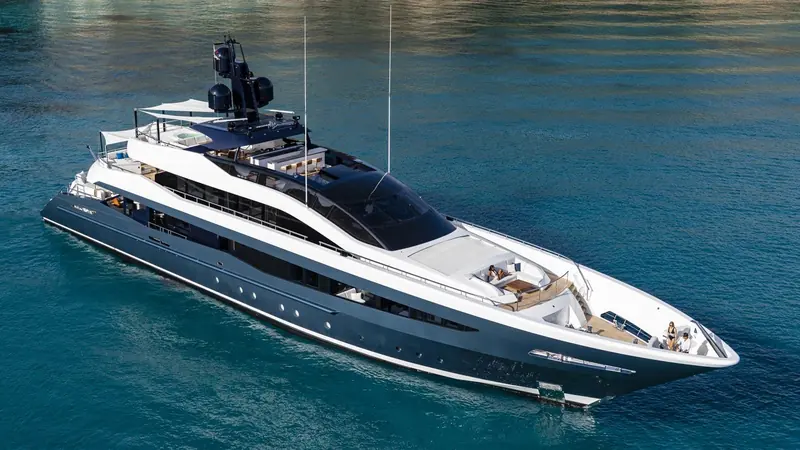
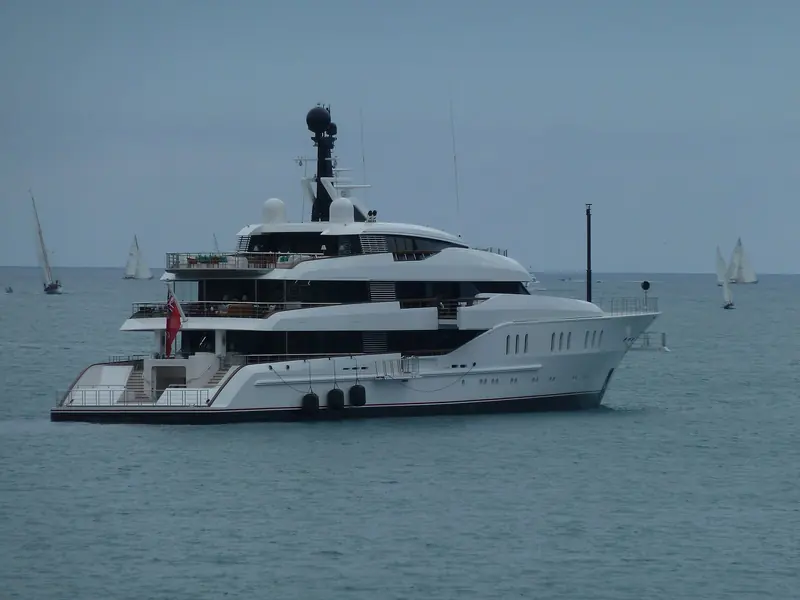
Irisha, 51 metres, came out of Heesen in 2018. She is aluminium, semi-displacement, stays under 500 GT and runs to a top speed of around 26 knots. Her paint shifts between metallic blue and dark olive depending on the light. The yard sells the platform as a fast custom boat, and the studio's job was to make 51 metres feel like more.
That 500 GT threshold matters to an owner for practical reasons. Below it the regulatory and crewing burden is lighter, and a boat can be run with a smaller crew and fewer certificates. Designing a 51 metre that stays under the line while still feeling like a big yacht is a volume problem before it is an aesthetic one. This is the part of the studio's work that is invisible in photographs.
How a commission runs
All three directors work on the initial concept. Once the direction is set, either Ben or Peder leads the project with the studio behind them, and the owner deals with that person for the duration. The studio has said a project typically takes three to four years from concept to completion.
Because there is no naval architecture in house, the yard is in the conversation early. On a Feadship the platform and engineering are settled with De Voogt while the exterior is still moving. An owner should expect the studio to argue for the shape and the yard to argue for buildability, with him holding the budget between them. That triangle is normal at this level and works better when the designer has built with the yard before.
What it costs, and where the studio stops
Studios of this standing charge either against defined design stages or as a share of build cost, and none of them publishes the number. The current market band, from the SuperYachtReview guide updated March 2026, is 1 to 5 per cent of build cost for the designer and a further 2 to 4 per cent for project management, both outside the price a yard quotes. On a EUR 120 million build that is EUR 1.2 million to EUR 6 million for the design. Taking exterior and interior from the same office sits in the upper half of the band and still costs less than appointing two studios plus the interface between them, which is where schedule slippage usually starts. Concept is bought first and can be stopped for its own price. The yacht building agreement is the commitment.
The studio does not warrant speed, range, fuel burn or noise. Those belong to the naval architect and the yard and appear in the build contract, which is a distinction that decides who pays when a boat is loud at 12 knots. An owner who wants a single party accountable for both the look and the performance of the boat needs a different structure and should say so before appointing anybody. Site attendance through construction is a separate charge from the design fee, billed by time in the way the profession bills all supervision, and it is the last item that should be cut from a budget.
Recognition, and who it does not suit
Tango collected multiple awards after her 2011 delivery and the studio has been a regular presence at the industry design prizes since. Recognition at this level is a useful filter for an owner and a modest help at resale. It says nothing about how a studio behaves when a yard is three months late. The better test is the second Vanish, since that owner had already been through the whole process once and chose the same three people again.
Harrison Eidsgaard does not suit an owner who wants a hull developed from first principles by the same firm that styles it. It is not the obvious choice above 100 metres, since the portfolio tops out at 95. An owner wanting a hard Italian sports profile is also in the wrong office, because the studio's work runs cooler and more Northern European than that.
The evidence is that these boats change hands
The most useful thing that can be said about resale here is not an opinion. Madsummer now sails as CC-Summer, Elandess is listed as M'Brace and the 2016 Vanish as Hampshire, and at this size a change of name normally follows a change of ownership. A fleet that trades is a fleet with a market, which is more than can be said for several studios in this directory whose largest works have never been offered. The reason is straightforward. The work is cool, Northern European and unemphatic, and it is almost always attached to a Feadship, a Lurssen, an Abeking and Rasmussen or a Heesen, which Ocean Independence identifies on 11 May 2026 as the yards that hold market confidence.
The limits are worth naming too. The portfolio tops out at 95 metres, so an owner is inside the size band where the buyer pool is deepest, and that helps. The interiors are restrained enough not to narrow it, but restraint is not neutrality, and a buyer looking for warmth or ornament will feel the boat is cold rather than calm. That costs enquiries rather than money. Against an average 487 days on market and a median of 277 across the 470 yachts of 24 metres and over sold in 2025, a boat from this studio should expect to sit nearer the median than the average, which is the whole argument.
Practical detail
| Design fee | Not published. Market band 1 to 5 percent of build cost, plus 2 to 4 percent project management, both outside the yard price, per the SuperYachtReview 2026 guide updated March 2026. |
|---|---|
| Site attendance | Charged separately from the design fee and billed by time through the construction period; do not assume it is included in the headline percentage. |
| Drawing ownership | Copyright normally stays with the studio and the owner licenses one hull; a second boat to the same design, as with the two Vanish commissions, has to be separately negotiated and priced. |
| Naval architecture | Not offered by the studio. On Feadship projects it is De Voogt; on the German yards it is the builder's own engineering department, and all performance guarantees sit in that contract, not the design agreement. |
| Typical programme | Three to four years from concept to delivery, with the yard entering the conversation early since the hull and engineering are settled in parallel with the exterior. |
| What is not published | The studio's own fee, and any warranty for speed, range, fuel burn or noise, which belong to the naval architect and appear in the build contract. |
What owners and crew report
The second Vanish is a documented repeat commission from the same owner
SuperYachtFan and Boat International both confirm the American owner who bought the 66.25 metre Vanish in 2016 returned to Feadship and to Harrison Eidsgaard two years later for a larger 71.5 metre Vanish, delivered in 2021 with a three-deck atrium.
SuperYachtFanThe studio's fleet keeps changing hands under new names, evidence the boats trade
Madsummer now sails as CC-Summer, Elandess is listed as M'Brace and the 2016 Vanish as Hampshire; Ocean Independence's 11 May 2026 note identifies Feadship, Lurssen, Abeking and Rasmussen and Heesen, the studio's core yards, as the builders that hold market confidence.
Ocean IndependenceLurssen itself called the Madsummer proportions timeless
The yard's own description of its largest Harrison Eidsgaard commission, the 95 metre delivered in 2019, used the word timeless, unusual praise from a builder that rarely comments on a design partner's work.
Lurssen
What is good, and what to watch
Strong points
- A repeat client is the strongest evidence a design practice can offerAn owner who had already lived through one four-year Feadship build chose the same three directors again for a second, larger Vanish, rather than testing a different studio.
- The fleet demonstrably tradesA change of name at this size normally follows a change of ownership, and three of the studio's largest boats, Madsummer, Elandess and the first Vanish, have all changed hands and been renamed.
- All three directors sit in on every conceptThe people who sell an owner the first sketch are the same three who defend it in the yard's meeting room years later, rather than handing the job to a junior team.
What to watch
- No naval architecture in houseHull lines and engineering come from De Voogt or the yard's own department; an owner wanting one firm accountable for both the look and the performance numbers needs a different structure.
- The portfolio tops out at 95 metresAn owner building above 100 metres is outside anything the studio has delivered.
- The restraint that defines the work can read as coldThe interiors are deliberately unemphatic and Northern European rather than warm or ornamented, and a buyer wanting warmth may simply pass rather than negotiate.
Who it is for: Owners building a Northern European motor yacht between 50 and 95 metres who want the outside and the inside from the same small team.