Reymond Langton Design
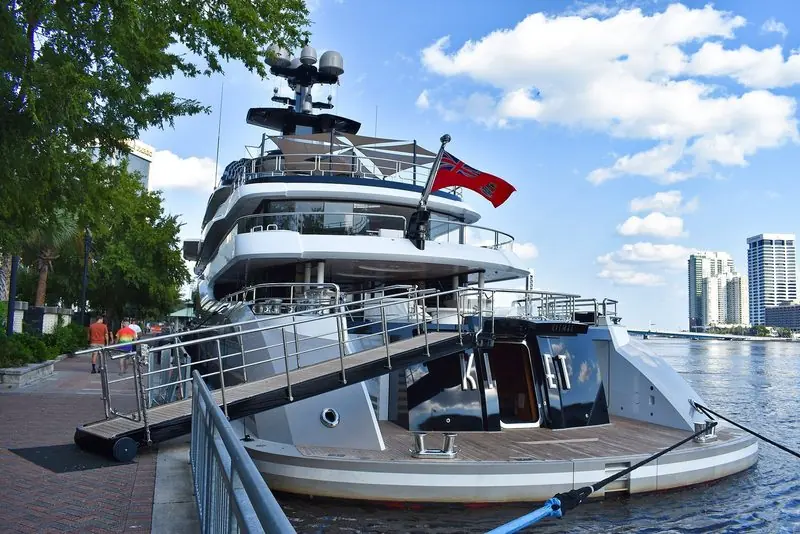
| Founders | Pascale Reymond and Andrew Langton, both with more than a decade in the industry before founding the studio |
|---|---|
| Founded | 2001, originally in London |
| Based | Bath, Somerset, England, with a team of around twenty |
| Directors | Jason Macaree joined as a director in 2002 |
| Disciplines | interior design and exterior styling, with no naval architecture |
| Largest interior | Serene, 133.9 m, Fincantieri, 2011, over an Espen Oeino exterior |
| Largest full project | Aviva, 98.4 m, Abeking and Rasmussen, delivered May 2017, exterior and interior, 4,966 GT |
| Lady Lara, 91 m, Lurssen, 2015, built as project Orchid: exterior and interior | |
| Whisper, 95.2 m, Lurssen, 2014, delivered as Kismet and built as project Global: interior | |
| Kismet, 122 m, Lurssen, 2024 | interior, under a Nuvolari Lenard exterior |
| Interior-only work | interior-only work also includes Lady S (93 m, Feadship, 2019), Artefact (80 m, Nobiskrug, 2020) and Bravo Eugenia (109 m, Oceanco, 2018) |
| Awards | World Superyacht Award for Mogambo, World Superyacht Award 2015 for Kismet, and both a World Superyacht Award and a BOAT Design and Innovation Award in 2018 for Aviva |
| Design fee | not published. Market band 1 to 5 per cent of build cost, plus 2 to 4 per cent project management, both outside the yard price (SuperYachtReview 2026 price guide, updated March 2026) |
| Commissioned art and bespoke pieces sit in the owner's own supply budget, not the design fee, and on this specification they routinely exceed it | |
| Copyright in the design normally stays with the studio. Commissioned artworks carry the artist's separate rights, which do not pass with the yacht unless bought | |
An art historian and a transport designer
Pascale Reymond read art history at the Sorbonne before training in design in London. Andrew Langton took a degree in transport design. Those two educations pull in opposite directions, one towards period, reference and material, the other towards surface, stance and how a shape moves. The studio's work lives in the tension between them.
They founded the practice in 2001, by which point each had spent more than ten years inside the superyacht industry working for other people. Jason Macaree joined as a director the following year. The office started in London and later moved to Bath. Both founders are still directly on the work, which at this level is less common than owners assume.
A small studio taking very large boats
The team is around twenty people. Set against a portfolio that includes a 133.9 metre interior and a 122 metre interior, that is a strikingly small number, and it is the single most important thing an owner should understand about hiring this office. The founders answer the phone. The work does not get delegated down three levels to someone the owner has never met.
The trade-off is capacity. A studio of this size takes a limited number of projects at once and cannot absorb an unlimited volume of late revisions. An owner who expects to change his mind repeatedly through a four year build should ask directly how many other yachts the studio has running in the same window. It is a fair question and a good studio answers it honestly.
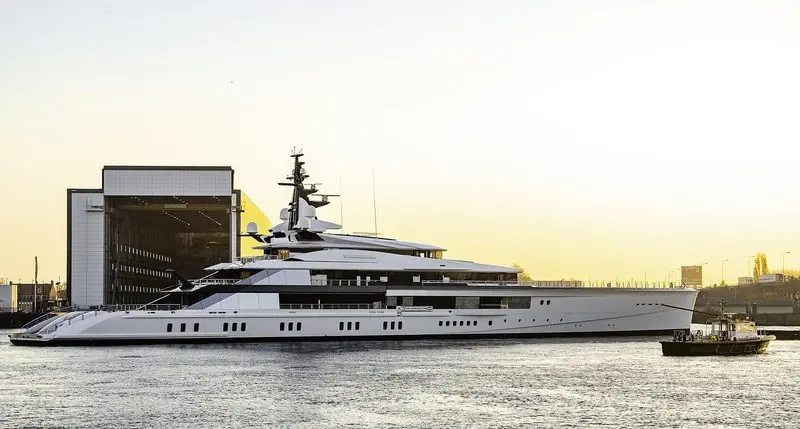
The brief for Aviva began with a regulation padel court and the 98 metre yacht was drawn outwards from it.
Where the studio's work starts and stops
Reymond Langton does interiors and exterior styling. There is no naval architecture, so the hull, the structure and the performance belong to the yard or to a separate office. On the largest projects the studio usually holds the interior alone while another firm draws the profile, and it is comfortable in that role.
The interior is where the studio's ambition sits. It commissions bespoke art, custom finishes and one-off pieces made for a specific yacht, which means the practice is running a network of craftspeople and suppliers alongside the drawing. That is a project management job as much as a design job. It is also where the cost and the delay live, since every commissioned piece is a separate order with its own lead time and its own capacity to be late.
Serene
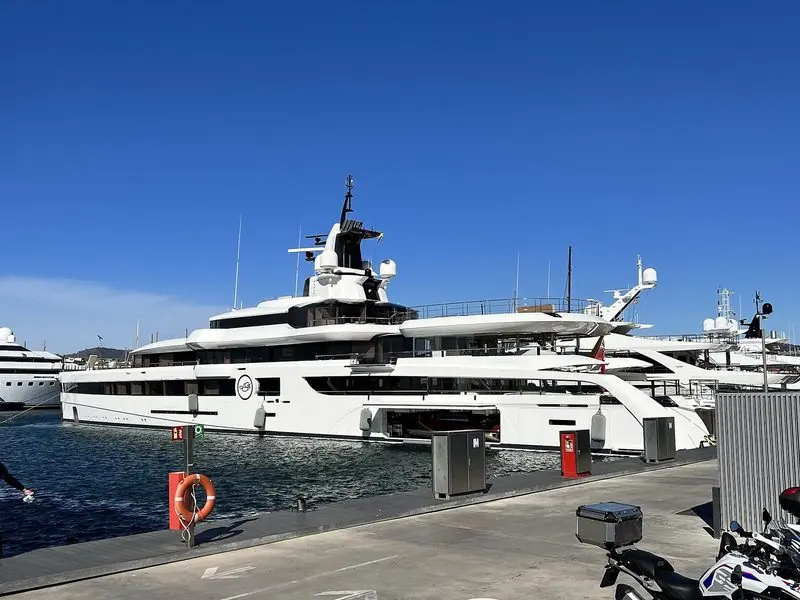
Serene was delivered by Fincantieri in 2011 at 133.9 metres, with the exterior and naval architecture from Espen Oeino International and the interior by Reymond Langton. She has seven decks, two helicopter landing areas, a sea-water pool and a tender garage sized for a submarine. She runs with a crew of around 52 for up to 24 guests.
An interior of that size is a different problem from a large one. Volume alone stops helping past a certain point, and the risk is that a saloon reads as a hotel lobby no matter what goes into it. The studio's answer is to work in layers, so a room resolves at three metres and then resolves again at thirty centimetres. That is what an owner is buying when he pays for commissioned marquetry instead of a specified veneer.
Aviva, and a yacht built around a tennis court
Aviva was delivered by Abeking and Rasmussen in May 2017 at 98.4 metres and 4,966 GT, with both the exterior styling and the interior by the studio. She remains its largest full project. Her design brief started from a single requirement, which was a regulation padel tennis court on board, and the yacht was drawn outwards from it.
The court is 10 metres by 20 with 6.65 metres of headroom, spanning two decks, with regulation artificial turf carrying around two tonnes of special sand. Everything difficult about her follows from that. Sound deadening, air handling, damaged stability and evacuation routes all had to be resolved around a void the size of a small sports hall placed inside a moving hull. She took a World Superyacht Award and a BOAT Design and Innovation Award in 2018.
Lady Lara and Mogambo
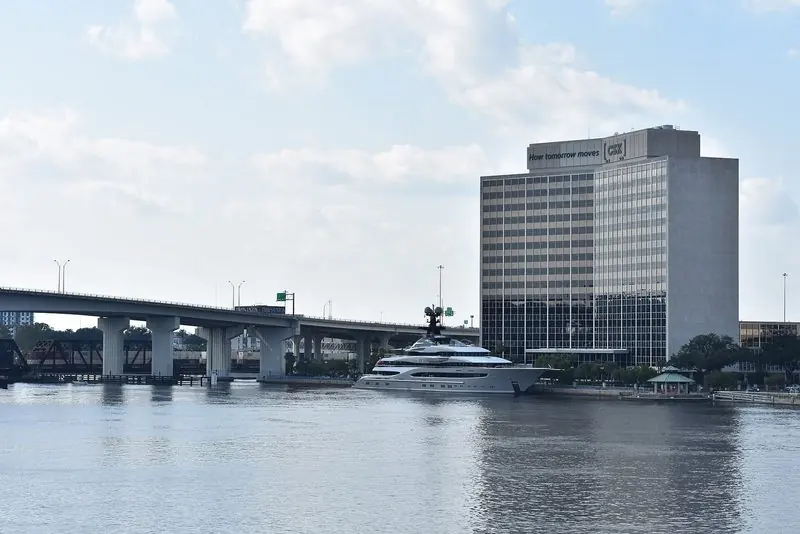
Lady Lara was delivered by Lurssen in 2015 at 91 metres, built under the project name Orchid, with the exterior and the interior both from the studio. She carries a large beach club at the waterline, fold-down balconies on the guest suites and extensive spa space, and her sculpted exterior forms are carried directly into the interior architecture. Mogambo, 73.5 metres from Nobiskrug in 2012, was another full commission and took a World Superyacht Award.
These are the projects that show what the studio does when nobody else is drawing half the boat. The exteriors are shaped and sculptural, with the same appetite for a strong line that the interiors have for a strong material. Apostrophe, a 39 metre from Royal Hakvoort in 2013, took a ShowBoats Design Award and proves the approach scales down. Winning at 39 metres and at 98 is a better signal of consistency than any single trophy.
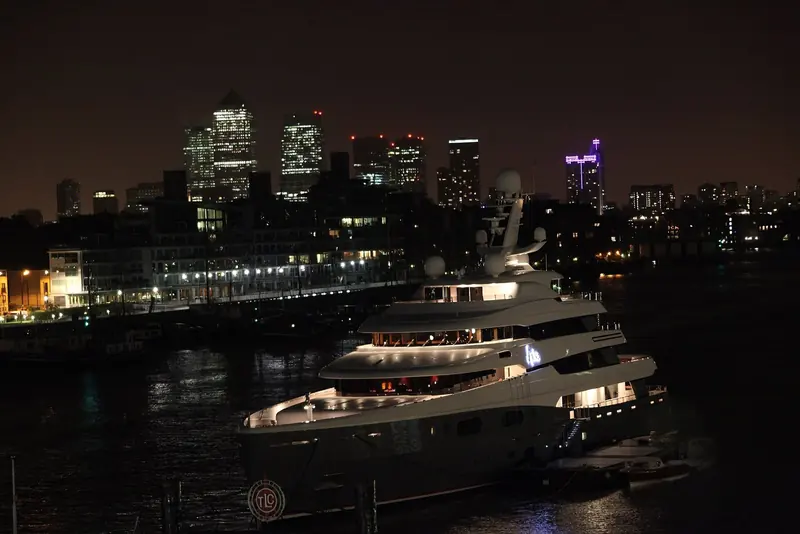
The interior-only commissions
Much of the studio's reputation rests on interiors sitting under somebody else's profile. Whisper, the 95.2 metre Lurssen delivered in 2014 as Kismet and built as project Global, carries an interior Reymond described as a rich contemporary reading of art deco, and she took the World Superyacht Award for motor yachts above 75 metres in 2015. The 122 metre Kismet delivered by Lurssen in 2024 carries a Reymond Langton interior under a Nuvolari Lenard exterior.
Lady S, 93 metres from Feadship in 2019, Artefact, 80 metres from Nobiskrug in 2020, and Bravo Eugenia, 109 metres from Oceanco in 2018, all carry the studio's interiors. Working under another studio's exterior demands a particular discipline, since the window openings, deck heights and structural columns are somebody else's decisions by the time the interior designer arrives. An owner appointing separately should get the interior house into the room before the general arrangement is frozen, not after.
How a commission runs, and what it costs
Work begins with a long conversation about taste, art and use, and the studio is unusually direct about wanting personal objects and commissioned pieces in a scheme instead of catalogue specification. Concept and mood work is followed by interior architecture, then detailed design, then a long procurement and supervision phase running to delivery. That last phase is where an interior-only appointment differs commercially from an exterior one. The fee does not stop at drawings. It carries through sourcing, sampling, factory visits and site attendance across two or three years, and it is billed as a separate service from the design itself, in the way naval architecture practice has always separated construction attendance from design.
There is no published scale. The current market band for a designer's fee is 1 to 5 per cent of build cost, with project management a further 2 to 4 per cent, both outside the yard's price, per the SuperYachtReview guide updated March 2026. An interior-only mandate sits inside that band, not on top of it. The number owners miss is the second one entirely. Commissioned art, bespoke furniture and special finishes are bought by the owner, not by the studio, and on an interior of this specification they can exceed the design fee several times over. That figure should be quantified at concept stage, not discovered at month thirty.
Recognition, and who it does not suit
The studio has taken World Superyacht Awards for Mogambo, for Kismet in 2015 and for Aviva in 2018, and a ShowBoats Design Award for Apostrophe. That spread across 39, 73, 95 and 98 metres is the useful part. It says the approach is not dependent on a single scale or a single yard, which is exactly what a first-time owner needs to know.
This studio does not suit an owner who wants a pared-back minimalist interior, because the work is layered and detailed by intent. It does not offer naval architecture and it is not a hull designer. Anyone who wants a fast delivery should look at what a fully commissioned interior actually involves, since bespoke pieces are the single most common cause of a late handover. Owners buying a semi-custom hull with a fixed layout will find most of the studio's leverage already spent.
The drawings, the art, and a studio of two names
Copyright normally stays with the designer. The professional default, in the ITIC standard trading conditions for naval architects dated 8 July 2025, gives a client only a non-exclusive royalty-free licence for the purposes of the agreement, and superyacht contracts usually improve on that to an exclusive, irrevocable and assignable licence, the clause Federico Santini sets out in Barche magazine in August 2018. On an art-led interior a second document matters as much. Commissioned pieces carry the artist's own rights, and the sale of a yacht does not transfer them. An owner who intends the art to stay with the boat has to buy that outcome deliberately, and an owner who intends to take it with him should say so before a room is designed around it.
Pascale Reymond and Andrew Langton founded the practice in 2001 and it is named after them, in a studio of around twenty. No marine standard form says what a design contract does if one of two principals is unavailable in year three of a build, and the ITIC conditions do not address it. The clauses to ask for are the ordinary commercial ones: death or prolonged incapacity of a named individual as a termination event, an obligation to propose a replacement of equal standing for the owner's approval, and a right to the full drawing and specification set in native format if the practice ceases. On an interior carried by procurement and site supervision, continuity of the people is not a sentimental point. It is the deliverable.
A commissioned interior is worth most to the person who commissioned it
This is the sharpest version of the resale question in the directory, and the answer is that a Reymond Langton interior is an asset to the first owner and a cost to the second. A scheme built around commissioned pieces is built around one family's taste, and when the pieces leave with them what remains is a room designed for objects that are gone. The award record across 39, 73, 95 and 98 metres tells a buyer the work was finished to a standard a panel would defend, and that is worth something narrow at resale. It does not widen the pool of people who want to live inside somebody else's carefully argued scheme.
The honest counsel is to separate the durable from the personal at concept stage. Interior architecture, the volumes, the stair, the light and the way the boat moves between decks, will still be earning for the third owner. Loose furniture, commissioned art and the most emphatic finishes will not, and the market does not usually return the cost of the refit that replaces them. Denison Yachting recorded an average 487 days on market and a median of 277 across the 470 yachts of 24 metres and over sold in 2025, and heavily authored interiors sit at the long end of that. An owner who plans to keep the boat for a decade should commission exactly what he wants. An owner who does not should keep the strongest opinions in the pieces he can carry off.
Practical detail
| Design fee | not published; market band is 1 to 5 per cent of build cost plus 2 to 4 per cent project management, both outside the yard price (SuperYachtReview 2026 price guide, updated March 2026) |
|---|---|
| What the studio covers | interior design and exterior styling; no naval architecture, which has to be appointed separately |
| Studio size and base | around 20 people in Bath, Somerset, led by founders Pascale Reymond and Andrew Langton with director Jason Macaree, who joined in 2002 |
| Art and commissioned pieces | sit in the owner's own supply budget, not the design fee, and routinely exceed it on a fully commissioned specification |
| Copyright | the design normally stays with the studio; commissioned artworks carry the artist's own separate rights, which do not pass with the yacht unless bought outright |
What owners and crew report
The Artefact owner on the design brief
the owner described the brief as giving the interior designers permission to be daring, calling the resulting design "radical, yet minimalist" - a short, verified quote rather than an extended interview, and the only on-the-record owner comment this research could confirm against a primary source
the Artefact owner, quoted by Superyachts.comNo further independently attributable owner testimony found
beyond the Artefact line, search covered Aviva, Lady Lara, Kismet and Bravo Eugenia and turned up only award citations and the studio's own project descriptions, no further named owner or captain commentary
Yotters research desk
What is good, and what to watch
Strong points
- A record run at the very top of the marketseven superyachts delivered in eighteen months across 2020 to 2021 by the studio's own count, on top of Serene's interior (133.9 m, the studio's largest) and Kismet's 2024 interior under a Nuvolari Lenard exterior
- Comfortable working under someone else's exteriorLady S, Artefact, Bravo Eugenia and the 2024 Kismet were all interior-only commissions, so an owner who already has an exterior designer chosen can still bring this studio in for the part that touches guests every day
- Owners are given room to be genuinely daringthe Artefact owner's own description of the brief as radical yet minimalist, and the studio's reputation for layered, art-led interiors with commissioned pieces, points to a practice that will push a brief rather than default to a safe superyacht formula
- Award record across different owners and yardsWorld Superyacht Awards for Mogambo and Kismet, plus both a World Superyacht Award and a BOAT Design and Innovation Award in 2018 for Aviva, spread across Lurssen and Abeking and Rasmussen builds rather than one relationship
What to watch
- A small studio for the workload it carriesaround twenty people in Bath delivered seven superyachts in eighteen months; that pace only works with a fairly standardised process behind the bespoke look, which is worth asking about directly
- Commissioned art is a real extra cost, not includedbespoke pieces sit in the owner's own supply budget rather than the design fee, and on this specification they routinely exceed it; an owner has to budget for art as its own line, separately negotiated with the artist
- No naval architecture, and often no exterior eithera large share of the portfolio is interior-only, so an owner still has to appoint and coordinate a separate exterior designer and naval architect on the same project
- Only one verified owner quote in wide circulationfor a studio with this record, independently confirmable owner commentary is thin; most of what is written repeats the studio's own project descriptions rather than a buyer's account
Who it is for: Owners who want a layered, art-led interior with commissioned pieces throughout and will accept a small studio's limited capacity to get it.