Sinot Yacht Architecture & Design
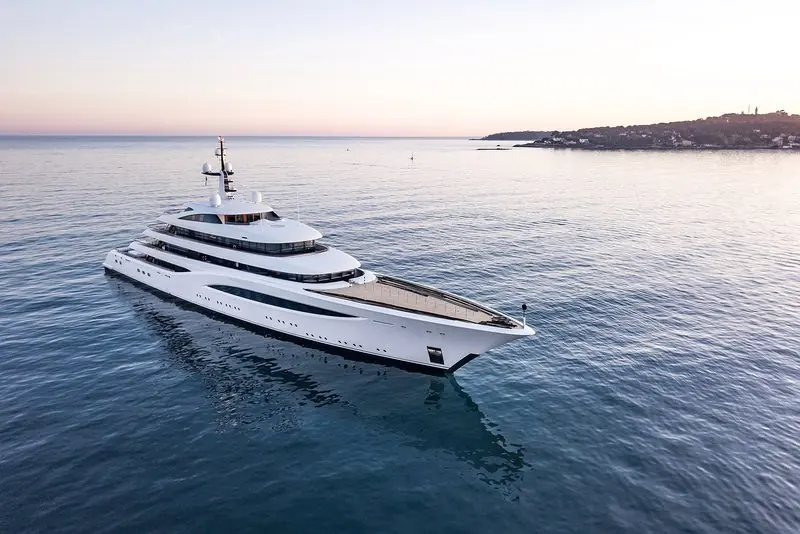
| Founder | Sander J. Sinot, industrial designer |
|---|---|
| Founded | in the Netherlands, with published accounts placing it in the late 1990s or the early 2000s |
| Based | Vlierberg 3, Eemnes, about twenty minutes from Schiphol airport |
| Team | close to 50 people across architecture, industrial design, interior architecture, 3D modelling, design engineering and production consultancy |
| Disciplines | exterior design, interior design, custom furniture, fixtures and furnishings sourcing, and art curation |
| Built fleet | 42 yachts afloat by the studio's own count, on projects from around 45 metres upwards |
| Musashi, 87.78 m, Feadship, 2011 | exterior and interior |
| Aquarius, 92 m, Feadship, 2016 | exterior and interior, naval architecture by De Voogt |
| Galactica Super Nova, 70.07 m, Heesen, 2016: interior, under an Espen Oeino exterior | |
| Ulysses, 102.6 m, Feadship, 2024 | exterior and interior, naval architecture by Azure |
| Drizzle, 91.8 m, Feadship, 2024 | exterior and interior, naval architecture by De Voogt |
| Concepts | Nature (120 m, 2017), Aqua (112 m liquid hydrogen, 2019), Inspire (138 m, 2024) |
| Design fee | not published. Market band 1 to 5 per cent of build cost for the designer, plus 2 to 4 per cent for project management, both outside a yard's quoted price (SuperYachtReview 2026 price guide, updated March 2026) |
| Production consultancy through the build is an additional appointment, not part of the design fee. Naval architecture practice bills construction attendance separately and by the hour (ITIC standard trading conditions for naval architects, 8 July 2025) | |
| Copyright normally remains with the studio, with the owner licensed to build one hull unless the contract is negotiated further | |
An industrial designer who went to sea
Sander Sinot came to yachts from industrial design, a discipline that begins with how an object is held, used and manufactured. His background includes time at the New York office founded by the American industrial designer Henry Dreyfuss, whose work defined how a generation of American products fitted the human body. He founded his own studio in the Netherlands around the turn of the century, and published accounts put the year variously in the late 1990s and the early 2000s.
The training shows in the output. A yacht from this office is treated as one manufactured object with a coherent surface language, instead of a hull with rooms added to it. That is a design philosophy and it is also a production philosophy, since the studio carries its own design engineering and production consultancy and expects to be involved when the joinery is being tooled. Owners who care about how a door closes will notice the difference.
What the office is, and what it sells
The studio works from Vlierberg 3 in Eemnes, twenty minutes from Schiphol and inside the cluster of yards and suppliers that make up the Dutch industry. It employs close to fifty people covering architecture, interior architecture, styling, 3D modelling, visualisation and engineering. Naval architecture is not offered. On the Feadships it comes from De Voogt, and on Ulysses it came from Azure.
What is offered goes further into the interior than most exterior houses go. Alongside exterior and interior design the office does custom furniture, sources fixtures and furnishings, and curates art. An owner who wants one contract covering everything he can see, and who is content to let the yard and a naval architect own everything he cannot, will find this a clean arrangement. The performance figures still belong to the build contract.
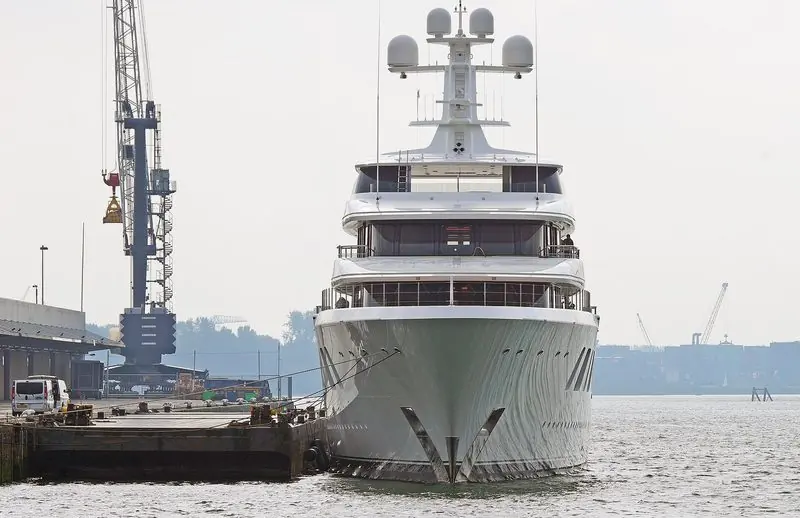
Minimalism at this level costs more in yard hours than decoration does, because every surface has to be right the first time.
What restraint looks like, and what it costs
The Sinot hand is calm. Interiors run on natural stone, light timber and restrained colour, with the composition carried by proportion and daylight instead of pattern and ornament. Exteriors are quiet and modern, and the studio pushes daylight and greenery deep into a hull, often bringing water and planting inside where most designers stop at a window.
Owners should understand that this is the expensive kind of simple. A room with nothing in it has nowhere to hide a badly cut stone joint, an uneven veneer match or a service run that could not be routed cleanly. Minimalism at this level costs more in yard hours than a decorated interior, not less, because every surface has to be right the first time. The studio's production consultancy exists partly to police that.
Musashi, and the first big one
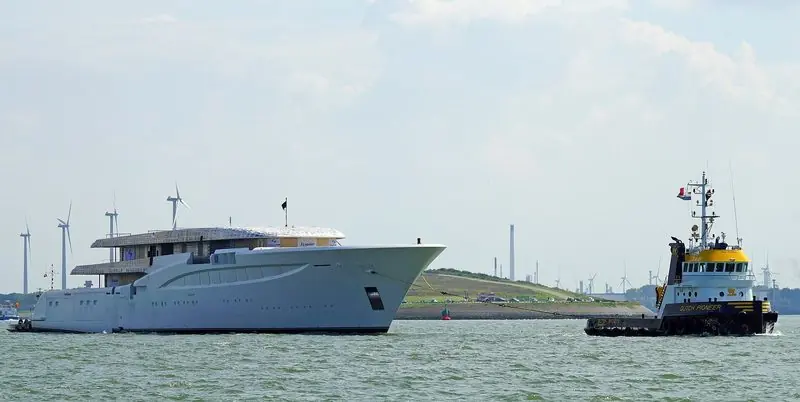
Musashi was delivered by Feadship in 2011 at 87.78 metres, with both the exterior and the interior from the studio. She accommodates up to 18 guests in ten suites. Her interior runs a Japanese aesthetic against art deco proportions, which is a harder combination to hold together than it sounds and depends entirely on discipline in the detailing.
She was the project that established the office at the top of the Dutch market and she has collected awards steadily since. She also set the pattern the studio still works to, which is to take the outside and the inside of the same hull and let the two arguments settle in one room. For an owner that removes the interface where most build disputes begin, at the window line and the deck edge.
Aquarius
Aquarius came out of Feadship in 2016 at 92 metres, with exterior and interior by Sinot and naval architecture by De Voogt. Her profile is deliberately conventional in its bow and raked superstructure, with the studio's contribution sitting in the proportion and the light. Inside there is a cinema, a spa, a beauty salon, a lift, a gym and a beach club, for up to 14 guests.
Her crew number is the fact an owner should look at hardest. She carries accommodation for 31 crew to serve 14 guests. That ratio is normal at this size and it is the largest recurring cost of owning a yacht of this kind, ahead of fuel in most years. A designer's decisions about service routes, crew mess placement and how many separate stewardess trips a breakfast requires are running-cost decisions, and they are made at general arrangement stage.
The 2024 Feadships
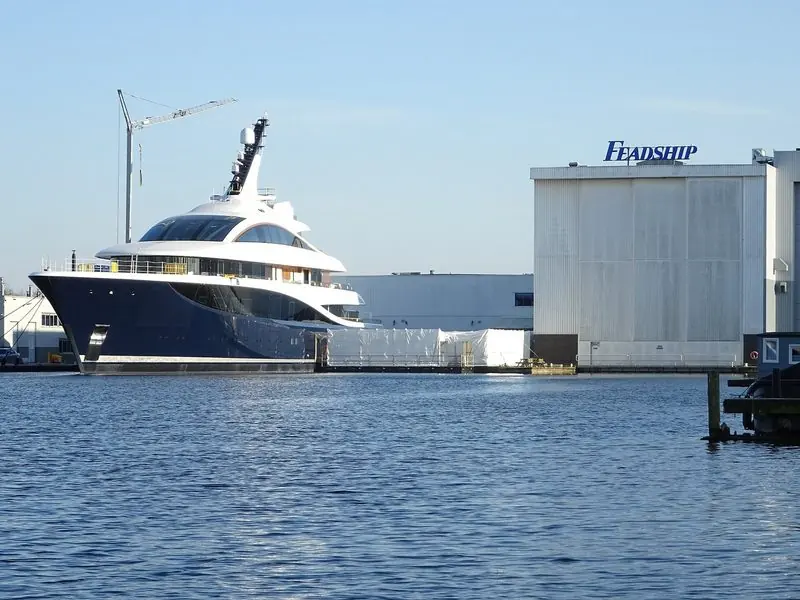
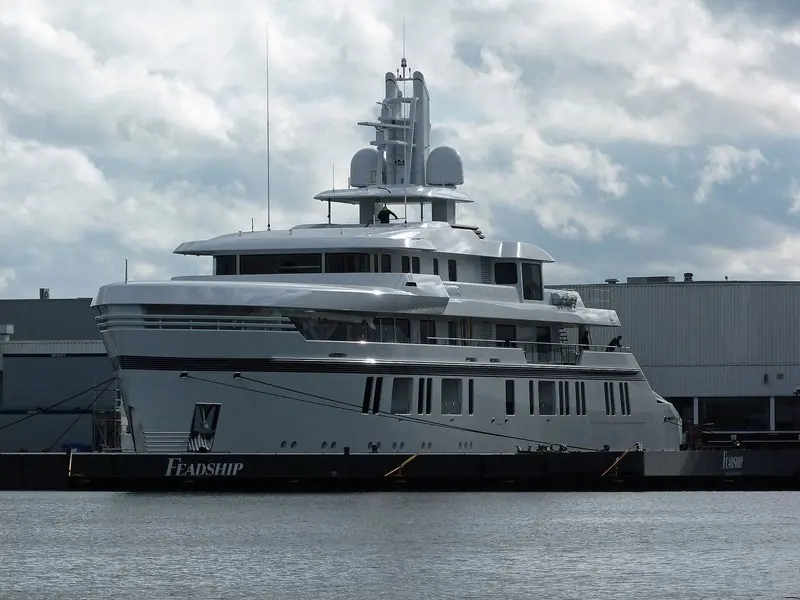
Two Feadships delivered in 2024 carry Sinot exterior and interior. Ulysses is 102.6 metres, with naval architecture by Azure Yacht Design and Naval Architecture, and she was one of the most tightly kept builds in recent Dutch memory. Drizzle is 91.8 metres, with naval architecture by De Voogt and a hybrid propulsion package.
Two boats of that size from one yard in one year, both inside and out from the same studio, is a serious statement about capacity. Feadship does not hand a designer two hulls at once on reputation. It matters to a prospective owner because it is evidence the office can staff a project properly and still answer the phone, which is the failure mode that catches out small studios when they win a big commission.
Aqua, Nature and the concepts
The studio is equally known for unbuilt work. Nature, a 120 metre concept shown at Monaco in 2017, put a climate-controlled garden at the centre of the yacht with a panorama deck above 900 square metres. Aqua, revealed at Monaco in 2019 at 112 metres, was drawn around liquid hydrogen stored in two cryogenic tanks and fuel cells, quoted at 17 knots and 3,750 nautical miles, with water as the only emission. Inspire, a 138 metre concept from 2024, carries an underwater observation room.
Concepts are easy to dismiss and this office has earned the right not to be. Aqua was published five years before Feadship launched an actual hydrogen fuel-cell yacht, and the arguments it forced into the trade press about tank volume, bunkering and range are the arguments the industry is now having in earnest. For an owner, the studio's concept work is a useful window into how it thinks. It is not a promise that any of it can be built to a budget.
How a commission runs, and what it costs
The studio works through a long dialogue about how an owner intends to live at sea, then moves through concept development to final design, with 3D visualisation used throughout to test whether an idea survives the technical and classification limits. Naval architects and yard staff join that conversation early, which is necessary when the studio does not hold the naval architecture itself. Commercially the work is bought in stages and paid for before a yard is contracted. The gates are worth naming. An owner can stop after concept for the price of the concept. A letter of intent reserves a slot. The yacht building agreement is the commitment, and from the day the yard starts engineering to these drawings, changing studio means paying for the same design twice.
No studio at this level publishes a fee scale, so the only current market figure is the SuperYachtReview 2026 price guide, updated March 2026, which puts a designer's fee at 1 to 5 per cent of build cost and project management at a further 2 to 4 per cent, both outside the yard's quoted price. On a EUR 200 million Feadship the designer's band alone is EUR 2 million to EUR 10 million. Exterior and interior from one office sits high in it, and still costs less than two appointments plus the interface between them. The studio's production consultancy is an additional service rather than part of the design fee, which is the normal way supervision is billed and, on a minimal interior, the money best spent.
Recognition, and who it does not suit
Sinot yachts have collected design awards consistently since Musashi, and the studio's concept work has taken it well beyond the trade press. The recognition is worth a narrow amount to an owner. It confirms the finish met a standard specialists would defend and it helps a broker at resale. It says nothing about behaviour in the second year of a build.
This studio does not suit an owner who wants a rich, layered, art-led interior, because the work runs the other way and a minimalist scheme executed half-heartedly looks cheap. It does not offer naval architecture, so anyone wanting hull form and styling under one contract should look elsewhere. It is not set up for boats below about 45 metres, and it is not a sailing yacht office.
The quiet interior is the one the market can absorb
A calm, daylight-led scheme is the most resale-friendly kind of authored interior in this directory, and for an unromantic reason. It does not impose a taste on the next owner, so the buyer pool is not narrowed by the decoration. Ocean Independence, writing on 11 May 2026, lists accommodation, layout, volume, technical specification and paint condition as the things that position a boat against its comparables, and a Sinot interior scores on all of them without asking a buyer to share an enthusiasm. Set against that, Feadship underneath is the real asset. Ocean Independence names the Northern European yards as those that continue to command market confidence, and a hull from one of them carries a valuation that a design signature does not.
The risk runs the other way, and it is a condition risk rather than a taste risk. Minimalism has nowhere to hide wear. A stone joint that has moved, a veneer that has faded unevenly, a cracked seal in a full-height glass panel are all invisible in a busy interior and glaring in this one. A ten-year-old Sinot boat that has been maintained looks new. One that has not looks tired in a way that costs real money to reverse, and the market does not usually give back the full cost of refit spending. The maintenance file is worth more on this boat than on almost any other in the directory.
Practical detail
| Typical project size | 45 metres and above; the studio does not take smaller commissions |
|---|---|
| Design fee | Not published. Market band for a full exterior-plus-interior appointment at this level is 1 to 5 per cent of build cost (SuperYachtReview 2026 price guide), EUR 2 million to EUR 10 million on a EUR 200 million Feadship |
| Project management fee | A further 2 to 4 per cent of build cost, billed separately from the design fee |
| What is not included | Naval architecture is never part of the appointment. On Feadships it comes from De Voogt in-house; on other yards the owner must appoint a naval architect separately |
| Payment structure | Bought in stages: concept, then a letter of intent to reserve a slot, then the yacht building agreement as the binding commitment. Changing studios after the yard starts engineering means paying for the design twice |
| Where to find the studio | Vlierberg 3, Eemnes, Netherlands, about 20 minutes from Schiphol airport, inside the Dutch yacht-building cluster |
| Studio size | Close to 50 staff across architecture, interior architecture, industrial design, 3D visualisation, design engineering and production consultancy |
What owners and crew report
A two-year, hands-on brief
Steve Wynn worked through Aquarius's interior concept for two years alongside his own longtime designer Roger Thomas before Sinot executed it. It was an unusually long and direct client involvement for a yacht this size.
YachtBuyer
What is good, and what to watch
Strong points
- One studio for the whole visible boatExterior and interior come from a single design language and a single contract, removing the friction that usually opens up at the window line between two separate designers.
- Production consultancy through the buildThe studio stays involved once the yard starts cutting, which matters most on the minimalist work it is known for, where a badly cut stone joint has nowhere to hide.
- Proven capacity at the largest sizesTwo Feadships over 90 metres delivered in the same year, 2024, both exterior and interior from this office, is evidence of staffing depth that smaller studios cannot show.
- Resale-friendly interiorsOcean Independence names calm, daylight-led schemes as the kind that do not narrow the buyer pool at resale, unlike a heavily authored, opinionated interior.
What to watch
- No naval architectureAn owner wanting hull form and styling under one contract has to look elsewhere. Every Sinot yacht carries a separate naval architecture credit, from De Voogt, Azure or others.
- Not for boats under about 45 metresThe studio's own build list starts there, so smaller commissions are out of scope entirely.
- Minimalism is unforgiving of wearA calm interior with little to distract the eye shows a moved stone joint or an unevenly faded veneer far more readily than a decorated one, and refit spending to fix it is not usually recovered in full at resale.
- No published fee scaleOwners are budgeting from a third-party market band (SuperYachtReview) rather than a rate card, so a real number only comes from asking the studio directly.
Who it is for: Owners commissioning above 45 metres who want a calm, daylight-led boat inside and out and will appoint a separate naval architect.