Studio Arch. Tommaso Spadolini
| Florence, Italy | |
| Founded by Tommaso Spadolini | |
| Exterior design, some naval architecture |
A Florence Studio Built on Two Generations
Most of the boutique yacht studios on this site were founded by people who arrived from car design, architecture or naval engineering and discovered boats along the way. Spadolini's route was different: he was raised inside a family design practice, with his father Pierluigi employed as an in-house designer at the Cantieri di Pisa yard and his mother Gianna working as an interior designer, and the trade press covering his career treats that inheritance as the reason his eye reads as fluent rather than studied. He built his own practice on that foundation rather than starting one from a different discipline.
The studio today operates from an address in Florence, Costa Scarpuccia 9, and a 2026 itBoat photo feature on the office describes it as housed inside a deconsecrated church, Santi Agostino e Cristina, with the high ceilings, columns, stucco and antiques the building came with. It is an unusual working environment for a firm whose output is oceangoing steel and aluminium, and the studio has made a point of being photographed there rather than in a generic design-office setting.
The World's Fastest Yacht, Briefly
In a Boat International Creative Q&A, Spadolini himself described the project's method rather than just its result: he worked with the American naval architect Donald Blount in a wind tunnel to chase a target speed of 75 knots, a very different design process from styling a displacement hull for comfort. The delivered boat's reported top speed, cited consistently across yachting and royal-family coverage of the King's later handover of the vessel, sits at 68 to 70 knots on a combination of three Rolls-Royce gas turbines feeding waterjets and two MAN diesels for cruising, output usually put at around 22,660 horsepower.
Fortuna stayed the King's official yacht for over a decade, based mostly out of Palma, until he gave it up in 2013 as part of a wider retreat from royal perks that had drawn public criticism in Spain; the Balearic tourist and cultural foundation that had funded her took the boat back and sold her a few months later for a reported EUR 2.2 million, a fraction of what a 44 metre, three-turbine yacht cost to build. She has since operated under the name Foners. It is a reminder that a design commission's fame and a yacht's later commercial life are two different stories, and a studio's fastest, most photographed project is not necessarily its most typical one.
The Canados Line That Became a Production Standard
Most of what follows in this entry is a one-off, custom-build practice, so the Canados line is worth separating out: it is the one period in which Spadolini's work became a repeatable production standard rather than a single commission. The figure of 107 hulls across a decade, if accurate, would make it one of the more commercially significant motor-yacht lines of its era, produced at a volume closer to a production-boat builder than a custom design house.
This research could not independently corroborate the 107-boat figure or the exact model range beyond the one trade profile that states it, and no second source with the same specificity was found. It is included here because it is a real, named, dated claim from a publication that covers the sector professionally, not because it has been separately verified, and a reader relying on the exact count should treat it as reported rather than confirmed.
One Client, Four Boats: How Aslec 4 Actually Got Built
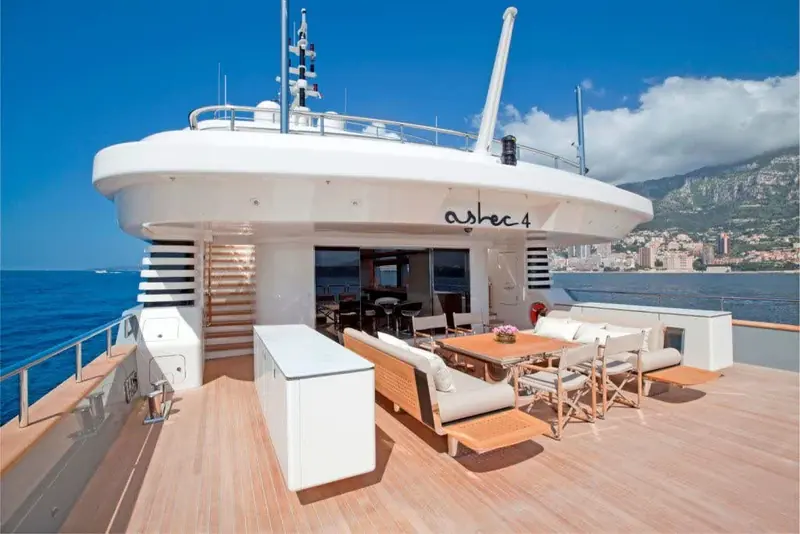
Superyacht Times journalist Maarten Janssen's 2012 report on the launch is unusually specific about how the project came together: Spadolini made the first sketches in April 2009, and that autumn introduced his client to the Rossi Navi (now Rossinavi) yard, which had just started building another Spadolini-designed yacht, the 70 metre Numptia, for a different owner. Steel-cutting on Aslec 4 began in March 2010. The relationship between designer and client that produced a fourth consecutive commission is the clearest evidence in this research of what keeps a boutique studio like this one in business: not a single famous boat, but owners who come back.
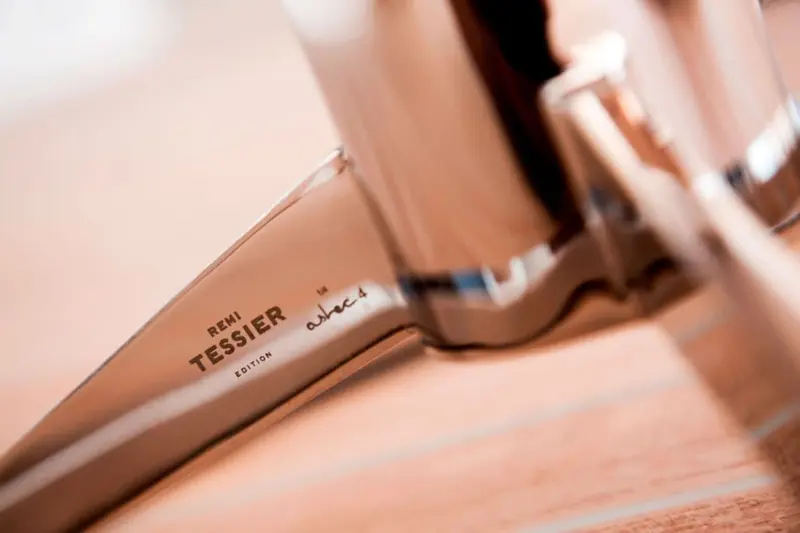
Aslec 4 carries interior design by Remi Tessier, another studio in this directory, and won the Neptune statue for exterior design and styling at the 2013 ShowBoats Design Awards, in the category for displacement motor yachts of 100 to 199 feet; contemporaneous award coverage credited Spadolini's team specifically for the functionality and appeal of the boat's deck spaces. She was refitted in 2023 and has since operated on the charter market out of the Western Mediterranean.
Numptia: The Boundary-Pushing Sister Project
Numptia and Aslec 4 were being built at Rossinavi at almost the same time, which the Superyacht Times report on Aslec 4's launch confirms directly: the yard had just started Numptia's construction when Spadolini brought his Aslec 4 client through the door in 2009. A photo caption elsewhere on this site had at one point attributed Numptia's hull to a different exterior designer; this research cross-checked the credit against three independent trade sources, Charterworld, Boat International and Superyacht Times, all of which name Spadolini as the exterior designer, so that is the credit given here.
At 70 metres, Numptia represents a noticeably larger scale than the bulk of Spadolini's documented, verifiable fleet, which otherwise sits in the 45 to 57 metre range. That makes her, alongside Fortuna, one of the two projects that show the studio operating at the top end of its range rather than its more typical, repeat-client, 45 to 60 metre commissions.
The Move to Codecasa: Legacy 4, Cocktails and Armada
Legacy 4 is the newest and best documented of these. She is the first hull of the Codecasa 57 line (yard number F81), with a steel hull and aluminium superstructure built to Lloyd's Register class; construction began in December 2023 and she launched in February 2026 ahead of her spring maiden season. Coverage of the delivery, including Megayacht News, describes Spadolini working closely with both the owner and Codecasa's own in-house technical team on the design, with Ocean Independence and Yanova acting as the owner's representatives through the build. She carries twin 2,375hp Caterpillar engines for a reported maximum speed of 17 knots and a cited range of 5,000 nautical miles at a 12-knot cruise, figures aimed squarely at long-range, low-drama cruising rather than outright pace.
Cocktails and Armada are confirmed by Superyacht Times' own structured company listing rather than by dedicated feature coverage, and this research did not find independent press profiles of either beyond brokerage and charter listings; Armada was listed for resale in 2026 at an asking price of EUR 14,900,000, which is a brokerage figure and not the yacht's original commission price. The pattern across the current book, Codecasa and Rossinavi both based in or near Viareggio, suggests a studio that has built durable relationships with a small number of Tuscan and Ligurian yards rather than one chasing a broad client base across builders and countries.
What a Spadolini Commission Actually Costs
No source found in this research states what Spadolini specifically charges, what a Codecasa 57 or a Rossinavi custom hull costs to commission or how the studio's fee is staged against the build contract. That silence is normal for this category of business: naval architecture and exterior design houses almost never publish rates, because every commission is scoped individually against a build contract that is itself confidential between owner and yard. The figures that do circulate, from marine design-cost guides such as Cad Crowd and DraftXL, describe the industry in general, not this studio specifically and should be read as context rather than as Spadolini's own pricing.
What can be said with more confidence is the shape of the studio's actual business: repeat commissions from the same clients (Aslec 4 was a fourth boat, not a first), a small number of long-standing yard relationships rather than a broad multi-builder client list, and at least one project, Fortuna, that involved naval-architecture-level engineering work (wind-tunnel testing with Donald Blount) well beyond pure styling. A buyer approaching the studio should expect a bespoke, negotiated fee rather than a published rate card, and should ask directly about scope, since the studio's own history shows it will take on engineering work, not just the exterior profile, where the project calls for it.
Practical detail
| Design fee | not published by Studio Spadolini; the general 2026 industry band per Cad Crowd and DraftXL runs roughly 10 to 20 per cent of build cost for a fully custom commission, higher for the most bespoke scope; no Spadolini-specific figure found |
|---|---|
| Studio location | Costa Scarpuccia 9, 50125 Firenze, Italy, working from a deconsecrated church, Santi Agostino e Cristina, per itBoat's 2026 studio feature |
| Current book and yards | Rossinavi (Aslec 4 2012, Numptia 2011, High Power III 2011) and Codecasa (Legacy 4 delivered February 2026, Cocktails 2021), plus Armada with Columbus Yachts (2011) |
| Typical delivered scale | 45 to 70 metres; Fortuna (roughly 44m) and Numptia (70m) are the outliers at each end of the confirmed range |
| What is not published | studio headcount, project-management structure, standard fee schedule and any figure for how many projects remain unbuilt concepts versus delivered hulls |
What owners and crew report
A repeat client commissioned four Spadolini-designed yachts in a row before Aslec 4
Superyacht Times' 2012 launch report on Aslec 4 states plainly that she was the fourth yacht, after 19, 24 and 32 metre boats, that Spadolini had designed for the same client, and that the designer personally introduced that client to the Rossi Navi yard in 2009.
Maarten Janssen, Superyacht TimesNo independently reported owner, captain or crew commentary on a Spadolini-designed hull was found in this research
Coverage of Fortuna, Aslec 4, Numptia, Legacy 4, Cocktails and Armada in the marine trade press consistently quotes the shipyard, the designer himself or a Boat International Q&A about his process; charter listings for Aslec 4 describe the crew in general marketing terms without naming or quoting an owner or captain about the boat itself.
Yotters research desk
What is good, and what to watch
Strong points
- A genuine four-decade record across several respected yardsdocumented, named work for Cantieri di Pisa (via family history), Canados, Rossinavi, Codecasa and Columbus Yachts, spanning the 1980s Canados production line through a Codecasa 57 delivered in February 2026
- Owners who come backAslec 4 was reported as the fourth consecutive yacht Spadolini designed for one client, the clearest evidence available that his clients are satisfied enough to recommission rather than switch studios
- Real naval-architecture-level engineering credentials, not just stylingthe Fortuna project involved wind-tunnel testing with naval architect Donald Blount chasing a 75-knot target, a scope well beyond exterior profile work
- Independent awards recognitionAslec 4 won the Neptune statue for exterior design and styling at the 2013 ShowBoats Design Awards, with judges specifically praising the deck-space planning
What to watch
- No public fee schedule or studio headcount found anywhere in this researchunlike some larger studios in this directory, Spadolini's office size, project-management structure and pricing are simply not published, so a first-time client has less to go on before the first meeting
- Some of the studio's biggest historical claims rest on one sourcethe 200-plus-projects and 107-Canados-boats figures come from a single trade profile (Top Yacht Design) that this research could not independently corroborate against a second source
- No confirmed delivered flagship above 70 metres in the modern fleetFortuna at roughly 44 metres and Numptia at 70 metres are the largest confirmed credits; several rival studios in this directory have delivered multiple 90 metre-plus yachts in the same period
- No independently reported owner or captain testimonyevery account of what it is like to own or run a Spadolini-designed yacht traced back, in this research, to the studio or the yard rather than to the owner
Who it is for: owners commissioning a custom 45 to 70 metre motor yacht from a Tuscan-area yard, and buyers researching the design pedigree behind a Rossinavi or Codecasa hull