Van de Stadt Design
| Founder | Ericus Gerhardus 'Ricus' van de Stadt, 1910-1999, Dutch; yard opened in Zaandam in 1933 |
|---|---|
| Valk | 21 ft 4 in hard-chined plywood sloop for Bruynzeel, designed 1938, built from 1939 |
| Zeevalk | 35 ft plywood ocean racer, 1949, class winner in the 1951 Fastnet and second overall |
| Stormvogel | hull by Van de Stadt, rig by John Illingworth, details by Laurent Giles; 1961 Fastnet line honours |
| Pionier 9 | 1959, among Europe's first GRP production cruisers, moulded by Tylers and fitted out by Southern Ocean Shipyard |
| Dehler Varianta | about 4,000 built |
| Gallant 53 Express Crusader | Naomi James's solo circumnavigation, 1977-78, 272 days |
| 1973 | yard sold to Dehler (Wikipedia); the firm became a design office |
| Today | Van de Stadt Design, the Netherlands, led by Cees van Tongeren |
| Tonga 56 stock design | INSV Mhadei (2009) and INSV Tarini (2017), both built by Aquarius Fibreglass, Goa |
| Stock plans | EUR 950 to EUR 13,000 per design on the firm's site, study packs EUR 15 to 20 |
| Custom design fee and lead time | not published |
A Zaandam Yard and a Sheet of Plywood
Ricus van de Stadt grew up on the west bank of the River Zaan just outside Amsterdam, the son of a wood merchant and a neighbour of Kees Bruynzeel. WoodenBoat says his first design was a sailing canoe drawn while he was still at school, whose plans he sold for 25 Dutch cents plus postage. He trained in naval engineering in Haarlem, worked briefly at a yard building steel boats and set up his own yard in Zaandam in 1933. The early work was small and slow: canoes, Olympic O-Jolles, Dragons and a practice skiff of his own.
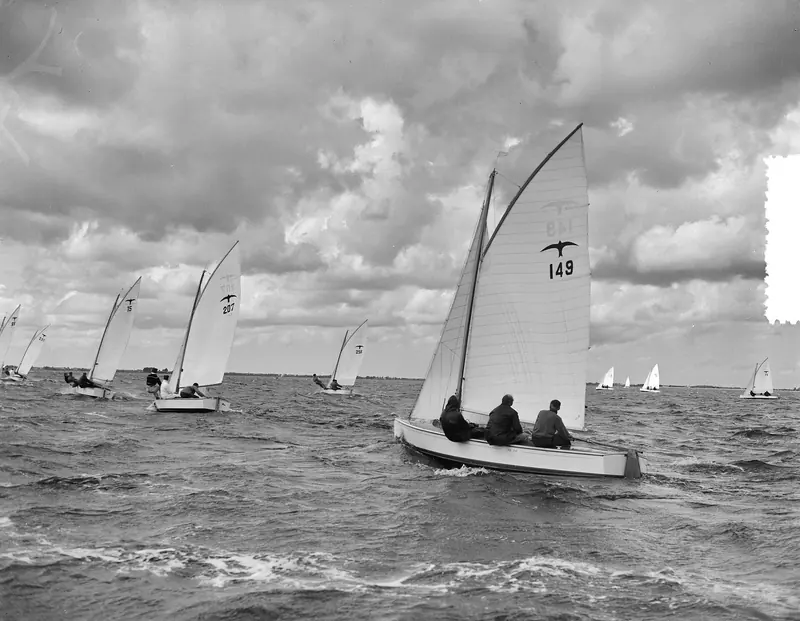
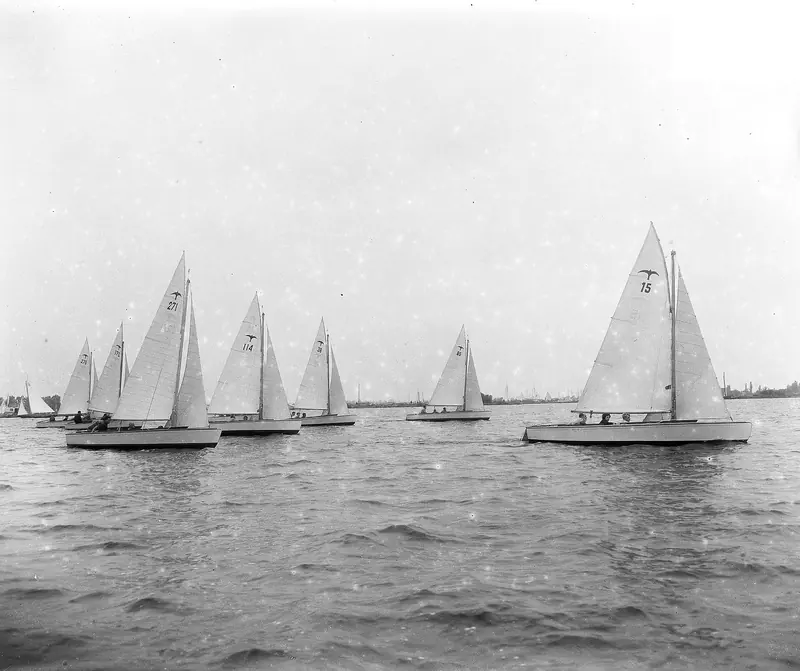
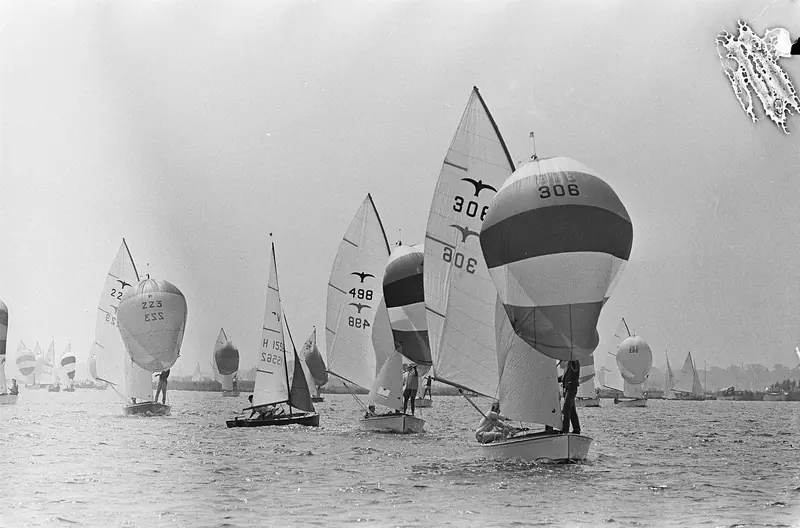
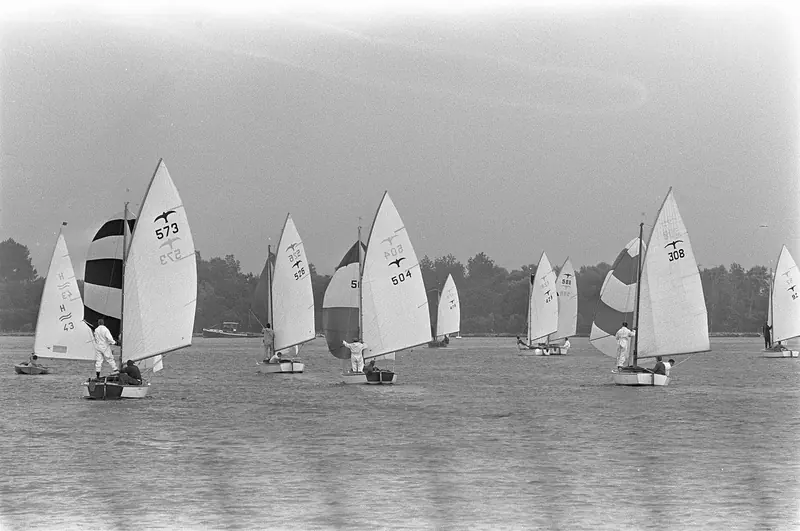
The break came when Bruynzeel, a Zaandam door maker, developed a waterproof plywood and wanted to prove it could build a boat. Van de Stadt drew the Valk, a 21 ft 4 in hard-chined sloop with a bulb keel and a spade rudder, designed in 1938 and on the water by 1939 according to both WoodenBoat and the firm's own history. It's still one of the most raced open keelboats on Dutch lakes, and a polyester version, the Polyvalk, followed later. Everything the office became, from production GRP to frameless steel kits, starts from that brief: a good hull that a new material and an ordinary builder can turn out without fuss.
Zeevalk, Stormvogel and the Offshore Record
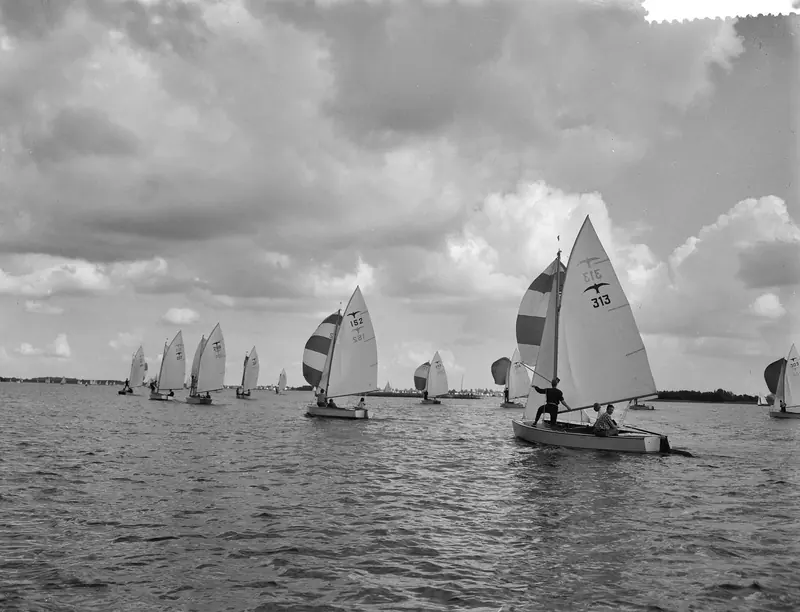
Zeevalk was a 35 ft plywood ocean racer drawn in 1949 for Kees Bruynzeel, a seagoing development of the Valk. She won her class in the Fastnet and placed second overall behind Yeoman. Some accounts, including a Yachting World piece and the Royal Naval Yacht Club, give 1952, but the race was run in odd years and the firm's own history says 1951. Either way the light plywood hull beat heavier conventional boats over 600 miles of open water, and that result is the one his admirers point to when they say it settled his design approach.
Stormvogel, launched in 1961 for Cornelius Bruynzeel, was a team effort that the record often flattens. Van de Stadt drew the hull, John Illingworth the rig and Laurent Giles the construction details, after Olin Stephens declined the commission and all three hull proposals were tank tested at Southampton University, where the Van de Stadt lines came out best. She took Fastnet line honours in her first season and later crossed the world to race the 1965 Sydney Hobart. Sources still argue over her length (73 to 74 ft 6 in) and whether she was built by Bruynzeel or by Lamtico in Stellenbosch.
Everything the office became, from production GRP to frameless steel kits, starts from that brief.
Glassfibre in Series: Pionier, Varianta and Dehler
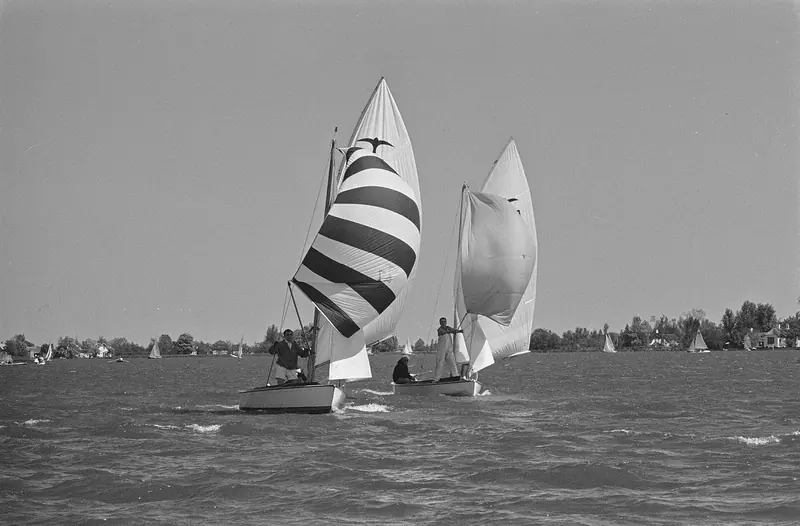
The Pionier 9 came out in 1959 through Van de Stadt's link with Southern Ocean Shipyard in Poole: Tylers in Kent moulded the hulls and SOS fitted them out, according to Yachting Monthly. The firm's history calls it the first and possibly most influential GRP production cruiser-racer in Europe. The longer Pionier 10 was built from 1969 to 1975, won her class twice in the Fastnet in the 1970s and became a sailing school favourite. A standard 1965 Pionier was sailed single-handed round the world by Herman Jansen in 1972, says the firm.
For Dehler in Germany the office drew the Varianta, a small family cruiser with a keel-centreboard. Both the firm's history and Wikipedia's Dehler history put production at about 4,000, though they disagree on whether it appeared in 1965 or 1966. Southern Ocean Shipyard also built the big ones: the Ocean 71 centre-cockpit ketch and the Gallant 53. Chay Blyth's Gallant 53 Spirit of Cutty Sark, renamed Express Crusader, carried Naomi James round the world alone in 272 days in 1977-78, two days inside Francis Chichester's time. How many Ocean 71s exist isn't settled: the firm says 22, a sales history says 16.
The Office Today: Van de Stadt Design
By Wikipedia's account the yard was sold to Dehler in 1973 and the company concentrated on design as E.G. van de Stadt and Partners; Ricus worked there until 1978. The partners listed after his retirement include Cees van Tongeren, who still leads the office today, alongside Hans Korner, Klaas Buis, Walter Galjaard and Anita de Vos. The website gives an email address and agents in nine countries (Argentina, Brazil, Finland, France, Greece, Hungary, Italy, Japan and Turkey) but no street address, team page or staff count.
The current list runs from the Van de Stadt 84 down to a 5.5 metre. The 84 is a 25.5 m aluminium lift-keel cruiser built by Aluboot in Hindeloopen, with draft from 2.0 m keel up to 4.0 m keel down and twin rudders set at 15 degrees. The Stadtship 70 is a 21 m aluminium passage maker built by K and M Yachtbuilders, with a pneumatic system working the thruster, windlass, bowsprit and transom door. The office also draws classic-style yachts, the Winner range of production sailboats and Fineliner motor yachts. What sets it apart is the stock plan catalogue of fourteen offshore designs, which most custom studios simply don't offer.
Stock Plans and What They Cost
Each stock design has a study pack for EUR 15 to 20, which includes a full building specification so you can compare yard quotes, plus a polar diagram. Full building plans for the 10.25 m Van de Stadt 34 cost EUR 950 for the multi-chine quick-assembly steel or aluminium version and EUR 1,150 for round-bilge wood epoxy or glassfibre wood core. The 14.3 m Samoa 47 is EUR 5,800 in steel, aluminium or wood core and EUR 6,300 with a lift keel. The 17.1 m Tonga 56 costs EUR 12,500, or EUR 13,000 with the hydraulic lift keel and twin rudders. These are the firm's listed prices as of November 2026.
The plans aren't the boat. So what does a finished Samoa 47 cost? Nobody publishes that, and it's where a budget goes wrong. On metal versions the plate patterns come as AutoCAD DWG files and a ready-cut plate package is available, and the firm claims a 34 hull can be assembled in a couple of weeks; that's the yard's claim, not a measured one. Custom commissions have no published fee or lead time, and no published figure says how long the office takes to turn round a stock-plan query. For a one-off you'll need a written scope and fee from the office, and you'll want separate quotes from at least two of the builders it lists, such as Aluboot, Bloemsma, K and M, Kolibri or Harwood in Australia.
The Tonga 56 and the Indian Navy
INSV Mhadei is a Tonga 56 built at Aquarius Fibreglass on Divar island in Goa and handed to the Indian Navy in February 2009. Commander Dilip Donde sailed her round the world alone with stops between August 2009 and May 2010, and the standby officer on that voyage, Abhilash Tomy, later took her round solo and non-stop. The firm's history records the Tonga 56 going round twice, once non-stop, and by early 2015 Mhadei was about to pass 100,000 miles, Business Standard reported.
Her sister INSV Tarini had her keel laid at the same Goa yard on 27 March 2016. She's a wood-core glassfibre sandwich hull adapted at the Navy's request for an all-women crew, and from 10 September 2017 to 21 May 2018 she carried six women officers round the world on the Navika Sagar Parikrama. A second women's circumnavigation in the same boat followed in 2024-25. For a buyer, the point is simple: these are stock-plan hulls built in a regional yard, not one-offs, and they've survived the Southern Ocean more than once.
Buying a Used Van de Stadt
Yachting Monthly's 2024 test of the Pionier 10 Maija is the most useful owner account we found. The owner, a former broker and surveyor, bought her after about twelve years ashore near Waldringfield: sound structure, dire cosmetics, a dead engine and the original mild steel fuel tank. The babystay support wire runs from the forecabin deckhead to the hull and can break away if the boat is sailed hard, and he bonded in a new hardwood pad. The keel is bolted through a wide flange and the bolts had already been replaced. Used Pionier 10s list at roughly GBP 15,000 to 25,000.
The steel stock-plan boats need a different check. On the Ybw forum one owner of a Van de Stadt 34 reported a clean full ultrasonic hull test after internal corrosion had been dealt with, and another's Morvoren-built Falco passed survey with minor faults. The warnings there are generic but real: amateur welding varies, and condensation trapped behind insulation corrodes the inside of the hull where you can't see it. Van de Stadt's metal designs are frameless, which helps, but if large areas of the inner skin can't be opened up, walk away. Ask who built the hull, and ask for the plate-package invoice.
Practical detail
| Design fee | custom commission fee not published; stock building plans listed at EUR 950 (Van de Stadt 34 steel or aluminium), EUR 5,800 to 6,300 (Samoa 47) and EUR 12,500 to 13,000 (Tonga 56), study packs EUR 15 to 20, firm's site, November 2026 |
|---|---|
| Where | the Netherlands; the site gives an email address and agents in nine countries but no street address |
| Builders the firm lists | Aluboot, Bloemsma Aluminiumbouw, Jachtbouw Folmer, K and M Yachtbuilders, Kolibri Jachtbouw, Jachtbouw Bart Jan Bats and Harwood Aluminium and Steel Boats in Australia |
| Build methods | multi-chine or round-bilge steel and aluminium, glassfibre wood core, wood epoxy; metal plate patterns supplied as AutoCAD DWG files |
| Used market | Pionier 10 roughly GBP 15,000 to 25,000 (Yachting Monthly); check babystay pad, keel bolts and the mild steel fuel tank |
| What is not published | custom fees, lead time for a commission or a plan order, staff and address, and a verified count of hulls built for most stock designs |
| Alternatives | Dick Koopmans and Bruce Roberts for metal cruising designs, Dudley Dix for amateur-build plans; for a custom superyacht look at the larger Dutch studios elsewhere on this site |
What owners and crew report
The Pionier 10 sails better than she looks below
the test boat was stiff, well balanced and light on the helm, steering on the mainsheet alone, but has less interior volume than a modern 32 footer and needs a lot of winching to tack
Yachting MonthlyA twelve-year lay-up didn't hurt the structure
the owner of Maija found the hull sound after years ashore in Suffolk but replaced the engine, rigging and keel bolts and kept the original mild steel tank for now
Yachting MonthlySteel 34s can survey clean
an owner of a Van de Stadt 34 reported a good full ultrasonic hull test once internal corrosion had been treated
Ybw forumThe Tonga 56 has been round the world repeatedly
Mhadei completed an assisted solo circumnavigation in 2009-10 and a non-stop solo one later, and Tarini took an all-women crew round in 2017-18
Indian Navy
What is good, and what to watch
Strong points
- Prices you can actually seestock building plans are listed on the site, from EUR 950 to EUR 13,000, with cheap study packs that include a full building specification
- Designs built for the buildermulti-chine quick-assembly metal, wood core and wood epoxy versions of the same hull, plus ready-cut plate packages
- A long, documented offshore recordFastnet results in 1951 and 1961, a woman's solo circumnavigation in 1977-78 and the Indian Navy's Tonga 56 voyages
What to watch
- Custom fees and lead times aren't publishedyou only learn the cost of a one-off by asking
- Build quality depends on whoever built itmany stock-plan hulls are amateur or small-yard built, so two boats of the same design can be very different
- A small, opaque officethe site names no team and no address, so key-person risk and support after the plans are sold have to be settled in writing
- Older GRP boats are olda Pionier or Gallant is now 50 to 65 years old, and engine, tank, rigging and keel bolts are likely jobs
Who it is for: Owners who want a proven offshore hull they can have built in steel, aluminium or wood core by a small yard or by themselves, and buyers of classic Dutch and British GRP cruisers from the 1960s and 1970s who want to know what they're looking at.