Vripack
| Founded | 1961 by Dick Boon |
|---|---|
| Based | Sneek, Friesland, in the northern Netherlands |
| Team | around 40 designers, engineers and naval architects |
| Led by | co-creative directors Bart M. Bouwhuis and Marnix J. Hoekstra |
| Disciplines | exterior design, interior design, naval architecture, engineering and refit, all in house |
| Portfolio | the studio's own count is more than 8,000 projects |
| The Doggersbank line | begun by Boon in 1968, with the first composite hull in 1977 |
| Al Waab | 55 m, Alia Yachts, 2021, kept below 500 GT, with a sister Al Waab II |
| Special One | 52 m, Royal Huisman, 2024, the largest sportfishing yacht built |
| Project Zero | 68.9 m, Vitters, launched 10 July 2026, designed to run without fossil fuel |
| Project Zero partners | Dykstra Naval Architects on the technical hull, Emirates Team New Zealand on hull performance |
| Recent yards | Alia Yachts, Royal Huisman, Vitters, Moonen |
| Design fee | charged against stages, with engineering and production drawings priced by the volume of work the yard needs, rather than as a single percentage |
| Superyacht market band for reference is 1 to 5 per cent of build cost for a designer, plus 2 to 4 per cent for project management, both outside the yard price (SuperYachtReview 2026 price guide, updated March 2026) | |
| The studio does not supervise construction on the owner's behalf and does not run classification. Those are separate appointments with separate remedies | |
Sneek, 1961
Dick Boon grew up in Sneek, learned to sail on a vegetable barge and spent his childhood sketching hulls. He worked at the Amsterdam Drydock Company and ran a sailing school before starting his own practice in 1961. The studio has been in Friesland ever since, a long way from Monaco and Fort Lauderdale.
Boon's principle from the first year was that every element of a boat should be drawn under one roof with the owner's experience as the reference point. That is still the studio's structure. It also explains why Vripack sits awkwardly in most directories, since it is neither a pure styling house nor a pure engineering office.
The man who invented the expedition yacht
Boon began the Doggersbank line in 1968, named for the North Sea fishing bank. These were rugged, slow, enormously seaworthy motor yachts built to cross oceans at a time when a private boat was expected to stay in sight of a coast. The 1977 Doggersbank 1525 introduced a composite hull to the range. The 1985 Doggersbank Offshore took the line international.
Boon is widely credited as the father of the expedition yacht, and the category he opened is now one of the fastest growing parts of the market. An owner buying an explorer today is buying an idea Vripack was selling fifty years before it became fashionable. The studio has never stopped drawing them. That continuity is worth something when a boat is meant to go somewhere cold.
Sixty five years in a Frisian town, and the studio that named the expedition yacht is now launching one that carries no fuel.
What the studio is now
Around forty designers, engineers and naval architects work from the Sneek studio, led by co-creative directors Bart M. Bouwhuis and Marnix J. Hoekstra. The library runs to more than eight thousand projects by the studio's own count, covering superyachts, commercial vessels, tenders and production boats. Very little of that work is famous. Much of it is the quiet engineering that keeps a yard on schedule.
The office was an early adopter of computer aided design and later of CNC files sent straight to the builder, which is the reason a small Dutch studio has been able to service yards in several countries. For an owner, the practical effect is that one firm can take a project from first sketch to production files. There is no handover between a designer who drew it and an engineer who has to make it work.
Al Waab and the 500 GT line
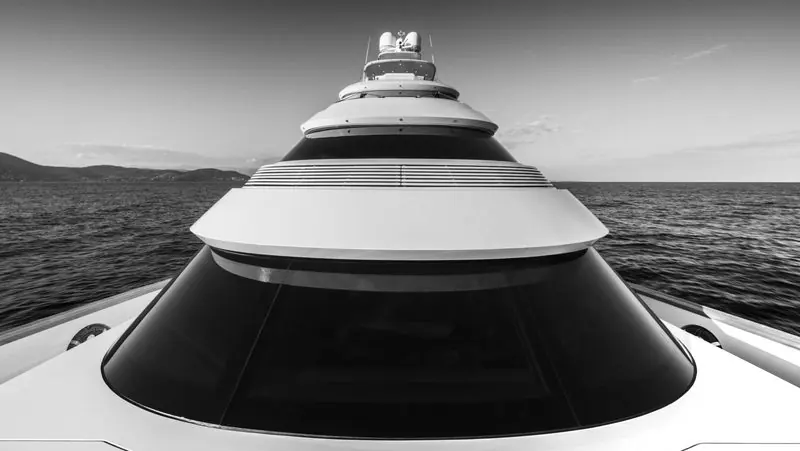
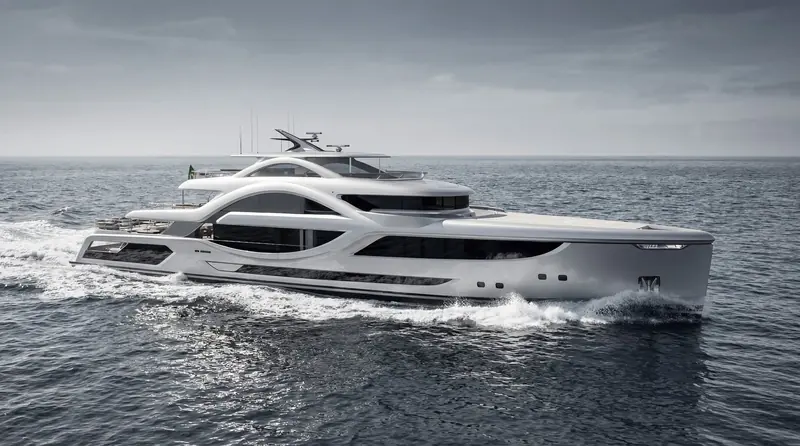
Al Waab, 55 metres, was delivered by Alia Yachts in Antalya in 2021 after two years of construction. The interesting number is not her length. Vripack kept her below 500 GT, which is the threshold above which crewing, certification and operating obligations step up sharply.
Fifty five metres under 500 GT is difficult and it is the sort of problem a studio with naval architects in the building can actually solve. The boat won several awards and a sister, Al Waab II, followed. For an owner the payoff is a yacht that looks and feels like a 55 metre and runs on a smaller crew with a lighter regulatory load. That difference shows up in the annual budget every year of ownership.
Special One, and briefs nobody else wants
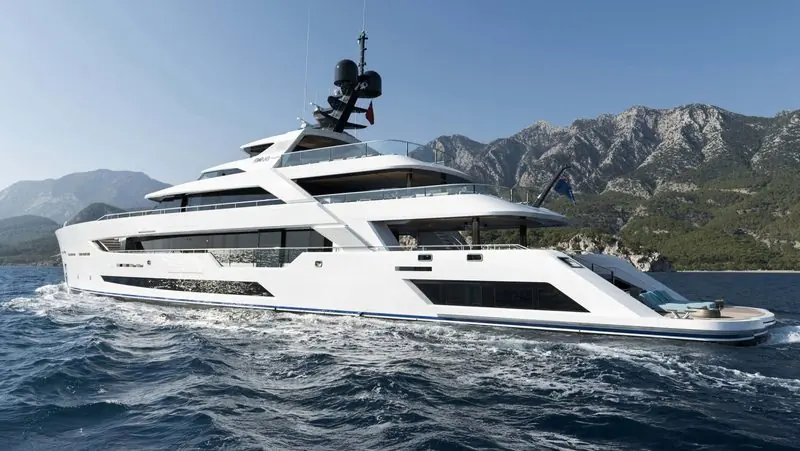
Special One, 52 metres, was delivered by Royal Huisman in 2024 and is the largest true sportfishing yacht ever built. She has six decks and is built in Alustar aluminium to keep weight down. She debuted at the Monaco Yacht Show in 2024.
A sportfisher at that size is not a scaled up version of anything. The fishing cockpit, the tower, the weight distribution and the speed required all pull against the volume an owner expects at 52 metres. Vripack has a long record of taking briefs that do not fit an existing category and making them work. Owners with an unusual requirement tend to arrive here after being told elsewhere that it cannot be done.
Project Zero
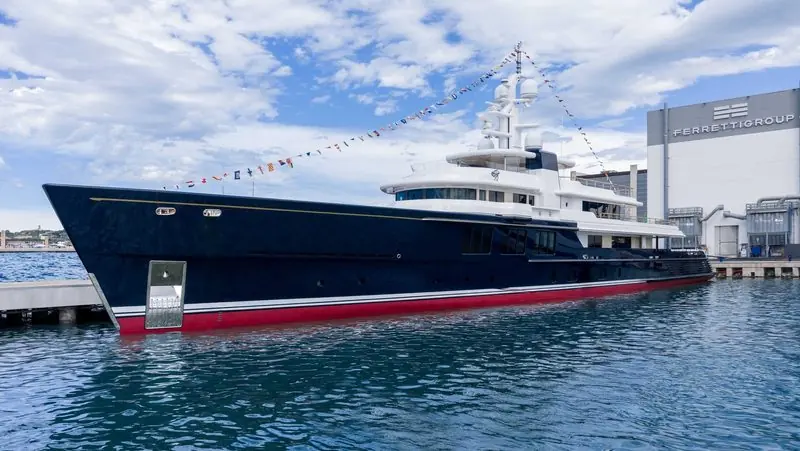
Project Zero is a 68.9 metre sailing yacht built by Vitters at Zwartsluis, launched on 10 July 2026 and designed to operate without fossil fuel. Vripack drew the exterior and the interior. Dykstra Naval Architects handled the technical hull design and Emirates Team New Zealand refined the hull performance. Foundation Zero commissioned the boat and is publishing the technical data openly.
She carries around 100 square metres of photovoltaic thermal panels on her biminis, regenerates electricity through her propellers while she is sailing and runs everything off a 700 volt direct current grid. The stated target is up to two weeks of cruising on renewable energy alone. Seven years of development and more than 60,000 hours of research went into her. She is at sea trials as of July 2026, and whatever she proves will be public.
How an owner works with the studio
Vripack starts from how an owner intends to live on the water and works back to the boat. The studio then produces the exterior, the general arrangement, the interior and the naval architecture, and can carry through to the engineering and production files the yard builds from. On a custom project of 50 metres and above the design and engineering phase runs to many months before steel or aluminium is cut.
The single point of responsibility is the difference. On most projects an owner appoints an exterior designer, an interior designer and a naval architect and then spends four years reconciling three sets of drawings. Here that sits with one office. The owner still needs an independent build supervisor, because a designer carrying the engineering is not the right party to police the yard.
What it costs, and where the studio stops
Because Vripack sells more scope than a styling studio, its fee covers more and is quoted differently. Design work is charged against stages, with engineering and production drawings priced by the volume of work the yard actually needs, which is closer to how naval architecture has always been billed than to a percentage of a boat nobody has priced yet. The published scales in the profession run from 4 to 7 per cent of finished cost at Marsh Design to 10 to 12 per cent on a fixed commission at Kasten Marine, both read 28 July 2026, and both at small craft size. At superyacht scale the SuperYachtReview guide of March 2026 puts a designer at 1 to 5 per cent of build cost with project management a separate 2 to 4 per cent.
The number to hold on to is that a single appointment here displaces fees an owner would otherwise pay to two or three firms, and it removes the interfaces between them. What it does not displace is supervision. The studio does not build and does not supervise construction on the owner's behalf, and it does not run the classification process, which belongs to the yard and the society. The design contract and the build contract are separate documents with separate remedies, and an owner should read what the studio has actually warranted before assuming that a performance figure in a brochure is a promise somebody has signed.
Recognition, and who it does not suit
Vripack has taken superyacht design awards through the 2010s and 2020s, and Al Waab collected several after her 2021 delivery. Boon's standing as the originator of the expedition yacht is the more durable credential. Awards move a boat at resale by a small margin and tell an owner that specialists would defend the work.
This studio does not suit an owner who wants a fashion statement or a name that impresses at a Monaco dinner, since the practice is deliberately low profile. It has not worked much above 70 metres in recent years, so an owner commissioning at 100 metres will find deeper portfolios elsewhere. Anyone whose brief is a conventional Mediterranean flybridge boat is also over-served here, because the studio's value shows up on the difficult jobs.
Under 500 GT is a resale feature, not a design opinion
A Vripack boat sells on things that survive a change of taste, which is a rarer quality than it sounds. A hull kept below 500 GT carries a lighter regulatory and crewing burden for whoever owns it, and that shows up in an operating budget every year rather than in a photograph. Expedition capability is the same kind of asset. Range, tankage, tender handling and the ability to leave the Mediterranean are capabilities a second owner either wants or does not, and if he does, there are not many boats that have them. The design is not asking him to share an aesthetic. It is offering him a specification.
The offsetting weakness is the shallow buyer pool at the top of the studio's range and the absence of a name that impresses at a Monaco dinner. Ocean Independence, on 11 May 2026, puts builder pedigree and specification ahead of cosmetic detail in what holds value, which favours this work, but a boat with an unusual brief still needs the buyer who had that brief. Special One, the largest sportfishing yacht built, is the extreme case: a superb object with a buyer pool that could be listed on one page. An owner with an awkward brief should commission it and should plan to keep it.
Practical detail
| Design fee | Charged against project stages, with engineering and production drawings priced by the volume of work the yard needs rather than a flat percentage; the wider superyacht market band for reference is 1-5% of build cost for the designer plus 2-4% for project management, both outside the yard price (SuperYachtReview 2026 price guide, updated March 2026) |
|---|---|
| What is NOT included | Construction supervision on the owner's behalf and classification management - both are separate appointments with separate remedies, not part of the design scope |
| Recent yards worked with | Alia Yachts, Royal Huisman, Vitters, Moonen - useful as a cross-check when choosing a builder for a Vripack design, since the studio has an established working relationship with each |
| What to check before commissioning | Ask specifically how much of the design brief depends on heavy glazing or an unusually slender hull section, since both have been named by Vripack's own team and by a build partner as sources of real cost or layout compromise on delivered projects |
| Design process an owner should expect | On recent large projects Vripack has visited owners' homes before drawing interiors and used VR walkthroughs for layout and sightline sign-off ahead of construction, rather than relying on renderings and 2D plans alone |
What owners and crew report
Delivered owners describe the priority as home first, yacht second
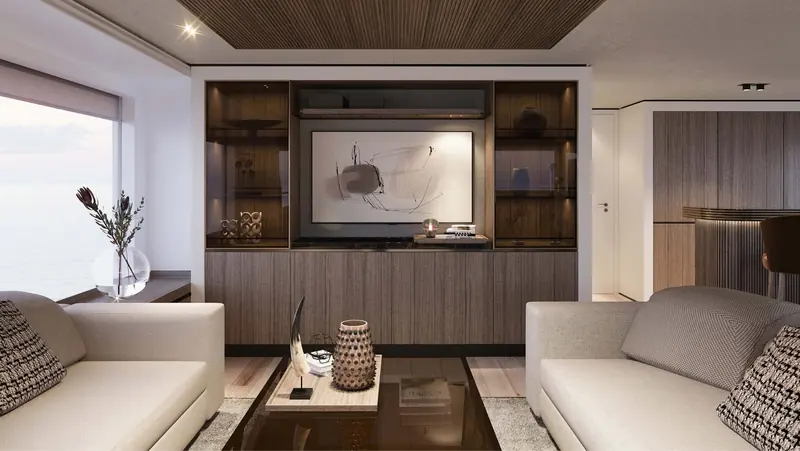
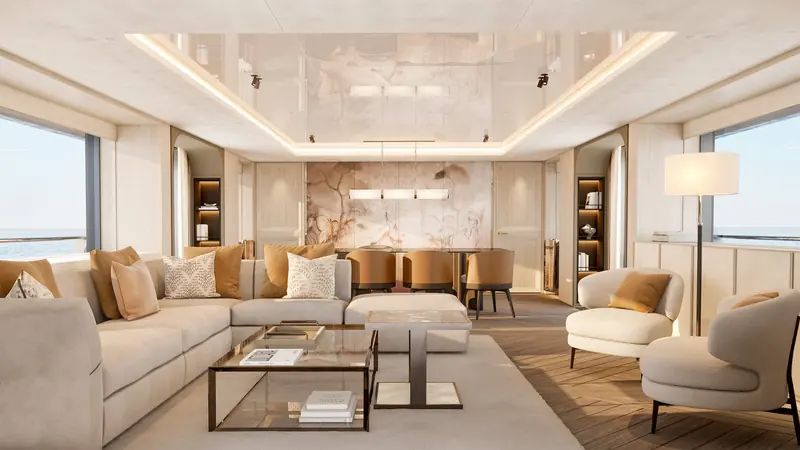
Handing over Al Waab after two years at Alia Yachts, the owner's own account of the brief was that he wanted a customised yacht that feels modern, fresh and, most importantly, like a home - comfort, space, luxury, privacy and stability at sea ranked ahead of styling for its own sake, and Vripack used VR walkthroughs from the owner's home in the Middle East to confirm layout and sightlines before steel was cut.
Al Waab owner, quoted by Boat InternationalVripack's own designer names the real trade-off behind a slender hull
Explaining the design logic on Al Waab, co-creative director Bart Bouwhuis said a slender hull buys propulsion efficiency and comfort at sea, but the compromise is that the owner has to walk down a couple of steps to reach the suite bathroom - a specific, acknowledged cost of the hull-shape decision rather than a hidden one.
Bart Bouwhuis, Vripack co-creative director, quoted by Boat InternationalThe yard building the design reports genuine construction difficulty from the amount of glazing Vripack specified
Alia's own project manager said the first problem on his mind was how to route pipes and cables through the structure, and that the volume of glass Vripack's design called for did not make it easier - a build-side account of what an ambitious exterior costs the yard, not just the owner.
Elkin Yildirim, Alia Yachts project manager, quoted by Boat InternationalEven Vripack's own team was not sure the fossil-free target on Project Zero was achievable at first
Co-creative director Marnix Hoekstra said the studio's early analysis indicated only around two days of fossil-free autonomy was realistic against a 14-day target, and that the 14-day goal appeared unrealistic for a significant period of the project before the team found the combination of systems that closed the gap.
Marnix J. Hoekstra, Vripack co-creative director
What is good, and what to watch
Strong points
- Every discipline under one roofExterior design, interior design, naval architecture and engineering all sit inside the same 40-person studio, which is rare among yacht designers and removes one layer of coordination an owner would otherwise have to manage between separate firms.
- A genuine research process behind ambitious briefs, not just stylingOn Project Zero, the studio's own account is that it did not know the 14-day fossil-free target was achievable when it started, and worked from an early two-day estimate to a delivered 70-metre sailing yacht built around the goal - evidence of engineering follow-through rather than a rendering exercise.
- Owner-led process backed by VR, not just presentation boardsOn Al Waab, Vripack visited the owner's home before drawing the interior and used VR walkthroughs so the owner could judge sightlines and space planning from the Middle East before construction - a working method the owner himself credits for the result feeling like home rather than a showroom.
What to watch
- Slender-hull styling carries a stated day-to-day costVripack's own co-creative director says plainly that the efficiency and comfort of a slender hull on Al Waab comes at the cost of the owner walking down steps to reach the suite bathroom - a real layout compromise the studio names rather than hides.
- Heavy glazing pushes real construction difficulty onto the yardAlia's project manager named routing pipework and cabling through the structure, made harder by the amount of glass specified, as the first challenge his team faced building Al Waab - a cost the design imposes on the build side, separate from anything the owner sees.
- The studio does not supervise construction or run classificationThose are separate appointments with separate remedies - an owner who assumes Vripack is managing the yard on their behalf needs to check the contract, because it is not automatically part of the design fee.
Who it is for: Owners with an awkward brief, an expedition programme or a gross tonnage limit, who want design and engineering from a single office.