Alaska & the Inside Passage
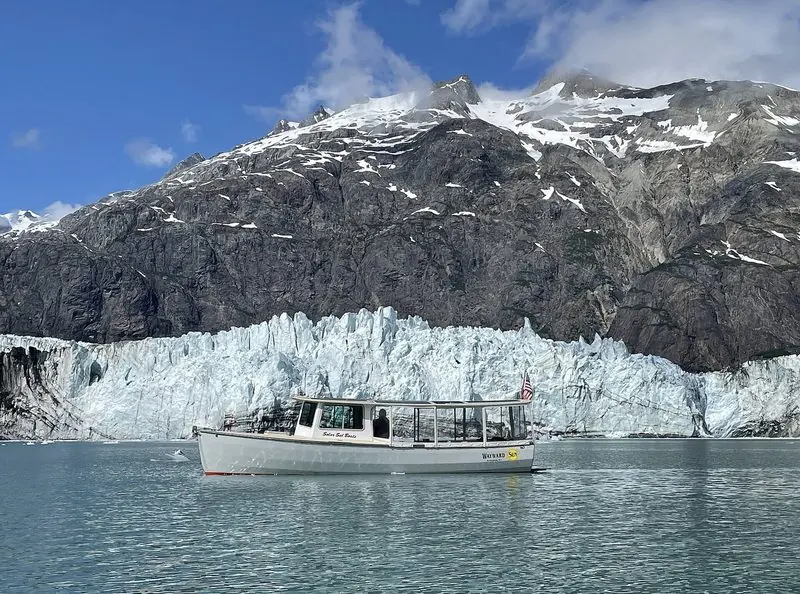
| Region | Inside Passage from Puget Sound and British Columbia to south-east Alaska |
|---|---|
| Route | over 1,000 miles from Seattle to Skagway, mostly sheltered by islands |
| Season | late May to early September |
| Glacier Bay permit | 25 private vessel permits a day, required 1 June to 31 August, maximum stay five days |
| Glacier Bay eligibility | permits are for owner-operated or bareboat-chartered vessels, commercial operations carrying paying passengers are not eligible |
| Glacier Bay application | lotteries open 1 to 31 January and 1 to 15 March, with short-notice permits by daily lottery three days ahead |
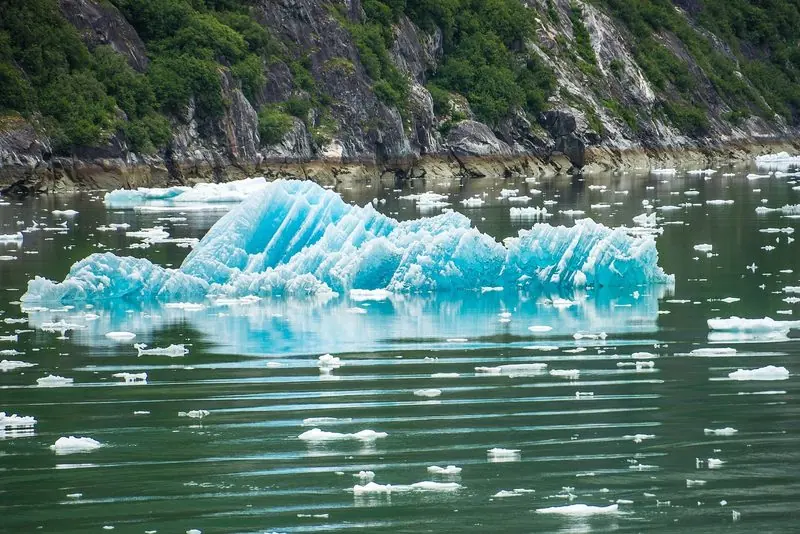
| Tracy Arm | over 30 miles long, about 45 miles south of Juneau, with summer ice from hand-sized to the size of a three-storey building |
| Seymour Narrows | currents to 15 knots through a channel about 750 metres wide, transited at slack water |
| Rainfall | Ketchikan averages 3,798 mm a year and is known as the rain capital of Alaska |
| Traffic | Ketchikan handled more than 500 cruise calls and about 1.47 million visitors in 2025, with over 1.6 million forecast for 2026 |
| Berthing | no dedicated superyacht marina in south-east Alaska, large yachts anchor or arrange commercial dock space |
| Airports | Juneau, Ketchikan and Sitka, with Anchorage and Seattle as the long-haul gateways |
| Berth cost | Juneau Docks and Harbors FY26 reservation rate at the Intermediate Vessel Float and Statter Harbor breakwater, 1 May to 30 September, USD 6.24 per foot per day for vessels of 65 ft and over from 1 April 2026 |
| Juneau harbour tariff | 79 cents per foot a day and USD 5.75 per foot a calendar month at Douglas, Harris and Aurora Harbors from 1 July 2026, on slips built for the fishing fleet |
| Shore power at Juneau | USD 32.72 a day for 50 amp, USD 112.58 for 100 amp at 208 V and USD 259.19 for 100 amp at 480 V from 1 July 2026, plus 5 per cent local sales tax |
| Charter | the PVSA penalty is USD 300 per passenger under 19 CFR 4.80, inflation-adjusted to USD 996 per passenger for 2025, and a commercially operated yacht is separately ineligible for a Glacier Bay private vessel permit |
| Cruising licence | 19 CFR 4.94, valid up to one year, private use only, with a Canadian clearance in each direction on the Inside Passage |
| Nearest lift | Ketchikan Shipyard, operated by Vigor, drydock rated at 10,000 tons taking vessels to 460 ft, with a second dock of 2,500 tons |
| Discharge | 33 CFR 159.309 permits treated sewage or graywater from a cruise vessel in Alaskan waters only under way at 6 knots or more and at least one nautical mile from shore |
| Discharge permit | Alaska's Commercial Passenger Vessel Environmental Compliance programme bars small commercial passenger vessels from discharging treated sewage, graywater or other wastewater in Alaska waters without a state permit |
| Cruise traffic | Ketchikan was reported to expect about 1.47 million passengers and over 500 ship calls in 2025, and was forecast in March 2026 to exceed 1.6 million in 2026 |
The shape of the passage
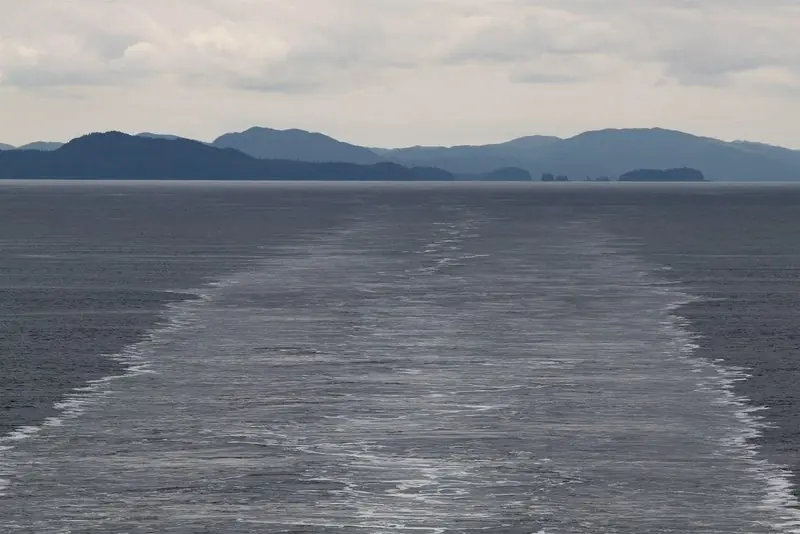
From Puget Sound the route runs north through the Salish Sea and the Strait of Georgia, up the inside of Vancouver Island through Johnstone Strait, along the British Columbia coast behind Princess Royal and Pitt Islands, and into the Alexander Archipelago of south-east Alaska. Islands shelter almost all of it. There are two or three exposed stretches where the Pacific gets in, and the rest is flat water with mountains on both sides.
That is more than 1,000 miles from end to end, and the distances are the first thing an owner has to accept. Ketchikan, the first Alaskan port, is around 600 miles north of Seattle. Juneau is another 250 beyond it. Nothing about this ground is compressed, and the boat spends real hours under way. Around 36,000 recreational vessels use the passage each year, almost all of them under 20 metres.
A week, and three weeks
A week here only works as a segment. Guests fly into Juneau, the boat takes them south to Tracy Arm and Endicott Arm for the glaciers, west through Frederick Sound for the humpbacks, and out at Sitka or Petersburg. That is a full and very good week, and it requires the yacht to have already spent two weeks getting north.
Three to four weeks is the honest figure for the whole thing, Seattle or Vancouver to Glacier Bay and back, and most owners who do it properly run the boat north with crew in May and fly guests in and out in blocks through June, July and August. A yacht that has come up from the Pacific coast of Mexico or across from Japan is already committed to a season here. This is not a ground a boat drops into for ten days.
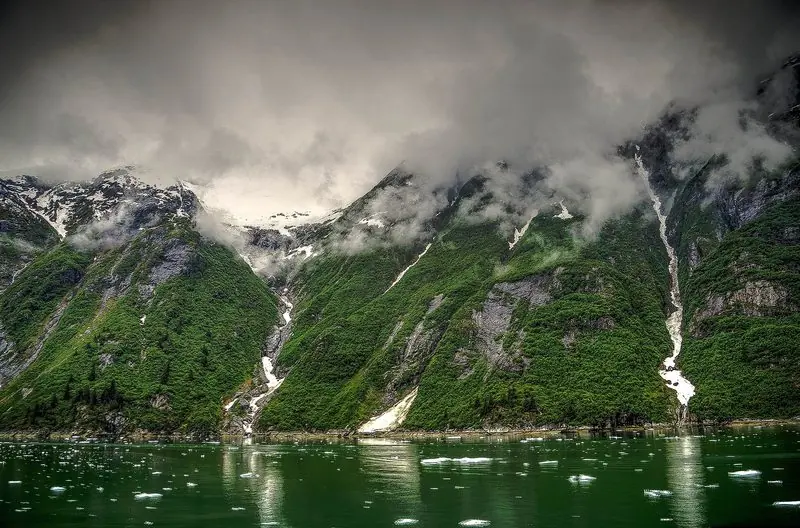
Twenty-five permits a day for the best of it, and a tide gate that decides when the boat leaves.
Glacier Bay and the permit
Glacier Bay is the set piece, and access is rationed. Twenty-five private vessel permits are issued per day, fifteen by advance notice and ten short-notice, and a permit is required to go north of the line between Point Gustavus and Point Carolus from 1 June to 31 August. Advance permits are allocated by lottery in January and again in the first half of March, with the remainder released first-come. Short-notice permits run on a rolling daily lottery three days ahead. The maximum stay is five days.
The clause that catches owners is eligibility. Permits are for owner-operated or bareboat-chartered vessels, and a boat carrying paying passengers or operating commercially is not eligible. A yacht in commercial registry running a charter cannot simply apply. Everyone entering must complete an annual boater orientation, report in and out to Bartlett Cove by VHF, and observe the whale water restrictions on speed and course that the park issues through the season for humpbacks.
The fjords and anchorages worth the trip
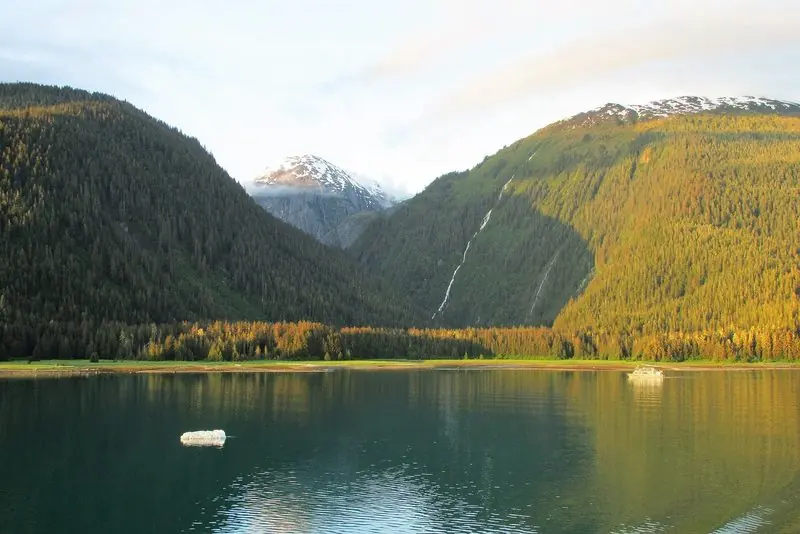
Tracy Arm is the one most owners rate first. Over 30 miles of granite walls about 45 miles south of Juneau, ending at the twin Sawyer Glaciers, with floating ice ranging from hand-sized to pieces the size of a three-storey building. The ice is the limiting factor, and a yacht works in as far as the ice allows and no further. Endicott Arm and Dawes Glacier next door do the same job with fewer boats.
Further south, Princess Louisa Inlet on the British Columbia coast is entered through the Malibu Rapids at slack water and ends at Chatterbox Falls, and it is worth planning a whole day around. Desolation Sound has the warmest water on the coast. The Broughton Archipelago and the Great Bear Rainforest give days of empty anchorages with bears on the shoreline. In Alaska, Baranof Island's hot springs, Red Bluff Bay and the bays off Chatham Strait are the ones crews come back to.
Where a 50 metre boat fits, and where it does not
There is no dedicated superyacht marina in south-east Alaska. Juneau, Sitka, Ketchikan and Petersburg all have harbours built for the commercial fishing fleet, with finger berths sized accordingly. A 50 metre yacht arranges space on a commercial or cruise-ship dock through an agent, or she anchors, and anchoring is what she does most of the time. Depths in the fjords are often too great to anchor at all close to the head, so the good spots are specific and known.
Vancouver and Seattle at the southern end are the exception, with proper marinas, deep berths and full service. Everything north of that gets progressively thinner. The yacht that works best here is one with long range, good tender capability, a strong radar picture and crew who are comfortable anchoring in 25 metres with a stern line to a tree. Air draft and beam are irrelevant. Ice, current and the absence of anywhere to tie up are the constraints.
Weather, tides and the currents
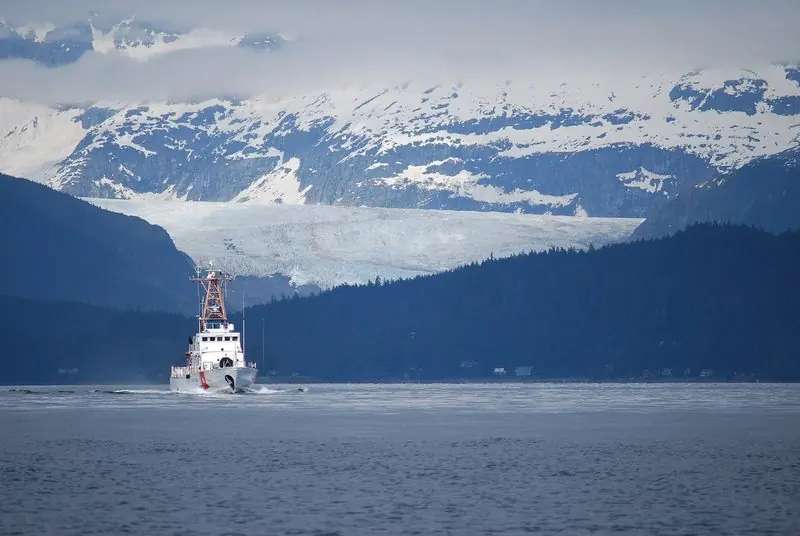
This is a rain coast. Ketchikan averages 3,798 mm a year and the whole passage is cloudy, humid and cool. Summer air temperatures sit in the mid-teens Celsius on a good day. Fog and low cloud are constant companions and floatplane schedules move accordingly. Owners should plan on being wet and be pleasantly surprised when they are not.
Tides and currents matter more than wind. Ranges of five metres and more are normal, and the water has to get through narrow passes, so gates like Seymour Narrows run to 15 knots through a channel about 750 metres wide and are transited at slack. Captain Vancouver called it one of the vilest stretches of water in the world, and even after Ripple Rock was blasted away in 1958 it dictates the day's timing. A cruise here runs on the tide tables, not the clock.
The season and what fills it
Late May to early September, and that is the whole of it. June and July are the long-daylight months, with usable light until well past ten at night in the north. August brings more settled weather in places and the salmon runs, which brings the bears down to the rivers. By mid-September the boats are heading south and the yards in Seattle and Vancouver are booked with the returning fleet.
The competition is not other yachts. It is cruise ships. Ketchikan took more than 500 cruise calls and about 1.47 million visitors in 2025, and Juneau, Skagway and Sitka carry similar loads. A yacht that plans her days around the cruise schedule sees a wholly different coast to one that does not, and any decent local agent will have the timetable.
Getting guests aboard, and what they do ashore
Juneau, Ketchikan and Sitka all have airports with scheduled jet service, and Juneau is the usual guest exchange point. Anchorage and Seattle are the long-haul gateways, and the last leg is a scheduled or chartered hop. Floatplanes and helicopters are the local currency and every yacht here uses them, for glacier landings, for remote fishing and for getting a guest out when the weather closes in.
Ashore the attraction is not the towns. It is bear viewing at Pack Creek and Anan Creek, heli-hiking on the icefields, salmon and halibut fishing that is genuinely world class, and Sitka's Russian church and totem park for the one afternoon of culture. Food is fish, and the fish is superb. Nightlife is a bar in a fishing town. Guests who need a restaurant scene will be unhappy inside three days.
Fuel, support and the honest downside
Fuel is available at Ketchikan, Petersburg, Juneau and Sitka, on docks scaled for the fishing fleet, so a large uplift is arranged in advance and sometimes by barge. Provisioning at that standard means flying it in from Seattle. Technical support in south-east Alaska is capable and practical, aimed at commercial boats, and a serious failure means either flying a specialist up or running 600 miles south. Spares logistics are the single most common frustration crews report.
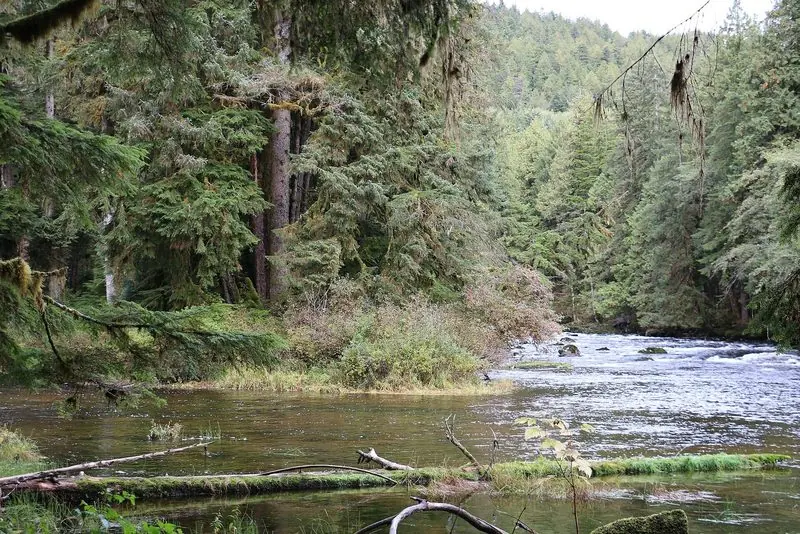
The rest of the downside is plain. It rains, it is cold, the water is unswimmable, the towns are small and the cruise ships got there first. Glacier Bay may refuse a permit. A commercially registered yacht is excluded from the private permit system altogether. Against that, an owner gets tidewater glaciers calving 200 metres off the beam and anchorages where nothing man-made is visible in any direction, which is a rarer commodity every year.
What a month costs, on a published municipal tariff
There is no superyacht marina to quote, so the numbers come from the harbour authorities and they are public. Juneau Docks and Harbors publishes its FY26 schedule: 79 cents per foot a day and USD 5.75 per foot for a calendar month at Douglas, Harris and Aurora Harbors from 1 July 2026. Those are fishing-fleet slips and a 50 m yacht will not get one. The tariff that applies to her is the reservation rate at the Intermediate Vessel Float and the Statter Harbor breakwater, running 1 May to 30 September and, from 1 April 2026, charging USD 3.74 per foot per day for vessels under 65 ft, USD 6.24 per foot per day at 65 ft and over and USD 7.47 per foot per day at 200 ft and over. A 164 ft yacht at USD 6.24 is USD 1,023 a day, about USD 31,700 for a month. Shore power is charged on top at USD 32.72 a day for 50 amp, USD 112.58 for 100 amp at 208 volts and USD 259.19 for 100 amp at 480 volts from 1 July 2026, and a 5 per cent City and Borough of Juneau sales tax may apply to all of it.
Against Marina di Porto Cervo's published 2026 tariff, which charges EUR 3,698 a day in the band to 40 m between 1 and 20 August and about EUR 102,000 for the month, Alaska is roughly a third of the price and there is nothing to spend the difference on. The permit that rations the best of the ground costs nothing at all, which is the surprise: Glacier Bay's twenty-five private vessel permits a day are allocated by lottery rather than by price. The costs that do bite are the ones that do not appear on a tariff. A large fuel uplift is arranged in advance and sometimes comes by barge, provisioning at guest standard is flown from Seattle, and the delivery north and south either side of the season is three to four weeks of running that no owner is aboard for.
The PVSA, the permit bar and the yard nobody expects
Two rules exclude a commercially registered yacht from this ground and they compound. The Passenger Vessel Services Act bars a foreign-flagged vessel from carrying passengers between United States points, and the penalty under 19 CFR 4.80 is USD 300 per passenger transported and landed, inflation-adjusted to USD 996 per passenger for 2025. On top of that, Glacier Bay's private vessel permits are issued to owner-operated or bareboat-chartered vessels only, and a vessel carrying paying passengers or operating commercially is not eligible, so a charter yacht is shut out of the best of the park by the park itself rather than by customs. A foreign-flagged yacht cruising privately takes a cruising licence under 19 CFR 4.94, valid up to a year, which lets her move between United States ports without formally entering at each one, and the Inside Passage adds a Canadian clearance in each direction because most of the route is British Columbian water.
The yard position is much better than the reputation of the coast suggests. Ketchikan Shipyard, operated by Vigor, runs a drydock rated at 10,000 tons taking vessels to 460 ft, with a second dock of 2,500 tons and a covered assembly hall. A 50 m yacht can be docked in south-east Alaska, which is not true of the Maldives, French Polynesia or the Grenadines. What Ketchikan does not have is a superyacht paint shed, a joinery shop or the finishing trades, so the honest description is that structural and mechanical work can be done here and cosmetic work cannot.
Discharge, and how busy it now is
Alaska has its own federal discharge standard and it is stricter than the general rule. Under 33 CFR 159.309 a cruise vessel may discharge treated sewage or graywater in Alaskan waters only when under way at not less than 6 knots and not less than one nautical mile from the nearest shore, with fecal coliform not exceeding 20 per 100 millilitres as a geometric mean and total residual chlorine not exceeding 10.0 micrograms per litre. Alaska's own Commercial Passenger Vessel Environmental Compliance programme goes further for small commercial passenger vessels, which may not discharge treated sewage, graywater or other wastewater in Alaska waters without a state permit. A yacht carrying paying passengers is inside that regime. A private yacht is outside the letter of both and inside the culture of neither, because the fjord anchorages have no flushing and everybody notices.
The traffic picture has also moved a long way, and any planning built on figures from the last decade is wrong. Ketchikan was reported to expect about 1.47 million cruise passengers across more than 500 ship calls in 2025, and in March 2026 was forecast to take more than 1.6 million in the 2026 season, an increase of over 100,000 and enough to pass Juneau for the first time. Juneau and Skagway each took over a million in 2025 as well. That is the schedule a yacht plans around, and it is why the good days here start early and end in an anchorage no ship can reach.
Ashore, access and booking
| Getting there | Juneau and Ketchikan are where itineraries start and where guests join, both served by jet from Seattle. Sitka, Wrangell and Petersburg fill in the middle of the route. The working season is late May to early September, with June and July the strongest for wildlife, and there is no realistic shoulder either side of it. |
|---|---|
| Pilotage, which catches almost every foreign flag | This is the rule that reshapes an Alaskan plan. Alaska requires state pilotage for foreign-flagged vessels over 65 ft LOA. Between 65 ft and 175 ft a yacht may apply to the Alaska Marine Pilot Board for an exemption, but the application goes in a minimum of 30 days before arrival and needs a registered agent to file it. Between 125 ft and 175 ft a pilot must be taken on arrival at the first Alaskan port whether or not an exemption is held. Over 175 ft there is no exemption at all. Wrangell Narrows and Peril Strait require a pilot from everyone regardless of exemption status, and both sit squarely on the Inside Passage route. |
| The cruising permit trap | A foreign-flagged pleasure vessel of an eligible flag can hold a US cruising permit that exempts it from formal entry and clearance at each port; the eligible register list is at 19 CFR 4.94 and includes the British Virgin Islands, Cayman Islands, Bahamas, Jamaica and the Marshall Islands. The trap is that a cruising permit cannot be renewed while the vessel is in Alaskan waters. A permit that expires mid-season is not a paperwork problem, it is a passage: the yacht has to leave and come back. |
| Over 400 GT | A vessel above 400 gross tons must hold a current Alaska Certificate of Financial Responsibility and an approved Oil Spill Response Plan before it enters Alaskan waters, not on arrival. That is a lead-time item measured in weeks and it is the one most often discovered too late by a yacht repositioning up from the Pacific Northwest. |
| Glacier Bay, and how the quota really works | Glacier Bay runs a daily quota of 25 private vessel permits from 1 June to 31 August, one of which the superintendent designates as a transit permit usable only to run out of the bay from Bartlett Cove and back. From September through May there is no quota on private or charter vessels at all. Permits are non-transferable between vessels, a private vessel may hold at most two, only one of which can be an advance-notice permit, and no vessel may hold permits for more than 14 days in any 21-day period. That last rule, not the daily quota, is what actually limits a yacht that wants to spend real time in the bay. |
| The other permits nobody budgets for | Separate permits are required for Anan Creek Bear Observatory, the Pack Creek Bear Sanctuary and Baranof Warm Springs. These are the three shore excursions guests most often ask for by name once they are aboard, and none of them can be arranged on the day. |
| Agricultural inspection | A vessel that has operated outside the United States within the previous two years must be able to show proof of agricultural inspection. For a yacht arriving from Mexico, the South Pacific or a Vancouver refit this is a live requirement rather than a formality. |
| Fuel and support | Juneau has fuel docks and shoreside services but they expect a call ahead rather than a walk-up, and capacity is sized for the fishing and small-cruise fleet rather than for a 60 m yacht. There is no superyacht refit capability in southeast Alaska; the nearest real yard capacity is Seattle or Vancouver, which is a multi-day run. Carry the spares. |
| What a chartered week costs | The published charter market runs from roughly USD 46,000 a week for a small four-guest expedition yacht to over USD 200,000 for a full superyacht, before the expenses that Alaska adds: pilotage, permits, and a fuel bill inflated by distance from anywhere. |
What owners and crew report
The pilotage exemption is a 30-day, agent-filed application, not a form on arrival
Agents working Alaskan yacht arrivals state that Marine Pilot Board exemption applications should be submitted a minimum of 30 days ahead and require a registered agent to file them. This is the agent's own account of a service it provides, but the 30-day figure is the operative planning number and it is the one most often missed by yachts repositioning north on a compressed schedule.
Yacht Services of AlaskaThe permit that cannot be renewed is the one that ends seasons early
Practitioners advising foreign-flagged yachts entering US waters flag the non-renewal of cruising permits inside Alaska as a distinct trap from the ordinary permit rules further south. The remedy is always the same and always expensive: leave US waters and re-enter to obtain a fresh permit.
International Yacht Brokers AssociationGlacier Bay's binding limit is the 14-in-21 rule, not the daily quota
Operators report that securing one of the 25 daily permits is achievable, while the restriction preventing any vessel from holding permits for more than 14 days in any 21-day period is what actually forces a yacht out of the bay and shapes a multi-week itinerary around it.
Yacht Services of Alaska
What is good, and what to watch
Strong points
- Protected water for almost the entire routeThe Inside Passage links Ketchikan, Wrangell, Petersburg, Sitka and Juneau through sheltered channels. A cruising ground of this scale that almost never requires an exposed passage is rare, and it makes Alaska viable for yachts and guests that would not attempt open Pacific water.
- The quota is a feature, not an obstacleTwenty-five private vessels a day across the whole of Glacier Bay in peak season means the single best thing to look at in southeast Alaska is never crowded. Owners used to queueing for a Mediterranean anchorage in August consistently rate this the most valuable thing about the destination.
- Nine months of the year the quota does not existFrom September through May neither private nor charter vessels are subject to quotas. A late-season boat willing to accept weather and short daylight has the bay effectively to itself and needs no permit lottery at all.
- The rules are written down and they are stablePilotage thresholds, the 19 CFR 4.94 flag list, the Glacier Bay quota and the 14-in-21 rule are all published federal or state regulation rather than local practice. An owner can plan an Alaskan season precisely, which is not true of most remote destinations.
What to watch
- Pilotage is a hard cost on any foreign flag over 65 ftThe exemption is discretionary, needs 30 days and a registered agent, and disappears entirely above 175 ft. Between 125 ft and 175 ft a pilot is compulsory at the first port regardless. For a foreign-flagged yacht this is the largest and least avoidable line in an Alaskan budget.
- A cruising permit cannot be renewed in AlaskaIf the permit runs out mid-season the yacht must physically leave US waters and return. That is a multi-day repositioning built on a date, and it has to be designed into the itinerary before the season starts rather than solved when it happens.
- The season is about fourteen weeksLate May to early September. Everything, including the Glacier Bay quota window of 1 June to 31 August, is compressed into it, so a yacht committing to Alaska is committing its whole summer and giving up a Mediterranean one.
- There is no technical support within a thousand milesNo superyacht yard in southeast Alaska, fuel docks sized for the fishing fleet, and Seattle or Vancouver as the nearest real capability. A failure that would be a morning in Antibes is a delivery voyage here.
- The shore excursions all need paperAnan Creek, Pack Creek and Baranof Warm Springs each need a separate permit. Guests ask for these by name and they cannot be produced spontaneously, so a captain who has not applied in advance spends the trip declining requests.
Who it is for: An owner with a long-range boat, a competent captain and no interest in being seen, who would rather watch a glacier calve than sit on a beach club.