French Riviera
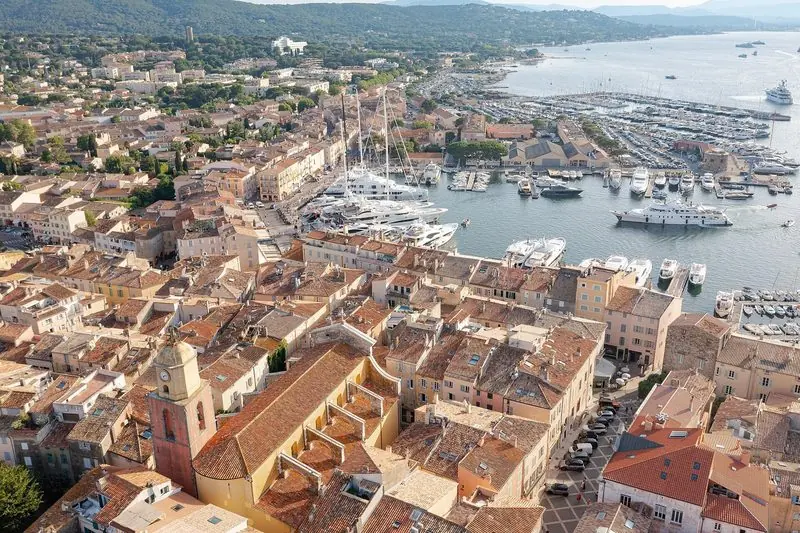
| Region | Cote d'Azur, Saint-Tropez east to Menton, southern France |
|---|---|
| Scale | about 110 km of coast, roughly 55 nautical miles by sea from Saint-Tropez to Monaco |
| Core season | June to September, with May already busy for the Grand Prix and the film festival |
| Main harbours | Port Hercule (Monaco), Port Vauban (Antibes), Vieux Port and Port Canto (Cannes), Port de Saint-Tropez |
| Largest berths | the IYCA quay at Port Vauban, with berths quoted up to 150 m and 165 m |
| Port Hercule | about 760 berths, depths in the pool from 2.5 m to over 50 m |
| Saint-Tropez limits | 90 m maximum on the Mole Estienne d'Orves, 50 m in the old port, 4 m maximum draft |
| Anchoring | prohibited on Posidonia seagrass for all vessels over 24 m across the French Mediterranean |
| Extra duty over 45 m | an anchoring plan must be declared to the local semaphore before dropping |
| Penalty exposure | fines up to EUR 150,000 and exclusion from French waters (decree 157/2024, 23 May 2024) |
| Air access | Nice Cote d'Azur, around 30,000 business aviation movements a year, 7 minutes by helicopter to Monaco |
| 2026 show weeks | Cannes Yachting Festival 8 to 13 September, Monaco Yacht Show 23 to 26 September |
| Berth, Monaco 2026 | EUR 1,258.80 a day or EUR 25,207.20 a month for 50.00 to 54.99 m, high season 1 May to 1 October, VAT included |
| Berth, Saint-Tropez 2026 | EUR 7.29 per square metre a day on the Mole Estienne d'Orves from 10 July to 20 August, about EUR 3,280 a day for a 50 m by 9 m hull |
| Antibes and Cannes publish no berthing rate card, and the IYCA quay at Port Vauban is quoted on application | |
| Temporary admission | 18 months for a non-EU flagged yacht in private use, under Articles 212 and 217(e) of Delegated Regulation (EU) 2015/2446, running across the whole EU customs territory |
| Charter | a non-EU flagged yacht under temporary admission may not charter in France, and cabotage between French ports is reserved to EU flags under Regulation 3577/92 |
| French Commercial Exemption | over 15 m, commercially registered, permanent crew, exclusive commercial use, and 70 per cent of trips in the previous calendar year outside French territorial waters |
| Charter VAT | 20 per cent on the hire, with the 50 per cent flat abatement withdrawn for contracts signed from 30 March 2020 and reduction now based on evidenced time outside EU waters |
| Nearest lift | MB92 La Ciotat, a day's run west, with a 4,300 tonne shiplift for yachts to 115 m and a 300 tonne travel lift for the 30 m to 50 m range |
The shape of the coast
The usable Riviera is short. Saint-Tropez to Menton on the Italian frontier is about 110 kilometres of shoreline, and roughly 55 nautical miles by sea from Saint-Tropez to Monaco. At a 20 knot cruise that is under three hours end to end. Cannes to Antibes is about 11 miles, Antibes to Monaco under 20, Nice to Monaco a nine mile run. Nothing on this coast is a passage.
A realistic week: base at Antibes or Golfe-Juan, lunch at anchor off the Iles de Lerins, take a night off Villefranche, spend one evening stern-to in Monaco and no more, then run west for Pampelonne and a night in the Baie des Canoubiers. Two weeks is hard to fill on the French coast alone, and most owners break out. Calvi in Corsica is about 100 nautical miles from Nice, and Portofino sits roughly 85 miles east of Monaco. Either gives the boat somewhere to be in the second week without the August berth fight.
The harbours worth a night
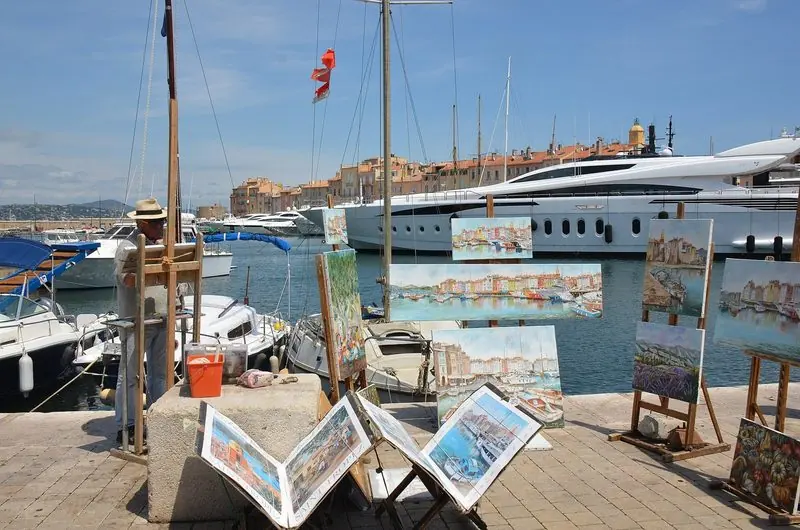
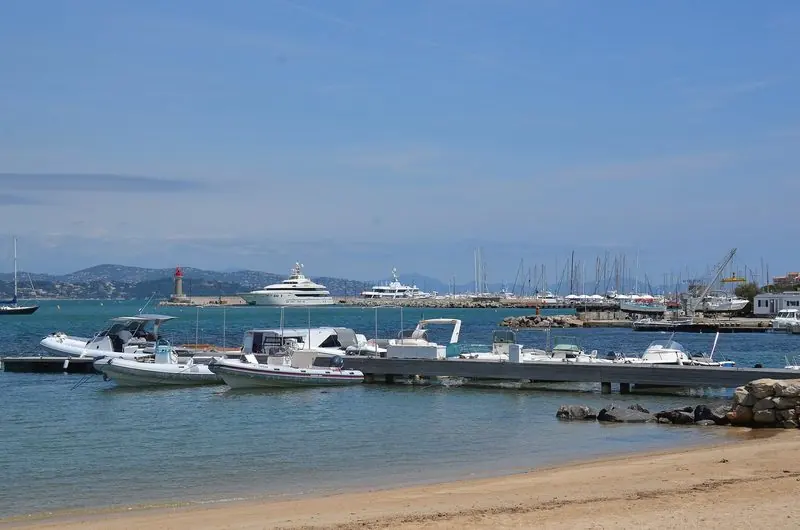
Port Hercule in Monaco is the address, with about 760 berths and depths inside the pool running from 2.5 metres to more than 50. Yachts well over 100 metres lie there all summer and during show week the harbour is solid. Port Vauban in Antibes holds the largest capacity on the coast, and its IYCA quay, known to everyone as the billionaires' quay, has berths quoted up to 150 and 165 metres. Cannes offers the Vieux Port beside the Croisette and Port Canto at the eastern end of the bay.
Saint-Tropez is smaller than its reputation suggests. The Mole Estienne d'Orves takes vessels to 90 metres, the old port is capped at 50, and the whole harbour is limited to 4 metres of draft, which quietly rules out a lot of modern displacement hulls. Booking above 18 metres runs through the port's Magelan e-resa system, and the harbourmaster often confirms only on the morning of arrival. Golfe-Juan and Nice give useful overflow within a short run of Cannes and Monaco.
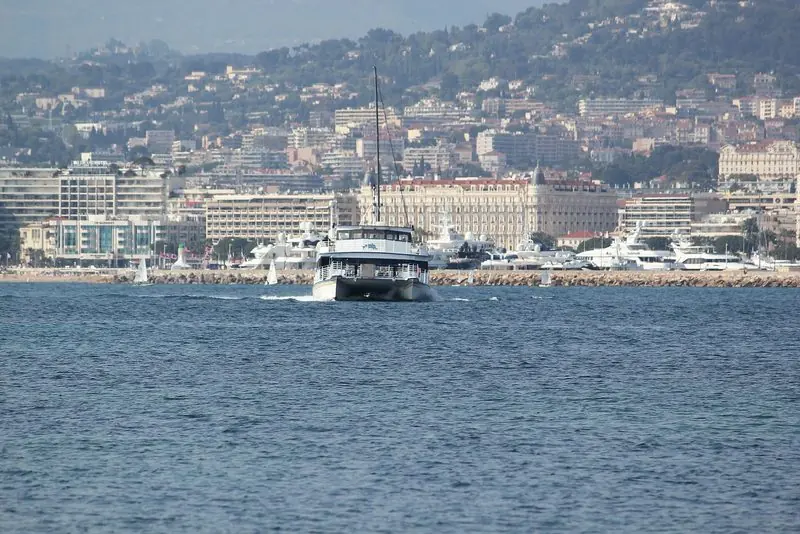
Distance is never the problem on this coast, and a berth in August always is.
The anchorages that earn a day
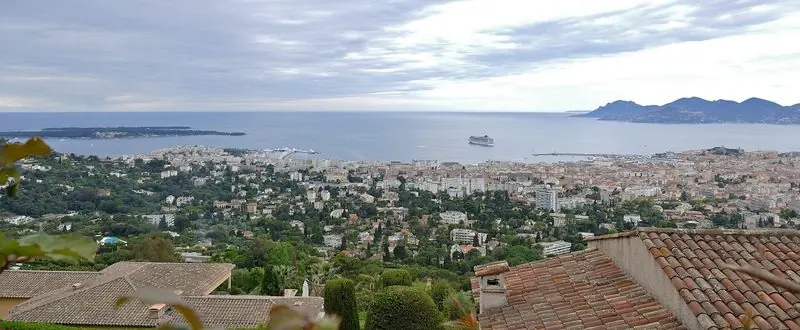
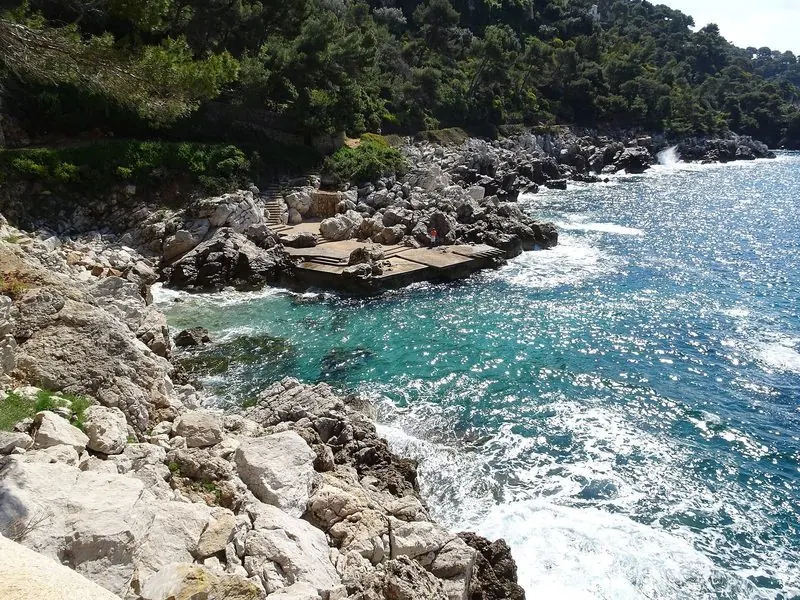
The Rade de Villefranche is the best natural anchorage on the coast, a deep bay between Nice and Monaco with shelter from the west and a tender run of minutes into a working village. Off Cannes, the channel between Sainte-Marguerite and Saint-Honorat gives flat water and pine shade ashore, with a monastery on the smaller island that still makes and sells its own wine. Off Saint-Tropez, Pampelonne is the classic day anchorage, open to the east and backed by the beach clubs. The Baie des Canoubiers just north of the town is the better overnight option when the wind goes south.
West of Saint-Tropez the coast changes character. Cap Taillat and Cap Camarat give clear water and almost no development, and the Baie de Cavalaire has room for a large yacht to swing. In an easterly this whole coast turns uncomfortable and the fallback is the lee of the Lerins or a berth. A boat at anchor here moves at least once on a typical day.
What a 50 metre yacht can and cannot do here
Depth is rarely the constraint here. Availability is. Only a few dozen berths on the whole coast take a 50 metre boat in August, and most are held on annual contracts by owners who secured them years ago. An owner without a home berth depends on an agent working the cancellations. Monaco's own published tariff is not the obstacle and is in fact the lowest of the major Riviera ports, at EUR 1,258.80 a day for a 55 metre in August 2026 against Porto Cervo's EUR 5,437. What is scarce is the berth itself, not the money. Many boats of this size hold a contract in Antibes or a nearby Italian port and day-cruise into the hotspots.
At anchor the rules bite hard above 24 metres. Anchoring on Posidonia seagrass is prohibited for all vessels over that length across the entire French Mediterranean, and the meadows cover much of the sandy shelf between the surface and about 35 metres. Yachts over 45 metres carry a further duty to contact the local semaphore in advance and declare where they intend to drop. Fines run to EUR 150,000 under decree 157/2024 and a vessel can be excluded from French waters. Crews work from the Donia and Nav&Co apps, which map the meadows and the restricted zones.
The mistral and the month by month picture
The summer here is settled by Mediterranean standards. June brings warm air with the sea still catching up, July and August are hot and often windless by day with a light thermal breeze in the afternoon, and September holds warm water until the first autumn fronts arrive late in the month. May is pleasant ashore and cold in the water, which matters if guests expect to swim.
The wind that defines the coast is the mistral, a cold northwesterly that funnels down the Rhone valley and out over the Golfe du Lion. It hits the western end hardest, so the Golfe de Saint-Tropez feels it far more than Monaco does, and it can blow for three days at a stretch. It also leaves the best visibility of the year behind it. A summer easterly is less common and turns the open anchorages off Cannes and Saint-Tropez untenable.
The weeks that are already spoken for
Several weeks are effectively closed to a casual arrival. The Monaco Grand Prix in late May fills Port Hercule with yachts rafted along the quays for a grandstand view of the circuit, at rates set for that weekend and booked a year out. The Cannes Film Festival in May does the same to Cannes on a smaller scale. In 2026 the Cannes Yachting Festival runs 8 to 13 September across the Vieux Port and Port Canto, and the Monaco Yacht Show follows on 23 to 26 September in Port Hercule.
The show weeks cut both ways for an owner. If the boat is for sale or for charter, September is the reason to be here at all, because the brokerage world comes to the yacht. If it is not, those are the weeks to spend in Italy or Corsica, since both Cannes harbours and the whole of Port Hercule go over to the exhibitions and the surrounding berths absorb the displaced fleet. Les Voiles de Saint-Tropez in late September has the same effect further west.
Nice airport, and the road that ruins transfers
Nice Cote d'Azur is the reason this coast works for owners with limited patience. It handles around 30,000 business aviation movements a year through a dedicated terminal, and it sits nine nautical miles from Monaco and a few minutes' drive from Antibes. The helicopter transfer from the airport to Monaco takes seven minutes against forty-five by car on a clear day. Cannes Mandelieu takes smaller jets and turboprops and is closer to the Cannes harbours.
On the ground the coast road is the weak link. The Basse Corniche between Nice and Monaco can take an hour in high summer for a distance a tender covers in twenty minutes, and the approach to Saint-Tropez from Sainte-Maxime is regularly gridlocked in August. Well-run boats move guests by tender wherever the destination is on the water and keep cars for the inland trips to Eze, Saint-Paul-de-Vence and Grasse.
Restaurants, beach clubs and the evening
Dining is the centre of a Riviera summer and the standard is genuinely high. Monte Carlo holds the Louis XV at the Hotel de Paris, Le Grill on the roof and the Yacht Club de Monaco for members and their guests. Antibes has a serious market in the Cours Massena and a run of small restaurants in the old town that the industry uses year round. On Pampelonne the beach clubs, Club 55 among them, run a booking system that expects the boat's name and a tender arrival at a set time.
The nightlife is concentrated and expensive. Monte Carlo runs on the Casino square, Jimmy'z and the summer terraces, Saint-Tropez on Les Caves du Roy and the beach clubs that become evening venues. Cannes is quiet outside festival weeks. The scene rewards owners who enjoy being seen and want a full diary, and it is somewhat wasted on those who came for the swimming. Guests wanting a quiet week are better served across the border in Liguria.
Tax, support and the honest downside
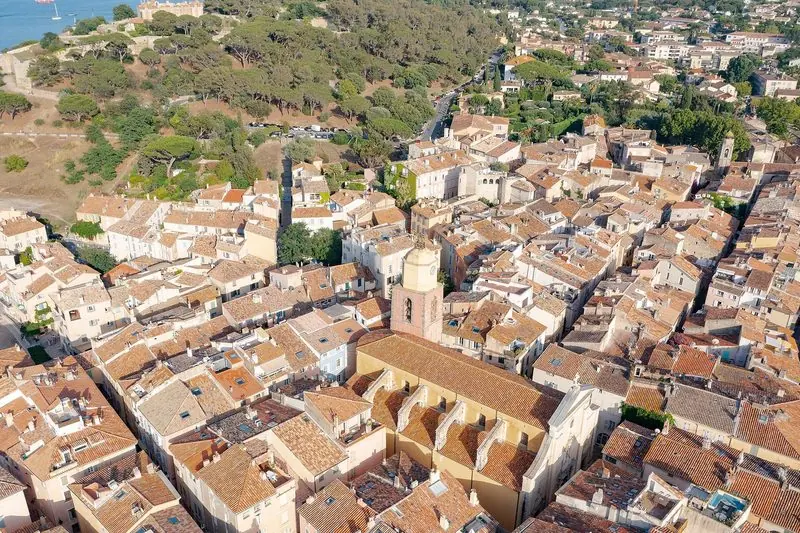
France is in the EU customs union and the Schengen area, which shapes crew movement, VAT treatment and the structure of any commercial operation. Charter from a French port carries French VAT on the hire, and the rules on where a charter may begin and end have tightened, so this is agent and lawyer territory. Antibes holds the densest concentration of superyacht trades in the world, La Ciotat and Marseille sit within a day's run for refit and lift, and most parts can be found the same day.
The honest downside is crowding and cost. In August the water between Cannes and Monaco is genuinely busy with ferries, day boats, jet skis and tenders, and the good anchorages are taken by mid-morning. Berth prices at the top marinas are the highest in the Mediterranean and are quoted per metre with a season multiplier owners routinely underestimate. The Posidonia rules have cut the number of legal anchoring spots at exactly the moment demand rose. Owners who want wilderness will not find it here.
What a berth here actually costs
Two of the four harbours publish, and the published numbers are not the ones the coast's reputation predicts. Monaco's port operator posts a 2026 transit tariff for Port Hercule outside the Rainier III dike: a yacht of 50.00 m to 54.99 m pays EUR 1,258.80 a day or EUR 25,207.20 a month in high season, which runs 1 May to 1 October 2026, against EUR 500.40 a day and EUR 13,749.60 a month either side of it, all figures inclusive of 20 per cent VAT (Societe d'Exploitation des Ports de Monaco, 2026 tariff sheet, retrieved 28 July 2026). Saint-Tropez prices by area rather than by length, multiplying LOA by beam. The Mole Estienne d'Orves is EUR 7.29 per square metre a day from 10 July to 20 August 2026 and EUR 5.37 from 30 April to 10 July, and the Vieux Port, the basin that takes 25 m to 50 m, is EUR 9.24 and EUR 7.03 across the same two windows, again TTC (Port de Saint-Tropez, Tarifs 2026, retrieved 28 July 2026).
Run a 50 m hull with a 9 m beam through those tables and the ranking inverts. Saint-Tropez on the Mole comes to about EUR 3,280 a day at the July and August peak, and the whole of August on the published rates is about EUR 92,200. Monaco's published month over the same dates is EUR 25,207.20, a little over a quarter of it. That is not because Monaco is cheap. It is because the pool is let on long contracts and the transit tariff only ever applies to what those holders have not taken, so the rate card describes a berth most arriving yachts cannot get. Port Vauban in Antibes, the Vieux Port at Cannes and Port Canto publish no rate card at all, and the IYCA quay is quoted on application. For scale at the other end of the Mediterranean, ACI Split in Croatia charges EUR 1,670 a day for the same 50 m boat in July and August 2026, so a Saint-Tropez August is roughly double an Adriatic one at a marina that is itself the busiest on that coast.
Whether a foreign flag may charter in French waters
A yacht on a non-EU flag may cruise the French Mediterranean privately under temporary admission, which is the EU customs relief set out in Article 212 of Commission Delegated Regulation (EU) 2015/2446. The conditions are that she is registered outside the EU customs territory in the name of a person established outside it, and used by a person established outside it, and Article 217(e) fixes the discharge period for a means of transport for private use by sea at 18 months. That clock covers the whole EU customs territory rather than France alone, and crossing to Italy or Spain does not restart it. Temporary admission is a private-use relief and nothing else. It does not permit commercial charter, so a yacht intending to earn in French waters must leave the regime and enter free circulation with import VAT accounted for, which is the practical meaning of the phrase EU-imported. Cabotage, meaning carrying paying guests between two French ports, is reserved to EU-flagged vessels under Regulation 3577/92 on maritime cabotage.
Once she is imported, the French Commercial Exemption is what makes commercial operation worth the trouble. It removes French VAT from fuel, stores, supplies and yard work, and its conditions are cumulative rather than alternative: LOA over 15 m, commercial registration, permanent crew employed by the owning company, exclusive commercial use under charter contracts at market rates, and at least 70 per cent of trips in the previous calendar year carried out beyond French territorial waters, counted from 1 January to 31 December. Sea trials, repositioning to a yard and static charters are not trips. Fall below 70 per cent in one year and the exemption is unavailable for the next, which is why the test is monitored trip by trip rather than reconciled in December. VAT on the charter fee is a separate matter at 20 per cent. The flat 50 per cent abatement of the taxable base was withdrawn for contracts signed from 30 March 2020, and the only reduction now available is for time genuinely spent outside EU waters, evidenced from the yacht's own track. The exposure for getting it wrong is assessed VAT plus interest and penalty on every invoice in the year, not a fixed fine.
Ashore, access and booking
| Getting there | Nice Cote d'Azur serves the whole coast through a dedicated business aviation terminal. Blade and Monacair fly the airport to the Monaco heliport at Fontvieille in about seven minutes from around EUR 195 a seat, and run a Nice to Cannes rotation of about ten minutes at a similar seat price from May to October. On the road, fixed-price transfer operators quote roughly EUR 60 to EUR 75 to Antibes, EUR 75 to EUR 85 to Cannes and EUR 90 to EUR 95 to Monaco, and the train from Nice-Ville to Monaco-Monte-Carlo takes about 22 minutes for under EUR 10 to a station a short walk from Port Hercule. Cannes Mandelieu takes smaller jets and turboprops and is closer to the Cannes basins. |
|---|---|
| Arriving by sea | There is no single channel for the coast. Port Hercule in Monaco answers on VHF 12 on +377 97 77 30 00, holds 3 knots inside the pool and takes a compulsory pilot for movements at 80 m and over. Port Vauban in Antibes and the IYCA quay work on VHF 9 on +33 4 92 91 60 00, with the office running 08:00 to 18:00 in winter and out to 21:00 at the height of the season. IGY Vieux-Port de Cannes is VHF 12 on +33 4 92 98 70 21, open 08:00 to 18:00 seven days, check-in and check-out both at midday. Port Canto answers on VHF 9. Port de Saint-Tropez is VHF 9, and the harbour is capped at 4 m of draft whatever the quay. |
| How you actually reserve | Four ports, four procedures. Saint-Tropez splits by length: under 18 m goes through Navily, 18 m and over through Magelan eResa, where you open an account, upload the ship's papers and insurance, and the booking is confirmed only against a deposit of 50 per cent of the stay excluding tourist tax and options, with cheques refused and the balance due on arrival. Monaco takes a call on channel 12 with 24 hours notice for a large yacht in the ordinary season, but Grand Prix week is an application to an allocation committee with a booking fee, not a reservation, and late or incomplete dossiers are not read. Antibes and the IYCA go through the operator at [email protected] and [email protected], or the Riviera Ports customer account. Cannes goes through the IGY office, which states plainly that berthing is not guaranteed without a confirmed reservation. |
| What a berth costs | Two of the four publish. Monaco posts EUR 1,258.80 a day, or EUR 25,207.20 a month, for a yacht of 50.00 m to 54.99 m in high season, 1 May to 1 October 2026, VAT included at 20 per cent. Saint-Tropez prices by area rather than length, at EUR 7.29 per square metre a day on the Mole Estienne d'Orves from 10 July to 20 August 2026, which is about EUR 3,280 a day for a 50 m by 9 m hull, and water and electricity sit inside that fee rather than being metered on top. Antibes, the IYCA quay, the Vieux Port at Cannes and Port Canto all quote on application. |
| Buying a berth rather than renting one | The IYCA quay at Port Vauban is sold as long leases and the asking prices are public, which is unusual on this coast. Burgess listed a 70 m berth at EUR 2,800,000, an 80 m at EUR 3,500,000, an 85 m at EUR 4,100,000, a 90 m at EUR 4,300,000 and a 95 m at EUR 4,500,000, while Edmiston listed a 110 m by 17 m berth from EUR 13,300,000. Inside Port Vauban itself the only published annual-contract tariff covers hulls under 12.99 m by 4.30 m, and those berths are allocated strictly off a waiting list on production of identity documents at the harbour office. |
| Power, water and fuel | Saint-Tropez supplies 240 V and 400 V to 250 A on the Mole and in the Vieux Port, and 240 V at 32 A and 63 A in the Jean Lescudier basin, with water and electricity inside the harbour fee. Monaco has 220 V and 380 V on the quays and pontoons, a BP station at the landing stage, 12 showers and 20 WCs, and prohibits discharging grey or black water overboard. Cannes offers shore power to 400 A, a fuelling station and a clean point for hazardous waste. No French Riviera port publishes a diesel pump price: fuel is a same-day quote from a bunker supplier such as Fioul 83, and duty relief follows commercial registration and the French Commercial Exemption, not the berth. |
| Eating and after dark within walking distance | Antibes is the practical base. The Cours Massena covered market is inside the old town walls, Cafe Brun sits between the market and Port Vauban with a mix of locals and crew, and the Blue Lady and the Hop Store are the crew rooms a few steps from the quay; Les Pecheurs at the Cap d'Antibes Beach Hotel is the Michelin-starred option a short ride out. In Monaco, Quai des Artistes and La Rascasse are on Port Hercule itself, the Marche de la Condamine food hall at the head of the port serves 18:00 to 21:30 Tuesday to Sunday, and Le Louis XV is up the hill, with Jimmy'z, Sass Cafe and Twiga as the late rooms. Cannes is quiet outside festival weeks; Saint-Tropez runs on Les Caves du Roy and the Pampelonne beach clubs, which expect the yacht's name and a set tender time. |
| Fixed dates to plan around | The Grand Prix moved in 2026. The Formula 1 Grand Prix de Monaco ran 5 to 7 June 2026 rather than its usual late-May slot, with Port Hercule rafted for it, and the 79th Cannes Film Festival ran 12 to 23 May 2026. Still ahead in 2026 are the Cannes Yachting Festival, 8 to 13 September across the Vieux Port and Port Canto, the Monaco Yacht Show, 23 to 26 September in Port Hercule, and Les Voiles de Saint-Tropez, 26 September to 4 October. Those weeks are the reason to be here if the boat is for sale or charter, and the reason to be in Italy or Corsica if it is not. |
| What is NOT published | No rate card exists for Port Vauban's superyacht quays, the IYCA quay, the Vieux Port at Cannes or Port Canto: all four are quoted on application, and the only public Port Vauban tariff covers hulls under 12.99 m. Grand Prix week is not tariffed at all, only allocated. No French port publishes a diesel pump price. And the one headline number that is published, Monaco's transit rate, describes a berth most arriving yachts cannot get, because the pool is let on long contracts and the tariff only ever applies to what the contract holders have not taken. |
What owners and crew report
The anchoring law is enforced in court, and the liability lands on the captain
The Marseille maritime court fined the captain of the 51 m Benetti Falcon EUR 15,000 for illegal anchoring near Cannes in 2023, with EUR 22,423 for ecological damage and EUR 4,000 in moral damages paid to the Rhone Mediterranee Corse water agency and two environmental associations. A separate case against the captain of a 26 m yacht for repeated anchoring off Cannes and Saint-Tropez in 2021 and 2022 drew a EUR 20,000 fine, EUR 86,537 in compensation and a one-year ban from French territorial waters.
SuperyachtNews (November 2024)A home berth is a multi-year acquisition, not a booking
The French marina federation reports more than 40,000 unsatisfied berth applications across its 301 member ports, with waits on the Mediterranean coast running from about two years to nine. Port Vauban allocates annual contracts strictly by position on the waiting list and subject to availability, which is why owners routinely secure a position before taking delivery of the yacht that will use it.
Federation Francaise des Ports de Plaisance, reported by CharterWorldThe clearest published price on the coast is for tenure, not for a summer
Burgess and Edmiston are co-exclusive on the IYCA long leases at Port Vauban and list them openly, from EUR 2,800,000 for a 70 m berth to EUR 13,300,000 for a 110 m by 17 m. An owner comparing a lease against a decade of August transit rates has real numbers on one side of that sum and none at all on the other.
Burgess and Edmiston berth listingsCrew go to the old town, guests do not
Crew guides name Cafe Brun, between the Cours Massena market and Port Vauban, and the Blue Lady and the Hop Store within a few steps of the quay, as the rooms the industry actually uses in Antibes rather than guest destinations. La Rascasse plays the same role on the Grand Prix bend in Monaco. Knowing which is which cuts both ways when an owner is choosing where to take a party.
YPI Crew, Superyacht Services GuideNo independent price exists for the two largest quays on the coast
Checked in August 2026, neither Port Vauban's superyacht berths nor the IYCA quay, nor the Vieux Port at Cannes or Port Canto, publishes a rate card, and the only public Port Vauban tariff covers hulls under 12.99 m. Any figure circulating for those berths is a negotiated deal reported second-hand, not a tariff, and should not be planned against.
Yotters desk, checked August 2026
What is good, and what to watch
Strong points
- Nothing on this coast is a passageAbout 55 nautical miles from Saint-Tropez to Monaco, 11 from Cannes to Antibes and nine from Nice to Monaco. At a 20 knot cruise the boat can be anywhere on the Riviera inside three hours.
- The best air access in the MediterraneanNice handles around 30,000 business aviation movements a year and is seven minutes from Monaco by helicopter against forty-five by car, so a guest change costs hours rather than a day.
- The deepest trade base in yachtingAntibes holds the densest concentration of superyacht trades anywhere, most parts can be found the same day, and MB92 La Ciotat is a day's run west with a 4,300 tonne shiplift for hulls to 115 m.
- Two September fixtures bring the market to the yachtCannes Yachting Festival 8 to 13 September 2026 and the Monaco Yacht Show 23 to 26 September 2026. For a boat on the market that is the whole argument for being here.
- Monaco's published berth is the cheapest headline on the coastEUR 1,258.80 a day for the 50 m to 55 m band against roughly EUR 3,280 a day at Saint-Tropez's July and August peak. The address costs less than its reputation, when you can get it.
What to watch
- The berth is the constraint, not the moneyOnly a few dozen berths on the whole coast take a 50 m boat in August and most are held on annual contracts secured years earlier. An owner without one depends on an agent working cancellations.
- Half the market publishes nothingPort Vauban's superyacht quays, the IYCA, Cannes Vieux Port and Port Canto all quote on application, so a buyer cannot compare the coast before committing to it.
- The anchoring law has shrunk the usable coastPosidonia is closed to everything over 24 m across the French Mediterranean, with a further duty over 45 m to declare an anchoring plan to the local semaphore, and the meadows cover much of the sandy shelf.
- August crowding is real and it is on the waterThe good anchorages are taken by mid-morning and the Basse Corniche can take an hour for a run a tender covers in twenty minutes.
- No wilderness, and thin varietyTwo weeks is hard to fill on the French coast alone. Most owners break out to Corsica or Liguria, which means budgeting the passage and a second set of berths.
Who it is for: An owner who wants the industry, the restaurants and the September shows within a tender ride, and who has either secured a contract berth or accepted that the boat will day-cruise from Antibes.