Sardinia & the Costa Smeralda
| Region | Gallura, north-eastern Sardinia, western Mediterranean |
|---|---|
| Scale | Porto Cervo to La Maddalena about 15 nautical miles, to Bonifacio in Corsica about 25, to Olbia about 20 by sea |
| Season | June to September with a hard peak in the first three weeks of August |
| Main marina | Marina di Porto Cervo, around 700 berths, roughly 100 of them superyacht berths, largest quoted at 160 m |
| Alternatives | Marina di Olbia (up to about 100 m), Porto Rotondo, Portisco, Poltu Quatu |
| Park rules | La Maddalena archipelago requires a paid park permit, bought online at lamaddalenapark.it, priced by length and duration |
| Permit penalty | buying inside the park instead of in advance costs 40 per cent more |
| 2026 change | Ordinanza 33/2026, effective 1 June 2026, removed the general overnight anchoring ban in the park |
| Zone MA | all traffic, anchoring and stopping prohibited, including Cala Roto, the pink beach on Budelli |
| Speed in the park | 7 knots within 500 m of the coast, 10 knots between 500 m and 1,000 m |
| Fixed weeks in 2026 | Giorgio Armani Superyacht Regatta 26 to 30 May, Maxi Yacht Rolex Cup 6 to 12 September |
| Air access | Olbia Costa Smeralda, about 28,000 aircraft movements a year and severely slot-constrained in early August |
| Peak berth 2026 | EUR 5,437 a day at Porto Cervo Marina from 1 to 20 August for a hull to 55 m and 10 m beam, VAT included |
| Same berth off peak | EUR 3,780 a day from 10 July to 5 September, EUR 1,569 in June, EUR 386 in May and October |
| A counter-rate August at Porto Cervo is EUR 150,320, against EUR 325,707 for a contracted 1 May to 31 October season | |
| Season services at category X are billed on top: EUR 8,190 refuse, EUR 9,380 water, EUR 51,800 electricity | |
| Above 55 m the marina charges by area, EUR 7.38 per square metre a day from 10 July to 5 September | |
| Enforcement | a Guardia di Finanza sweep of the Costa Smeralda and the archipelago had identified 100 undeclared foreign-flagged yachts worth over EUR 48 million by May 2026, with about EUR 23 million in fines assessed |
| The trigger is the Quadro RW asset declaration, which bites on ownership by an Italian tax resident, not on charter income | |
| Charter VAT | 22 per cent on the hire, with the length-based flat reductions withdrawn on 1 November 2020 |
| Discharge | Ordinanza 33/2026 conditions overnight anchoring in the park on a closed blackwater system |
| Nearest lift | Cantieri di Olbia, about 20 miles south, hauling to 600 tonnes |
A thirty mile box
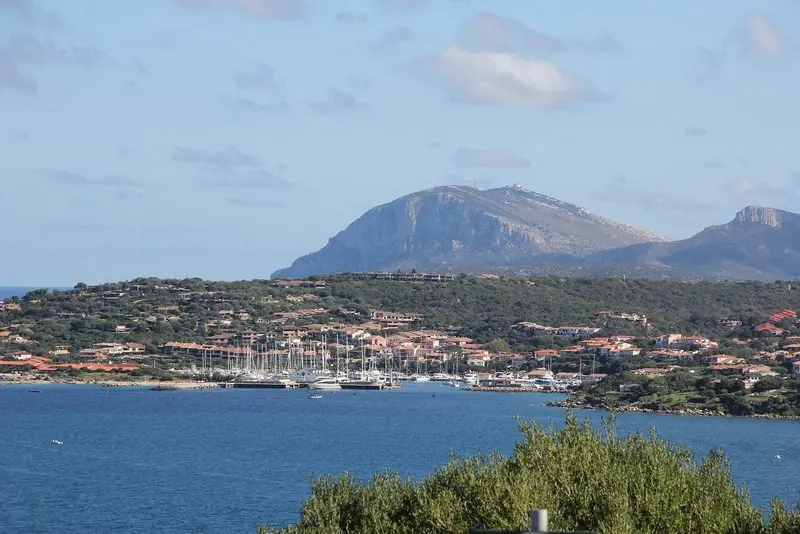
The cruising area is small and unusually good. Porto Cervo sits at the top of the Costa Smeralda, the La Maddalena archipelago is about 15 nautical miles north, and Bonifacio on the Corsican side of the strait is another ten beyond that. Olbia and its airport are 20 miles south by sea. Everything an owner comes for is inside a 30 mile box, and the boat can be at anchor off a granite island forty minutes after leaving the marina.
A week is easy to fill. Two nights in Porto Cervo, a day in Cala di Volpe and the beaches at Romazzino and Capriccioli, then four days working the archipelago between Spargi, Santa Maria, Caprera and Porto Palma. Two weeks almost always means crossing to Corsica, where Bonifacio, the Lavezzi islands and the Gulf of Porto Vecchio are all within a short run and the prices are half. The rest of Sardinia is a long way off, with Alghero about 130 miles round the north coast and Cagliari roughly 200 to the south.
The anchorages that justify the trip
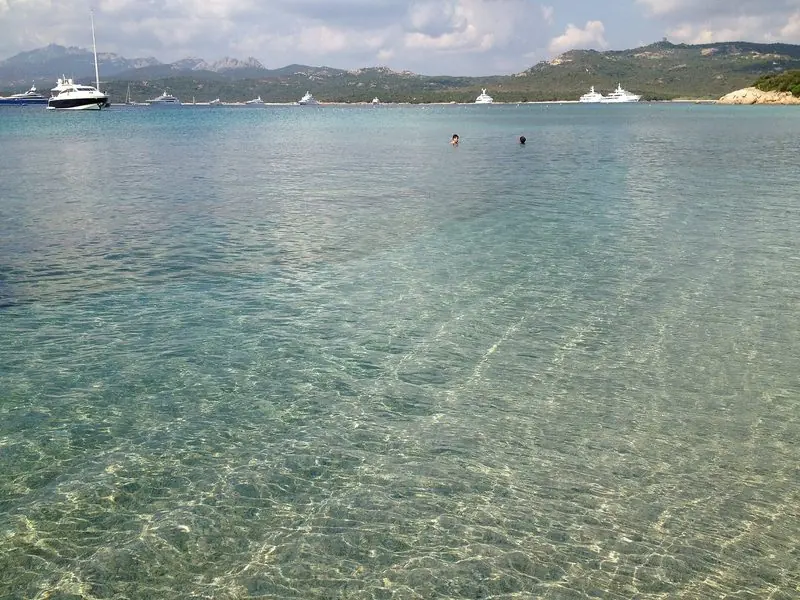
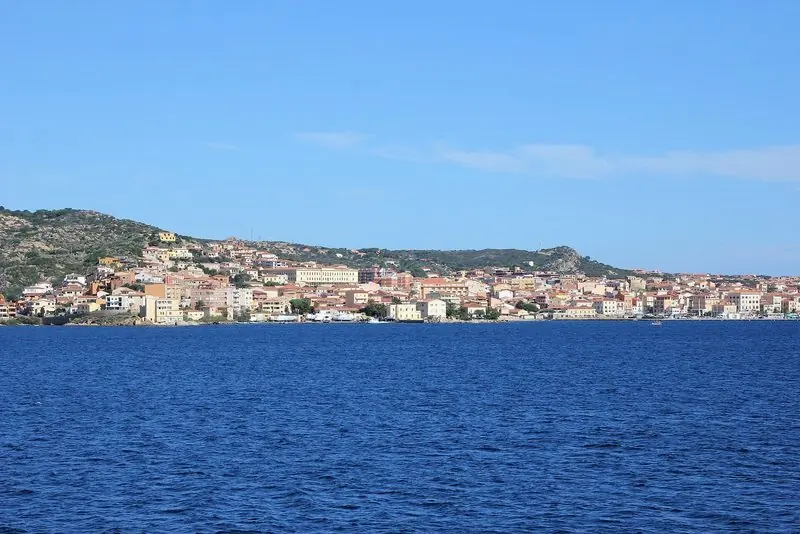
The archipelago is the cruising prize and it does not disappoint. Cala Coticcio on Caprera, often called Tahiti locally, is the picture postcard, with pale sand and water that goes from turquoise to deep blue in a few metres. Cala Corsara on Spargi holds a large yacht comfortably. The lagoon known as Porto della Madonna, between Budelli, Razzoli and Santa Maria, is the finest spot in the group and heavily regulated. Porto Palma on Caprera is the working anchorage, deep, sheltered and used by the sailing schools.
On the Costa Smeralda itself the anchorages are prettier than they are practical. Cala di Volpe is the classic, with the landmark hotel at its head and good holding, and Liscia di Vacca and Cala Petra Ruja work in the right wind. South of Olbia the island of Tavolara rises 500 metres out of the sea and gives an excellent day at anchor with almost none of the Costa Smeralda crowd.
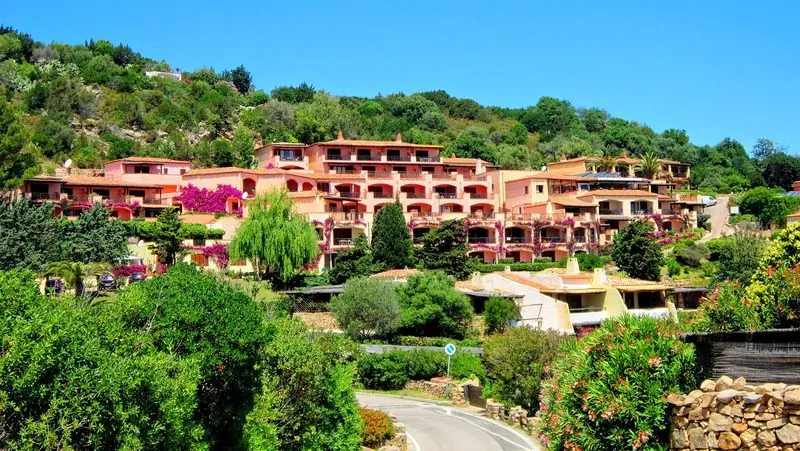
Six weeks of season, the most expensive published berth in the Mediterranean, and a national park forty minutes north of it.
The park permit, and what changed for 2026
The La Maddalena archipelago is a national park and no vessel may navigate, anchor or moor in it without a permit from the park authority. It is bought online at lamaddalenapark.it, priced by boat length and duration, and buying it inside the park costs 40 per cent more than buying it in advance. Inspections start early in the season and are routine in April and May. The park is zoned, and zone MA is closed to all traffic, anchoring and stopping, which includes Cala Roto, the famous pink beach on Budelli.
The significant news for 2026 is that the general ban on overnight anchoring has gone. Ordinanza 33/2026, effective from 1 June 2026, allows overnight anchoring subject to a valid permit, a closed blackwater system and the no-anchor zones, which reverses a rule that had pushed the fleet back to the marinas every evening. Anchoring inside marked buoy fields is prohibited and so is anchoring on Posidonia. Speed is capped at 7 knots within 500 metres of the coast and 10 knots out to a thousand. A restricted area between Santa Maria and Budelli, closed for unexploded ordnance, was reopened by the coastguard on 9 June 2026.
Porto Cervo, Olbia and the alternatives
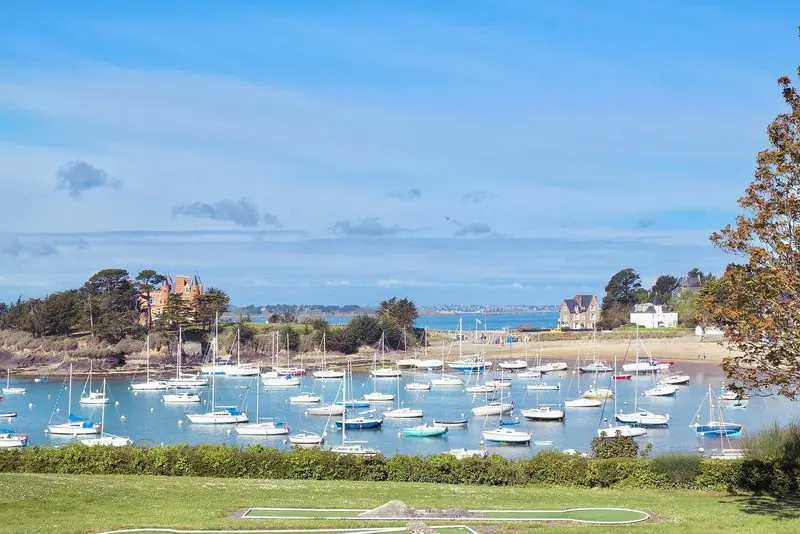
Marina di Porto Cervo is the flagship and it is built for this. It runs around 700 berths, roughly a hundred of them sized for superyachts, with the largest quoted at 160 metres and depths that take an 8 metre draft. It is also the most expensive published berth in the Mediterranean in August, priced by length with a peak-season multiplier, and it is contracted out long before the season. An owner without a contract is on a waiting list.
The alternatives are good and less discussed. Marina di Olbia takes yachts to about 100 metres inside a sheltered gulf with the airport ten minutes away, which makes it the sensible base for a boat doing guest rotations. Portisco and Porto Rotondo sit between Olbia and Porto Cervo and both handle sizeable boats. Poltu Quatu, tucked into a narrow inlet near Baja Sardinia, is a small marina in a spectacular setting.
The mistral, and the months
June is warm, quiet and the best value month of the four. July fills steadily. August is hot, crowded and expensive, with the first three weeks the peak and Ferragosto on 15 August the centre of it. September cools slightly, keeps warm water and empties fast after the Maxi week.
The defining wind is the mistral, funnelling through the Strait of Bonifacio between Sardinia and Corsica, where the acceleration is severe. It can blow 30 knots and more for three or four days at a time, and it decides which side of each island in the archipelago is usable, which is the single most useful piece of local knowledge a crew can have. It also flattens the humidity and produces the clearest water of the summer. In settled spells the strait is glass and the crossing to Corsica takes an hour.
Two regattas that set the calendar
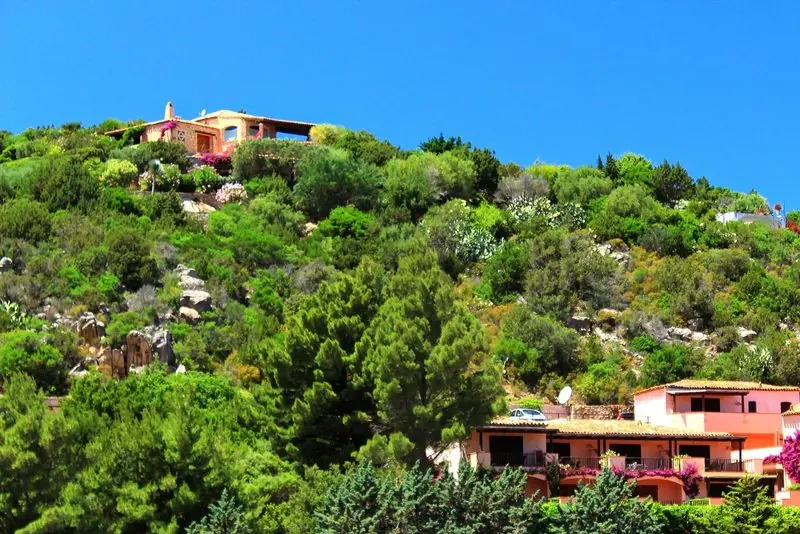
The Yacht Club Costa Smeralda drives the calendar and it has become the reason a lot of owners come at all. The Giorgio Armani Superyacht Regatta, formerly the Loro Piana Superyacht Regatta, runs 26 to 30 May 2026 and opens the season with the large sailing yachts. The Maxi Yacht Rolex Cup follows on 6 to 12 September 2026 in its thirty-sixth edition and is the most concentrated gathering of maxi and supermaxi racing anywhere in the world.
Around those two fixtures the social season is short and intense. The village and the beach clubs open properly in the second half of June, run flat out through August, and are winding down by the third week of September. Owners who arrive in the second week of June or the last week of September get the same water and the same anchorages with a fraction of the traffic. Berth pricing follows the same curve, and the difference between late June and mid August is substantial.
Olbia, and the August slot problem
Olbia Costa Smeralda is the gateway and it works well outside the peak. It handles around 28,000 aircraft movements a year, with scheduled traffic from the Italian mainland and much of Europe in summer, and it is about half an hour by road to Porto Cervo. In the first fortnight of August the slot position becomes genuinely difficult, and inbound windows in the morning hours are scarce enough that arrivals need to be planned weeks out. Cagliari and Alghero are too far south and west to help.
On the ground the Gallura roads are narrow and the August traffic between Olbia, Porto Rotondo and Porto Cervo is slow. Helicopter transfers are common between the airport and the resorts, and there is a landing point at Porto Cervo. For anything between the marina and the archipelago the tender is faster than the car by a wide margin.
The Piazzetta, the beach clubs and inland Gallura
Porto Cervo was built to a plan and it shows. The Piazzetta and the Promenade du Port hold the boutiques and the bars, the Cervo Hotel sits above them, and the Hotel Cala di Volpe a few miles south is the landmark of the coast. Dining runs from the hotel restaurants to Gianni Pedrinelli and Spinnaker, with Da Giovannino in Porto Rotondo the long-standing favourite of the summer crowd. Prices in August are set for the clientele and are not apologised for.
The nightlife is concentrated in a handful of venues and everyone ends up in the same three. Phi Beach at Forte Cappellini above Baja Sardinia is the sunset spot, the Billionaire Club above Porto Cervo is the late one, and Ritual, cut into the granite at Baja Sardinia, has been running for decades. Beyond that, inland Gallura is a different country, with cork oak, granite villages such as San Pantaleo and its Thursday market, and Vermentino di Gallura from the vineyards behind the coast. Guests who want culture should be told in advance that there is very little here.
Support, cost and the honest downside
Italy is in the EU, and charter operations carry Italian VAT and paperwork that an agent should handle. Fuel is available at Porto Cervo, Olbia and Portisco, and Olbia is the practical port for bunkering, stores and anything technical, since the Costa Smeralda marinas are service points and not yards. Provisioning at Porto Cervo is possible and expensive, and most boats bring stores up from Olbia. The park permit is carried aboard and it is checked.
The honest downsides are three. The season is very short, and an owner paying for a Mediterranean summer will find the Costa Smeralda gives him about six usable social weeks. The cost of a peak berth is the highest in the region and the increments are steep. And the mistral can take three or four days out of a two week cruise, which on a coast this small means the same sheltered anchorages every day. Owners who want variety should plan Corsica into the trip from the outset.
Pricing the most expensive published berth in the Mediterranean
The marina publishes, which settles the question. Porto Cervo Marina posts a daily rate card for the Porto Nuovo, and category X covers a hull up to 55 m LOA and 10 m beam, which is where a 50 m motor yacht sits. From 1 to 20 August 2026 that berth is EUR 5,437 a day. Across the wider peak from 10 July to 5 September it is EUR 3,780. The first nine days of July and the whole of September are EUR 3,438, June is EUR 1,569, May and October drop to EUR 386, and winter is EUR 150. Every figure is VAT inclusive, at the 10 per cent rate the list applies where permitted. Above 55 m the marina switches to a square metre basis, at EUR 7.38 per square metre a day for the 10 July to 5 September window, which puts a 70 m by 12 m hull at roughly EUR 6,200 a day (Porto Cervo Marina, Porto Nuovo 2026 daily rates, retrieved 28 July 2026).
A full August at the counter rate is 20 days at EUR 5,437 and 11 at EUR 3,780, or EUR 150,320 for the month before water, power or refuse. Those are billed separately on a long-term contract and are not small at category X: EUR 8,190 for refuse, EUR 9,380 for water and EUR 51,800 for electricity. The contracted alternative is EUR 325,707 for 1 May to 31 October or EUR 306,562 for 1 June to 30 September, which is why the boats already on the pontoon are not paying the August number and why a late arrival is. Against the rest of the Mediterranean, Capri's Porto Turistico charges EUR 3,580 a day for a 55 m by 10 m berth from 16 May to 15 September 2026, Saint-Tropez about EUR 3,280 a day for a 50 m by 9 m hull at its July peak, and Monaco EUR 1,258.80 a day for the 50 m to 55 m band. Of the Mediterranean marinas that publish a rate card at all, Porto Cervo's August is the highest by a clear margin. The claim survives being priced, which is more than most claims of its kind do.
What Italy checks in these marinas, and what it costs to be wrong
Northern Sardinia is where Italy enforces, and the enforcement is aimed at ownership rather than at charter. A Guardia di Finanza operation working Porto Cervo, Porto Rotondo, Poltu Quatu, Cannigione and the Maddalena archipelago had by May 2026 identified 100 undeclared foreign-flagged yachts with a combined value above EUR 48 million, all traced to Italian tax residents, with administrative fines assessed at around EUR 23 million. The trigger is the Quadro RW declaration, an annual reporting obligation on foreign-held movable assets that attaches to ownership and not to income, so a yacht that never carries a paying guest still has to appear on the return. Law 70/2026, the Legge Mare, added Article 26-ter to the pleasure craft code with effect from 10 May 2026, requiring foreign-flagged vessels up to 24 m owned by Italian residents to carry a certificate of fitness for navigation. None of that touches a genuinely foreign owner, and all of it explains why the marina office asks the questions it asks.
The ordinary rules run underneath. A non-EU flagged yacht in private use is on the 18 month EU temporary admission clock under Article 217(e) of Delegated Regulation (EU) 2015/2446, and the clock covers the whole EU rather than Italy alone. Charter from an Italian port carries Italian VAT at 22 per cent on the hire, and the flat reductions keyed to hull length were withdrawn on 1 November 2020, so any reduction now has to be evidenced as actual navigation outside EU waters. Inside the La Maddalena park the permit is carried and checked, and buying it after entering costs 40 per cent more than buying it in advance. Ordinanza 33/2026 makes the new overnight anchoring permission conditional on a closed blackwater system, which is the one discharge rule on this coast a boarding officer will ask to see demonstrated rather than described. The nearest lift is Cantieri di Olbia, about 20 miles south, which quotes a hauling capacity to 600 tonnes and takes larger hulls afloat only.
Ashore, access and booking
| Getting there | Olbia Costa Smeralda is the gateway, handling around 28,000 aircraft movements a year with summer scheduled traffic from the Italian mainland and much of Europe. Porto Cervo is about 30 to 35 km by road and 30 to 45 minutes outside the August traffic, with taxis quoted at roughly EUR 60 to EUR 80 and genuinely scarce in the first fortnight of August; Marina di Portisco is about 20 minutes from the terminal. Helicopter transfers are common and there is a landing point at Porto Cervo. The binding constraint is the airport itself: in the first half of August morning inbound slots at Olbia are scarce enough that arrivals need planning weeks ahead, and Cagliari and Alghero are too far to help. |
|---|---|
| Arriving by sea | Marina di Porto Cervo keeps a 24 hour radio watch on VHF 9 and also monitors 11 and 16. Porto Nuovo is +39 0789 905111, the Porto Vecchio office +39 0789 936666, night duty +39 335 1200241 and the Capitaneria +39 0789 94498. The desk runs 08:00 to 20:00 from June to August and 08:00 to 19:00 in May and September, with check-in at 16:30 and check-out at 10:30. The marina takes hulls to 160 m in 8 m of draft with no beam restriction, across roughly 700 berths of which about 100 are megayacht size. Marina di Portisco, in the Gulf of Cugnana, has 589 berths including 41 superyacht berths, to 90 m in up to 10 m of water. |
| How you actually reserve | The New Port takes a request through the marina's own booking form or IGY's online system, and states that a berth is not guaranteed without a confirmed reservation. The Porto Vecchio is not tariffed at all and every enquiry goes to [email protected]. In practice the August pontoon is already let before the season opens: a category X season contract for 1 May to 31 October 2026 is EUR 325,707, or EUR 306,562 for 1 June to 30 September, so the arriving yacht is competing for what the contract holders have not taken and pays the counter rate for it. |
| What a berth costs | Porto Cervo Marina publishes a full daily card for the Porto Nuovo, which almost nothing in this bracket does. Category X, a hull to 55 m LOA and 10 m beam, is EUR 5,437 a day from 1 to 20 August 2026, EUR 3,780 across the wider peak from 10 July to 5 September, EUR 3,438 for the first nine days of July and the whole of September, EUR 1,569 in June, EUR 386 in May and October and EUR 150 in winter, all VAT inclusive. Above 55 m the basis switches to area at EUR 7.38 per square metre a day in the 10 July to 5 September window, which puts a 70 m by 12 m hull near EUR 6,200 a day. A full August at the counter is EUR 150,320. |
| What the metered services cost | They are billed separately from the berth and they are not small. On a category X season contract the marina charges EUR 8,190 for refuse, EUR 9,380 for water and EUR 51,800 for electricity, so the services alone approach half a counter-rate August. Shore power is supplied at 16, 32, 63, 125 and 250 A, with water at the berths, waste collection, wifi and 24 hour security. Fuel pumps are on the quay at Porto Cervo, and Portisco and Olbia are the practical bunkering ports, Portisco's fuel service run by an outside operator. |
| The park permit, priced | No vessel may navigate, anchor or moor in the La Maddalena archipelago without a permit, bought online at lamaddalenapark.it. The 2026 daily card runs by length band at EUR 2.00 a metre to 10 m, EUR 3.00 from 10.01 to 24 m, EUR 4.50 from 24.01 to 35 m and EUR 5.00 from 35.01 m up, so a 50 m yacht pays EUR 250 a day. Fixed-period permits in the 40 to 200 m band are EUR 760 for seven days, EUR 1,440 for fifteen, EUR 2,560 for thirty and EUR 8,960 for a hundred and twenty. Buying online takes 5 per cent off, sailing vessels take 40 per cent off, and a boat that arrives without a permit pays the fee due plus 40 per cent. |
| Where you may stop, and how fast | Ordinanza 33/2026, effective 1 June 2026, removed the general ban on overnight anchoring in the park, so a night at anchor is now allowed where daytime anchoring is allowed, on sand and mud only, subject to a valid permit, a closed blackwater system and a cap on numbers in the busiest coves. Zone MA remains closed to all traffic, anchoring and stopping, which includes Cala Roto, the pink beach on Budelli. Anchoring inside marked buoy fields and on Posidonia is prohibited. Speed is capped at 7 knots within 500 m of the coast and 10 knots between 500 m and 1,000 m, and the permit is carried aboard and checked. |
| Eating, after dark, and the fixed dates | The Piazzetta and the Promenade du Port hold the boutiques, bars and restaurants a walk from the New Port, with Gianni Pedrinelli and Spinnaker close by and Da Giovannino at Porto Rotondo; the marina runs a ferry from Molo B at the Marina Nuova every 30 minutes from 09:00 with a last return at 01:00, between 20 June and 20 September. Phi Beach at Forte Cappellini above Baja Sardinia is the sunset room, the Billionaire above Porto Cervo and Ritual at Baja Sardinia the late ones. In 2026 the Giorgio Armani Superyacht Regatta ran 26 to 30 May and the Maxi Yacht Rolex Cup runs 6 to 12 September, both from the Yacht Club Costa Smeralda. |
| What is NOT published | Porto Cervo publishes the New Port day rates as a downloadable document and nothing at all for the Porto Vecchio, which is quote-only on request. Porto Rotondo, Poltu Quatu and Marina di Olbia publish no superyacht tariff. Cantieri di Olbia, the nearest lift at about 20 miles south with hauling to 600 tonnes, publishes no lift price. No marina on this coast publishes a diesel price, so bunkering is a same-day quote through an agent. And nothing published anywhere tells an owner how many category X berths are actually free in August, which is the number that decides the trip. |
What owners and crew report
The tax sweep in these marinas is aimed at ownership, not at charter
The Guardia di Finanza air and naval unit at Cagliari closed Operation Red Jack after working Porto Cervo and the surrounding Sardinian ports, identifying 100 foreign-flagged vessels with a combined market value above EUR 48 million, all traceable to individuals tax-resident in Italy and none declared, with fines assessed at up to EUR 23 million. The investigation began in 2025 after a routine check at sea. The trigger is the Quadro RW asset declaration, which attaches to ownership rather than to income, so a yacht that never carries a paying guest still has to appear on the return.
L'Unione Sarda and Il Sole 24 OreOvernight anchoring returned in 2026, with a condition a boarding officer will test
Ordinanza 33/2026 replaced the general overnight ban with permission to stay the night where daytime anchoring is allowed, on sand and mud only, with a valid permit, a closed blackwater system and a cap on numbers in the busiest coves. Local agents read the ordinance as the framework for both the 2026 and 2027 seasons, and are clear that the blackwater condition is the one an inspector asks to see demonstrated rather than described.
Parco Nazionale dell'Arcipelago di La Maddalena, reported by Nautica AssistanceArriving without a park permit is the expensive way to buy one
The park's own tariff platform prices by length band and duration, returns 5 per cent for buying online and 40 per cent for sailing vessels, and park staff charge the fee due plus a 40 per cent surcharge to a boat that turns up without one. Inspections start early in the season and are routine in April and May, before most of the fleet has arrived.
Parco Nazionale dell'Arcipelago di La MaddalenaThe published August day rate is not what the boats on the pontoon are paying
The marina's own 2026 card puts category X at EUR 5,437 a day from 1 to 20 August, while a season contract for 1 May to 31 October is EUR 325,707. A full August at the counter, EUR 150,320, buys 31 days where the contract buys six months. The counter rate is a scarcity price for whatever the contract holders have not taken, which is why it reads as the highest in the Mediterranean.
Porto Cervo Marina 2026 rate cardThere is no independent account of the smaller Gallura marinas
Checked in August 2026, Porto Rotondo, Poltu Quatu and Marina di Olbia publish no superyacht tariff, and no published owner or captain account of their superyacht service could be found. An owner considering them as the sensible alternative to Porto Cervo is relying on an agent's word and his own inspection, not on anything reported.
Yotters desk, checked August 2026
What is good, and what to watch
Strong points
- A first rate cruising ground inside a thirty mile boxPorto Cervo to La Maddalena about 15 nautical miles, to Bonifacio about 25, to Olbia about 20. The boat can be at anchor off a granite island forty minutes after leaving the pontoon.
- The marina publishes, which almost nobody at this level doesA full seasonal day card by category, plus the season contract and the separate service charges, so an owner can price an August here before he commits to it. On the Riviera he cannot.
- Size and depth are not the constraintHulls to 160 m in 8 m of draft with no beam restriction, about 100 megayacht berths of roughly 700, and Portisco a few miles south with 41 superyacht berths in up to 10 m of water.
- Two fixtures that bring the fleet to the same waterThe Giorgio Armani Superyacht Regatta in late May and the Maxi Yacht Rolex Cup, 6 to 12 September 2026, both run by the Yacht Club Costa Smeralda over the archipelago.
- The 2026 rule change gives the archipelago back at nightOrdinanza 33/2026 ended the general overnight anchoring ban that had pushed the fleet back to the marinas every evening, subject to permit, sand or mud bottom and a closed blackwater system.
What to watch
- Six usable social weeks for a full season's costThe village and the beach clubs open properly in the second half of June and are winding down by the third week of September. Outside that Porto Cervo is beautiful and largely empty.
- The most expensive published August berth in the MediterraneanEUR 5,437 a day at category X from 1 to 20 August 2026, against EUR 3,580 at Capri's peak, about EUR 3,280 at Saint-Tropez and EUR 1,258.80 in Monaco.
- The metered services are a second bill nobody budgetsEUR 51,800 of electricity, EUR 9,380 of water and EUR 8,190 of refuse on a category X season contract, billed on top of the berth.
- The counter rate punishes the yacht without a contractA counter-rate August is EUR 150,320 for 31 days, against EUR 325,707 for a contracted 1 May to 31 October. The boats already on the pontoon are not paying the August number.
- The mistral can take four days out of a fortnightIt accelerates hard through the Strait of Bonifacio and decides which side of each island is usable, which on a coast this small means the same sheltered anchorages every day.
Who it is for: An owner who races or wants to be where the racing is, will pay Porto Cervo prices for August, and treats the La Maddalena archipelago as the real reason to be in Sardinia.