Antarctica & the Patagonian Channels
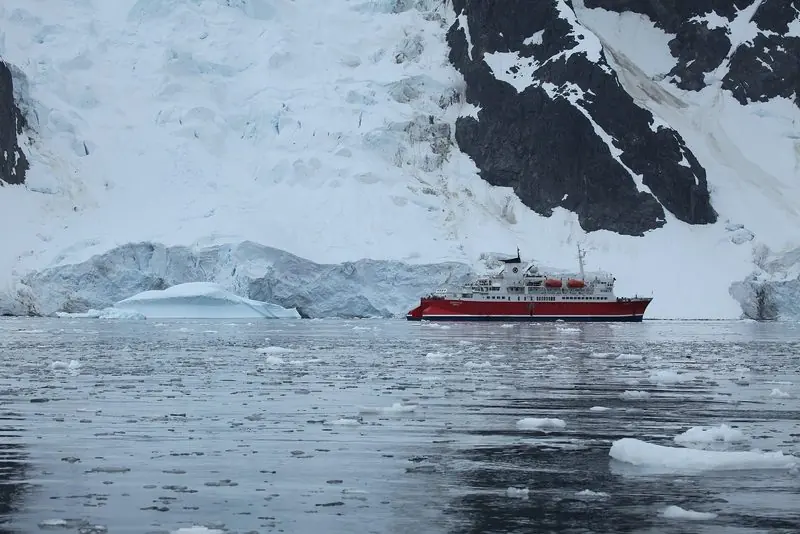
| Region | the Chilean and Argentine channels from the Strait of Magellan south to Cape Horn, and the Antarctic Peninsula beyond |
|---|---|
| Season | the southern summer, roughly November to March |
| Drake Passage | about 800 km, or 500 miles, from Cape Horn to Livingston Island, with waves reported to 12 metres |
| Current | the Antarctic Circumpolar Current transports an estimated 100 to 150 Sverdrups, the strongest ocean current on earth |
| Ushuaia | about 1,100 km from the Antarctic Peninsula and the world's principal departure port for it, with around 540 cruise calls a year |
| Beagle Channel | about 240 km long and 5 km wide at its narrowest |
| Pilotage | the 1984 Treaty of Peace and Friendship requires foreign ships to carry Chilean pilots between the Strait of Magellan and Ushuaia |
| Strait of Magellan | about 570 km long, narrowest at roughly 2 km, with compulsory pilotage |
| Chilean channels | a navigable system from about 42 to 55 degrees south, with navigation lanes regulated under Chilean decree 416 of 1977 |
| Antarctic rules | no more than 100 visitors ashore at a site at one time, and vessels carrying over 500 passengers may not land anyone |
| Permits | Antarctic Treaty parties issue permits instead of visas, obtained through the operator's national authority |
| Traffic | Antarctic visitor numbers reported at about 124,000 a year by 2025 |
| Chilean pilotage | set by gross tonnage under Supreme Decree 427 of 1979, in US dollars, revalued annually to the US CPI |
| Published pilotage band | USD 3,836.04 to 6,552.16 for 2,000 to 4,000 GRT for continuous navigation between Bahia Ancud and Bahia Posesion within 120 hours with two pilots, with section multipliers of 0.038 to 1.150 |
| Pilotage extras | USD 55.75 an hour for delayed departure beyond twelve hours, for navigation beyond 120 hours, and for pilot transfer outside a station |
| Port billing | the Austral ports tariff effective 1 May 2025 applies its yacht rates only to vessels up to 50 gross tonnage, so a large yacht is charged on the commercial scale |
| Permits | issued by a national authority of an Antarctic Treaty party to the organiser of the activity, with an environmental impact assessment and contingency planning, and taking months |
| Discharge | the Antarctic is a MARPOL Special Area under Annexes I, II and V, in force since 17 March 1992, and nothing may be discharged |
| Fuel | MARPOL Annex I Regulation 43 has prohibited the carriage and use of heavy grade oil south of 60 degrees south since 1 August 2011 |
Two grounds, one voyage
Almost nobody does Antarctica alone. The Peninsula sits at the end of a route that begins in the Chilean fjords, and the fjords are worth the trip in their own right. The navigable channel system runs from about 42 degrees south down to 55, a thousand miles of glaciated inside passage with one genuinely exposed stretch across the Golfo de Penas. Puerto Montt, Puerto Natales and Punta Arenas are the ports along it.
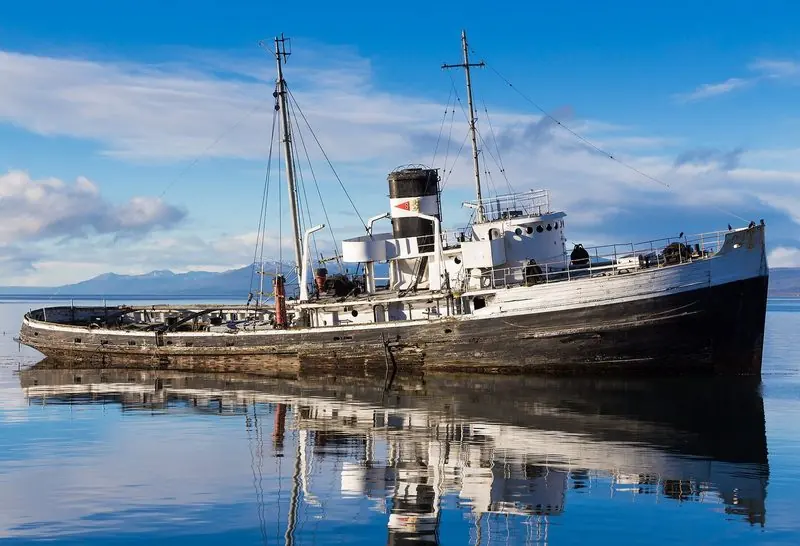
At the bottom the Beagle Channel runs 240 km east to west, five kilometres wide at its narrowest, with Ushuaia on the Argentine side and Puerto Williams on the Chilean. From there it is Cape Horn and then open water. An owner who builds a two-month programme gets the channels, the Horn and the Peninsula. One who has only three weeks should do the channels and leave the Drake alone.
The Patagonian channels
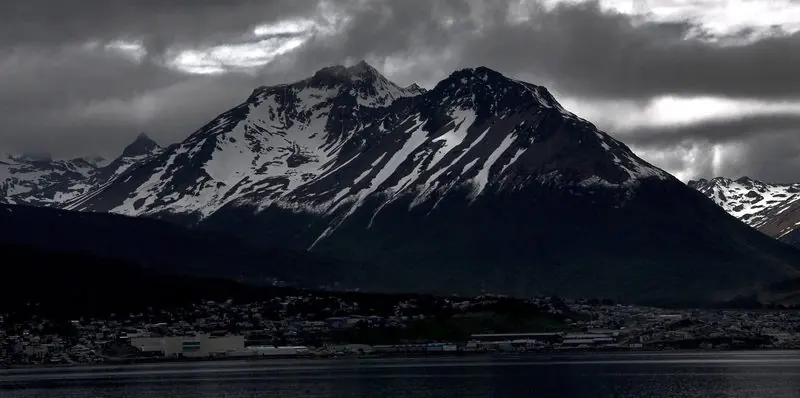
This is the part most guests remember. Glaciers coming down to the water on both sides, condors, and anchorages where the boat ties four lines to trees because the bottom drops away and the wind arrives without warning. The north-west arm of the Beagle has a run of tidewater glaciers that everyone calls Glacier Alley. Seno Pia and Seno Garibaldi are the two fjords crews rate above the rest. Puerto Natales is the jumping-off point for Torres del Paine.
The defining hazard is the williwaw, a katabatic gust that pours off a glaciated slope and hits an anchored yacht at 50 or 60 knots from a flat calm. Shore lines are not optional here, they are the technique. Chilean pilotage is compulsory in the Strait of Magellan and, under the 1984 treaty, for foreign vessels running between the Strait and Ushuaia. The Armada de Chile controls movement through a zarpe system, and a yacht does not leave an anchorage without one.
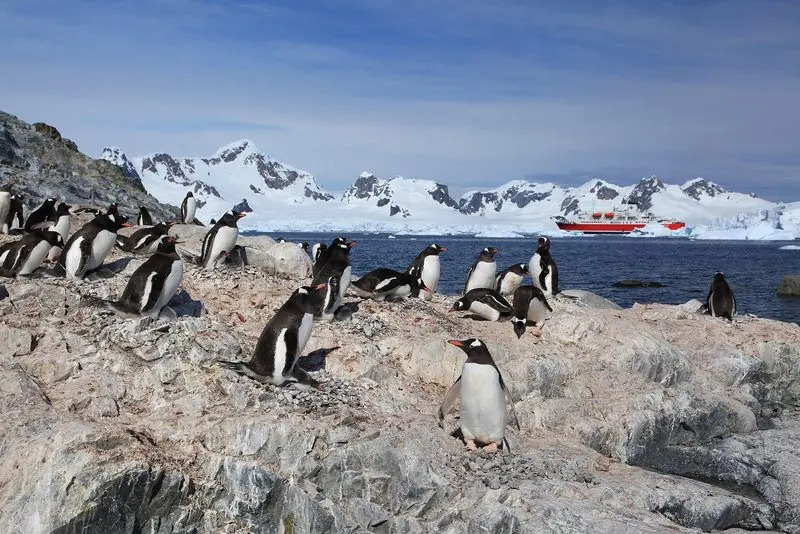
Two days of Drake Passage buys a coastline that almost no private yacht ever sees.
The Drake and the Peninsula
The Drake Passage is 800 kilometres from Cape Horn to Livingston Island, which for most yachts is two days each way. The Antarctic Circumpolar Current runs through it at an estimated 100 to 150 Sverdrups, the strongest current in the ocean, and the sea state has a genuine reputation. Waves of 12 metres are recorded. A crossing is planned on a forecast window and the boat either goes or she waits.
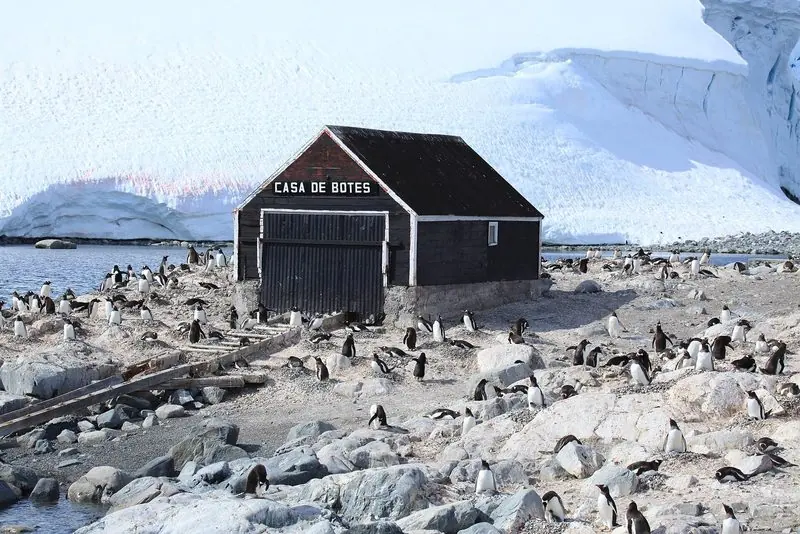
On the far side, the Peninsula gives sheltered water most of the time. Deception Island is an active caldera entered through a gap called Neptune's Bellows, with the ruins of a whaling station inside. The Lemaire Channel is the narrow ice-walled passage every photograph comes from. Paradise Harbour, Neko Harbour and Wilhelmina Bay are the anchorages, and Port Lockroy has a British base with a museum and a post office. Ice, not depth, decides where a yacht goes on any given day.
A fortnight, and a month
A fortnight based on Ushuaia does the Beagle Channel, the Chilean arms and Cape Horn, and it is a full and demanding two weeks with real scenery every day. Guests fly in and out of one airport. That is the version most owners should start with, and many never go further.
A month is the Peninsula programme: Ushuaia, the Drake, ten to fourteen days working south along the Peninsula, and the Drake again. Adding South Georgia, which lies well to the east and carries the king penguin colonies and Shackleton's grave at Grytviken, turns it into six or seven weeks. Every one of those legs is a passage, so the boat's range, motion and crew endurance decide the plan more than the itinerary does.
What a 50 metre boat needs
Berthing is not the question here. There is a commercial pier at Ushuaia, quays at Punta Arenas and Puerto Williams, and nothing at all in Antarctica. What matters is the specification: ice-strengthened hull or at least an ice-capable class notation, protected propellers and rudders, redundant heating and power, heavy ground tackle with a shore-line arrangement, radar that sees growlers, and range enough to cross the Drake twice without bunkering.
Insurance is the practical gate. Underwriters ask about class notation, ice pilots, crew experience and medical provision, and premiums for a season south reflect the absence of any salvage or rescue capability. Most yachts that go carry an ice pilot and an expedition team, and a doctor aboard is normal. A boat that is not built for it does not get a policy, and that is usually the point at which an owner learns what the trip really involves.
Permits, IAATO and what is allowed ashore
Nobody owns Antarctica, so nobody issues a visa. Antarctic Treaty parties issue permits instead, and a yacht obtains authorisation through the national authority of her flag or of the organiser, under the Environmental Protocol. That process takes months, requires an environmental impact assessment and contingency planning, and cannot be arranged at short notice from Ushuaia. Yachts that turn up without it are a known and unwelcome category.
In practice most legitimate operators work within IAATO, whose rules limit landings to 100 visitors ashore at a site at one time and bar any vessel carrying over 500 passengers from landing anyone at all. For a private yacht those numbers are not a constraint, but the site booking system behind them is, and it is why the operator relationship matters. Antarctic visitor numbers reached about 124,000 a year by 2025, so the good landing sites are scheduled.
Weather, ice and the season
The season is the southern summer, roughly November to March. November and early December give the most ice and the cleanest snow. January and February are the warmest, with the most wildlife activity and the most traffic. By March the days are shortening and the fleet is heading north. Outside that window the Peninsula is not a place any private yacht should be.
Weather in the channels is wet, windy and changeable in a way that has no Mediterranean equivalent, with four seasons in an afternoon as the standing description. On the Peninsula the air is dry and cold and the wind is usually less than an owner expects, with the risk sitting in the ice instead. Katabatic events off the ice sheet, brash choking a bay overnight, and a change in the pack that closes a channel are the daily working problems.
Getting guests aboard, and what they do
Ushuaia's international airport takes jets and connects through Buenos Aires, Santiago and El Calafate. Punta Arenas is the Chilean equivalent. Both are a long way from anywhere and both are weather-dependent, so guests should arrive a day early and expect that the boat may not sail on the planned morning. There is no air access to the Peninsula for a yacht guest short of a charter to the airstrip on King George Island, which some operators arrange to skip the Drake.
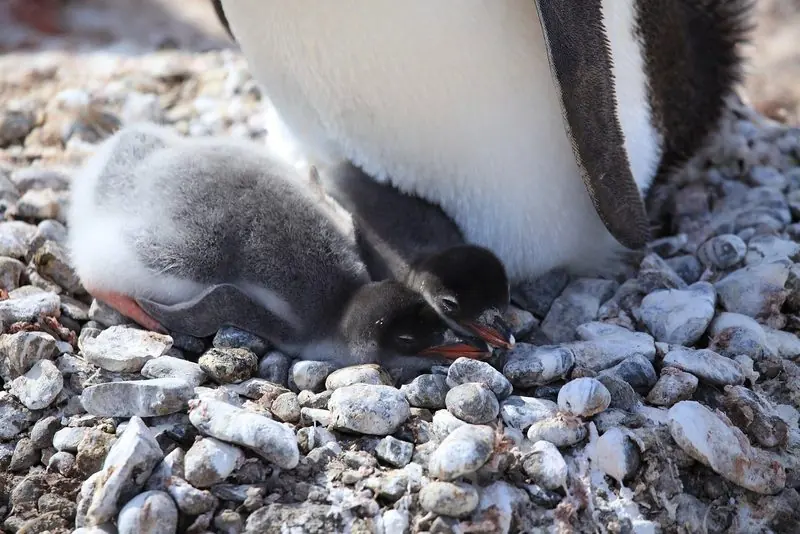
Ashore, the day is landings by tender. Penguin colonies at Neko and Petermann, the base and post office at Port Lockroy, the caldera at Deception, kayaking among ice and a swim in the volcanic shallows for those who insist. In Patagonia it is trekking in Torres del Paine, glacier walks and the estancias. Food and nightlife are not part of this destination in any form an owner would recognise. Ushuaia has restaurants and king crab, and that is the extent of it.
Fuel, support and the honest downside
Fuel and provisions come from Ushuaia, Punta Arenas or Puerto Williams and nowhere else, and a yacht crossing the Drake carries everything for the whole southern leg. Technical support at the level a 50 metre yacht needs does not exist south of Buenos Aires or Santiago, and a serious failure on the Peninsula is a self-rescue back across the Drake with whatever is aboard. Spares, specialists and even medical evacuation are all measured in days.
The downside list is long and none of it is a surprise. The permit process is slow. Chilean pilotage and zarpe procedures add cost and time at every step. Insurance is expensive if it is available. The Drake will be uncomfortable and may be worse. Guests who are not committed will be miserable by day four. Against that, the Peninsula in February is the least crowded landscape a private yacht can reach under her own power, and the owners who go generally go more than once.
The compulsory costs, and the one tariff that is published
Chilean pilotage is the line an owner cannot avoid and it is the only part of this voyage with a public tariff. Fees are set by gross tonnage under Supreme Decree 427 of 1979, denominated in US dollars and revalued each year against the US consumer price index. The published standard fee covers continuous navigation between Bahia Ancud and Bahia Posesion within 120 hours with two pilots aboard, and runs from USD 3,836.04 to USD 6,552.16 for vessels of 2,000 to 4,000 GRT, rising through USD 11,505.15 to USD 12,623.55 at 10,000 to 12,000 GRT. A 50 m yacht sits below the bottom of that band, so her base fee is lower, but the structure around it applies in full: section multipliers of 0.038 to 1.150 depending on the route through the Strait and the channels, and USD 55.75 an hour for a delayed departure beyond twelve hours, for navigation beyond 120 hours, and for embarking or landing a pilot outside a transfer station. On a channels programme that runs for weeks, the hourly charges are the part that moves.
Port charges are the other surprise. The Austral ports tariff effective 1 May 2025 applies its yacht rates to vessels up to 50 gross tonnage, which means a 50 m yacht is not a yacht for billing purposes and is charged on the commercial vessel scale at Punta Arenas. Ushuaia's commercial pier is agent-arranged and the agencies that handle expedition ships and superyachts publish nothing. Set the whole thing against the Mediterranean alternative for scale: Marina di Porto Cervo's published 2026 tariff is EUR 3,698 a day in the band to 40 m between 1 and 20 August, about EUR 102,000 for the month. A southern season will cost more than that and almost none of it will be berthing. It is pilotage, agency, fuel carried for the whole leg, an ice pilot, an expedition team, a doctor and an insurance premium priced for a coast with no salvage capability.
Permits, and why a commercial charter is a different application
Nobody owns Antarctica, so there is no visa and no port state to license the yacht. Authorisation comes from a national authority of an Antarctic Treaty party, under the Environmental Protocol, and it is issued to the organiser of the activity rather than to the vessel. That distinction is the one that catches commercial operations: a charter is an organised activity and the permit application has to be made in the name of whoever is organising it, supported by an environmental impact assessment, contingency planning and evidence of self-sufficiency. It takes months, it cannot be assembled from Ushuaia in a fortnight, and a yacht that arrives on the Peninsula without it is in a category the other operators report. There is no fine schedule of the kind a Mediterranean state would publish, because enforcement runs through the flag state and through the permit rather than through a coastguard alongside.
The operational limits come from IAATO rather than from law, and for a private yacht they are not the constraint. No more than 100 visitors ashore at a site at one time, and no landings at all from a vessel carrying more than 500 passengers. What does constrain a yacht is the site booking system behind those numbers, which allocates the good landings among operators who are inside the system, and Antarctic visitor numbers reported at about 124,000 a year by 2025 mean the popular sites are scheduled rather than available. In Chilean and Argentine waters the yacht is back inside ordinary jurisdiction, with compulsory pilotage between the Strait of Magellan and Ushuaia under the 1984 Treaty of Peace and Friendship and the Armada de Chile controlling every movement through the zarpe system.
Discharge and fuel: the strictest regime a yacht will meet
The Antarctic area is a MARPOL Special Area under Annex I for oil, Annex II for noxious liquids and Annex V for garbage, and unlike the Red Sea these designations are in force, having taken effect on 17 March 1992. Garbage discharge is prohibited. Oil discharge is prohibited. Nothing goes over the side, and a yacht crossing the Drake carries out everything she carried in, which is a real volume calculation over a month with guests aboard and a driver of tankage on any boat built for this.
The fuel rule is the one that decides whether a hull can go at all. Under MARPOL Annex I Regulation 43, in force since 1 August 2011, the carriage in bulk as cargo, the use as ballast and the carriage and use as fuel of heavy grade oil are prohibited south of 60 degrees south. A yacht burning distillate is unaffected, which is most of them, but the rule is absolute and applies to what is in the tanks, not to what is being burned that day. Combined with the Polar Code requirements on structure, equipment and crew training, this is the point at which an owner discovers whether the boat is genuinely capable or merely large.
Ashore, access and booking
| Getting guests aboard | Ushuaia's international airport takes jets and connects through Buenos Aires, Santiago and El Calafate; Punta Arenas is the Chilean equivalent. Both are weather-dependent, so guests should arrive a day early and expect the boat may not sail on the planned morning. There is no air access to the Peninsula for a yacht guest short of a charter to the airstrip on King George Island, which some operators arrange to skip the Drake. |
|---|---|
| What the boat itself needs | Berthing is not the gate, the specification is: an ice-strengthened hull or at least an ice-capable class notation, protected propellers and rudders, redundant heating and power, heavy ground tackle with a shore-line arrangement for williwaw anchorages, radar that sees growlers, and range enough to cross the Drake twice without bunkering. |
| How the permit actually works | Authorisation comes from the national authority of an Antarctic Treaty party, issued to the organiser of the activity rather than to the vessel, and requires an environmental impact assessment and contingency planning. It takes months and cannot be assembled from Ushuaia in a fortnight. A commercial charter is a harder, separate application made in the organiser's name. IAATO's site-booking system, not a law, then allocates the actual landing slots among operators inside it. |
| What it costs: the one published tariff | Chilean pilotage under Supreme Decree 427 of 1979, denominated in US dollars and revalued yearly to US CPI, is compulsory and public: USD 3,836.04 to 6,552.16 for 2,000 to 4,000 GRT on the standard continuous transit, rising to USD 11,505.15 to 12,623.55 at 10,000 to 12,000 GRT. A 50 m yacht sits below that band, but the section multipliers of 0.038 to 1.150 and the USD 55.75 an hour charge for delays, extended transit or an off-station pilot transfer apply in full, and on a weeks-long channels programme the hourly charges are what moves. |
| What it costs: port charges and everything unpublished | The Austral ports tariff effective 1 May 2025 caps its yacht rate at 50 gross tonnage, so a 50 m yacht is billed on the commercial vessel scale at Punta Arenas. Ushuaia's commercial pier is agent-arranged and the agencies that handle expedition ships and superyachts there publish nothing. Almost none of a southern season's cost is berthing - it is pilotage, agency fees, fuel carried for the whole leg, an ice pilot, an expedition team, a doctor, and an insurance premium priced for a coast with no salvage capability. |
| Insurance and crew | Underwriters ask about ice class notation, ice pilots, crew experience and medical provision before extending a policy south, and premiums reflect the absence of any salvage or rescue capability. Captain Gerhard Veldsman of the 85.9 m sailing ketch Aquijo, who has made the run, put it plainly: an ice pilot is mandatory for insurance in the region, and although he initially thought hiring one was a waste of money, he found real value in a pilot who could read how the ice moved with the tide and wind. |
| Discharge and fuel rules | The Antarctic area is a MARPOL Special Area under Annexes I, II and V, in force since 17 March 1992: nothing is discharged, and a yacht crossing the Drake carries out everything she carried in. Under MARPOL Annex I Regulation 43, in force since 1 August 2011, heavy grade oil may not be carried or used as fuel south of 60 degrees south. A distillate-burning yacht is unaffected, but the rule is absolute on what is in the tanks, not on what is being burned that day. |
What owners and crew report
An ice pilot is not optional, and a real one earns his place
Captain Gerhard Veldsman of the 85.9 m sailing ketch Aquijo has said an ice pilot is mandatory for insurance in the region. He initially thought carrying one was a waste of money, but found that a good pilot adds real value, talking the boat through a path in the ice by reading how it moves with the tide and wind.
Captain Gerhard Veldsman, master of Aquijo (Boat International)Two weeks between Ushuaia and southern Chile without seeing another vessel
Veldsman also described the isolation of the Patagonian leg directly: his crew travelled for two weeks from Ushuaia to Chacabuco without seeing another living soul, and a yacht is on her own even if she carries a helicopter, because it is not flown unless it has to be.
Captain Gerhard Veldsman, master of Aquijo (Boat International)The smaller the group ashore, the better the Antarctic experience actually is
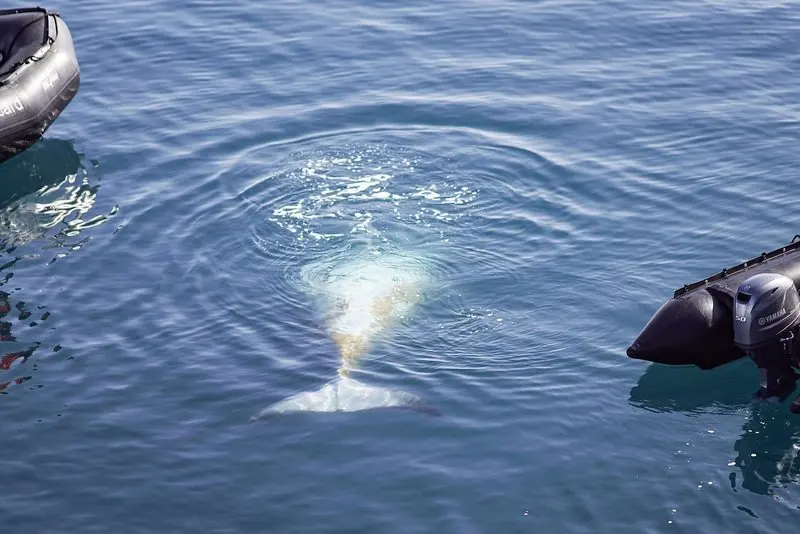
Ben Lyons, CEO of EYOS Expeditions, which organises private yacht polar voyages, has said there is a genuine privilege in being the only people ashore in Antarctica, and that on a smaller vessel the boat can stop for whales and have guests in the zodiacs within two minutes - flexibility a scheduled expedition ship does not have.
Ben Lyons, CEO, EYOS Expeditions (Forbes, November 2025)A private yacht changes what a landing feels like, not just who else is there
An Antarctic expedition leader has said the sense of wilderness is diminished when landing with around 100 people at once, and that a yacht-scale group lets guests discover Antarctica for themselves rather than as part of a managed crowd.
Richard White, expedition leader (Boat International)
What is good, and what to watch
Strong points
- The least crowded landscape a private yacht can reach under her own powerEYOS Expeditions CEO Ben Lyons: being the only people ashore somewhere in Antarctica, surrounded by that scale of landscape with nobody else around, is a real privilege, and the smaller the group the better the experience is.
- A private yacht changes what the day can be, not just who is on itLyons again: on a smaller vessel, spotting whales means the boat simply stops and the zodiacs are in the water two minutes later, a kind of responsiveness a scheduled expedition ship cannot offer.
- One genuinely public, price-able cost existsChilean pilotage is set by gross tonnage under a 1979 supreme decree, denominated in US dollars and revalued to CPI every year, so an owner can actually cost this one compulsory line rather than guess at it.
- The channels alone are a complete programmeA fortnight based on Ushuaia covers the Beagle Channel, the Chilean arms and Cape Horn with real scenery every day, and does not require the Drake crossing at all - many owners never need to go further.
- Expedition leaders report the exclusivity is real, not marketingRichard White, an Antarctic expedition leader, has said the sense of wilderness is diminished landing with 100 people at once, and that a private yacht lets guests discover Antarctica for themselves rather than as part of a crowd.
What to watch
- There is no salvage or rescue capability south of Buenos Aires or SantiagoA serious failure on the Peninsula is a self-rescue back across the Drake with whatever is aboard. Spares, specialists and medical evacuation are all measured in days, not hours.
- Isolation is a literal fact, not an atmosphereCaptain Gerhard Veldsman of Aquijo: his crew travelled two weeks from Ushuaia to Chacabuco in southern Chile without seeing another living soul, and even a yacht carrying a helicopter cannot fly it unless it has to - you have to be able to survive on what is aboard.
- The permit process is slow and cannot be rushedAuthorisation is issued to the organiser of the activity, not the vessel, requires an environmental impact assessment and contingency planning, and takes months - it cannot be assembled from Ushuaia in a fortnight, and a commercial charter faces a harder, separate application.
- Insurance is expensive where it exists at allAn ice pilot is a mandatory condition of cover for this region, not an optional guide, and underwriters price the whole policy against a coast with no salvage capability.
- Guests who are not committed will struggleThe Drake will be uncomfortable and may be worse than forecast. There is no food or nightlife destination in any form an owner would normally recognise - Ushuaia's restaurants and king crab are the extent of it.
Who it is for: An owner with an ice-capable boat, an experienced captain and the patience for a permit process measured in months, whose guests want a voyage instead of a beach.