Bermuda & the Royal Naval Dockyard
| Location | mid-Atlantic, British Overseas Territory, population about 64,459 (2026 estimate) |
|---|---|
| Newport Bermuda Race | 636 nautical miles from Newport RI, even years, finishes off St David's Lighthouse |
| Marion Bermuda Race | 645 nautical miles from Marion MA, odd years, finishes off St David's Head |
| Airport | L.F. Wade International (BDA/TXKF), sole airport, GA limited to jets and long range turboprops |
| Airlines | Air Canada, American, British Airways, United, Delta, JetBlue, WestJet |
| Port of entry | St George's Harbour, the island's only port of entry; hail Bermuda Radio from 30 nm out |
| Permits | Transit Permit under 5 days, Cruising Permit up to 6 months over 5 days, SailClear mandatory pre-arrival |
| St George's | UNESCO World Heritage town since 2000, founded 1612 |
| Royal Naval Dockyard | King's Wharf built 1850s, Heritage Wharf added 2009 for two large ships back to back |
| 2017 America's Cup | about USD 77 million total Bermuda spend, USD 25 million on infrastructure, 26 superyachts booked at Dockyard |
| Hurricanes | Fabian 2003 (120mph, USD 300 million damage, 4 deaths), Gonzalo 2014 (100mph-plus, USD 400 million damage) |
| Cost of living | ranked world's most expensive place to live 2026, about 23.5 percent above New York City |
| Marinas | RBYC USD 4.00 a foot a day in season, USD 3.00 off season; St George's Marina USD 2.85 to USD 3.75 a foot a night |
| Racing | King Edward VII Gold Cup, oldest match racing trophy in the world, dates to 1907, sailed at RBYC |
A Mid-Atlantic Stop With Its Own Gravity
Bermuda sits alone in the western Atlantic, roughly 640 nautical miles east of New York and 636 nautical miles southeast of Newport, Rhode Island, so it is never a detour on the way to somewhere else. The island is the destination.
Two established ocean races confirm the routing every year they run. The Newport Bermuda Race, sailed in even years, covers 636 nautical miles from Fort Adams to a finish off St David's Lighthouse, with the 2026 fleet of more than 150 boats starting on 19 June and the fastest boats arriving inside three days. The Marion Bermuda Race, sailed in odd years from Marion, Massachusetts, covers 645 nautical miles to the same finish off St David's Head. Between the two, a fully raced or comfortably cruised Atlantic crossing lands at Bermuda almost every summer, not once every four years. The passage itself is the real qualifying test. Both races cross the Gulf Stream, a band of warm, fast moving water that can turn a benign forecast rough within hours, and most cruising boats budget two to four days for the crossing depending on route and weather. There is no fallback anchorage partway. An owner commits to open ocean the moment Newport or New York drops astern.
Getting There By Air
L.F. Wade International Airport, code BDA, is Bermuda's only airport and handles both commercial and private traffic on a single runway. Its distance from the mainland means general aviation is effectively limited to jets and long range turboprops, since the airport's own operators state plainly that shorter legged aircraft cannot safely make the crossing.
Atlantic Aviation runs the FBO with concierge, catering and VIP lounge services, and Skyport provides hangarage; SOL Petroleum supplies fuel on the field, and it is jet fuel only. Commercial service connects Bermuda directly to the United States, Canada and the United Kingdom on seven carriers, Air Canada, American, British Airways, United, Delta, JetBlue and WestJet, so crew changes and guest transfers rarely need a connection through a third airport.
A 636 nautical mile crossing of open Atlantic is the price of admission, and Bermuda has been worth paying it since well before the America's Cup arrived in 2017.
Arriving By Sea: St George's and the Clearance Process
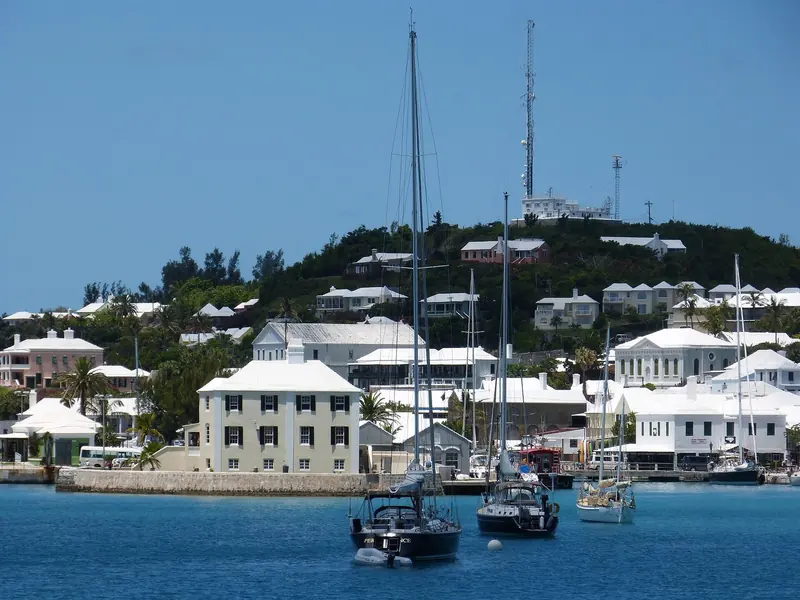
Every yacht entering Bermuda by sea must clear in at St George's Harbour, the island's only port of entry, and the process starts well before the anchor goes down.
Boats are required to file through the SailClear online system ahead of arrival and to hail Bermuda Radio by VHF channel 16, or on the station's round the clock watch on 2182kHz and 4125kHz, from as far out as 30 nautical miles. Bermuda Radio then talks the yacht in and assigns a berth at the customs reporting dock. A single Customs boarding officer typically clears immigration, customs and health together, a minimum formality process for a private yacht arriving from overseas. Stays of less than five days need only a Transit Permit; anything longer requires a Cruising Permit, valid up to six months. Reported clearance charges have moved over time, from a flat USD 35 per person historically to a total closer to USD 140 for a four person sailing yacht on more recent reporting, so an owner should confirm the current figure with Bermuda Customs or an agent before arrival rather than budget against either number blind. St George's is not a bare customs shed. The town has been Bermuda's port of entry since its founding in 1612, making it among the oldest continuously settled English speaking towns in the Americas, and UNESCO listed the town together with its fortifications as a World Heritage Site in 2000. A yacht clearing in here ties up within walking distance of Ordnance Island and the old town's narrow lanes, not an industrial terminal.
The Royal Naval Dockyard, Then and After the America's Cup
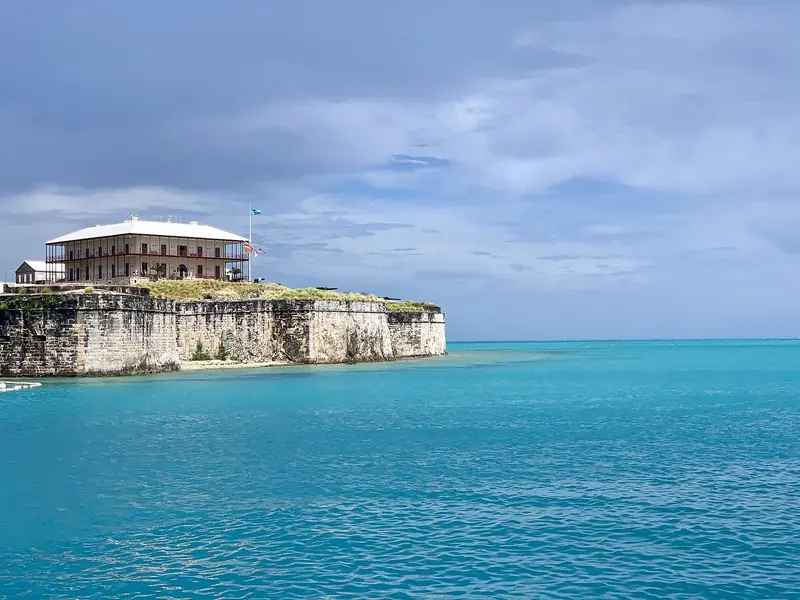
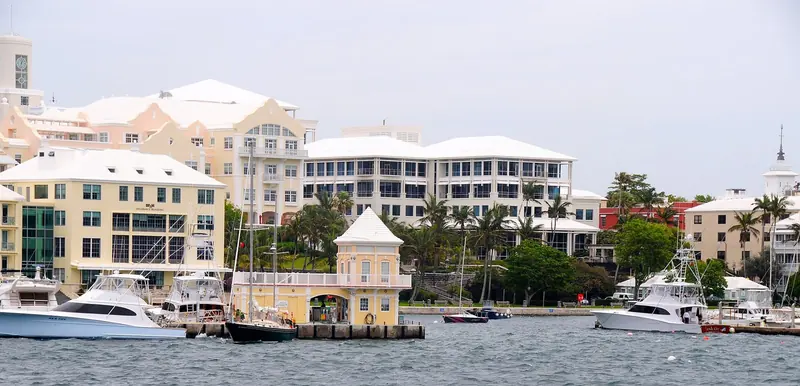
The Royal Naval Dockyard on Ireland Island was built as a Royal Navy base through the 19th century, and its King's Wharf, completed in the 1850s to give warships a protected basin for repair, is now Bermuda's main deep water berth.
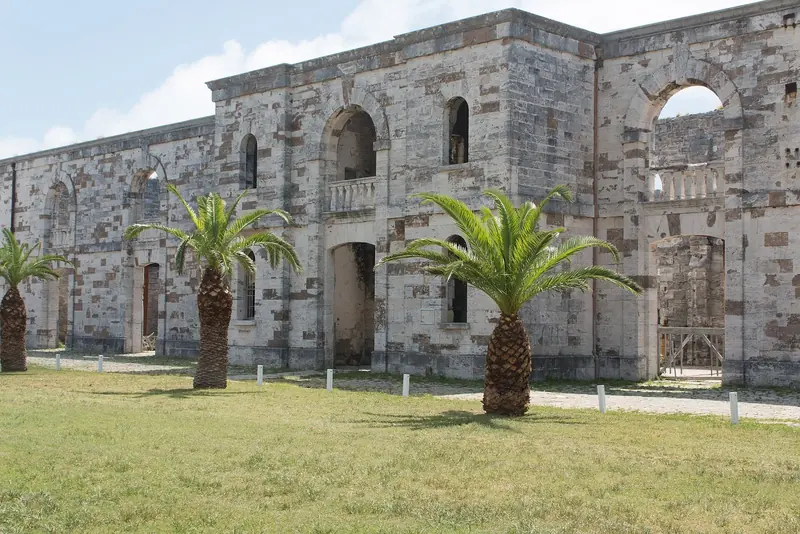
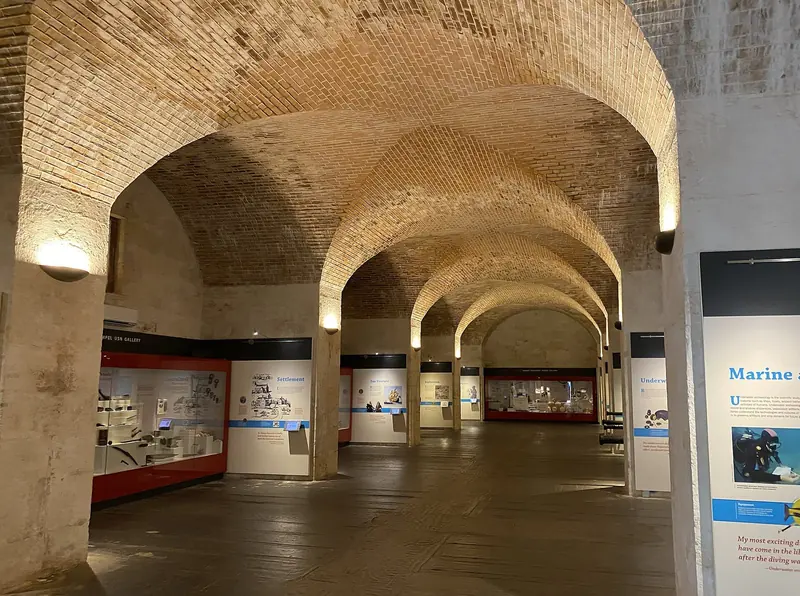
Heritage Wharf was added alongside it in 2009 specifically so two large ships could dock back to back, a scale built for cruise liners that also serves the yacht traffic sharing the same basin. The Dockyard's most significant recent upgrade came from hosting the 2017 America's Cup: Bermuda spent an estimated USD 77 million on the event, including about USD 25 million on permanent infrastructure such as an event village built on nine acres of reclaimed land in the Dockyard's south basin, plus new moorage built specifically for the visiting fleet. The Cup's own superyacht programme had 26 yachts booked into Dockyard alone that year, with a further nine on Front Street and 15 at the Hamilton Princess, and the berths, power and water laid on for that fleet remain in everyday commercial use. The Dockyard today also holds the National Museum of Bermuda, built into the Keep's former storehouses and fortifications, with Commissioner's House, the restored residence of the dockyard's commissioners, as its centerpiece. It is a working stop with real depth alongside it, not a preserved ruin, since cruise ships, day charter boats and visiting yachts all still use the same basin the Georgian and Victorian navy built.
Hamilton Harbour and Bermuda's Sailing Calendar
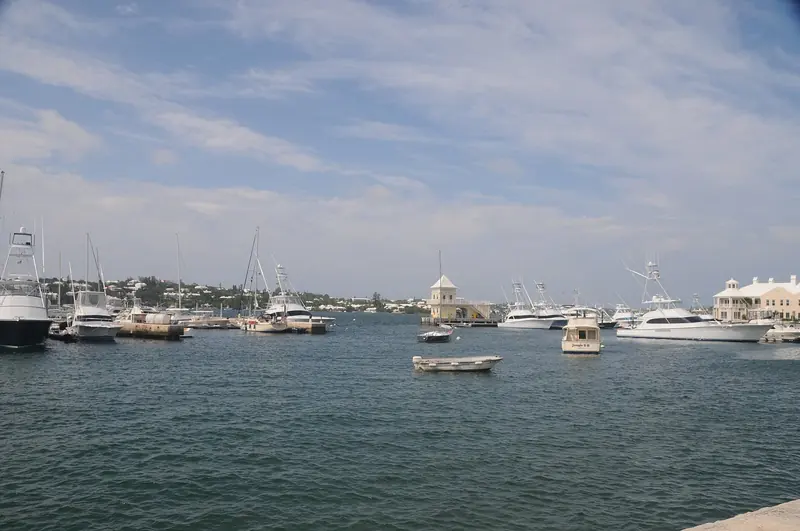
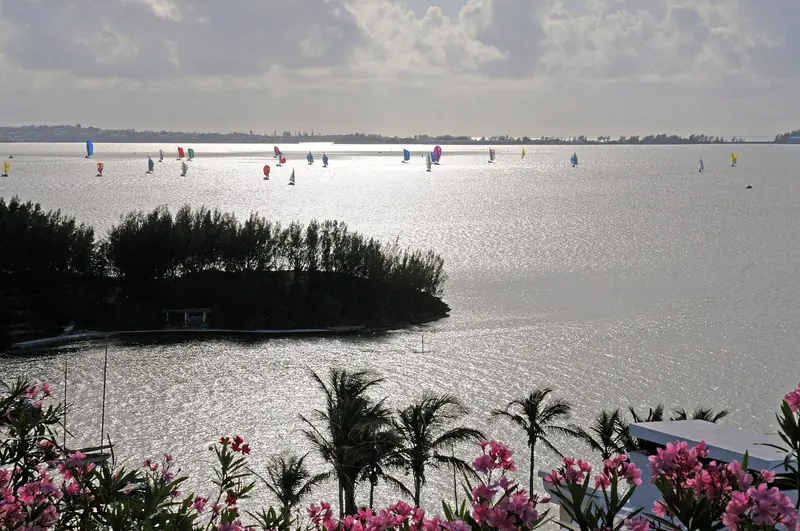
Hamilton Harbour, on the other side of the island from the Dockyard, is Bermuda's capital port and the base of the Royal Bermuda Yacht Club, founded in 1844 and one of the oldest yacht clubs in the western hemisphere.
RBYC's own dock takes yachts up to about 150 feet alongside its concrete breakwaters, with shore power, water and full crew facilities, and it hosts the King Edward VII Gold Cup, the oldest match racing trophy in the world for one design yachts, dating to 1907 and sailed close inshore in International One Designs. The 2026 edition runs 14 to 18 October at RBYC, following the 2025 edition's 21 to 26 October dates, both drawing fields from the World Match Racing Tour for a USD 100,000 purse. Evening dinghy and keelboat racing is also a weekly fixture on the harbour through the season, visible from the RBYC lawn and from the Hamilton waterfront itself. Beyond the two ocean races that finish here, this gives Bermuda its own home grown racing scene rather than a calendar borrowed from somewhere else, and an owner timing a visit around the Gold Cup gets both the match racing and the tail end of the island's better cruising weather in the same week.
Hurricane Season and When To Actually Go
Bermuda's hurricane season runs the same calendar as the wider Atlantic, June through November, but the island's real exposure is smaller than its reputation suggests and the numbers say so specifically.
The island is a small target, about 21 square miles, and the Bermuda Weather Service puts a seriously damaging storm at roughly once every six to seven years even though an average of one named storm passes within 180 nautical miles every season. When a direct hit does land it is not academic. Hurricane Fabian struck on 5 September 2003 with sustained winds near 120mph, causing the island's first hurricane fatalities in 77 years, four deaths, and about USD 300 million in damage. Hurricane Gonzalo followed on 17 October 2014, also a direct hit, with sustained winds over 100mph and roughly USD 400 million in damage, though without a reported fatality that time. Both storms fell inside the August to October window that is also, statistically, the peak of the season. The practical answer for a cruising owner is to treat May, June and the first half of July as the reliable window, which is exactly when both ocean races run, and to watch the tropics closely for anything scheduled from mid-August through October, statistically the year's highest-risk stretch on the island. The Gold Cup's October date sits inside that same window, so an owner sailing for it should watch the forecast the way a hurricane-season cruiser would, not assume the racing calendar has already cleared the risk.
What Bermuda Actually Costs
Bermuda's costs are not a rumor. The 2026 Global Cost of Living Index ranked it the single most expensive place to live in the world, with prices running about 23.5 percent above New York City, and that premium lands on a visiting yacht as hard as it lands on a resident.
Marina pricing that is actually published bears this out. The Royal Bermuda Yacht Club in Hamilton charges USD 4.00 a foot a day from April through October and USD 3.00 a foot a day from November through March, with a 10 percent discount past 30 days, for a berth on its outer wall. St George's Marina prices by length band, USD 2.85 a foot a night up to 78 feet and USD 3.75 a foot a night above that. Public Bermuda Maritime Authority moorings run an estimated USD 300 to USD 1,000 a year and private slips USD 2,500 to USD 8,000 a year depending on length and location, with Hamilton Harbour commanding the premium end and Sandys and St George's running cheaper; seasonal yard storage ashore runs USD 30 to USD 80 a foot for the December to April lay-up window. Provisioning is where the reputation is most deserved. Groceries in Hamilton run about 25 percent above New York, the second highest grocery cost of any city measured worldwide after Zurich, and restaurant prices run roughly 50 percent above New York, the widest gap the same survey recorded anywhere. Fuel is a separate problem entirely: no Bermuda-specific pump price for marine diesel is published anywhere Yotters could verify, global fuel price trackers list Bermuda with a placeholder rather than a figure, and an owner should treat any fuel budget for the island as an estimate to confirm dockside, not a number to plan a passage against.
Ashore, access and booking
| Getting there | L.F. Wade International Airport (BDA) is the only airport, served directly from the United States, Canada and the United Kingdom by Air Canada, American, British Airways, United, Delta, JetBlue and WestJet. Private aviation runs through Atlantic Aviation's FBO with Skyport hangarage; general aviation is limited to jets and long range turboprops because of the distance offshore, and only jet fuel is sold on the field. |
|---|---|
| Arriving by sea and clearing in | St George's Harbour is Bermuda's only port of entry. File through SailClear before arrival, hail Bermuda Radio on VHF 16 (or 2182kHz/4125kHz) from up to 30 nautical miles out, and proceed to the assigned customs reporting berth. One boarding officer typically clears immigration, customs and health together. A Transit Permit covers stays under 5 days; a Cruising Permit, valid up to 6 months, covers longer stays. Reported clearance fees range from a historical USD 35 per person to a more recent total near USD 140 for a 4 person sailing yacht; confirm the current figure with Bermuda Customs or a local agent. |
| Marina and mooring costs | Royal Bermuda Yacht Club in Hamilton: USD 4.00 a foot a day April to October, USD 3.00 a foot a day November to March, 10 percent off past 30 days, for yachts up to about 150 feet. St George's Marina: USD 2.85 a foot a night up to 78 feet, USD 3.75 a foot a night above that. Public Bermuda Maritime Authority moorings run an estimated USD 300 to USD 1,000 a year, private slips USD 2,500 to USD 8,000 a year, and December to April yard storage ashore USD 30 to USD 80 a foot for the season. |
| Provisioning and fuel | Bermuda was ranked the world's most expensive place to live in 2026, about 23.5 percent above New York City. Groceries in Hamilton run roughly 25 percent above New York, the second highest grocery cost of any city measured worldwide, and dining out runs about 50 percent above New York. No Bermuda-specific marine diesel pump price is published; budget it as an estimate to confirm dockside. |
| Fixed dates to plan around | Hurricane season runs June through November, statistically worst from mid-August through October. The Newport Bermuda Race (even years) starts mid-to-late June; the Marion Bermuda Race runs odd years. The King Edward VII Gold Cup runs at RBYC in mid-to-late October, 14 to 18 October in 2026, inside the same higher-risk weather window. |
| What is NOT published | No island-wide marine diesel price is published anywhere Yotters could verify. The Royal Naval Dockyard's own commercial marina does not post a public rate card the way RBYC and St George's Marina do. Bermuda Customs' current clearance fee schedule was not found published as a fixed table; recent reporting gives a range rather than a tariff, so it should be confirmed directly before arrival. |
What owners and crew report
The Dockyard's marina upgrade was bought for one regatta and kept afterward
Bermuda spent an estimated USD 77 million hosting the 2017 America's Cup, including about USD 25 million on infrastructure such as the event village built on nine acres of reclaimed land at the Royal Naval Dockyard's south basin. The Cup's own superyacht programme had 26 yachts booked into Dockyard alone, with a further nine on Front Street and 15 at the Hamilton Princess, and the berths and shore services built for that fleet are still in commercial use.
CNN, October 2016; Royal Gazette, May 2017A direct hit is rare, not impossible, and the record is close enough to plan around
Hurricane Fabian made a direct hit on 5 September 2003 with sustained winds near 120mph, the island's first hurricane fatalities in 77 years, and caused about USD 300 million in damage. Hurricane Gonzalo followed on 17 October 2014, also a direct hit, with sustained winds over 100mph and roughly USD 400 million in damage, this time without a reported fatality.
NOAA's Atlantic Oceanographic and Meteorological Laboratory; Al Jazeera, October 2014Bermuda is not just expensive by reputation, it is now the most expensive place on the numbers
The 2026 Global Cost of Living Index ranked Bermuda first in the world, with prices running about 23.5 percent above New York City. Groceries in Hamilton ran roughly 25 percent above New York, the second highest grocery cost of any city measured after Zurich, and restaurant prices ran about 50 percent above New York, the widest gap the survey recorded anywhere.
Visual Capitalist, 2026 Global Cost of Living IndexThe wreck count is real and it draws its own kind of visitor
More than 300 recorded shipwrecks lie in Bermuda's waters, spanning the 15th to the late 20th century, a density that has earned the island a reputation as one of the world's leading wreck diving destinations and put it near the top of shipwrecks-per-square-mile rankings.
Scuba Diving magazineClearance is simple in person, but the paperwork has to be done before you arrive
Every vessel must file through SailClear before arrival and hail Bermuda Radio by VHF 16 from as far out as 30 miles, then proceed to the reporting berth in St George's, the island's only port of entry, where a single Customs boarding officer clears passports, immigration and vessel documents together. Stays under five days need only a Transit Permit; anything longer requires a Cruising Permit valid up to six months.
Noonsite; Bermuda Radio (Bermuda Maritime Operations Centre)
What is good, and what to watch
Strong points
- Nothing about the location is marginalTwo established ocean races finish there every year they run, the Newport Bermuda Race's 636 nautical miles from Rhode Island in even years and the Marion Bermuda Race's 645 nautical miles from Massachusetts in odd years, so an Atlantic crossing lands at the same island almost every summer.
- A genuine deep water port with modern legacy infrastructureHeritage Wharf, added in 2009, lets two large ships berth back to back at the Dockyard, and the USD 25 million spent readying the same basin for the 2017 America's Cup, including reclaimed land and new moorage, is still the working marina fleet in use today.
- Air access matches the yacht trafficL.F. Wade International takes long range jets direct with a full FBO, Atlantic Aviation and Skyport hangarage, and seven airlines flying commercial from the US, Canada and the UK, so crew changes and guest transfers do not depend on the boat.
- A real historic port of entry, not a marketing labelSt George's has been Bermuda's port of entry since its 1612 founding and carries UNESCO World Heritage status since 2000 for the town and its fortifications, so clearing in also means walking off the boat into one of the oldest English speaking colonial towns still standing.
- The diving and the racing scene are both genuinely deepMore than 300 recorded wrecks lie in Bermuda's waters, and the King Edward VII Gold Cup, dating to 1907, is sailed in International One Designs close inshore at RBYC every October for a USD 100,000 purse.
What to watch
- It is provably the most expensive stop in the cruising AtlanticRanked the world's most expensive place to live in 2026, with Hamilton groceries and dining running 25 to 50 percent above New York, costs that land on provisioning and crew changes exactly as they land on residents.
- Hurricane season is not a formalityFabian in 2003 and Gonzalo in 2014 both scored direct hits with USD 300 to 400 million in damage apiece, and the Bermuda Weather Service puts a seriously damaging storm at roughly once every six to seven years, so an owner cruising August through October is planning around a real, if infrequent, risk.
- Marina pricing is scattered and partly unpublishedRBYC and St George's Marina post rates, but the Royal Naval Dockyard's own commercial marina, and any Bermuda-wide diesel pump price, were not found published anywhere Yotters could verify.
- Distance cuts hard against small aircraftL.F. Wade's own operators limit general aviation traffic to jets and long range turboprops because of how far offshore the island sits, so a piston aircraft or short range turboprop genuinely cannot make the trip.
- The passage itself is the real barrier to entryEven the shortest recognized routes run 636 to 645 nautical miles of open Atlantic with no stops along the way, a two to four day commitment each way that rules out the casual visit a Mediterranean island never has to.
Who it is for: An owner who wants a genuine mid-ocean destination rather than a coastal hop, who can absorb Bermuda's prices and plan the crossing around hurricane season, and who wants a port with real naval and racing history rather than a marina built for the purpose.