Cabo Verde
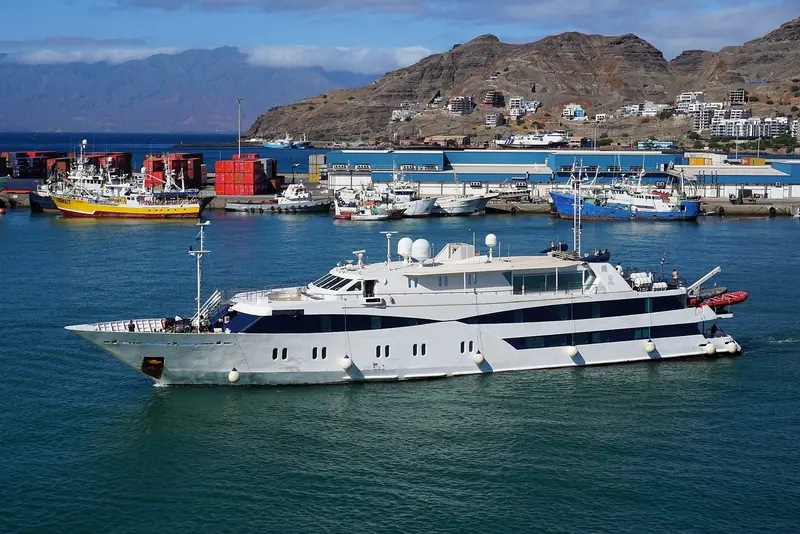
| Region | mid-Atlantic archipelago, nine inhabited volcanic islands, about 850 nm south of the Canary Islands |
|---|---|
| Ports of entry | only three, Palmeira (Sal), Mindelo (Sao Vicente), Praia (Santiago); landfall elsewhere is a fineable offence |
| Marina Mindelo | 144 berths, 720 m of pontoon, boats to 50 m and 4.5 m draft per the marina's own site; older listings cite about 120 boats to 40 m |
| Marina VHF channel 72; opened 2005, first phase complete November 2007; the only full-service marina in the archipelago | |
| Season | November to June, NE trades Force 4-7, strongest December to April; August-September is the rainy season to avoid |
| Harmattan | Saharan dust, roughly October to June, worst October to March |
| Cape Verde hurricanes | the islands are the formation zone for about two of the Atlantic's largest storms a year, but are rarely struck directly themselves |
| Inter-island channel gusts logged to 50-52 kt against a 25-35 kt forecast (North Star, 2020) | |
| ARC+ | Las Palmas to Mindelo 850 nm (5-7 days), Mindelo to Grenada 2,150 nm (12-16 days); 2025 fleet 86 boats from 26 countries, generally capped under 100 |
| Highest point | Pico do Fogo, 2,829 m, active volcano, erupted for 77 days from November 2014 to February 2015 |
| Santa Luzia Marine Reserve | the archipelago's largest protected marine area; anchoring and access need a permit from the environment authority |
| Currency | Cape Verdean escudo, pegged at 110.265 to the euro since 1999 |
| No refit yard | local yards CabNave, Internave and Onave hold haul-out cranes but, per Noonsite's listing, reportedly use them only in genuine emergencies |
Getting to Cabo Verde
TAP Air Portugal, Cabo Verde Airlines, TUI Airways, Eurowings and a rotating cast of European winter-sun charter carriers fly into Sal from Lisbon, the UK, Germany, France, Belgium and the Netherlands, and as of September 2026 the airport counts seventeen airlines serving 63 destinations. Cesaria Evora Airport at Sao Vicente, 13 km from Mindelo and renamed for the singer in 2012, takes a smaller but still useful set of routes: TAP, Cabo Verde Airlines, TUIfly Netherlands, easyJet UK and Transavia France connect it directly to Lisbon, Paris, Amsterdam and Brussels, at roughly 10 to 15 flights a day across the airport's domestic and international traffic combined.
A crew basing a guest change on Sal rather than flying direct to Mindelo needs to budget for the inter-island leg on top: Cabo Verde's domestic network links the islands, but frequency is thin and a missed connection can cost a full day. Where the passage plan allows it, Santo Antao is reachable from Mindelo by a short public ferry rather than a flight at all: CV Interilhas and Nos Ferry both run crossings twice a day in each direction between Mindelo and Porto Novo, the ride takes 50 to 60 minutes and a non-resident fare runs about 13 to 14 euros one way.
Clearance and the three ports of entry
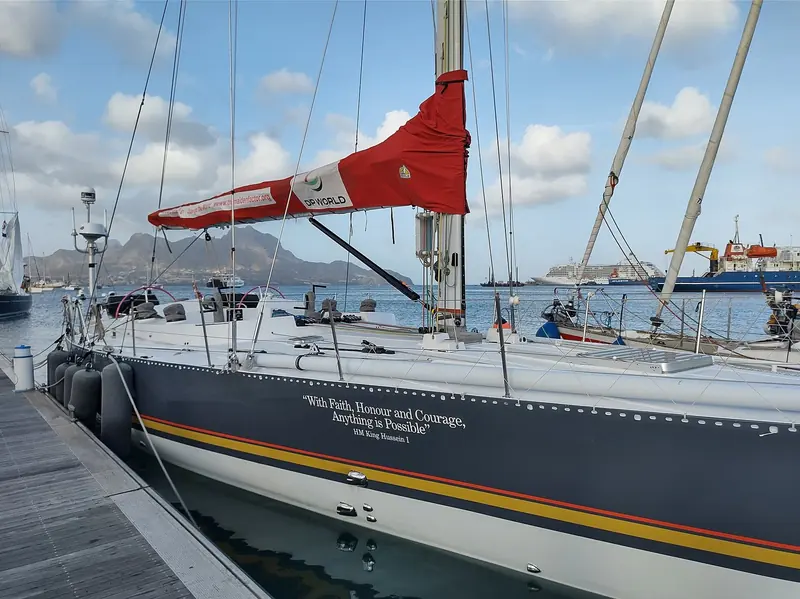
The process itself is straightforward once you are at the right port. A yacht flies the Q flag in, reports first to the Port Captain or Maritime Police, then to Immigration (Policia de Fronteira) at Mindelo and Praia; a visa is not required for a short visiting stay, and Eric Rigney of SV Kandu, writing on Noonsite after clearing into Mindelo in November 2018, reported the whole process taking 15 to 20 minutes and costing five euros total for Immigration's stamp on three passports. Marina Mindelo's own check-in adds proof of insurance, the captain's passport and a standard form describing vessel, crew and prior and next ports, handled at the marina office rather than a separate government building.
The one real trap is departure, not arrival: a yacht cannot clear out of Cabo Verde from Fogo or Brava, the two downwind southern islands, and must sail back to Praia, Sal or Mindelo to collect its papers before leaving, whatever route it actually sails out on afterward. Both the Port Captain and Immigration also expect a Friday clearance if a boat plans to leave over a weekend, since neither office opens for the purpose on Saturday or Sunday. Same-day clearance in and out is possible for a yacht only passing through.
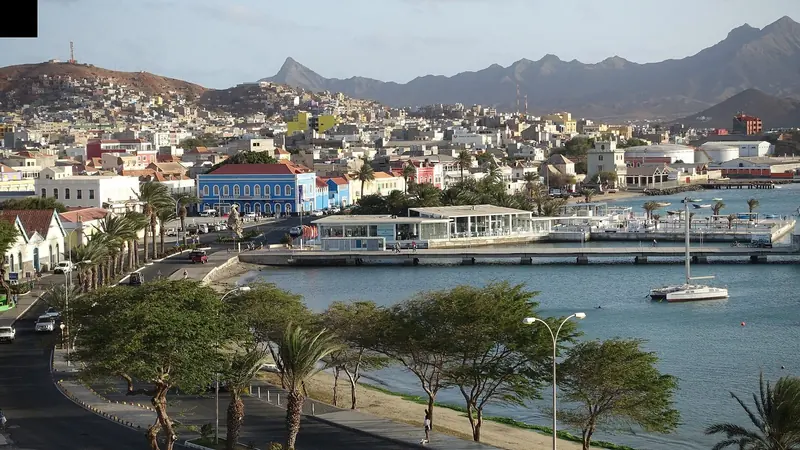
Marina Mindelo is consistently described as secure and well run; the open anchorage outside it has had yachts robbed at least twice, six years apart.
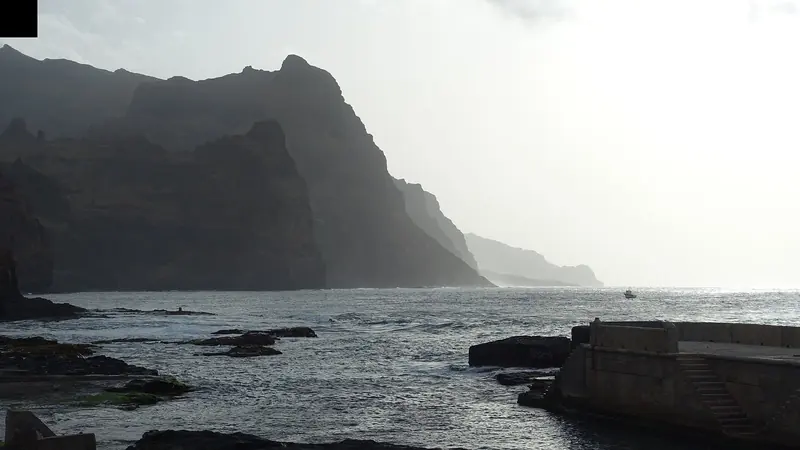
Marina Mindelo, the archipelago's only full-service marina
The marina's first phase finished construction in November 2007 and its workforce grew from seven to 33 employees by 2017, growth that tracks Cabo Verde's rise as an Atlantic rally waypoint more than as a resort destination in its own right. It answers on VHF channel 72, and berths are billed by length multiplied by beam rather than a flat daily rate: Rigney's SV Kandu, at 12.7 by 3.8 metres, paid about 30 US dollars a day in November 2018, a rate that included security, shore power, toilets and Wi-Fi through the marina's Floating Bar restaurant. BoatCV, a yacht services and chandlery operator, works on site and can connect a boat with other local contractors, though Rigney also noted some friction between BoatCV and the marina's own management without it affecting his visit.
The marina genuinely fills up. Rigney's boat arrived the same week as 95 extra yachts from two ARC rallies and one French rally running concurrently in 2018, and Marina Mindelo had told him by email in advance that no berths would be available that week before finding space regardless once his boat rounded the point; a first-time visitor arriving during rally season in November should email ahead rather than assume a berth on arrival. Water is metered rather than free, sold by pre-paid smartcard at about 0.02 euros a litre under the marina's current published fee schedule, and though it is potable, cruisers are advised to filter it before drinking.
Season, trade winds and the harmattan
The Harmattan, a hot, dry wind carrying Saharan dust south over the islands, is the specific local hazard: sources place it broadly across the cruising season, roughly October through March at its worst and lingering into June in a weaker form, and it can cut visibility and coat sails, solar panels and instruments in fine orange dust with little warning. Cabo Verde is also, somewhat counter-intuitively, the naming source for the Atlantic's so-called Cape Verde hurricanes: tropical waves that cross West Africa and organise into some of the season's largest storms near the islands, averaging about two a year and responsible for record-setting Atlantic hurricanes including Ivan, Dean and Irma. The islands themselves are rarely hit directly, since these systems typically track west toward the Caribbean rather than striking the archipelago, but the formation zone sits close enough that a crew sailing in August or September, outside the normal cruising window, should treat the risk as real rather than theoretical.
The wind itself is generally the easy part of a passage in open water between islands, but the channels separating them can accelerate the trades sharply. Boris Benedikovic, sailing aboard North Star in 2020, logged a forecast of 25 to 35 knots for the passage toward Brava that built past 45 with sustained gusts to 52 knots, and reported up to 50 knots on the approach back into Mindelo. A first-time crew should treat every inter-island channel the way a Mediterranean sailor treats a headland: reef early and expect more than the forecast, not less.
The volcanic archipelago
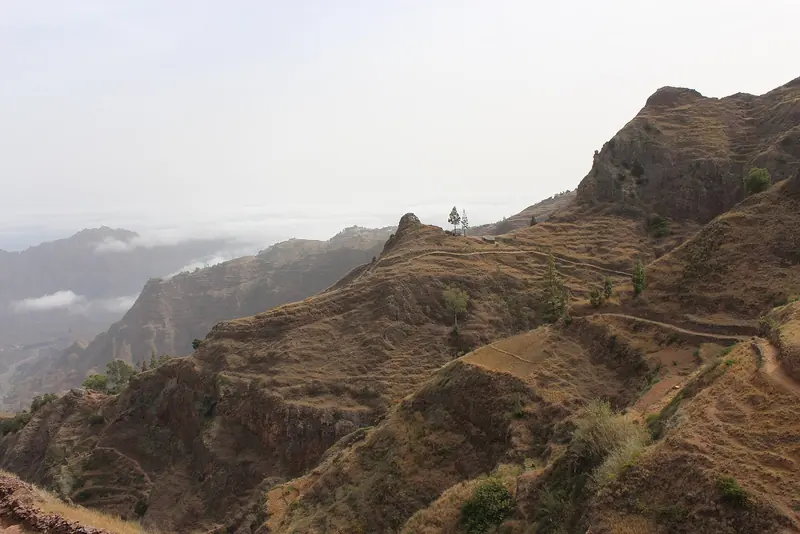
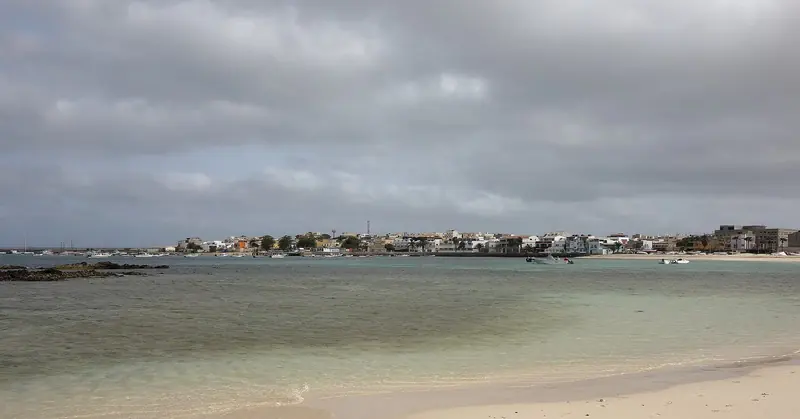
Santo Antao, a short ferry ride from Mindelo, is the hiking island: a green, deeply eroded volcanic landscape of ridge trails and terraced valleys around Ribeira Grande and the village of Fontainhas, walkable as a day trip or worth an overnight. Sal, the flattest and geologically oldest of the group, is Cabo Verde's tourism and kitesurfing island, with steady 15 to 25 knot trade winds from November to May drawing riders to Ponta Preta on the west coast; its port of entry, Palmeira, offers about 30 berths in 4 to 6 metres of water plus fuel and a small market, a workable but much smaller stop than Mindelo. Boa Vista, south of Sal, adds long empty beaches around the town of Sal Rei and its own shallow anchorage.
Fogo, in the southern Sotavento group, carries the archipelago's one genuine natural hazard beyond weather: Pico do Fogo, at 2,829 metres the highest point in Cabo Verde and in West Africa, is an active stratovolcano that has erupted roughly thirty times since the island was settled, most recently for 77 days from November 2014 to February 2015 in an eruption that destroyed the villages of Portela and Bangaeira. Santa Luzia, together with the islets of Branco and Raso, is uninhabited and now the Santa Luzia Marine Reserve, the largest protected marine area in the archipelago; access is by permit only from Cabo Verde's environmental authority and anchoring without one is not allowed, so a yacht that fancies a look at the reserve on the way south from Mindelo needs to arrange it in advance rather than simply stop.
What a stop in Cabo Verde actually costs
The only concrete berth figure found in this research is Rigney's, from November 2018: about 30 US dollars a day for a 12.7 by 3.8 metre yacht, billed by length times beam, which by his account ran roughly half what a comparable Mediterranean or Canary Islands berth would cost. That figure is eight years old and should be treated as historical colour rather than a quote; a crew planning a budget should request current pricing directly from reception, open Monday to Friday 08:00 to 18:00 and weekends 09:00 to 18:00 per the marina's own site. Fuel follows the same pattern: Rigney's fill-up came to about a dollar a litre of VAT-free diesel at the marina's own dock, roughly 15 percent below the street-side pump in town, but no current bunkering price for Mindelo turned up anywhere in this research, and the marina's tariff page defers diesel enquiries to reception rather than publishing a rate.
Everything else runs cheap by comparison. Cabo Verde's currency, the escudo, has been pegged at 110.265 to the euro since 1999, so there is no exchange-rate risk to budget around. A local SIM cost about one euro in 2018 with eight gigabytes of data for ten euros, a full-boat laundry service ran twelve dollars for seven kilograms washed, dried and folded and a three-coast island tour arranged through the marina office cost 60 euros for up to four people. What is not published anywhere, by the marina or by any Cabo Verde authority page found in this research, is a current rate card for a 30 or 50 metre yacht at Mindelo, or any bunkering price more recent than 2018; both should be treated as genuinely unknown until a crew requests them directly.
Why yachts actually stop here
The 2025 ARC+ fleet numbered 86 boats from 26 countries; the rally is generally capped at just under 100 boats from 27 to 65 feet because Mindelo's marina, however large it has grown, is still a finite resource shared with the regular cruising fleet and, in some years, more than one rally at once. Cabo Verde's role predates the ARC+ by more than a century: Porto Grande has been a working deepwater harbour since 1838, when it opened as a coaling station for transatlantic steamships, gained city status in 1879 and has hosted a submarine telegraph cable station since 1875, so the same natural harbour that suits a modern yacht rally was suiting steamship traffic across the Atlantic 150 years earlier.
For an independent crew rather than a rally entry, the calculation is more practical: Rigney's account describes Cabo Verde cutting three to four days off a subsequent Atlantic crossing to French Guiana purely through the head start on longitude, at the cost of an eight-day passage south from the Canaries to get there, and he called the detour worth the extra time even without a rally's structure around it. Set against that appeal is a real security caveat that shows up independently in more than one crew account: SV Kandu in 2018 flagged the risk of theft from yachts left at anchor in Mindelo's outer bay rather than tied up in the marina, and the crew of Cervino reported French friends anchored nearby having their companionway kicked in and electronics and cash stolen in early January 2024, six years later. The marina itself, by contrast, is consistently described as secure and well run, which is as much a reason to book a berth over anchoring as the shelter itself.
Ashore, access and booking
| Getting there | Amilcar Cabral International Airport (SID) on Sal is Cabo Verde's main international gateway: TAP, Cabo Verde Airlines, TUI Airways, Eurowings and other carriers from Lisbon, the UK, Germany, France and the Netherlands. A yacht based in Mindelo is better served flying directly into Cesaria Evora Airport (VXE) on Sao Vicente, 13 km from the marina, served by TAP, Cabo Verde Airlines, TUIfly Netherlands, easyJet UK and Transavia France. |
|---|---|
| Arriving by sea | Three legal ports of entry only: Palmeira (Sal), Mindelo (Sao Vicente) and Praia (Santiago). Fly the Q flag, report to the Port Captain then Immigration; a visa is not required for a short visiting stay. Cannot clear out from Fogo or Brava. |
| Marina Mindelo | 144 berths across 720 m of pontoon, boats to 50 m and 4.5 m draft per the marina's own 2026 figures; older listings cite about 120 boats to 40 m. VHF channel 72. The only full-service marina in the archipelago, so book ahead in ARC/ARC+ season. |
| Season | November to June for the dry, trade-wind season; NE trades Force 4-7, strongest December to April. August-September is the rainy season and the one stretch to avoid. |
| Weather hazards | The Harmattan brings Saharan dust roughly October to June. Inter-island channels can push gusts well past forecast, up to 50-52 kt logged near Mindelo and Brava in 2020. Cabo Verde is the formation zone for the Atlantic's largest hurricanes, though the islands are rarely struck directly. |
| Anchoring | Santa Luzia, Branco and Raso form the Santa Luzia Marine Reserve, the archipelago's largest protected area; anchoring needs a permit. Anchoring in Mindelo's outer bay rather than the marina has produced at least two reported thefts, in 2018 and January 2024. |
| Fuel and provisioning | VAT-free diesel at the marina's own dock, about USD 1/litre in a 2018 report; current rate not published, request from reception. BoatCV chandlery and services on site; markets and gas-bottle refilling in Mindelo town. |
| What it costs | No published per-length berth rate; the marina's tariff page is a quote calculator only. Confirmed add-ons: electricity EUR 4/8/17 per day for 16/32/63 amp, water EUR 0.02/litre, 15% VAT included. Currency is the Cabo Verdean escudo, pegged at 110.265 to the euro. |
| Nearest serious refit | None at the marina itself. Local yards CabNave, Internave and Onave hold haul-out cranes but, per Noonsite's repair-facilities listing, reportedly use them only in genuine emergencies. |
| Why yachts stop here | The World Cruising Club's ARC+ rally routes its fleet from Las Palmas (850 nm) to Mindelo, then on to Grenada (2,150 nm); the 2025 fleet numbered 86 boats from 26 countries. |
What owners and crew report
The marina is secure and well run; the outer anchorage is not
Checking in took 15 to 20 minutes and cost 5 euros for three passports, the marina charged about 30 dollars a day by length times beam including security, power and Wi-Fi, and the staff, restaurant crew and chandlery were rated the most professional found across an entire circumnavigation.
Eric Rigney, SV Kandu, Noonsite report, 31 December 2018French friends anchored nearby were robbed
The companionway was kicked in and all the electrical appliances and cash were stolen, in early January 2024, from a yacht anchored rather than berthed in Mindelo bay.
Sailing Cervino logbook, 4 January 2024Inter-island gusts ran well ahead of forecast
A passage toward Brava forecast at 25 to 35 knots built to sustained gusts of 52 knots, and the approach back into Mindelo saw gusts up to 50 knots.
Boris Benedikovic, Go West Sailing, 10 May 2020
What is good, and what to watch
Strong points
- The best-supported jumping-off point south of the CanariesPorto Grande has worked as a deepwater Atlantic harbour since 1838, the World Cruising Club routes the ARC+ fleet through it every year, and an independent crew can shave three to four days off a subsequent crossing purely through the head start on longitude.
- A marina that is genuinely secure and well runMultiple crew accounts, years apart, describe Marina Mindelo's staff, security and facilities as professional and the best they found on an entire circumnavigation, even as the surrounding bay carries real risk.
- A real archipelago beyond the marinaSanto Antao's hiking trails are a 50 to 60 minute ferry ride away and Fogo has an active volcano and a summit trek. Sal adds some of the Atlantic's most consistent kitesurfing wind.
- Everything except the berth itself is cheapThe escudo has been pegged to the euro since 1999, and SIM cards, laundry, ferries and shore excursions all price well below Mediterranean or Canary Islands equivalents.
What to watch
- Pricing at the one marina that matters is opaqueNo per-length daily rate is published anywhere; the marina's own tariff page is a quote calculator, and the only concrete berth figure on record is a single 2018 report now eight years stale.
- Anchor outside the marina and the risk is real, not theoreticalTwo separate crews, six years apart, reported theft from yachts anchored in Mindelo's outer bay rather than berthed inside it.
- No refit capability beyond an emergency haul-outLocal yards hold cranes but reportedly use them only when a boat is at genuine risk, per Noonsite's own repair-facilities listing; anything beyond that means sailing on to the Canaries or further.
- Berth capacity is disputed and rally season fills itThe marina's own site and older third-party listings disagree by around 20 percent on both berth count and maximum length, and one crew's boat arrived the same week as 95 extra yachts from three simultaneous rallies.
Who it is for: An owner routing an Atlantic crossing who wants the shortest, best-supported jumping-off point south of the Canaries and is prepared to book a marina berth rather than anchor out.