Elba & the Tuscan Archipelago
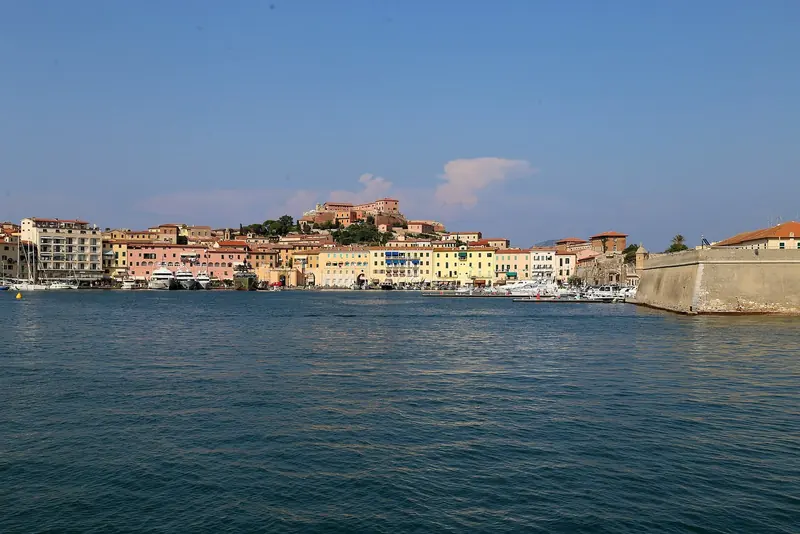
| Location | largest island of the Tuscan Archipelago, between Corsica and the Tuscan mainland |
|---|---|
| Ferry link | Piombino to Portoferraio, roughly 35 minutes to an hour depending on the operator and vessel |
| Napoleon's exile | 4 May 1814 to 26 February 1815, roughly ten months, governing the island as a sovereign principality |
| Napoleon's residences | Villa dei Mulini (Palazzina dei Mulini) in Portoferraio, his official seat, and Villa San Martino, his country residence; both are now part of the National Museum of Napoleonic Residences |
| Fortification | Cosimo I de' Medici began fortifying Portoferraio as Cosmopoli in 1548, building Forte Stella, Forte Falcone and Forte della Linguella; the walls withstood an Ottoman siege under Admiral Dragut in 1553 |
| Cruising ground | around 75 anchorages and 16 marinas across the island, by Elba-focused cruising guides |
| Marciana Marina | roughly 115 berths, maximum LOA about 30 metres, protected by a breakwater of artificial tetrapod blocks |
| Highest point | Monte Capanne, 1,019 metres, reached by an open-basket cable car from Marciana in around 18 minutes |
| Parco Nazionale Arcipelago Toscano | Europe's largest marine park, 56,766 hectares of sea and 17,887 hectares of land across the archipelago's seven main islands |
| Park zoning | Zone 2 permits free anchoring; Zone 1 prohibits both anchoring and passage entirely |
| Montecristo | a fully protected reserve within the park, limited to 1,000 visitor permits a year, applications opening each January |
| Season | Portoferraio carries the island's main superyacht traffic in summer; Marciana Marina and the west coast run at a genuinely quieter pace |
An Emperor's Island, for Ten Months
The Allied powers chose Elba partly for its size and its distance from Paris, small enough to contain an emperor, close enough to the Italian and French coasts to administer easily. Napoleon arrived with a household and a small army and set about governing a state of only a few hundred subjects with the same energy he had once applied to Europe, redesigning roads, reforming the island's iron mining and rebuilding his own residence, Villa dei Mulini in Portoferraio, adding a second storey and converting a barn into a ballroom. He kept a small fleet too, built around the 14-gun brig Inconstant, which he had painted to resemble a British vessel, and it was that same disguised brig, with six smaller vessels and around 1,150 men, that slipped out of Portoferraio on the night of 26 February 1815 and carried him back to France.
None of it kept him. Ten months in, he sailed from Portoferraio back to France aboard the Inconstant, evaded the royalist ships patrolling the crossing, and landed at Golfe-Juan near Cannes on 1 March 1815 to begin the Hundred Days. What remains on Elba is the physical evidence of a working exile rather than a monument to defeat: Villa dei Mulini and the country residence at Villa San Martino, both now part of the National Museum of Napoleonic Residences, sit exactly where he left them, and both are an easy visit from a Portoferraio anchorage rather than an inland excursion requiring a car.
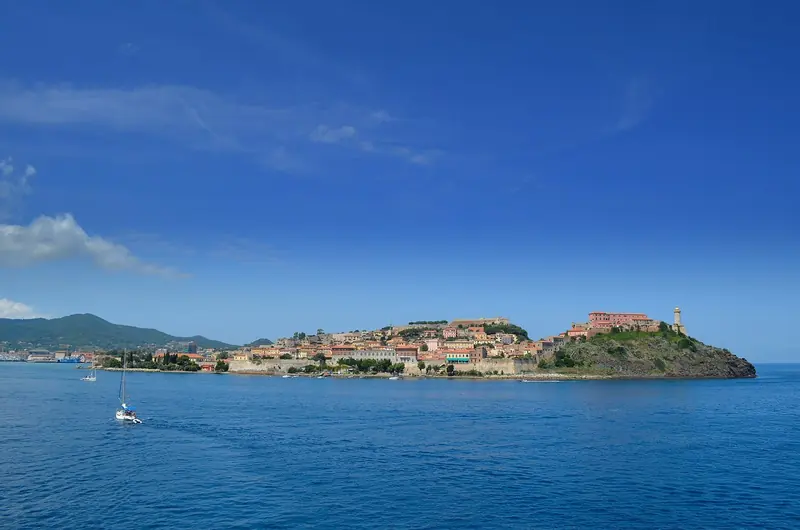
A Fortress Built Against Barbary Raids, Not Against History
Elba's position between Tuscany and Corsica made it a target for North African raiding fleets throughout the sixteenth century, and Cosimo's fortress town was a direct response, a genuinely planned city rather than an organic port, with bastioned walls connecting the forts on the high ground to the harbour defences below. The Darsena Medicea, the inner harbour the fortification protected, still holds the town's boats today.
That the walls held against Dragut's fleet in 1553 is part of why Portoferraio still looks the way it does. Cosimo's investment worked, the town was never taken, and the fortress silhouette that now frames every photograph of the harbour is the same one built to keep raiders out rather than a later romantic addition. A yacht entering the Darsena Medicea today sails into a working defensive plan that is close to five hundred years old, still legible in the walls rather than reconstructed for visitors.
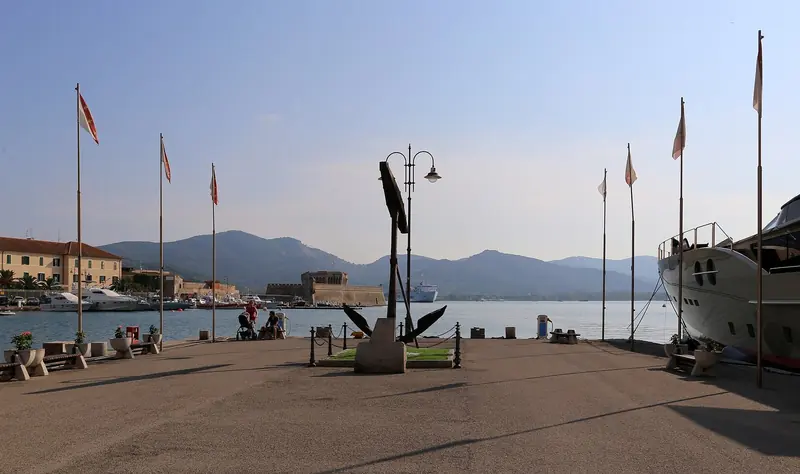
An emperor was exiled here and found it small enough to govern alone. A cruising yacht finds it large enough to need a season.
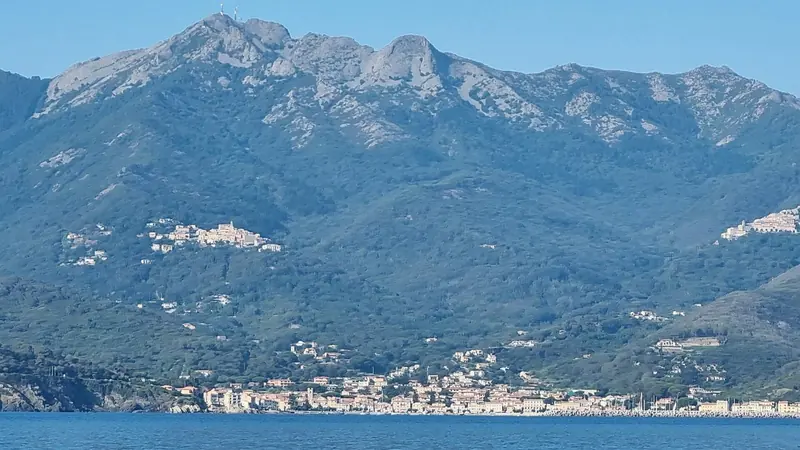
A National Park That Is Also Europe's Largest Marine Reserve
Zone 2 areas across the park allow free anchoring, which covers most of the water a cruising yacht actually wants. Zone 1 areas are a harder line: anchoring and passage are both prohibited, full stop, which means a route has to be planned around them rather than through them. This is a stricter regime than the marine protected areas found in most of the western Mediterranean.
Montecristo, the most restricted island in the park, takes the zoning furthest: only 1,000 visitor permits are issued a year, with the application window opening each January on the park's own website. An owner who wants Montecristo on an itinerary is planning most of a year ahead, not booking a stop the week before arrival.
Portoferraio and Marciana Marina Are Two Different Islands
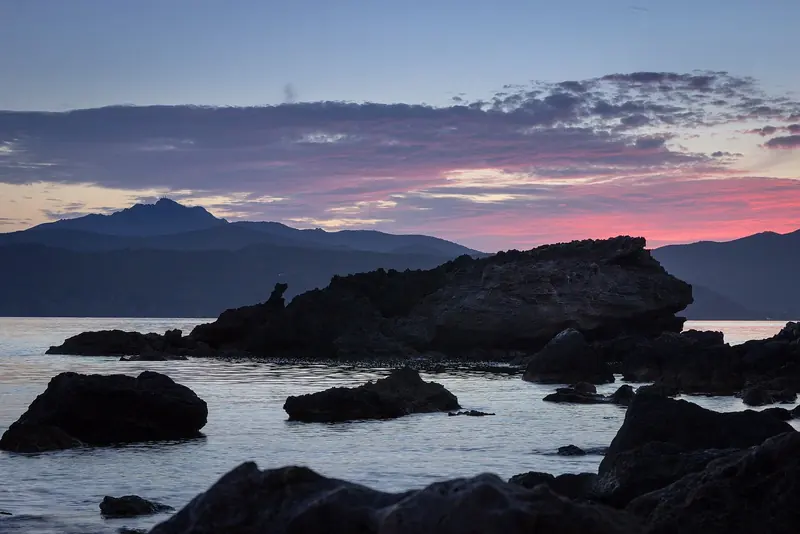
The choice is less about facilities than about character. Portoferraio puts a yacht inside a working historic town with restaurants, provisioning and the ferry terminal all close at hand, and in July and August that means real crowds and real competition for a berth. Marciana Marina trades that convenience for a smaller, calmer harbour on the side of the island that sees less traffic altogether.
Around 75 anchorages and 16 marinas are counted across the island by Elba-focused cruising guides, which is a reminder that Portoferraio and Marciana Marina are only two of many real options, not the only two. An owner who wants variety within a single island can genuinely spend a week moving between anchorages without repeating one.
Monte Capanne, and the Case for Going Ashore Properly
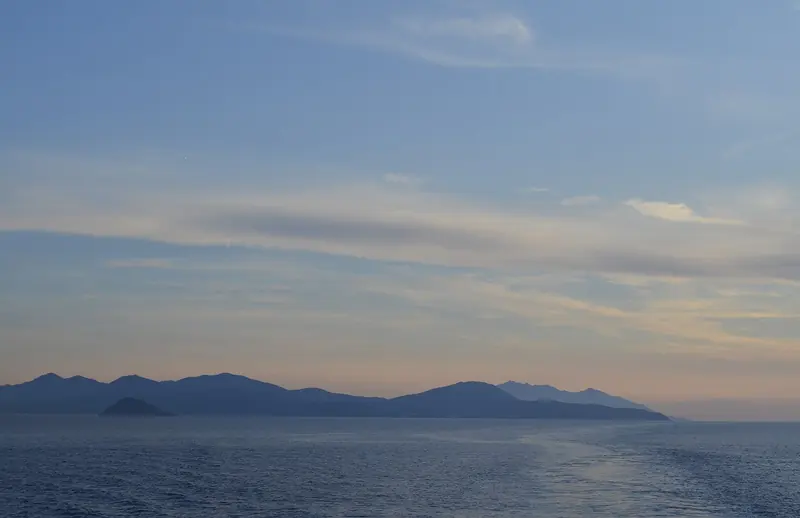
Elba's interior is mountainous enough to carry real hiking and a mining history distinct from the coastal resort image most charter itineraries sell. The cable car's basket cabins, open to the air rather than enclosed, are themselves part of the experience, climbing from Marciana's sea-level starting point to a viewing platform at 950 metres before a short path finishes the ascent to the summit.
On a clear day the summit view takes in Corsica, the Tuscan mainland and, weather depending, a genuine sense of how small the whole archipelago actually is, which is a useful corrective for anyone who has only seen Elba from its anchorages.
The Beaches, the Wine and the Rest of the Archipelago
Aleatico, a sweet passito style grown on around 32 hectares on Elba and a further 3 on Capraia, earned Italy's DOCG status in 2011, the first designation of that rank from any island in the archipelago and the eighth in Tuscany as a whole. It is a genuinely local product rather than a tourist label, and worth seeking out at a Portoferraio table rather than assuming it travels well off the island.
Sansone Beach, just west of Portoferraio and reached only on foot, is known for white pebbles and unusually clear water inside light-coloured cliffs; Sant'Andrea, on the island's northwest tip, looks straight out toward Capraia and Corsica across open water. Both islands are themselves realistic day trips from an Elba base within the same national park, Capraia mountainous with its own hiking and small harbour village, Pianosa flat and far more restricted because of its history as a prison island. Both are the kind of stop that rewards arriving by tender rather than trying to walk to them from a road, since the coastal footpaths that reach them were built for hikers, not for carrying beach gear from a car park.
The Island of a Thousand Fires
The Etruscan aristocracy's wealth was built in real part on Elba's ore, prized for its purity, and the mineral trade continued through the Roman period at the same sites. Smoke from the smelting furnaces along the coast, visible to passing ships, is where the island's old name comes from, a genuinely industrial history hiding behind what now reads as a straightforwardly scenic coastline.
For a visiting yacht this is a half-day worth taking seriously rather than a detour: the mineral museum at Rio Marina and the mining district around Capoliveri are both reachable from Portoferraio, and they explain why Elba mattered to the ancient Mediterranean world centuries before Napoleon or the Medici ever set foot on it. Rio Marina itself, on the island's eastern coast, is a small working port in its own right and a realistic alternative overnight to the busier anchorages further west.
The Honest Downside
Elba in July and August is genuinely crowded, particularly around Portoferraio, and the island's popularity with the Italian domestic market means high season pressure on berths and anchorages that a purely international itinerary might not anticipate. The national park's Zone 1 restrictions, real and enforced, mean a route plan has to account for water that is simply off limits, not merely less convenient.
And the island rewards a full season rather than a single overnight stop. An owner treating Elba as a one-night call between Corsica and the mainland will see the harbour and little else; the mountain, the fortress town, the west coast marinas, the mining museums and the wider archipelago's other islands need real time that a fast-moving itinerary rarely leaves for them.
Ashore, access and booking
| Getting there | Pisa and Florence are the nearest airports with long-haul connections; Elba's own small airport (Marina di Campo) takes seasonal flights. By sea, the Piombino to Portoferraio ferry runs in roughly 35 minutes to an hour depending on operator, and is the standard route for crew changes and provisioning runs from the mainland. |
|---|---|
| Choosing a base | Portoferraio, the capital, carries the island's main summer superyacht traffic and its historic Darsena Medicea harbour. Marciana Marina, on the quieter west coast, holds around 115 berths behind a breakwater at a genuinely different pace, with a 30 metre LOA ceiling. |
| Navigating the park | Parco Nazionale Arcipelago Toscano zoning matters for route planning: Zone 2 areas allow free anchoring, Zone 1 areas prohibit anchoring and passage entirely. Montecristo requires one of 1,000 annual visitor permits, applied for from January through the park's own website. |
| Ashore | Portoferraio's Darsena Medicea sits inside Cosimo I de' Medici's 1548 fortified town of Cosmopoli, with Forte Stella and Forte Falcone still standing above the harbour. Napoleon's Villa dei Mulini, his official residence during his exile, is a short walk up from the same water and is now a museum. |
| Inland | Monte Capanne, at 1,019 metres the island's highest point, is reached by an open-basket cable car from Marciana in around 18 minutes, giving a genuinely different day out from a beach anchorage. |
| What is not published | There is no single island-wide tariff for anchoring or mooring; Marciana Marina and Portoferraio's own harbour authorities each publish separate berth rates, and anchoring fees inside the national park's permitted zones are set by the park rather than by any marina. |
What owners and crew report
Napoleon's exile was short, close to the mainland, and still ended in escape
Elba was chosen partly for its distance from Paris, yet Napoleon left after roughly ten months and returned to France to begin the Hundred Days. Guides to the Napoleonic residences note he governed a state of only a few hundred subjects from Villa dei Mulini, redesigning the building itself, adding a second storey and converting a barn into a ballroom, while he was there.
Visit Tuscany, and the National Museum of Napoleonic ResidencesThe marine park's zoning is a real navigational constraint, not a suggestion
Zone 1 areas prohibit both anchoring and passage outright, which a cruising yacht has to route around rather than treat as a recommendation. Montecristo, the most protected island in the park, issues only 1,000 visitor permits a year, with applications opening in January, so a season built around visiting it needs planning many months out.
Parco Nazionale Arcipelago Toscano's own published zoning and permit rulesThe Piombino crossing is short, but timing varies a lot by operator
The fastest operators cross in around 30 to 35 minutes; conventional ferries can take closer to an hour. For a yacht not making the crossing itself but coordinating guest or crew changeovers via the ferry, that spread is worth checking against the specific operator's schedule rather than assuming a single crossing time.
Direct Ferries and Blu Navy Traghetti route information
What is good, and what to watch
Strong points
- Genuine history beyond the beachesA working Napoleonic exile and Medici fortifications that actually held against a siege.
- Real variety on one islandAround 75 anchorages and 16 marinas across contrasting coasts.
- A mountain, not just a coastlineMonte Capanne's cable car reaches 1,019 metres in under 20 minutes.
- A short, well-served mainland linkThe Piombino ferry runs as fast as 30 to 35 minutes on the quickest operators.
What to watch
- Genuinely crowded in July and AugustPortoferraio in particular sees heavy domestic Italian season traffic.
- Hard no-go zones, not soft guidanceZone 1 marine park areas prohibit both anchoring and passage outright.
- Montecristo needs a year of planningOnly 1,000 permits a year, applications opening each January.
- Rewards a season, punishes a single-night stopMost of what makes Elba worthwhile is missed on a fast one-night call.
Who it is for: An owner who wants a real island to explore rather than a single anchorage to tick off, is willing to plan around a marine park's genuine no-go zones, and does not mind sharing Portoferraio's harbour with the Italian domestic fleet in August.