French Polynesia
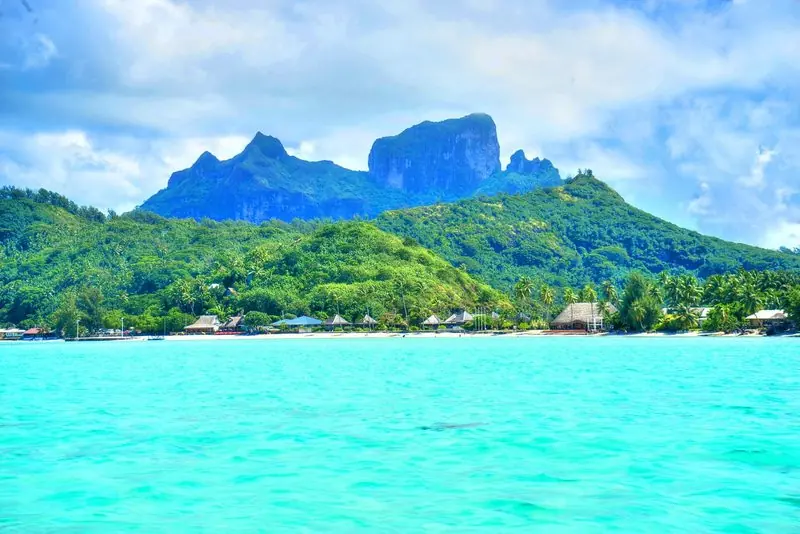
| Region | five archipelagos in the South Pacific, 121 islands and atolls spread over more than 2,000 km |
|---|---|
| Scale | 3,521 square kilometres of land, population 278,786 in 2022 with about 69 per cent of it on Tahiti |
| Season | dry season roughly May to October, wet season and cyclone risk November to April |
| Bora Bora | 125 nautical miles north-west of Papeete, one ocean entrance through Teavanui pass on the west side |
| Fakarava | atoll 60 km by 21 km with a lagoon of 1,112 square kilometres, the second largest in French Polynesia |
| Fakarava north pass | about 1,600 m wide and the largest pass in the territory |
| Fakarava south pass | has been protected since 2008 and holds an estimated 700 grey reef sharks |
| Marquesas | about 1,370 km north-east of Tahiti, with no fringing reefs, listed by UNESCO in 2024 as Te Henua Enata |
| Ports of entry | Papeete and Moorea, Nuku Hiva, Hiva Oa and Ua Pou, Bora Bora, Raiatea and Huahine, Rangiroa and Fakarava, plus the Australs and Gambiers |
| Entry | an online arrival form at least 48 hours ahead, with approval reported to take one to three days |
| Biosecurity | an online questionnaire with a fee and an onboard inspection before departure clearance |
| Access | Faa'a International at Papeete is the only long-haul gateway, with domestic strips at Bora Bora, Raiatea, Rangiroa, Fakarava and four in the Marquesas |
| Temporary admission | 24 consecutive months for a foreign pleasure vessel, extended to 36 consecutive months for a hull of 24 m or more, with a further three months possible for force majeure |
| End of the clock | the vessel must leave French Polynesian waters or be cleared through customs, and the regime restarts only on proof of leaving the territory and entering a foreign one, with a reported minimum of six months outside |
| Charter | permitted for foreign-flagged vessels under a licence de charter nautique from the Direction Polynesienne des Affaires Maritimes, granted by presidential decree after an advisory commission, taking several weeks with a provisional licence available |
| Charter conditions | entry in the commercial register, qualifications, insurance and guarantees, a description of the activity and a level three criminal record certificate |
| Cabotage | no bar on carrying paying guests between Polynesian islands once the charter licence is held |
| Tax | French Polynesia is outside the EU VAT territory and levies its own TVA at 5, 13 and 16 per cent, with a 1 per cent rate from 1 July 2026 for operations benefiting the remote archipelagos |
| Fuel | the duty-free diesel benefit for private pleasure vessels under temporary admission was announced for suppression at the Council of Ministers of 10 June 2026 |
| Lifting | the Papeete port slipway is rated at 800 tonnes, 60 m and 4.5 m draught, and Technimarine runs travel lifts of 300 and 75 tonnes taking hulls to about 40 m |
| Berthing | Marina Taina's published tariff documents date from 1 March 2024 and its rates are not public, checked 28 July 2026 |
The scale of the place
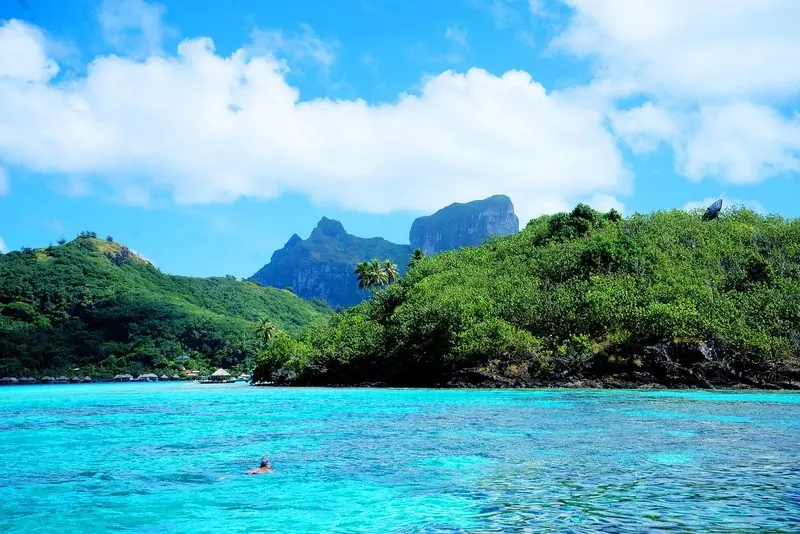
French Polynesia is the size of Europe with the land area of a small county. Five archipelagos, 121 islands and atolls, and passages between them that are measured in days. Tahiti holds about 69 per cent of the population and everything else is thinly settled. Mount Orohena on Tahiti rises to 2,241 metres, and the volcanic islands generally are steep, green and dramatic, while the atolls are flat rings of coral with nothing on them above palm height.
The consequence for an owner is planning. This is not a coast where a yacht wanders and sees what turns up. Passages are committed, weather windows matter, and a change of mind can cost two days. The reward is that the anchorages, once reached, are as good as anywhere on earth and there is nobody in them.
Three different cruising grounds
The Society Islands are the accessible third: fourteen islands in two groups, with Tahiti, Moorea and Tetiaroa to windward and Huahine, Raiatea, Taha'a and Bora Bora to leeward. Moorea is about 12 nautical miles from Papeete. Bora Bora is 125. Raiatea and Taha'a share one lagoon, which makes them the easiest and most protected cruising in the territory and the reason the charter fleet is based there.
The Tuamotus, a couple of hundred miles north-east of Tahiti, are the atolls. Coral rings with lagoons inside, entered through passes, and the diving here is the point of the whole trip. The Marquesas are about 1,370 km further north-east, high volcanic islands with no fringing reefs, which means the anchorages take the ocean swell directly. UNESCO listed the Marquesas in 2024 as Te Henua Enata. They are magnificent and they are uncomfortable.
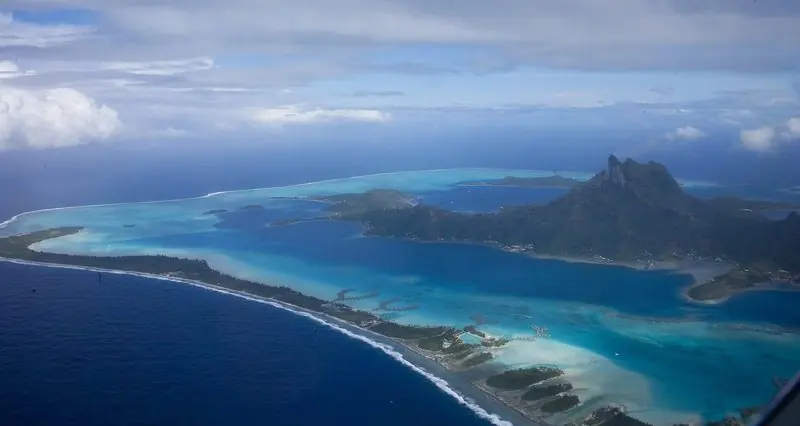
The best lagoon cruising on earth, supplied through a single runway at Papeete.
A week, and three weeks
A week means the Leeward Societies and nothing else. Guests fly to Bora Bora or Raiatea, the boat works the shared Raiatea and Taha'a lagoon, crosses to Bora Bora and Huahine, and everyone flies home. That is a genuinely good week of flat lagoon water, and it is what most owners actually do here.
Three weeks buys the Tuamotus. Papeete or Moorea, north-east to Rangiroa and Fakarava for a week among the passes, back through the Societies. Adding the Marquesas turns it into a six-week programme with two ocean passages of several days each. A boat that has crossed the Pacific arrives with the Marquesas already behind her, which is the usual way anybody sees them.
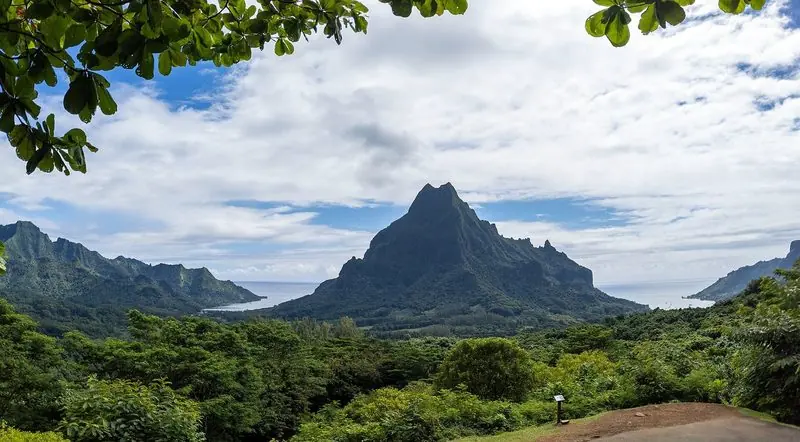
The passes, and where a 50 metre boat fits
Every atoll is entered through a pass, and the pass is the technical problem of this cruising ground. Water piles into the lagoon over the reef and drains out through one or two gaps, so the streams run hard and set up standing waves against an opposing swell. Transits are timed on slack. Fakarava's Garuae pass, about 1,600 m wide, is the easiest in the territory and the largest. Others are a few hundred metres across with coral on both sides, and some are simply not attempted by a large yacht.
Inside, the lagoons are shallow, coral-headed and generally poorly charted, so a 50 metre boat moves on eyeball navigation with a spotter forward and good light behind her. Bora Bora has a single ocean entrance through Teavanui pass on the west side, which takes cargo ships and cruise ships and presents no difficulty. Tetiaroa has no navigable pass at all, so a yacht lies outside and tenders in. Berthing barely exists: Marina Taina near Papeete and the commercial quay in Papeete by arrangement, plus Apooiti on Raiatea. Everything else is anchor or mooring.
The anchorages and dives that justify the passage
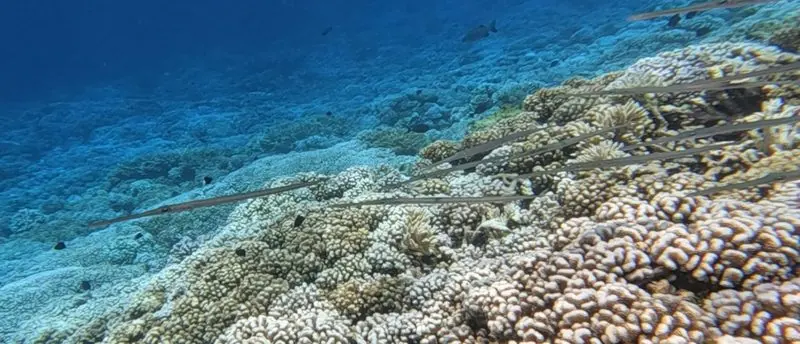
Fakarava is the one people come back for. The southern Tumakohua pass has been protected since 2008 and holds an estimated 700 grey reef sharks, which gather in the pass in a wall that divers tend to count instead of describe. The whole atoll is a UNESCO Biosphere Reserve. Rangiroa's Tiputa pass has dolphins working the tide and is the other must-dive. Neither is a place to run a tender casually across the stream.
In the Societies the anchorages are gentler. The Taha'a coral garden, the motu anchorages off Raiatea, the bay at Opunohu on Moorea under the volcanic spires, and the lagoon at Bora Bora with the resorts on the motu. Tetiaroa carries The Brando on a private atoll and is the discreet stop for owners who want one. In the Marquesas, Taiohae on Nuku Hiva and the bays of Fatu Hiva are the anchorages, and all of them roll.
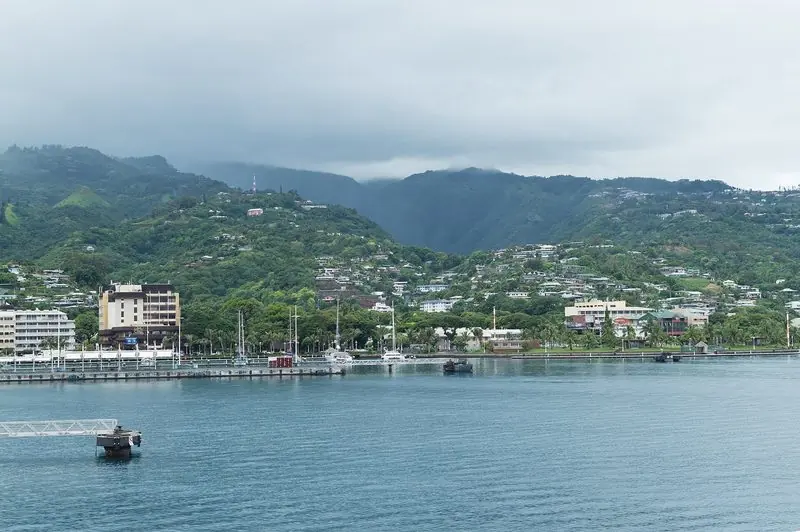
Weather and the season
The dry season runs roughly May to October, with the south-east trades steady, humidity lower and the water clear. That is the cruising season and it is when the fleet is here. The wet season from November to April brings heavy rain, squalls and the cyclone risk, and insurers price accordingly. Very few large yachts stay through it.
Even in the dry season the trades mean the passages north-east to the Tuamotus and the Marquesas are upwind and up-current, which is why boats crossing from the Americas arrive downwind and leave to the west. Southern-ocean swell arrives on the south-facing passes through the austral winter and can close them. Humpbacks are in these waters through the same months, which most guests rate above the diving.
Getting there and getting guests there
Faa'a International at Papeete is the only long-haul airport in the territory. Flights come from Los Angeles, Paris via Los Angeles, Auckland, Tokyo and a handful of other points, and every guest movement funnels through it. From Papeete, domestic services reach Bora Bora, Raiatea, Huahine, Rangiroa, Fakarava and the four Marquesan strips, on small aircraft with real baggage limits.
The practical effect is that a guest arriving from Europe is looking at the better part of a day in the air and a domestic connection at the end. Private jets reach Papeete but not most of the domestic fields. Owners plan long guest blocks here for that reason. Nobody comes for four nights.
Ashore, and what there is to do
The honest position is that guests come for the water. Ashore, Bora Bora and Taha'a have the over-water resorts and their restaurants, Moorea has the pineapple valleys and the Belvedere lookout above Opunohu, and Papeete has a working city, a market and the roulottes, the food trucks on the waterfront, which are better than they sound. Raiatea has the Taputapuatea marae, a major Polynesian religious site and a World Heritage listing.
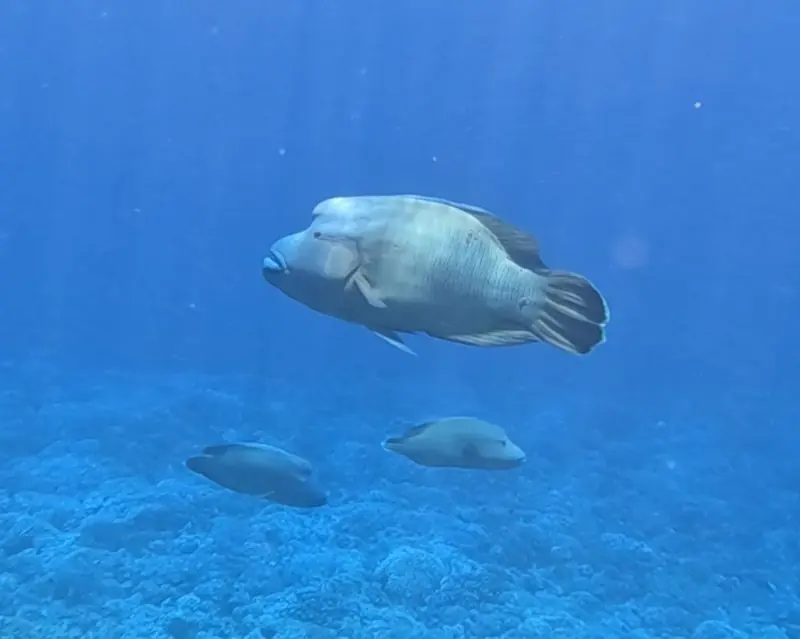
The food is French-influenced and expensive because almost everything is imported. Poisson cru, local tuna and mahi mahi are the exceptions and are excellent. Nightlife is resort bars and the occasional dance performance. What actually fills the days is diving, kite surfing, paddleboarding across a lagoon at first light and the fact that the water is 27 degrees and clear to 40 metres.
Papers, support and the honest downside
Clearance is French, digitalised and done in advance. Yachts file an online arrival form at least 48 hours before arriving, and cruisers report approval taking one to three days. Ports of entry are spread sensibly across the archipelagos, from Nuku Hiva in the north to Mangareva in the far south-east. Before leaving, a biosecurity questionnaire and fee and an onboard inspection are required. Charter operation and the tax position of a foreign-flagged yacht here are specialist questions and change, so an owner needs a local agent and advice that is current.
The downside is supply. Fuel is available at Papeete, Raiatea and a few outer points, at prices that reflect the distance, and a large uplift has to be arranged in advance. Spares come from France or the United States and take weeks. A 50 metre yacht can be lifted in the territory, on the 800 tonne Papeete port slipway, but lifting is not refitting and the paint, joinery and systems trades are not there, so a serious failure means a passage of thousands of miles or an air-freighted specialist. Provisioning at guest standard means flying it in. An owner should treat the boat as self-sufficient for the whole season, because functionally she is.
Temporary admission, and the clock that decides the programme
This is the number that shapes a Pacific itinerary and it is published. A foreign pleasure vessel may stay in French Polynesia under temporary admission for a maximum of 24 consecutive months, and for a hull of 24 m or more that maximum is 36 consecutive months. Force majeure can extend it by three further months. At the end of it there are only two options, and the customs administration states them plainly: leave French Polynesian waters with the vessel, or clear her through customs, which means importing her and paying what importation costs. Renewal is not automatic and is not a paperwork exercise. The regime restarts only on proof that the vessel left the territory and entered a foreign one, and the working requirement reported by local agents is a minimum of six months outside French Polynesian waters before the clock begins again.
Two consequences follow for an owner. The first is that a 50 m yacht gets three years here, which is long enough to run a genuine Pacific programme out of Papeete rather than a single season, and long enough that the boat can be left in the territory between guest blocks. The second is that the six-month exit is a real voyage in this part of the ocean, not a run across a border, so the decision to import or to leave has to be taken a year before the clock expires and not a month before. Arrival itself is now a single online declaration filed at least 48 hours ahead, with approval reported at one to three days, and a foreign-flagged vessel operating under a charter licence is admitted temporarily without a bond.
Charter: what a foreign flag may actually do here
A foreign-flagged yacht may charter in French Polynesia, and the answer is a licence rather than a flag change. The instrument is the licence de charter nautique, administered by the Direction Polynesienne des Affaires Maritimes, and the governing text applies in terms to francised vessels and to vessels under a foreign flag alike. The conditions are commercial rather than nautical: the owner or operator must be entered in the commercial register, hold the required qualifications, carry the required insurance and guarantees, produce a description of the intended activity and a level three criminal record certificate. The licence is granted by decree of the President of French Polynesia after the advisory commission on charter navigation has been consulted, which takes several weeks, and a provisional licence can be issued while the file is pending. There is no cabotage bar of the American or Turkish kind once the licence is held, which is precisely why a charter fleet exists at Raiatea and why the Leeward Societies are the accessible week.
The tax position is its own jurisdiction and no EU rule reaches it. French Polynesia is outside the European Union VAT territory entirely and levies its own TVA at 5 per cent reduced, which covers passenger transport and hotel accommodation, 13 per cent intermediate and 16 per cent standard, with a new 1 per cent rate introduced from 1 July 2026 for operations benefiting the remote archipelagos, meaning the Tuamotus, the Marquesas, the Australs and the Gambiers. A charter that starts here is taxed here, on local rates, and none of the EU charter VAT structures an owner may have used in the Mediterranean apply or are needed. The classification of a nautical charter between the 5 and 13 per cent bands is the question worth putting to the licensed local operator in writing, because it moves the number by eight points on every booking.
Fuel, the yard, and what the season actually costs
The commercial sweetener here has been fuel, and it is being taken away. Temporary admission has carried duty-free fuel and duty-free spare parts in transit, arranged through a local broker, and it is a material part of why a long Pacific programme works out of Papeete. At the Council of Ministers of 10 June 2026 the government announced that the duty-free diesel benefit for private pleasure vessels under temporary admission is to be suppressed, as part of a hydrocarbon tax package reported at XPF 3.8 billion, on the stated ground of equity between users. An owner planning a 2026 to 2027 season should price fuel duty-paid and treat any remaining exemption as a bonus rather than a budget line, and should get the current position from the agent in writing before committing to a bunkering port.
The yard position is better than the territory's reputation. The port slipway at Papeete is rated at 800 tonnes, 60 m and 4.5 m of draught, and Technimarine at Papeete runs travel lifts of 300 and 75 tonnes taking hulls to about 40 m, with Raiatea Carenage covering the leeward islands. A 50 m yacht can therefore be taken out of the water in French Polynesia, which is not true in the Maldives or the Grenadines, but capacity to lift is not capacity to refit and the paint, joinery and systems trades are not there. Berthing is the number nobody publishes: Marina Taina's tariff documents date from 1 March 2024 and its rates are not reproduced publicly, checked on 28 July 2026. Set that against Marina di Porto Cervo's published 2026 tariff of EUR 3,698 a day in the band to 40 m from 1 to 20 August, about EUR 102,000 for the month, and the shape of a Polynesian season becomes clear. There is almost no berthing line at all. There is fuel that is about to cost more, air freight for everything, and a delivery measured in weeks.
Ashore, access and booking
| Getting there | Faa'a International on Tahiti is the only long-haul gateway, and Marina Taina is about ten minutes from it by road. Everything else in the territory is reached by inter-island flight or by the boat itself. Guest changes are therefore built around Tahiti whether the yacht wants to be there or not, and a Marquesas or Gambier itinerary means either a long repositioning leg or an internal flight for the guests. |
|---|---|
| Arriving by sea | Authorised entry points cover the Marquesas, the Australs, the Tuamotu and Gambier groups, and the Society Islands in both the Windward and Leeward groups. Check-in is required immediately on arrival, not at leisure. The exception that catches people is Moorea: you cannot clear in there, it has to be Tahiti, which matters because Moorea is the obvious first stop for anyone arriving from the west. |
| The bond, and who has to post it | Every non-EU crew member and guest needs a repatriation guarantee. That is either cash lodged with a local bank equivalent to a one-way air ticket home, reported at roughly USD 1,700 per non-EU passport, or a bond letter from a registered local agent undertaking to cover repatriation, which is a paid service typically quoted around USD 300 to USD 400. EU nationals arriving by yacht do not post a bond. Short stays of up to 30 days can have it waived. On a yacht with a mixed crew this is a per-passport cost on every rotation, not a one-off on arrival. |
| Temporary admission | A foreign yacht may stay 24 months under temporary admission without paying import duty, which is among the longest windows available anywhere and materially longer than the 18 months the EU allows. It is the reason a Pacific programme can be based here rather than merely passing through. |
| Duty-free fuel | Duty-free fuel is obtainable on most islands, and the entitlement runs six months and is renewable after that. It is arranged through an agent rather than at the pump. In a territory where every litre has crossed an ocean, this is the difference between an affordable season and an unaffordable one. |
| Where a large yacht actually berths | Marina Taina at Punaauia is the territory's premier superyacht facility, offering limited stern-to dockage with controlling depths of 4 to 15 m. Above roughly 65 m the only suitable dock in Tahiti is Papeete Port, where fuel and water come from pipes on the quay. That is the whole of it. Outside Tahiti the yacht is at anchor or on a mooring, which shapes the itinerary far more than the weather does. |
| Parts, and what they cost to land | Nothing is stocked locally at superyacht scale, so spares are air-freighted and cleared by a customs broker. Broker fees run about XPF 10,000 to XPF 25,000 per shipment depending on the courier, on top of freight and duty. Build the lead time into a refit or a warranty job here; a part that is next-day in Antibes is a week away in Papeete. |
| What is not published | There is no public rate card for superyacht dockage at either Marina Taina or Papeete Port, and no published tariff for the agent packages that in practice are compulsory. Agents quote per call and per boat. An owner cannot cost a French Polynesian season from open sources; the honest planning method is to get two agent quotes and compare them against each other. |
What owners and crew report
The duty-free fuel entitlement runs six months and is renewable, and it is arranged not found
The agent's own published account of its clearance service states that duty-free fuel can be obtained on most islands, that the entitlement is valid for six months and that it is renewable thereafter. This is the agent describing a service it sells, and it should be read as that rather than as an independent audit, but it is consistent across the agents working the territory.
Tahiti CrewClearing in without an agent is possible and is a different set of trade-offs
Published cruiser accounts set the do-it-yourself route against the agent route directly, and the recurring finding is that the agent exists to convert the bond into a letter and to unlock the fuel exemption. Owners who cleared independently report the process as workable but slower, and they pay the cash bond per non-EU passport instead of a letter fee.
Cruising WorldThe customs broker fee is small and the freight lead time is not
Broker charges for a parts shipment are quoted at XPF 10,000 to XPF 25,000 depending on courier. Crews consistently report that the fee is trivial next to the schedule cost: the constraint in French Polynesia is not the price of getting a part cleared but the number of days before it arrives.
Tahiti Crew
What is good, and what to watch
Strong points
- Twenty-four months of temporary admissionSix months longer than the EU allows, and long enough to base a yacht in the Pacific across two seasons without an import event. For an owner choosing between a Mediterranean and a Pacific programme this is the single most consequential number on the page.
- Duty-free fuel across most of the territorySix-month entitlement, renewable. In a place where fuel has been shipped thousands of miles, an exemption of this kind changes the arithmetic of a long-range programme rather than merely softening it.
- The cruising ground is the pointFive archipelagos across an area the size of western Europe, with the Tuamotu atolls and the Marquesas offering anchorages that receive a handful of yachts a year rather than a handful an hour. Nothing in the Mediterranean is comparable and that is precisely why owners come.
- Clear, published entry rulesThe authorised entry ports, the immediate check-in duty and the bond regime are all stated plainly, and EU nationals are exempt from the bond outright. The paperwork is heavy but it is knowable in advance, which is not true of every remote cruising ground.
What to watch
- The agent is not optionalBond letters, duty-free fuel, inter-island clearance and customs broking all run through a local agent. There is a do-it-yourself route, but it costs the fuel exemption and the bond waiver in practice, so the agent fee is better read as a fixed cost of the destination than as a service you can decline.
- The shore infrastructure is one marina and one quayMarina Taina takes a limited number of yachts stern-to at 4 to 15 m of depth, and anything above about 65 m has exactly one option in Tahiti. There is no second base, no alternative if the berth is taken, and no yard capability of Mediterranean type anywhere in the territory.
- Every non-EU passport is a recurring costThe repatriation bond attaches to people, not to the yacht, so a crew rotation with non-EU nationals repeats the cost and the paperwork each time. On a boat with a mixed nationality crew this is an administrative drag that owners consistently underestimate.
- You cannot clear in at the island you will arrive at firstMoorea is closed as an entry point and Tahiti is not, which forces an arrival routing that is not the natural one and puts the yacht into the territory's one congested area on day one.
- Nothing about the cost is publicNo dockage tariff, no published agent pricing. The figures that circulate for the bond and the broker fees come from agents and cruising guides rather than from an authority, and they should be re-quoted rather than relied upon.
Who it is for: An owner willing to commit a full season and a self-sufficient boat, whose guests want diving and empty lagoons and will accept a long flight to get them.