Gotland & Faro
| Distance | about 50 nautical miles from the Swedish mainland; island about 176 km long and 52 km wide with roughly 800 km of coastline (YACHT, March 2025) |
|---|---|
| Gotland Runt race route from Sandhamn near Stockholm: 350 nautical miles (YACHT) | |
| Visby Guest Harbour | about 250 places, 3 to 6 m deep, open year-round, buoy or broadside mooring |
| Visby nightly price by length | 275 SEK up to 10 m, 498 SEK 10-15 m, 762 SEK 15-20 m, 1,220 SEK 20-30 m, 3,048 SEK 30 m and over (Gasthamnsguiden listing; confirm with the harbour) |
| Visby booking | online through Dockspot; check in and pay within 30 minutes of mooring or a 3,000 SEK fee applies |
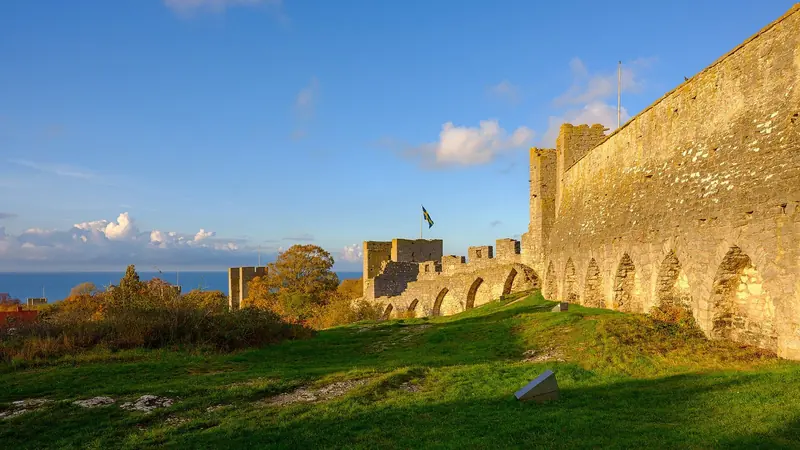
| Visby is listed as a UNESCO World Heritage Site, inscribed 1995 as the Hanseatic Town of Visby | |
| Visby ring wall | about 3.4 km by most sources; its construction century is disputed (12th or 13th) |
| Season | mid-June to August is busy, especially at weekends; September is usually still warm; summer averages around 18 degrees C |
| Medieval Week runs in week 32, early August (3 to 10 August in 2025); Almedalen Week falls in late June or early July | |
| Faro (Lauterhorn) | about 25 berths for yachts up to 14 m, 3 m depth, basic facilities (YACHT) |
| Slite guest harbour | 10 spots on buoys at 1.5 to 3 m; 178 SEK up to 10 m to 1,321 SEK at 30 m and over (Gasthamnsguiden) |
| Non-EU yachts or crew | Leisure Boat Entry/Exit Form to Swedish Border Control in advance; Russian-flagged yachts are not permitted in any Swedish port (Noonsite) |
Getting a Yacht to Gotland, and Getting Guests to It
YACHT magazine, writing in March 2025, puts the island at roughly 176 km long and 52 km wide with about 800 km of coastline, and the Gotland Runt race route from Sandhamn near Stockholm at 350 nautical miles. That race is the nearest thing the island has to a shipping forecast for ambition: it is a long way round, and the island's own shape means wind and swell wrap around it. The Swedish Maritime Administration publishes route and passage-plan files for Visby, Slite, Faarosund, Klintehamn and the smaller ports, which is the first thing a captain of a larger yacht should open.
Guests have it easier than the boat. Ferries run to Visby from Nynashamn, close to Stockholm, and from Oskarshamn, with the crossing taking roughly three hours and the Oskarshamn run offering two to three trips a day in summer. A crew can change guests in Visby without the boat ever leaving the island. We could not find a current published timetable or fare for the yacht-relevant sailings, so check Destination Gotland directly before routing anyone through it.
Clearance and Paperwork for a Non-EU Yacht
Noonsite's Sweden pages say Border Control then books a day and a time at the port of entry so passports can be stamped. For customs, a boat arriving from a non-EU country such as Norway needs no customs notification while its owner stays in Sweden, for up to 18 months, and it must be sailed back out when the owner leaves; leave it behind and you must notify Swedish Customs and file an import notification. Russian-flagged or Russian-registered yachts are not permitted to enter any Swedish port.
Two things are moving. Noonsite notes the EU Entry/Exit System means non-EU crew now have biometrics recorded on entry and exit, though sources disagree on whether the first stage began in October 2025 or the full system in April 2026. And Noonsite's own Swedish customs page was last updated in March 2022. Treat both as things to confirm with the Swedish Police and Tullverket before the passage, not as settled.

Gotland gives a Baltic cruise the one thing the Stockholm archipelago cannot, an open-water crossing with a walled medieval town at the end of it, and charges for it with a coast that has almost nowhere to hide.

Visby: The Harbour Everything Else Is Measured Against
The listed tiers are 498 SEK for 10 to 15 metres, 762 SEK for 15 to 20 metres and 1,220 SEK for 20 to 30 metres. Booking is online through Dockspot, and check-in and payment must be done within 30 minutes of mooring or the harbour charges 3,000 SEK. Mooring is to a buoy or broadside, and the access card for toilets, showers and laundry is included. There is marine diesel and petrol, a boat lift, a mast crane, engine service, LPG, groceries, an ATM and a restaurant on the quay. The harbour master can be reached on +46 73 600 63 00.
YACHT describes the harbour as well protected except in strong south-westerly winds, with a harbour master's dinghy that meets arriving boats and guides them to a free place, and constant choppy water in the outer harbour from commercial and ferry traffic. Lars Reisberg of No Frills Sailing, who delivered a Beneteau Oceanis 30.1 there in July 2019 and paid 24 euros for a night under 10 metres, scored it 7 out of 10: friendly, helpful staff and everything working, but not the most beautiful or upscale marina he had used. The old town is a short walk from the pontoons.
Almedalen Week, Medieval Week and When Not to Arrive
YACHT says mid-June to August is busy and that September is usually still warm with restaurants easier to get into without a reservation. Medieval Week ran 3 to 10 August in 2025, and one travel source puts attendance as high as 40,000, though we could not verify that against an official figure. We found no reporting on whether the guest harbour turns boats away during either week, so the honest advice is to book through Dockspot well ahead and phone the harbour master rather than arrive on the day.
The town itself is a UNESCO World Heritage Site, inscribed in 1995 as the Hanseatic Town of Visby, with a medieval ring wall most sources give as about 3.4 kilometres. Sources disagree on whether the wall dates from the 12th or the 13th century, so we leave the date out. If the town is full and the harbour is booked, the rest of the island is the answer, and its quieter harbours reward a crew that planned for them.
The Rest of the Island: Faro, Lickershamn, Blase and the East Coast
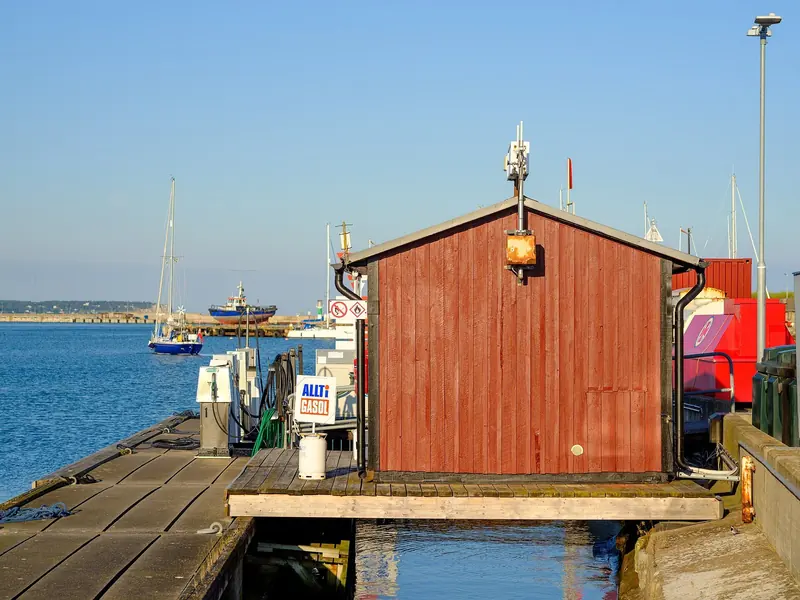
According to YACHT, Faro's small fishing harbour at Lauterhorn has about 25 berths for sailing yachts up to 14 metres at 3 metres depth, with basic facilities, a small restaurant and cafe and a bus stop within walking distance. Lickershamn has about 20 berths on its northern jetty at 2 to 3 metres, protected except in north-westerly winds, with a sauna and a restaurant, though sand drifts there and depths can change. Blase has moorings on its old pier, often in a packet, unsettled in westerly and northerly winds, with limited water and electricity. Sysne holds about eight yachts alongside in around 4 metres, with electricity, water and a dry toilet.
The east coast is a different proposition. Lasse Peterson of the Svenska Kryssarklubben's cruising department told YACHT the harbours and entrances there are very shallow, and winter storms shift the sandbanks, so small east-side fishing piers suit yachts drawing up to 2 metres. On Slite, the Gasthamnsguiden listing shows 10 spots on buoys at 1.5 to 3 metres, with prices from 178 SEK up to 1,321 SEK for 30 metres and over. We found no published guest-harbour figures for Faarosund or Ljugarn. Klintehamn and Slite are described by YACHT as industrial in character but with every service a crew needs. Do not approach any small harbour in strong onshore winds.
What a Stay Costs, and What the Season Allows
A week at Visby on the published tiers is easy to price: a 15 to 20 metre yacht pays 762 SEK a night and a 30 metre yacht 3,048 SEK, so seven nights is about 5,300 SEK and 21,300 SEK before fuel, food or the ferry. The smaller harbours are cheaper and less serviced. What no source we found publishes is a current fuel price at Visby, any harbour fee schedule for Faro, Lickershamn or Blase or a seasonal berth rate.
For a boat coming from the Stockholm archipelago, Gotland works best as an extension of a Baltic summer rather than a destination on its own: sail out, spend a week or two, and plan the return around the weather rather than the calendar. For the archipelago itself, see our Stockholm Archipelago entry. Cruising guides to carry are the Svenska Kryssarklubben Gotland coast guide, Delius Klasing's Cruising Guide Sweden 2 and Hamnguiden 7 for Landsort to Skanor.
Stora Karlso, Lauters and the Small Details That Catch Crews Out
YACHT describes a concrete pier on the north side of Stora Karlso with room for about three yachts in 1.5 to 2.5 metres, where a reef gives some protection but the approach should be made only in calm weather; water, a toilet and showers are at the youth hostel, and the ferry to the island leaves from Klintehamn. Lauters guest harbour is named by the same article as the best place for close access to the limestone coast, about one kilometre from Digerhuvud, though it gives no further detail and we found no berth count or price for it. Bring cash or a booking app: Blase takes bookings and payment through psidan.se, and Visby through Dockspot.
In Visby the details are small and useful. Lars Reisberg found that Scandinavian sailors usually moor bow-first to buoys, that he needed only one buoy line when he lay alongside the concrete jetty instead, and that the harbour lent a plug adapter free and a courtesy car on condition the tank was refilled; he also noted there was no harbour wifi in 2019, so check that has changed. Three high-speed ferry docks share the harbour, which explains the wash in the outer basin. A fish restaurant sits at the pontoon, and the harbour publishes a live webcam, so a crew can look at the quay before committing to the approach.
Ashore, access and booking
| Getting there | By yacht, about 50 nautical miles of open water from the mainland, typically from the Stockholm archipelago or from Oskarshamn. Guests can use the ferries to Visby from Nynashamn or Oskarshamn, a crossing of roughly three hours. The Swedish Maritime Administration publishes route files for Visby, Slite, Faarosund and Klintehamn. |
|---|---|
| Clearance | Yachts from outside Schengen, or with non-EU nationals aboard, file a Leisure Boat Entry/Exit Form with Swedish Border Control in advance and are given a time at the port of entry. Non-EU boats can stay up to 18 months without customs notification while the owner remains in Sweden. Russian-flagged yachts are refused. Confirm with Swedish Police and Tullverket. |
| Berthing and cost | Visby 275 SEK a night up to 10 m, 762 SEK for 15-20 m, 1,220 SEK for 20-30 m, 3,048 SEK for 30 m and over, booked via Dockspot. Slite buoys 178 to 1,321 SEK by length. Prices come from the Gasthamnsguiden listing and are undated, so confirm with the harbour master. |
| Services in Visby | Marine diesel and petrol, mast crane, boat lift, engine service, LPG, groceries, ATM, laundry, showers and a restaurant on the quay. A chip card for toilets, showers and laundry is included in the fee. |
| When to go | Mid-June to August is busy; September is often still warm and calmer for restaurant tables. Plan around Almedalen Week in late June or early July and Medieval Week in early August, when Visby is full. |
| What to check before approaching | Small harbours should not be entered in strong onshore winds. East-coast entrances are very shallow and sandbanks shift in winter storms; piers there suit yachts drawing up to 2 m. Visby's outer harbour is choppy from ferry traffic. |
| What is not published | We found no current fuel price at Visby, no harbour fee schedule for Faro, Lickershamn or Blase, no guest-harbour figures for Faarosund or Ljugarn, and no report on whether the Visby guest harbour turns boats away during Almedalen Week or Medieval Week. |
What owners and crew report
Visby works well but is not a showpiece
Delivering a Beneteau Oceanis 30.1 in July 2019, the reviewer paid 24 euros for a night under 10 m, found friendly staff and clean, working facilities, and scored it 7 out of 10, noting it was neither the most beautiful nor the most upscale marina he had used.
Lars Reisberg, No Frills SailingThe east coast is very shallow
Harbours and entrances on the east coast are very shallow, and some harbours are not beautiful but offer every service a sailor needs; Sysne, he said, is his favourite for its fishmongers.
Lasse Peterson, Svenska Kryssarklubben, quoted in YACHTA steep wave can build depending on the wind
Depending on the wind a steep wave can build up, and near the coast bottom seas can occur where it is shallow; the small harbours should not be entered in strong onshore winds.
Nico Krauss, YACHTVisby is a Hanseatic town that was never ordinary
Visby was never ordinary, neither today nor in the heyday of the Hanseatic League in the 14th century.
Edda Lindstrom, quoted in YACHT
What is good, and what to watch
Strong points
- A genuine offshore destination in the BalticGotland is a 50-nautical-mile passage with a UNESCO walled town at the end, which gives a Baltic cruise a real landfall.
- Visby is easy to useA 250-place guest harbour with published prices by length, online booking, fuel, a mast crane and a boat lift and a harbour master's dinghy that meets arriving boats.
- Small north-coast harbours with characterFaro, Lickershamn, Blase and Sysne each offer a quiet berth, a restaurant or sauna or a fishmonger, at a fraction of Visby's scale.
- A usable shoulder seasonYACHT says September is usually still warm with restaurants easier to book, which lets a crew avoid the Visby crush.
What to watch
- Almost no natural shelterYACHT and Lasse Peterson both say well-protected anchor bays are few and that wind and waves wrap around the island, which pushes every crew into harbours.
- Shallow east coastEntrances are very shallow and storms shift sandbanks, so a deep-draught yacht is effectively limited to Visby and the north-west.
- A short season and a crowded peakMid-June to August is busy and Visby fills around Almedalen Week and Medieval Week, while we found no published figures for harbour capacity in those weeks.
- Undated pricingThe only published nightly rates we found are on a guide listing with no date, and several harbours have no published price at all.
Who it is for: An owner or captain already cruising the Baltic or the Stockholm archipelago who wants an offshore leg with a real destination at the end of it, and who is comfortable booking small harbours ahead and reading the wind before every approach.