Indonesia & Raja Ampat
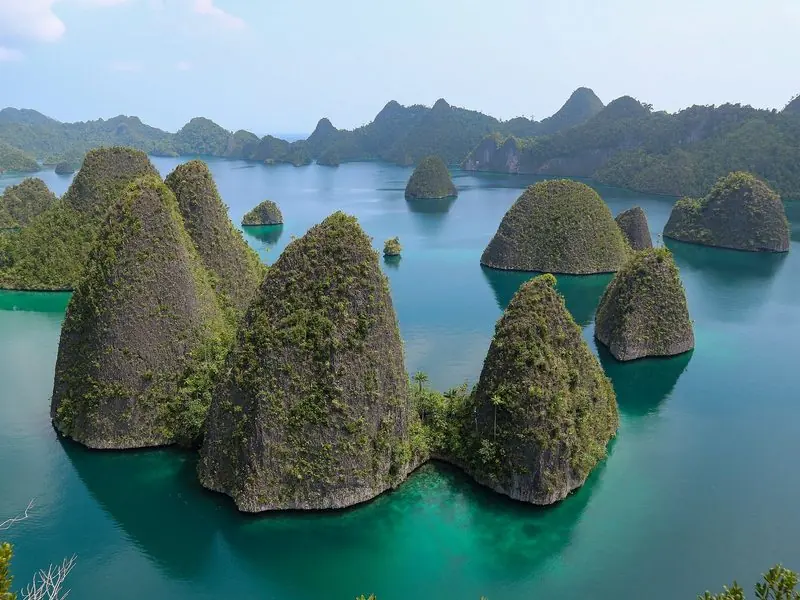
| Region | the Indonesian archipelago, from Bali east through Komodo and the Banda Sea to Raja Ampat in West Papua |
|---|---|
| Scale | some 17,000 islands spread over more than 5,000 km |
| Seasons | Komodo generally April to October, Raja Ampat generally October to April |
| Komodo National Park | 1,733 square kilometres of which 603 is land, a UNESCO World Heritage site since 1991 |
| Komodo dragons | around 1,700 on Komodo island and 1,300 on Rinca, and extinct on Padar |
| Raja Ampat | over 1,500 islands, cays and shoals around Misool, Salawati, Batanta and Waigeo, with 8,034 square kilometres of land |
| Raja Ampat biodiversity | more than 600 hard coral species, about 75 per cent of the world's known total, plus 1,508 fish species |
| Raja Ampat status | marine recreation park designated in 2009, UNESCO biosphere reserve in 2025 |
| Distance | Labuan Bajo to Sorong is roughly 800 nautical miles direct |
| Clearance | an online Vessel Declaration System, with ports of entry including Benoa on Bali, Kupang, Ambon, Sorong and Biak |
| Cruising permit | yachts are required to list every intended port in advance, and many ports require a registered agent |
| Airports | Komodo International at Labuan Bajo, 2,750 metre runway, and Domine Eduard Osok at Sorong, 2,500 metres |
| Komodo fees | IDR 150,000 on a weekday and IDR 250,000 at the weekend for international visitors, plus IDR 50,000 for snorkelling and IDR 100,000 for diving, and roughly IDR 150,000 to 200,000 per group for a ranger |
| Raja Ampat permit | IDR 1,000,000 per person for international visitors, about USD 67, valid twelve months and bought by bank transfer through the SIPARI portal |
| Charter | a foreign-flagged yacht may not charter in Indonesia, under the cabotage principle in Law 17 of 2008 on Shipping as amended by Law 66 of 2024 |
| Cruising | the online vessel declaration and e-clearance system that replaced the CAIT covers recreational use only, with no commercial carriage |
| Comparison | Turkey sells a foreign flag a charter licence at EUR 74,423.36 for 39 to 59 m since 19 June 2026 and St Vincent sells one over a customs counter, while Indonesia offers no equivalent |
| Discharge | Indonesian waters are not a MARPOL Special Area on the IMO list and reception facilities east of Benoa are effectively absent, so the standard is the operator's own |
| Berthing | there is no marina berthing for a large yacht east of Bali and no rate card to quote, checked 28 July 2026 |
The shape of the ground
Indonesia is not a cruising ground in the sense the Mediterranean is. It is a country the width of the Atlantic, and a yacht here works two or three defined areas out of it. Bali is the western gateway and the place with something like infrastructure. Komodo, in the Lesser Sundas, is about 250 nautical miles east of it. Raja Ampat, off the western tip of New Guinea, is roughly 800 miles beyond that in a straight line and more by any route a yacht actually takes.
Between them lie the Banda Sea and the spice islands, deep water, active volcanoes and villages that see a handful of yachts a year. That middle passage is the part owners either love or skip entirely. The practical decision is whether the boat is committing a season to Indonesia or simply passing through on a longer Asian programme.
Komodo
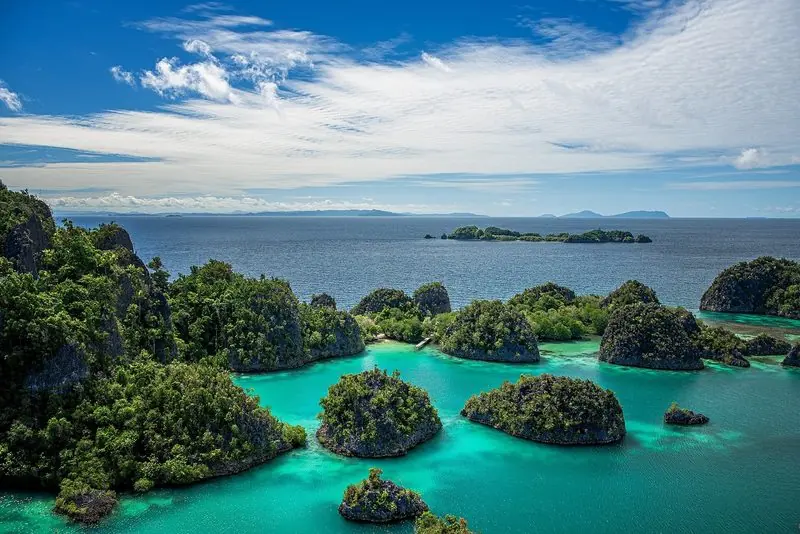
Komodo National Park covers 1,733 square kilometres, of which only 603 is land, across the three main islands of Komodo, Padar and Rinca and 26 smaller ones. It has been a UNESCO World Heritage site since 1991. Around 1,700 dragons live on Komodo island and 1,300 on Rinca, and the ranger-led walks are the guest excursion everyone books. Padar's ridge walk, with three bays below it, is the photograph.
The diving is the real reason to bring a boat. Manta Alley, Crystal Rock, Castle Rock, Batu Bolong, the Cauldron and Tatawa Besar are the named sites, and most of them are current-driven, which is what makes them so rich and what makes them serious. Water on the southern side of the park is markedly colder than the north. Labuan Bajo on Flores is the base town and it has grown fast.
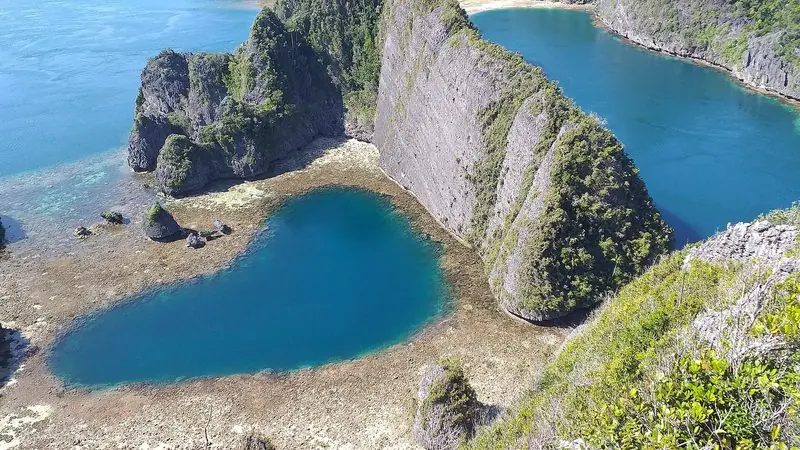
Komodo runs April to October and Raja Ampat October to April, which is why a boat that comes here stays.
Raja Ampat
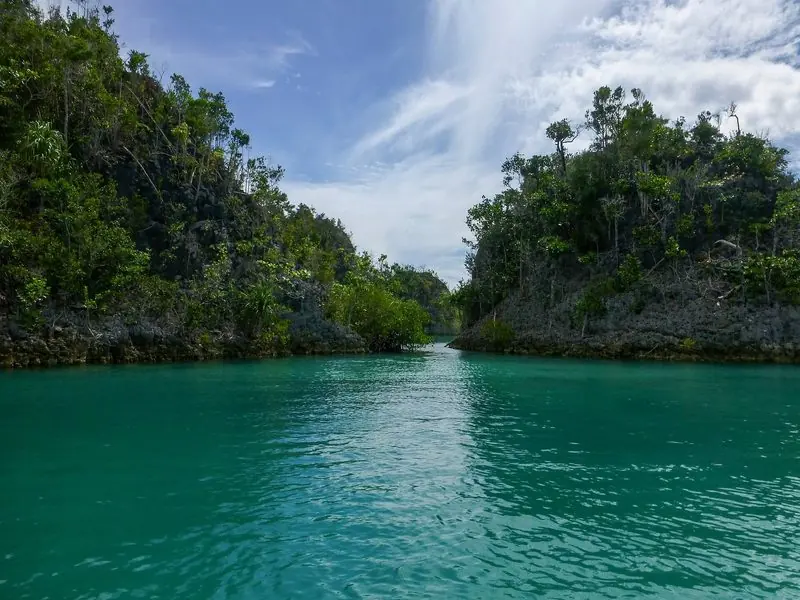
Raja Ampat is over 1,500 islands, cays and shoals around the four big ones, Misool, Salawati, Batanta and Waigeo, with 8,034 square kilometres of land in total. It holds more than 600 species of hard coral, about 75 per cent of every species known, along with 1,508 species of fish. It became a marine recreation park in 2009 and a UNESCO biosphere reserve in 2025. The reefs are not merely good. They are the global benchmark against which other reefs are measured.
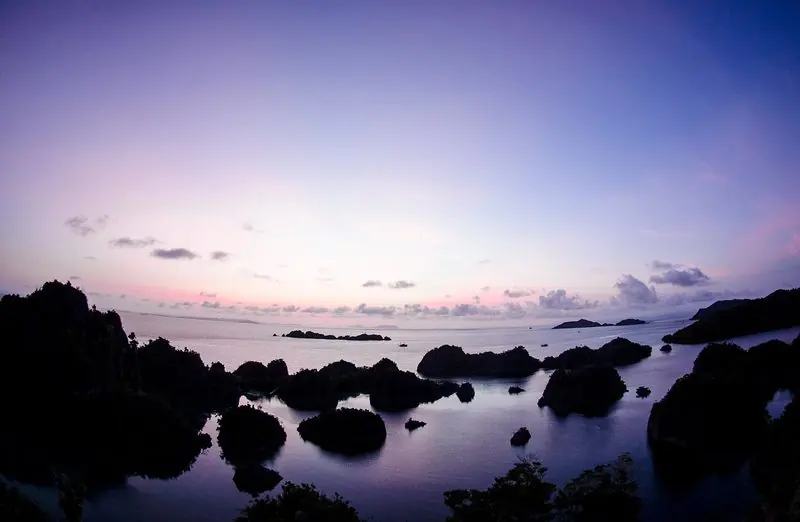
The four working areas are the waters around northern Salawati, Batanta and south-west Waigeo, Mayalibit Bay in central Waigeo, the south-east of Misool, and the Sembilan Islands. Wayag, in the far north-west, is the karst lagoon of the postcards and a long run from anywhere. The Dampier Strait between Waigeo and Batanta runs hard, and everything there is a drift dive planned on the tide. Guests who dive will not want to leave.
A fortnight, and a season
A fortnight in Komodo out of Labuan Bajo is the standard programme and it works well. Guests fly into Komodo International, the boat covers the park in a week, and the second week runs east into the Flores Sea or south around Sumba. Everything is within a few hours of the last anchorage and the airport is on the doorstep.
A fortnight in Raja Ampat out of Sorong is the other half. What does not work is trying to do both in one guest trip, because the 800 miles between them is a delivery passage of several days through open water. Owners who want both bring the boat east in the second half of the year, work Komodo through the dry season, then run to Raja Ampat for the northern winter. That is a six-month commitment and it is how the resident fleet operates.
Where a 50 metre boat fits
There is effectively no marina berthing for a large yacht anywhere in this cruising ground. Benoa on Bali is the port of entry and the closest thing to a base, and everything east of it is anchoring. That is not the problem it sounds, because the anchorages are deep, sheltered and empty, but it means the boat is entirely self-supporting from the moment she leaves Bali.
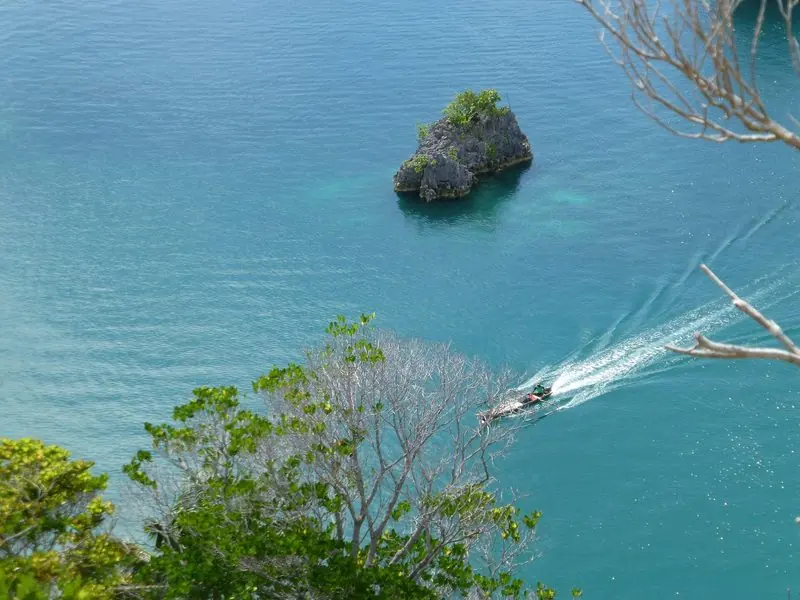
The real constraint is charting. Much of eastern Indonesia is surveyed to nineteenth-century standards or not at all, reefs rise steeply from deep water, and satellite imagery is used alongside the chart as a matter of routine. A 50 metre yacht moves in good light with a spotter and a tender ahead in the tighter places. Depths are frequently too great to anchor close in, so long scope and careful holding checks are normal.
Weather and the two seasons
The archipelago straddles the equator and runs on monsoons instead of a summer and a winter. Komodo is generally reckoned to be at its best from April to October, in the dry south-east monsoon, with settled conditions and clear water. Raja Ampat runs the other way, and October to April is the calmer window there. That opposition is the single most useful fact about planning a year in Indonesian waters.
Rain, when it comes, comes hard and briefly. Squalls build fast and visibility drops with them. Sea temperature is warm everywhere except the southern side of Komodo, where upwelling brings it down sharply and guests will want a wetsuit they were not expecting. Indonesia sits outside the main tropical cyclone belts near the equator, though the southern islands are close enough to the Australian system to warrant watching.
Getting guests aboard
Komodo International at Labuan Bajo has a 2,750 metre runway, handled over a million passengers in 2024, and gained international status in 2024 with services to Kuala Lumpur. Domine Eduard Osok at Sorong has 2,500 metres and connects through Jakarta and Makassar, with the small strip at Waisai onward into Raja Ampat. Both are reachable by business jet.
The realistic route for a European guest is a long-haul flight to Singapore, Jakarta or Bali and a domestic connection of two to four hours after it. Add the drive and the tender run and a guest is looking at the better part of two days from London. Baggage handling on the domestic legs is a genuine risk, and crews here routinely keep dive gear aboard instead of relying on guests to carry it.
Ashore, and what guests actually do
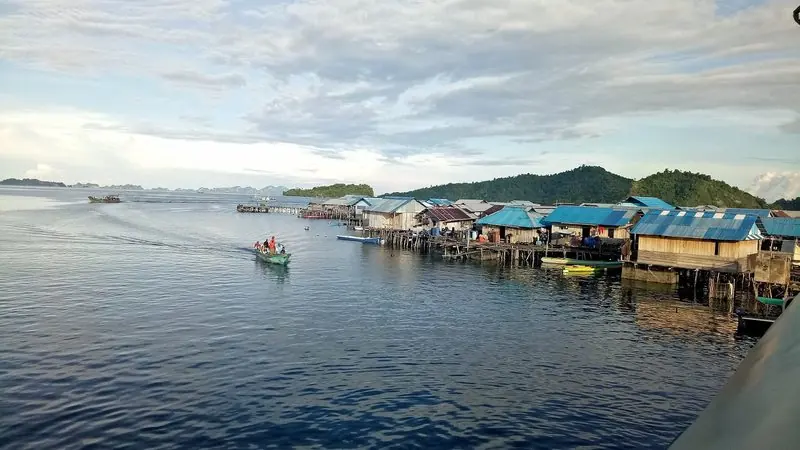
This is a water destination and an owner should set expectations accordingly. Ashore in Komodo it is the ranger walks for the dragons, the Padar ridge and the pink sand beaches. In Raja Ampat it is village visits, the birds of paradise at dawn on Waigeo and the viewpoint above the Piaynemo karst. Bali at the start or end supplies temples, Ubud, restaurants and everything else a guest might miss.
Food outside Bali is local and simple, so a boat provisions properly in Benoa or flies it in. Nightlife east of Bali does not exist. What fills the days is diving, snorkelling over reefs with more coral species than the entire Caribbean, kayaking through karst and the fact that most anchorages have nothing in them but a fishing boat.
Papers, fuel, support and the honest downside
Clearance runs through an online vessel declaration system that has been changed more than once, with ports of entry including Benoa, Kupang, Ambon, Sorong and Biak. Yachts are expected to declare every intended port in advance, which sits awkwardly with the way anyone actually cruises an archipelago, and many ports now require a registered local agent. National park and marine park entry permits are charged separately and are checked. The charter position for a foreign-flagged yacht is the first thing to settle and needs current local advice, not an assumption carried over from Europe.
Fuel is available at Benoa and at the larger ports, and availability is fine and quality is the concern, so polishing and filtration matter. There is no refit yard in Indonesia that will take a 50 metre yacht, and Singapore, Phuket or Australia are the fallback, each of them days away. Medical evacuation from Raja Ampat is a serious planning exercise. Set against all of that, the reefs at Misool are the richest a private yacht can anchor over anywhere on earth.
What the permits cost, and what a berth does not
The park fees are the running cost here and they are published. Komodo National Park charges international visitors IDR 150,000 on a weekday and IDR 250,000 at the weekend, with IDR 50,000 more for snorkelling and IDR 100,000 for diving per person, and a ranger fee of roughly IDR 150,000 to 200,000 per group, and the park has been moving during 2026 to a single bundled ticket per route. Raja Ampat is the bigger number and the better value: the marine park entry permit is IDR 1,000,000 per person for international visitors, about USD 67, valid for twelve months from purchase and bought by bank transfer when registering on the SIPARI portal. For twelve guests that is IDR 12,000,000 for a year of access to the richest reefs on the planet, and it is checked.
Berthing does not exist east of Bali in any form a rate card could describe, so the berthing line in an Indonesian season is close to zero and the cost sits in fuel, agency, park permits and air freight. That is the inverse of the Mediterranean arithmetic. Marina di Porto Cervo's published 2026 tariff charges EUR 3,698 a day in the band to 40 m from 1 to 20 August, roughly EUR 102,000 for the month, and EUR 195,819 for a 1 May to 31 October contract, which is more than an entire Indonesian programme will spend on anything except fuel. What an owner is buying instead is total self-sufficiency: no yard in the country will take a 50 m yacht, Singapore, Phuket and Australia are each days away, and a medical evacuation from Raja Ampat is a planning exercise rather than a phone call.
Charter: the cabotage answer, stated plainly
A foreign-flagged yacht may not charter in Indonesia. The cabotage principle is codified in Law 17 of 2008 on Shipping, most recently amended by Law 66 of 2024, and it reserves the carriage of goods and the transport of passengers within domestic waters to Indonesian-flagged vessels crewed by Indonesian nationals. There is no permit, licence or fee that buys a foreign flag out of it for passenger carriage. What a foreign yacht may do is cruise, under the online vessel declaration and e-clearance system that replaced the old CAIT, and that clearance covers recreational use only with no commercial carriage of any kind. The narrow exemptions in the 2024 amendment are for offshore work where no Indonesian-flagged vessel is available, and they do not reach yacht charter.
That single rule explains the shape of the fleet an owner sees here. The commercial boats working Komodo and Raja Ampat are Indonesian-flagged, which is why the phinisi is the local charter platform rather than a European motor yacht, and it is why a visiting owner cannot defray a season by putting the boat out between guest blocks. An owner who wants the yacht to earn in Indonesian waters is looking at Indonesian registration and an Indonesian operating structure, not at paperwork. Set against Turkey, which since 19 June 2026 sells a charter licence to a foreign flag for EUR 74,423.36, and the Grenadines, which sell one over a customs counter, Indonesia simply does not offer the transaction.
Discharge, and why it matters more here than anywhere
Indonesian waters are not a MARPOL Special Area, so the general convention rules are the legal floor and they are a long way below what these reefs need. There is no MARPOL Special Area covering the archipelago on the IMO's own list, and there are no reception facilities of any consequence east of Benoa. The binding rules a yacht will actually meet are the park ones: Komodo and Raja Ampat both regulate anchoring and activity inside their boundaries, permits are checked, and both are UNESCO-listed, Komodo as a World Heritage site since 1991 and Raja Ampat as a biosphere reserve since 2025.
The practical position is therefore a matter of the operator's own standard rather than of enforcement, which is exactly why it should be written into the boat's orders before she leaves Bali. A yacht working Misool for a week over reefs holding about 75 per cent of the world's known hard coral species has no business discharging anything, and the tankage to avoid it is a specification question settled at build or refit. Anchoring is the same discipline. Depths are frequently too great to anchor close in, charts are nineteenth-century in places, and a chain laid across a coral head does damage that no permit fee compensates.
Ashore, access and booking
| Getting guests aboard | Komodo International at Labuan Bajo has a 2,750 m runway and gained international status in 2024 with services to Kuala Lumpur. Domine Eduard Osok at Sorong has 2,500 m and connects through Jakarta and Makassar, with the small strip at Waisai onward into Raja Ampat. The realistic route for a European guest is a long-haul flight to Singapore, Jakarta or Bali and a domestic connection of two to four hours, the better part of two days from London. Baggage handling on the domestic legs is a real risk, which is why crews here routinely keep dive gear aboard rather than trust it to a guest's suitcase. |
|---|---|
| How the cruising clearance works | Clearance runs through an online Vessel Declaration System that replaced the old CAIT and has been changed more than once, with ports of entry including Benoa, Kupang, Ambon, Sorong and Biak. Yachts are expected to declare every intended port in advance, which sits awkwardly with how anyone actually cruises an archipelago, and many ports now require a registered local agent. The clearance covers recreational use only, with no commercial carriage of any kind. |
| Local pilots are now a rule, not a courtesy | Government rules are being implemented to require boats in Raja Ampat to engage local pilots and captains, both to provide employment and to bolster reef protection. The reason is on the record: since 2017, three vessels - the 120-passenger cruise ship Caledonian Sky and two yachts - have crashed into the corals, often at low tide, causing irreparable damage to the reef structure. |
| What the permits actually cost | Komodo National Park charges international visitors IDR 150,000 on a weekday and IDR 250,000 at the weekend, plus IDR 50,000 for snorkelling and IDR 100,000 for diving per person, and a ranger fee of roughly IDR 150,000 to 200,000 per group. Raja Ampat's marine park permit is IDR 1,000,000 per person for international visitors, about USD 67, valid twelve months from purchase and bought by bank transfer through the SIPARI portal - for twelve guests that is IDR 12,000,000 for a year of access. |
| What a berth does not cost, because there is none | There is no marina berthing for a large yacht anywhere east of Bali and no rate card to quote, checked 28 July 2026. The cost that would sit on a Mediterranean berthing line instead sits in fuel, agency fees, park permits and air freight - the inverse of the Mediterranean arithmetic, where Marina di Porto Cervo's 2026 tariff alone runs about EUR 102,000 for a August month. |
| Charter: the cabotage answer | A foreign-flagged yacht may not charter in Indonesia at any price. The cabotage principle in Law 17 of 2008 on Shipping, as amended by Law 66 of 2024, reserves domestic passenger carriage to Indonesian-flagged vessels crewed by Indonesian nationals, and there is no permit or fee that buys a foreign flag out of it. That is unlike Turkey, which has sold a foreign-flag charter licence for EUR 74,423.36 since 19 June 2026, or St Vincent, which sells one over a customs counter. |
| Fuel, refit and medical evacuation | Fuel is available at Benoa and the larger ports; availability is fine and quality is the concern, so onboard polishing and filtration matter. No refit yard in Indonesia will take a 50 m yacht - Singapore, Phuket or Australia are the fallback, each days away. Medical evacuation from Raja Ampat is a serious planning exercise, not a phone call. |
What owners and crew report
The reserve's own recovery numbers, not a marketing claim
Fish biomass inside the Misool no-take zones rose 250 per cent over six years, a figure drawn from a Mark Allen study at Murdoch University and cited by the foundation that runs the reserve. The Misool Marine Reserve, founded by Andrew and Marit Miners in 2005, now spans about 1,220 square kilometres of no-take zones and has been credited elsewhere with lifting shark populations sharply within its boundaries.
Marit Miners, co-founder, Misool Foundation (Ocean Panel perspective piece)Three groundings on coral since 2017 are why local pilots are now compulsory
The 120-passenger cruise ship Caledonian Sky and two yachts have crashed into the reefs since 2017, often at low tide, causing irreparable damage to the coral structure. That record is the reason Indonesia is moving to require boats in Raja Ampat to engage local pilots and captains.
Boat International, reporting from the phinisi Prana by AtzaroShark numbers are the crew's own yardstick for a healthy reef, and this one has plenty
Mick Taylor, cruise director and dive instructor aboard the 55 m phinisi Prana by Atzaro, has said shark numbers are one of the best indicators of a healthy reef system in these waters, and that Raja Ampat has them in quantity.
Mick Taylor, cruise director and dive instructor, Prana by Atzaro (Boat International)The crew who work here still find the place disorienting in a good way
Captain Saiful Hadi, who navigates Prana by Atzaro through Raja Ampat's bays, has said nothing prepares a visitor for a place like this, and that he sometimes cannot believe it exists himself.
Captain Saiful Hadi, master, Prana by Atzaro (Boat International)
What is good, and what to watch
Strong points
- The reef recovery here is measured, not just claimedMisool's no-take marine reserve, run by the Misool Foundation, saw fish biomass increase by 250 per cent over six years, a figure the foundation's own co-founder cites from a Mark Allen, Murdoch University study. Onboard, the crew of the phinisi Prana by Atzaro rate shark numbers as one of the best live indicators of a healthy reef, and Raja Ampat has plenty.
- Two seasons that run in opposition keep a resident boat in season year-roundKomodo's dry season runs April to October and Raja Ampat's calm window runs October to April, so an owner committing six months to Indonesia never has to sit out either ground's bad weather.
- The published park fees are cheap for what they buyRaja Ampat's marine park permit runs about USD 67 a guest for twelve months of access to reefs holding roughly 75 per cent of the world's known hard coral species - a fraction of a single Mediterranean berth night.
- No berth invoice, but real self-sufficiency insteadThere is no marina berthing east of Bali at any price, so the cost that would sit on a Mediterranean tariff card moves entirely into fuel, agency and permits - a different kind of ownership, not a cheaper version of the same one.
- The place still produces the reaction owners come here forCaptain Saiful Hadi, who has run guests through these waters, put it simply: sometimes he cannot believe Raja Ampat exists himself.
What to watch
- The charts cannot be fully trustedMuch of eastern Indonesia is surveyed to nineteenth-century standards or not at all. Since 2017, three vessels - the 120-passenger cruise ship Caledonian Sky and two yachts - have crashed into the coral, often at low tide, causing irreparable damage to the reef structure.
- There is no refit capability in the country for a boat this sizeSingapore, Phuket or Australia are the fallback for anything serious, each of them days away by sea, and medical evacuation from Raja Ampat is a genuine planning exercise rather than a call to an ambulance.
- Cabotage closes the one thing a European owner might expectA foreign-flagged yacht cannot charter in Indonesia at any price under Law 17 of 2008 as amended in 2024. There is no licence to buy here, unlike Turkey's EUR 74,423.36 foreign-flag charter licence or the Grenadines' over-the-counter version.
- The new local-pilot rule could price some vessels out altogetherPrana by Atzaro's own cruise director and dive instructor, discussing the proposal that followed the coral groundings, said it could help price certain vessels out of Raja Ampat, though he also called streamlining boat traffic crucial to saving the destination from overtourism.
- Nightlife and food ashore do not exist east of BaliWhat fills the days is diving and village visits; a boat provisions properly in Benoa or flies supplies in, and an owner should set guest expectations accordingly before the yacht leaves Bali.
Who it is for: An owner whose guests dive, with a self-sufficient boat, a good agent and the patience for permits and passages measured in days.