New Caledonia
| Region | South Pacific, French overseas territory (sui generis collectivity), outside the Schengen area |
|---|---|
| Scale | barrier reef about 1,500 km long, lagoon about 24,000 sq km, average lagoon depth 25 m |
| UNESCO status | Lagoons of New Caledonia inscribed 2008, six separate marine clusters |
| Core cruising season | late April to mid-November (southeast trades, calm lagoon) |
| Cyclone season | mid-November to mid or late April |
| Humpback whale season | mid-July to mid-September, 100 m minimum approach distance, max 4 boats per pod |
| Port of entry | Noumea only, via Port Moselle or Port du Sud |
| Port Moselle | berths to 35 m LOA, 8 m depth, fuel dock, 220V power |
| Port du Sud | alongside berthing to about 40 m LOA, up to 5 m draft |
| Pilotage | mandatory for yachts over 60 m entering New Caledonian coastal waters |
| Customs | temporary admission regime, approximately 6-month cruising permit, duty and VAT suspended |
| Extended stay option | customs private bonded warehouse storage up to 12 months, boat immobilised |
| Health insurance with repatriation cover required to clear in since January 2019 | |
| Pet quarantine | 10 days ashore minimum, entry barred if a rabies-affected country visited within 6 months |
| Isle of Pines | about 35 nm from Prony Bay, roughly 40-45 nm from the Noumea area, population about 2,000 across 8 tribes |
| Haulout capacity | Nouville Plaisance travel lift to 50 tonnes, 6.2 m beam |
| Natural Park of the Coral Sea | about 1.29 million sq km EEZ marine park, established 2014, highly protected zone expanded from 2.4 percent to about 10 percent of the EEZ in October 2023 |
| Economy | nickel accounts for roughly 85-94 percent of merchandise exports |
| 2024 unrest | 13 killed in May 2024 rioting, damage estimated around EUR 2.2 billion (about 10 percent of GDP) |
| Tourism impact | international arrivals fell from about 125,000 (2023) to about 58,000 (2025) |
A reef built at a different scale
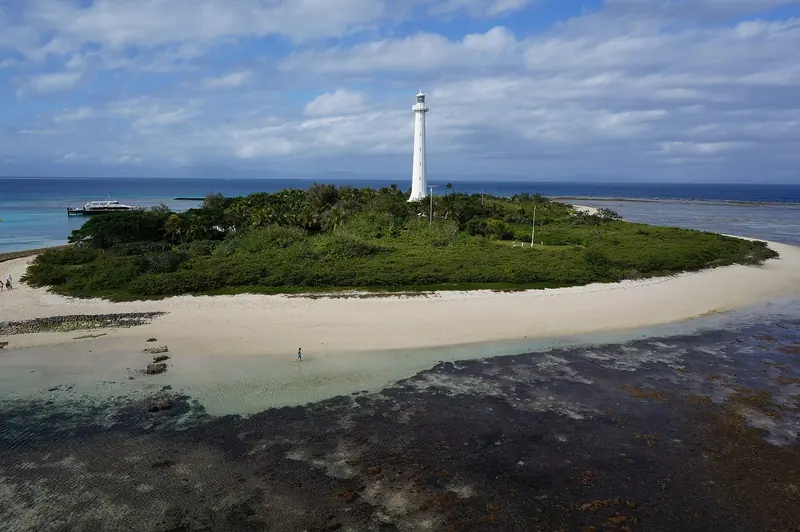
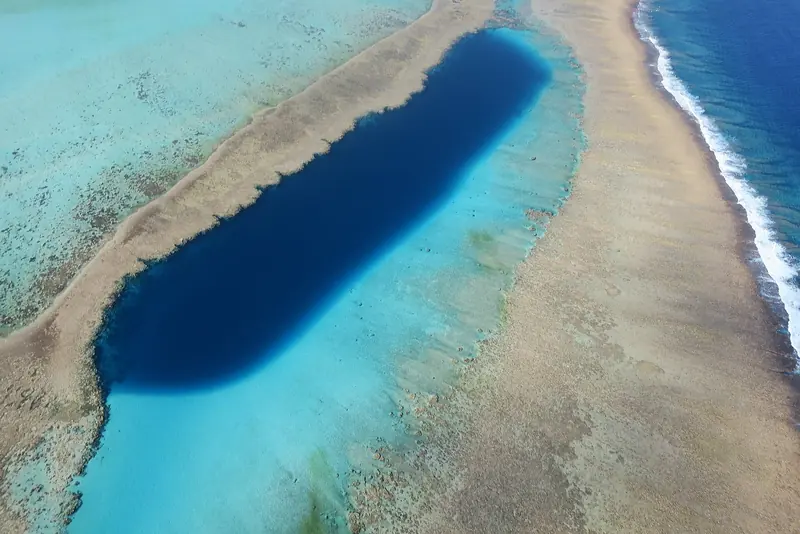
The New Caledonian barrier reef runs roughly 1,500 kilometres, making it the longest continuous barrier reef on the planet and the third largest reef system after the Great Barrier Reef and the Mesoamerican Reef. It encloses a lagoon of about 24,000 square kilometres with an average depth of 25 metres, calm almost year round because the reef kills the ocean swell before it ever reaches an anchorage. UNESCO inscribed the lagoons as a World Heritage site in 2008 under the title Lagoons of New Caledonia: Reef Diversity and Associated Ecosystems, a serial listing covering six separate marine clusters rather than one continuous protected strip.
Inside that lagoon the French territorial government has laid hundreds of free mooring buoys specifically to stop yachts dropping anchor on coral, a genuinely useful piece of infrastructure most Pacific cruising grounds do not bother with. The buoys are rated for boats up to about 10 metres in all wind strengths; anything larger, or any boat riding out winds above 20 knots, is expected to relocate rather than rely on the mooring alone.
Noumea and Port Moselle: the only door in
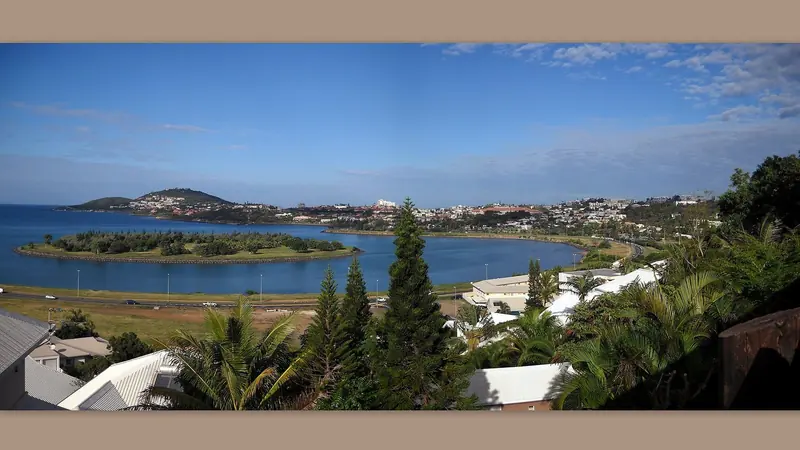
Noumea is the sole port of entry and exit for New Caledonia; a yacht arriving from overseas may not stop anywhere else in territorial waters before clearing in there. Port Moselle, in the centre of the capital, is the main clearing marina, with berths for yachts up to 35 metres and 8 metres of depth alongside, plus water, 220V power, CCTV and a fuel dock. Larger vessels use Port du Sud in Orphelina Bay, which takes vessels up to about 40 metres with up to 5 metres of draft, while superyachts above 40 metres berth alongside the main wharf in the Petite Rade, the same water used by cruise ships.
Pilotage rules kick in for the biggest vessels: yachts over 60 metres total length must take a pilot aboard before entering New Caledonian coastal waters, though a pilot is not required for onward coastal or port movement between 60 and 80 metres, subject to movement notification. None of this is exotic by Mediterranean or Caribbean standards, but it means every visiting yacht funnels through one capital and, in practice, one marina office.
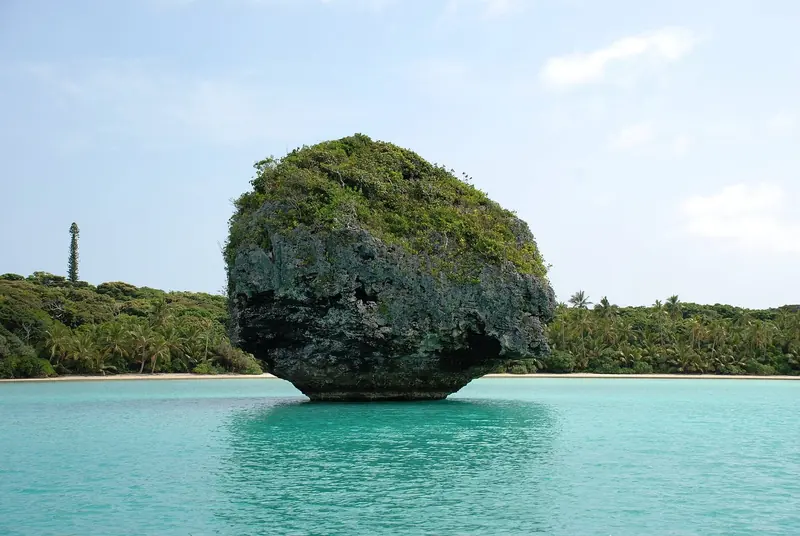
The lagoon has stayed safe through everything; the country around it has not.
Clearing in: France, but not the France you think
New Caledonia is French territory but sits outside the Schengen area, so the usual European entry logic does not apply; French nationality and French customs law do. Foreign-flagged yachts clear in under a temporary admission regime that suspends import duty and VAT, with a cruising permit of around six months granted on arrival. If an owner needs to leave the boat longer than that, New Caledonian customs offers a private warehouse scheme allowing storage for up to 12 months (during which the boat cannot be used or moved) without the clock running on the permit. Clearance itself runs through three separate offices on business days only, immigration, customs and the phytosanitary/quarantine service, and historically has carried no government fee at all, though since January 2019 arriving crew have needed proof of health insurance that includes repatriation cover.
Biosecurity is taken seriously and enforced at the dock. Most fresh and frozen food aboard is liable to be confiscated on arrival, and all products of animal or plant origin must be declared and kept aboard until cleared. Pets are treated separately again: dogs and cats can be imported only from a defined list of countries (including France, Australia, New Zealand and a handful of Pacific territories), need a veterinary health certificate and advance import paperwork lodged before the yacht arrives, face 10 days of quarantine ashore regardless, and are barred entirely if the yacht has visited a rabies-affected country in the previous six months.
Beyond Noumea: Prony Bay and the Isle of Pines
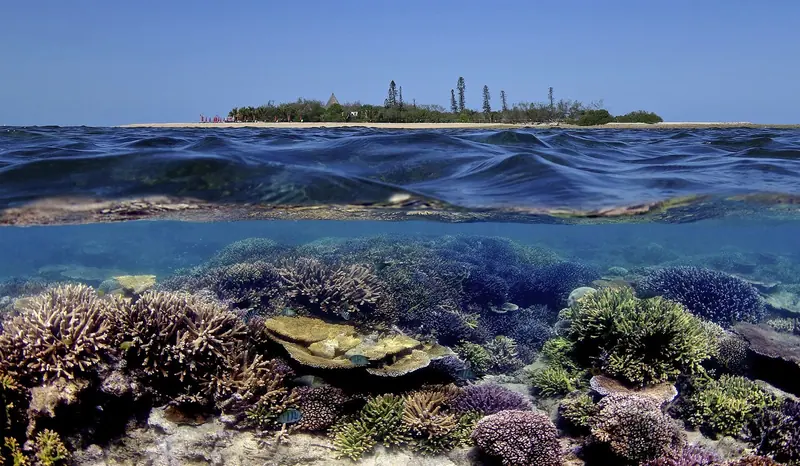
The two cruising areas every itinerary is really built around lie south of Noumea. Prony Bay, about four hours' cruising from the capital, is a maze of coves, creeks and mangroves with more than 15 distinct anchorage areas offering shelter in effectively any wind direction; the bottom throughout is red mud or sand, the legacy of the laterite soil that colours the whole bay a deep rust red (locally called boue rouge, and it stains everything it touches). The bay also has waterfalls, hot springs and some of the territory's better diving within a short dinghy ride of the anchorage.
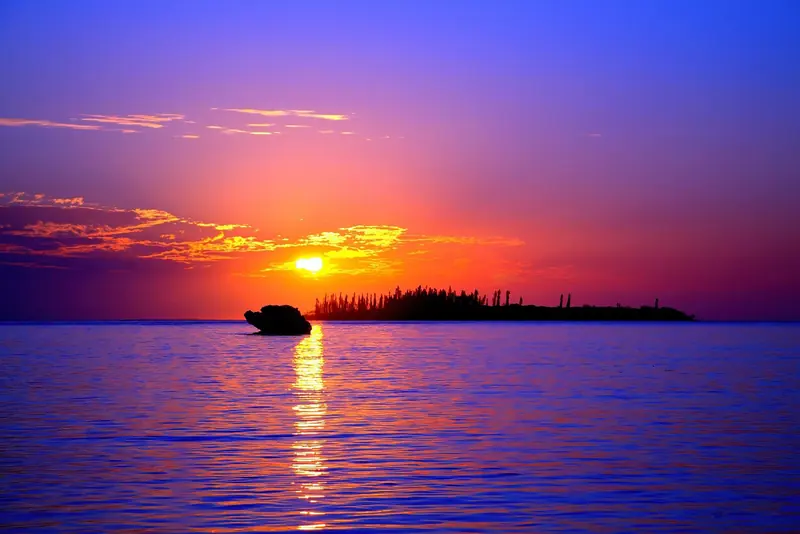
From Prony it is roughly 35 nautical miles on to the Isle of Pines, and around 40 to 45 nautical miles direct from the Noumea area; either way it is an easy overnight or a long day sail. The island holds about 2,000 people across eight tribes, each with its own chief, and remains one of the least commercialised parts of the territory, with Kuto Bay as the main anchorage and the tidal lagoon La Piscine Naturelle as the signature stop. Between Noumea and the south, the so-called Five Islands cluster (between Ilot Eroue and Ilot Kouare) is commonly cited by charter brokers as some of the best snorkelling in the lagoon.
The season that actually works
New Caledonia's cyclone season runs roughly mid-November to mid or late April, during which tropical systems can and do form in the wider South Pacific basin. The workable cruising season sits opposite that, late April to mid-November, when the southeast trade winds are steady, humidity drops and the lagoon is at its calmest. Humpback whales use the lagoon as a winter breeding and calving ground from around mid-July to mid-September, and sightings are tightly regulated: boats must keep at least 100 metres from a whale or pod, a single vessel gets a maximum of one hour with a group without a calf (half an hour if a calf is present), no more than four boats may be with the same whale or pod at once, and swimming with whales is prohibited outright, with fines attached to any approach inside 50 metres.
Outside the safe season, insurers and most charter operators simply will not put a boat there, which narrows New Caledonia to a roughly seven month window each year compared with a near year round season in, say, Fiji's more sheltered anchorages.
What is actually wrong with the water
The honest weak point of this lagoon is not weather or crowding, it is mining. New Caledonia holds some of the world's largest nickel reserves and nickel products make up roughly 85 to 94 percent of the territory's merchandise exports (estimates vary by year and dataset, though every source agrees exports are overwhelmingly nickel), even though the sector's direct GDP contribution is smaller and volatile, cited anywhere from about 4 percent to 20 percent depending on the year and price cycle. That mining has a coastal cost: peer reviewed studies of rivers draining active mine sites have measured nickel concentrations around 96 micrograms per litre against roughly 7 micrograms per litre in unaffected catchments, well above the European guideline of under 4 micrograms per litre, and decades of untreated mine waste and cyclone driven erosion (notably after cyclones in 1969, 1981 and 1988) have deposited heavy sediment loads into lagoons such as Thio, degrading coral and disrupting the local microbial ecosystem.
This is not a lagoon wide problem; the World Heritage clusters and most cruising anchorages are well away from active mine outflows. But it is a genuine, geographically specific defect that a brochure would never mention, and an owner planning an itinerary along the east coast or near Thio should be aware the water there is not the same postcard water as the Isle of Pines.
Provisioning and the real cost of living there
New Caledonia uses the CFP franc, pegged to the euro, and prices reflect it. Noumea sits among the more expensive cities globally for cost of living, with a typical monthly grocery basket estimated around 671 US dollars and food overall running roughly 20 to 30 percent above equivalent Australian or New Zealand prices, especially for imported meat and produce; a New Zealand apple costs noticeably more in Noumea than at home purely on freight. Local produce, fresh seafood, French bread, pastries and wine are the exceptions and can be genuinely cheap and good, a direct legacy of the territory's status as French soil.
There is a useful offset for cruisers: yachts clearing out of New Caledonia can request duty free fuel through customs at the point of departure, ordering as much diesel and petrol as needed under separate permits, at prices reported well below pump rates. Current published fuel and berth tariffs are not available online in most cases (see Practical below), so budgeting still requires a direct call to the marina or agent before arrival.
The 2024 unrest and where it actually stands in 2026
In May 2024, rioting driven by a disputed French voting law reform tore through Noumea and its suburbs: 13 people were killed, hundreds injured, and damage has been estimated at around EUR 2.2 billion, roughly 10 percent of the territory's GDP, with several hundred businesses burned or looted and more than 10,000 jobs lost. Tourism collapsed by roughly half in 2024 alone and international arrivals fell from about 125,000 in 2023 to around 58,000 in 2025, the lowest figure in three decades; the territory's chamber of commerce president has said roughly 12,000 people left New Caledonia in the aftermath, hollowing out healthcare and other essential services, and residential burglaries in and around Noumea rose about 47 percent in 2025. Politically, France and local parties signed the Bougival Accord in July 2025 proposing a semi-autonomous State of New Caledonia that stays French, but the pro-independence FLNKS has since rejected it and support has visibly eroded in the territorial Congress, leaving the promised 2026 referendum date uncertain.
Set against that, the actual cruising reports are calmer than the headlines. Cruisers who stayed through the unrest describe living aboard in Baie de Prony and sailing into Noumea about once a month for supplies, with no problems beyond restricted shopping hours and higher prices, and local marine police are reported to have had no incidents involving yachts through the worst of it. Official government travel advisories, aimed mainly at air travellers staying ashore in Noumea hotels, still counsel a high degree of caution; the practical read for a yacht is that the water has stayed safe while the city, the economy and the politics around it have not fully settled, and any 2026 or 2027 itinerary should be planned with that gap in mind rather than either extreme.
Superyacht support and haulout
Support infrastructure is real but small scale. Noumea Yacht Services and Seal Superyachts both operate as dedicated yacht agents in the capital, arranging clearance, bunkering, provisioning and crew logistics in English, French and Spanish; Noumea Yacht Services has run since 2006 under a former captain who personally knows the local marine trades. There are four commercial haulout facilities in greater Noumea, the largest being Nouville Plaisance, whose travel lift handles boats up to 50 tonnes and 6.2 metres beam, which covers most charter and private yachts but rules out true megayacht haulout.
For anything beyond that scale, or for parts and specialist refit work, owners route through agents with wider Pacific reach based in New Zealand or Fiji, since New Caledonia's own industrial marine base is thin relative to Auckland's or even Suva's.
Who this destination is actually built for
New Caledonia rewards an owner who wants genuinely uncrowded, reef protected water and is comfortable operating in French bureaucracy and a still recovering economy rather than a polished five star charter machine.
It suits a shoulder season itinerary bolted onto a wider Australia to Fiji to Vanuatu run, not a standalone two week charter destination, because the safe season is short, the support infrastructure is limited to one capital, and there is real reputational and logistical uncertainty sitting one referendum away from changing the political map of the whole territory.
Ashore, access and booking
| Getting there | Fly into La Tontouta International Airport (NOU), about 52 km northwest of Noumea, on Aircalin, Qantas or Air New Zealand; direct routes run to and from Australia (Sydney, Brisbane), New Zealand (Auckland), Fiji, Singapore and Thailand, but there is no direct service from Japan, which routes via Australia or connects onward through Aircalin's Tokyo link. |
|---|---|
| Arriving by sea | Noumea is the only legal port of entry and exit; a yacht may not call anywhere else in New Caledonian waters before clearing in there. Fly the Q flag on approach, clear at Port Moselle or Port du Sud through immigration, customs and the phytosanitary/quarantine service in turn (weekday office hours only, no weekend or holiday clearance), and expect a temporary admission cruising permit of about 6 months. |
| How you actually reserve | There is no online berth booking system comparable to a Mediterranean marina app; visiting yachts contact Port Moselle's Capitainerie (SODEMO) or Port du Sud directly by VHF or phone ahead of arrival, and superyachts typically work through a local agent such as Noumea Yacht Services or Seal Superyachts to arrange the berth, clearance and provisioning together. |
| What a berth costs | Current tariffs are not published; a widely cited historical reference (2012) puts a visiting catamaran at roughly 204 US dollars a week at Port Moselle with monohulls around 25 percent less, but rates have risen since and must be confirmed directly with the marina or an agent before budgeting. |
| Power, water and fuel | Port Moselle offers 220V shore power and metered water; duty-free fuel can be requested through customs at the point of departure, with separate permits for diesel and petrol, at prices below normal pump rates. |
| Eating and after dark within walking distance | Port Moselle sits in central Noumea with restaurants, a produce and craft market, and bars within walking distance; local seafood, French bread, pastries and wine are good value, while most imported goods run 20 to 30 percent above Australian or New Zealand prices. |
| Fixed dates to plan around | Safe cruising season late April to mid-November; cyclone season mid-November to mid or late April; humpback whales present mid-July to mid-September with strict approach rules; a New Caledonian referendum on the Bougival Accord was intended for 2026 but its date is unsettled as of September 2026. |
| What is NOT published | Current Port Moselle and Port du Sud berth tariffs, current duty-free fuel pricing, and a plain-English map of the Natural Park of the Coral Sea's 2023-expanded highly-protected zones are not published in any consolidated, current, English-language source; all three require a direct call to the marina, customs or the territorial environment authority before an itinerary is finalised. |
What owners and crew report
Cruisers who stayed through the 2024 unrest reported no problems at sea
A cruising couple described living aboard in Baie de Prony through the worst of the 2024 unrest and sailing into Noumea about once a month for supplies, encountering no issues beyond restricted shopping hours and higher prices, with marine police reported to have had no incidents involving yachts.
Cruisers Forum thread, New Caledonia 2026: the real situation for cruising yachtsClearance in practice is fast and free, but the country needs a real season to appreciate
A visiting sailing journalist reported clearing customs in about two hours at no cost, and quoted a local sailor's advice to newcomers to leave and come back after a month, or better, after a whole season, rather than trying to see the lagoon in a short hop.
Yachting World, Cruising New Caledonia: Spectacular sailing in the French corner of the PacificPetty theft does happen even in daylight at the main marina
A visiting cruiser's dinghy was stolen from the vicinity of Port Moselle during daylight hours, prompting a standing recommendation in the clearance report to lock dinghies rather than assume the marina area is automatically secure.
Noonsite, New Caledonia Clearance and Cruising Information reportOfficial travel advice still runs well behind what cruisers themselves are experiencing on the water
Government travel advisories continue to recommend a high degree of caution across New Caledonia due to the risk of civil disorder, guidance drafted primarily around air travellers in Noumea hotels rather than yachts cruising offshore anchorages, creating a visible gap between the official risk rating and the on-the-water reports above.
Smartraveller, the Australian Government's travel advisory for New CaledoniaThe territory's own business leadership is warning about a post-unrest exodus that thins out shoreside services
New Caledonia's chamber of commerce president said roughly 12,000 people have left the territory since the 2024 unrest, a departure he linked to gaps opening up in healthcare and other essential services, a trend with obvious knock-on risk for the availability of marine trades, agents and provisioning support that cruisers and charter yachts rely on ashore.
David Guyenne, president of the New Caledonia Chamber of Commerce, as reported by Radio New Zealand and Pacific Media Network
What is good, and what to watch
Strong points
- Reef-protected, near-flat water at real scaleA 1,500 km barrier reef enclosing a 24,000 sq km lagoon means calm sailing conditions across a cruising ground bigger than many countries, with the swell killed well offshore.
- Genuine mooring infrastructureHundreds of free government mooring buoys are laid specifically to keep anchors off coral, a level of cruiser-facing conservation infrastructure most Pacific nations do not provide.
- Two distinct, high-quality cruising areas close togetherProny Bay's sheltered coves and hot springs and the Isle of Pines' beaches and lagoon sit within a single overnight passage of each other and of Noumea.
- Straightforward customs mechanics on paperA roughly 6-month duty-free temporary admission regime plus a bonded private-warehouse extension option gives an owner real flexibility to leave the boat without triggering import duty.
- Real superyacht agent coverageEstablished agents (Noumea Yacht Services since 2006, Seal Superyachts) run English, French and Spanish speaking support for clearance, bunkering and provisioning, so an owner is not navigating French bureaucracy alone.
What to watch
- One door in, and it is the capital that was set on fireEvery arrival and departure must route through Noumea, the same city where May 2024 rioting caused an estimated EUR 2.2 billion in damage and where recovery is still incomplete in 2026.
- Politically unresolvedThe Bougival Accord signed in July 2025 has since lost support in New Caledonia's own Congress and the FLNKS has rejected it, leaving the 2026 referendum date uncertain and the territory's long-term status genuinely unsettled.
- Short seasonThe workable cruising window runs only late April to mid-November; cyclone season effectively closes the destination for close to five months a year.
- Real, localised pollutionNickel mining runoff has measurably elevated nickel and chromium levels in rivers and lagoons near active mines (up to roughly 96 micrograms per litre against a European guideline of under 4), degrading coral and sediment quality in specific coastal areas, notably around Thio.
- Thin haulout and repair capacityThe largest local travel lift handles only 50 tonnes and 6.2 m beam, so anything approaching true megayacht scale needs to route refit and major repair work through New Zealand or Fiji instead.
Who it is for: An owner running a broader Australia-to-Fiji-to-Vanuatu circuit who wants a genuinely uncrowded, reef-protected lagoon for a shoulder-season leg and can tolerate French bureaucracy and a still-recovering local economy, rather than an owner who wants a polished, self-contained two-week charter destination.