New England & Maine
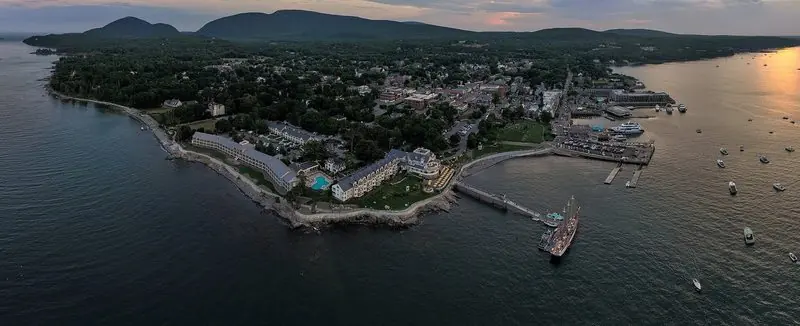
| Region | US north-east, from Newport, Rhode Island up the Maine coast to Mount Desert Island |
|---|---|
| Season | mid-June to late September, with August the peak |
| Distance | roughly 250 nautical miles from Newport to Mount Desert by the coastal route |
| Newport | Safe Harbor Newport Shipyard, 3,500 linear feet of dock, yachts over 300 feet, travel lifts of 500, 200 and 150 tonnes |
| Maine refit | Safe Harbor Front Street Shipyard at Belfast, 485-ton lift, yachts to 200 feet, over 100 marine staff |
| Penobscot Bay | islands include Vinalhaven, North Haven, Islesboro and Isle au Haut, with harbours at Camden, Rockland, Castine and Stonington |
| Mount Desert Island | 108 square miles, Acadia National Park, Cadillac Mountain at 466 metres |
| Nantucket | about 30 miles south of Cape Cod, resident population 14,255 rising to around 80,000 in summer |
| Defining hazards | summer fog and a very high density of lobster gear |
| Newport history | hosted the America's Cup from 1930 to 1983 and starts the 635-nautical-mile Newport Bermuda Race |
| Charter | the Passenger Vessel Services Act bars foreign-flagged vessels from carrying passengers between US ports |
| Airports | Boston Logan, Providence, Nantucket, Martha's Vineyard, Portland and Bar Harbor |
| Berth cost | Northeast Harbor Marina 2026 published tariff, USD 5.40 per foot per night for vessels of 100 ft and over, USD 4.70 from 60 to 99 ft, USD 4.20 from 50 to 59 ft |
| Power at Northeast Harbor | USD 25 a day for 30 amp, USD 36 for 50 amp, USD 65 for 100 amp and USD 130 for two 100 amp services |
| Moorings at Northeast Harbor | USD 25 to USD 55 a night transient, USD 2,300 for the season on the larger series |
| Newport | Safe Harbor Newport Shipyard publishes no rates, checked 28 July 2026, and adds a 5 per cent environmental compliance charge and 7 per cent Rhode Island sales tax |
| Tax | Rhode Island charges no sales tax on a boat bought after 29 July 1993, no use tax and no property tax on a registered boat |
| PVSA penalty | USD 300 per passenger under 19 CFR 4.80, inflation-adjusted to USD 996 per passenger for 2025 |
| Cruising licence | 19 CFR 4.94, up to one year, private use only, with a minimum fifteen-day gap before a non-resident owner takes another |
| Discharge | Rhode Island designated all coastal waters a No Discharge Zone in 1998, Massachusetts statewide in 2014, and in Maine only part of the coast is designated, with Casco Bay approved on 13 June 2006 |
| Pump-out | USD 5.00 at Northeast Harbor on the town's published 2026 schedule |
The shape of the coast
The ground divides cleanly in two. Southern New England is Newport, Block Island, Cuttyhunk, Martha's Vineyard and Nantucket, a compact cluster of harbours in warmer, sandier water with a heavy summer social calendar. Maine, beginning about 100 miles north-east, is granite, spruce and thousands of islands, with Penobscot Bay and Mount Desert as its two great cruising areas. The Cape Cod Canal joins them and saves the run round the outside of the Cape, with a tidal current that has to be worked and fixed bridges that set an air draft limit.
Water is deep almost everywhere, which is a relief after the Bahamas. Penobscot Bay reaches 145 metres at its deepest. The tidal range is measured in metres, not centimetres, so currents run hard through the island passages and a yacht at anchor swings through a much bigger circle than a Mediterranean crew expects. Depth is not what limits a large yacht here.
A week, and two weeks
A week out of Newport covers the southern islands comfortably. Block Island for the Great Salt Pond, Cuttyhunk, Edgartown on Martha's Vineyard and Nantucket, with a night back in Newport at either end. Legs are short, the harbours are close together and guests get a different town every day. That week is more social than scenic.
Two weeks is what Maine needs, and it is the better fortnight. Through the canal, up past Boothbay to Penobscot Bay for five or six days among the islands, then east to Mount Desert for Acadia and Northeast Harbor. Turning round adds another four days at sea, so many owners run the boat north with the crew and fly guests in and out at each end. That is how the coast is actually used by the yachts that come back every year.
Twelve weeks, two refit yards and anchorages a yacht can have entirely to herself.
Newport and the southern harbours
Newport is the yachting capital of the American east coast and it wears its history openly. It hosted the America's Cup from 1930 to 1983, it starts the Newport Bermuda Race over 635 nautical miles every other year, and the New York Yacht Club has its summer station here. The Gilded Age mansions along Bellevue Avenue, The Breakers and Marble House among them, are open to the public and are the one guest excursion that never fails. Fort Adams hosts the Newport Jazz and Folk festivals, both running since the 1950s.
Nantucket is the other set-piece. Thirty miles out into the Atlantic, a preserved whaling town of cobbles and grey shingle, with a resident population of about 14,000 that swells towards 80,000 in summer. Edgartown on Martha's Vineyard is the quieter version of the same idea. Both harbours are shallow and crowded in August, so a large yacht lies outside and runs guests in, which is easy in settled weather and unpleasant when it blows.
Maine: Penobscot Bay and Mount Desert
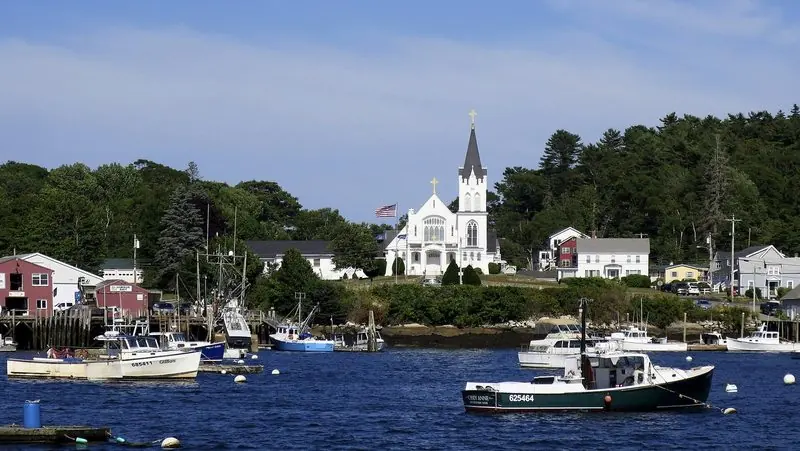
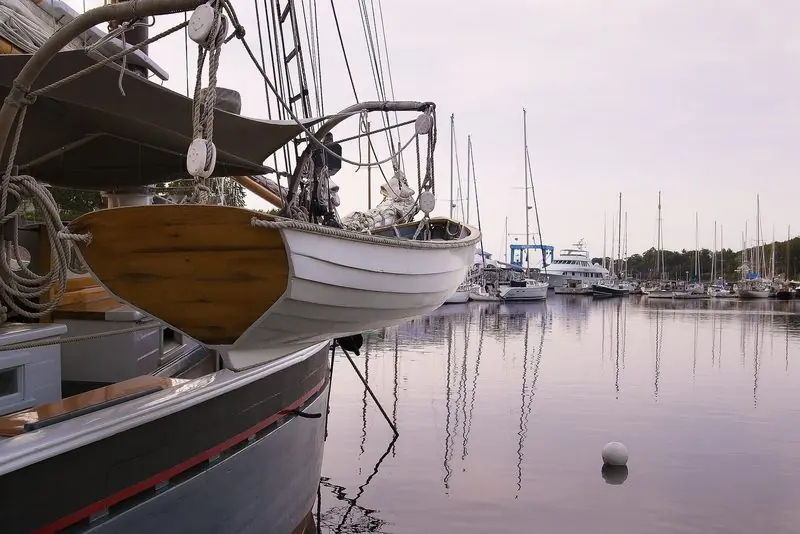
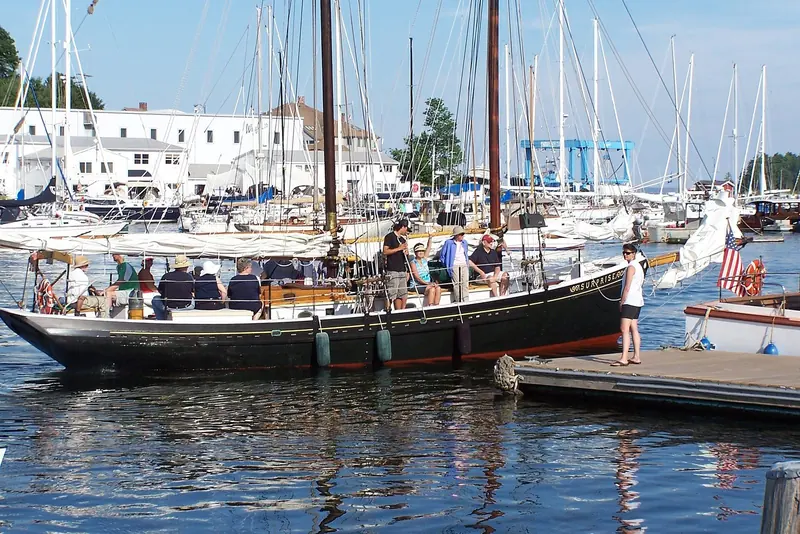
Penobscot Bay is the heart of it. Islands by the hundred, working lobster harbours at Rockland and Stonington, summer colonies on North Haven and Islesboro, and Camden with its schooner fleet under Mount Battie. Anchorages here are genuinely empty. A yacht can spend a week in the bay and share an anchorage with nobody, which is close to impossible in the Mediterranean at any time of year.
Mount Desert Island is the eastern anchor, 108 square miles of it, most of it inside Acadia National Park. Cadillac Mountain rises to 466 metres directly above the water. Northeast Harbor is the yacht harbour and the discreet end of the island. Bar Harbor is the busy end and takes cruise ships. Guests walk the carriage roads, climb Cadillac for the sunrise and eat popovers at Jordan Pond, and the scenery does the work.
Where a 50 metre boat fits, and where it does not
Safe Harbor Newport Shipyard sits in downtown Newport with 3,500 linear feet of dock, takes yachts of over 300 feet and runs travel lifts of 500, 200 and 150 tonnes. It is a full refit yard as well as a berth, and it is the reason a large yacht can base a whole summer here. At the northern end, Safe Harbor Front Street Shipyard in Belfast lifts to 485 tons, handles yachts to 200 feet and employs more than a hundred marine trades.
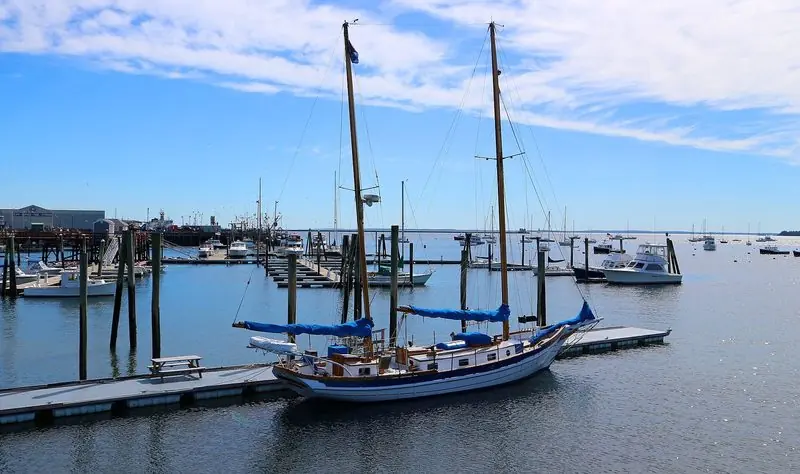
Between those two there is very little alongside berthing for anything over 40 metres. Camden, Rockland, Northeast Harbor and Boothbay all have moorings and small marinas built for the local fleet. Nantucket and Edgartown are shallow and their berths are booked out. In Maine the answer is always to anchor, which is exactly what an owner should want here, because the anchorages are the attraction. What it means practically is that guests move by tender in cold water and frequent fog.
Weather, fog and the months
Fog is the defining feature of the Maine summer. Warm air moving over very cold water produces days, sometimes several consecutive days, when visibility closes to a few hundred metres. July is the worst month for it. Radar and a careful watch are not optional, and neither is the assumption that a scheduled guest arrival may not happen. August and early September are clearer, warmer and generally the best weeks of the year.
Water temperature in Maine rarely leaves the teens Celsius even at the height of summer, so the swim platform is largely decorative and the toys go unused. Southern New England is warmer and swimmable. Late August into September carries a real if low probability of a tropical system tracking up the coast, and the season closes on that. October is beautiful ashore and finished afloat.
The season and the weeks already spoken for
The usable window is roughly twelve weeks, from mid-June to late September. Newport's charter yacht show in June opens it and fills the shipyard. The Fourth of July and the middle two weeks of August are when the southern harbours are at their worst, with Nantucket and Edgartown moorings gone months ahead and the anchorages busy. Maine barely notices any of this.
The compression is the problem. Yard slots, moorings and crew all have to fit into one short season, and a boat that arrives in July has already lost a third of it. Owners who use the coast seriously commit in the winter. Anyone hoping to arrive in August and find a Newport berth will be disappointed.
Getting guests aboard, and what they eat
Boston Logan and Providence serve the southern half, both under two hours by road from Newport. Nantucket and Martha's Vineyard have their own airports with heavy seasonal private traffic. For Maine, Portland is the main gateway and the Hancock County airport at Trenton puts guests fifteen minutes from Northeast Harbor. The weak point is fog, which closes the small Maine fields and diverts the light jets more often than owners expect.
The food is regional and very good at the top end. Lobster straight off the boat in Stonington, oysters from the Damariscotta river, and serious restaurants in Newport, Nantucket and Portland. Rockland has the Farnsworth Art Museum and its Wyeth collection. Nightlife essentially does not exist north of Portland, and that is why people come.
Support, charter law and the honest downside
Technical support is a genuine strength. Two full refit yards at either end of the ground, a dense network of Maine boatbuilders and riggers in between, and parts sourced overnight from the rest of the United States. Fuel and provisioning are straightforward in Newport, Portland and Rockland, thinner further east. Clearance for foreign-flagged yachts is routine and a cruising licence covers private use.
The downsides are the fog, the lobster gear and the length of the season. Lobster buoys carpet the Maine coast in numbers that make night passages inadvisable and force a permanent bow watch by day. The Passenger Vessel Services Act bars foreign-flagged vessels from carrying passengers between US ports, so a foreign-flag yacht cannot run a crewed charter here. And a boat that comes north for the summer is a boat that is not in the Mediterranean, which for most owners is the real cost.
What twelve weeks here actually costs
Maine prices this coast in public, which is unusual and useful. The town of Mount Desert publishes the Northeast Harbor Marina summer rate schedule for 2026: dockage at USD 3.70 per foot per night for vessels under 49 ft, USD 4.20 from 50 to 59 ft, USD 4.70 from 60 to 99 ft and USD 5.40 for vessels of 100 ft and over, with electricity charged separately at USD 25 a day for 30 amp, USD 36 for 50 amp, USD 65 for 100 amp and USD 130 for a pair of 100 amp services. A 164 ft yacht on that tariff is USD 885.60 a night alongside plus USD 130 of power, which is a shade over USD 31,000 for a month at the eastern end of the ground. Transient moorings in the same harbour run USD 25 to USD 55 a night and the seasonal rate for the larger series is USD 2,300.
Newport is the opposite. Safe Harbor Newport Shipyard publishes no rates and quotes on request, checked on 28 July 2026, and what it does publish is the two charges added on top: a 5 per cent environmental compliance charge and 7 per cent Rhode Island sales tax where applicable. Set the Maine figure against the obvious alternative and the case for coming north is clear enough. Marina di Porto Cervo's published 2026 tariff charges EUR 3,698 a day in the band to 40 m between 1 and 20 August, roughly EUR 102,000 for the month, so August in Northeast Harbor costs under a third of August in the Costa Smeralda and the anchorage next door is empty. The real cost here is not the berth. It is that the season is about twelve weeks long, that yard slots and moorings are committed over the winter, and that a delivery north and south either side of it eats a fortnight at each end.
Its own paperwork, and why the deals close in Newport
The federal position is the same as Florida's and the consequences are identical. A foreign-flagged yacht cruises on a cruising licence issued under 19 CFR 4.94 for a period not exceeding one year, which lets her move between United States ports without formally entering and clearing at each one, is available only where the flag state reciprocates, and requires a gap of at least fifteen days before a non-resident owner takes another. It permits private use and nothing more. The Passenger Vessel Services Act still bars carrying passengers between United States points, and the penalty is USD 300 per passenger transported and landed under 19 CFR 4.80, inflation-adjusted to USD 996 per passenger for 2025. Newport to Nantucket with paying guests aboard is the same offence as Fort Lauderdale to Key West.
Where New England differs from Florida is state tax, and it is the reason this coast matters commercially at all. Rhode Island charges no sales tax on a boat purchased after 29 July 1993, no use tax and no property tax on a registered boat. That single position is why brokerage deals close in Newport, why yachts sit out a purchase there, and why the town supports a shipyard, a brokerage cluster and a charter show on a coast with a twelve-week season. An owner comparing New England with Florida on running cost alone has missed the larger number. Massachusetts and Maine have their own treatment and it is not the same, so the state in which a boat is bought, kept and registered is a question to settle before the delivery leg is booked, not after.
Discharge: three states, three regimes
The rule changes as the boat runs north and the strictest part is the busiest part. Rhode Island became the first state in the country to designate all of its coastal waters, out to three miles, as a No Discharge Zone, in 1998, so nothing goes over the side anywhere between Block Island and the Sakonnet. Massachusetts followed with a statewide designation approved by the Environmental Protection Agency in 2014, which covers Buzzards Bay, the Cape, Martha's Vineyard and Nantucket. Maine is the loose one: only part of the coast is designated, with Casco Bay approved on 13 June 2006 and the rest of the state's coastline still outside a formal zone.
That inconsistency is a trap rather than a licence. A yacht that has spent a fortnight in Penobscot Bay, where no zone applies, is in a statewide zone the moment she is south of the Cape Cod Canal, and the holding tank has to have been managed for it. Facilities are cheap and ordinary where they exist: Northeast Harbor charges USD 5.00 for a sanitary pump-out on its published 2026 schedule. On a coast whose entire appeal is cold clean water and empty anchorages, this is the rule that the resident fleet enforces socially long before a warden does.
Ashore, access and booking
| Getting there | For the southern end, T.F. Green International Airport (PVD) at Providence is the main gateway, about 25 miles and 39 minutes' drive from Newport; Newport State Airport (KUUU), 2.3 miles from town, takes piston and select turboprop traffic, with larger jets routed to PVD or Quonset State Airport (OQU) in North Kingstown. For Maine, Hancock County-Bar Harbor Airport (BHB) in Trenton is the gateway, about 22 minutes by taxi from Bar Harbor town, with the free Island Explorer bus also running the route; Northeast Harbor itself is further on again, and no sourced transfer time or cost from BHB to Northeast Harbor was found, so treat 30 to 40 minutes by car as an estimate, not a confirmed figure. |
|---|---|
| Arriving by sea | Safe Harbor Newport Shipyard works VHF channel 9. Newport Harbor's harbourmaster monitors channel 16 and must be called directly by any vessel over 65 ft; Oldport Marine Services, the harbour's launch and mooring operator, is hailed on channel 68 on arrival for a mooring assignment. Camden's harbourmaster monitors channel 16, working channel 11. Northeast Harbor's town dock and harbourmaster work channel 68. |
| Reserving a mooring or berth | Northeast Harbor has 50 rental moorings and 16 rental slips, mostly first-come-first-served: hail channel 68 on approach and a mooring or float is assigned, with 11:00 am the usual checkout time; a Marina Registration form is available through the Town of Mount Desert for advance registration. Camden runs a formal Mooring Wait List Application through its harbour department, implying real lead time for anything beyond a transient stay. Newport Shipyard takes reservations by direct contact (email or phone) rather than a self-service online system. |
| What it costs, and what is not published | Northeast Harbor Marina's 2026 tariff is public: USD 3.70 to 5.40 per foot per night by length band, plus power at USD 25 to 130 a day. Neither Newport Shipyard nor Front Street Shipyard publishes a haul-out or travel-lift rate, and no current diesel price at any Newport or Maine fuel dock could be found published anywhere; get both in writing before budgeting a season here. |
| Eating within walking distance | Near Newport Shipyard: Belle's Cafe on the shipyard's own dock, Brick Alley Pub on site, and Clarke Cooke House, 22 Bowen's, The Black Pearl, Fifth Element, Midtown Oyster Bar, Stoneacre Brasserie and the White Horse Tavern on the wharves nearby. Near Northeast Harbor: The Docksider on Sea Street for lobster and clams, The Colonel's Restaurant and Bakery on Main Street, family-run for over fifty years, and The Good Wolf at the renovated Asticou Hotel. |
| After dark | Newport has genuine nightlife on its wharves. Mount Desert Island does not: every account describes Northeast Harbor as dining-only after dark, with Bar Harbor, a short drive away, the place guests actually go for an evening out. |
| The fixed dates | The Newport Bermuda Race starts 19 June 2026. The Newport Charter Yacht Show runs 22 to 25 June 2026 at Safe Harbor Newport Shipyard, its 35th year. The Newport International Boat Show runs 17 to 20 September 2026. The Camden Windjammer Festival runs 4 to 5 September 2026, Labor Day weekend. A WoodenBoat Rendez-Vous sails into Brooklin, Maine on 15 September 2026. |
What owners and crew report
Fog can close in fast enough to put a bowsprit in the trees
David H. Lyman, who has cruised this coast for fifty years, writes in Cruising World that on a foggy day "your keel could be in 30 feet of water with the bowsprit tangled up in the spruce trees ashore," and calls the anchor "the most valuable piece of equipment to have on board in fog." He rates September as the better month precisely because June and July see more of it.
David H. Lyman, Cruising WorldLobster gear is a genuine, everywhere hazard, not a coastal quirk
Melissa Hill, cruising Maine aboard the catamaran SV Atlas, describes Penobscot Bay as "EVERYWHERE" strewn with lobster pots: "it's often hard to pick our way through, as we slow down to weave in between, trying to find some path." She found the bay felt more rural and more the preserve of full-time cruisers than the weekend crowd further south around Casco Bay.
Melissa Hill, SV Atlas (svatlas.ca)An owner's own verdict on the scenery and the sailing
Cameron Riddell, owner of the 31.4 metre 1939 Brooke Marine yacht Eros, writes in an owner's-diary piece for Boat International that "Maine offers some of the most gorgeous summer cruising anywhere," that afternoon thermal winds mean "you can get in some sporty sailing," and that a boat here can "anchor on an unlimited number of glassy bays without a boat or house in sight."
Cameron Riddell, owner of Eros, Boat InternationalA five-day cruise from the Benjamin River to Northeast Harbor, in an owner's own words
Writing in Yachting, Mary South joined Michael and Debbie McMenemy aboard their 58-foot 1950 Henry B. Nevins wooden motorsailer Burma for a cruise through the Benjamin River, Southwest Harbor, Northeast Harbor, Jericho Bay and Eggemoggin Reach, and quotes: "Maine is one of my favorite places in the world, and I've seen a good portion of our planet."
Mary South, Yachting
What is good, and what to watch
Strong points
- Wilderness cruising within a day's run of a major metroMaine's coast is close to 3,000 islands, most of them uninhabited, and the resulting density of empty anchorages is not available anywhere in the Mediterranean at any price.
- A dependable afternoon breezeThe thermal wind that builds most summer afternoons gives reliable sailing conditions rather than the flat calms or the sudden squalls of other grounds.
- Full refit capability inside the cruising ground itselfSafe Harbor Newport Shipyard (500, 200 and 150-tonne lifts) and Safe Harbor Front Street Shipyard in Belfast (485-ton lift) bookend the coast, so a haul-out or a repair does not mean leaving the region.
- A real price advantage over the obvious Mediterranean alternativeA 164 ft yacht on Northeast Harbor's published 2026 tariff runs a shade over USD 31,000 for a month at the eastern end of the ground, against roughly EUR 102,000 for the same August month at Marina di Porto Cervo on its own published tariff.
- No state boat tax to weigh against the Mediterranean's VAT arithmeticRhode Island charges no sales tax on a boat bought after 29 July 1993, no use tax and no property tax on a registered boat, which is a documented reason brokerage deals close in Newport rather than elsewhere on the US east coast.
What to watch
- The season is genuinely shortThe usable window runs roughly twelve weeks, mid-June to late September, and the best month, September, only arrives after the foggiest weeks of the calendar are past.
- Fog is an operational hazard, not a nuisanceVisibility can collapse to a few hundred metres with little warning, and owner accounts describe it closing a coast down for days at a stretch; radar and a careful watch are not optional here.
- Lobster gear density forces a permanent bow watchOwner and cruiser accounts converge on the same rule: do not run unfamiliar Maine water at night or in fog, because the buoy density makes a fouled prop a real and common risk.
- Nightlife is genuinely minimal outside NewportNortheast Harbor and the rest of Mount Desert Island are dining-only after dark by every account; guests wanting an evening out drive to Bar Harbor.
- The tide and current demand a different techniqueAn 8 to 10 foot tidal range and currents reported up to 4 knots through the island passages mean a Mediterranean or Caribbean crew has to plan scope and swing room differently to how they are used to.
Who it is for: An owner who has done the Mediterranean summer for years, wants cold clean water and empty anchorages, and does not need the boat to earn while she is there.