Phuket & the Andaman Sea
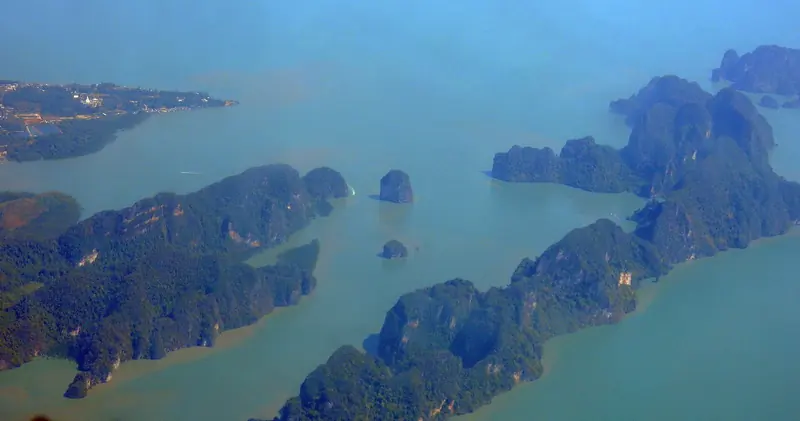
| Region | Phuket and the Andaman Sea, with Phang Nga Bay, Krabi and Phi Phi, the Similan and Surin islands and the Butang group to the south |
|---|---|
| Distances | Phuket to Phang Nga Bay under 20 nautical miles, to Phi Phi about 25, to the Similans about 60 |
| The Ministry of Transport announcement on superyacht commercial operation in Thai waters, B.E. 2568 of 2025, cut the qualifying length from 30 m to 24 m | |
| The licence is valid for one year and grants freedom to cruise and charter commercially in Thai waters | |
| A royal decree allows a foreign flagged superyacht to obtain that licence without paying the baseline 7 per cent VAT on the total value of the yacht | |
| Conditions include a maximum of 12 guests and full hull and third party liability insurance | |
| Ao Po Grand Marina | 230 berths with wide walkways on the north and east docks, taking vessels up to 499 gross tons |
| Ao Po Grand Marina quotes rates in the region of 20 to 35 Thai baht per foot per month | |
| Phuket Yacht Haven at the northern tip is the other large marina, with Royal Phuket Marina and Boat Lagoon on the east coast | |
| Boat Lagoon has a tidal entrance and is not accessible at all states of tide | |
| Chalong Bay in the south is the anchorage and the standard clearance point rather than a marina | |
| National park fees run 200 to 500 baht per person per day plus 100 baht for the yacht, varying by park | |
| A foreign visitor to the Phi Phi national park currently pays 400 baht | |
| The Similan National Park requires a private yacht to obtain a permit in advance, because the number of yachts admitted each day is capped | |
| That permit is issued only from the park headquarters at Thap Lamu, on the mainland near Khao Lak | |
| The Similan park is a dry season destination, open roughly from mid October to mid May | |
| Season | the north east monsoon from November to April is dry, light and flat, with December to February the peak |
| From May to October the south west monsoon puts wind and swell on the west facing coast and closes the Similans | |
| Phang Nga Bay and the east side of Phuket stay workable through much of the south west monsoon | |
| Phang Nga Bay is shallow, mostly under 20 m, with hundreds of limestone islands and hongs reachable only by tender at the right tide | |
| Tidal range in the bay runs two to three metres, which decides which cave entrances are open | |
| Maya Bay on Phi Phi Leh has reopened under a management regime with restrictions on boat access and swimming and an annual closure | |
| The King's Cup Regatta in December is the fixed week of the Asian sailing calendar | |
| Costs ashore, from provisioning to crew accommodation to dining, are a fraction of Mediterranean levels | |
One base, four cruising grounds
Phuket is an island joined to the mainland by a bridge, with the marinas on its eastern and northern shores and the beaches on the west. From it four separate grounds open up. Phang Nga Bay, immediately east, is the shallow bay of limestone towers, sea caves and hidden lagoons that most people picture when they think of Thailand. South east lies Krabi with the Railay peninsula and the Phi Phi islands. North west are the Similan and Surin islands, the diving. And 150 miles south is the Butang group and the Malaysian border.
The distances are short. Phuket to the heart of Phang Nga Bay is under 20 nautical miles, to Phi Phi about 25, to the Similans about 60. That makes it a rare cruising ground where a week is genuinely enough to see the best of it, and where a large yacht can lie in one place and work the area by tender if the draft or the anchoring rules make that easier.
The 2025 licence changed the economics
Under the Ministry of Transport's announcement on superyacht commercial operation in Thai waters, B.E. 2568 in 2025, the minimum length for the foreign flagged charter licence was reduced from 30 metres to 24, which brought a large part of the visiting fleet inside it for the first time. The licence is available immediately for qualifying yachts, runs for one year, and grants freedom to cruise and to charter commercially in Thai waters.
The financial change is the significant part. A royal decree allows a foreign flagged superyacht to obtain the commercial operating licence without paying the baseline 7 per cent value added tax on the total value of the yacht, which was the barrier that kept the fleet away. The conditions attached are straightforward: a maximum of 12 guests, and full hull and third party liability insurance in place. For a boat already in Asia the calculation now favours a Thai season in a way it did not.
The 2025 licence dropped the qualifying length to 24 metres and removed 7 per cent of the yacht's value from the price of chartering in Thailand.
Phang Nga Bay, and what a big boat can do in it
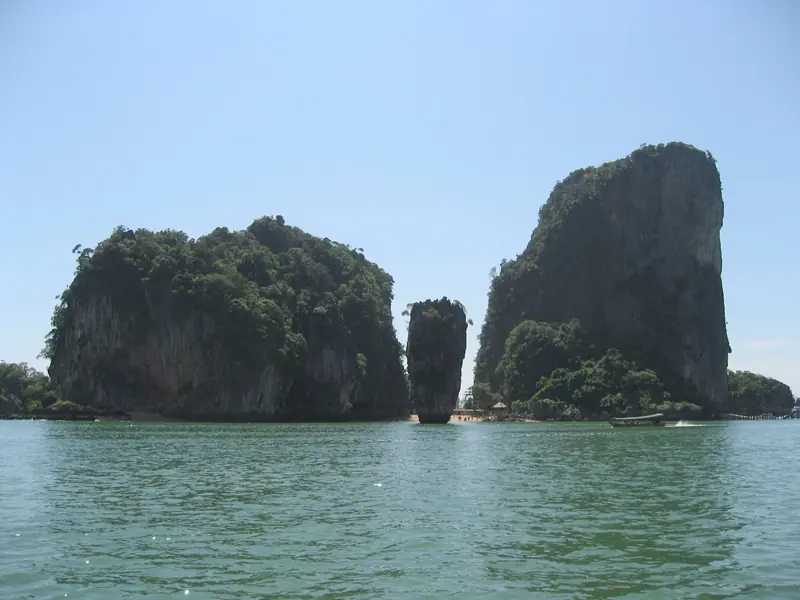
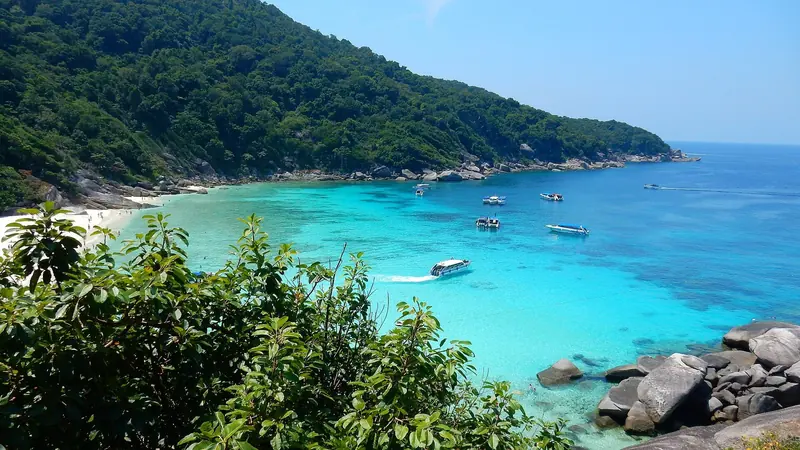
The bay is a drowned karst landscape: several hundred limestone islands rising vertically out of water that is mostly under 20 metres deep, many of them hollow, with hongs, collapsed cave systems open to the sky and reachable only by tender or kayak at the right state of tide. Koh Panyee is a fishing village built on stilts against a cliff. Koh Tapu, the vertical stack from the 1974 James Bond film, is the one every guest asks about and the one to see early in the morning.
The bay's constraint is depth. A yacht of any draft works the marked channels and the deeper eastern side, and the hongs are always a tender operation, which suits the place: the tender day is the point of Phang Nga rather than a consolation. Tide matters more than most Mediterranean crews expect, with ranges of two to three metres, and the cave entrances that are open at one state of tide are closed at another.
The marinas, and what they cost
Ao Po Grand Marina on the north east coast is the superyacht end, now a 230 berth marina with wide walkways on the north and east docks, taking vessels up to 499 gross tons. It publishes competitive rates in the region of 20 to 35 Thai baht per foot per month, which by the standards of anywhere else in this directory is close to free. Phuket Yacht Haven at the northern tip is the other large marina, and Royal Phuket Marina and Boat Lagoon on the east coast serve the smaller and resident fleets.
Water refill and services are available at Boat Lagoon and Royal Phuket Marina, Yacht Haven and Ao Po Grand Marina. Chalong Bay in the south is the anchorage and the clearance point rather than a marina, and it is where most yachts do their formalities. The tidal entrance at Boat Lagoon is the one to check, because it is not accessible at all states of tide, and a deep draft yacht should confirm the approach depth for any of these before committing.
The national parks charge, and one of them rations
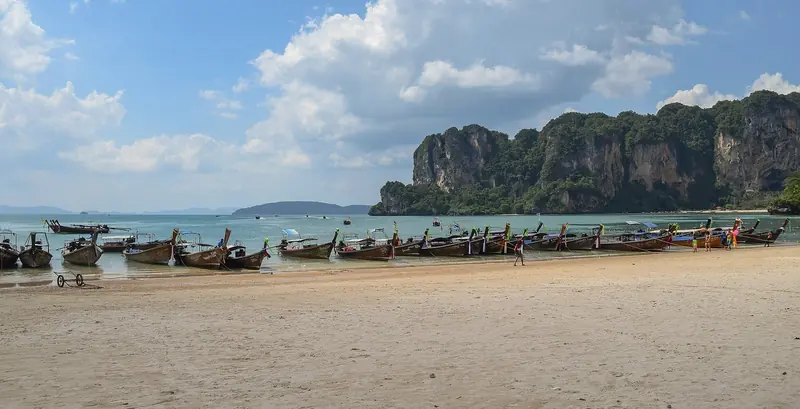
Most of the good anchorages are inside marine national parks and every one of them charges. Fees run between 200 and 500 baht per person per day plus 100 baht for the yacht, varying by park, and a foreign visitor to the Phi Phi park currently pays 400 baht. That is small money and it is collected properly, so the paperwork should be organised in advance rather than negotiated at a ranger boat.
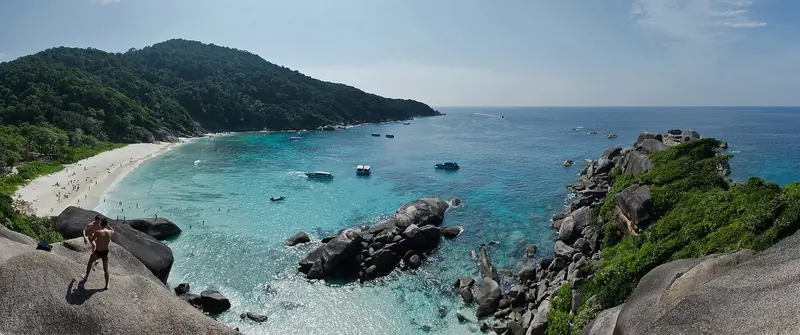
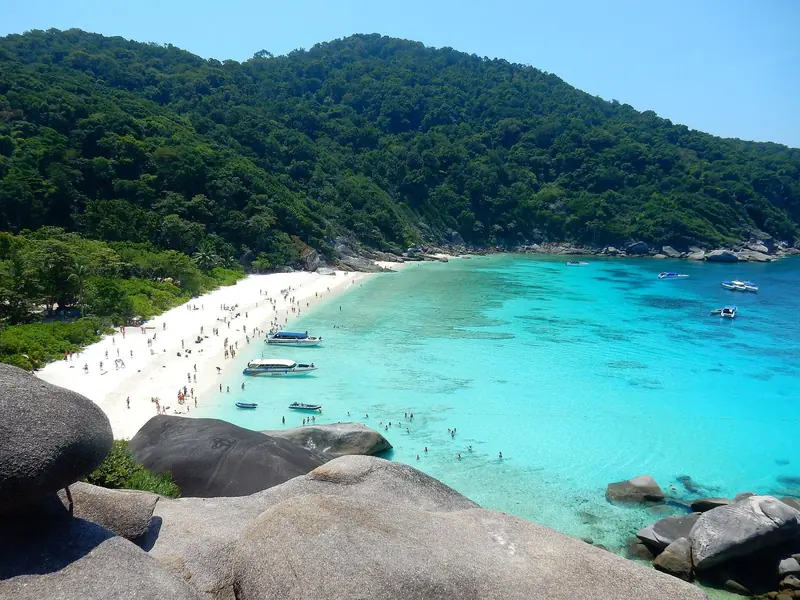
The Similan islands are the exception that catches people out. Unlike the other marine parks, a private yacht must obtain a permit in advance before entering the Similan National Park, because the number of yachts allowed in the park each day is capped. The permit is issued only from the park headquarters on the mainland at Thap Lamu near Khao Lak, which is not somewhere a yacht passes on the way. Plan that one properly or do not plan it at all. The park is also a dry season destination, open roughly from mid October to mid May.
Two monsoons, and which coast to be on
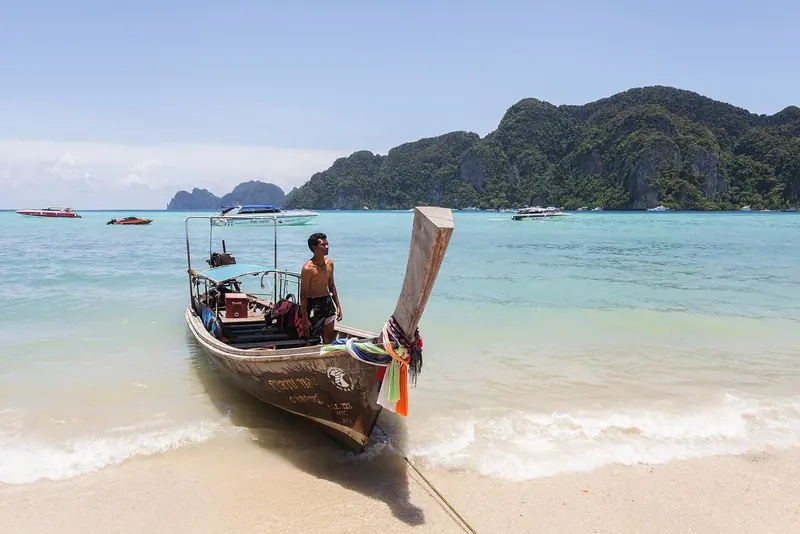
The season is the north east monsoon, from November to April, when the Andaman coast is dry, the wind is light to moderate from the north east and the sea is flat. That is the cruising window and it is reliable. December to February is the peak in every sense, and March and April are hotter and calmer still, with April the hottest month of the year before the rains.
From May to October the south west monsoon puts wind and swell directly onto the west facing coast, which closes the Similans and makes the outer islands uncomfortable to unusable. It does not close Thailand. Phang Nga Bay and the eastern side of Phuket remain workable through much of it, with rain that comes in bursts rather than all day, and the low season berthing rates and empty anchorages are a genuine argument for an owner who is not tied to school holidays.
Clearance, crew and the practical paperwork
Chalong is the standard clearance point for Phuket, with customs, immigration and the harbour master in one place, and an agent is the normal way to do it. Crew visas have been a running issue for visiting yachts in Thailand and have been part of the same reform conversation as the charter licence, so the current position should be confirmed with the agent rather than assumed from a previous season.
The licence itself is worth reading in full before it is relied on. It is a one year permission with conditions, and the 12 guest limit and insurance requirements are explicit. Thailand's rules on cabotage, on carrying guests between Thai ports and on the boundary between private and commercial use are the areas where a well intentioned owner gets caught, and they are exactly the areas an agent earns the fee on.
What guests actually do
Tenders and toys, more than in almost any other ground in this directory. The hongs, the caves at Koh Hong and Koh Panak, the beaches at Railay and Phra Nang under overhanging limestone, snorkelling at Phi Phi and diving in the Similans. Maya Bay on Phi Phi Leh, the beach from the film, has been reopened under a management regime with restrictions on boat access and swimming and an annual closure, and the current rules should be checked before it is promised to anyone.
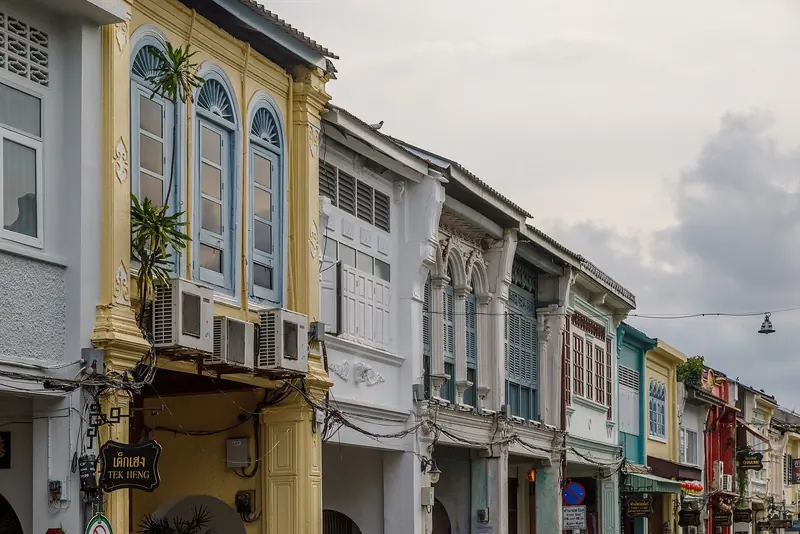
Ashore, Phuket runs from Patong, which is a mass market resort strip, to genuinely good hotels and restaurants on the west coast and around the northern beaches. Phuket Old Town has Sino Portuguese shophouses and a serious food culture. The King's Cup Regatta in December is the fixed week of the Asian sailing calendar and fills the island. And the cost of everything ashore, from crew accommodation to provisioning to a good dinner, is a fraction of the Mediterranean.
The honest downside, and what is not published
The water is not Maldivian: Phang Nga Bay is shallow, tidal and often milky, and the clear water is out at the Similans and Surins, which are closed for half the year. The good anchorages are busy with day boats from mid morning to late afternoon, and the parks charge per head. The refit capacity is thin. And the whole proposition sits on a licensing regime that has just been rewritten, which is good news that still has to be tested by a season of practice.
Checked in August 2026, Ao Po Grand Marina's monthly rate of about 20 to 35 baht per foot is one of the few published berthing figures in this directory, and no Phuket marina publishes a superyacht day rate or a fuel price. The national park fees are published as ranges rather than as a table by park and by vessel. And nothing published tells an owner how many Similan permits are issued in a day, which is the number that decides whether that part of the trip happens at all.
Ashore, access and booking
| Getting there | Phuket International handles long haul and heavy regional traffic and is around thirty to forty minutes from the northern marinas. Bangkok connects to everything and is an hour and a half away by air. Krabi serves the eastern side of the bay. For guests this is one of the easier destinations in this directory to reach from Europe, the Gulf and Australia, and the transfers on the island are short outside the afternoon traffic. |
|---|---|
| The licence, in force since 2025 | The Ministry of Transport announcement on superyacht commercial operation in Thai waters, B.E. 2568 of 2025, reduced the qualifying length from 30 metres to 24, and the licence runs for one year and permits both cruising and commercial charter in Thai waters. A royal decree removed the baseline 7 per cent VAT on the total value of the yacht that previously applied to obtaining it. The conditions are a maximum of 12 guests and full hull and third party liability cover. Read the conditions in full with an agent before relying on it. |
| Where the boat berths | Ao Po Grand Marina on the north east coast is the superyacht end, with 230 berths, wide walkways on the north and east docks and capacity for vessels up to 499 gross tons, at rates in the region of 20 to 35 baht per foot per month. Phuket Yacht Haven at the northern tip is the other large marina. Royal Phuket Marina and Boat Lagoon on the east coast serve smaller and resident boats, and Boat Lagoon's entrance is tidal. Chalong Bay in the south is the clearance anchorage rather than a berth. |
| Clearing in | Chalong is the standard clearance point, with customs, immigration and the harbour master together, and an agent is the normal way to handle it. Crew visas have been a running issue for visiting yachts and have been part of the same reform conversation as the charter licence, so confirm the current position with the agent rather than working from a previous season. Cabotage, carrying guests between Thai ports and the private versus commercial boundary are where owners get caught. |
| The national parks | Most of the good anchorages are inside marine national parks. Fees run 200 to 500 baht per person per day plus 100 baht for the yacht, varying by park, with a foreign visitor to the Phi Phi park paying 400 baht. It is small money, collected properly, so organise it in advance rather than at a ranger boat. Maya Bay on Phi Phi Leh operates under a management regime with restrictions on boat access and swimming and an annual closure, so check the current rules before promising it. |
| The Similan permit | Unlike the other marine parks, a private yacht must obtain a permit before entering the Similan National Park, because the number of yachts allowed in each day is capped. The permit is issued only from the park headquarters at Thap Lamu on the mainland near Khao Lak, which is not on the route, so it has to be arranged by an agent well in advance. The park is a dry season destination, open roughly mid October to mid May, which puts the Similans firmly inside the north east monsoon season. |
| Which monsoon you are in | November to April is the north east monsoon: dry, light winds, flat water, and the season for the Similans and the outer islands, with December to February the peak and April the hottest month. May to October is the south west monsoon, which puts wind and swell onto the west facing coast, closes the Similans and makes the outer islands uncomfortable. It does not close Thailand: Phang Nga Bay and the east side of Phuket work through much of it, with rain in bursts, empty anchorages and low season rates. |
| What guests do | This is a tender and toys ground. The hongs, collapsed cave lagoons open to the sky and reachable only at the right state of tide, the caves at Koh Hong and Koh Panak, the stilt village at Koh Panyee, Koh Tapu from the 1974 film seen early before the day boats, the beaches at Railay and Phra Nang under overhanging limestone, snorkelling at Phi Phi and diving in the Similans. Ashore, Phuket Old Town has Sino Portuguese shophouses and a serious food culture, and the King's Cup Regatta in December fills the island. |
| What is NOT published | Checked in August 2026, Ao Po Grand Marina's monthly rate of about 20 to 35 baht per foot is one of the few published berthing figures anywhere in this directory, and no Phuket marina publishes a superyacht day rate or a fuel price. The national park fees are published as ranges rather than as a table by park and vessel size. Nothing published states how many Similan permits are issued per day. And the practical operation of the 2025 licence still has to be tested across a full season. |
What owners and crew report
The threshold moved from 30 metres to 24, which is what opened the fleet
Under the Ministry of Transport announcement concerning superyacht commercial operation in Thai waters, B.E. 2568 of 2025, the minimum length for the foreign flagged charter licence was reduced from 30 metres to 24, expanding eligibility substantially. The licence is available immediately to qualifying yachts, remains valid for one year and grants freedom to cruise and to charter commercially in Thai waters, subject to a maximum of 12 guests and full hull and third party liability insurance.
Thai Ministry of Transport, reported by Seal Superyachts and the Asia-Pacific Superyacht AssociationThe tax change is the reason the licence is worth having
A royal decree allows a foreign flagged superyacht to secure the commercial operating licence without paying the baseline 7 per cent value added tax on the total value of the yacht, which industry advisers identify as the barrier that had previously kept the visiting fleet out of Thai charter altogether. For a 40 metre yacht the difference is not a fee, it is a percentage of the asset.
Boat Lagoon Yachting and Seal SuperyachtsOne marina publishes a rate, and it is startling
Ao Po Grand Marina is described as a 230 berth marina with wide walkways on the north and east docks, accommodating superyachts of up to 499 gross tons, at competitive rates in the region of 20 to 35 Thai baht per foot per month. Water refill and services are also available at Boat Lagoon and Royal Phuket Marina, at Yacht Haven and at Ao Po Grand Marina itself.
Ao Po Grand Marina and Forbes and PartnersThe Similans ration access and the permit is not obtainable on the way
Unlike the other marine national parks in Thailand, a private yacht must first obtain a permit in advance before entering the Similan National Park, because the number of yachts allowed into the park each day is capped. The permit can only be acquired from the park headquarters on the mainland near Khao Lak at Thap Lamu. Elsewhere, national park fees run 200 to 500 baht per person per day plus 100 baht for the yacht.
Thai Department of National Parks, reported by Asia Global YachtingThe published record thins out beyond that
Checked in August 2026, no Phuket marina publishes a superyacht day rate or a fuel price, the national park fees are published as ranges rather than a table by park and vessel, and no source states how many Similan permits are issued in a day. No independent published owner or captain account of superyacht service standards at the Phuket marinas could be found, and the 2025 licence has not yet been tested across a full season of practice.
Yotters desk, checked August 2026
What is good, and what to watch
Strong points
- The licence finally works for a foreign flagThe 2025 announcement cut the qualifying length to 24 metres, runs a year, and a royal decree removed the 7 per cent of the yacht's value that used to be payable to obtain it.
- Berthing costs a fraction of anywhere else hereAo Po Grand Marina quotes around 20 to 35 baht per foot per month across 230 berths for vessels to 499 gross tons, and publishes the figure, which almost nothing in this directory does.
- Scenery that photographs like nowhere elseSeveral hundred limestone towers rising vertically out of Phang Nga Bay, hollow islands with hongs open to the sky, and beaches under overhanging cliffs at Railay.
- Short distances and a real weekUnder 20 nautical miles to the heart of Phang Nga Bay, 25 to Phi Phi and 60 to the Similans, so a week covers the best of it without a passage plan.
- Everything ashore is inexpensiveProvisioning, crew accommodation, dining and labour at a fraction of Mediterranean levels, in a country with the air links to support a season.
What to watch
- The clear water is closed for half the yearThe Similans and Surins are dry season destinations, open roughly mid October to mid May, and the bay itself is shallow, tidal and often milky.
- The Similan permit is a real obstacleA daily cap on yachts and a permit issued only from the park headquarters at Thap Lamu on the mainland, which is nowhere near the route.
- Day boat traffic owns the middle of the dayThe best anchorages fill from mid morning to late afternoon, which pushes a yacht towards early starts and late stops to have them to itself.
- Thin refit capacityRoutine work is available and inexpensive, but a major project means the Malaysian or wider Asian yards rather than Phuket.
- The new regime is untested by practiceThe licence, the crew visa position and the cabotage boundaries have all moved recently, and a season of real cases has not yet settled how they work at the counter.
Who it is for: An owner with a boat already in Asia who now has a workable licence to use it commercially, or one who wants a tender and toys cruising ground with limestone scenery, short distances and costs a fraction of the Mediterranean.