Sicily & the Aeolian Islands
| Region | the Aeolian archipelago in the southern Tyrrhenian plus the 300 mile coast of Sicily behind it |
|---|---|
| Scale | the seven Aeolian islands sit inside a 30 nautical mile circle, about 20 miles north of Milazzo |
| The islands | Vulcano, Lipari, Salina, Panarea, Stromboli, Filicudi and Alicudi, inscribed as a UNESCO World Heritage site in 2000 |
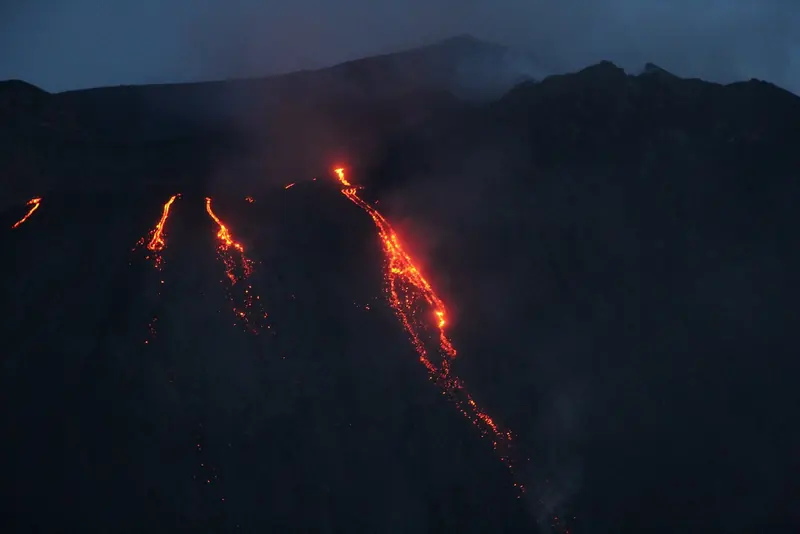
| Stromboli | continuously active, with the Civil Protection alert level at yellow, level two of four, through 2026 |
| May 2026 | intense spattering from the north crater fed a lava overflow onto the Sciara del Fuoco |
| Official guidance in a violent explosion, for anyone on a boat, is to move offshore immediately | |
| The real hazard is a landslide generated tsunami, as in 2002, not the lava itself | |
| Anchoring | volcanic and irregular bottom plus protected Posidonia, so buoy fields laid by concessionaires are the norm at Panarea and Vulcano's Levante bay |
| Lipari harbour has laid lazy lines, Panarea's port has none and a boat backs onto the pier on its own anchor | |
| Marina di Portorosa publishes annual rates excluding VAT: EUR 2,700 at 8 m, EUR 5,500 at 12 m, EUR 9,000 at 15 m, EUR 18,000 at 20 m and EUR 30,000 for 30 m by 6 m | |
| Those annual rates require a full year contract paid in advance, and exclude water and electricity | |
| Portorosa's peak daily season runs 15 June to 15 September, with three other bands across the year | |
| Portorosa holds about 700 boats with listings quoting a maximum of roughly 40 m | |
| Marina di Riposto, the Porto dell'Etna, has 366 berths under the volcano on the east coast | |
| Marina Villa Igiea at Palermo is the largest, about 400 berths for hulls to 65 m, twenty minutes from the airport | |
| Marina di Ragusa on the south coast is listed at about 700 berths taking 50 m | |
| Egadi Islands | the largest marine protected area in Italy, zoned A to D, with Zone A closed to anchoring and mooring |
| Egadi Zone B allows anchoring beyond 500 m from the coast, and inside that distance only with authorisation | |
| Egadi buoy fields have run since 2011 from June to September, priced by boat size, with permits now issued through the BlueDiscovery app | |
| Winds | maestrale from the north west in summer, scirocco off Africa bringing heat, haze and southerly swell |
| The Strait of Messina runs several knots at springs and reverses roughly every six hours, with overfalls where the streams meet | |
| Air | Catania Fontanarossa carried about 12 million passengers in 2025 with capacity now near 15 million, plus Palermo, Trapani and Comiso |
| The Aeolians have no airport, and the standard guest route is the hydrofoil from Milazzo, under an hour to Vulcano and Lipari | |
| Italy charges 22 per cent VAT on a charter from an Italian port, with the length based flat reductions withdrawn on 1 November 2020 | |
Two grounds off one gateway
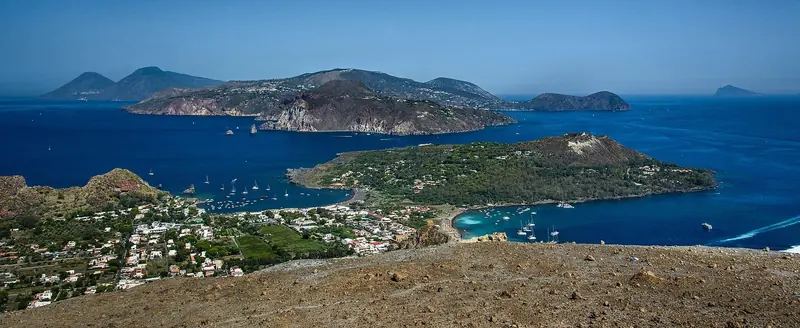
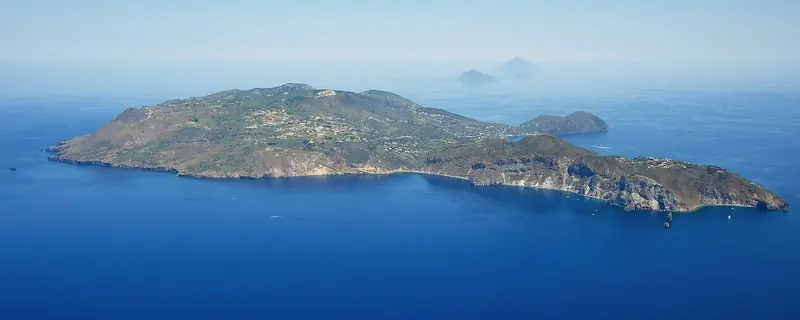
The Aeolian Islands sit in the southern Tyrrhenian about 20 nautical miles north of Milazzo on Sicily's north coast, and the whole archipelago fits inside a 30 mile circle. Vulcano and Lipari are a mile apart at the southern end, Salina is five miles west of Lipari, Panarea about twelve miles east, Stromboli twelve miles beyond Panarea, and Filicudi and Alicudi trail off to the west. Nothing in the group is more than two hours from anything else, and a week is a comfortable circuit with time to stop.
Behind them Sicily runs 300 miles around its own coast and is a separate trip. The east side has Taormina, Etna, Catania and Ortigia at Siracusa. The south west corner has Agrigento and the Greek temples. The west end has Trapani, Marsala and the Egadi Islands. The north coast has Cefalu and Palermo. An owner with a fortnight usually takes the Aeolians and the east coast, or the Aeolians and the west, rather than trying to circumnavigate, because the passages between them are long and the good stops are clustered.
The seven islands, and what each one is for
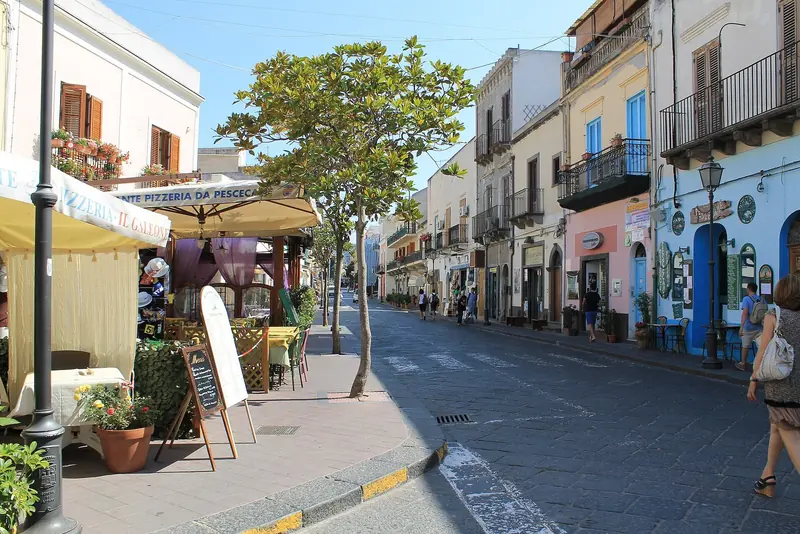
Vulcano is the arrival, with the sulphur smell, the crater walk and the fumaroles on the beach at Porto Levante. Lipari is the capital, the only island with a real town, a castle on the rock above the harbour and the provisioning. Salina is the food island, green and terraced, with capers, Malvasia wine and the two harbours of Santa Marina and Rinella, and it is where crews eat properly. Panarea is the small, smart, whitewashed one where the fleet gathers in August and where a yacht is very visible.
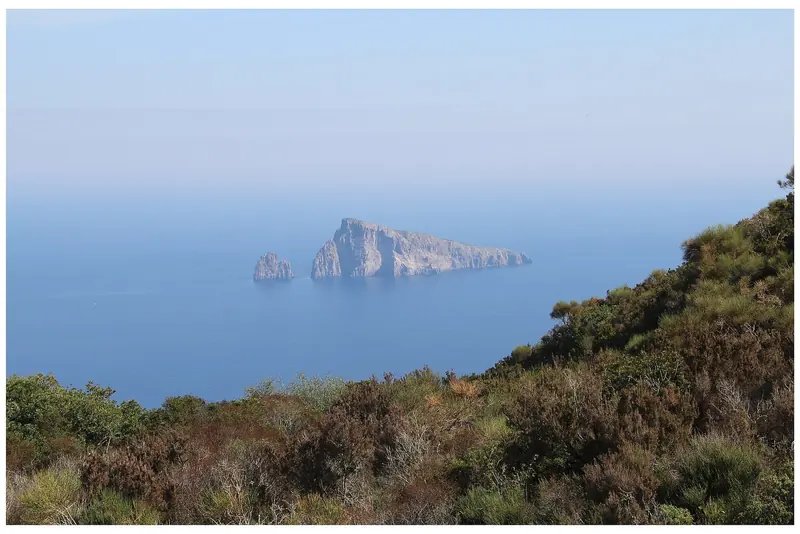
Stromboli is the reason people come. The island is a live volcano rising 900 metres straight out of the water, in continuous mild eruption for at least two thousand years, and the Sciara del Fuoco on its north western flank is the black scar down which the lava runs into the sea. Filicudi and Alicudi at the western end are the empty ones, with no roads worth the name on Alicudi and about a hundred inhabitants, and they are the two islands an owner tends to remember.
A live volcano to lie off at night, the largest marine reserve in Italy, and a published rate card that stops at thirty metres.
Anchoring here is mostly not anchoring
The Aeolian seabed is a poor combination for ground tackle. It is volcanic and irregular, with rock and boulder in the shallows, and where the bottom is sand it is often Posidonia, which is protected and which Italy now polices seriously. The practical answer, in place for years and standard by 2026, is that the good bays carry buoy fields laid by local concessionaires, notably at Panarea and in Vulcano's Levante bay, and an operator comes out by tender to take the line and collect the fee.
In the harbours the pattern changes again. Lipari has laid lazy lines, so a yacht reverses in and picks up a bow line off a mooring block. Panarea's small port has no lines and a boat drops its own anchor and backs onto the pier. The rule of thumb an owner should give the captain is simple: use the buoy where one exists, put the hook on clean sand and never on the dark patches, and expect the whole thing to be a tender operation rather than a berthing operation, because the archipelago has very little quay.
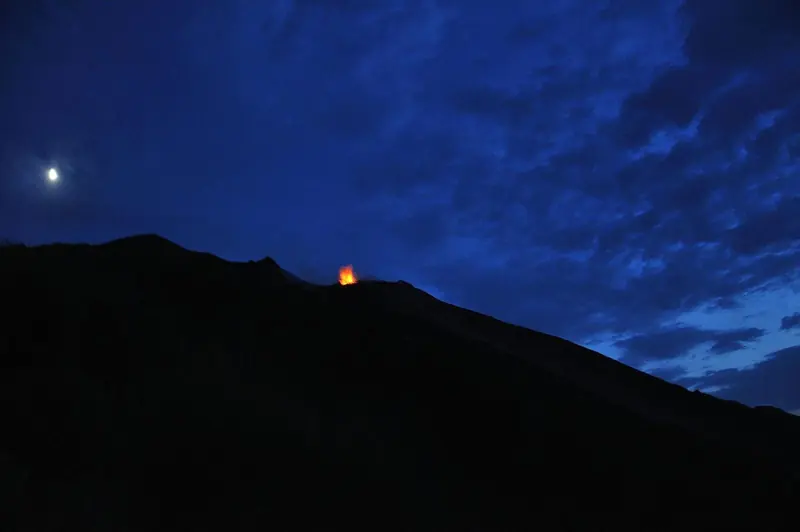
Stromboli is a working volcano, with rules attached
INGV monitors Stromboli continuously and the Civil Protection Department has kept the alert level at yellow, which is level two on a four level scale, through 2026, with the aviation colour code at orange for parts of the year. The weekly bulletins in July 2026 described ordinary Strombolian activity from vents in both crater areas, and in May 2026 intense spattering from the north crater fed a lava overflow onto the Sciara del Fuoco. None of that stops a yacht from lying off at night to watch it, which is one of the sights of the Mediterranean.
It does mean the boat needs a brief. The Civil Protection Department's published rules of conduct are explicit about what to do in a violent explosion, and the instruction for anyone on a boat is to move offshore immediately. The island's real hazard is not the lava but the tsunami that a flank landslide can generate, as happened in 2002, and the guidance is to leave the coast if you see a violent explosion, a large landslide or the sea withdrawing. The beach from Piscita towards the Sciara is exposed to falling rock. Safe distance offshore changes with the activity, and the local operators know it before any bulletin does.
Where a boat actually berths, and the size ceiling
Marina di Portorosa on the Gulf of Patti is the mainland base for the Aeolians and it publishes its card, which is unusual and useful. The annual rates, excluding VAT, run from EUR 2,700 for an 8 metre category D berth to EUR 5,500 at 12 metres, EUR 9,000 at 15 metres, EUR 18,000 at 20 metres and EUR 30,000 for category A1 at 30 metres by 6 metres. Annual rates apply only on a full year contract paid in advance, water and electricity are extra, and daily rates apply outside that across four seasonal bands, the peak running 15 June to 15 September.
That ceiling is the story of the region. Portorosa holds around 700 boats and listings put its maximum at about 40 metres. Marina di Riposto, the Porto dell'Etna under the volcano on the east coast, has 366 berths. Marina Villa Igiea at Acquasanta in Palermo is the one place that takes real size, with about 400 berths on fixed and floating docks for hulls to 65 metres, a walk from the old city and twenty minutes from the airport. Marina di Ragusa on the south coast is listed at 700 berths taking 50 metres. Anything above 65 metres in Sicily is a commercial quay negotiated through an agent.
The Sicilian coast is the other half of the trip
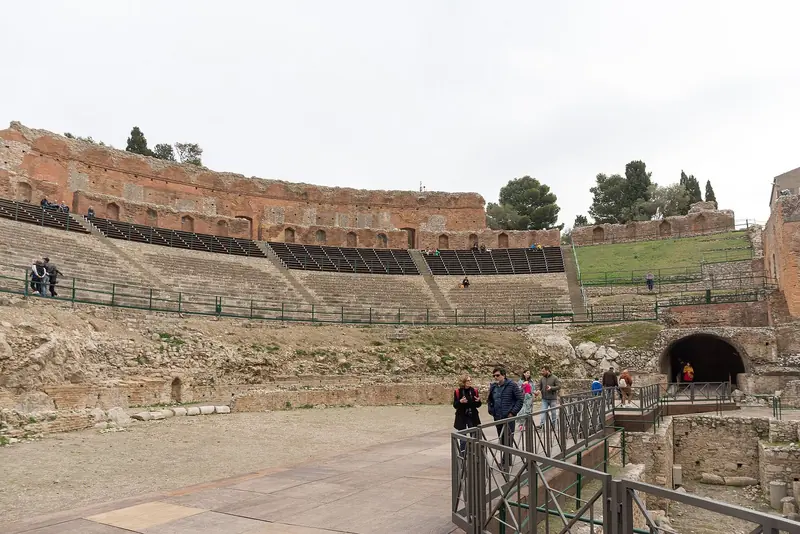
Taormina sits on its terrace above Giardini Naxos with the Greek theatre looking straight at Etna, and it is the one place on the island where the yacht crowd and the land crowd overlap. Etna itself is Europe's most active volcano and a UNESCO site, and it can be climbed or driven up in a morning from Riposto. Further south Ortigia, the island heart of Siracusa, is the finest old town in Sicily, a Baroque grid on Greek foundations with a cathedral built inside a temple, and the Porto Grande in front of it is a large sheltered anchorage.
The west is different country. Trapani and Marsala look at the Egadi Islands and the salt pans, Favignana is a low limestone island of quarries and coves, Marettimo is the remote one, and Mozia sits in a lagoon with a Phoenician settlement on it. Agrigento's Valley of the Temples on the south coast is the best Greek archaeology outside Greece and is reached from Porto Empedocle. Palermo in the north is a real city with markets, Norman churches and a marina inside it, and Cefalu an hour east of it is the prettiest small town on the coast.
The Egadi are the largest marine protected area in Italy
The Isole Egadi marine protected area covers the sea around Favignana, Levanzo and Marettimo and is zoned A to D. Zone A is an integral reserve where anchoring and mooring are both prohibited. Zone B allows navigation and anchoring outside 500 metres from the coast for everyone, and inside 500 metres only with authorisation. Zones C and D are progressively lighter. The zoning is published by the managing authority and is the document to read before the tender goes anywhere near Cala Rossa or the Marettimo coast.
Since 2011 the authority has laid buoy fields in the most used bays across the three islands, with the mooring service running from June to September and the price scaled by the size of the boat. The permit used to be bought on the authority's website and is now issued through the BlueDiscovery app. It is worth planning around rather than resenting: the reason the water off Favignana looks the way it does is the same reason a yacht cannot drop an anchor into it.
The strait, the winds and the months
The season runs from May to October. June and September are the best of it, with warm water, reliable breeze and space in the bays. August is hot, expensive and crowded, and Panarea in the middle of it is a small island with a very large fleet outside it. The prevailing summer wind is the maestrale from the north west, which can blow hard for two or three days and makes the northern sides of the Aeolians untenable. The scirocco comes up from Africa with heat, haze and a swell that shuts the southern anchorages instead.
The Strait of Messina between Sicily and the toe of Italy is the one piece of pilotage on the trip. The tidal streams run hard, reaching several knots at springs, they reverse roughly every six hours, and where they meet they raise overfalls and eddies that have been famous since Homer named them Scylla and Charybdis. It is a strait to transit on the fair stream in daylight, with the current tables read in advance, and it is a routine passage when that is done and an unpleasant one when it is not.
Getting guests in
Catania Fontanarossa is the gateway and the busiest airport in southern Italy, handling about 12 million passengers in 2025 with terminal capacity now around 15 million, and it sits about an hour from Taormina and Riposto. Palermo Punta Raisi serves the north and west and is twenty minutes from Marina Villa Igiea. Trapani Birgi covers the Egadi end and Comiso the south east. Catania has had construction on its runway and periodic night restrictions, so an owner planning a tight guest change in the summer should confirm the operating position rather than assume it.
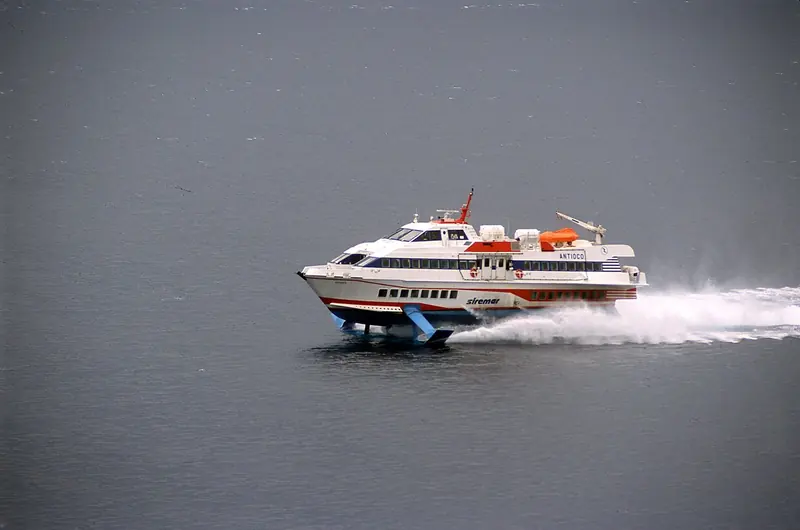
The Aeolians themselves have no airport. Guests reach them by hydrofoil from Milazzo, which is the standard route and takes under an hour to Vulcano and Lipari, by helicopter, or aboard the boat. Milazzo is therefore the practical crew change point for the archipelago, an hour and a half by road from Catania and about the same from Palermo. For a large yacht the sensible pattern is to berth at Portorosa or lie off Milazzo for the change and go back out to the islands the same day.
The Italian paperwork that applies here
Italy charges 22 per cent VAT on a charter starting from an Italian port, and the old flat reductions keyed to hull length were withdrawn on 1 November 2020, so any reduction now has to be evidenced as actual navigation outside EU waters rather than assumed. A non EU flagged yacht in private use runs on the 18 month EU temporary admission clock under Article 217(e) of Delegated Regulation (EU) 2015/2446, and that clock covers the whole Union rather than Italy alone. An agent should hold the file before the boat arrives.
Two Italian rules catch owners rather than charterers. Law 70/2026, the Legge Mare, added Article 26-ter to the pleasure craft code with effect from 10 May 2026, requiring foreign flagged vessels up to 24 metres owned by Italian residents to carry a certificate of fitness for navigation. And the Quadro RW asset declaration attaches to ownership by an Italian tax resident rather than to charter income, which is what the Guardia di Finanza has been checking in Italian marinas. Neither touches a genuinely foreign owner, and both explain the questions the marina office asks.
The honest downside, and what is not published
Sicily is a cruising ground with a berthing ceiling. Portorosa's own published card stops at 30 metres, Riposto and Ragusa are marinas for boats rather than superyachts, and only Palermo's Marina Villa Igiea takes 65 metres. Above that an owner is negotiating commercial quay space in Catania, Palermo or Messina with an agent, and paying for it without a tariff to check. The Aeolians have almost no alongside berthing at all, so a fortnight there is a fortnight of buoys, anchors and tenders, in an archipelago where the bottom is unforgiving.
Checked in August 2026, Portorosa is the only marina in the region publishing a full rate card. Riposto, Marina Villa Igiea and Marina di Ragusa quote on enquiry, and no marina in Sicily publishes a fuel price. The Aeolian buoy fields are run by local concessionaires whose rates are set on the water rather than posted. The Egadi mooring permit is priced by boat size inside an app rather than on a published scale. And nothing published tells an owner how many buoys are free off Panarea on a Saturday in August, which is the number the day turns on.
Ashore, access and booking
| Getting there | Catania Fontanarossa is the main gateway, the busiest airport in southern Italy at about 12 million passengers in 2025 against terminal capacity near 15 million, roughly an hour from Taormina and Riposto and an hour and a half from Milazzo. Palermo Punta Raisi serves the north and west and is twenty minutes from Marina Villa Igiea. Trapani Birgi covers the Egadi and Comiso the south east. Catania has run runway construction and periodic night restrictions in recent seasons, so confirm the operating position before a tight guest change rather than assuming it. |
|---|---|
| Reaching the Aeolians | There is no airport in the archipelago. Guests come by hydrofoil from Milazzo, under an hour to Vulcano and Lipari and about two to Stromboli, by helicopter, or aboard. Milazzo is the practical crew change point, an hour and a half by road from either Catania or Palermo. For a large yacht the workable pattern is to berth at Portorosa on the Gulf of Patti or lie off Milazzo for the change and be back among the islands the same afternoon. |
| What a berth costs | Marina di Portorosa publishes annual rates excluding VAT of EUR 2,700 for an 8 m category D berth, EUR 5,500 at 12 m, EUR 9,000 at 15 m, EUR 18,000 at 20 m and EUR 30,000 for category A1 at 30 m by 6 m, on a full year contract paid in advance, with water and electricity charged separately. Outside that it charges daily by category across four seasonal bands, the peak running 15 June to 15 September. It is the only published card in the region. Riposto, Marina Villa Igiea and Marina di Ragusa quote on enquiry. |
| Where the size ceiling sits | Marina Villa Igiea at Acquasanta in Palermo takes hulls to about 65 m across roughly 400 berths on fixed and floating docks, a walk from the old town. Marina di Ragusa is listed at about 700 berths to 50 m, Portorosa at about 700 boats to roughly 40 m, and Riposto at 366 berths. Above 65 m there is no marina in Sicily and the answer is commercial quay space at Palermo, Catania or Messina arranged through an agent, priced privately. |
| How you stop in the Aeolians | Use the concession buoys where they exist, which means Panarea and Vulcano's Levante bay among others, with an operator coming out by tender to take the line and collect the fee. Lipari harbour has laid lazy lines to reverse onto. Panarea's small port has none, so a boat drops its own anchor and backs to the pier. Where you must anchor, use clean sand and stay off the dark Posidonia patches, which are protected and enforced. Expect the whole archipelago to run on tenders rather than passerelles. |
| Lying off Stromboli | The Sciara del Fuoco is watched from the water at night and it is the fixture of any Aeolian cruise. INGV monitors the volcano continuously and the alert level has stood at yellow, level two of four, through 2026, with ordinary Strombolian activity reported in the July 2026 bulletins and a lava overflow onto the Sciara in May. Keep the distance the local operators are keeping, brief the crew that the published instruction in a violent explosion is to move offshore immediately, and treat a large landslide or a withdrawal of the sea as a tsunami warning without waiting for a siren. |
| The Egadi permit | The Isole Egadi marine protected area around Favignana, Levanzo and Marettimo is zoned A to D. Zone A is an integral reserve closed to anchoring and mooring. Zone B permits navigation and anchoring outside 500 m from the coast, and inside that only with authorisation. Buoy fields have been laid in the busiest bays since 2011 with the service running June to September, priced by the size of the boat, and the permit is now issued through the BlueDiscovery app rather than the authority's website. |
| Ashore, and the fixed sights | Taormina and its Greek theatre look straight at Etna and are the social evening of the east coast. Ortigia at Siracusa is the best old town on the island and sits behind the large sheltered Porto Grande. Etna can be climbed or driven from Riposto in a morning. Agrigento's Valley of the Temples is reached from Porto Empedocle, Palermo has the markets and the Norman churches, and Cefalu is an hour east of it. On the islands, Salina is where the food is, Lipari has the only real town, and Panarea is where the fleet is. |
| What is NOT published | Checked in August 2026, Marina di Portorosa is the only marina in the region publishing a full tariff. Riposto, Marina Villa Igiea and Marina di Ragusa are quote only, and no marina in Sicily publishes a fuel price. The Aeolian buoy fields are operated by local concessionaires who set their rates on the water. The Egadi mooring fee is scaled by boat size inside an app rather than on a published table. And no source tells an owner how many buoys are free off Panarea on an August Saturday, or how much commercial quay Palermo will release to a 70 metre yacht, which are the two numbers a season here actually turns on. |
What owners and crew report
The alert level has stayed at yellow through 2026, and the activity has not been quiet
INGV's weekly bulletins reported ordinary Strombolian activity from vents in both crater areas through late July 2026, with the Civil Protection Department holding the alert level at yellow, level two on a four level scale, and the aviation colour code at orange for parts of the year. In May 2026 intense spattering from the north crater area fed a lava overflow onto the Sciara del Fuoco. The safe standing off distance moves with the activity rather than with the alert level.
INGV and the Italian Civil Protection Department, reported by the Smithsonian Global Volcanism ProgramThe published instruction for a boat at Stromboli is to move offshore immediately
The Civil Protection Department's rules of conduct for the island tell anyone on a boat to move offshore at once in a violent explosion, tell those ashore near the coast to move inland to the marked waiting areas, and warn that a tsunami is typically preceded by a landslide or a violent explosion. Even without sirens, a large landslide or a withdrawal of the sea is the signal to leave the coast. The beach from Piscita towards the Sciara is separately flagged for falling rock.
Dipartimento della Protezione CivileAnchoring in the archipelago is discouraged by the seabed before any rule gets to it
Cruising guidance for the islands is consistent that the bottom is volcanic and irregular and that much of the usable sand carries protected Posidonia, so the concession buoy fields at Panarea, in Vulcano's Levante bay and off several villages are the standard practice rather than a convenience. Operators approach by tender to take the line and take the fee. Lipari's larger harbour has laid lazy lines, and Panarea's port has none at all.
Aeolian cruising guides, including SailScanner and Catamaran Charter ItalyThe Egadi permit moved into an app, and the zoning is the part that matters
The managing authority of the Isole Egadi marine protected area has laid buoy fields in the most used bays of Favignana, Levanzo and Marettimo since 2011, running the service from June to September and pricing it by the size of the boat, with the permit now issued through the BlueDiscovery app instead of the authority's website. Zone A remains closed to anchoring and mooring altogether, and inside 500 metres of the coast in Zone B anchoring requires authorisation.
Area Marina Protetta Isole EgadiThere is no published account of superyacht service standards on the island
Checked in August 2026, Marina di Portorosa is the only marina in Sicily or the Aeolians publishing a full rate card, Riposto, Marina Villa Igiea and Marina di Ragusa quote on enquiry, and no marina in the region publishes a fuel price. No independent owner or captain account of large yacht service at any Sicilian marina could be found. An owner above 40 metres is relying on an agent's word and his own inspection.
Yotters desk, checked August 2026
What is good, and what to watch
Strong points
- A live volcano you can lie off at nightStromboli has erupted continuously for at least two thousand years and the Sciara del Fuoco runs into the sea on its north west flank. Nothing else in the Mediterranean offers it, and it is watched from the water.
- Seven very different islands inside 30 milesVulcano for the fumaroles, Lipari for the town, Salina for the food, Panarea for the fleet, Stromboli for the show and Filicudi and Alicudi for the emptiness, none of them more than two hours apart.
- One marina publishes a real cardPortorosa posts annual rates from EUR 2,700 at 8 m to EUR 30,000 at 30 m excluding VAT, plus four daily seasonal bands, which is more than any of its neighbours will tell you before you ask.
- The Sicilian coast is a second holidayTaormina and Etna, Ortigia and the Porto Grande, Agrigento's temples, Palermo's markets and the Egadi Islands. Very few cruising grounds carry archaeology and a city at this level.
- Costs are a fraction of the north western MediterraneanA 20 metre berth at Portorosa is EUR 18,000 for a full year excluding VAT. The same money buys a handful of August nights on the Costa Smeralda.
What to watch
- The berthing ceiling is lowOnly Marina Villa Igiea in Palermo takes 65 metres. Portorosa's card stops at 30, and above 65 the answer is commercial quay negotiated through an agent with no tariff to check.
- The Aeolians are a fortnight of tendersAlmost no alongside berthing, a volcanic and irregular bottom, protected Posidonia over much of the sand, and concession buoys that are finite in August.
- The weather closes half the archipelago at a timeThe maestrale makes the northern sides untenable for days at a stretch and the scirocco does the same to the southern ones, which on islands this small means moving rather than waiting.
- The Strait of Messina is real pilotageStreams of several knots at springs, a reversal roughly every six hours and overfalls where they meet. It is routine on the fair tide in daylight and unpleasant otherwise.
- Almost nothing is publishedOne rate card in the region, no fuel prices anywhere, buoy fees set on the water and the Egadi permit priced inside an app. A season here cannot be budgeted from public information.
Who it is for: An owner who wants volcanoes, Greek theatres and honest food rather than a social address, is content to spend the fortnight on buoys and tenders, and whose boat is under about 65 metres, which is the ceiling of the best berth on the island.