The Bahamas & Exumas
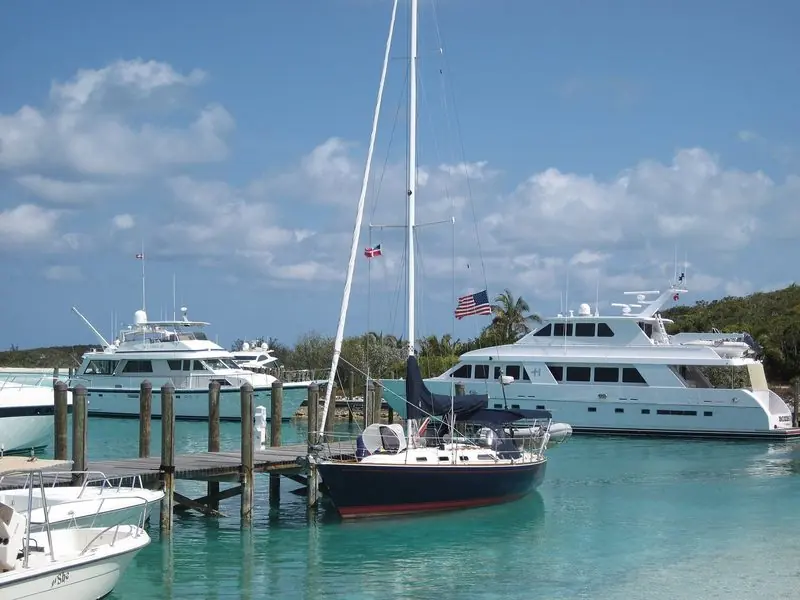
| Region | western Atlantic, southeast of Florida, hundreds of islands across shallow banks |
|---|---|
| Scale | Nassau to Highbourne Cay about 35 nautical miles, Highbourne to Staniel Cay about 40, Fort Lauderdale to Nassau about 180 |
| Season | December to April, with the Atlantic hurricane season 1 June to 30 November |
| Draft | much of the Exuma bank carries about 1.8 m, so deep-draft yachts run the Exuma Sound side and enter through the cuts |
| The cuts | tidal streams of 2 to 4 knots, with Dotham Cut around 120 feet wide, so transits are planned around slack water |
| Cruising permit from 1 April 2026 | USD 600 for 30 days, USD 2,000 for six months, USD 3,000 for twelve months for vessels over 100 feet |
| Anchorage fee from 1 April 2026 | USD 200, USD 1,000 or USD 1,500 for vessels over 100 feet on the 30-day, six-month or twelve-month permit, payable only if not in a marina |
| Frequent Digital Cruising Card | USD 1,500 for vessels over 100 feet, valid two years |
| Exuma Cays Land and Sea Park | moorings only in the mooring fields, no anchoring, no fishing of any kind |
| Park moorings | Warderick Wells north field takes vessels to 150 feet at USD 50 a night in 2026, paid through the ParkPay platform |
| Charter surcharge in the park | an extra USD 14 per person per day on mooring and anchorage fees |
| Largest marina | Albany on New Providence, 71 slips taking vessels to about 250 feet |
| No Bahamian marina published a superyacht rate card in July 2026, including Albany, which quotes on application | |
| Trade benchmarks | about USD 2 to USD 3 per foot per day for larger vessels, USD 25 to USD 40 per foot per month in Nassau, and USD 9 to USD 10 per foot per day in premium resort sections at peak |
| A twelve month cruising permit, the matching anchorage fee and a two-year Frequent Digital Cruising Card together come to a few thousand US dollars, against EUR 5,437 for one August night at Porto Cervo | |
| Charter tax | 14 per cent, being 10 per cent VAT plus a 4 per cent Port Department fee, now collected by the Port Department as a single payment |
| A Foreign Charter Licence must be obtained from the Bahamas Port Department before arrival and is valid for one year | |
| There is no temporary admission clock of the EU kind, because a foreign yacht is admitted on a cruising permit rather than into a customs union | |
| AIS is mandatory for foreign vessels of 50 feet and over, introduced with the 2025 and 2026 amending legislation | |
| The amended fee schedule took effect on 1 April 2026 | |
| Nearest lift | Fort Lauderdale, about 180 nautical miles from Nassau |
A hundred and twenty miles of cays
The Exuma chain runs about 120 miles southeast from Nassau and that is the cruise. Nassau to Highbourne Cay at the northern end is 35 miles, Highbourne to Staniel Cay another 40, and Staniel to Georgetown at the bottom about 60. Florida is close, with Fort Lauderdale about 180 miles from Nassau and Bimini only 50 miles off the Florida coast. The chain has a shallow bank on its western side and the deep Exuma Sound on its eastern side, and which of the two a yacht uses is decided by its draft.
A week is Nassau down to Staniel Cay and back, moving 20 to 40 miles a day and stopping twice. Two weeks reaches Georgetown and Long Island at the southern end, or turns north instead to Eleuthera, Harbour Island and the Abacos, which is a different and gentler kind of cruising. Owners doing this properly build in slack water at each cut and do not plan a fixed arrival time anywhere.
Highbourne to Georgetown, cay by cay
Highbourne Cay at the top of the chain has a small marina, fuel and a beach, and is the usual first stop out of Nassau. Norman's Cay just south has a wrecked drug-running aircraft in the shallows that guests swim over and a beach bar at MacDuff's. Shroud Cay, inside the national park, has mangrove creeks that a tender can run at the right state of tide and comes out on an ocean beach. Warderick Wells is the park headquarters, with a mooring field in a channel of water so clear that the boat appears to be floating on nothing.
Further south the chain gets busier. Staniel Cay is the hub, with the Yacht Club, a fuel dock and an airstrip, and the two famous excursions within a mile of it, Thunderball Grotto and the swimming pigs on Big Major Cay. Below Staniel, Black Point, Little Farmer's and Cave Cay are quieter, and Georgetown's Elizabeth Harbour is a large protected basin with a long-standing cruising community. Almost every anchorage here is over white sand in three to six metres.
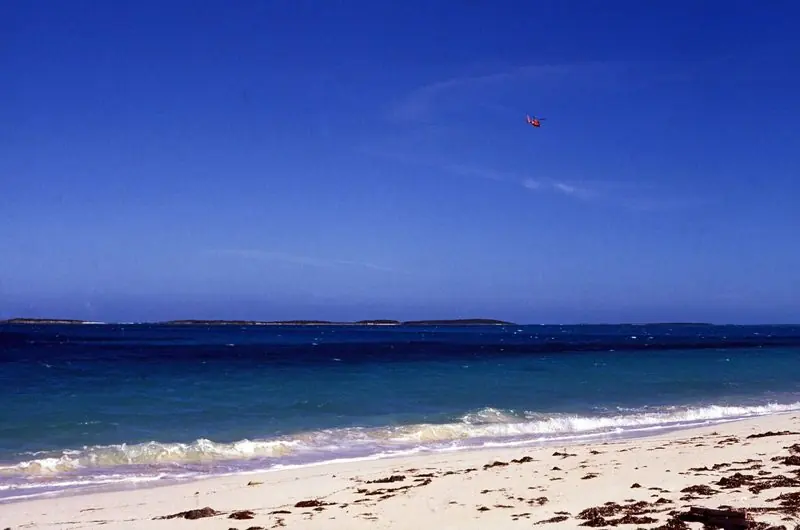
Two metres of water over the bank decides more about a Bahamas cruise than any budget does.
Draft, the cuts and the marinas
Depth is the whole question. Large parts of the Great Bahama Bank carry around 1.8 metres, which puts a modern 50 metre displacement yacht permanently on the Exuma Sound side. The cuts between the cays are the doors between the two, and they run 2 to 4 knots of tide, with Dotham Cut about 120 feet wide, so transits are timed for slack water and abandoned when an opposing ocean swell makes the cut break.
Marina options are concentrated. Albany on the southwest of New Providence has 71 slips and takes vessels to about 250 feet, and it is the address for large yachts in the Bahamas. Hurricane Hole on Paradise Island and Nassau Yacht Haven cover the rest of the capital, and Baha Mar and Atlantis have their own basins. Down the chain there are small marinas at Highbourne, Staniel Cay and a few private cays, all sized for boats far below superyacht scale. A 50 metre yacht in the Exumas is at anchor or on a park mooring for the whole cruise.
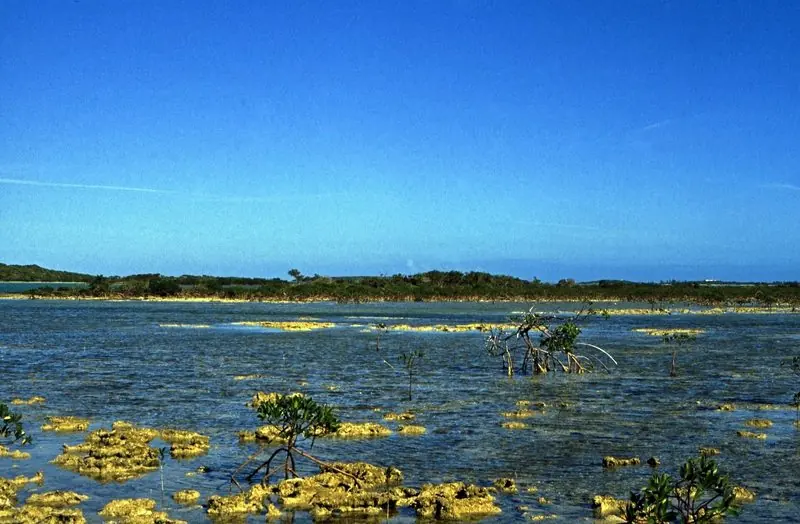
Fronts, trades and the months
December to April is the season and the weather is mostly benign. Days run in the mid twenties, the trades blow east to southeast at 10 to 20 knots, and the water is clear and warm enough to swim in without thinking about it. The hurricane season officially runs 1 June to 30 November and takes almost all the large yachts out of the country.
The variable is the winter cold front. Systems push off the North American continent every five to seven days from December into March, swing the wind through southwest, northwest and north, and blow 20 to 30 knots for a day or two before settling back into the trades. On a chain of low cays that run north to south, a front means moving to the other side of an island, and the good lee anchorages are known and get busy. A front that arrives with an ocean swell can make the cuts dangerous, which is the one genuine hazard in this cruising ground.
American holidays and the pig beach
The Bahamas season is shaped by American holidays more than by any regatta. Christmas and New Year, Presidents Day week in February, and the spring break weeks in March and April are the pressure points, and Nassau marina space at those times is booked well ahead. The rest of the winter is remarkably quiet by Mediterranean standards, and a yacht can have an Exuma anchorage to itself on a Tuesday in January.
Two places are exceptions. Staniel Cay and the Big Major pig beach are worked by day boats and seaplane tours from Nassau throughout the season, and by mid morning there can be dozens of small craft in the anchorage, so guests are better taken there at seven in the morning. Georgetown fills with the cruising fleet from February.

Nassau, and the airstrips down the chain
Access is the easiest of any destination on this list. Lynden Pindling International at Nassau has direct service from most of the eastern United States, from London and from Canada, plus full private jet handling, and it is 20 minutes from Albany or the Paradise Island marinas. Exuma International at Georgetown takes jets and has direct service from Florida. Staniel Cay, Norman's Cay, Black Point and several private cays have airstrips for light aircraft and charter turboprops.
That airstrip network is what makes a two-week Exuma cruise practical, because a guest can join or leave the boat halfway down the chain without a day of repositioning. The seaplane and light charter operators out of Nassau and Fort Lauderdale run this routinely. The other route in is the boat itself, since Fort Lauderdale to Nassau is an overnight run and many American owners simply bring the yacht across.
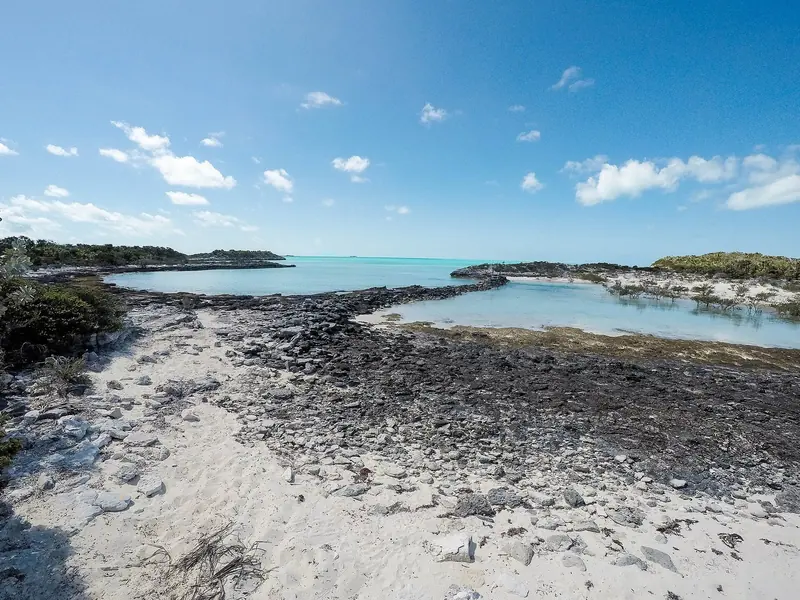
Ashore, and what there is of it
There is very little ashore and that is the point of the place. Staniel Cay Yacht Club is a bar, a restaurant and a fuel dock with brightly painted cottages behind it, and it is the social centre of the middle Exumas. Big Major, Compass Cay and Thunderball Grotto are half-day tender excursions and are what most guests remember.
Nassau is where the shore life is, and it is a different country. Albany, Baha Mar and Atlantis run resorts, golf, spas and restaurants at international standard, and the capital has the shopping, the provisioning and the hospitals. The Abacos and Harbour Island on Eleuthera sit between the two extremes, with Dunmore Town on Harbour Island offering a genuinely good handful of restaurants and pink sand. Guests who want nightlife should be told before they book that the Exumas have none.
The 2026 fee regime and the park
The fee structure changed on 1 April 2026 under amended customs regulations and owners should budget for it properly. For a vessel over 100 feet a temporary cruising permit costs USD 600 for 30 days, USD 2,000 for six months or USD 3,000 for twelve months, with one or two free re-entries on the longer permits. A separate anchorage fee applies to vessels not lying in a marina, at USD 200, USD 1,000 or USD 1,500 for the same three durations. A Frequent Digital Cruising Card costs USD 1,500 for a vessel over 100 feet and runs two years.
The Exuma Cays Land and Sea Park has its own regime, and it is a no-take zone where nothing living or dead may be removed. Anchoring is prohibited in the mooring fields, moorings are booked and paid through the ParkPay platform, the Warderick Wells north field takes vessels to 150 feet, and the 2026 mooring rate is USD 50 a night with an extra USD 14 per person per day on charter vessels. Technical support in the Bahamas is thin outside Nassau, so spares come from Florida by air freight and anything major is a run back to Fort Lauderdale.

The honest downside
The Bahamas punish the wrong boat. A deep-draft yacht is excluded from most of the anchorages the destination is famous for, and its guests end up in tenders for the good bits while the mother ship sits in the Sound or at the top of the chain. Even a shallow boat is working around tide tables for the whole cruise. There is no marina in the Exumas that will take a large yacht, no fuel in useful quantity outside Nassau and Staniel Cay, and no technical help at all.
The second point is that the shore experience is close to nonexistent and the famous excursions are crowded. The swimming pigs are a day-boat destination with a queue, and the grottoes work only at the right tide. Provisioning at the standard a large yacht expects means loading in Nassau or freighting from Florida. And the season is short and the fee regime is moving upwards, so an owner comparing this to a Mediterranean summer should be clear that he is buying water and emptiness and very little else.
The fees are published, the berth is not
The regulatory side of a Bahamas season is the easy part to price because the government prints it. What is not printed is the berth. Albany, which is the address for a large yacht in the country with 71 slips taking to about 250 feet, refers to rates without displaying them and quotes on application, and no Bahamian marina had a public superyacht rate card in July 2026. The workable benchmarks are per foot and they come from trade reporting rather than a tariff. Dockage for larger vessels runs about USD 2 to USD 3 per foot per day, monthly superyacht dockage in Nassau runs about USD 25 to USD 40 per foot per month at standard facilities, and the resort marinas publish tiered daily rates with premium sections reaching USD 9 to USD 10 per foot per day in peak season. On the resort figure a 164 foot yacht is roughly USD 1,475 to USD 1,640 a day. Those daily and monthly benchmarks do not reconcile with each other, so no single all-in month is stated here.
The fee side does reconcile and it is startlingly cheap by Mediterranean standards. A twelve month cruising permit for a vessel over 100 feet is USD 3,000, the matching anchorage fee is USD 1,500 where the boat is not in a marina, and the Frequent Digital Cruising Card is USD 1,500 for two years, so the entire regulatory cost of a year in the country runs to a few thousand dollars against EUR 5,437 for one August night at Porto Cervo. Inside the Exuma park the mooring is USD 50 a night at the Warderick Wells north field, which takes vessels to 150 feet, with an extra USD 14 per person per day on charter vessels. What is expensive in the Bahamas is not the country but the absence of one. There is no fuel in useful quantity outside Nassau and Staniel Cay and no technical capability outside Nassau, so spares come from Florida by air freight and the budget line that grows is freight and repositioning rather than berth. The nearest yard that can lift a hull of this size is at Fort Lauderdale, about 180 nautical miles from Nassau.
Whether a foreign flag may charter in Bahamian waters
The Bahamas is one of the few grounds on this list where a foreign-flagged yacht may charter outright, and the rule is stated rather than implied. A non-Bahamian owner must hold a Foreign Charter Licence, obtained from the Bahamas Port Department before arrival, valid for one year and applied for online through the government portal. The charter tax is 14 per cent, made up of 10 per cent VAT and a 4 per cent Port Department fee, and the Port Department is now authorised to collect the whole 14 per cent as a single payment, which removes the separate VAT filing with Inland Revenue that the original 2022 arrangement required. There is no equivalent of the EU's 18 month temporary admission clock, because a foreign yacht is admitted on a cruising permit rather than into a customs union, and the permit rather than the flag is what governs how long she may stay.
The regime moved through 2025 and 2026 and an owner working from an older briefing will get it wrong. The Port Authorities (Amendment) Act 2025, amended Customs Management Regulations in 2025 and 2026, the Boat Registration (Amendment) Act 2025 and the Environmental Health Services (Amendment) Act 2025 together introduced the new cruising, anchorage and fishing fees and mandated AIS for foreign vessels of 50 feet and over, with the amended fee schedule effective from 1 April 2026. The AIS requirement is the one with teeth, because it converts the question of where a yacht has been and whether she was in a marina or at anchor from an assertion into a record, and the anchorage fee is charged precisely on the boats that are not alongside. Inside the Exuma Cays Land and Sea Park nothing living or dead may be removed, anchoring is prohibited in the mooring fields, and moorings are booked and paid through the ParkPay platform. Fishing without the correct permit and anchoring inside a mooring field are the two infringements a visiting yacht is most likely to commit without meaning to.
Ashore, access and booking
| Getting there | Nassau's Lynden Pindling International is the gateway and takes anything, with business aviation handled by Odyssey Aviation and by Jet Nassau, the Bahamian operator that took over the former Jet Aviation FBO. For the Exumas, Exuma International at George Town has a 7,051 foot runway served by Odyssey Aviation and Strachan's Aviation. Staniel Cay, in the middle of the cays and beside the best of the cruising ground, has a small airstrip with genuine scheduled service: Makers Air runs up to six flights a day from Fort Lauderdale Executive in Cessna Grand Caravans and Staniel Air flies the same route daily. The constraint at Staniel is aircraft type rather than availability, which is why guests arriving by jet still route through Nassau or George Town. |
|---|---|
| Clearing in, and the AIS rule that catches people | Clearance paperwork goes in through Click2Clear before you arrive rather than on the dock, and Bahamas Customs publishes the list of ports of entry. The rule that catches visiting yachts is the electronics one: a foreign pleasure vessel above 50 feet must have AIS fitted, working and switched on at all times in Bahamian waters, and the published penalty is USD 1,000. A yacht that habitually runs dark for privacy has to change that habit at the boundary. Note that the published wording sits on the 50 foot mark itself in different ways depending on the source, so a yacht measuring exactly 50 feet should confirm at clearance rather than assume. |
| What the permits cost, and what actually changed in 2026 | The July 2025 reform abolished short cruising permits and made every temporary permit a twelve month one. The 1 April 2026 amendment did not cut prices; it re-created the 30 day and six month tiers that had been removed. For a yacht over 100 feet the 30 day permit is USD 600, six months is USD 2,000 and twelve months is USD 3,000; in the 50 to 100 foot band the same three are USD 350, USD 750 and USD 1,000. Crucially the longer permits carry free re-entries the short ones do not: the six month permit includes one, the twelve month permit two. A fishing permit is USD 300 over 50 feet and USD 100 under, a tender permit for a tender over 25 feet is USD 500, and a USD 30 head tax applies per additional non-Bahamian guest beyond the first three. The twelve month permit, the Frequent Digital Cruising Card, the fishing and tender permits, the head tax and the AIS fine were all set on 1 July 2025 and are unchanged. |
| Whether the Frequent Digital Cruising Card is worth it, with the arithmetic | The card buys two years of unlimited entry for USD 8,000 over 100 feet and USD 2,500 in the 50 to 100 foot band, and it is widely recommended without anyone doing the sum. Do the sum. Over 100 feet, three crossings a season on 30 day permits is USD 1,800 a season and USD 3,600 across two years, well under half the card. Three crossings a season on twelve month permits is USD 3,000 a year, or USD 6,000 over two years, because the twelve month permit already covers two re-entries. Break-even against 30 day permits falls at roughly fourteen crossings in two years. The card is the right answer for a yacht genuinely shuttling to Florida most months, and poor value for almost everyone else. |
| The anchorage permit is a separate charge | Anchoring is licensed apart from cruising and it is the fee most often missed. The twelve month anchorage band has been USD 200, USD 350 and USD 1,500 by size since July 2025 and is unchanged; what April 2026 added were 30 day and six month tiers beneath it, running from about USD 50 to USD 200 and USD 150 to USD 1,000 respectively. A two year anchorage entitlement attaches to the Frequent Digital Cruising Card. None of it applies while the yacht is in a marina, so a boat that berths every night pays nothing under this head. |
| What the Exuma Cays Land and Sea Park charges, and why you cannot book it | The park is run by the Bahamas National Trust and charges daily, in Bahamian dollars and before tax. Private vessel moorings are BSD 109.09 a night in the 70 to 89 foot band, BSD 136.36 from 90 to 119 feet and BSD 172.73 from 120 to 150 feet. Anchoring instead is BSD 0.45 per foot under 90 feet and BSD 0.91 per foot at 90 feet and over. Charter vessels pay an extra BSD 12.73 per person per day. Every one of those figures is net: since 1 January 2022 all marine and park fees carry 10 per cent Bahamian VAT applied at checkout, so the 120 to 150 foot mooring actually costs BSD 190.00 and anchoring at 90 feet and over is BSD 1.001 a foot. The operational point matters more than the money: the park does not accept reservations at all. You must secure a mooring physically and pay afterwards through the ParkPay app, and paying in advance buys nothing. |
| How you actually reserve a berth | Staniel Cay Yacht Club is the practical centre of the cays. It holds 18 slips carrying up to 12 feet of draft even at low water, plus 21 moorings, and takes bookings by email to [email protected] or by telephone on 242 355 2024 and 954 833 2100, working VHF 16, with the fuel dock open 08:00 to 17:00 daily. Albany, on the south side of New Providence, is the large-yacht address with 71 slips taking hulls to 250 feet; you complete a slip reservation request and the Harbour Master's office comes back, on [email protected] or 242 676 6020. Albany takes 100 per cent of the fees at booking, imposes a three night minimum on any reservation touching a peak date and five nights over the festive period, and refunds in full only on 72 hours notice off-peak or 30 days in peak, less a USD 100 processing fee. |
| What it costs alongside, including the fees under the headline | Albany publishes a full 2026 rate sheet and it repays reading. Dockage is USD 9.50 a foot from 22 November to 30 April, USD 6.50 from 1 May to 21 November and USD 12.00 at peak, which covers Thanksgiving weekend, 20 December to 5 January and Easter weekend. On top of that sits a 12 per cent resort services fee, then 10 per cent VAT on the dockage, the resort services fee and the amenity fee together. A transient guest also pays an amenity access fee of USD 3,100, USD 2,650 or USD 4,100 by season simply to use the resort. Electricity is USD 0.80 a kilowatt hour and water USD 0.34 a gallon for non-members. Read the small print too: USD 15 a night of the dockage rate is a gratuity to marina staff, and crew do not get access to Albany's amenities at all, only to the recreation centre. Staniel Cay by contrast publishes USD 3.85 to USD 7.45 a foot over 100 feet and USD 2.75 to USD 6.35 under, by season, moorings from USD 48.40 to USD 99.00, electricity at USD 1.20 a kilowatt hour and water at USD 0.40 a gallon. For the rest of the market, an Explorer Chartbooks survey dated January 2023 put Nassau Yacht Haven at USD 2.50 a foot a day, Bay Street Marina at USD 4, Lyford Cay Club at USD 6.50 and Highbourne Cay at USD 2.75 to USD 3.50, all before VAT. |
| Fuel, and what is honestly known about it | Fuel in the cays is dearer than in Nassau because every gallon arrives by barge, and range planning here is a real constraint rather than a formality. What is not available is a reliable current price: no marina in Nassau or the Exumas publishes a dockside diesel rate, and the Waterway Guide fuel report for the Bahamas currently carries a single facility, Grand Bahama Yacht Club at Freeport, at USD 7.060 a gallon including tax as at 31 July 2026. Treat any Exuma figure quoted to you in advance as an estimate. Fuel is available at Staniel Cay and Highbourne Cay among others, and Waterway Guide's Exumas directory also lists Black Point, Cave Cay, Compass Cay, Emerald Bay, George Town, Little Farmers Cay and Warderick Wells. Sampson Cay is not an option and has not been one since its marina closed in September 2013 and the cay went private. |
| Where to eat, and after dark | This is not a restaurant destination and pretending otherwise misleads. At Staniel Cay the Sea Level Dining Room at the Yacht Club is the room everyone ends up in, running a four course prix fixe across two seatings at six and eight, with a same-day dinner reservation required. The Captain's Lounge, open since 1956, is the club's original dining room and the informal alternative rather than merely a bar: breakfast, casual lunch and dinner, no reservation needed. Big Dog's Restaurant and Bar on the same cay does the Bahamian side, with dishes such as oxtail with peas and rice and chicken souse. Beyond that the evening is the boat, and owners who expect a town should be based in Nassau. |
| Dates to plan around | The National Family Island Regatta races Bahamian wooden sloops in Elizabeth Harbour at George Town every April; the 70th consecutive edition ran 21 to 25 April 2026, in four classes from the 28 foot A-Class down to the 12 foot E-Class. It is the best week of the year to see the country's own sailing culture rather than the visiting fleet. Against that, the Atlantic hurricane season runs June to November and most insurance and most owners treat the Bahamas as a December to May cruising ground. |
What owners and crew report
The marinas said the July 2025 fees were costing them bookings, by name and in advance
Peter Maury, president of the Association of Bahamas Marinas, said in June 2025 that marinas were calling him to report charters cancelling 2026 reservations because of the fees due on 1 July, and that several boats were cancelling for Abaco and Bimini because the position was so confusing and the additional fees so unclear.
Peter Maury, Association of Bahamas Marinas, reported by The Tribune, June 2025By mid-winter the northern marinas said it had happened
Operators in Bimini and Abaco described the new fees and regulations as absolutely strangling the winter season, with one saying they would be satisfied to settle at 50 per cent of the previous year's business. Reports from the same period describe widespread cancellations from long-time repeat visitors and a sharp drop in forward bookings during what is normally the peak.
Bimini and Abaco marina operators, reported by The Tribune, December 2025The objection worked, which tells an owner the rules here are still moving
After a review taken to prime ministerial level the government amended the schedule with effect from 1 April 2026, restoring the 30 day and six month cruising and anchorage tiers that July 2025 had abolished. The twelve month permit, the cruising card and the ancillary fees were left where they were.
Megayacht News and The Triton, April 2026Cruising guides put the workable draft at about six feet, not at what the chart says
Waterway Guide reports that most coral heads in the Exumas stand only three to four feet above the bottom, so vessels drawing up to about six feet pass over them without trouble even at low water. Above that, tide dictates movements, with a range around three and a half feet and more on springs.
Waterway GuideThe park tells you outright that planning ahead will not help
The Bahamas National Trust states that the Exuma Cays Land and Sea Park does not accept reservations, that a visitor must secure a mooring before making any payment, and that paying in advance does not constitute a booking. Roughly 115 balls are spread across eight mooring fields at four cays, and vessels of 90 feet and over generally pay by the foot to anchor instead.
Bahamas National Trust
What is good, and what to watch
Strong points
- The clearest water and the widest choice of anchorages in the western AtlanticThe Exuma chain runs roughly 120 miles of cays over white sand, and it is normal to find a 150 foot motor yacht and a 30 foot sailing boat sharing an anchorage, because the ground is broad rather than concentrated in a few harbours.
- It is close to Florida in a way no other Caribbean ground isNassau is an overnight run from south Florida rather than a passage, so a yacht can be used for long weekends out of Fort Lauderdale for half the year. That single fact is why so much of the American fleet bases here.
- The park is genuinely protected, not nominallyThe Exuma Cays Land and Sea Park has been a no-take reserve for decades and it shows in the fish and the coral. Even with VAT, anchoring at BSD 1.001 a foot for a yacht of 90 feet and over is a fraction of a berth anywhere else.
- Two marinas publish a full tariff, which is rare in this regionAlbany's 2026 sheet gives dockage per foot by season plus every ancillary fee, and Staniel Cay publishes dockage, moorings, power and water. An owner can cost a season at either from public information, which is more than St Barths or most of the Caribbean allows.
- The longer permits carry free re-entriesThe twelve month permit at USD 3,000 over 100 feet covers two re-entries and the six month permit one, which is what makes them good value against repeated 30 day permits at USD 600 each. It is the detail that decides which permit to buy and it is rarely mentioned.
What to watch
- Draft rules the whole cruising groundWaterway Guide puts most coral heads at three to four feet above the bottom, so vessels drawing up to about six feet pass over them even at low water. Above that draft the direct routes stop being available and the tide starts dictating the day. This is the biggest constraint on specifying a boat for the Bahamas and it is rarely stated plainly.
- Nobody publishes what fuel costsNo Nassau or Exuma marina posts a dockside diesel price, and the only current published Bahamian figure is USD 7.06 a gallon at Freeport as at 31 July 2026. On a large motor yacht that uncertainty is thousands of dollars a fill, and it has to be settled by asking rather than by planning.
- The headline berth rate is not the billAlbany's USD 9.50 a foot in season becomes USD 9.50 plus a 12 per cent resort services fee plus 10 per cent VAT on both, plus a seasonal amenity access fee of USD 2,650 to USD 4,100 for a transient guest. The published number understates the real cost of a week by a wide margin, and crew are excluded from the amenities being charged for.
- You cannot book the park, and that is policyThe Bahamas National Trust states plainly that the Exuma Cays Land and Sea Park does not accept reservations and that payment in advance holds nothing. With roughly 115 balls across eight mooring fields serving the whole visiting fleet, a large yacht in season is competing for them on arrival.
- The cost of entry has moved twice in nine monthsJuly 2025 abolished short permits, April 2026 brought them back, and the industry objection in between was loud enough to force a review at prime ministerial level. The twelve month figures have held throughout, but an owner planning several seasons cannot yet treat this line as settled.
- Half the year is closedHurricane season runs June to November and most policies restrict the yacht's position through it. The Bahamas is a December to May ground, which makes the six month permit better value than the twelve month one for most owners despite the re-entry allowance.
Who it is for: An owner with a shallow-draft yacht or a serious tender programme who wants empty, luminous anchorages an afternoon from Florida and does not need anything ashore.