The Channel Islands and North Brittany
| Tidal range | up to 10 metres (Colin Le Conte, Motor Boat & Yachting); Herm doubles in size at low water |
|---|---|
| Alderney Race | up to nine knots at springs; wind against tide builds a steep breaking sea (nammert.com) |
| Needles to Braye Harbour 61 nautical miles; Braye to St Peter Port 22; St Peter Port to St Helier 26; St Helier to Saint-Malo 37 (Yachting Monthly, 2022) | |
| Victoria Marina, St Peter Port | sill, access 2.5 hours either side of high water; five holding pontoons outside |
| St Helier Marina | maximum length 20 metres; 2026 daily visitor rate GBP 63.75 for 14 to 15.99 metres |
| Alderney Braye Harbour | 70 yellow visitor buoys, GBP 25 a night, anchoring GBP 10, over 14 metres GBP 40, not reservable |
| Clearance | Guernsey Bailiwick requires Q flag and form; Jersey does not for most yachts; returning to the UK means reporting to UK customs |
| Suggested time | two weeks for the islands and back, three with Saint-Malo (Yachting Monthly) |
What the ground is
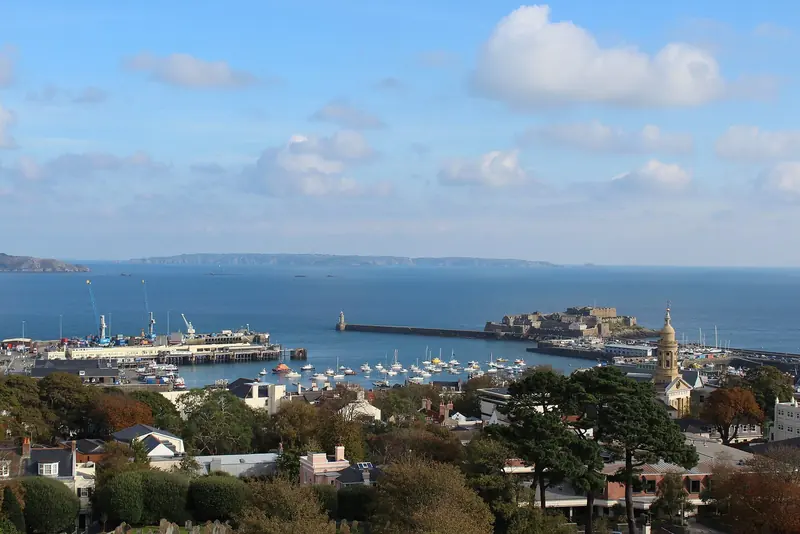
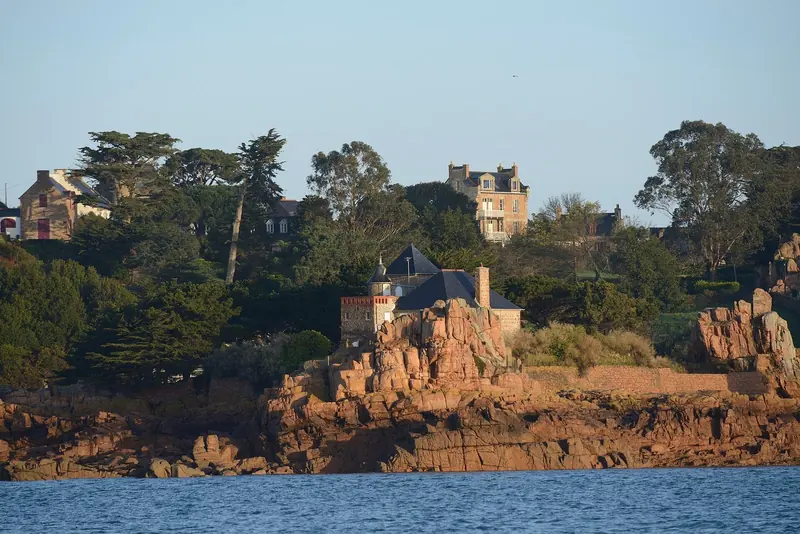
The group is three Crown Dependencies and a French shore. Guernsey (with Herm and Sark) and Alderney sit together in the Bailiwick of Guernsey; Jersey is a separate jurisdiction about 26 to 27 nautical miles south-east of Guernsey; and the French coast from Cherbourg round to Saint-Malo and the Chausey archipelago closes the circle. Colin Le Conte, a Guernsey boat owner writing in Motor Boat & Yachting, puts the tidal range at up to 10 metres and says Herm doubles in size at low water, while the Minquiers reef covers an area almost the size of Jersey on a spring low. That one fact explains the character of the whole ground: depth changes the map twice a day, so what you can enter, anchor in or walk ashore on depends on the hour.
The scale suits a short cruise. Yachting Monthly's Miranda Delmar-Morgan (August 2022) suggests two weeks for the islands and back from the Solent and three weeks if you add Saint-Malo. Le Conte's own advice is to overnight in a Guernsey marina or in Alderney's harbour and make day trips to the smaller islands and bays, and he does not recommend overnight bay anchoring unless you know these conditions well. Both of those are sensible limits for an owner whose crew is new to the area.
Getting there and the distances that matter
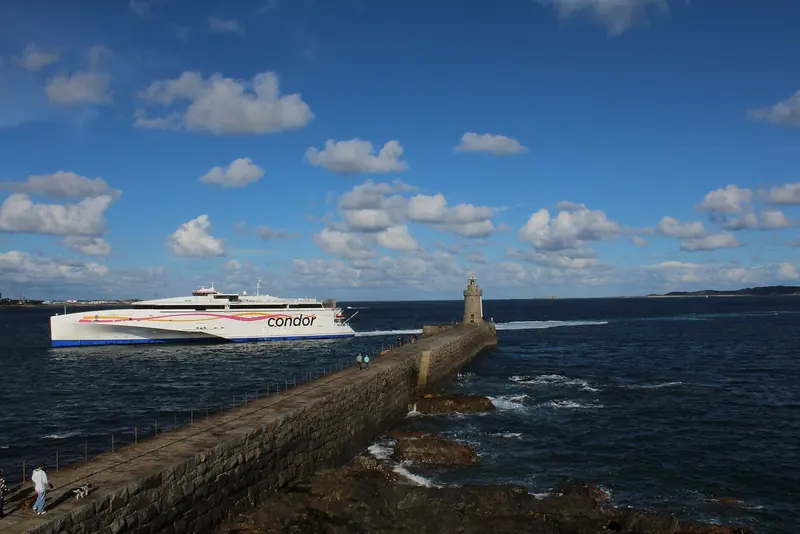
Delmar-Morgan's route table gives Yarmouth to the Needles as 5 miles, the Needles to Braye as 61, Portland Marina to Braye as 54, and the Needles to Chantereyne Marina in Cherbourg as 61. From Braye it is 22 miles to St Peter Port, then 6.5 to Sark and 26 on to St Helier. From St Helier it is 12 miles to Les Minquiers, 14 to the Iles Chausey and 37 to Saint-Malo. Le Conte quotes Alderney as about 25 miles north-east of Guernsey, so the 22 and the 25 differ by route and source; use the pilot for the leg you are sailing.
The passage to Alderney is a tidal problem before it is a distance problem. The rhumb line is west of south and needs about 23 miles of westing, so Delmar-Morgan says to get the best of the tide, watch set and drift, and arrive up-tide of Braye because the streams run harder on the French side. She recommends neap tides if the passage worries you and a wind with no hint of south or west in it, and she adds that you should not be afraid to call it off if the weather looks unstable. A competent crew who know the boat are assumed.
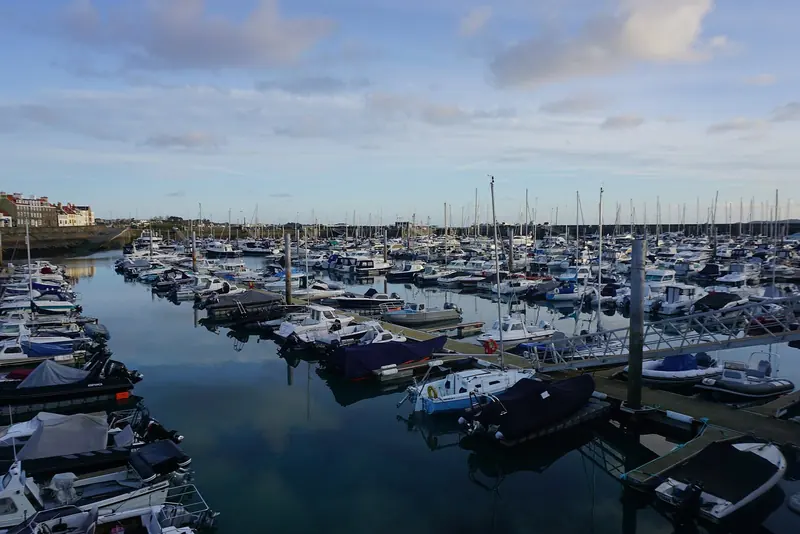
A range of up to 10 metres, a Race that runs at up to nine knots and a marina you enter by the clock: the Channel Islands are a tide table with harbours attached.
The tidal gates
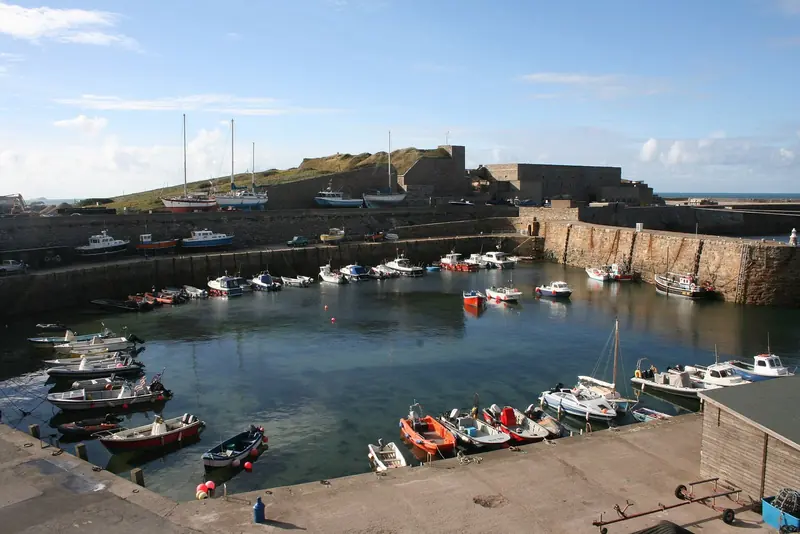
Yachting Monthly names the Alderney Race, the Swinge, the Ortac Channel and the Little Russell as the four. The hazard reference at nammert.com describes the Race running at up to nine knots at springs and warns that wind against tide builds a steep, breaking sea unrelated to the forecast wind, with a narrow fixed passage window; enter at the wrong hour and a boat can be held or set back, and the slamming can damage fittings, steering and electronics. The Swinge can be taken at slack and is shorter than going round the top of the island and down the Race, but Delmar-Morgan notes there is very little slack, and Pierre Vraic and Corbet Rock lie in it.
Timing figures from the same article: the south-west-going stream off Braye starts at St Helier HW+0350, which is Dover HW-0100 and Braye HW+0230, and the calmer water in the earlier stages is on the eastern side. Into St Peter Port you take the Little Russell on the same tide. On an owner forum, a poster called Robin (11 February 2011) advised leaving Cherbourg at local high water for St Helier in one tide, using the inshore eddy off Cap de la Hague for about two hours before reaching the Race near slack, and he warned that the same eddy can stop a boat dead on the way back if you hug the shore; stay offshore until past Omonville. That is a 2011 forum post, so treat it as a pattern to check against current tidal atlas data and not as a table.
Clearance and paperwork
The RYA's Channel Islands page says Guernsey, including Alderney, Herm and Sark, requires you to clear customs on arrival: fly the Q flag, complete the form at your port of entry and return it. Jersey does not require the Q flag or the Customs and Immigration declaration, with two exceptions: you arrived from outside the Common Travel Area with someone aboard who is not British or Irish, or you have goods to declare. The RYA is clear that the Channel Islands and the UK are separate customs authorities, so when you return to the UK you must report your arrival to UK customs. At Alderney the harbour office page says the declaration form goes in the yellow Customs box at the top of the dinghy pontoon walkway, that you show a yellow Q flag until the Guernsey Border Agency has cleared you, and that the Harbour Authority does not handle customs (GBA 01481 221417).
Two newer points are worth checking before you sail. Alderney's page says an Electronic Travel Authorisation applies to some visitors from 23 April 2026 (GBP 16 at the time of writing, rising to GBP 20, one per person including children), so crew nationality matters, and dogs may only arrive from the UK, the Isle of Man, Guernsey or Jersey and not from mainland Europe. For French landfalls, a 2019 Motor Boat & Yachting report on post-Brexit crossings listed Cherbourg, Granville, Carteret, Saint-Malo, Brest and Roscoff as the Frontieres Maritimes ports; that was a no-deal contingency written by Chris Jefferies and is dated, so confirm the current French procedure with the port before relying on it.
Guernsey, Jersey and Alderney: where you actually berth
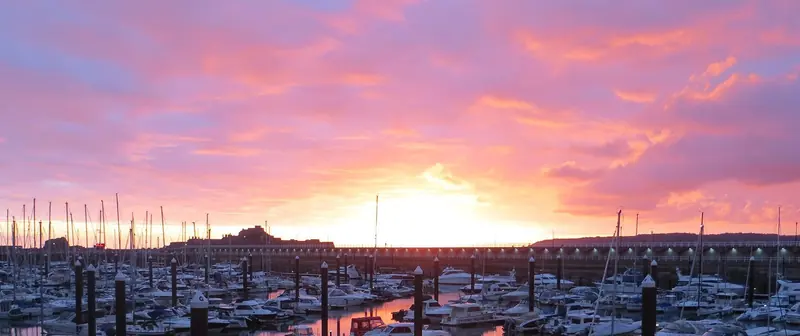
St Peter Port's Victoria Marina sits in the town centre and is the main visitor berth. Le Conte says access is restricted by a sill to 2.5 hours either side of high water; if you miss the window there are five holding pontoons outside, connected to shore through the summer, and a marina attendant in the harbour Dory guides arrivals. Low-duty diesel is on the south side of the main fairway. Guernsey Ports announced a GBP 300,000 programme in January 2025 to renew the roughly 50-year-old pontoons in the visitors' marina (Bailiwick Express and Island FM). Beaucette, a private marina in an old quarry in the north, can be entered over a greater range of tides, but the entrance is narrow in rough weather and visitor space is limited, so call ahead.
In Jersey, the 2026 Jersey Marinas tariff sets a maximum length of 20 metres inside St Helier Marina, subject to displacement and space. Ports of Jersey says access to St Helier and Elizabeth marinas is governed by the tide, and a separate pilot listing gives a three-hour sill window either side of high water; the Ports of Jersey page itself describes all-tide access for vessels up to 30 metres across its three marinas. These two descriptions do not match, so ask the marina which basin and which time applies to your draught before you commit. Alderney's Braye Harbour has 70 yellow visitor buoys that cannot be reserved, a water taxi on VHF 73 and no pontoons; Le Conte warns sleeping aboard can be uncomfortable with the wrong wind.
What it costs
The Jersey Marinas tariff valid from 1 January 2026 lists daily visitor rates at La Collette, Elizabeth and St Helier of GBP 37.85 up to 7.99 metres, 41.30 for 8 to 9.99, 44.75 for 10 to 11.99, 54.20 for 12 to 13.99, 63.75 for 14 to 15.99 and 93.75 for 16 to 19.99 metres, then GBP 8.50 per metre above 20 metres. A weekly stay is seven days for the price of six if paid in advance, ships other than single-hulled boats pay 50 per cent more at La Collette and St Helier, and 5 per cent GST is applied where applicable. Visitor electricity is a daily charge: GBP 3.63 up to 12 metres, 5.11 from 12 to 19.99, 10.45 from 20 to 24.99 and 27.93 above 25 metres.
Alderney's harbour office lists a visitor mooring at GBP 25 a night, anchoring at GBP 10 and a large-vessel rate of GBP 40 a night over 14 metres, collected by the harbour launch at your boat; the water taxi is GBP 3 per adult one way in summer. For Guernsey, a report from 2024 said Guernsey Ports planned to raise visitor fees by 30 per cent by 2026 and berth fees by 50 to 93 per cent over three years to fund pontoon work, but a published 2026 visitor tariff per metre was not found, so ask Victoria Marina (VHF 80, +44 1481 725987) for the figure. Do not budget from an old forum price: a post that quoted GBP 18 a night on the St Peter Port outer pontoons is undated and long out of date.
Sark, Herm and the French side
Herm lies about 4 miles east of Guernsey, has around 50 permanent residents and no cars, and its harbour suits dropping passengers above half tide, with visitor buoys outside and sandy holding elsewhere; Belvoir Bay is steep and sheltered from most winds, and Shell Beach is very busy in high summer. On Sark, Le Conte lists Dixcart Bay on the east coast, protected from most west and north winds, and Havre Gosselin, where yellow visitor moorings sit in water deep enough at all states of tide, though it is close to the Gouliot Passage and open to the west. Greve de la Ville has yellow buoys but is difficult to land in rough conditions, and Grande Greve can swell even in calm weather.
On the French side, Saint-Malo's Vauban basin is entered through a lock; PredictWind gives the window as roughly 2 hours 30 either side of high water, with waiting buoys north-west of the lock per Yachting Monthly, and Bas-Sablons is the alternative if there is enough water over the sill. Visitor numbers in the sources disagree (one says 225 berths, another 75 visitor places split 25 and 50), so reserve rather than assume. A 2011 forum thread has a poster saying Chausey has fore-and-aft buoys and that leaving a boat at anchor in big tides is worrying, and another saying Carteret completely dries and Granville has a drying approach with a quoted 2.50 metre maximum draught.
Ashore, access and booking
| Where it is | Channel Islands (Guernsey, Alderney, Herm, Sark, Jersey) plus the French coast from Cherbourg to Saint-Malo and the Iles Chausey. About 61 nautical miles from the Needles to Alderney or Cherbourg. |
|---|---|
| Season | No source reached gives a best month. Delmar-Morgan suggests two to three weeks and neap tides for a nervous first passage; plan by the tide table, not the calendar. |
| Tides | Range up to 10 metres. Four gates: Alderney Race (up to nine knots at springs), the Swinge, the Ortac Channel, the Little Russell. Streams up to 4 knots in the bays. |
| Clearance | Guernsey Bailiwick (including Alderney, Herm, Sark): Q flag and customs form. Jersey: not required for most yachts, with two exceptions (arrival from outside the Common Travel Area with non-British or non-Irish crew aboard, or goods to declare). Report your arrival to UK customs when you return. |
| Guernsey berth | Victoria Marina: sill, 2.5 hours either side of high water; five holding pontoons outside. 2026 visitor per-metre rate: not found. VHF 80, +44 1481 725987. |
| Jersey berth | St Helier Marina up to 20 metres. Daily 2026: GBP 37.85 up to 7.99 m, 54.20 for 12 to 13.99 m, 93.75 for 16 to 19.99 m, then GBP 8.50 per metre over 20 m; weekly is seven days for six if paid in advance. Phone +44 1534 447708. |
| Alderney berth | 70 yellow buoys, GBP 25 a night (GBP 40 over 14 m), anchoring GBP 10. Not reservable. Harbour Office VHF 74, +44 1481 820070; water taxi VHF 73. |
| Fuel | Low-duty diesel on the south side of the main fairway at St Peter Port; red diesel and marine petrol at Alderney. A poster reported cheap diesel outside the gate at St Helier (2011, unverified). |
| Not published | A current Guernsey visitor tariff per metre; a verified St Helier sill time (sources conflict); current French clearance procedure for arrivals from the islands. |
What owners and crew report
Neaps and a clean wind make the Alderney passage easier
Chose neap tides because they are slightly less daunting, wanted no hint of wind from south to west and said not to be afraid to call the passage off if the weather looks unstable.
Miranda Delmar-Morgan, Yachting Monthly, August 2022Overnight in a marina or Alderney, day-trip the bays
Recommended overnighting in a Guernsey marina or Alderney harbour and visiting Herm, Sark and the bays by day, and did not recommend overnight bay anchoring without experience of the conditions.
Colin Le Conte, Guernsey boat owner, Motor Boat & YachtingCherbourg to St Helier in one tide, with a caution on the return
Left Cherbourg at local high water, used the Cap de la Hague eddy for about two hours and reached the Race near slack; warned the eddy can stop a boat dead on the way back if you hug the shore.
Robin, YBW forum, 11 February 2011Carteret and Granville dry; Chausey has buoys
Carteret completely dries once the tide goes out and a boat lay over on a sandbank leaving too late; Granville has a drying approach; Chausey has fore-and-aft buoys but leaving a boat at anchor in big tides is worrying.
Sailfree, Angele and Solent sailer, YBW forum, February 2011
What is good, and what to watch
Strong points
- A big cruise in a small areaDistances between the islands are 6.5 to 37 miles, so two weeks covers Alderney, Guernsey, Sark, Jersey and the Chausey archipelago as Yachting Monthly lays it out.
- Sark, Herm and the bays reward a boat that can use the tideLe Conte's anchorages (Dixcart, Belvoir, Havre Gosselin with buoys usable at all states) put guests on car-free islands within a short tender ride.
- Honest, published harbour prices at Alderney and JerseyBoth authorities publish a daily visitor scale, so a buyer can price a week before arrival, which is more than most Mediterranean ports offer.
What to watch
- The tide, not the weather, can stop youUp to 10 metres of range, a sill at Victoria Marina and a Race at up to nine knots mean a missed window costs hours.
- No reservable visitor buoys at AlderneyThe harbour cannot reserve its 70 buoys, and Le Conte says sleeping aboard can be uncomfortable with the wrong wind.
- Clearance differs by islandGuernsey needs a Q flag and form, Jersey mostly does not, and the UK needs a report on return, so the paperwork changes at every border.
- Guernsey's 2026 visitor price is unpublished where this desk could find itA 2024 report of planned 30 per cent rises means an old forum price will be wrong.
Who it is for: A crew with tidal-gate experience and an owner who is happy to plan around the clock for a one to three week circuit within a day of the Solent, not an owner expecting guaranteed berths in high summer or a published Guernsey tariff in advance.