The Cook Islands
| Ports of entry for yachts in practice | Avatiu (Rarotonga) and Arutanga (Aitutaki); Customs Advance Notice of Arrival at least 48 hours before arrival (Cook Islands marine craft page) |
|---|---|
| Suwarrow is not a port of entry | Customs permission on Form 27 first, then park rules of 9 June 2026 apply |
| Suwarrow entrance fee | USD 150 per vessel for up to 2 people and up to 5 days, USD 50 for each extra person (NES rules, June 2026; confirmed by Noonsite, 3 September 2026) |
| Cyclone season | 1 November to 30 April, peak December to February (Cook Islands Meteorological Service, via Cook Islands News, May 2024) |
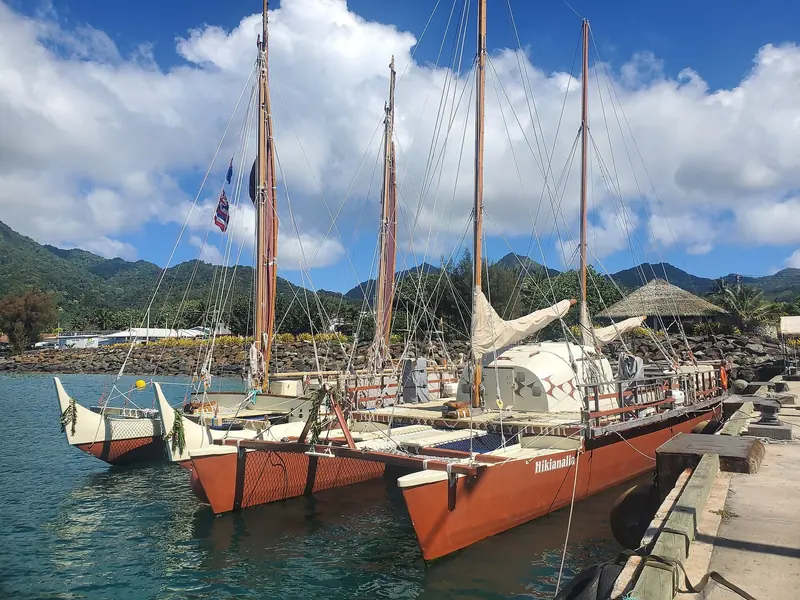
| Avatiu | med-moor with own bow anchor, basin dredged to 10 m, 27 m height limit at the north end of the wharf, closed in strong northerlies (Noonsite) |
| Aitutaki | channel dredged in 2024 and 2025 to a planned 6 m depth and 15 m width; boats over 2 m draft anchor outside the reef (Noonsite) |
| Departure | 72 hours' notice, Certificate of Clearance, no stops at other Cook Islands anchorages afterwards |
| Fuel stock, 5 November 2026 | Rarotonga about 50 days of diesel, Aitutaki about 40 days (Ministry of Finance and Economic Management) |
A scattered nation with two doors
Noonsite describes the group as a popular stopover for yachts heading west across the Pacific, and places Rarotonga about 2,100 miles northeast of New Zealand. A cruising guide by a sailing couple who visited in 2016 and 2018 puts the whole chain at almost 800 nautical miles from Mangaia in the south to Penrhyn in the north. Aitutaki, the second port of entry, lies 220 km north of Rarotonga according to Noonsite. Because the group sits between French Polynesia and Samoa, it works as a stage on a longer Pacific voyage more than a cruising ground you tour for a season.
The Ministry of Finance and Economic Management lists seven designated Customs ports: Avatiu on Rarotonga, Arutanga on Aitutaki, Atiu, two on Manihiki, Pukapuka and Penrhyn. Noonsite reported in December 2024 that officials had confirmed only Avatiu and Arutanga as open to yachts, with Penrhyn closed for want of customs staff. Treat the shorter list as the working one and ask in writing before you point a bow at anything else. Suwarrow, Palmerston and the other outer islands aren't ports of entry at all. You clear in at one of the two doors first and then ask permission to go on.
Clearing in
The government's marine craft page asks for Form 29 or an email to [email protected] headed ANA, giving the craft name, the estimated arrival and the full passport details of everyone aboard, and it asks you to tell Biosecurity and Immigration at the first port as well. Arrival is counted from entering the 12-mile territorial sea, and nobody leaves the boat until it is entered or Customs says otherwise. On the paper side expect an inward report on Form 36 or 38, an arrival card and passport for each person, a Border Cash Report if required and lists of crew, passengers and any drugs or firearms. Firearms are declared and held by the police until you leave. The cruising guide from 2018 says the officials usually come to the dock, with the harbour master first, then Customs in Avarua and a quarantine inspection of the boat.
The penalties are written down and they aren't gentle. The marine craft page lists up to two years in prison or a fine of up to $100,000 for failing to give advance notice, and up to two years or $50,000 for an unauthorised landing at a non-designated port. The Customs Service advised in 2024 that a captain should send the documents and wait for approval before leaving the last port, because space in the country's ports is very limited. Noonsite carried the 2021 case of a solo yacht that arrived at Avatiu unannounced and was told to leave; that was under Covid border rules, but the Secretary of Transport's reasoning, that nobody had communicated, still describes the posture. Arrive at night and you anchor off and call for permission after daylight. Departure needs 72 hours' notice, a Certificate of Clearance and a straight exit: after clearing out you may not stop at other Cook Islands anchorages.
Two doors, a 48-hour notice, a med-moor that closes in a northerly and an atoll that opens when the park service says so.
What it costs
The marine craft page lists what is charged but not how much: Customs officer's time, Immigration, Health and Biosecurity fees and port fees on entry, and officer's time plus departure tax on exit. For numbers you're left with reports. Hugh Pilsworth of BlueFlyer posted on the Ocean Cruising Club forum in May 2018 that harbour dues were $2.48 per foot per day, cash only at the harbour office, that Customs worked out at $95 per person for a three-day visit, that the health check cost $40 and that the whole visit came to almost $550. The report doesn't name the currency. A 2015 comment on Noonsite gave customs fees of $57.20 and a departure tax of $66.30 per person.
Noonsite also reproduced the Ports Authority's 2015 rates: NZD 2.14 per metre per day for a monohull, NZD 2.95 for a multihull and NZD 2.40 per gross ton or per metre, whichever is greater, for a motor yacht, plus a NZD 5 mooring fee at Aitutaki and a NZD 65 departure tax per adult. On that basis a 40-metre motor yacht would have paid at least NZD 96 a day for its berth in 2015, and more if gross tonnage was the higher number. These are eleven-year-old figures and tariffs have almost certainly moved since, so use them as a floor and ask the harbour master for today's schedule.
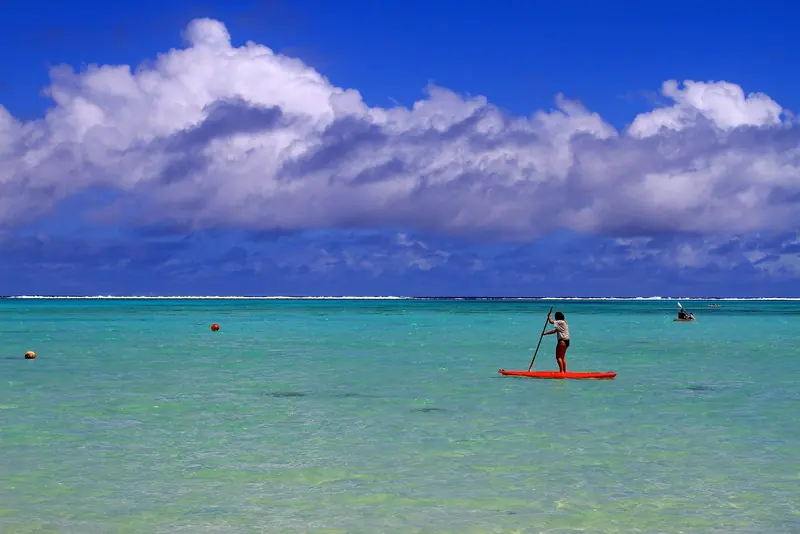
Avatiu
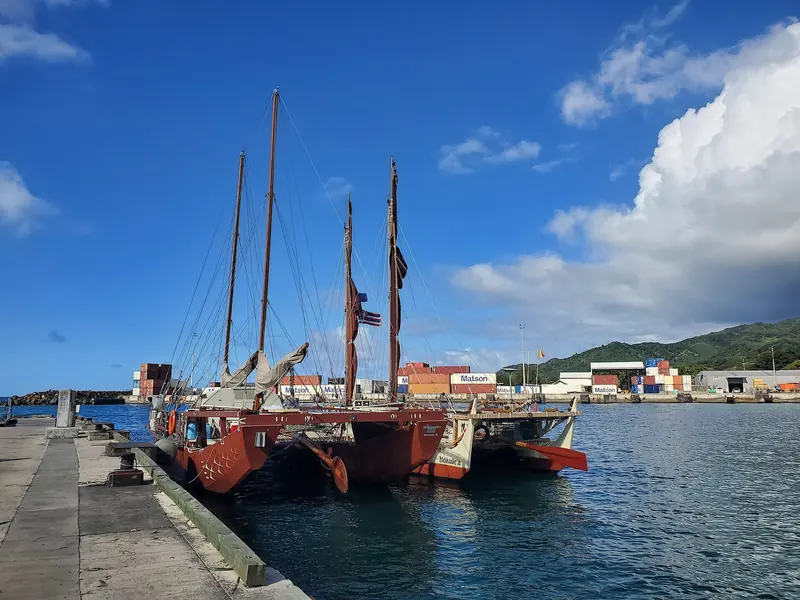
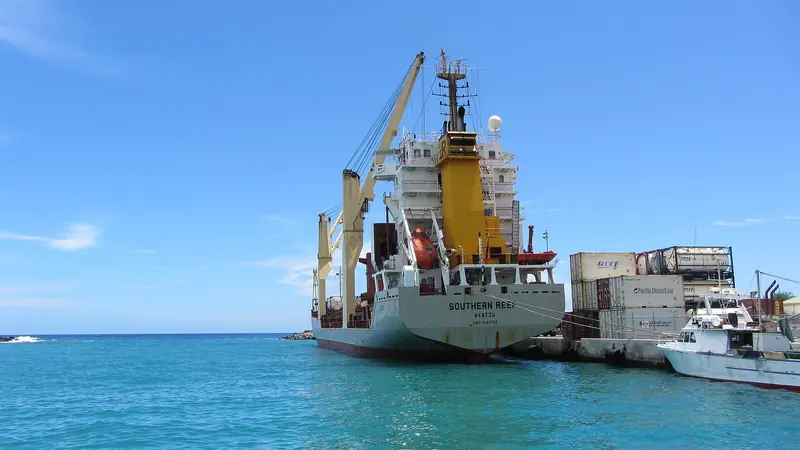
Noonsite says the island is almost completely ringed by a reef with no navigable lagoon or easy anchoring, and that Avatiu was realigned and dredged to 10 metres some years ago. Officials may tell you to med-moor about five metres off the wall, where large black tyres hang roughly every two metres, and the top of the wall stands about two metres above the water at low tide. There's a height limit of 27 metres at the north end of the wharf because masts would interfere with aircraft from the nearby airport. The cruising guide counted about 50 yachts a year tying up here in 2018. Call the harbour master on VHF 16; Pilsworth warned that the office isn't staffed before 9 am.
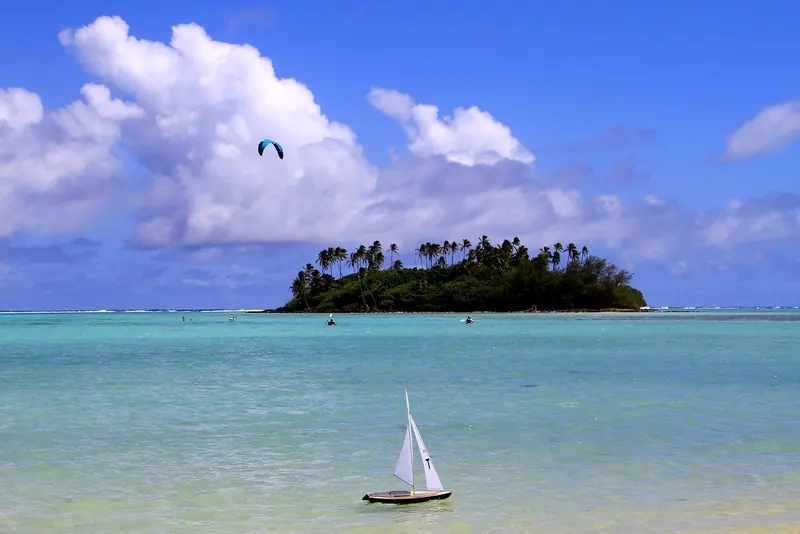
The weakness is exposure. The same Noonsite page says the dredging left the harbour open to northerly swell, so in a strong northerly it is untenable and may be closed, and there's no other suitable shelter nearby. A 2013 cruiser, Anthony of Wild Fox, wrote that surge is a major problem whenever there is any north in the wind, and Pilsworth described constant motion from the southeast trades and the need for a long bow line to shore. Anchoring off the town isn't a clean answer either: Noonsite calls the holding very poor, flat hard coral under a couple of inches of sand, and rougher at anchor than at sea in the trades. Don't buoy your anchor in the harbour, because it can obstruct shipping. Muri Lagoon, the island's famous stretch of turquoise water, is a place for kayaks and paddle boards; a YIT destination guide puts the island's lagoon at one to two metres deep and generally too shallow for visiting yachts. We found no published rule on anchoring there, so ask before you try.
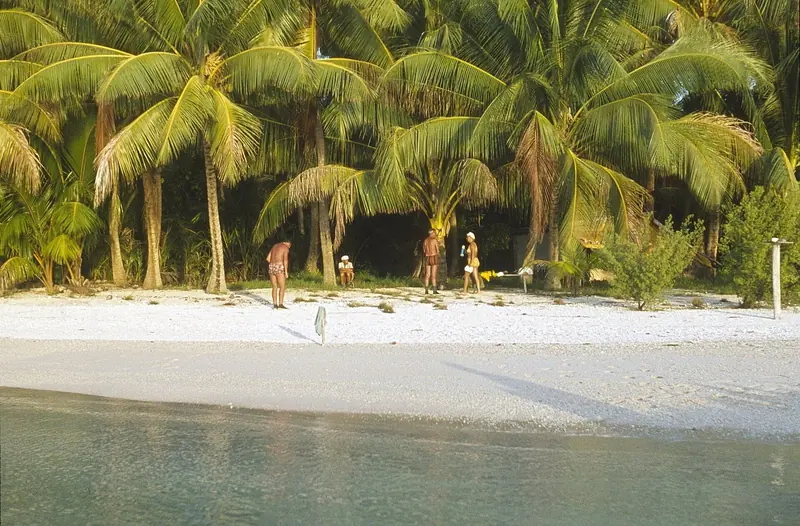
Aitutaki
Arutanga is the only harbour on Aitutaki and a port of entry. Noonsite says a dredging project in 2024 and 2025 was meant to deepen the channel to six metres, widen it to 15 and add light poles. Before the dredging, the 2018 guide said you needed less than 1.4 metres and that the depths shift. After it began, Andrew Bereson of Second Sun, with a 6.5-foot draft, reported in July 2023 that his sonar showed at least 1.8 metres in the channel, that swinging room inside was very tight and that the new wharf cut through the old charted anchorage. Noonsite's 2026 update says anchoring inside takes 10 to 12 feet with your stern close to the southern wharf, and that boats too large or drawing more than two metres should lie outside the reef south of the channel.
Noonsite adds that only Cook Islands citizens and residents may operate motorboats, dinghies included, in the lagoon, so a visitor takes a water taxi to the best spots or goes with a dive operator at about $40 a head. The reef anchorage the guide described has live bommies that can swallow an anchor, so use goggles. Noonsite noted in December 2024 that new charges for yachts would follow the dredging and weren't yet known; we haven't found them. For a large yacht Aitutaki is, in practice, a day trip by tender from outside the reef, not a berth.
Suwarrow and the outer islands
The National Environment Service rules dated 9 June 2026 close the park until the service announces an opening date, then charge USD 150 per vessel for up to two people for no more than five days, with USD 50 more per extra person for that period and USD 50 a person for each person who stays beyond five days, though the notice's wording on that second charge is unclear. Children of 15 and under are exempt. A vessel can't stay longer than 10 days except in an emergency. Noonsite reported on 3 September 2026 that the park was open until 16 October, with the USD 150 fee and a standard stay of five days, so the 2026 window had closed by mid-November unless the service extended it, and we found no extension or 2027 dates. A vessel carrying 12 or more people needs the service's permission before entry, which matters to any yacht with crew and guests. The ranger sets the anchorage. The rules bar transiting the pass before 7 am or after 6 pm (stated among the conditions for entry while the park is closed) and require visitors to be back aboard by 7 pm.
The conduct rules read like a yacht's equipment list: no entry into a lagoon without a sewage holding tank or marine toilet, no discharge or hull cleaning, no pets, no drones without permission, no spear guns, reef-safe sunscreen only, and no fishing or scuba without the ranger's say. An on-the-spot fine can reach USD 500 plus up to USD 500 more for each day the offence continues, and the owner can face further charges for a grounding. Permission to go to Suwarrow is separate: apply to the Comptroller of Customs on Form 27, and Customs consults several ministries and may refuse. Noonsite says such requests can take up to five working days. Palmerston works the same way. In 2018 Pilsworth found the island families met the boat, supplied about eight moorings at $10 a night including shuttle and lunch, and charged $20 in cash for the Biosecurity and Customs visit; the guide warned that the buoys are only safe in the trades and that a wreck ashore shows what a northerly does.
Season and cyclones
A Met Service observer told the Cook Islands News in May 2024 that cyclones can also form out of season between May and October, though that is less usual. The 2023/24 season brought two named cyclones, Nat and Osai, inside the exclusive economic zone and a tropical depression that hit Rarotonga hardest. The 2018 guide notes that Suwarrow's rangers welcome yachts between May and October and that Rarotonga turns cool in the southern winter. It also warns that the South Pacific Convergence Zone brings unsettled weather and wind shifts every seven to ten days, which makes the uncovered reef anchorages on the raised southern islands such as Atiu, Mauke and Mangaia workable only in calm spells.
For an owner that reads as a narrow window set by the weather and the clerk: Suwarrow opens only on the service's announcement, and Avatiu closes itself to yachts when a northerly arrives. Nothing in the sources we read describes a hurricane-hole or a yacht-storage yard in the group, so a boat left here for the summer is simply left. Dates matter for the paperwork too: a yacht that has cleared out of Avatiu has to leave the country without stopping elsewhere, so a late-season departure leaves no room to wait out weather at another island.
Fuel, supplies and support
Noonsite advises that diesel can also be ordered by truck but that the hoses may not be clean, so jerry-jugging and filtering is the safer route, and that propane is filled in the harbour area with North American fittings while you wait. The Cook Islands is a small, fuel-importing nation, and supply has recently been tight. In November 2025 RNZ reported that diesel had run out at one Rarotonga station after a tanker delay and that one of the two fuel suppliers was out of stock. The government's energy update of 5 November 2026 said Rarotonga held about 50 days of diesel and Aitutaki about 40, while warning that the global situation is tight. A large yacht should confirm its fuel stop with the harbour master and a supplier before it arrives, not on the dock.
Provisioning gets good marks: Noonsite's summary calls supplies good at reasonable pricing, and the 2018 guide says shopping and getting around Rarotonga are easy. Pilsworth rated Rarotonga Welding excellent for machine work and pointed to a second-hand parts dealer a kilometre from the harbour. There are no yacht services to speak of at Avatiu, which Noonsite says has very basic washrooms and a rubbish collection three days a week without bins. At Suwarrow and Palmerston you cannot buy provisions. We found no published price for yacht diesel and no listing of superyacht agents on the island.
Who actually goes there
The same 2018 guide puts Avatiu's traffic at about 50 yachts a year. The Cook Islands News reported in May 2016 that 28 yachts had visited Rarotonga and Aitutaki so far that financial year, a partial figure. Jimmy Cornell's survey for 2010 recorded 107 yachts at Suwarrow and 108 at Palmerston, so the outer atolls drew crowds that the main ports did not. Those numbers are old and no more recent official arrival count turned up. Customs' own warning that port space is very limited fits a fleet this small.
For a buyer or owner of a larger yacht, the practical picture is this. The harbour is a med-moor with your own anchor, the height limit is 27 metres, Aitutaki wants two metres or less to go inside, Suwarrow needs permission once the crew-and-guest count reaches 12 and the beach rules are written for small boats. None of the sources we read gives a maximum length for Avatiu. If that matters, put the question to the harbour master before you commit, not on arrival.
Ashore, access and booking
| Where it is | South Pacific between French Polynesia and Samoa; Rarotonga about 2,100 miles northeast of New Zealand, Aitutaki 220 km north of Rarotonga (Noonsite). |
|---|---|
| Season | May to October. Cyclone season runs 1 November to 30 April with the peak from December to February; out-of-season cyclones have happened (Cook Islands Met Service, May 2024). |
| Clearance | Advance Notice of Arrival at least 48 hours ahead by Form 29 or email to [email protected]; Q flag from the 12-mile limit; Customs, Immigration, Biosecurity and Health at Avatiu or Arutanga; clear out with 72 hours' notice. |
| Penalties | Failure to give advance notice: up to two years or a fine up to $100,000; landing at a non-designated port: up to two years or $50,000 (Cook Islands marine craft page; currency not stated). |
| Fees | Charged for Customs officer time, Immigration, Health, Biosecurity and port fees, plus departure tax; no schedule is published on the government page. A 2018 report: harbour dues $2.48 per foot per day, health check $40, about $550 for a three-day visit by a small yacht (currency not stated). |
| 2015 Ports Authority rates (old) | Monohull NZD 2.14 per metre per day, multihull NZD 2.95, motor yacht NZD 2.40 per gross ton or metre whichever is greater; NZD 5 mooring at Aitutaki; NZD 65 departure tax (Noonsite reproduction, 2015). Tariffs have risen since. |
| Suwarrow | Open only when NES announces it (2026: until 16 October). USD 150 per vessel for up to 2 people up to 5 days, USD 50 per extra person; 12 or more aboard needs NES permission; maximum 10 days; fines up to USD 500. |
| Where to lie | Avatiu: med-moor on your own anchor, about 5 m off the wall; 27 m height limit at the north end; surge in northerlies. Roadstead off the town: poor holding. Aitutaki: draft over 2 m anchors outside the reef. |
| Fuel and supplies | Service station across the road from the Avatiu moorings; truck delivery possible but hoses may be dirty. Rarotonga had about 50 days of diesel on 5 November 2026. Propane fills with North American fittings. |
| What is not published | A current yacht fee schedule; a maximum yacht length for Avatiu; a count of large yachts per year; the fee for Aitutaki's new yacht facilities; a rule on anchoring in Muri Lagoon; the 2027 Suwarrow opening dates. |
What owners and crew report
A three-day Rarotonga visit cost almost $550
Reported harbour dues of $2.48 per foot per day, $95 per person for Customs, a $40 health check, the harbour office not staffed before 9 am and a Biosecurity officer who never appeared. Also reported a med-moor in constant motion from the southeast trades and a quay ladder that was hard to use from a dinghy. Currency not stated.
Hugh Pilsworth, BlueFlyer, Ocean Cruising Club forum, 25 May 2018Surge when any north is in the wind
Said the mooring information on Noonsite was correct, that surge is a major problem if there is any north in the wind, and not to go ashore until permission is given.
Anthony, SV Wild Fox, comment on Noonsite, August 2013Aitutaki channel after dredging began
Carried a 6.5-foot draft in at about one foot of rising tide, saw a least depth of 1.8 metres on sonar, found a new wharf cutting through the old anchorage and said swinging room with three boats was very tight.
Andrew Bereson, SV Second Sun, Noonsite, July 2023About 50 yachts a year at Avatiu
A cruising couple visiting in 2016 and 2018 described med-mooring at Avatiu with two strong lines to the dock, said the harbour is open to the north and advised leaving when strong northerlies are forecast.
Pitufa cruising guide, Cook Islands notes by a sailing coupleOuter-island fees jumped in 2015
Reported that the fee for anchoring in the Penrhyn lagoon rose from about NZD 3 a day to about NZD 3 per metre of boat per day and that a council member was trying to correct what looked like a mistake.
Dave and Wendy Kall, SY Elysium, reported on Noonsite, 22 May 2015A yacht that arrived unannounced was turned away
A solo yacht reached Avatiu without contact, was told to leave and was kept out; the Secretary of Transport said nobody had communicated. This was under Covid border rules in December 2021.
Cook Islands News, via Noonsite, 9 December 2021Large motor yachts: no first-hand report found
Every owner report we found comes from sailing yachts. We found no named account from a motor yacht over about 24 metres, so the large-yacht points on this page come from the port rules, not from owners.
Yotters desk
What is good, and what to watch
Strong points
- A clear, written entry processThe marine craft page spells out the 48-hour notice, the forms and the departure rules, so there are no surprises if you read it.
- Suwarrow is genuinely protectedThe park rules ban discharge, pets, drones and reef-unsafe sunscreen, and put the fee and the 10-day cap in writing.
- Good provisioning at RarotongaNoonsite calls supplies good and reasonably priced, and a service station sits across from the moorings.
What to watch
- Avatiu is exposed and sharedIt is a commercial port with surge, no shelter in strong northerlies and a 27-metre height limit near the airport.
- Large yachts have little roomWe found no published maximum length, the lagoons are shallow, Aitutaki wants about 2 m draft or less inside and the roadstead holds poorly.
- No published fee scheduleThe only prices are old cruiser receipts, and the government page lists charges without amounts.
- Fuel supply has been tightDiesel ran out at a Rarotonga station in November 2025 and the government says the global situation is tight.
- Short seasonCyclone season starts on 1 November and Suwarrow opens only when the park service says so.
Who it is for: A sailing yacht owner crossing from French Polynesia who can work to a 48-hour notice and a May to October window, and who draws under two metres; it is a poor fit for an owner of a large motor yacht who wants a marina berth, fuel on demand and a place to leave the boat for the summer.