The Maldives
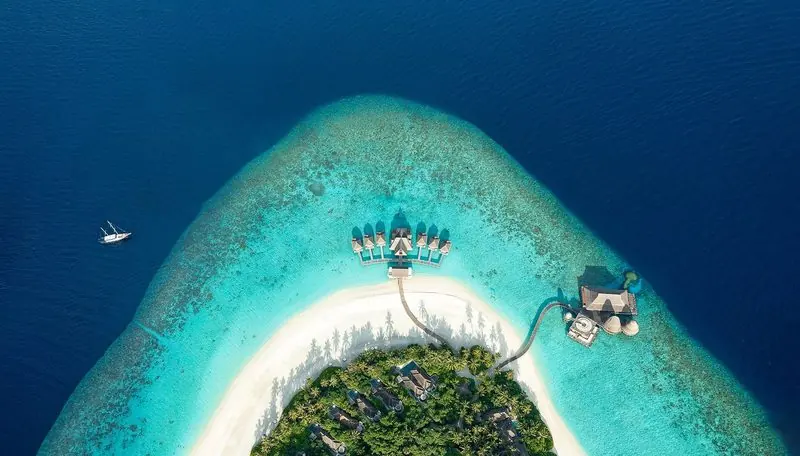
| Region | Indian Ocean, southwest of Sri Lanka, 26 atolls across roughly 440 nautical miles north to south |
|---|---|
| Season | November to April in the dry northeast monsoon, with December to March the peak |
| Cyclones | the atolls sit close enough to the equator that tropical cyclones are very rare |
| Cruising permit | issued by the Ministry of Tourism, applied for before arrival or within four days of customs clearance |
| Permit cost | vessels over 20 m staying more than seven days after clearance pay USD 1,000 to the Maldives Inland Revenue Authority, plus a USD 5 per person passenger licence fee |
| Agents | only Maldivian nationals may act as agents for foreign tourist vessels |
| Charter | a separate charter licence is required for any commercial or private charter carrying tourists in Maldivian waters |
| Berthing | Crossroads Maldives at Emboodhoo Lagoon, 30 berths taking yachts to about 55 m, 15 minutes by speedboat from the airport |
| Hanifaru Bay | scuba diving has been banned inside the bay since 2012, snorkelling only, no anchoring in the bay |
| Manta season at Hanifaru | May to November, peaking June to October in the southwest monsoon |
| Gateway | Velana International at Male, with domestic airports and the world's largest seaplane network beyond it |
| Navigation | reef passes need high sun and good light, so passages are planned for the middle of the day |
| Green Tax | tourist vessels charge USD 12 per person per night from 1 January 2025, doubled from USD 6, under Regulation 2024/R-117 |
| Tourism GST | 17 per cent from 1 July 2025, up from 16 per cent |
| Charter | permitted for foreign-flagged yachts holding a cruising permit and a separate charter licence, with no cabotage bar on moving guests between Maldivian islands |
| Agency | only Maldivian nationals may act as agents for a foreign tourist vessel, and the agent is appointed before arrival |
| Reef damage | a yacht that grounded in Alifu Dhaalu Atoll on 28 April 2025 was fined MVR 4,889,450, about USD 311,000, under Regulation 2011/R-9 and Act 4/93 |
| Enforcement scale | an audit reported in January 2026 put over MVR 930 million of environmental fines outstanding, with MVR 228 million recovered from 37 reef-damage cases in two to three years |
| Berthing | Crossroads Maldives publishes no rate card, checked 28 July 2026, so berths are quoted against dates |
| Nearest yard | Colombo Dockyard in Sri Lanka, four dry docks of 107 to 263 m and over 1,000 m of repair berth |
Four hundred and forty miles of atolls
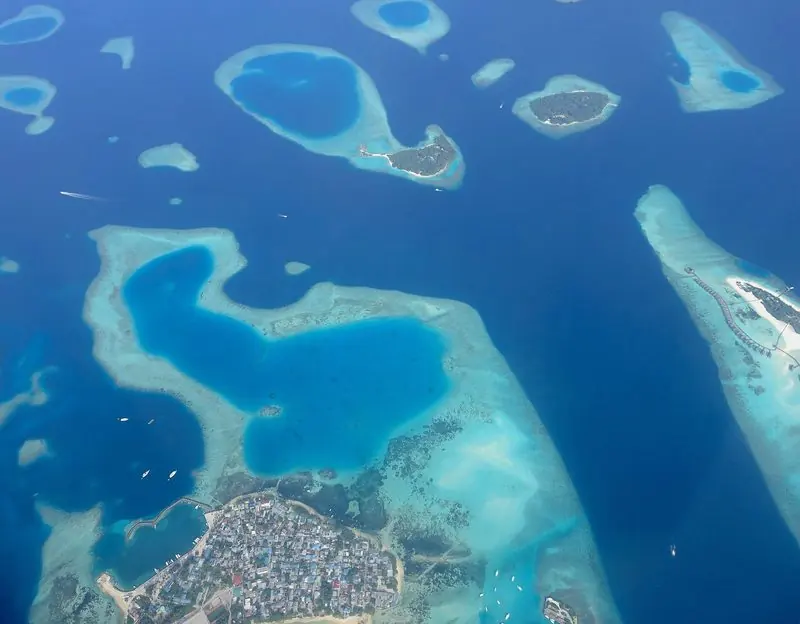
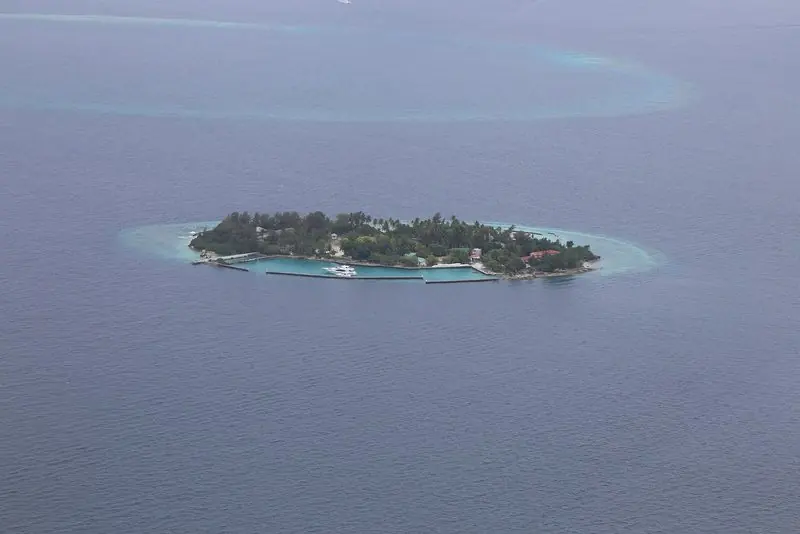
The Maldives are 26 natural atolls strung along about 440 nautical miles of ocean, north to south, and they are separated by deep channels. Male to Ari Atoll is around 40 miles, Male to Baa in the north about 60, and Male to Addu at the southern end close to 300. Inside an atoll the water is a shallow lagoon dotted with reef and sandbank, and the yacht moves between them in a few miles. Between atolls it is open ocean with real depth under the keel.
A week is one atoll group. Male, Ari and Baa in the centre and north cover the manta and whale shark sites, the best-known dive walls and enough sandbanks for a beach set-up every day. Two weeks reaches further, either north to Haa Alifu and the quiet atolls near the Indian border or south across the one-and-a-half degree channel into the southern atolls. Anyone who wants Fuvahmulah and Addu at the far south should plan the whole trip around that, because it is a passage and not an excursion.
Lagoons, sandbanks and the dive sites
The anchorage here is a lagoon, and the pattern is the same everywhere. The boat lies in eight to twenty metres over sand inside a reef, with a tender running to the reef edge for diving, to a sandbank for a beach lunch, and to a resort or local island for anything else. Some of the best spots have no name that a guest would recognise, and the difference between a good week and an average one is almost entirely the captain's local knowledge or the agent's.
The named draws are worth planning around. South Ari Atoll near Maamigili holds whale sharks year-round and is one of very few places in the world where that is true. Hanifaru Bay in Baa Atoll, a UNESCO biosphere reserve, gathers manta rays in some of the largest aggregations recorded anywhere, though access is controlled, scuba has been prohibited inside the bay since 2012 and anchoring in it is not allowed. Fuvahmulah in the deep south has become a tiger shark destination.
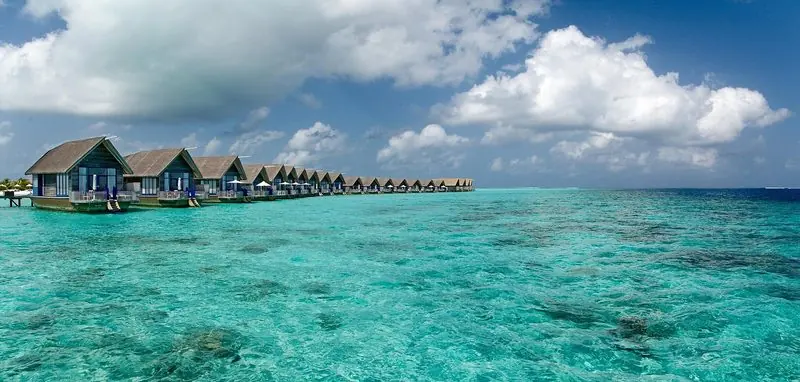
A yacht in the Maldives is the hotel, the restaurant and the dive centre, because there is nothing ashore that is any of those things.
Light, reef passes and the one marina
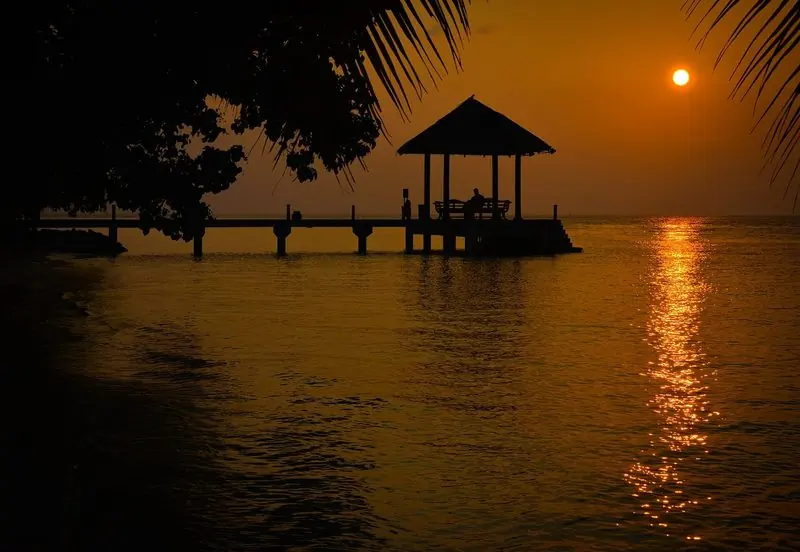
Inside the lagoons a large yacht lies comfortably. Depths in the atolls suit a large yacht and the holding over sand is good. The one thing that constrains movement is light, because the reef passes and the shallow patches inside a lagoon are read by eye and by colour, so passages are run with the sun high, roughly from mid morning to mid afternoon, and a crossing that would be routine at any hour in the Mediterranean is planned around the clock here. Charts are not uniformly reliable and local pilotage is normal.
Alongside, the country now has one option. Crossroads Maldives at Emboodhoo Lagoon in South Male Atoll has 30 berths taking yachts to about 55 metres, with fuel, water, power and provisioning, and it is fifteen minutes by speedboat from Velana airport. That single facility has changed the practicality of a Maldives season, because guest changes and stores no longer have to happen at anchor off Male. Everywhere else in the country the yacht is at anchor.
The two monsoons
The Maldives have two seasons and they are opposites. The northeast monsoon, from November to April, is the dry one, with light winds, calm seas, clear water and the best visibility for diving, and December to March is the peak. The southwest monsoon, from May to October, brings rain, squalls and a bigger sea, and it also brings the plankton that draws the manta rays. Sea temperatures stay in the high twenties all year.
That split creates a genuine conflict for an owner. The calm weather and the clear water are in the northeast monsoon, and the great manta aggregation at Hanifaru runs from May to November with the peak from June to October, which is the wet season. Owners who want that spectacle are choosing weather they would not otherwise choose. The other consequence of the monsoon reversal is that the sheltered side of every atoll changes, so a bay that works in January is a lee shore in July.
How busy it actually is
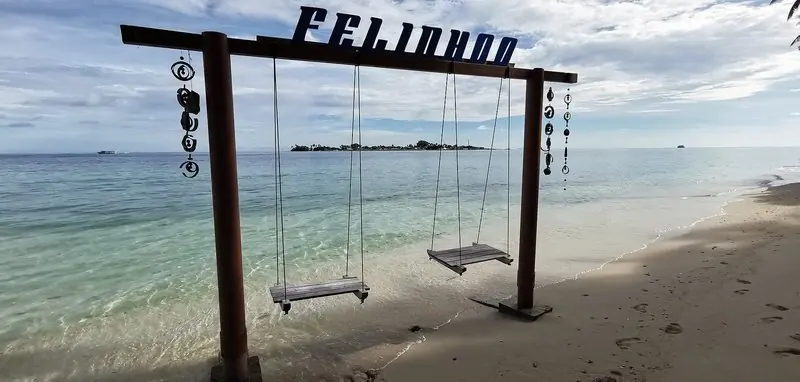
There is no fleet here in the Mediterranean sense and there is no social season at all. Yacht traffic is thin, and even in the December to March peak an owner can move for days without seeing another private boat. The pressure is in the air, since the Christmas and New Year fortnight and the European half-term weeks fill the resorts, the seaplanes and the international flights, and that is what makes a guest change difficult.
Liveaboard dive boats work the same sites and are the traffic a yacht actually encounters, particularly at the manta and whale shark points, which can gather a dozen vessels at the right state of tide. Hanifaru operates on ranger-controlled access with caps on numbers, so the visit is booked and scheduled and it is not a matter of turning up. Away from those few sites the atolls are empty.
Male, seaplanes and the daylight limit
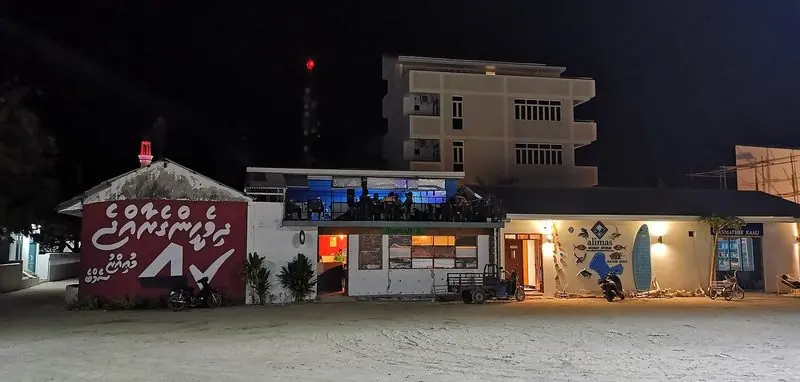
Velana International at Male has direct wide-body service from Europe, the Gulf and Asia, and full private jet handling, so guests arrive easily. What happens next is the Maldivian problem. Domestic airports at Dharavandhoo in Baa, Maamigili in Ari, Hanimaadhoo in the north and Gan in the far south cover the country, and the seaplane network out of Male is the largest in the world and reaches most of the resort islands. Both stop flying at dusk.
That daylight limit shapes everything. A guest arriving on a late evening flight into Male cannot reach a boat in Baa Atoll until the next morning, which means a night in a hotel or a yacht that repositions south to meet them. Owners who do this repeatedly base the changeover at Crossroads or at a resort near Male and accept a delivery leg. Getting the boat itself to the Maldives is the larger question, since Male is roughly 4,500 nautical miles from the Mediterranean by way of Suez, and the Red Sea leg is its own decision.
Resort islands, local islands and the rules
There is no town, no marina village and no restaurant scene, and an owner who has not internalised that will find the fortnight long. The three options ashore are resort islands, which are private and require arrangement in advance and often a day rate, local inhabited islands such as Dhigurah, Thoddoo and Maafushi, which offer a village, a beach and a genuine glimpse of Maldivian life, and Male itself, which is a dense working capital with markets and shops and is not a guest destination. None of the three is a substitute for a town.
The rules on the local islands matter and catch people out. The Maldives is a Muslim country and alcohol is not available on inhabited islands, modest dress is expected ashore, and bikinis are confined to designated beaches. None of that applies aboard the yacht or on a resort island. Guests who want a bar and a night out are choosing between a resort island by prior arrangement and the aft deck, and most weeks the answer is the aft deck.
Permits, agents and support
The cruising permit comes from the Ministry of Tourism and can be applied for before arrival or within four days of customs clearance, and a vessel over 20 metres staying more than seven days after clearance pays USD 1,000 to the Maldives Inland Revenue Authority, with a passenger licence fee of USD 5 per person on top, on the figures current in July 2026. Only Maldivian nationals may act as agents for a foreign tourist vessel, so the choice of agent is a real decision. Any commercial or private charter carrying tourists needs a separate charter licence.
Support is thin. Fuel is available at Male and at Crossroads and is expensive, spares are air freighted from Singapore, Dubai or Europe and clear customs slowly, and there is no yard capability for a large yacht in the country. Provisioning is done through the agent and the resort supply chain and the quality varies. A yacht planning a Maldives season carries a deep spares inventory and an engineer who can use it.
The honest downside
The Maldives ask a lot and give one thing back. There is no culture to see beyond the local islands, no restaurants, no nightlife, no shopping and nothing to do that is not in or on the water, so a fortnight here suits divers, surfers and families with young children and bores almost everybody else by day nine. And the resort islands, which are the only serious shore facility, are set up for their own guests and treat a visiting yacht as an exception.
The larger point is the delivery. Bringing a Mediterranean yacht to the Maldives commits it to a passage of several thousand miles each way and a season away from any support network, which is why most of the boats working these atolls are either based in the Indian Ocean or on a longer world itinerary. An owner who wants two weeks of this without that commitment is looking at a charter.
What the state takes, and what nobody publishes
The government's share is documented and it is the part an owner can actually budget. A vessel over 20 m staying more than seven days after clearance pays USD 1,000 to the Maldives Inland Revenue Authority, with a passenger licence fee of USD 5 per person on top, on the figures current in July 2026. Green Tax is the line that scales with guests. From 1 January 2025 tourist vessels charge Green Tax at USD 12 per person per night, doubled from USD 6, under Regulation 2024/R-117 made with the fourteenth amendment to the Tourism Act. Twelve guests aboard for a fortnight is USD 2,016 in Green Tax by itself. Tourism goods and services tax rose to 17 per cent on 1 July 2025 from 16, and it attaches to what a charter sells.
Everything else is a quotation. Crossroads Maldives is the only marina in the country and publishes no rate card, and none could be found on 28 July 2026, so a berth there is priced against the dates. There is no published fuel price for yachts either, and bunkering runs through the agent at Male or Crossroads. What that adds up to is a season with almost no berthing line at all, which is the opposite of the Mediterranean arithmetic: Marina di Porto Cervo's published 2026 tariff is EUR 3,698 a day in the band to 40 m from 1 to 20 August, roughly EUR 102,000 for the month, or EUR 195,819 for a 1 May to 31 October contract. The Maldives removes that number and replaces it with a delivery of several thousand miles each way and a spares bill that travels by air.
Charter, the Maldivian agent and the cost of a grounding
A foreign-flagged yacht may charter in Maldivian waters, and the condition is licensing rather than flag. The vessel takes a cruising permit from the Ministry of Tourism first, then a separate charter licence for foreign tourist vessels, and that licence is required whether the charter is commercial or private so long as tourists are carried. The agent is not optional and cannot be foreign, since the 2024 amendments to the foreign vessel regulations reserve agency for foreign tourist vessels to Maldivian nationals, and the agent is appointed before arrival. There is no cabotage bar on carrying paying guests between Maldivian islands once the licence is held, which is the material difference between this ground and Florida or Turkey. Tourism GST at 17 per cent and Green Tax at USD 12 per person per night both fall on the charter.
The penalty that owners actually meet is environmental, and it is large. Fines are set under Regulation 2011/R-9 made under the Environmental Protection and Preservation Act 4/93, and the Environmental Protection Agency issues them as a matter of routine. A yacht that grounded in Alifu Dhaalu Atoll on 28 April 2025 was fined MVR 4,889,450, about USD 311,000, for reef damage. An audit reported in January 2026 put more than MVR 930 million in environmental fines outstanding, with MVR 228 million recovered from 37 reef-damage cases over the preceding two to three years, which says both that the fines are handed out constantly and that the state is serious about collecting them. Anchoring in sand only, and not at all inside Hanifaru Bay, is not a courtesy.
The nearest yard, and where the waste goes
Nothing in the Maldives will lift a 50 m yacht and nothing is likely to soon. The nearest facility of any real capacity is Colombo Dockyard in Sri Lanka, which runs four dry docks between 107 and 263 m and more than 1,000 m of serviced repair berth, and reaching it is an ocean passage east. Everything short of that is an air-freighted specialist and a wait at anchor, which is why the boats that work these atolls carry an engineer who can use a deep spares inventory and why a Maldives season is planned around the yard period that preceded it.
Waste is the same problem in miniature. Reception facilities exist at Male and at Crossroads and effectively nowhere else, so a yacht working the outer atolls holds everything aboard for the length of the cruise and lands it on the way through. In a country whose entire economy sits on the reef, and whose fines regime prices reef damage in hundreds of thousands of dollars, a discharge decision taken casually inside a lagoon is the most expensive mistake available.
Ashore, access and booking
| Getting there | Velana International at Male takes direct wide-body flights from Europe, the Gulf and Asia, plus full private jet handling. Domestic airports and the world's largest seaplane network reach the outer atolls, but both stop flying at dusk. |
|---|---|
| By sea | Reef passes are read by eye, so passages run from mid morning to mid afternoon when the sun is high. Charts are not uniformly reliable and local pilotage is normal practice, not a precaution for the inexperienced. |
| Reserving a berth | Crossroads Maldives at Emboodhoo Lagoon is the only marina in the country, 30 berths to about 55 m, 15 minutes by speedboat from the airport. It publishes no rate card, so a berth is quoted against the dates, checked 28 July 2026. |
| What it costs the state | A vessel over 20 m staying more than seven days after clearance pays USD 1,000 to the Maldives Inland Revenue Authority plus a USD 5 per person passenger licence fee. Green Tax is USD 12 per person per night since 1 January 2025, and tourism GST is 17 per cent since 1 July 2025. |
| Fluids and stores | Fuel is available at Male and at Crossroads and is expensive. Spares are air freighted from Singapore, Dubai or Europe and clear customs slowly. There is no yard capability for a large yacht anywhere in the country. |
| Clearance and permits | The cruising permit comes from the Ministry of Tourism, applied for before arrival or within four days of customs clearance. Only Maldivian nationals may act as agents for a foreign tourist vessel, and the agent is appointed before arrival. |
| Where to eat | There is no restaurant scene. Resort islands require prior arrangement and often a day rate; local inhabited islands such as Dhigurah, Thoddoo and Maafushi offer a village and a beach; alcohol is not sold on inhabited islands. |
| After dark | Aboard the yacht or a pre-arranged resort island are the only options with a bar. Local islands are dry under Maldivian law, and there is no town or marina village anywhere in the country. |
| Fixed dates | Northeast monsoon, November to April, is the calm, clear dry season and peaks December to March. The Hanifaru manta aggregation runs May to November, peaking June to October, inside the wetter southwest monsoon. |
What owners and crew report
The marina that finally made a Maldives season practical has an environmental record of its own
Sleeper's review of Crossroads Maldives praised the resort and marina's design but recorded that the land reclamation behind the first phase was criticised by environmental observers at the time, a detail worth weighing against a country that fines yacht grounding in the millions.
Neena Dhillon, Sleeper magazineGetting the local pilotage wrong is expensive, not theoretical
The 45 m explorer yacht Big Fish grounded on the reef at Alif Dhaal Atoll on 28 April 2025 and was fined around MVR 4.8 million, roughly USD 311,000 at the time, for the resulting coral damage, a case the Maldivian authorities and the trade press both treated as routine enforcement rather than an exception.
Boat International
What is good, and what to watch
Strong points
- Genuinely uncrowdedEven in the December to March peak, an owner can move for days without seeing another private yacht outside the handful of named dive and manta sites.
- World-class, little-competed-for divingSouth Ari Atoll holds whale sharks year-round, one of very few places on earth where that is true, and Hanifaru Bay gathers some of the largest manta aggregations recorded anywhere.
- No real cyclone riskThe atolls sit close enough to the equator that tropical cyclones are very rare, unlike the Caribbean, the Pacific or the Arabian Sea further north.
- One proper marina now existsCrossroads Maldives at Emboodhoo Lagoon takes yachts to about 55 m with fuel, water, power and provisioning 15 minutes from the airport, which has changed what a guest change or a stores run actually requires.
What to watch
- Nothing ashoreNo town, no restaurant scene, no shopping and nothing to do that is not in or on the water. A fortnight suits divers, surfers and families with young children and bores most other guests by day nine.
- The delivery is the real commitmentMale is roughly 4,500 nautical miles from the Mediterranean by way of Suez. Most boats working these atolls are based in the Indian Ocean or on a long world itinerary rather than visiting for one season.
- Grounding fines are large and enforcedThe 45 m explorer yacht Big Fish was fined roughly MVR 4.8 million, about USD 311,000, for reef damage after grounding in Alif Dhaal Atoll on 28 April 2025, reported by Boat International. An audit in January 2026 found over MVR 930 million in environmental fines outstanding across the country.
- The only marina has its own criticsSleeper magazine's review of Crossroads Maldives, while positive on the design, noted that the reclamation behind phase one of the development drew criticism on environmental grounds.
Who it is for: An owner whose family dives or surfs, who is on a long ocean itinerary or willing to commit a season to the Indian Ocean, and who needs nothing from the shore.