Turkey & the Dodecanese
| Region | south-west Turkey (Aegean and Lycian coasts) plus the Greek Dodecanese |
|---|---|
| Season | May to October, with mid-July to late August the peak |
| Defining wind | the meltemi, north-westerly, force 5 to 6 in July and August and reaching force 7 to 8 |
| Main harbours | Yalikavak, Bodrum, Gocek, Marmaris, Kos, Symi, Rhodes |
| Largest berthing | Yalikavak Marina, around 620 berths, yachts to roughly 140 metres |
| Signature anchorages | Skopea Limani and the Gocek islands, Kekova, the Bozburun peninsula |
| Anchoring | Skopea Limani bays run 15 to 20 metres close inshore, lines ashore are standard |
| Turkish entry | e-Transitlog at the first port, valid one year, plus a Blue Card recording waste discharge |
| Charter | Turkish cabotage law restricts foreign-flagged commercial charter, a Turkish licence or a ministry cruising permit is required |
| Fuel | duty-free bunkering for foreign-flagged yachts at licensed Turkish marinas and yards |
| Greek side | TEPAI cruising tax, reported at EUR 8 per metre per month for yachts over 12 metres in 2026 |
| Airports | Milas-Bodrum about 45 minutes to Yalikavak, Dalaman about 30 minutes to Gocek, Rhodes and Kos on the Greek side |
| Charter from 19 June 2026 | a foreign-flagged commercial yacht under 39 m may not embark charter guests in Turkey and pays EUR 40 per metre of LOA at each clearance |
| Charter licence for 39 m and above | one-off and banded, EUR 74,423.36 for 39 to 59 m, EUR 108,135.03 for 60 to 79 m, EUR 168,846.72 above 80 m, valid to 31 December 2026 |
| Private yachts | a foreign-flagged private yacht may not charter in Turkey and may cruise only with the ultimate beneficial owner or a first-degree family member aboard, with no licence and no VAT |
| Licence process | notarised translations and about ten working days, with no amendments and no refunds after payment |
| Berthing | no Turkish marina publishes a superyacht tariff, checked 28 July 2026, and Netsel publishes its formula without the unit price |
| Third-party berth figure | EUR 12,000 to 25,000 a year for a 12 m yacht in the Bodrum, Marmaris and Gocek marinas on a 2026 market guide |
| Greek cost | TEPAI at EUR 8 per metre per month is EUR 400 a month for a 50 m yacht |
| Discharge | marine pollution fines under Article 20 of Environmental Law 2872 rose 25.5 per cent for 2026, and eleven vessels were fined a combined TRY 18,038,414 in the first quarter of 2026 |
| Duty-free fuel | open to foreign-flagged yachts private and commercial, ordered a working day ahead, with no published price differential |
Two coasts, one cruising ground
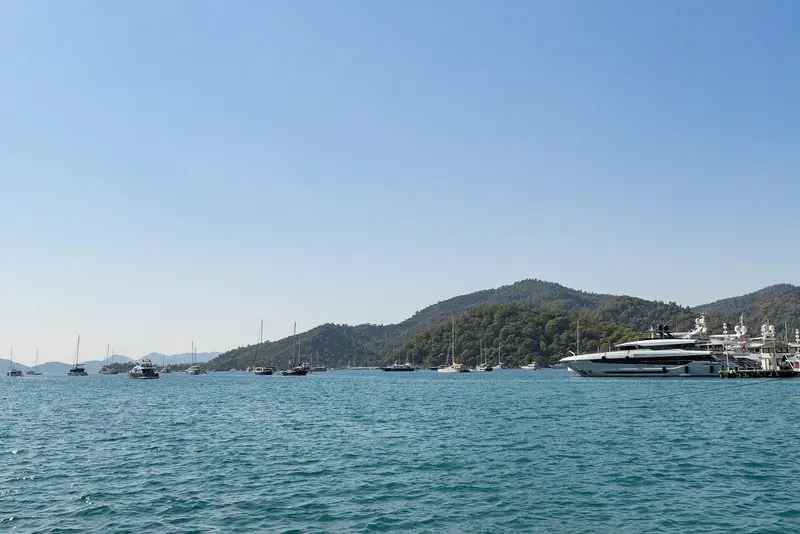
The Turkish half runs from the Bodrum peninsula south past Datca and Marmaris to Gocek and Fethiye, then east along the Lycian shore through Kas to Kekova. The Greek half lies a few miles off it and belongs to another state entirely: Kos, Symi, Rhodes, Patmos, Leros and the smaller rocks between them. Bodrum to Kos is about 12 nautical miles. Marmaris to Rhodes is about 35. Datca to Symi is roughly 12. A yacht can change jurisdiction in a morning and be at anchor somewhere completely different by the afternoon.
The shape of the Turkish coast is what sells it. Steep, pine-covered and deeply indented, with mountains behind Skopea Limani rising towards 2,000 metres. Deep water runs close in, so passages are short and shelter is immediate. Most cruising days here are two to four hours of running. An owner who dislikes long open legs gets an enormous amount of coastline for very little time at sea.
A week, and two weeks
The classic week starts at Gocek. Out into Skopea Limani for two nights among the Gocek islands, across the Gulf of Fethiye, then east to Kalkan and Kekova for the sunken Lycian city, and back with a night at Ekincik. Nothing on that route is more than four hours from the last anchorage. The alternative week is the Bodrum peninsula and the Gulf of Gokova, which is wider, windier and more open, with the Datca peninsula and Knidos at its western end.
Two weeks lets an owner join the two halves and add Greece. Bodrum down to Gocek with Kos, Symi and Rhodes in the middle is the honest fortnight. The friction is clearance. Every hop across the border means a full customs, immigration and health clearance both ways, and at a busy port such as Kos Town or Rhodes that is typically two to four hours on the day. Build one crossing into a fortnight, not four.
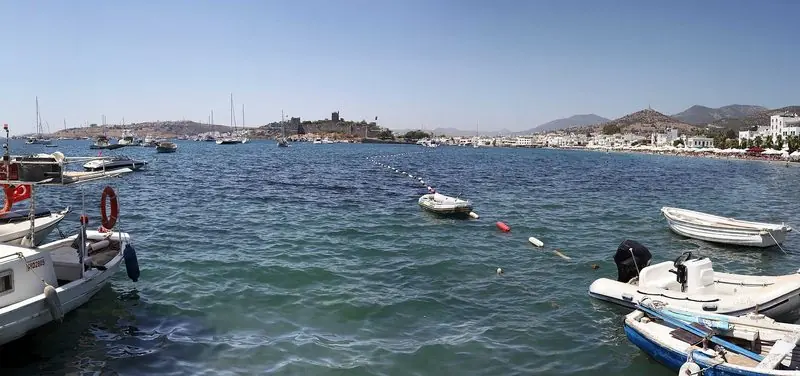
A yacht can change jurisdiction over lunch here, and pay for it with a clearance at each end.
The anchorages worth the trip
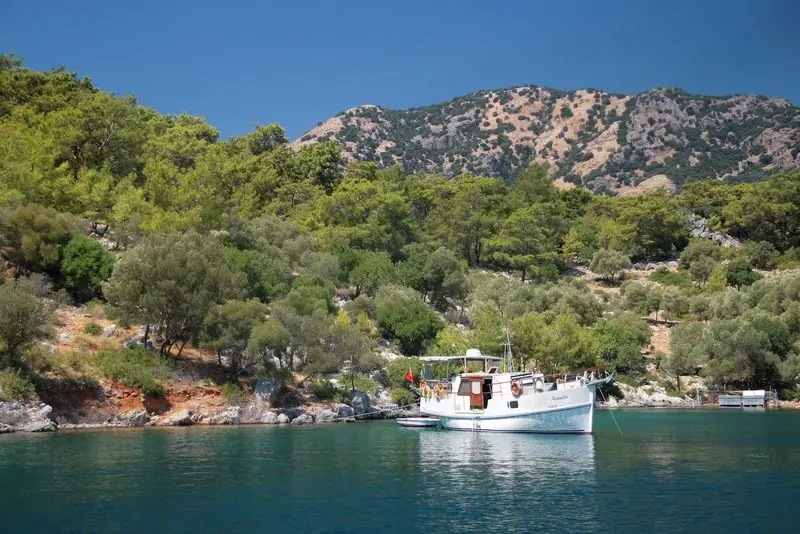
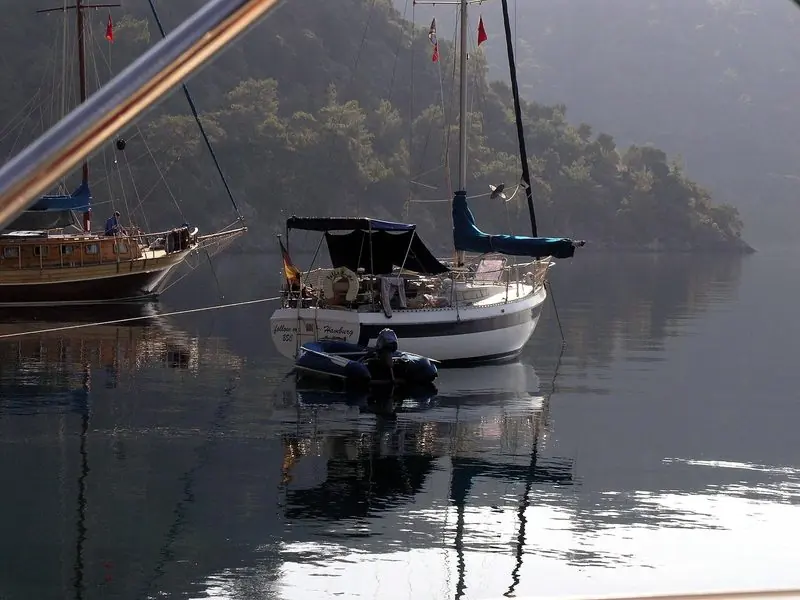
Skopea Limani, the enclosed gulf south-west of Gocek, holds the best of them. Bedri Rahmi bay is named for the Turkish painter whose fish motif is still on the rock face. Tomb Bay has Lycian rock tombs cut into the cliff directly above the water. Tersane island has a ruined shipyard and an abandoned settlement. Several bays have restaurant pontoons where staff row out to take the lines, which works beautifully for a 25 metre boat and not at all for a 50.
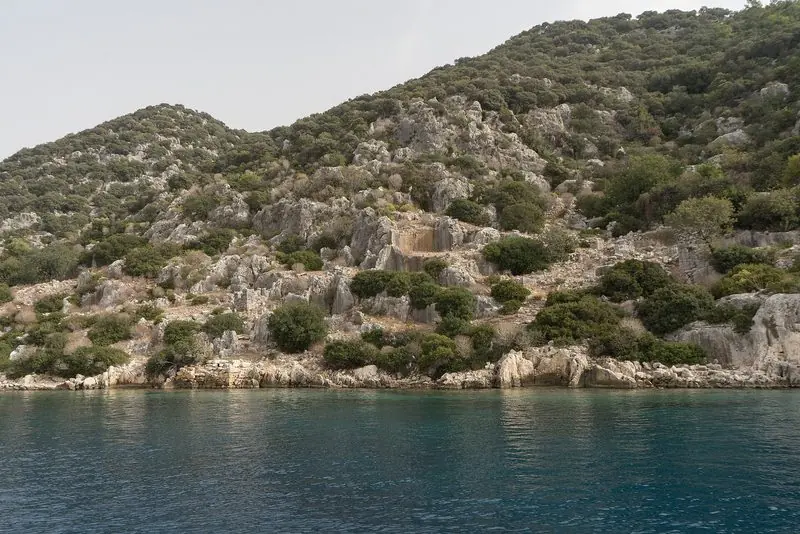
East of Fethiye the interest becomes archaeological. Kekova has a Lycian town half-submerged along the shoreline, best seen by tender at slow speed, with Ucagiz and Kalekoy at either end. West of Marmaris the Bozburun and Datca peninsulas are quieter, with Knidos on the point where two seas meet. On the Greek side, Symi's harbour at Gialos is the single most photographed arrival in the Dodecanese, all neoclassical facades stacked up a bowl of rock, and Patmos carries the monastery of Saint John and the cave of the Apocalypse above the port at Skala.
Where a 50 metre boat fits, and where it does not
Yalikavak Marina on the north-west tip of the Bodrum peninsula is the anchor of the whole region, with around 620 berths and capacity for yachts to roughly 140 metres. Gocek has several marinas packed into one small bay, of which D-Marin Gocek is the largest, taking yachts to about 70 metres behind a floating breakwater. Netsel Marmaris and the Bodrum marinas fill in the rest. Rhodes has a superyacht quay in the commercial harbour, and Rhodes Marina east of the town.
The limits show up at anchor. The Skopea Limani bays are deep until very close inshore, so the standard technique is to drop in 15 to 20 metres and run long lines to rocks or trees, which needs 50 to 60 metres of chain out and a shore party. That is routine for a well-crewed 50 metre boat and impossible in the smaller slots. Symi's town quay is short and busy. In practice a 50 metre yacht here anchors off in the outer part of the bay and works the coast by tender, which is how the resident fleet does it.
The meltemi and the sea state
The defining wind is the meltemi, north-westerly through the Dodecanese, at its hardest and most persistent in July and August. It typically runs force 5 to 6 in those months and can build to force 7 or 8. The daily pattern matters more than the average: light until mid-morning, hardest in the afternoon, easing overnight. That predictable rhythm is why local crews move at breakfast. Between the Cyclades and the Dodecanese the wind has around 100 nautical miles of clear fetch, so the open crossings are where the sea gets up, not the coast.
South and east of the Datca peninsula the Turkish coast is far more sheltered and the meltemi arrives softened. Skopea Limani in particular is a light-air pocket. Water is warm from June and stays swimmable into October. Spring and autumn bring the calmest sea and the greenest hills, with occasional thunderstorms in late August heat. November to March is not a cruising season here in any meaningful sense: wet, windy, and with most of the coastal restaurants closed.
The season and the weeks already spoken for
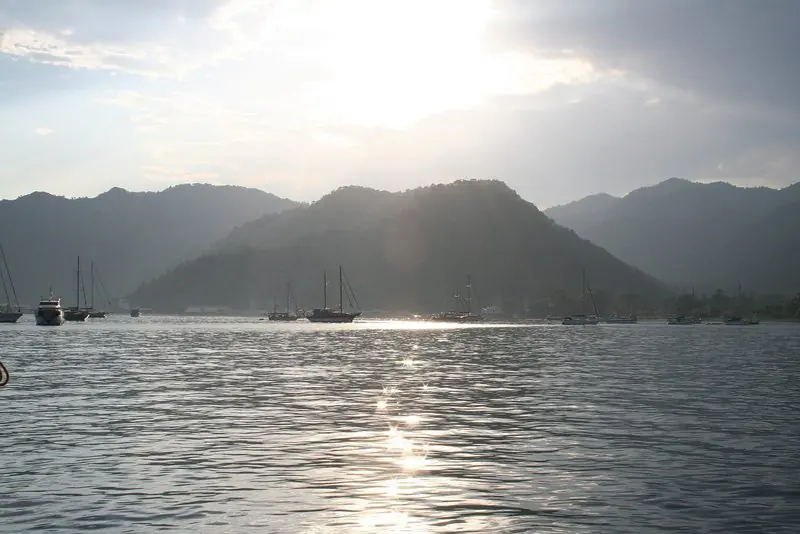
The usable season is May to October. Mid-July to the end of August is the Bodrum peninsula at full volume, with Turkish and regional holiday traffic on top of the international fleet. Gocek in August is genuinely full, and the good bays are taken by mid-afternoon. Late May, early June and the first three weeks of September are the windows people who know the coast actually choose, with warm water, softer wind and space to anchor.
Prime summer berths at Yalikavak are effectively spoken for by the boats that keep them on annual contracts, and the walk-up availability in August is thin at any length. October brings the Bodrum Cup, a gulet regatta running since 1989 in the third week of the month, which fills Bodrum with 150 or more traditional wooden yachts and closes the season with a week of parties. That week is worth either targeting or avoiding, depending on the owner.
Getting guests aboard
Milas-Bodrum is the gateway for the northern half, roughly 45 minutes by road to Yalikavak and less to Bodrum town, and it is the region's main private jet handling point. Dalaman serves the south, around 30 minutes from the Gocek marinas and under an hour to Fethiye. Both take business jets and both have summer schedules from most of Europe. Istanbul is a short domestic hop away for anyone arriving long-haul.
The Greek side is served by Rhodes Diagoras and Kos, both with heavy summer charter traffic and thinner private aviation handling than the Turkish airports. Guests joining in Greece and leaving from Turkey need to be told about the border. Turkish visa requirements vary by nationality and the electronic system is straightforward, but it has to be done before departure. Crew changes across the border cost a clearance each time.
Ashore, and what it is actually like
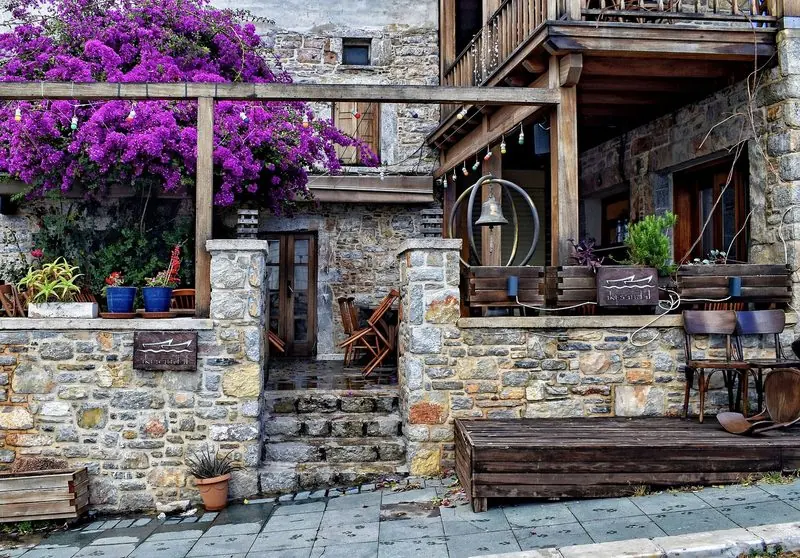
Bodrum has the castle of the Knights of Saint John, which houses the Museum of Underwater Archaeology, and the remains of the Mausoleum at Halicarnassus. Rhodes old town is a walled medieval city and a World Heritage site, and the one stop where guests will happily spend a full day. Dalyan, reachable by tender up the river from Ekincik, has the Kaunos rock tombs cut into the cliff face.
The food is honest and regional. Meze, grilled fish sold by weight, and coastal restaurants that will send a tender for guests. Turkbuku on the north side of the Bodrum peninsula and the promenade at Yalikavak Marina carry the summer scene, with the international restaurant names and the late crowd. The Greek islands are quieter, with Symi and Patmos in particular closing down early. Nobody comes to this coast for Riviera nightlife, and the ones who try are disappointed.
Paperwork, fuel and the honest downside
Every foreign-flagged yacht entering Turkey takes an e-Transitlog at the first port, valid for a year, plus a Blue Card that records waste discharges. Agents handle both routinely and it is not onerous. The commercial upside is real. Foreign-flagged yachts bunker duty-free at licensed Turkish marinas and yards, which on a 50 metre boat is a material number over a season. Turkey also sits outside the EU customs territory, which is why so many yachts use it to interrupt the EU's 18-month temporary admission clock, and owners should take their own advice on that point.
The downside is the charter regime. Turkish cabotage law reserves domestic maritime commerce to Turkish-flagged vessels, and a foreign-flagged commercial yacht cannot simply take guests aboard in Turkey. The routes around it, a Turkish charter licence or a per-metre cruising permit paid to the ministry, have changed more than once and need checking in the year of use. Beyond that: August crowding in Gocek, the meltemi on the Bodrum side, and a serious refit industry whose heaviest lifting capacity sits at Tuzla near Istanbul, several hundred miles from the cruising grounds themselves.
What it costs, and where the saving actually is
Turkish marinas do not publish superyacht tariffs. Netsel Marmaris publishes the formula, LOA multiplied by beam multiplied by days multiplied by a unit price, and not the unit price. Yalikavak lists 620 berths and a 60 m maximum on the booking platforms with no rate table behind it, checked on 28 July 2026. The best-sourced third-party figures are small-boat ones: a 2026 Turkish market guide puts an annual berth for a 12 m yacht at EUR 12,000 to 25,000 in the Mugla marinas, meaning Bodrum, Marmaris and Gocek, against EUR 8,000 to 15,000 around Izmir and Didim. That is not obviously cheap. Marina di Porto Cervo's published 2026 tariff charges EUR 17,952 for a 1 May to 31 October contract in the same 12 m band and EUR 2,328 for the winter, so at small lengths the Costa Smeralda and the Turkish coast are within sight of each other. The gap opens at the top, where Porto Cervo charges EUR 3,698 a day in the band to 40 m between 1 and 20 August and EUR 5,437 in the band to 55 m, and no Turkish marina will state its equivalent in public.
The saving on this coast is fuel and customs, not berthing. Duty-free bunkering is open to foreign-flagged yachts, private and commercially registered alike, at licensed Turkish marinas and yards, with orders placed a working day ahead and 48 hours ahead over a weekend. No Turkish supplier publishes the duty-free against duty-paid differential, so the number is a quotation on the day and worth getting in writing before the boat commits to a fuelling port. The second saving is jurisdictional and costs nothing at all: Turkey sits outside the EU customs territory, which is why so many yachts use a Turkish call to interrupt the EU's 18-month temporary admission clock. On the Greek side the cost is explicit and small. TEPAI runs at EUR 8 per metre per month for yachts over 12 m in 2026, which is EUR 400 a month for a 50 m boat, and it is payable whether she moves or not.
The charter rule changed on 19 June 2026
Turkey has replaced the arrangement that most owners still believe is in force, and the new position is the plainest in the eastern Mediterranean. From 19 June 2026, a foreign-flagged commercial yacht under 39 m LOA may cruise Turkish waters with charter guests already aboard on entry and may not embark new guests in a Turkish port, and she pays a cruising permit charged at EUR 40 for each metre of LOA at every clearance, up from EUR 36. A foreign-flagged commercial yacht of 39 m and above may now embark and disembark in Turkey, but only under a Turkish charter licence obtained before arrival, with the yacht held alongside until it is approved. The fee is one-off, banded on length and valid to 31 December 2026: EUR 74,423.36 for 39 to 59 m, EUR 108,135.03 for 60 to 79 m and EUR 168,846.72 above 80 m. Papers must be translated and notarised and the process runs to about ten working days, with no amendments and no refunds once it is paid.
A foreign-flagged private yacht may not charter in Turkey at all. She may cruise, and the condition attached is that the ultimate beneficial owner or a first-degree family member is aboard, under which no licence and no VAT arise. The purpose of the whole structure is protection of the Turkish-flagged commercial fleet, which sits overwhelmingly below 39 m, and that tells an owner how it will be enforced. Cabotage remains the underlying rule: domestic maritime commerce is reserved to Turkish-flagged vessels, and a charter that embarks and lands guests in Turkey without the licence is trading illegally rather than merely misfiled. An owner who intends to earn in these waters should treat the licence fee as the price of the ground and compare it with Greece before committing, because a 45 m boat is being asked for EUR 74,423.36 before she takes a single booking.
Discharge, the Blue Card and the fines
The Blue Card is not a formality. Every foreign yacht in Turkish waters carries one and it records waste discharges to shore reception, which means the state holds a running account of what a boat has landed and can read the gaps. Discharge offences are administered under Article 20 of Environmental Law 2872, and the tariff is revalued every year. Marine pollution penalties for 2026 were raised 25.5 per cent over 2025, and in the first three months of 2026 the authorities fined eleven ships and boats a combined TRY 18,038,414. That is an average approaching TRY 1.7 million a vessel in a quarter, on a coast where the offence is usually a tank emptied in a bay that looked empty.
The practical rule is that black and grey water go ashore, at the marina or to a pump-out boat, and the Blue Card entry is made. The enclosed bays are the exposure: Skopea Limani and the Gocek gulf hold water for days in a light-air summer, which is exactly why the enforcement is concentrated there. On the Greek side the yacht is inside a MARPOL Annex V Special Area for the Mediterranean, in force since 1 May 2009, under which effectively nothing but ground food waste may go over the side and only well offshore.
Ashore, access and booking
| Getting there | Milas-Bodrum is about 45 minutes to Yalikavak and is the region's main private jet handling point. Dalaman serves the south, around 30 minutes to the Gocek marinas. Rhodes and Kos serve the Greek side with heavier charter traffic and thinner private aviation handling. |
|---|---|
| By sea | Every crossing between Turkey and Greece needs a full customs, immigration and health clearance both ways, typically two to four hours at a busy port such as Kos Town or Rhodes. Build one crossing into a fortnight, not four. |
| Reserving a berth | No Turkish marina publishes a superyacht tariff. Yalikavak's prime summer berths are effectively spoken for by boats on annual contracts, and walk-up availability in August is thin at any length; book well ahead of the July to August peak. |
| What it costs | Turkish marina berthing is a quotation, not a published rate. Greece is explicit: TEPAI cruising tax runs EUR 8 per metre per month for yachts over 12 m in 2026, about EUR 400 a month for a 50 m yacht, payable whether she moves or not. |
| Charter licensing | From 19 June 2026 a foreign-flagged commercial yacht of 39 m or more needs a Turkish charter licence before embarking guests: EUR 74,423.36 for 39 to 59 m, EUR 108,135.03 for 60 to 79 m, EUR 168,846.72 above 80 m, valid to 31 December 2026. Under 39 m, guests must already be aboard on entry and each clearance costs EUR 40 per metre of LOA. |
| Fuel | Duty-free bunkering for foreign-flagged yachts, private and commercial, at licensed Turkish marinas and yards. Orders go in a working day ahead, or 48 hours over a weekend. No supplier publishes the duty-free differential; get the number in writing before committing to a fuelling port. |
| Where to eat | Turkbuku on the Bodrum peninsula and the Yalikavak Marina promenade carry the international restaurant names and the late crowd. Several Skopea Limani bays run restaurant pontoons where staff row out to take lines, which suits a 25 m boat far better than a 50. |
| After dark | Bodrum and Yalikavak have a real summer scene; the Greek islands, especially Symi and Patmos, close down early. Nobody comes to this coast for Riviera-style nightlife. |
| Fixed dates | Season runs May to October. Mid-July to late August is full volume on the Bodrum peninsula and in Gocek. The Bodrum Cup gulet regatta fills the third week of October with 150-plus traditional yachts and a week of parties. |
What owners and crew report
Captains who use a Turkish agent describe the paperwork as routine rather than a real obstacle
Several captains published in 360 Yachting's own client testimonials, writing under their yacht's name rather than their own, describe repeat use of a Turkish agent across multiple seasons and say they return every time they are back in Turkish waters. It is the agency's own published feedback rather than an independent survey, so it speaks to how manageable the clearance and licensing process feels with the right agent, not to the cost of the licence itself.
Captain, M/Y I Dynasty (via 360 Yachting)
What is good, and what to watch
Strong points
- An enormous amount of coastline for very little time at seaSteep, pine-covered, deeply indented shore with deep water close in. Most cruising days are two to four hours of running, so an owner who dislikes long open legs still sees a great deal.
- A serious marina, not a makeshift oneYalikavak Marina takes yachts to roughly 140 m across around 620 berths and has been rated the best superyacht marina in the world by the Yacht Harbour Association.
- Real fuel and tax savingsDuty-free bunkering for foreign-flagged yachts at licensed Turkish marinas, plus a Turkish call that interrupts the EU's 18-month temporary admission clock, both save genuine money at no cost beyond the paperwork.
- Two countries in one cruising groundBodrum to Kos is about 12 nautical miles and Datca to Symi about the same, so an owner can add the medieval towns and monasteries of the Dodecanese to a Turkish itinerary without a long passage.
What to watch
- The charter rule changed again on 19 June 2026A 45 m commercial yacht is now asked for a one-off Turkish charter licence fee of EUR 74,423.36 before she takes a single booking, and the fee is non-refundable once paid even if the licence process, which runs about ten working days, throws up a problem.
- No marina will tell an owner what a berth actually costsNetsel Marmaris publishes its pricing formula without the unit price, and Yalikavak lists berth counts and a length ceiling with no rate table behind them, checked 28 July 2026.
- Discharge enforcement is real money, not a warningMarine pollution fines rose 25.5 per cent for 2026, and eleven vessels were fined a combined TRY 18,038,414 in the first quarter of the year alone, concentrated on enclosed bays such as Skopea Limani that hold water for days in a light-air summer.
- August crowding is genuineGocek in August is full and the good bays are taken by mid-afternoon; the refit industry's heaviest lifting capacity sits at Tuzla near Istanbul, several hundred miles from the cruising ground itself.
Who it is for: An owner who wants short passages, deep private bays and a serious marina, and who cruises privately and does not need the boat to earn in local waters.