Fitzrovia Becomes YYachts' First Hybrid Y8 to Enter Charter
What does Fitzrovia's hybrid system actually do?
Fitzrovia pairs a Yanmar diesel engine with an electric motor and a lithium battery bank, so she can motor in near-silent, zero-local-emission mode on battery power alone before the diesel engine takes over. YYachts has not published how big that battery is or how long silent mode lasts before the diesel has to start.
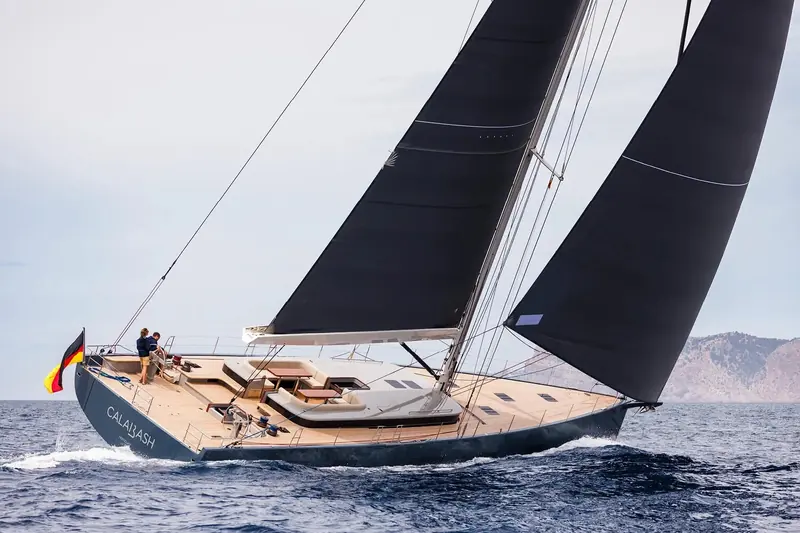
YYachts announced the first hybrid-powered Y8 was under construction on 26 February 2026, and Fitzrovia is that hull, delivered six months later and shown publicly for the first time at the Cannes Yachting Festival in September. The hybrid system is built around a Yanmar diesel-electric package: a conventional diesel engine sits alongside an electric motor and a lithium battery, switchable through a Yanmar touch display that shows the crew which mode is running, how the battery is charging and how much charge is left. In electric-only silent mode the yacht moves under battery power with no engine noise, no vibration and no exhaust at the point of use, which matters most at anchor and on the final approach into a crowded Mediterranean harbour where a diesel engine idling at low speed is the single most noticeable thing about a 24-metre yacht.
The battery recharges from shore power in port or from solar panels while under way or at anchor, and the diesel engine itself is HVO-compatible, meaning it can run on hydrotreated vegetable oil instead of standard marine diesel wherever a marina or fuel barge stocks it. That combination, battery for silent running plus a renewable-capable diesel for everything else, is what YYachts calls its answer to sustainability and performance being treated as opposites. What the yard has not said is more telling than what it has: no battery capacity in kilowatt-hours, no stated electric-only range or duration, and no price premium over a standard diesel Y8. For a first hull of a new system, that is normal. It also means a buyer cannot yet compare Fitzrovia's silent-mode endurance against a rival hybrid sailing yacht on a single published number.
Why does Fitzrovia feel larger than her 23.99-metre length suggests?
Fitzrovia's hull carries a wider stern and a mast moved further aft than the earlier Y8, and moving the engine room underneath the saloon floor freed up living space, together giving the interior about 20 percent more volume than previous Y8s of the same length.
The exterior is by Surge Projects under Javier Jaudenes, the same studio behind the standard Y8, but this second-generation hull widens the stern and sets the mast further aft for more sail power and a flatter run downwind. Inside, David Thulstrup and the YYachts design team used the extra beam and the relocated machinery space to build a lighter, more open saloon than the boat's length would suggest from the dock. Thulstrup is best known outside yachting for hotel interiors, including Copenhagen's Nobis Hotel, and the restraint of that work carries over here: pale oak, low-contrast joinery and glazing sized to keep the saloon reading as one continuous space rather than a boat's-worth of small rooms.
Moving the engine room beneath the saloon floor, rather than aft in the traditional position, is the structural decision that makes the volume gain possible, and it is a direct consequence of the electric motor and battery pack needing a different footprint than a standalone diesel. YYachts offers the underlying Y8 platform with the owner's suite and a dedicated saloon placed in either the bow or the stern depending on how an owner wants to use the boat, a flexibility that a from-scratch layout rarely allows on a yacht this size.
What does an owner give up for that extra space?
Fitzrovia's charter configuration sleeps six guests across three cabins, a master, a double and a twin, against the Y8 platform's own option of four to five cabins for eight to ten guests. An owner who wants to charter to capacity on a 24-metre hull gives up two or three berths for the quieter running and the larger saloon.
The charter listing puts Fitzrovia at six guests in three cabins with a crew of up to three, cruising the western Mediterranean out of Croatia, France, Italy, Malta and Montenegro at a rate from 44,000 US dollars a week before expenses. That is toward the lower end of what a new 24-metre Y8 has chartered for, and it reflects a genuinely new hull rather than an established charter history. She carries a full inventory for a first season: two paddleboards, a wakeboard, waterskis, a four-person towable, two sea-scooters and snorkelling gear, stowed in a transverse tender garage aft.
The cabin count is the clearest trade in this story. YYachts sells the standard Y8 with room for four or five cabins and eight to ten guests, which is the number a charter operator chasing maximum weekly revenue would want on a hull this size. Fitzrovia's owner chose three cabins instead, favouring a larger owner's suite, saloon and engine bay over an extra pair of berths, then put the boat into the same charter market as five- and six-cabin rivals. For a buyer weighing the Y8 platform, that is the real decision the hybrid system does not change: fewer heads in bunks in exchange for space and quiet, on a boat that still has to earn a weekly rate against motor yachts and other sailing yachts with more to sell.
Has anyone besides YYachts actually tested this drivetrain at sea?
No independent sea trial, owner account or charter guest review of Fitzrovia's hybrid system exists yet. Every performance claim so far, including the emissions and silent-mode benefits, comes from YYachts and the charter brokers marketing the boat, not from a third party who has run the drivetrain at sea.
Fitzrovia was delivered in August 2026 and shown publicly for the first time at Cannes the following month, which is too short a gap for a magazine sea trial, a season of charter guest feedback or an owner association thread to have formed. That is not a mark against the boat; it is simply where a first hull of any new system sits, and it is worth saying plainly rather than dressing up a yard press release as independent experience. The claims worth testing over the next year are specific: how long silent mode actually runs before the diesel cuts in, whether HVO is genuinely available at the marinas Fitzrovia is chartering out of, and whether the battery and electric motor need any more maintenance than a standard Y8's second engine would.
The broader context is that hybrid propulsion is arriving on sailing yachts well after it did on motor yachts, where the payback case for cruising sedately at hotel-load power has always been clearer. On a performance sailing yacht like the Y8, the engine only runs when the wind does not cooperate, which shrinks the hours a hybrid system gets to prove itself. Whether that is enough to justify the added weight and complexity of a second power source is exactly the question a buyer of the next hybrid Y8 will be asking YYachts to answer with real numbers, not a press quote.
What is good, and what to watch
Strong points
- Genuinely silent, zero-local-emission runningbattery power alone covers slow-speed manoeuvring and anchorage approaches with no engine noise or exhaust.
- HVO-compatible dieselthe backup engine can run on renewable fuel wherever it is stocked, without any hardware change.
- More usable interior for the same lengtha wider stern, aft-set mast and relocated engine room give roughly 20 percent more volume than earlier Y8s.
- Flexible chargingshore power or onboard solar keeps the battery topped up without relying on the diesel.
What to watch
- Fewer berths than the platform allows3 cabins and 6 guests against the Y8's own option of 4-5 cabins and 8-10 guests, a real charter-revenue trade-off.
- No published battery capacity or electric rangea buyer cannot compare silent-mode endurance against any other hybrid sailing yacht on a hard number.
- Zero independent testingevery claim so far comes from YYachts and its charter brokers, with no sea trial or owner account yet.
- HVO availability is not guaranteedthe fuel exists, but not every marina in Fitzrovia's own cruising grounds stocks it.
Practical detail
| Length overall | 23.99 metres (78'8") |
|---|---|
| Guests / cabins (charter configuration) | 6 guests / 3 cabins (1 master, 1 double, 1 twin) |
| Crew | up to 3 |
| Charter rate | from USD 44,000 per week, plus expenses |
| Builder | YYachts, Greifswald, Germany |
| Exterior design | Surge Projects (Javier Jaudenes) |
| Interior design | David Thulstrup with the YYachts design team |
| Propulsion | Yanmar diesel-electric hybrid, lithium battery, HVO-compatible diesel |
| Charging | shore power and onboard solar |
| Delivered | August 2026; public debut at Cannes Yachting Festival, 8-13 September 2026 |
| Cruising grounds | Croatia, France, Italy, Malta, Montenegro |
| Not published | battery capacity, electric-only range or duration, price premium over a standard Y8 |
Questions this story answers
What happened?
Fitzrovia, delivered in August 2026, carries YYachts' first diesel-electric drivetrain and went straight into Mediterranean charter rather than staying private. An owner comparing 24-metre sailing yachts should know the trade she makes for quiet running and lower emissions: two fewer cabins than the same hull can carry.
What is good about it?
Genuinely silent, zero-local-emission running. battery power alone covers slow-speed manoeuvring and anchorage approaches with no engine noise or exhaust.
What should an owner or buyer watch?
Fewer berths than the platform allows. 3 cabins and 6 guests against the Y8's own option of 4-5 cabins and 8-10 guests, a real charter-revenue trade-off.
Who reported this?
YachtCharterFleet (Anna Ingles, 10 September 2026), YYachts (press release, 26 February 2026), Boat International (Cannes Yachting Festival sailing yacht guide, September 2026), Megayacht News (YYachts Y8 specification report).
We do this for everyone who loves this world. The people who have spent their lives in it, and the people just discovering it. Yotters exists so that what we learn belongs to all of them.
Nobody pays us for this. No ads, no sponsors, nothing for sale. We just believe the world is a little better when knowledge is shared instead of kept.
If it gave you something today, tell us to keep going. Follow us, leave a like, or write a positive comment. We read every one, and they are what keeps us going.