Alaska & the Inside Passage
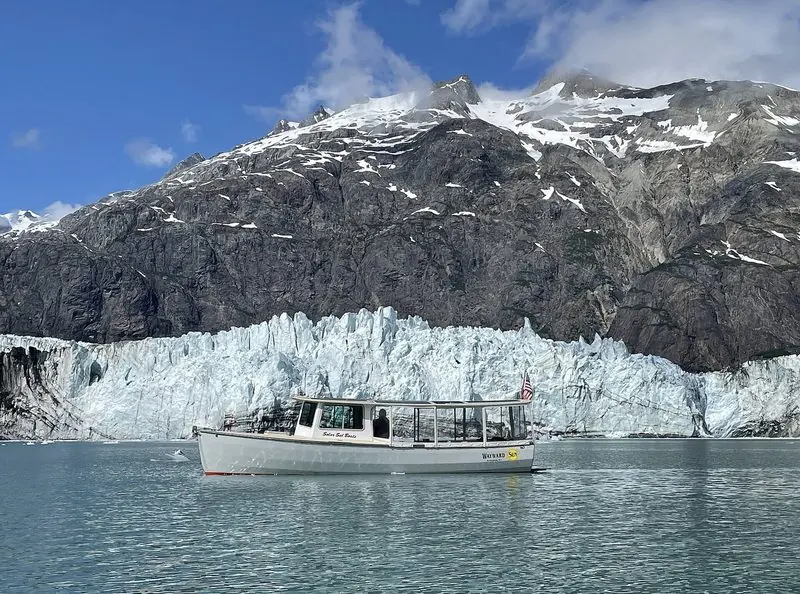
| Regione | l'Inside Passage dal Puget Sound e dalla Columbia Britannica fino al sudest dell'Alaska |
|---|---|
| Percorso | oltre 1.000 miglia da Seattle a Skagway, in gran parte riparate dalle isole |
| Stagione | da fine maggio a inizio settembre |
| Permesso per Glacier Bay | 25 permessi al giorno per unità private, obbligatori dal 1 giugno al 31 agosto, sosta massima cinque giorni |
| Requisiti per Glacier Bay | i permessi sono per unità condotte dall'armatore o noleggiate a scafo nudo, le attività commerciali che trasportano passeggeri paganti non hanno diritto |
| Domanda per Glacier Bay | i sorteggi sono aperti dal 1 al 31 gennaio e dal 1 al 15 marzo, con permessi a breve termine assegnati con sorteggio giornaliero tre giorni prima |
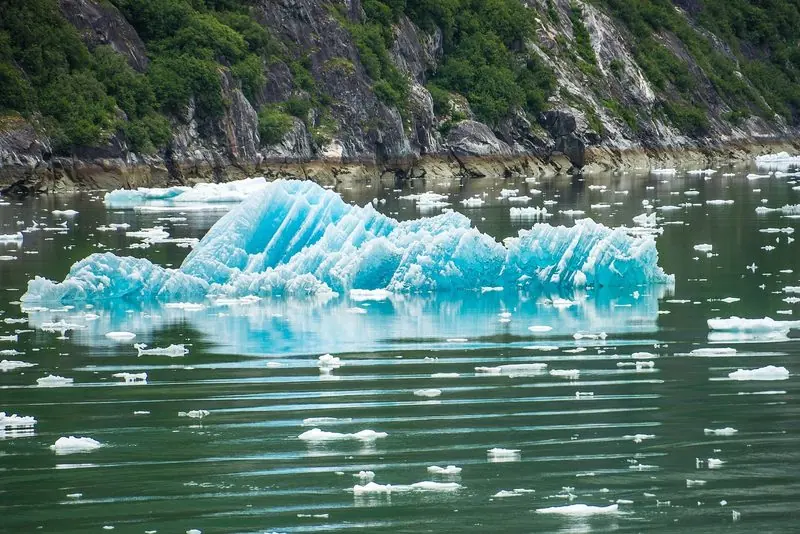
| Tracy Arm | lungo oltre 30 miglia, circa 45 miglia a sud di Juneau, con ghiaccio estivo che va dalle dimensioni di una mano a quelle di un edificio di tre piani |
| Seymour Narrows | correnti fino a 15 nodi in un canale largo circa 750 metri, da transitare alla stanca |
| Piogge | Ketchikan ha una media di 3.798 mm all'anno ed è nota come la capitale della pioggia dell'Alaska |
| Traffico | nel 2018 Ketchikan ha registrato più di 500 scali di navi da crociera e oltre 1.073.000 visitatori |
| Ormeggio | nessuna marina dedicata ai superyacht nel sudest dell'Alaska, i grandi yacht ancorano o si procurano spazio su banchine commerciali |
| Aeroporti | Juneau, Ketchikan e Sitka, con Anchorage e Seattle come porte d'accesso intercontinentali |
| Berth cost | Juneau Docks and Harbors FY26 reservation rate at the Intermediate Vessel Float and Statter Harbor breakwater, 1 May to 30 September, USD 6.24 per foot per day for vessels of 65 ft and over from 1 April 2026 |
| Juneau harbour tariff | 79 cents per foot a day and USD 5.75 per foot a calendar month at Douglas, Harris and Aurora Harbors from 1 July 2026, on slips built for the fishing fleet |
| Shore power at Juneau | USD 32.72 a day for 50 amp, USD 112.58 for 100 amp at 208 V and USD 259.19 for 100 amp at 480 V from 1 July 2026, plus 5 per cent local sales tax |
| Charter | the PVSA penalty is USD 300 per passenger under 19 CFR 4.80, inflation-adjusted to USD 996 per passenger for 2025, and a commercially operated yacht is separately ineligible for a Glacier Bay private vessel permit |
| Cruising licence | 19 CFR 4.94, valid up to one year, private use only, with a Canadian clearance in each direction on the Inside Passage |
| Nearest lift | Ketchikan Shipyard, operated by Vigor, drydock rated at 10,000 tons taking vessels to 460 ft, with a second dock of 2,500 tons |
| Discharge | 33 CFR 159.309 permits treated sewage or graywater from a cruise vessel in Alaskan waters only under way at 6 knots or more and at least one nautical mile from shore |
| Discharge permit | Alaska's Commercial Passenger Vessel Environmental Compliance programme bars small commercial passenger vessels from discharging treated sewage, graywater or other wastewater in Alaska waters without a state permit |
| Cruise traffic | Ketchikan was reported to expect about 1.47 million passengers and over 500 ship calls in 2025, and was forecast in March 2026 to exceed 1.6 million in 2026 |
La forma del passaggio
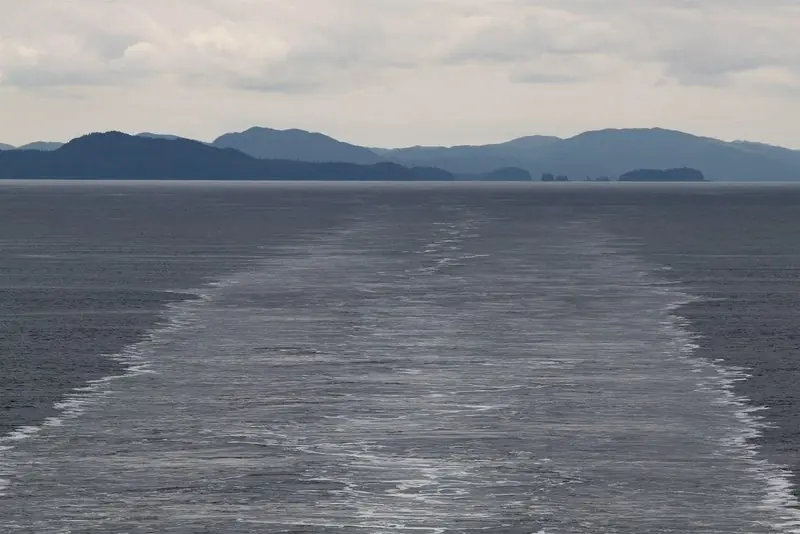
Dal Puget Sound la rotta sale a nord attraverso il Mare dei Salish e lo Stretto di Georgia, su per il lato interno dell'isola di Vancouver attraverso Johnstone Strait, lungo la costa della Columbia Britannica dietro le isole Princess Royal e Pitt, e dentro l'arcipelago Alexander nel sudest dell'Alaska. Le isole riparano quasi tutto il percorso. Ci sono due o tre tratti esposti in cui il Pacifico entra, e il resto è acqua piatta con montagne su entrambi i lati.
Sono più di 1.000 miglia da un capo all'altro, e le distanze sono la prima cosa che un armatore deve accettare. Ketchikan, il primo porto dell'Alaska, è circa 600 miglia a nord di Seattle. Juneau è altre 250 più in là. Niente in quest'area è compresso, e la barca passa ore vere in navigazione. Ogni anno usano il passaggio circa 36.000 unità da diporto, quasi tutte sotto i 20 metri.
Una settimana, e tre settimane
Qui una settimana funziona solo come segmento. Gli ospiti volano a Juneau, la barca li porta a sud verso Tracy Arm ed Endicott Arm per i ghiacciai, a ovest attraverso Frederick Sound per le megattere, e li sbarca a Sitka o a Petersburg. È una settimana piena e molto bella, e richiede che lo yacht abbia già passato due settimane a salire verso nord.
Da tre a quattro settimane è la cifra onesta per l'intero percorso, da Seattle o Vancouver a Glacier Bay e ritorno, e la maggior parte degli armatori che lo fa per bene manda la barca a nord con il solo equipaggio a maggio e fa arrivare e partire gli ospiti a blocchi tra giugno, luglio e agosto. Uno yacht che è risalito dalla costa pacifica del Messico o che è arrivato dal Giappone è già impegnato per una stagione qui. Non è un'area in cui una barca si infila per dieci giorni.
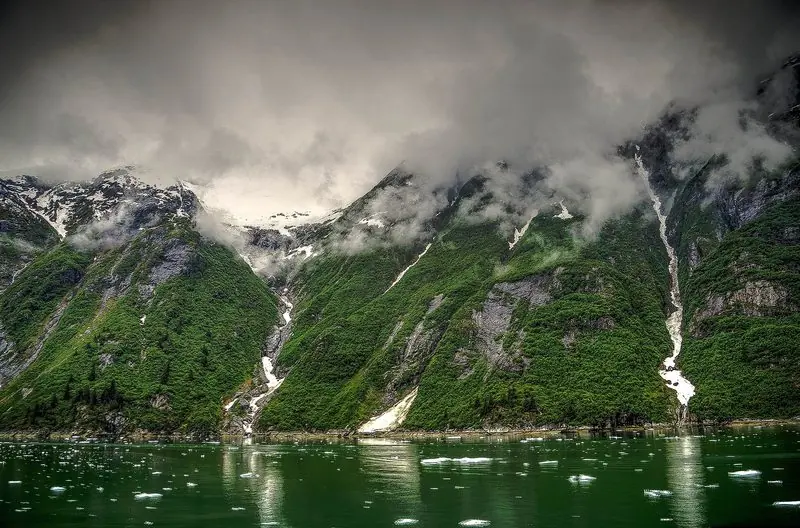
Venticinque permessi al giorno per la parte migliore, e una porta di marea che decide quando la barca parte.
Glacier Bay e il permesso
Glacier Bay è il pezzo forte, e l'accesso è razionato. Vengono rilasciati venticinque permessi al giorno per unità private, quindici con richiesta anticipata e dieci a breve termine, e dal 1 giugno al 31 agosto serve un permesso per andare a nord della linea tra Point Gustavus e Point Carolus. I permessi anticipati sono assegnati per sorteggio a gennaio e di nuovo nella prima metà di marzo, con i rimanenti rilasciati a chi arriva prima. I permessi a breve termine seguono un sorteggio giornaliero a rotazione, tre giorni prima. La sosta massima è di cinque giorni.
La clausola che coglie di sorpresa gli armatori è il requisito soggettivo. I permessi sono per unità condotte dall'armatore o noleggiate a scafo nudo, e una barca che trasporta passeggeri paganti o che opera commercialmente non ha diritto. Uno yacht in registro commerciale che fa charter non può semplicemente presentare domanda. Chiunque entri deve completare un briefing annuale per i diportisti, annunciarsi in entrata e in uscita a Bartlett Cove via VHF e rispettare le restrizioni su velocità e rotta nelle acque delle balene che il parco emana nel corso della stagione per le megattere.
I fiordi e gli ancoraggi che valgono il viaggio
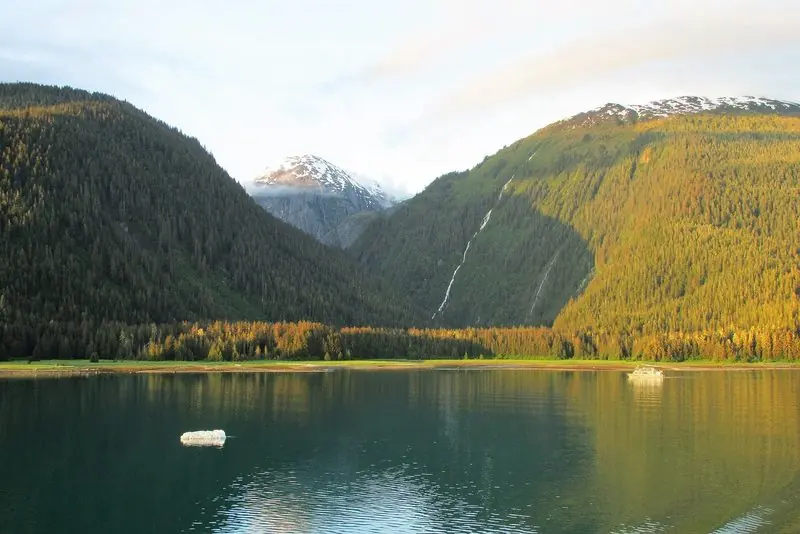
Tracy Arm è quello che la maggior parte degli armatori mette al primo posto. Oltre 30 miglia di pareti di granito a circa 45 miglia a sud di Juneau, che finiscono ai due Sawyer Glaciers, con ghiaccio galleggiante che va dalle dimensioni di una mano a pezzi grandi come un edificio di tre piani. È il ghiaccio il fattore limitante, e uno yacht entra fin dove il ghiaccio permette e non oltre. Endicott Arm e il Dawes Glacier lì accanto fanno lo stesso lavoro con meno barche.
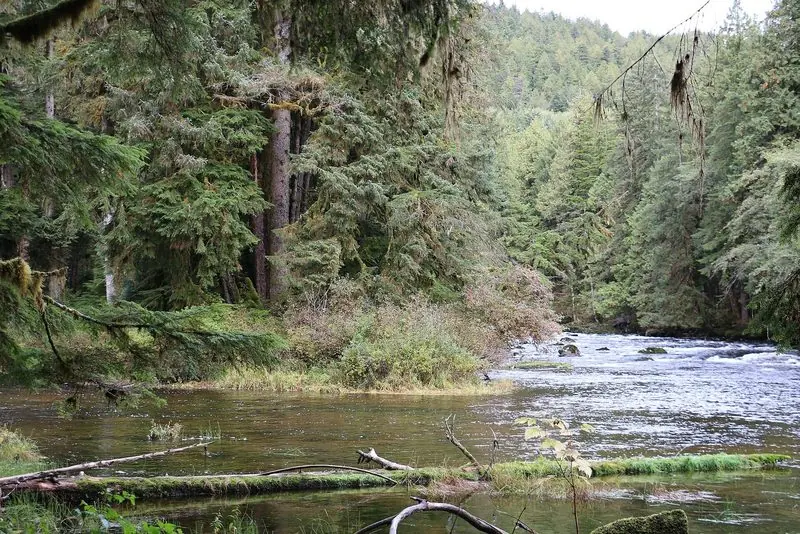
Più a sud, il Princess Louisa Inlet sulla costa della Columbia Britannica si imbocca attraverso i Malibu Rapids alla stanca e finisce alle Chatterbox Falls, e vale la pena costruirci attorno un'intera giornata. Desolation Sound ha l'acqua più calda della costa. L'arcipelago di Broughton e la Great Bear Rainforest regalano giornate di ancoraggi deserti con gli orsi sulla riva. In Alaska le sorgenti calde di Baranof Island, Red Bluff Bay e le baie lungo Chatham Strait sono quelle a cui gli equipaggi tornano.
Dove ci sta una barca di 50 metri, e dove no
Nel sudest dell'Alaska non esiste una marina dedicata ai superyacht. Juneau, Sitka, Ketchikan e Petersburg hanno tutte porti costruiti per la flotta da pesca commerciale, con finger dimensionati di conseguenza. Uno yacht di 50 metri si procura spazio su una banchina commerciale o crocieristica tramite un agente, oppure ancora, e ancorare è quello che fa la maggior parte del tempo. Nei fiordi le profondità sono spesso troppo grandi per ancorare vicino alla testata, quindi i punti buoni sono precisi e noti.
Vancouver e Seattle all'estremità sud sono l'eccezione, con marine vere, ormeggi profondi e servizio completo. Tutto quello che sta a nord si assottiglia progressivamente. Lo yacht che qui funziona meglio è quello con grande autonomia, buona dotazione di tender, un radar che dà un'immagine solida ed equipaggio a proprio agio nell'ancorare su 25 metri con una cima di poppa a un albero. Altezza d'aria e larghezza sono irrilevanti. I vincoli sono il ghiaccio, la corrente e l'assenza di posti dove legarsi.
Meteo, maree e correnti
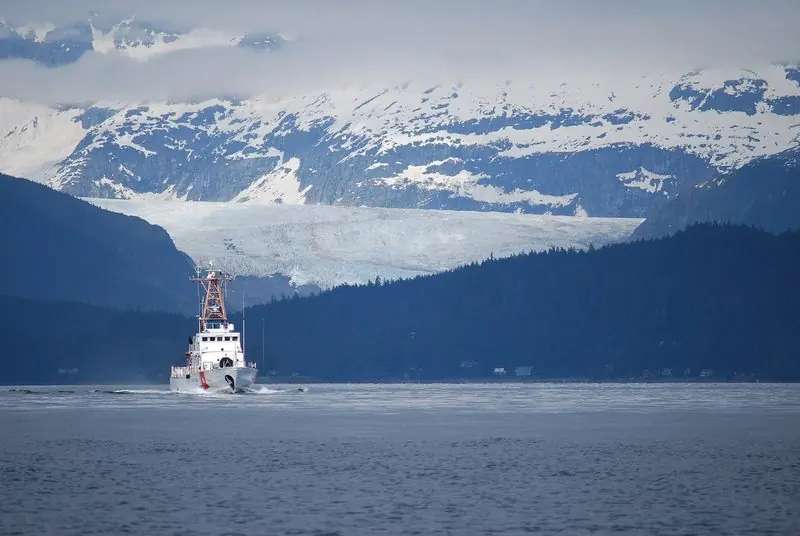
Questa è una costa da pioggia. Ketchikan ha una media di 3.798 mm all'anno e tutto il passaggio è nuvoloso, umido e fresco. D'estate le temperature dell'aria stanno attorno ai quindici gradi in una buona giornata. Nebbia e nuvole basse sono compagne costanti e gli orari degli idrovolanti si spostano di conseguenza. Gli armatori devono mettere in conto di bagnarsi e restare piacevolmente sorpresi quando non succede.
Maree e correnti contano più del vento. Escursioni di cinque metri e oltre sono normali, e l'acqua deve passare attraverso stretti angusti, quindi porte come Seymour Narrows arrivano a 15 nodi in un canale largo circa 750 metri e si transitano alla stanca. Il capitano Vancouver lo definì uno dei tratti d'acqua più infami del mondo, e anche dopo che nel 1958 Ripple Rock è stato fatto saltare continua a dettare i tempi della giornata. Qui una crociera va sulle tavole di marea, non sull'orologio.
La stagione e che cosa la riempie
Da fine maggio a inizio settembre, e tutto qui. Giugno e luglio sono i mesi di luce lunga, con luce utilizzabile fino a ben oltre le dieci di sera nel nord. Agosto porta in certi punti un tempo più stabile e le risalite dei salmoni, che portano gli orsi giù ai fiumi. Da metà settembre le barche puntano a sud e i cantieri di Seattle e Vancouver sono prenotati dalla flotta di ritorno.
La concorrenza non sono gli altri yacht. Sono le navi da crociera. Nel 2018 Ketchikan ha registrato più di 500 scali crocieristici e oltre un milione di visitatori, e Juneau, Skagway e Sitka portano carichi simili. Uno yacht che programma le proprie giornate attorno al calendario delle crociere vede una costa completamente diversa da uno che non lo fa, e qualunque agente locale decente ha gli orari.
Portare gli ospiti a bordo, e che cosa fanno a terra
Juneau, Ketchikan e Sitka hanno tutte aeroporti con voli di linea a reazione, e Juneau è il consueto punto di cambio ospiti. Anchorage e Seattle sono le porte d'accesso intercontinentali, e l'ultima tratta è un volo di linea o charter. Idrovolanti ed elicotteri sono la moneta locale e qui li usa ogni yacht, per gli atterraggi sui ghiacciai, per la pesca in posti remoti e per far uscire un ospite quando il tempo si chiude.
A terra l'attrazione non sono le città. Sono l'osservazione degli orsi a Pack Creek e ad Anan Creek, le escursioni in elicottero sui campi di ghiaccio, la pesca a salmone e ippoglosso che è davvero di livello mondiale, e la chiesa russa e il parco dei totem di Sitka per l'unico pomeriggio di cultura. Il cibo è pesce, e il pesce è superbo. La vita notturna è un bar in una cittadina di pescatori. Gli ospiti che hanno bisogno di una scena di ristoranti saranno infelici nel giro di tre giorni.
Carburante, supporto e il difetto da dire
Il carburante si trova a Ketchikan, Petersburg, Juneau e Sitka, su banchine dimensionate per la flotta da pesca, quindi un rifornimento grosso si organizza in anticipo e a volte con una bettolina. Fare provviste a quello standard significa farsele arrivare in aereo da Seattle. Il supporto tecnico nel sudest dell'Alaska è capace e pratico, tarato sulle barche da lavoro, e un guasto serio significa o far salire uno specialista in aereo o scendere 600 miglia a sud. La logistica dei ricambi è la frustrazione più comune che gli equipaggi riferiscono.
Il resto del difetto è facile da dire. Piove, fa freddo, l'acqua non è balneabile, le città sono piccole e le navi da crociera sono arrivate prima. Glacier Bay può negare un permesso. Uno yacht in registro commerciale è del tutto escluso dal sistema dei permessi privati. Contro tutto questo, un armatore ottiene ghiacciai di marea che partoriscono iceberg a 200 metri dal traverso e ancoraggi dove in nessuna direzione si vede qualcosa costruito dall'uomo, che è una merce ogni anno più rara.
What a month costs, on a published municipal tariff
There is no superyacht marina to quote, so the numbers come from the harbour authorities and they are public. Juneau Docks and Harbors publishes its FY26 schedule: 79 cents per foot a day and USD 5.75 per foot for a calendar month at Douglas, Harris and Aurora Harbors from 1 July 2026. Those are fishing-fleet slips and a 50 m yacht will not get one. The tariff that applies to her is the reservation rate at the Intermediate Vessel Float and the Statter Harbor breakwater, running 1 May to 30 September and, from 1 April 2026, charging USD 3.74 per foot per day for vessels under 65 ft, USD 6.24 per foot per day at 65 ft and over and USD 7.47 per foot per day at 200 ft and over. A 164 ft yacht at USD 6.24 is USD 1,023 a day, about USD 31,700 for a month. Shore power is charged on top at USD 32.72 a day for 50 amp, USD 112.58 for 100 amp at 208 volts and USD 259.19 for 100 amp at 480 volts from 1 July 2026, and a 5 per cent City and Borough of Juneau sales tax may apply to all of it.
Against Marina di Porto Cervo's published 2026 tariff, which charges EUR 3,698 a day in the band to 40 m between 1 and 20 August and about EUR 102,000 for the month, Alaska is roughly a third of the price and there is nothing to spend the difference on. The permit that rations the best of the ground costs nothing at all, which is the surprise: Glacier Bay's twenty-five private vessel permits a day are allocated by lottery rather than by price. The costs that do bite are the ones that do not appear on a tariff. A large fuel uplift is arranged in advance and sometimes comes by barge, provisioning at guest standard is flown from Seattle, and the delivery north and south either side of the season is three to four weeks of running that no owner is aboard for.
The PVSA, the permit bar and the yard nobody expects
Two rules exclude a commercially registered yacht from this ground and they compound. The Passenger Vessel Services Act bars a foreign-flagged vessel from carrying passengers between United States points, and the penalty under 19 CFR 4.80 is USD 300 per passenger transported and landed, inflation-adjusted to USD 996 per passenger for 2025. On top of that, Glacier Bay's private vessel permits are issued to owner-operated or bareboat-chartered vessels only, and a vessel carrying paying passengers or operating commercially is not eligible, so a charter yacht is shut out of the best of the park by the park itself rather than by customs. A foreign-flagged yacht cruising privately takes a cruising licence under 19 CFR 4.94, valid up to a year, which lets her move between United States ports without formally entering at each one, and the Inside Passage adds a Canadian clearance in each direction because most of the route is British Columbian water.
The yard position is much better than the reputation of the coast suggests. Ketchikan Shipyard, operated by Vigor, runs a drydock rated at 10,000 tons taking vessels to 460 ft, with a second dock of 2,500 tons and a covered assembly hall. A 50 m yacht can be docked in south-east Alaska, which is not true of the Maldives, French Polynesia or the Grenadines. What Ketchikan does not have is a superyacht paint shed, a joinery shop or the finishing trades, so the honest description is that structural and mechanical work can be done here and cosmetic work cannot.
Discharge, and how busy it now is
Alaska has its own federal discharge standard and it is stricter than the general rule. Under 33 CFR 159.309 a cruise vessel may discharge treated sewage or graywater in Alaskan waters only when under way at not less than 6 knots and not less than one nautical mile from the nearest shore, with fecal coliform not exceeding 20 per 100 millilitres as a geometric mean and total residual chlorine not exceeding 10.0 micrograms per litre. Alaska's own Commercial Passenger Vessel Environmental Compliance programme goes further for small commercial passenger vessels, which may not discharge treated sewage, graywater or other wastewater in Alaska waters without a state permit. A yacht carrying paying passengers is inside that regime. A private yacht is outside the letter of both and inside the culture of neither, because the fjord anchorages have no flushing and everybody notices.
The traffic picture has also moved a long way, and any planning built on figures from the last decade is wrong. Ketchikan was reported to expect about 1.47 million cruise passengers across more than 500 ship calls in 2025, and in March 2026 was forecast to take more than 1.6 million in the 2026 season, an increase of over 100,000 and enough to pass Juneau for the first time. Juneau and Skagway each took over a million in 2025 as well. That is the schedule a yacht plans around, and it is why the good days here start early and end in an anchorage no ship can reach.
A terra, accessi e prenotazioni
| Getting there | Juneau and Ketchikan are where itineraries start and where guests join, both served by jet from Seattle. Sitka, Wrangell and Petersburg fill in the middle of the route. The working season is late May to early September, with June and July the strongest for wildlife, and there is no realistic shoulder either side of it. |
|---|---|
| Pilotage, which catches almost every foreign flag | This is the rule that reshapes an Alaskan plan. Alaska requires state pilotage for foreign-flagged vessels over 65 ft LOA. Between 65 ft and 175 ft a yacht may apply to the Alaska Marine Pilot Board for an exemption, but the application goes in a minimum of 30 days before arrival and needs a registered agent to file it. Between 125 ft and 175 ft a pilot must be taken on arrival at the first Alaskan port whether or not an exemption is held. Over 175 ft there is no exemption at all. Wrangell Narrows and Peril Strait require a pilot from everyone regardless of exemption status, and both sit squarely on the Inside Passage route. |
| The cruising permit trap | A foreign-flagged pleasure vessel of an eligible flag can hold a US cruising permit that exempts it from formal entry and clearance at each port; the eligible register list is at 19 CFR 4.94 and includes the British Virgin Islands, Cayman Islands, Bahamas, Jamaica and the Marshall Islands. The trap is that a cruising permit cannot be renewed while the vessel is in Alaskan waters. A permit that expires mid-season is not a paperwork problem, it is a passage: the yacht has to leave and come back. |
| Over 400 GT | A vessel above 400 gross tons must hold a current Alaska Certificate of Financial Responsibility and an approved Oil Spill Response Plan before it enters Alaskan waters, not on arrival. That is a lead-time item measured in weeks and it is the one most often discovered too late by a yacht repositioning up from the Pacific Northwest. |
| Glacier Bay, and how the quota really works | Glacier Bay runs a daily quota of 25 private vessel permits from 1 June to 31 August, one of which the superintendent designates as a transit permit usable only to run out of the bay from Bartlett Cove and back. From September through May there is no quota on private or charter vessels at all. Permits are non-transferable between vessels, a private vessel may hold at most two, only one of which can be an advance-notice permit, and no vessel may hold permits for more than 14 days in any 21-day period. That last rule, not the daily quota, is what actually limits a yacht that wants to spend real time in the bay. |
| The other permits nobody budgets for | Separate permits are required for Anan Creek Bear Observatory, the Pack Creek Bear Sanctuary and Baranof Warm Springs. These are the three shore excursions guests most often ask for by name once they are aboard, and none of them can be arranged on the day. |
| Agricultural inspection | A vessel that has operated outside the United States within the previous two years must be able to show proof of agricultural inspection. For a yacht arriving from Mexico, the South Pacific or a Vancouver refit this is a live requirement rather than a formality. |
| Fuel and support | Juneau has fuel docks and shoreside services but they expect a call ahead rather than a walk-up, and capacity is sized for the fishing and small-cruise fleet rather than for a 60 m yacht. There is no superyacht refit capability in southeast Alaska; the nearest real yard capacity is Seattle or Vancouver, which is a multi-day run. Carry the spares. |
| What a chartered week costs | The published charter market runs from roughly USD 46,000 a week for a small four-guest expedition yacht to over USD 200,000 for a full superyacht, before the expenses that Alaska adds: pilotage, permits, and a fuel bill inflated by distance from anywhere. |
Cosa riferiscono armatori ed equipaggi
The pilotage exemption is a 30-day, agent-filed application, not a form on arrival
Agents working Alaskan yacht arrivals state that Marine Pilot Board exemption applications should be submitted a minimum of 30 days ahead and require a registered agent to file them. This is the agent's own account of a service it provides, but the 30-day figure is the operative planning number and it is the one most often missed by yachts repositioning north on a compressed schedule.
Yacht Services of AlaskaThe permit that cannot be renewed is the one that ends seasons early
Practitioners advising foreign-flagged yachts entering US waters flag the non-renewal of cruising permits inside Alaska as a distinct trap from the ordinary permit rules further south. The remedy is always the same and always expensive: leave US waters and re-enter to obtain a fresh permit.
International Yacht Brokers AssociationGlacier Bay's binding limit is the 14-in-21 rule, not the daily quota
Operators report that securing one of the 25 daily permits is achievable, while the restriction preventing any vessel from holding permits for more than 14 days in any 21-day period is what actually forces a yacht out of the bay and shapes a multi-week itinerary around it.
Yacht Services of Alaska
Cosa convince e cosa va valutato
Punti di forza
- Protected water for almost the entire routeThe Inside Passage links Ketchikan, Wrangell, Petersburg, Sitka and Juneau through sheltered channels. A cruising ground of this scale that almost never requires an exposed passage is rare, and it makes Alaska viable for yachts and guests that would not attempt open Pacific water.
- The quota is a feature, not an obstacleTwenty-five private vessels a day across the whole of Glacier Bay in peak season means the single best thing to look at in southeast Alaska is never crowded. Owners used to queueing for a Mediterranean anchorage in August consistently rate this the most valuable thing about the destination.
- Nine months of the year the quota does not existFrom September through May neither private nor charter vessels are subject to quotas. A late-season boat willing to accept weather and short daylight has the bay effectively to itself and needs no permit lottery at all.
- The rules are written down and they are stablePilotage thresholds, the 19 CFR 4.94 flag list, the Glacier Bay quota and the 14-in-21 rule are all published federal or state regulation rather than local practice. An owner can plan an Alaskan season precisely, which is not true of most remote destinations.
Da valutare
- Pilotage is a hard cost on any foreign flag over 65 ftThe exemption is discretionary, needs 30 days and a registered agent, and disappears entirely above 175 ft. Between 125 ft and 175 ft a pilot is compulsory at the first port regardless. For a foreign-flagged yacht this is the largest and least avoidable line in an Alaskan budget.
- A cruising permit cannot be renewed in AlaskaIf the permit runs out mid-season the yacht must physically leave US waters and return. That is a multi-day repositioning built on a date, and it has to be designed into the itinerary before the season starts rather than solved when it happens.
- The season is about fourteen weeksLate May to early September. Everything, including the Glacier Bay quota window of 1 June to 31 August, is compressed into it, so a yacht committing to Alaska is committing its whole summer and giving up a Mediterranean one.
- There is no technical support within a thousand milesNo superyacht yard in southeast Alaska, fuel docks sized for the fishing fleet, and Seattle or Vancouver as the nearest real capability. A failure that would be a morning in Antibes is a delivery voyage here.
- The shore excursions all need paperAnan Creek, Pack Creek and Baranof Warm Springs each need a separate permit. Guests ask for these by name and they cannot be produced spontaneously, so a captain who has not applied in advance spends the trip declining requests.
A chi si rivolge: L'armatore con una barca di grande autonomia, un comandante capace e nessun interesse a farsi vedere, che preferisce guardare un ghiacciaio sfaldarsi piuttosto che stare seduto in un beach club.