Antarctica & the Patagonian Channels
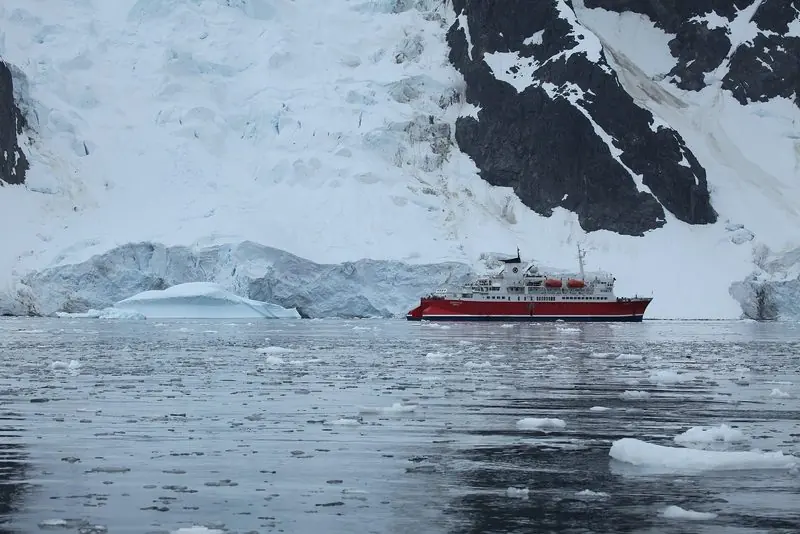
| Regione | i canali cileni e argentini dallo Stretto di Magellano giù fino a Capo Horn, e oltre la Penisola Antartica |
|---|---|
| Stagione | l'estate australe, grosso modo da novembre a marzo |
| Passaggio di Drake | circa 800 km, cioè 500 miglia, da Capo Horn all'isola Livingston, con onde riportate fino a 12 metri |
| Corrente | la Corrente Circumpolare Antartica trasporta una stima di 100-150 Sverdrup, ed è la corrente oceanica più forte del pianeta |
| Ushuaia | a circa 1.100 km dalla Penisola Antartica e principale porto di partenza al mondo per raggiungerla, con circa 540 scali crocieristici l'anno |
| Canale di Beagle | lungo circa 240 km e largo 5 km nel punto più stretto |
| Pilotaggio | il Trattato di pace e amicizia del 1984 impone alle navi straniere di imbarcare piloti cileni tra lo Stretto di Magellano e Ushuaia |
| Stretto di Magellano | lungo circa 570 km, largo al minimo circa 2 km, con pilotaggio obbligatorio |
| Canali cileni | un sistema navigabile da circa 42 a 55 gradi sud, con corridoi di navigazione regolati dal decreto cileno 416 del 1977 |
| Regole antartiche | non più di 100 visitatori a terra in un sito nello stesso momento, e le unità che trasportano oltre 500 passeggeri non possono sbarcare nessuno |
| Permessi | le parti del Trattato Antartico rilasciano permessi invece di visti, ottenuti tramite l'autorità nazionale dell'operatore |
| Traffico | i visitatori in Antartide sono indicati in circa 124.000 all'anno entro il 2025 |
| Chilean pilotage | set by gross tonnage under Supreme Decree 427 of 1979, in US dollars, revalued annually to the US CPI |
| Published pilotage band | USD 3,836.04 to 6,552.16 for 2,000 to 4,000 GRT for continuous navigation between Bahia Ancud and Bahia Posesion within 120 hours with two pilots, with section multipliers of 0.038 to 1.150 |
| Pilotage extras | USD 55.75 an hour for delayed departure beyond twelve hours, for navigation beyond 120 hours, and for pilot transfer outside a station |
| Port billing | the Austral ports tariff effective 1 May 2025 applies its yacht rates only to vessels up to 50 gross tonnage, so a large yacht is charged on the commercial scale |
| Permits | issued by a national authority of an Antarctic Treaty party to the organiser of the activity, with an environmental impact assessment and contingency planning, and taking months |
| Discharge | the Antarctic is a MARPOL Special Area under Annexes I, II and V, in force since 17 March 1992, and nothing may be discharged |
| Fuel | MARPOL Annex I Regulation 43 has prohibited the carriage and use of heavy grade oil south of 60 degrees south since 1 August 2011 |
Due aree, un solo viaggio
L'Antartide quasi nessuno la fa da sola. La Penisola sta in fondo a una rotta che comincia nei fiordi cileni, e i fiordi valgono il viaggio di per sé. Il sistema di canali navigabili corre da circa 42 gradi sud giù fino a 55, mille miglia di passaggio interno tra i ghiacciai con un solo tratto davvero esposto, l'attraversamento del Golfo de Penas. Puerto Montt, Puerto Natales e Punta Arenas sono i porti lungo il percorso.
In fondo il Canale di Beagle corre per 240 km da est a ovest, largo cinque chilometri nel punto minimo, con Ushuaia sul lato argentino e Puerto Williams su quello cileno. Da lì c'è Capo Horn e poi mare aperto. L'armatore che costruisce un programma di due mesi si porta a casa i canali, l'Horn e la Penisola. Chi ha solo tre settimane dovrebbe fare i canali e lasciar perdere il Drake.
I canali della Patagonia
È questa la parte che la maggior parte degli ospiti ricorda. Ghiacciai che scendono all'acqua su entrambi i lati, condor, e ancoraggi in cui la barca dà quattro cime agli alberi perché il fondo scende di colpo e il vento arriva senza preavviso. Il braccio nordoccidentale del Beagle ha una sequenza di ghiacciai di marea che tutti chiamano Glacier Alley. Seno Pia e Seno Garibaldi sono i due fiordi che gli equipaggi mettono sopra a tutti gli altri. Puerto Natales è il punto di partenza per il Torres del Paine.
Il pericolo che definisce tutto è il williwaw, una raffica catabatica che si rovescia giù da un pendio ghiacciato e colpisce uno yacht all'ancora a 50 o 60 nodi partendo da calma piatta. Qui le cime a terra non sono facoltative, sono la tecnica. Il pilotaggio cileno è obbligatorio nello Stretto di Magellano e, in base al trattato del 1984, per le unità straniere che navigano tra lo Stretto e Ushuaia. L'Armada de Chile controlla i movimenti con il sistema dello zarpe, e uno yacht non lascia un ancoraggio senza.
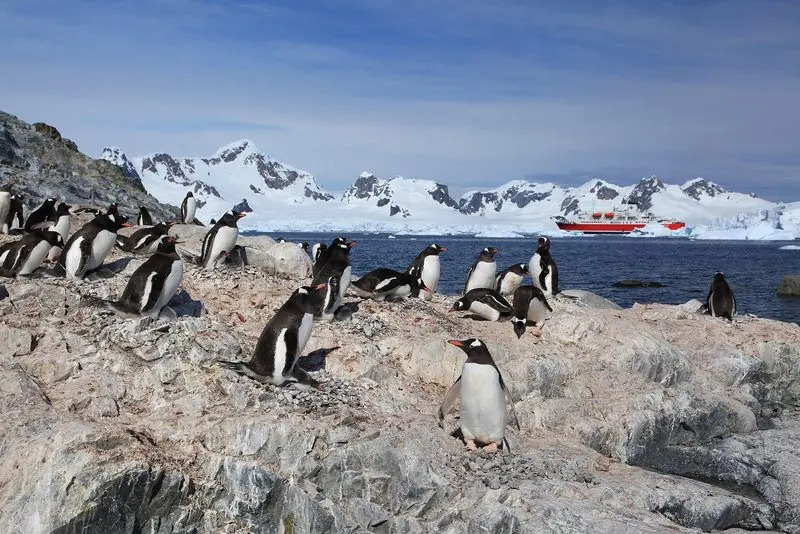
Due giorni di Passaggio di Drake comprano una costa che quasi nessuno yacht privato vede mai.
Il Drake e la Penisola
Il Passaggio di Drake misura 800 chilometri da Capo Horn all'isola Livingston, che per la maggior parte degli yacht sono due giorni per lato. La Corrente Circumpolare Antartica ci passa dentro a una stima di 100-150 Sverdrup, la più forte dell'oceano, e lo stato del mare ha una reputazione ben meritata. Sono registrate onde di 12 metri. Una traversata si programma su una finestra di previsione e la barca o parte o aspetta.
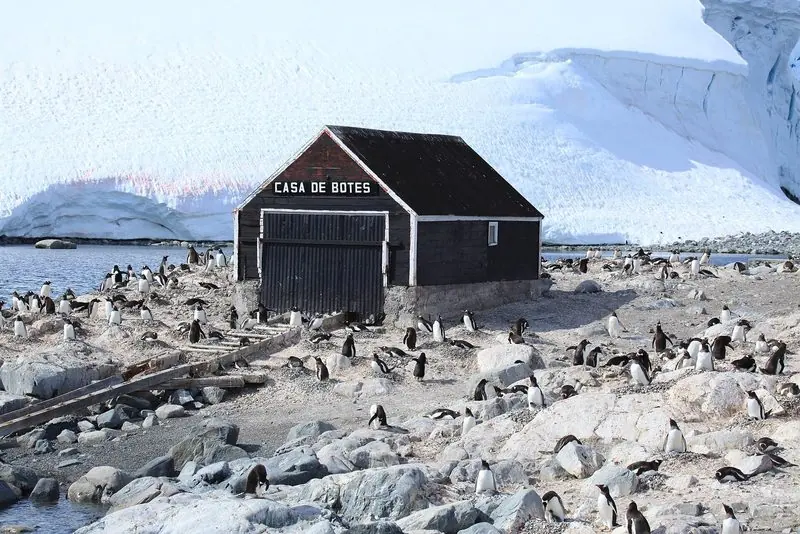
Dall'altra parte la Penisola offre acqua riparata quasi sempre. L'isola Deception è una caldera attiva in cui si entra da un varco chiamato Neptune's Bellows, con dentro le rovine di una stazione baleniera. Il Canale di Lemaire è quello stretto passaggio tra pareti di ghiaccio da cui vengono tutte le fotografie. Paradise Harbour, Neko Harbour e Wilhelmina Bay sono gli ancoraggi, e Port Lockroy ha una base britannica con un museo e un ufficio postale. È il ghiaccio, non la profondità, a decidere dove uno yacht può andare in un dato giorno.
Due settimane, e un mese
Due settimane con base a Ushuaia fanno il Canale di Beagle, i bracci cileni e Capo Horn, e sono una quindicina piena ed esigente con paesaggio vero tutti i giorni. Gli ospiti arrivano e ripartono da un solo aeroporto. È la versione da cui la maggior parte degli armatori dovrebbe cominciare, e molti non vanno mai oltre.
Un mese è il programma della Penisola: Ushuaia, il Drake, da dieci a quattordici giorni di lavoro verso sud lungo la Penisola, e di nuovo il Drake. Aggiungere la Georgia del Sud, che sta molto più a est e porta le colonie di pinguini reali e la tomba di Shackleton a Grytviken, lo trasforma in sei o sette settimane. Ognuna di quelle tratte è una traversata, quindi autonomia della barca, comportamento in mare e resistenza dell'equipaggio decidono il piano più dell'itinerario.
Che cosa serve a una barca di 50 metri
Qui la questione non è l'ormeggio. C'è un molo commerciale a Ushuaia, banchine a Punta Arenas e a Puerto Williams, e in Antartide nulla del tutto. Quello che conta è la specifica: scafo rinforzato per il ghiaccio o quantomeno una notazione di classe che lo consenta, eliche e timoni protetti, riscaldamento ed energia ridondanti, attrezzatura di ancoraggio pesante con la possibilità di dare cime a terra, un radar che veda i growler e autonomia sufficiente ad attraversare il Drake due volte senza bunkeraggio.
La barriera pratica è l'assicurazione. Gli assicuratori chiedono della notazione di classe, dei piloti del ghiaccio, dell'esperienza dell'equipaggio e della dotazione medica, e i premi per una stagione a sud riflettono l'assenza totale di capacità di recupero o di soccorso. La maggior parte degli yacht che ci vanno imbarca un pilota del ghiaccio e un team di spedizione, e avere un medico a bordo è normale. Una barca non costruita per questo non ottiene una polizza, ed è di solito il momento in cui un armatore scopre che cosa comporti davvero il viaggio.
Permessi, IAATO e che cosa è consentito a terra
L'Antartide non è di nessuno, quindi nessuno rilascia un visto. Le parti del Trattato Antartico rilasciano invece permessi, e uno yacht ottiene l'autorizzazione tramite l'autorità nazionale della propria bandiera o dell'organizzatore, in base al Protocollo ambientale. Quell'iter prende mesi, richiede una valutazione di impatto ambientale e una pianificazione delle emergenze, e non si organizza all'ultimo momento da Ushuaia. Gli yacht che si presentano senza sono una categoria nota e sgradita.
In pratica la maggior parte degli operatori seri lavora dentro IAATO, le cui regole limitano gli sbarchi a 100 visitatori a terra in un sito nello stesso momento e vietano a qualunque unità con oltre 500 passeggeri di sbarcare chiunque. Per uno yacht privato quei numeri non sono un vincolo, ma il sistema di prenotazione dei siti che ci sta dietro sì, ed è per questo che il rapporto con l'operatore conta. I visitatori in Antartide hanno raggiunto circa 124.000 all'anno entro il 2025, quindi i buoni punti di sbarco sono a calendario.
Meteo, ghiaccio e stagione
La stagione è l'estate australe, grosso modo da novembre a marzo. Novembre e i primi di dicembre danno più ghiaccio e la neve più pulita. Gennaio e febbraio sono i più caldi, con la maggiore attività della fauna e il maggior traffico. A marzo le giornate si accorciano e la flotta risale a nord. Fuori da quella finestra la Penisola non è un posto in cui uno yacht privato debba stare.
Nei canali il tempo è piovoso, ventoso e mutevole in un modo che non ha equivalenti mediterranei, con le quattro stagioni in un pomeriggio come descrizione corrente. Sulla Penisola l'aria è secca e fredda e il vento di solito è meno di quanto un armatore si aspetti, con il rischio che sta invece nel ghiaccio. Eventi catabatici dalla calotta, il brash che soffoca una baia nel giro di una notte e un cambiamento del pack che chiude un canale sono i problemi operativi quotidiani.
Portare gli ospiti a bordo, e che cosa fanno
L'aeroporto internazionale di Ushuaia prende jet e si collega via Buenos Aires, Santiago ed El Calafate. Punta Arenas è l'equivalente cileno. Sono entrambi lontani da tutto ed entrambi dipendenti dal meteo, quindi gli ospiti dovrebbero arrivare un giorno prima e mettere in conto che la barca possa non salpare la mattina prevista. Per un ospite di uno yacht non c'è accesso aereo alla Penisola, se non con un charter fino alla pista dell'isola King George, che alcuni operatori organizzano per saltare il Drake.
A terra la giornata è fatta di sbarchi in tender. Le colonie di pinguini a Neko e a Petermann, la base e l'ufficio postale di Port Lockroy, la caldera di Deception, il kayak tra i ghiacci e un bagno nei bassi fondali vulcanici per chi proprio insiste. In Patagonia sono trekking nel Torres del Paine, camminate sui ghiacciai e le estancias. Cibo e vita notturna non fanno parte di questa destinazione in nessuna forma che un armatore riconoscerebbe. Ushuaia ha ristoranti e granchio reale, e finisce lì.
Carburante, supporto e il difetto da dire
Carburante e provviste arrivano da Ushuaia, Punta Arenas o Puerto Williams e da nessun altro posto, e uno yacht che attraversa il Drake porta con sé tutto per l'intera tratta australe. Il supporto tecnico al livello che serve a uno yacht di 50 metri non esiste a sud di Buenos Aires o Santiago, e un guasto serio sulla Penisola è un rientro in autonomia attraverso il Drake con quello che si ha a bordo. Ricambi, specialisti e perfino l'evacuazione medica si misurano tutti in giorni.
L'elenco dei difetti è lungo e non contiene sorprese. L'iter dei permessi è lento. Pilotaggio cileno e procedure di zarpe aggiungono costi e tempo a ogni passaggio. L'assicurazione è cara, quando c'è. Il Drake sarà scomodo e può essere peggio. Gli ospiti non convinti saranno infelici entro il quarto giorno. Contro tutto questo, la Penisola a febbraio è il paesaggio meno affollato che uno yacht privato possa raggiungere con i propri mezzi, e gli armatori che ci vanno in genere ci vanno più di una volta.
The compulsory costs, and the one tariff that is published
Chilean pilotage is the line an owner cannot avoid and it is the only part of this voyage with a public tariff. Fees are set by gross tonnage under Supreme Decree 427 of 1979, denominated in US dollars and revalued each year against the US consumer price index. The published standard fee covers continuous navigation between Bahia Ancud and Bahia Posesion within 120 hours with two pilots aboard, and runs from USD 3,836.04 to USD 6,552.16 for vessels of 2,000 to 4,000 GRT, rising through USD 11,505.15 to USD 12,623.55 at 10,000 to 12,000 GRT. A 50 m yacht sits below the bottom of that band, so her base fee is lower, but the structure around it applies in full: section multipliers of 0.038 to 1.150 depending on the route through the Strait and the channels, and USD 55.75 an hour for a delayed departure beyond twelve hours, for navigation beyond 120 hours, and for embarking or landing a pilot outside a transfer station. On a channels programme that runs for weeks, the hourly charges are the part that moves.
Port charges are the other surprise. The Austral ports tariff effective 1 May 2025 applies its yacht rates to vessels up to 50 gross tonnage, which means a 50 m yacht is not a yacht for billing purposes and is charged on the commercial vessel scale at Punta Arenas. Ushuaia's commercial pier is agent-arranged and the agencies that handle expedition ships and superyachts publish nothing. Set the whole thing against the Mediterranean alternative for scale: Marina di Porto Cervo's published 2026 tariff is EUR 3,698 a day in the band to 40 m between 1 and 20 August, about EUR 102,000 for the month. A southern season will cost more than that and almost none of it will be berthing. It is pilotage, agency, fuel carried for the whole leg, an ice pilot, an expedition team, a doctor and an insurance premium priced for a coast with no salvage capability.
Permits, and why a commercial charter is a different application
Nobody owns Antarctica, so there is no visa and no port state to license the yacht. Authorisation comes from a national authority of an Antarctic Treaty party, under the Environmental Protocol, and it is issued to the organiser of the activity rather than to the vessel. That distinction is the one that catches commercial operations: a charter is an organised activity and the permit application has to be made in the name of whoever is organising it, supported by an environmental impact assessment, contingency planning and evidence of self-sufficiency. It takes months, it cannot be assembled from Ushuaia in a fortnight, and a yacht that arrives on the Peninsula without it is in a category the other operators report. There is no fine schedule of the kind a Mediterranean state would publish, because enforcement runs through the flag state and through the permit rather than through a coastguard alongside.
The operational limits come from IAATO rather than from law, and for a private yacht they are not the constraint. No more than 100 visitors ashore at a site at one time, and no landings at all from a vessel carrying more than 500 passengers. What does constrain a yacht is the site booking system behind those numbers, which allocates the good landings among operators who are inside the system, and Antarctic visitor numbers reported at about 124,000 a year by 2025 mean the popular sites are scheduled rather than available. In Chilean and Argentine waters the yacht is back inside ordinary jurisdiction, with compulsory pilotage between the Strait of Magellan and Ushuaia under the 1984 Treaty of Peace and Friendship and the Armada de Chile controlling every movement through the zarpe system.
Discharge and fuel: the strictest regime a yacht will meet
The Antarctic area is a MARPOL Special Area under Annex I for oil, Annex II for noxious liquids and Annex V for garbage, and unlike the Red Sea these designations are in force, having taken effect on 17 March 1992. Garbage discharge is prohibited. Oil discharge is prohibited. Nothing goes over the side, and a yacht crossing the Drake carries out everything she carried in, which is a real volume calculation over a month with guests aboard and a driver of tankage on any boat built for this.
The fuel rule is the one that decides whether a hull can go at all. Under MARPOL Annex I Regulation 43, in force since 1 August 2011, the carriage in bulk as cargo, the use as ballast and the carriage and use as fuel of heavy grade oil are prohibited south of 60 degrees south. A yacht burning distillate is unaffected, which is most of them, but the rule is absolute and applies to what is in the tanks, not to what is being burned that day. Combined with the Polar Code requirements on structure, equipment and crew training, this is the point at which an owner discovers whether the boat is genuinely capable or merely large.
A terra, accessi e prenotazioni
| Getting guests aboard | Ushuaia's international airport takes jets and connects through Buenos Aires, Santiago and El Calafate; Punta Arenas is the Chilean equivalent. Both are weather-dependent, so guests should arrive a day early and expect the boat may not sail on the planned morning. There is no air access to the Peninsula for a yacht guest short of a charter to the airstrip on King George Island, which some operators arrange to skip the Drake. |
|---|---|
| What the boat itself needs | Berthing is not the gate, the specification is: an ice-strengthened hull or at least an ice-capable class notation, protected propellers and rudders, redundant heating and power, heavy ground tackle with a shore-line arrangement for williwaw anchorages, radar that sees growlers, and range enough to cross the Drake twice without bunkering. |
| How the permit actually works | Authorisation comes from the national authority of an Antarctic Treaty party, issued to the organiser of the activity rather than to the vessel, and requires an environmental impact assessment and contingency planning. It takes months and cannot be assembled from Ushuaia in a fortnight. A commercial charter is a harder, separate application made in the organiser's name. IAATO's site-booking system, not a law, then allocates the actual landing slots among operators inside it. |
| What it costs: the one published tariff | Chilean pilotage under Supreme Decree 427 of 1979, denominated in US dollars and revalued yearly to US CPI, is compulsory and public: USD 3,836.04 to 6,552.16 for 2,000 to 4,000 GRT on the standard continuous transit, rising to USD 11,505.15 to 12,623.55 at 10,000 to 12,000 GRT. A 50 m yacht sits below that band, but the section multipliers of 0.038 to 1.150 and the USD 55.75 an hour charge for delays, extended transit or an off-station pilot transfer apply in full, and on a weeks-long channels programme the hourly charges are what moves. |
| What it costs: port charges and everything unpublished | The Austral ports tariff effective 1 May 2025 caps its yacht rate at 50 gross tonnage, so a 50 m yacht is billed on the commercial vessel scale at Punta Arenas. Ushuaia's commercial pier is agent-arranged and the agencies that handle expedition ships and superyachts there publish nothing. Almost none of a southern season's cost is berthing - it is pilotage, agency fees, fuel carried for the whole leg, an ice pilot, an expedition team, a doctor, and an insurance premium priced for a coast with no salvage capability. |
| Insurance and crew | Underwriters ask about ice class notation, ice pilots, crew experience and medical provision before extending a policy south, and premiums reflect the absence of any salvage or rescue capability. Captain Gerhard Veldsman of the 85.9 m sailing ketch Aquijo, who has made the run, put it plainly: an ice pilot is mandatory for insurance in the region, and although he initially thought hiring one was a waste of money, he found real value in a pilot who could read how the ice moved with the tide and wind. |
| Discharge and fuel rules | The Antarctic area is a MARPOL Special Area under Annexes I, II and V, in force since 17 March 1992: nothing is discharged, and a yacht crossing the Drake carries out everything she carried in. Under MARPOL Annex I Regulation 43, in force since 1 August 2011, heavy grade oil may not be carried or used as fuel south of 60 degrees south. A distillate-burning yacht is unaffected, but the rule is absolute on what is in the tanks, not on what is being burned that day. |
Cosa riferiscono armatori ed equipaggi
An ice pilot is not optional, and a real one earns his place
Captain Gerhard Veldsman of the 85.9 m sailing ketch Aquijo has said an ice pilot is mandatory for insurance in the region. He initially thought carrying one was a waste of money, but found that a good pilot adds real value, talking the boat through a path in the ice by reading how it moves with the tide and wind.
Captain Gerhard Veldsman, master of Aquijo (Boat International)Two weeks between Ushuaia and southern Chile without seeing another vessel
Veldsman also described the isolation of the Patagonian leg directly: his crew travelled for two weeks from Ushuaia to Chacabuco without seeing another living soul, and a yacht is on her own even if she carries a helicopter, because it is not flown unless it has to be.
Captain Gerhard Veldsman, master of Aquijo (Boat International)The smaller the group ashore, the better the Antarctic experience actually is
Ben Lyons, CEO of EYOS Expeditions, which organises private yacht polar voyages, has said there is a genuine privilege in being the only people ashore in Antarctica, and that on a smaller vessel the boat can stop for whales and have guests in the zodiacs within two minutes - flexibility a scheduled expedition ship does not have.
Ben Lyons, CEO, EYOS Expeditions (Forbes, November 2025)A private yacht changes what a landing feels like, not just who else is there
An Antarctic expedition leader has said the sense of wilderness is diminished when landing with around 100 people at once, and that a yacht-scale group lets guests discover Antarctica for themselves rather than as part of a managed crowd.
Richard White, expedition leader (Boat International)
Cosa convince e cosa va valutato
Punti di forza
- The least crowded landscape a private yacht can reach under her own powerEYOS Expeditions CEO Ben Lyons: being the only people ashore somewhere in Antarctica, surrounded by that scale of landscape with nobody else around, is a real privilege, and the smaller the group the better the experience is.
- A private yacht changes what the day can be, not just who is on itLyons again: on a smaller vessel, spotting whales means the boat simply stops and the zodiacs are in the water two minutes later, a kind of responsiveness a scheduled expedition ship cannot offer.
- One genuinely public, price-able cost existsChilean pilotage is set by gross tonnage under a 1979 supreme decree, denominated in US dollars and revalued to CPI every year, so an owner can actually cost this one compulsory line rather than guess at it.
- The channels alone are a complete programmeA fortnight based on Ushuaia covers the Beagle Channel, the Chilean arms and Cape Horn with real scenery every day, and does not require the Drake crossing at all - many owners never need to go further.
- Expedition leaders report the exclusivity is real, not marketingRichard White, an Antarctic expedition leader, has said the sense of wilderness is diminished landing with 100 people at once, and that a private yacht lets guests discover Antarctica for themselves rather than as part of a crowd.
Da valutare
- There is no salvage or rescue capability south of Buenos Aires or SantiagoA serious failure on the Peninsula is a self-rescue back across the Drake with whatever is aboard. Spares, specialists and medical evacuation are all measured in days, not hours.
- Isolation is a literal fact, not an atmosphereCaptain Gerhard Veldsman of Aquijo: his crew travelled two weeks from Ushuaia to Chacabuco in southern Chile without seeing another living soul, and even a yacht carrying a helicopter cannot fly it unless it has to - you have to be able to survive on what is aboard.
- The permit process is slow and cannot be rushedAuthorisation is issued to the organiser of the activity, not the vessel, requires an environmental impact assessment and contingency planning, and takes months - it cannot be assembled from Ushuaia in a fortnight, and a commercial charter faces a harder, separate application.
- Insurance is expensive where it exists at allAn ice pilot is a mandatory condition of cover for this region, not an optional guide, and underwriters price the whole policy against a coast with no salvage capability.
- Guests who are not committed will struggleThe Drake will be uncomfortable and may be worse than forecast. There is no food or nightlife destination in any form an owner would normally recognise - Ushuaia's restaurants and king crab are the extent of it.
A chi si rivolge: L'armatore con una barca capace di affrontare il ghiaccio, un comandante esperto e la pazienza per un iter di permessi che si misura in mesi, i cui ospiti vogliono un viaggio invece di una spiaggia.