Cartagena and Colombia's Caribbean Coast
| Region | Cartagena de Indias, Islas del Rosario and San Bernardo archipelago, Colombia's Caribbean coast |
|---|---|
| Scale | Rosario and San Bernardo Corals National Natural Park covers about 120,000 hectares (1,200 sq km), created 1988 |
| Core season | dry season December to April; wetter, lighter-wind season May to November |
| Hurricane exposure | coast lies south of roughly 10 degrees N, below the 10-20N Atlantic hurricane belt, under 1 percent annual direct-hit chance |
| Distance Cartagena to Islas del Rosario: about 19-22 nautical miles (35-40 km), 45-60 minutes by fast boat | |
| Distance Cartagena to Colon/Panama Canal entrance: about 267 nm direct, 292 nm by commercial sea route | |
| Distance Cartagena to Santa Marta | about 93 nm direct, roughly 100-105 nm by the actual coastal route sailed |
| Distance Cartagena to Aruba/ABC islands: about 346 nm direct, roughly 546 nm by typical sea route | |
| Club de Pesca y Vela Marina | 180+ berths, yachts to 160 ft LOA, 14.5 ft max draft, syncrolift to 30 tons/50 ft |
| Club de Pesca utilities (Jan 2025 rates): water USD 2.13/cubic meter, electricity USD 0.38/kWh, shore power to 440V/250A | |
| Club Nautico Cartagena | stern-to berths to 12 ft draft only, VHF 69 monitored, English spoken 08:00-17:00 |
| Marina Santa Cruz | about 194 moorings for vessels to 200 ft, own fuel dock, 24-hour security |
| Boca Chica main channel | 200 m wide, dredged over 11 m (36+ ft), AIS-marked buoys, used by larger yachts |
| Boca Grande alternate entrance | about 60 m wide, small-craft only, max suggested draft 13 ft |
| Clearance cost | about USD 320 for full paperwork up to 60 ft LOA for a stay to one year; short stays cheaper |
| Clearance timeline | commonly 5-7 days, agent mandatory in practice at every Colombian port of entry |
| Rosario Islands park fee | about COP 25,000-28,000 (USD 6-7) per foreign adult, plus a port/pier tax of about COP 26,500-29,000 (USD 6-8) |
| US Embassy security alert for named Cartagena neighborhoods (Chambacu and others): issued November 2021 | |
| Haul-out capacity | Manzanillo Marina Club 40-ton lift to 55 ft/8 ft draft; Astivik commercial floating dry dock to 4,000 tons at Mamonal |
| Cartagena cruise season load | 20+ cruise ships and roughly 25,000 tourists in a single December |
A hurricane-free base with real infrastructure
Colombia's Caribbean coast lies south of roughly 10 degrees north latitude, below the Atlantic hurricane belt's Main Development Region, which runs 10 to 20 degrees north. Storms essentially cannot form or sustain themselves that far south, and locations below 10N carry under a 1 percent chance of a direct hurricane hit in any given season. That is not marketing language, it is the reason Panama's San Blas coast and Colombia's Cartagena and Santa Marta are treated by cruisers and insurers as a genuine out-of-season refuge rather than a token claim.
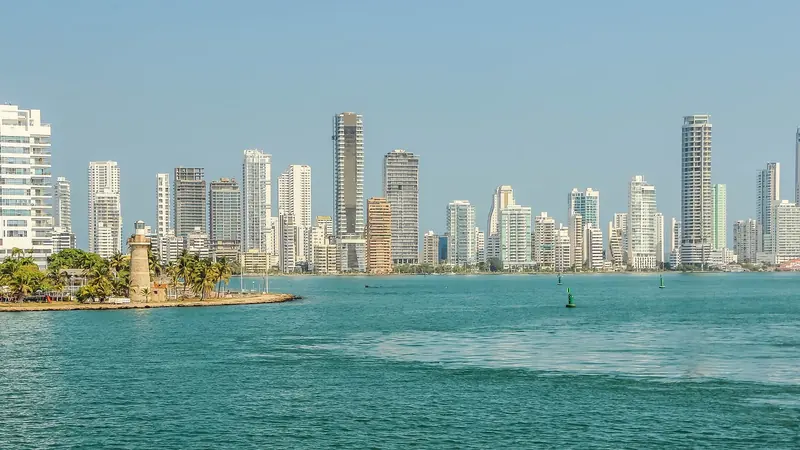
Unlike most low-hurricane-risk Caribbean corners, Cartagena also has real yacht infrastructure behind the claim. Club de Pesca y Vela Marina, in the Manga district at Fuerte San Sebastian del Pastelillo, runs over 180 berths, a T-dock built for vessels to 160 feet LOA and 14.5 feet draft, a syncrolift rated to 30 tons and 50 feet, and shore power to 440V/250A. That combination of latitude safety and haul-out capacity is unusual this far south in the Caribbean basin.
The clearance grind: why every yacht needs an agent
Colombia does not legally require an agent for immigration or DIAN customs, but in practice every cruising guide and marina in Cartagena says to use one anyway, mainly because the paperwork sequence is rigid: the Port Captain and Immigration must issue their documents and visas before Customs will process the Temporary Import Permit and cruising permit, and international clearance commonly takes 5 to 7 days in Colombian ports. Club Nautico Cartagena's own entry guide names three working agencies (Rymar, Logimar and Alpemar) and recommends contacting more than one before arrival because quoted fees vary significantly agency to agency.
Cost for a recreational vessel up to 60 feet runs close to 320 US dollars for a full package covering a Permanent Stay certificate, exit zarpe and immigration stamps for a stay up to a year; a short stay under a week is cheaper. A same-coast hop, say Santa Marta to Cartagena, still needs its own zarpe. One long-term cruiser's blog account put Santa Marta clearance at 53 US dollars through an agent named Dino and Cartagena clearance also at 53 dollars (100,000 pesos) through an agent named Paola, plus 80 dollars for a cruising permit if staying over two weeks and roughly 200 dollars for a permanent importation permit past two months, with the paperwork itself described as slow and inconsistent.
Cartagena solves the one problem every Caribbean owner actually worries about, hurricanes, and hands you a different one instead: a five-to-seven day agent-run clearance and an anchorage one veteran cruiser calls the most annoying in the Caribbean.
Where you actually tie up
Cartagena has four working options, not one. Club de Pesca y Vela Marina is the marquee address for larger yachts, with dockage quoted in US dollars plus VAT per foot per day (the exact per-foot figure sits behind a rate sheet, not published as plain text), water at 2.13 dollars per cubic meter and electricity at 0.38 dollars per kWh, both VAT inclusive as of January 2025. Club Nautico Cartagena, in the same Manga area, is smaller and stern-to only, capped at 12 feet draft, monitors VHF 69 with English speakers on hand 08:00 to 17:00, and publishes the clearest step-by-step entry guide of any Cartagena facility, down to which side of the Boca Chica buoys to favor.
Marina Santa Cruz, on the northern edge of the bay near the airport, adds roughly 194 moorings for vessels to 200 feet with its own fuel dock and 24-hour security. For haul-out and refit rather than a slip, Manzanillo Marina Club runs a 40-ton travel lift to 55 feet and 8 feet draft plus a 16-ton forklift, and the commercial yard Astivik at Mamonal offers floating dry-dock service to 4,000 tons for anything genuinely large. None of these publish a standard, comparable per-foot superyacht rate card online: pricing for anything over about 60 feet is a direct negotiation, not a lookup.
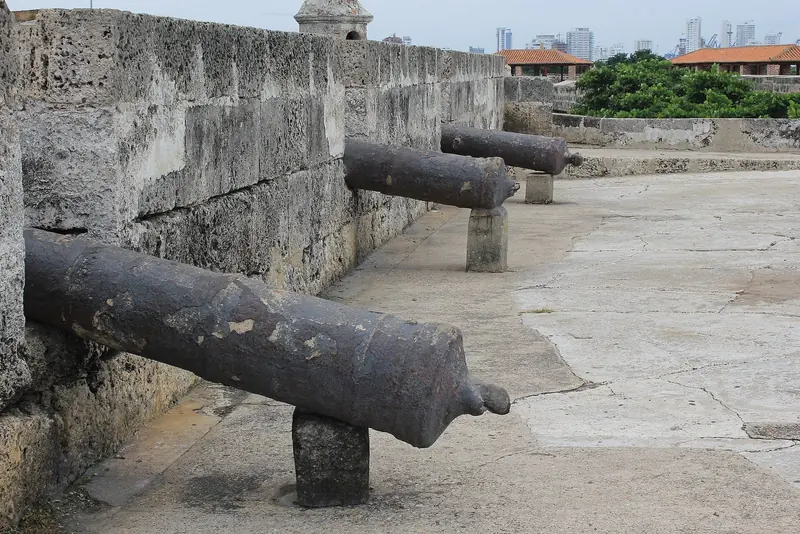
Islas del Rosario: a national park at the front door
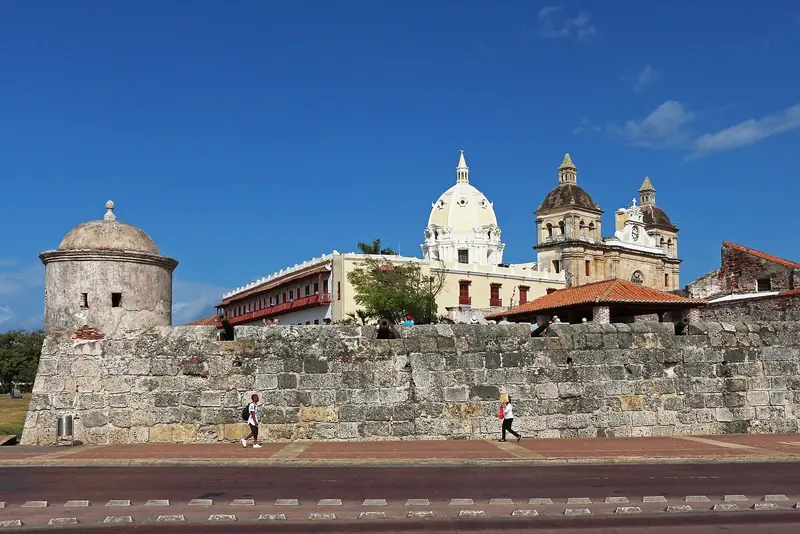
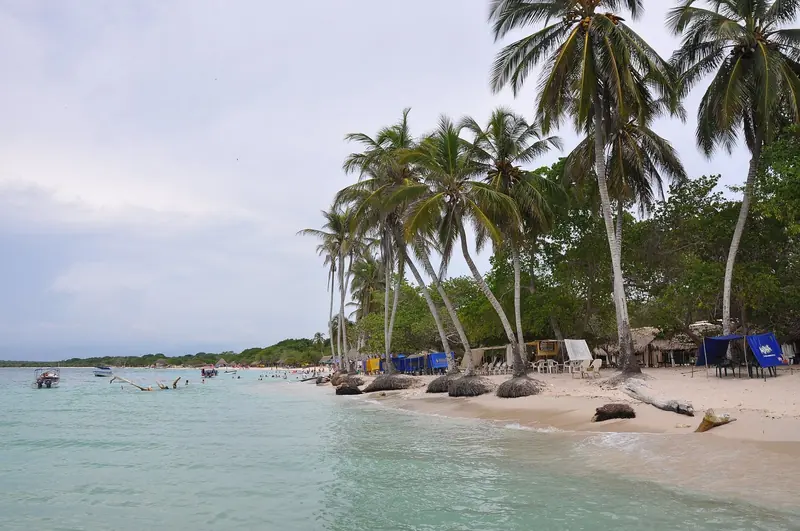
The Rosario and San Bernardo Corals National Natural Park covers about 120,000 hectares (1,200 square kilometers) of reef, mangrove and seagrass, was created in 1988, and was Colombia's single most visited national park in 2009 with over 318,000 visitors. The Rosario Islands themselves sit roughly 19 to 22 nautical miles (about 35 to 40 km) from Cartagena, a 45 to 60 minute run by fast boat from the Muelle de la Bodeguita dock in the Old City, putting a genuine coral-reef anchorage within day-trip range of any berth in the bay.
Every visitor, tourist boat or private yacht pays into the park: a national park entrance fee of roughly 25,000 to 28,000 Colombian pesos (about 6 to 7 US dollars) per foreign adult, plus a separate port or pier tax of around 26,500 to 29,000 pesos (roughly 6 to 8 dollars) collected at a floating checkpoint in the channel before Isla Grande, usually cash only since card readers are unreliable on the water. What was not findable in any official, citable source is a plain-English published anchoring or mooring-buoy regulation specific to yachts inside the park; operators and guides describe the fee collection process in detail but not a formal no-anchor/mooring-field regime, which for a coral park this heavily visited is a genuine information gap, not something we are choosing to omit.
Season and wind: December to April, and what the rest of the year looks like
The dry season runs December through April, when rainfall drops, skies clear and visibility is at its best, and it lines up with the region's northeast trade winds, which are reinforced locally by the semi-permanent Colombian Low into some of the most consistent wind anywhere in the Caribbean. This is also cruise-ship high season: more than 20 ships and an estimated 25,000 tourists arrived in Cartagena in a single December in recent years, which matters for anyone wanting a quiet mooring near the Old City in that window.
May through November is wetter and quieter, with more rain and lighter, less reliable wind, but because the coast sits outside the hurricane belt this off-season carries none of the storm risk that defines the rest of the Caribbean's low season. That is the actual trade an owner is making here: less predictable wind for cruising six months of the year, in exchange for not needing a hurricane plan at all.
Security: the 2021 alert that still shapes reputations
The security story that circulates about Cartagena is older than the current reality but has not fully faded. The US Embassy in Bogota issued a security alert in November 2021 flagging increased criminal activity in specific Cartagena neighborhoods, Chambacu, the area east of Centro Comercial Caribe Plaza, and southern Cartagena, timed to a cruise-season influx of roughly 25,000 tourists in one month. Cartagena's own police chief pushed back publicly at the time, pointing to five daily international flights and about 780 daily arriving travelers as evidence the city functioned normally. That alert is now four years old and geographically specific to named neighborhoods well away from the marina district, not a blanket warning on the anchorages.
The documented yacht-specific crime pattern for Colombia's coast, separately, is petty and opportunistic rather than violent: reported cases involve dinghies and outboards stolen at night from unattended tenders left in the water on a painter or cable, with lifting the dinghy clear and adding a lock cited as the practical fix. The Caribbean Safety and Security Net's most recent annual reports on reported yacht crime cover St Vincent, Grenada, Trinidad, Panama, St Lucia and Honduras in detail and do not list Colombia or Cartagena at all, which cuts both ways: there is no independent, yacht-specific incident count to verify Cartagena against, positive or negative, only the general-crime embassy alert and scattered cruiser anecdote.
Provisioning, fuel and the technical base
Cartagena city is, by a wide margin, the best-supplied stop on this coast. Budget Marine Colombia operates a chandlery in the city delivering locally and shipping nationwide, Club de Pesca has an on-site fuel dock and full shore power up to 440V, and the marina district sits close enough to the historic center and Bocagrande that provisioning, spares and skilled labor are a short taxi ride rather than a logistics project. The Islas del Rosario are the opposite: no meaningful chandlery or fuel presence, so any stores, spares or bunkering has to be sorted in Cartagena before heading out.
For technical work rather than routine provisioning, Manzanillo Marina Club's 40-ton lift handles boats to 55 feet and 8 feet draft for antifouling, fiberglass and mechanical work, while Astivik's commercial floating dry dock at Mamonal goes up to 4,000 tons for anything that has outgrown a recreational yard. What genuinely does not exist here is a large-superyacht refit yard on the scale of the Mediterranean or Fort Lauderdale; Cartagena can fuel, provision and service a yacht, but a major refit on a vessel much past Club de Pesca's 160-foot dock limit means moving on.
Cartagena as a staging post
Geography makes Cartagena a natural hinge point rather than a dead end. The port sits about 267 nautical miles direct (roughly 292 nm by the commercial sea route) from Colon at the Caribbean entrance to the Panama Canal, making it a realistic last (or first) Caribbean stop for any yacht transiting between the Atlantic and Pacific. Santa Marta lies about 93 nautical miles away on a direct line, or around 100 to 105 nm following the actual coastal route cruisers sail, against a well-documented counter-current that slows the passage; most cruising guides suggest breaking the trip rather than pushing it in one hop. Aruba and the ABC islands sit further out, about 346 nm on a direct line and roughly 546 nm by a typical Caribbean sea route, positioning Cartagena as the natural jump-off point for the eastern Caribbean or the reverse approach from it.
That staging role is exactly how the Ocean Posse and Panama Posse rallies use it: Cartagena is treated as one of the busiest and best-equipped hubs on the whole Panama-to-eastern-Caribbean corridor, with Ocean Posse listing Club de Pesca, Club Nautico Cartagena and Marina Puerto Velero as sponsor or recommended marinas along that specific route.
What cruisers who have actually been there say
The named accounts do not agree with each other, which is itself useful. Alan and Terry Ryall, sailing the Island Packet 465 Seminole Wind as part of the Ocean Cruising Club's Suzie Too Rally, described an unexpectedly warm welcome from a Colombian navy vessel and spent a relaxed Christmas and New Year in Cartagena before pushing on to Santa Marta. Against that, a long-running cruiser blog, It's Irie, written by a sailor named Liesbet, called the Cartagena anchorage the filthiest, busiest, bumpiest and most annoying anchorage in the Caribbean and recommended basing in Santa Marta instead, citing better marina facilities, lower costs and an agent (named Paola) whose information she found unreliable.
Mechanical and navigation problems surface repeatedly in first-hand accounts rather than security incidents. On the same Suzie Too Rally, John and Sal on Capel Mara suffered a raw-water intake overheating failure and had to be towed through reefs by Seminole Wind; Maggie and Al on Sweet Dreams were struck by a local fishing boat at 04:30 while anchored off Bernardino, cracking a portlight and damaging the hull. A 2024 training voyage out of Cartagena aboard the Dufour 450 Rush Slowly, run through Veleros Colombia under skipper Mauricio, reported missing navigation buoys and a failed VHF radio and depth sounder, forcing the crew onto a phone chartplotter app. None of this points to a dangerous coast, but it is a consistent, specific warning that navigation aids and equipment reliability here should not be assumed to match Bahamas or eastern Caribbean standards.
A terra, accessi e prenotazioni
| Getting there | Fly into Rafael Nunez International Airport (CTG) in Cartagena, with direct connections from Miami, Panama City and Bogota; crew and owners typically join the boat at the marina rather than the boat clearing crew changes itself. |
|---|---|
| Arriving by sea | Use the Boca Chica main channel (200 m wide, dredged over 11 m/36+ ft, AIS-marked buoys, red-right-returning) rather than the small-craft Boca Grande entrance (about 60 m wide, max suggested draft 13 ft); most recreational and larger yachts use Boca Chica. |
| How you actually reserve | No standard online booking; contact Club de Pesca, Club Nautico or Marina Santa Cruz directly by phone, email or VHF (Club Nautico monitors VHF 69, English 08:00-17:00) well ahead, and appoint a clearance agent (Club Nautico's guide names Rymar, Logimar and Alpemar) before arrival. |
| What a berth costs | Club de Pesca quotes dockage in USD plus VAT per foot per day on a rate sheet not published as plain text online; utilities are published (water USD 2.13/m3, electricity USD 0.38/kWh as of Jan 2025); clearance paperwork runs about USD 320 for a boat to 60 ft staying up to a year, less for a short stay. |
| Power, water and fuel | Club de Pesca: 110/220/440V shore power to 250A, on-site fuel dock, freshwater at the rates above. Manzanillo Marina Club and Marina Santa Cruz also run their own fuel docks; the Islas del Rosario have no fuel or chandlery of their own. |
| Eating and after dark within walking distance | Club de Pesca and Club Nautico both sit in the Manga district, a short taxi or walk from the walled Ciudad Amurallada and Bocagrande, Cartagena's restaurant and nightlife strip; the Rosario Islands have day-trip beach clubs but no comparable evening scene. |
| Fixed dates to plan around | Dry, windier season December to April; this overlaps Cartagena's cruise-ship high season, with 20+ ships and about 25,000 visitors arriving in a single December, which crowds the Old City and its anchorage. |
| What is NOT published | A standard per-foot superyacht dockage rate comparable across Cartagena's marinas; a plain-English anchoring/mooring-buoy regulation specific to yachts inside the Rosario Islands national park; and any independent yacht-crime incident count for Colombia (the Caribbean Safety and Security Net's recent annual reports cover six other countries but not Colombia at all). |
Cosa riferiscono armatori ed equipaggi
A warm, official welcome when the paperwork is right
Sailing the Island Packet 465 Seminole Wind on the Ocean Cruising Club's Suzie Too Rally, Alan and Terry Ryall described an unexpectedly hospitable greeting from a Colombian navy vessel and a relaxed Christmas and New Year spent in Cartagena.
Alan and Terry Ryall, Seminole Wind, quoted in Yachting WorldThe anchorage itself is the real complaint, not the country
A long-running cruiser blogger called the Cartagena anchorage the filthiest, busiest, bumpiest and most annoying in the Caribbean, and found her Cartagena clearance agent Paola's information unreliable, recommending Santa Marta as a better base instead.
Liesbet, It's Irie cruising blogMechanical failure and reef towing are a real risk on this coast
John and Sal, sailing the Beneteau Sense Capel Mara on the same rally, suffered an overheated raw-water intake and had to be towed through reef water by a fellow rally boat to reach safety.
John and Sal, Capel Mara, quoted in Yachting WorldNight collisions with local fishing traffic happen at anchor
Maggie and Al, aboard Sweet Dreams, were struck by a local fisherman's boat at 04:30 while anchored off Bernardino, cracking a portlight and damaging the hull, and relied on the rally community for repair parts.
Maggie and Al, Sweet Dreams, quoted in Yachting WorldNavigation aids and onboard equipment should not be assumed reliable
A 2024 training passage out of Cartagena through Boca Chica and Boca Grande to Cienaga de Cholon and the San Bernardo islands ran into missing navigation buoys and a failed VHF radio and depth sounder, forcing the crew onto a phone chartplotter app.
Captain Mauricio, skipper for Veleros Colombia, aboard Rush Slowly
Cosa convince e cosa va valutato
Punti di forza
- Genuinely outside the hurricane beltSouth of roughly 10 degrees N, below the 10-20N Main Development Region, with under a 1 percent annual chance of a direct hurricane hit, a real and verifiable safety case rather than a marketing line.
- Real superyacht-capable infrastructureClub de Pesca docks yachts to 160 ft on 14.5 ft draft with a syncrolift to 30 tons/50 ft, backed by Manzanillo's 40-ton lift and Astivik's 4,000-ton floating dry dock, a genuine technical base rather than a marina in name only.
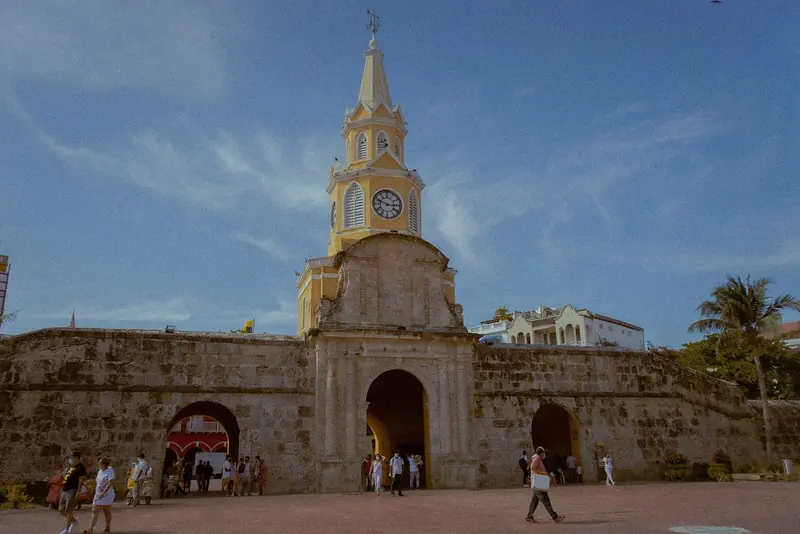
- A UNESCO city and a coral-reef national park in one stopThe walled Ciudad Amurallada sits minutes from the marinas, and the 120,000-hectare Rosario and San Bernardo Corals National Natural Park is a 45-60 minute run away, so cultural and reef cruising both work from a single base.
- Deep, well-marked main channelBoca Chica is dredged past 11 m (36+ ft) with AIS-transmitting marked buoys, removing the depth anxiety that limits many Caribbean harbor approaches.
- A genuine staging point, not a dead endRoughly 267-292 nm from the Panama Canal's Caribbean entrance and used as a named hub by the Ocean Posse/Panama Posse rally routes between the Canal and the wider Caribbean.
Da valutare
- Mandatory-in-practice agent bureaucracyClearance commonly takes 5-7 days and about USD 320 in fees for a boat to 60 ft, with cruiser accounts (Liesbet, It's Irie blog) describing inconsistent, unreliable agent service even when arranged in advance.
- The main anchorage's reputation problemOne experienced cruising blogger called Cartagena's anchorage the filthiest, busiest, bumpiest and most annoying in the Caribbean and recommended basing in Santa Marta instead; this is a named, specific criticism, not a vague complaint.
- Finite, size-capped berthingClub Nautico caps at 12 ft draft and Club de Pesca tops out at 160 ft/14.5 ft draft; anything genuinely larger or deeper has nowhere in Cartagena to tie up alongside.
- A security reputation still shaped by a 2021 alertThe US Embassy's named-neighborhood warning is four years old and geographically specific, but it still colors owner and insurer perception more than current, yacht-specific data supports, and no independent body publishes a yacht-crime count for Colombia to check it against.
- No transparent superyacht rate cardEvery marina above about 60 ft pushes pricing into a direct-negotiation phone call or email rather than a published per-foot rate, unlike marinas in Antigua or the BVI.
A chi si rivolge: An owner who wants a genuinely hurricane-safe Caribbean base with real haul-out infrastructure and is willing to trade a slow, agent-run bureaucracy and an unglamorous main anchorage for that safety, rather than one who wants a plug-and-play marina experience on eastern-Caribbean timelines.