Croatia & the Dalmatian Coast
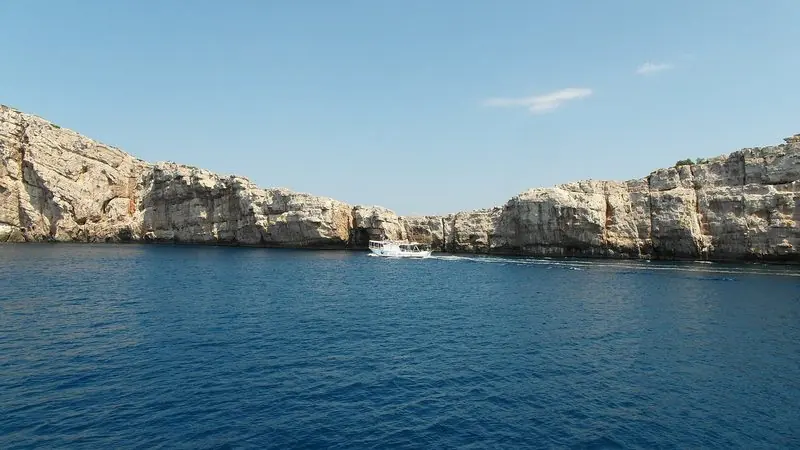
| Regione | Adriatico orientale, costa dalmata, Croazia |
|---|---|
| Stagione migliore | da maggio a ottobre, picco fra luglio e agosto |
| Porti principali | Dubrovnik, Split, Sibenik, Hvar |
| Ancoraggi simbolo | isole Pakleni (Hvar), parchi nazionali delle Kornati e di Mljet |
| Ormeggio | ampia rete di marine ACI lungo tutta la costa |
| Ingresso | vignetta di navigazione e tassa di soggiorno richieste all'arrivo |
| Giurisdizione | Croazia (UE, Schengen ed euro) |
| Attenzione a | la bora a raffiche, più frequente fuori dalla piena estate |
| Defining wind | the bora, a cold northeasterly, worst in the Velebit channel where record gusts exceed 200 km/h |
| Summer wind | the maestral, a benign afternoon sea breeze that makes the sailing |
| Jurisdiction | Croatia, in the EU, Schengen and the euro since 2023 |
| Dubrovnik note | the ACI marina is several kilometres up the Rijeka Dubrovacka, large yachts use the port at Gruz |
| Berth 2026 | EUR 1,670 a day for a 50 m yacht at ACI Split from 1 July to 31 August, VAT included, plus 10 per cent on Fridays, Saturdays and Sundays |
| ACI Dubrovnik 2026 | EUR 1,502 a day for 50 m in July and August, with an off-peak monthly wet berth at EUR 28,700 |
| A July or August month at ACI Split is about EUR 53,900, which buys ten August nights at Porto Cervo | |
| D-Marin Mandalina, the only Croatian marina built for superyachts and capped at about 60 m, publishes no rate card | |
| Kornati 2026 | a one-day vessel ticket for 50.00 m to 74.99 m is EUR 1,035 in advance and EUR 2,070 bought inside the park, June to September |
| Mljet 2026 | EUR 30 per person from June to September, EUR 20 in the shoulder months |
| Charter | an EU flag needs Croatian VAT and e-crew registration, a non-EU flag needs those plus a cabotage licence, valid one year, first come first served, up to about a month to obtain |
| A Croatian ship agent is mandatory for any yacht over 45 m, whatever the flag | |
| Charter VAT | 13 per cent on a charter starting in Croatia, applied to days spent in Croatian waters |
| No duty-free fuel, supplies or services are available in Croatia | |
| Arrival | proceed directly to the nearest official port of entry, with AIS used to document delay, and harbourmaster clearance required on departure |
Una costa di mille isole
La costa dalmata si estende lungo l'Adriatico orientale, dalle isole al largo di Zadar fino a Dubrovnik, vicino al confine montenegrino. Il suo tratto distintivo è il numero puro di isole, più di mille, che creano canali riparati e ancoraggi per una vita intera. Città storiche cinte da mura si allineano lungo la costa, diverse delle quali tutelate come patrimonio mondiale. Per uno yacht la costa offre acqua calma, traversate brevi e un forte senso della storia. È cresciuta in fretta fino a diventare un'area di navigazione mediterranea di primo piano.
Il richiamo sta nella combinazione di natura e patrimonio. Split è costruita attorno al palazzo romano dell'imperatore Diocleziano, e le mura di Dubrovnik racchiudono uno dei centri storici più belli del Mediterraneo. Hvar e Korcula portano porti vivaci e vigneti, mentre i parchi nazionali delle Kornati e di Mljet proteggono tratti di costa quasi deserti. L'acqua è pulita e limpida ovunque. Gli armatori scoprono di poter mescolare cultura e ancoraggi tranquilli in una sola settimana.
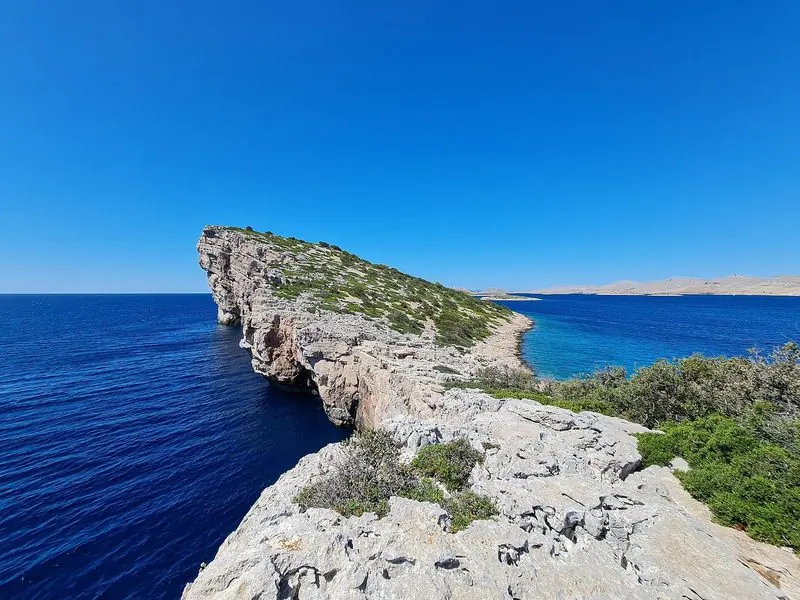
La stagione
La stagione va da maggio a ottobre, con luglio e agosto i mesi più affollati e più caldi. Qui l'Adriatico è in genere calmo e il tempo estivo stabile, il che rende la navigazione rilassata. Primavera e autunno portano giornate miti e meno folla, e il mare resta abbastanza caldo per il bagno fino a ottobre. Le temperature dell'acqua salgono durante giugno e si mantengono fino all'inizio dell'autunno. La fine di giugno e settembre sono spesso indicate come le finestre ideali.
Il principale elemento meteo è la bora, un vento forte e a raffiche da nord-est che può scendere dalle montagne, anche se è molto più frequente fuori dalla piena estate. Il maestrale, brezza di mare più gentile, entra nei pomeriggi estivi e aiuta la navigazione a vela. Nel caldo di agosto possono formarsi temporali. Nel complesso la costa è indulgente, ed è parte del motivo per cui è diventata così frequentata.
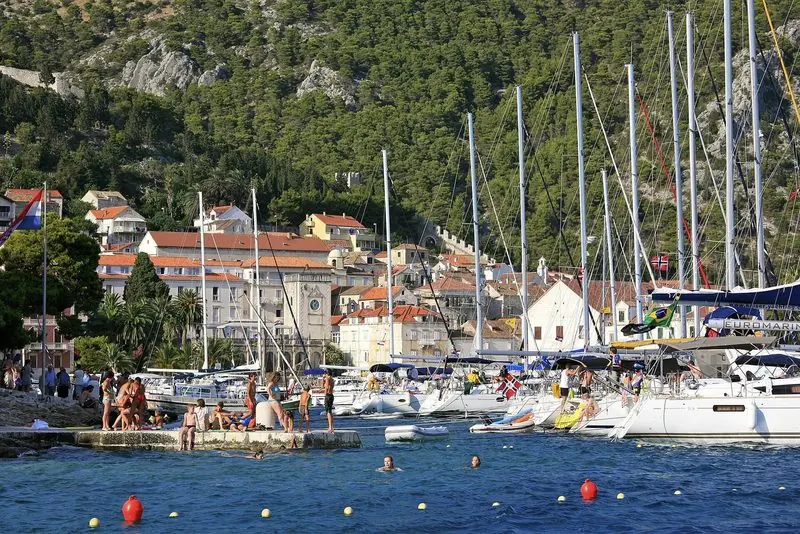
Mille isole e canali calmi, con un palazzo romano sulla banchina.
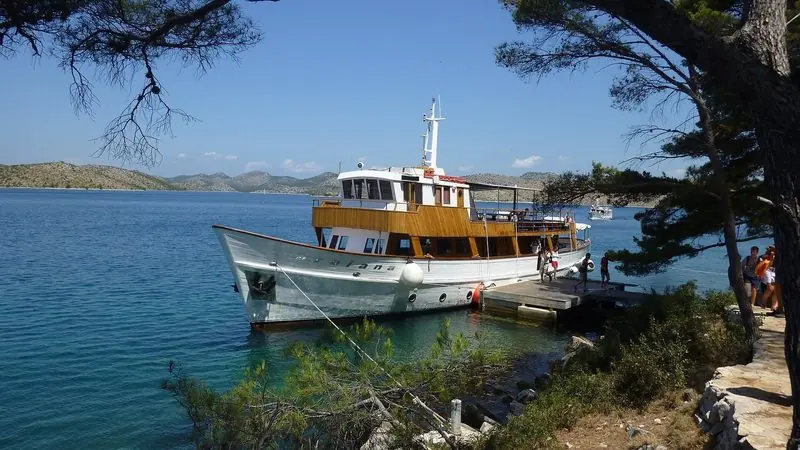
Porti e ancoraggi
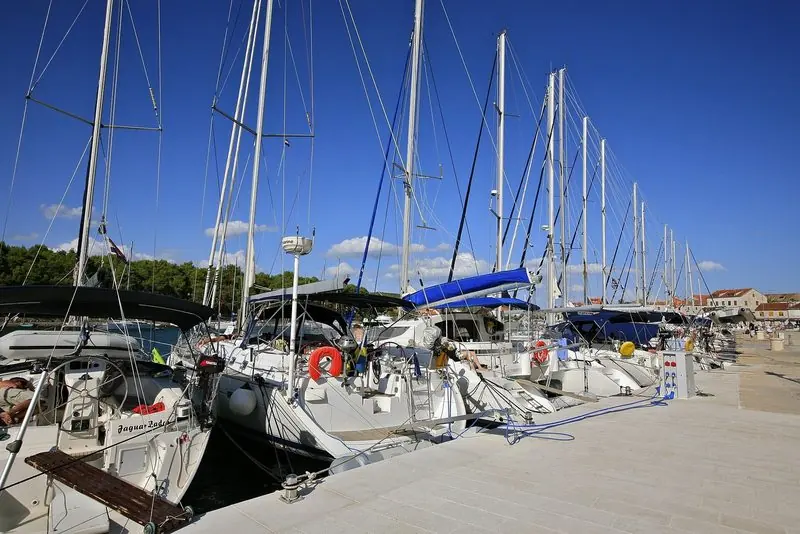
La Croazia ha una delle reti di marine più sviluppate del Mediterraneo, guidata dalla catena ACI che gestisce posti barca lungo tutta la costa. Dubrovnik, Split, Sibenik e le marine attorno a Trogir offrono tutte buone strutture e assistenza. La città di Hvar attira folle d'estate, con ancoraggi e ormeggi davanti alle isole Pakleni, appena dall'altra parte del canale. Gli yacht più grandi trovano sempre più spesso posti dedicati nelle marine più recenti.
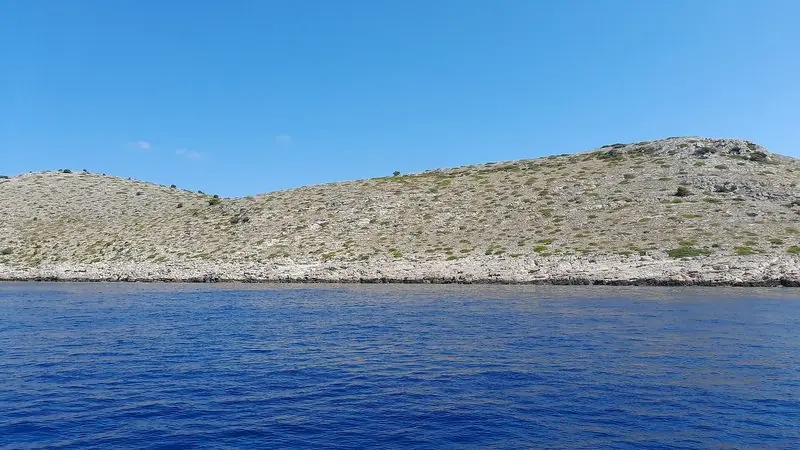
Gli ancoraggi sono un punto alto. Le isole Pakleni al largo di Hvar, le baie di Vis e le acque protette dell'arcipelago delle Kornati ripagano tutte una giornata all'ancora. Il parco nazionale di Mljet, con i suoi laghi salati, è fra le isole più verdi dell'Adriatico. Korcula e Lastovo offrono cale più tranquille, più al largo. Acqua limpida e buona tenuta sono comuni, anche se in stagione le baie più frequentate si riempiono presto.
A terra e in acqua
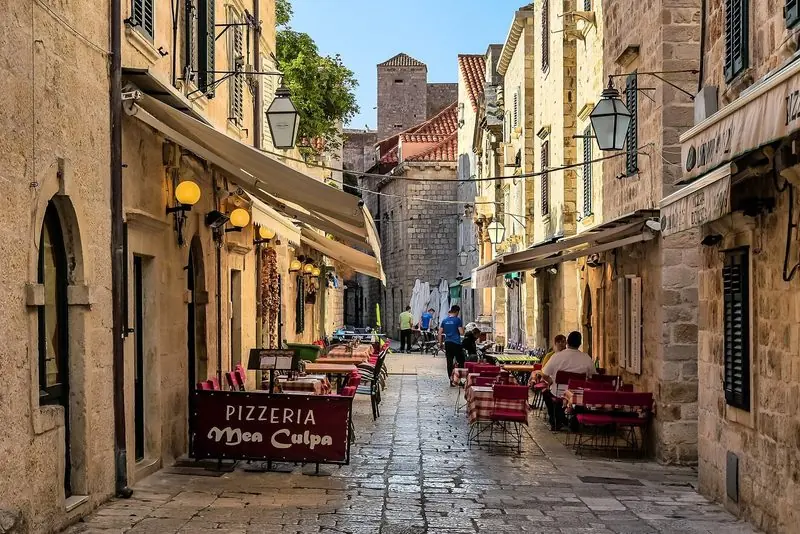
A terra, le città cinte da mura sono l'attrazione principale. Gli ospiti percorrono i bastioni di Dubrovnik, esplorano le cantine del Palazzo di Diocleziano a Split e godono dei bar e dei ristoranti della città di Hvar. La cucina e i vini della regione sono migliorati nettamente, con i vigneti delle isole e il pesce fresco che attirano un interesse serio. Porti più piccoli come Korcula e Vis offrono un ritmo più dolce. La storia non è mai lontana dalla banchina.
Sull'acqua l'Adriatico premia un giro facile fra le isole e i bagni in un mare pulito e riparato. Le traversate brevi fra le isole si addicono alle famiglie e ai gruppi misti che non vogliono giornate lunghe in mare. Le gite in tender verso cale nascoste e beach bar riempiono i pomeriggi. La Grotta Azzurra sull'isola di Bisevo, vicino a Vis, è un'escursione molto richiesta quando l'onda lo permette. Le condizioni calme rendono semplice l'uso di toys e tender.
Note pratiche
Gli yacht stranieri devono ottenere un permesso di navigazione, spesso chiamato vignetta, presso un ufficio della capitaneria all'arrivo, oltre a versare una tassa di soggiorno, e la vignetta vale fino alla fine dell'anno solare. Liste di equipaggio e i consueti documenti di bordo vengono controllati nel porto di ingresso. Le regole sono consolidate e gli agenti gestiscono la procedura di routine. L'armatore dovrebbe mettere in conto una sosta per le formalità all'inizio di ogni crociera.
La Croazia è entrata nell'Unione europea e in seguito nell'area Schengen e nell'euro, il che ha semplificato movimenti e pagamenti per i visitatori. La rete di marine rende l'ormeggio più facile che su molte altre coste, anche se i posti estivi migliori si esauriscono comunque. Approvvigionamento e carburante sono ampiamente disponibili lungo la costa. Le operazioni con i tender sono di routine nelle condizioni in genere calme, con le regole dei parchi nazionali come cosa principale da rispettare.
Split, Dubrovnik and the guest change
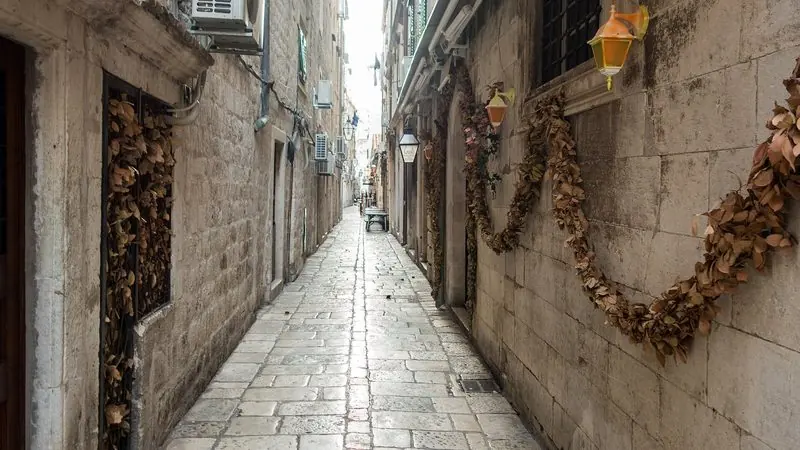
Split and Dubrovnik are the two airports that matter and both have good European scheduled traffic in summer and business aviation handling. Split is the more practical for a cruise that starts among the islands, and it is about half an hour from Marina Kastela. Dubrovnik airport is 20 kilometres southeast of the city at Cilipi, and the drive into Gruz takes 30 to 40 minutes outside the cruise-ship rush.
Once guests are aboard the coast is easy. The islands are close enough that a change of plan costs an hour, and the ferry and catamaran network is dense if somebody has to move independently. The one thing to plan properly is the Dubrovnik guest change, because the old town, the port and the airport all congest together when three cruise ships are alongside. Helicopter movement in Croatia is more restricted than in Italy or France and should be arranged well ahead.
Oysters, Plavac Mali and the walled towns
The food has improved out of recognition in fifteen years. Ston on the Peljesac peninsula produces the oysters everyone talks about, the konobas on Vis and Korcula do slow-cooked peka under an iron bell, and the wine is the real surprise, with Plavac Mali from the Dingac and Postup slopes on Peljesac, Posip and Grk from Korcula. Split's old town inside Diocletian's Palace has a serious restaurant scene now. Dubrovnik is the set piece, with the city walls, the Stradun and the cable car above it.
The nightlife is concentrated on Hvar and Split and it is a young crowd. Carpe Diem Beach on Stipanska island runs the big nights, Hula Hula does the sunset, and Hvar town itself is loud until late in August. Everywhere else is quiet by midnight. Guests who want a walled town, a vineyard lunch and a swim will find Croatia does that better than almost anywhere. Guests who want Monte Carlo will find nothing here at all.
The vignette, the parks and e-Nautics
Foreign yachts need the navigation safety and pollution fee, universally called the vignette, which runs to the end of the calendar year, plus the sojourn tax, and the arrival notification and payment now run through the government's e-Nautics digital service. Crew lists and ship's papers are checked at the port of entry and an agent handles the whole thing for a large boat in an afternoon. Kornati and Mljet charge separately, priced per boat by length and by season, and both are cheaper booked online in advance.
The charter position is the thing to get advice on. Croatia requires commercial yachts operating in its waters to be properly registered and taxed locally, and the treatment of non-EU flagged vessels is different and more restrictive, so an owner planning to charter here needs Croatian advice and not last season's assumptions. Fuel is available at marina stations the length of the coast, though large volumes need arranging. Technical support is adequate and not deep. Anything serious goes to Italy.
The honest downside
The berths are the problem and they do not get better. There is one true superyacht marina on a 200 mile coast, the best towns cannot take a large yacht alongside, and the boat spends most of the fortnight at anchor with tenders working hard. That is fine for an owner who wanted that. It is a shock to one who assumed the ACI network meant a berth every night.
The second point is that Dalmatia is beautiful and it is not dramatic. The water is clean and the islands are low and green, and there is no Capri, no caldera and no granite archipelago. Dubrovnik in August is one of the most crowded old towns in Europe, with cruise passengers arriving in the thousands, and the walls are best walked at eight in the morning. The coast rewards a slow fortnight and disappoints anyone in a hurry to be impressed.
The one coast on this list that publishes its prices
Croatia is the easiest Mediterranean ground to budget because the dominant marina operator prints a full tariff. The ACI price list effective 1 April 2026 quotes daily wet berths in euros including 25 per cent VAT, and its tables run to 90 m. At ACI Split a 50 m yacht is EUR 1,670 a day from 1 July to 31 August, EUR 1,588 from April to June and in September and October, and EUR 1,504 in winter, with a 10 per cent uplift on Fridays, Saturdays and Sundays. At ACI Dubrovnik the same boat is EUR 1,502 a day in July and August, EUR 1,426 in the shoulder, and the off-peak monthly wet berth is EUR 28,700. D-Marin Mandalina at Sibenik, which its operator describes as the only Croatian marina designed for superyachts and which takes hulls to 60 m, publishes no rate card at all and quotes on application.
The park tickets are where carelessness gets expensive. Kornati charges a one-day vessel ticket by length, and in high season from June to September a boat of 50.00 m to 74.99 m pays EUR 1,035 bought in advance and EUR 2,070 bought inside the park, an exact doubling for arriving without one. The pre-season and late-season price for the same band is EUR 690 in advance and EUR 1,380 inside. Mljet is a per-person ticket at EUR 30 from June to September and EUR 20 either side. Put a month together and the case for the coast makes itself: thirty-one July and August nights at ACI Split, weekend uplift included, is about EUR 53,900, which is what ten August nights cost at Porto Cervo on its 2026 card. Two Kornati days bought in advance add EUR 2,070 to that, and bought at the gate they add EUR 4,140.
Whether a foreign flag may charter in Croatian waters
Croatia says yes to both flags and charges the non-EU one an extra licence for the privilege. An EU-flagged commercial yacht needs a Croatian VAT registration in the owning company's name and an e-crew registration, both in place before any charter activity starts, and no cabotage licence. A non-EU flagged yacht needs those two plus a cabotage licence, which is issued for one year on a first come first served basis and takes up to about a month to obtain, which makes it a spring decision rather than a July one. A Croatian ship agent is mandatory for any yacht over 45 m whatever her flag. VAT is 13 per cent on a charter starting in Croatia, applied to the days spent in Croatian waters, and that is the lowest headline charter rate among the five EU grounds in this batch. The offsetting point is fuel: duty-free fuel, supplies and services are not available in Croatia at all, which is the practical reason Adriatic boats bunker in Montenegro.
The arrival procedure is enforced from the yacht's own track. A vessel entering Croatian waters must proceed directly to the nearest official port of entry, delay is documented by AIS rather than debated, and departure requires clearance from the harbourmaster followed by the shortest route out. The vignette, formally the navigation safety and pollution fee, is valid to 31 December of the year it is issued and is bought with the sojourn tax through the e-Nautics service. No official euro schedule of vignette amounts was obtainable in July 2026, so none is quoted here. Croatia is in the EU customs territory, so a non-EU flagged yacht in private use runs the ordinary 18 month temporary admission clock under Article 217(e) of Delegated Regulation (EU) 2015/2446, and stepping across to Montenegro for a night does not restart it, because the clock is discharged by leaving the Union, not by clearing a border and coming back. Heavy technical work is a commercial-port matter here rather than a marina one, with Palumbo running an Adriatic yard at Rijeka within the same network as its Naples docks.
A terra, accessi e prenotazioni
| Clearing in, and where you are allowed to do it | You may not simply arrive. On entering Croatian internal waters the master must take the shortest route to the nearest port open to international traffic, for border control and for the vignette. Open all year: Umag, Porec, Rovinj, Pula, Rasa-Brsica, Rijeka, Mali Losinj, Zadar, Sibenik, Split, Korcula, Vela Luka, Ubli on Lastovo, Ploce, Metkovic and Dubrovnik. Open seasonally from 1 April to 31 October only: ACI marina Umag, Novigrad in Istria, Sali, Bozava, Primosten-Kremik, Stari Grad and Hvar town on Hvar, Vis town, Komiza and Cavtat. That seasonal list is the one that catches people out. Coming up from Montenegro in winter, Cavtat is shut and you must run on to Dubrovnik. |
|---|---|
| The vignette, which is not the tourist tax | Two separate payments are often confused. The vignette is the fee for safety of navigation and protection of the sea from pollution, taken by the harbourmaster or through the eNautika service, and it is compulsory for any vessel of 3 metres or more, and for anything under 3 metres carrying 5 kW or more. It is charged on a schedule set by hull length and engine power, it is bought once, and it runs to 31 December of that year rather than for a rolling twelve months, so a vignette bought in September is worth little. We are not quoting a figure. The ministry publishes its schedule only as a downloadable document, several third-party calculators disagree with each other, and some tables still in circulation are denominated in kuna, which Croatia stopped using at the start of 2023. Get the number for your own length and engine power from the harbourmaster or eNautika, and treat any kuna figure as out of date. |
| Sojourn tax, and how to pay the least | Paid only online at nautika.evisitor.hr, no longer at harbour offices, and you choose whichever of two methods costs you less. Per head it is EUR 1.33 per person per night. By hull length it is a flat rate covering the whole boat, quoted here for 15 days, 30 days and a year: 7 to 9 m costs EUR 47.78, EUR 79.63 and EUR 238.90; 9 to 12 m costs EUR 79.63, EUR 132.72 and EUR 398.17; 12 to 15 m costs EUR 111.49, EUR 185.81 and EUR 557.44; 15 to 20 m costs EUR 127.41, EUR 212.36 and EUR 637.07; and over 20 m costs EUR 159.27, EUR 265.45 and EUR 796.34. Shorter 3-day and 8-day bands exist as well, and a boat under 7 metres pays nothing. Do the arithmetic before you pick. Four people aboard a 14 m boat for a fortnight is 4 times 14 nights at EUR 1.33, which is EUR 74.48 for the whole party, against EUR 111.49 for the 15-day hull rate, so the per-person route wins. Put eight aboard the same boat and the party total becomes EUR 148.96 and the hull rate wins. The portal's own guidance is that a card payment clears in about 30 minutes while a bank transfer takes days, so do not leave it to the morning you sail. |
| What a berth actually costs in 2026 | SeaHelp, the Adriatic breakdown service, surveys the coast every January. Its 2026 averages for a night alongside are EUR 91 for a 10 m boat, EUR 131 for 14 m and EUR 195 for 18 m, each about 10 per cent up on 2025, with the 6 m band up 24 per cent. The longer commitments did not move with them, and this is the part most coverage leaves out: SeaHelp headlines the 2026 survey on annual berths falling for the first time. Monthly rates were mixed, a 6 m berth down about 10 per cent while a 14 m berth rose from EUR 1,771 to EUR 2,418. So the nightly rate is the one climbing; if you keep the boat here, the annual contract moved in your favour. ACI, which runs 22 marinas and republishes a single network price list each January, is the benchmark most other operators price against. |
| The konoba buoy, which is the best value on the coast | Dozens of waterside restaurants lay their own mooring buoys and give you the buoy free on the condition that you eat there. SkipperCity puts dinner at about EUR 30 to EUR 60 a head, against EUR 45 to EUR 75 a night for a buoy in a concession-managed field and EUR 131 for a 14 m marina berth. Konoba Opat in the Kornati, Konoba Stoncica on Vis and Palmizana off Hvar are the long-established examples. You are trading a marina's power and water for a quiet bay and a meal, and for one or two nights of a week that is usually the better trade. |
| The wind to plan around | The bura is a northeasterly that falls off the Velebit massif with very little warning and gusts well beyond 50 knots, and it is at its worst in the Velebit Channel and northern Dalmatia. It is a winter and shoulder-season feature rather than a July problem, but it is the reason the northern channels are not a place to be casual about a forecast. The everyday summer wind is the afternoon maestral, which fills from the northwest and dies in the evening. |
| When not to come | The first fortnight of August. The Italian fleet crosses the Adriatic en masse at the start of the month and the popular harbours fill by late afternoon, so a berth becomes a race rather than a booking. June and September give you the same water and most of the same weather with room in it. |
Cosa riferiscono armatori ed equipaggi
Berth prices rose again for 2026 and the small-boat bands rose hardest
The service's January survey of the coast put daily berths up about 10 per cent year on year at 10, 14 and 18 metres, and 24 per cent at 6 metres, while a monthly 14 m berth went from EUR 1,771 to EUR 2,418. It headlines the same survey on annual berths falling for the first time, and its advice off the back of the numbers is that flexible cruising, with fewer marina nights and more time on anchor or a buoy, is where the saving now is.
SeaHelpThe restaurant buoy is the standing local arrangement, not a rumour
Waterside konobas lay their own buoys and waive the fee if you dine, with Konoba Opat in the Kornati, Konoba Stoncica on Vis and Palmizana off Hvar cited as the established examples, against EUR 45 to EUR 75 a night on a concession buoy field.
SkipperCityHarbours fill from the start of August because of the crossing from Italy
Charter operators working the coast report the Italian fleet arriving en masse at the beginning of August, with popular ports becoming very crowded in the evenings and the practical advice being to start the day early to secure a berth or reserve ahead through an app.
BoataroundNo independent euro-denominated vignette schedule could be verified
The navigation safety fee tables published on charter and agency sites are still quoted in kuna, which Croatia stopped using at the start of 2023, and the ministry publishes its own schedule only as a downloadable document. We are recording the gap rather than repeating a stale figure: confirm the amount with the harbourmaster for your length and engine power.
Yotters desk
Cosa convince e cosa va valutato
Punti di forza
- The passages are short and almost always shelteredMore than a thousand islands lie in a long chain parallel to the mainland, so you are nearly always in a channel with a lee somewhere. Hops are measured in single-figure miles, there is no tide worth planning around, and the water is clear enough that you can eye-ball a sandy patch to drop on.
- The shore infrastructure is genuinely goodLaid moorings, staffed pontoons and English-speaking marina offices are the norm rather than the exception, which is not true everywhere in the Mediterranean. ACI alone runs 22 marinas on one published tariff, so pricing is predictable across most of the coast.
- It still undercuts the western MediterraneanA 14 m boat averages EUR 131 a night alongside in 2026 by SeaHelp's survey. The equivalent week on the French Riviera or the Costa Smeralda is a different order of money, and there is a free-buoy-with-dinner economy here that has no real counterpart there.
- You can avoid marinas entirely and it is not a hardshipBetween the concession buoy fields and the restaurant buoys, a flexible boat can cross a fortnight touching a marina only for water and fuel. SeaHelp's own conclusion from the price survey is that those who travel flexibly save considerably.
Da valutare
- Nightly berths are climbing about 10 per cent a yearSeaHelp measured daily berths up roughly 10 per cent across the 10 m, 14 m and 18 m bands for 2026 and 24 per cent at 6 m, and a 14 m monthly berth up 37 per cent, from EUR 1,771 to EUR 2,418. Budgeting a cruising week off last year's figures will be wrong, and wrong in one direction. Annual contracts are the exception and went the other way.
- Early August is genuinely unpleasantThe Italian influx at the start of the month overwhelms the popular harbours. The practical consequence is that you stop cruising to a plan and start cruising to whatever berth you can still get by four in the afternoon.
- The paperwork is real and it is split across three systemsBorder control at a designated port, a vignette from the harbourmaster or eNautika, and a sojourn tax that can now only be paid online at a different portal. None of them talk to each other, and the seasonal port-of-entry list changes on 1 April and 31 October.
- It is thinner for large yachts than the numbers suggestThe marina count is high but the network was built around 10 to 20 m boats, and the deep-water, long-quay berths a 40 m-plus yacht needs are concentrated in a handful of places rather than spread along the coast. We are not attributing a regional ranking here: the 2026 survey coverage we could reach disagrees with itself about which counties are tightest, so check berth availability for your own length before committing to a route.
- The bura does not give noticeA northeasterly gusting past 50 knots off the Velebit is a different proposition from a Mediterranean blow that builds over a day. In the northern channels it constrains where you are willing to be overnight in the shoulder seasons.
A chi si rivolge: Armatori che vogliono un giro fra isole riparate, centri storici cinti da mura e una rete di marine comoda su una costa compatta e calma.