Fernando de Noronha, Brazil
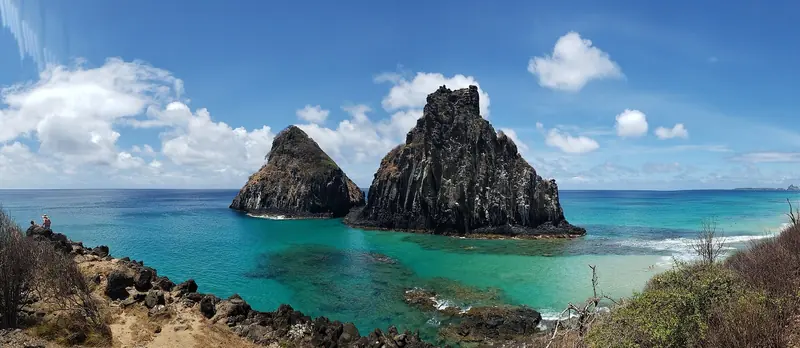
| Location | 21-island volcanic archipelago, about 26 sq km, 545 km from Recife and 360 km from Natal, district of Pernambuco state, Brazil |
|---|---|
| UNESCO World Heritage Site since 2001 (Brazilian Atlantic Islands, jointly with Atol das Rocas); Marine National Park created by federal decree 96.693 of 14 September 1988, covering about 70 percent of the archipelago (10,927.64 ha) | |
| Legal visitor ceiling | 132,000 a year and 11,000 a month by Pernambuco-federal agreement; 2025 arrivals were 140,203, the first year the annual cap was broken (Panrotas) |
| Reported daily visitor caps vary by source, roughly 400 to 600 a day, indicating the figure is managed rather than published as one fixed number | |
| Fernando de Noronha Airport (FEN) | Azul about 18 flights a week from Recife (ATR 72-600, about 70 seats), Gol about 8 a week from Recife plus a Sao Paulo-Guarulhos link, LATAM also to Sao Paulo-Guarulhos; no scheduled Natal service |
| 2026 Taxa de Preservacao Ambiental (TPA): opens at R$105.79 a day, R$672.85 for 7 days, R$7,460.56 for 30 days, up 4.4 percent on 2025 (Panrotas, Brasil Turis) | |
| 2026 ICMBio Marine National Park entry ticket: R$192 for Brazilian nationals, R$384 for foreign visitors, valid up to 10 consecutive days, sold only via tickets.parnanoronha.com.br (CNN Brasil) | |
| Only anchorage | Baia de Santo Antonio roadstead off Vila dos Remedios, 10 to 14 m over sand and rock, no marina or berth of any kind, reported by cruisers as among the rolliest anchorages they have used, worst under a north or north-westerly swell |
| One cruiser account (November 2023) | Capitania dos Portos anchoring due about R$226.40 a day for a 10 m boat, charged by calendar day, early departure exempt for that day; another (Noonsite) logged about R$1,450 for 2 crew over 4 days in port plus environmental fees |
| Baia dos Golfinhos (Dolphin Bay) | spinner dolphins entered on 94 percent of days studied 1991-2015, averaging 284 animals and about 3 hours 33 minutes a visit; bay closed to all boats and swimmers, viewing only from the Mirante dos Golfinhos clifftop lookout |
| Recorded average dolphin dwell time in the bay fell from over 8 hours in 1998 to under 3 hours by 2015, tracked against rising boat traffic in the wider archipelago (Projeto Golfinho Rotador) | |
| Baia do Sueste | documented insular nursery for lemon sharks (Negaprion brevirostris) and nurse sharks (Ginglymostoma cirratum); juvenile lemon sharks reported still occasionally taken during birth season despite protection (2004-2019 monitoring) |
| Fundacao Projeto Tamar has worked the archipelago since 1984; the island now averages about 100 nests and roughly 8,900 green turtle hatchlings a year, mostly at Praia do Leao | |
| Corvette Ipiranga wreck | 56 m Brazilian Navy vessel, sank 1984 after striking a shoal, sits upright about 3 km offshore at 54 to 62 m, trimix-certified technical dive only |
| Fuel and most supplies arrive by dedicated tanker and cargo vessel from the mainland (Alfamares Transportes, Apoio Maritimo e Portuario; tanker capacity 350,000 litres); no superyacht-scale fuel service, chandlery or haul-out yard found on the island | |
| Season | dry, calm, clearest water roughly August to November; bigger north-east groundswell December to March, prized by surfers and the hardest period on the anchorage; winter (June to August) reported as the settled window for the roadstead |
A Volcanic Speck 545 Kilometres From Anywhere
Fernando de Noronha is the main island of a 21-island volcanic archipelago covering about 26 square kilometres in the equatorial Atlantic, administered as a district of the state of Pernambuco. It sits 545 km from Recife and 360 km from Natal, both figures consistent across Wikipedia's airport entry and independent flight-distance calculators, and it is the only inhabited landmass of consequence within hundreds of kilometres. Fernando de Noronha and the neighbouring Atol das Rocas were jointly inscribed as a UNESCO World Heritage Site in 2001 under the name Brazilian Atlantic Islands, cited for their importance as a feeding ground for tuna, sharks, turtles and marine mammals, a separate and later designation from the 1988 federal decree that created the national marine park.
That combination, offshore rather than coastal, permit-capped rather than open, is the whole difference from a place like Ilha Grande, where the Costa Verde's 106 beaches sit two hours from Rio and a boat can hop between them at will. Noronha has one working anchorage, one small airport, and a legal ceiling on how many visitors the island may hold, so the cruising decision here is not which cove to pick but whether the crossing, the paperwork and the roll are worth it for what waits on the other side.
Only By Boat Or A Seat On A Small Plane
Fernando de Noronha Airport (FEN, also called Governador Carlos Wilson) is the only scheduled air link, and it takes turboprops and regional jets, not wide-body traffic. Azul runs the busiest schedule, around 18 flights a week from Recife using ATR 72-600 turboprops seating roughly 70, having moved off larger Embraer E195 jets on this route; Gol adds about 8 weekly Recife services plus a link to Sao Paulo-Guarulhos, and LATAM also serves Sao Paulo-Guarulhos, both flightconnections.com and FlightsFrom.com agreeing on Recife and Sao Paulo as the busiest routes.
There is no scheduled Natal service despite Natal being the closer mainland city, so Recife is the practical gateway whichever airline a guest books. Seat counts in the low hundreds a day, against a legally capped island population of visitors, mean a yacht planning a crew or guest change should book weeks ahead in the July to January high season rather than assume a seat is there to be bought.
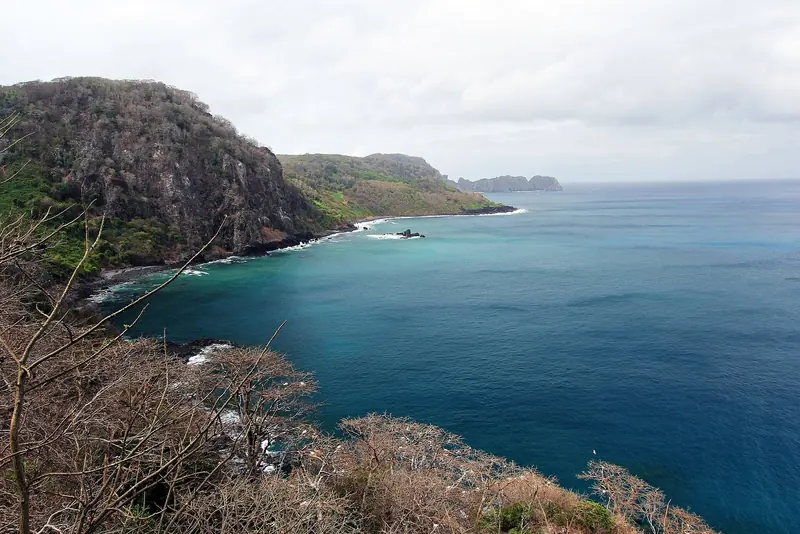
Cala en Turqueta has nothing on this: Baia dos Golfinhos is closed to every boat and swimmer outright, and the island's own legal visitor ceiling of 132,000 a year was broken in 2025, with 140,203 arrivals and the state government admitting the monthly limit had stopped being respected too.
The Cap, And The Two Fees Paid For Every Day Ashore
The 132,000-a-year, 11,000-a-month ceiling comes from a management agreement between the Pernambuco state government and federal authorities, and Panrotas, the Brazilian travel trade publication, reported that 2025 closed with 140,203 visitors, the first year the annual limit was broken, with Pernambuco's own government admitting the monthly ceiling had also stopped being respected. Reported daily caps vary by outlet, from roughly 400 to 600 people a day, which is a sign the figure is managed in practice rather than published as a single hard number.
On top of that cap, every visitor pays the Taxa de Preservacao Ambiental (TPA), which for 2026 opens at R$105.79 a day and steps down the longer the stay is booked, to R$672.85 for seven days or R$7,460.56 for thirty, an increase of 4.4 percent on 2025 confirmed independently by Panrotas and Brasil Turis. Separately, the ICMBio park entry ticket costs R$192 for Brazilian nationals and R$384 for foreign visitors, valid for a single stay of up to ten consecutive days, sold only through the park's own portal, tickets.parnanoronha.com.br, and confirmed at those prices by CNN Brasil's own coverage of the 2026 increase.
No Marina: The Roadstead At Baia De Santo Antonio
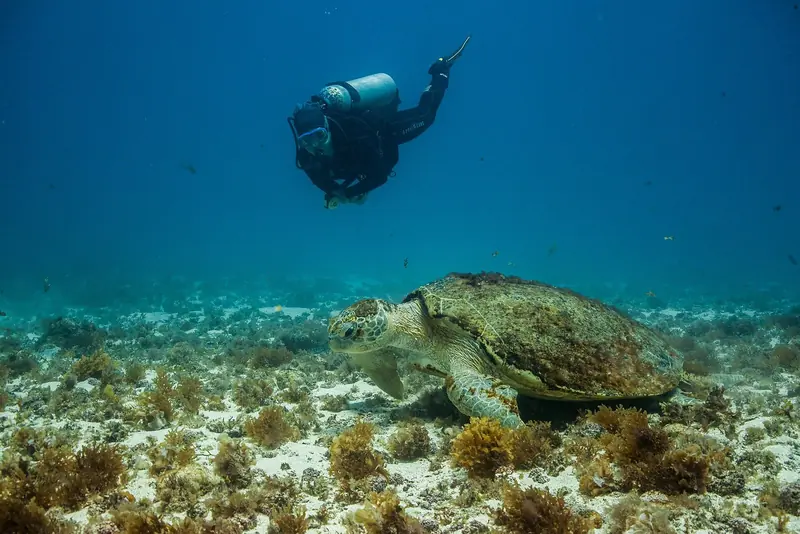
There is no way to bring a vessel alongside anywhere on the island; Baia de Santo Antonio, the bay below the capital Vila dos Remedios, is the sole anchorage, and the World Cruising and Sailing Wiki logs it at 10 to 14 metres over hard sand and rock, close enough to the breakwater for a six to eight minute dinghy run ashore. Multiple independent cruising blogs, including Sailing West Around The World and Wild Rumpus Sailing, describe it as among the rolliest anchorages they have used anywhere, rolling beam to beam under a north or north-westerly swell and only genuinely settling in the southern-hemisphere winter, notably July.
A charted mooring field is larger in practice than paper charts show, and cruisers warn against a night arrival for exactly that reason. Combined with the daily TPA and anchoring dues described above, and no protection from weather, the practical effect is that most yachts, superyachts included, treat Noronha as a days-long stop worth the discomfort for the diving and the dolphins rather than a base to settle into, the reverse of a marina-equipped destination where the length of stay is a budget decision rather than a comfort one.
Baia Dos Golfinhos: One Of The World's Great Dolphin Research Sites
A long-running study covering 1991 to 2015, published in the marine mammal literature and summarised by the Projeto Golfinho Rotador (Spinner Dolphin Project), recorded spinner dolphins entering the bay on 94 percent of days, with an average of 284 animals a visit and stays ranging from one minute to nearly 13 hours, averaging around three and a half hours as the pod rests after a night spent feeding offshore. The same research programme, running continuously since 1990, is one of the longest cetacean studies of its kind in Brazil.
Access is deliberately one-way: boats and bathers are barred from entering the bay itself, and the only sanctioned viewpoint is Mirante dos Golfinhos, a clifftop lookout where park rangers provide guidance and binoculars for an early-morning watch. The project's own data records average time spent in the bay falling from over eight hours in 1998 to under three hours by 2015, tracked alongside rising boat traffic elsewhere in the archipelago, which is the reason ICMBio treats the bay as a closed sanctuary rather than an attraction to be marketed.
Sharks And Turtles: A Nursery Run As A Research Station, Not A Show
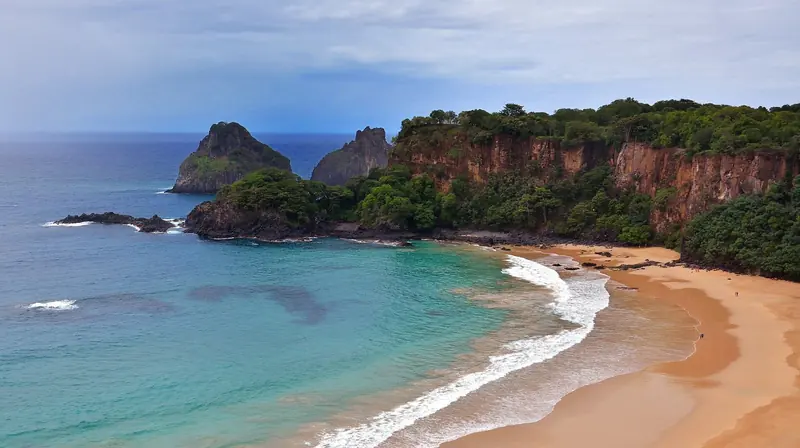
Sueste's shallow, murky water is recorded in the peer-reviewed marine biodiversity literature as an insular nursery area for lemon sharks (Negaprion brevirostris) and nurse sharks (Ginglymostoma cirratum), one of relatively few documented shark nurseries in the equatorial western Atlantic; conservation reporting from 2004 to 2019 also notes juvenile lemon sharks are still occasionally taken during the birth season despite the protected status, an enforcement gap the research programme itself has flagged. Fundacao Projeto Tamar, Brazil's national sea turtle programme, has worked the archipelago since 1984, when the green turtle population there was near collapse; today the island averages around 100 nests and roughly 8,900 green turtle hatchlings a year, most of them on Praia do Leao with the remainder split between Sancho and Conceicao beaches.
For a visiting yacht the practical rule is simple and strictly enforced: no touching, chasing or feeding any marine animal, and if a turtle or dolphin approaches a swimmer in open water, the swimmer must leave the water rather than linger for a photograph. Several beaches and bays, Golfinhos foremost among them, are closed to entry outright rather than merely regulated, which is a stricter standard than the buoy-and-fine regime used in most Mediterranean marine reserves.
The Corvette Ipiranga: A Technical Wreck, Not A Snorkel Trail
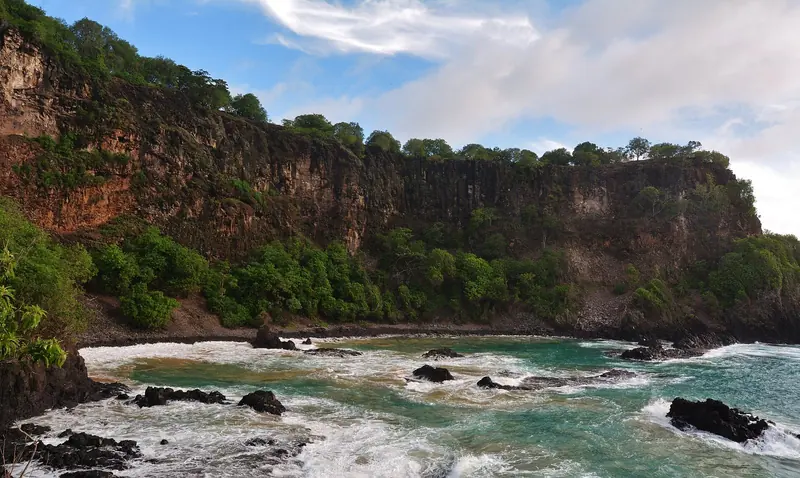
The 56 metre corvette, built in 1953 and lost in 1984 after colliding with a rock formation locally called Cabeca do Sapato, took roughly eight hours to sink and now rests upright in navigation trim about three kilometres off the island, its hull and deck fittings largely intact aside from armament salvaged by the Navy at the time. Wikipedia's entry on the vessel and diver accounts on ScubaBoard and specialist sites including Bahia.ws agree on the depth range of 54 to 62 metres and the requirement for trimix certification.
Local technical operators including Atlantis Divers, described by the independent scuba review newsletter Undercurrent as by far the best-organised operation of its kind in Brazil, run the wreck as a dedicated trimix charter rather than a standard two-tank day, which is worth knowing before an owner promises guests a look at it: this is a specialist add-on for a qualified diver aboard, not a stop every guest can make.
Fuel, Parts And Provisioning: An Island That Imports Almost Everything
Fuel reaches the archipelago by a dedicated tanker route run by Alfamares Transportes, Apoio Maritimo e Portuario, whose vessel carries 350,000 litres between Natal, Recife and the island, a supply chain scaled for a permanent population in the low thousands and a visitor cap in the low hundreds a day, not for topping off superyacht tankage on demand. Research for this page found no published superyacht-scale fuel or provisioning service on the island, and no local chandlery or parts supplier of any scale.
For anything beyond a basic top-up and a market-stall food run, the honest answer is that a yacht plans around the mainland: Recife and Natal are the nearest bases with real chandlery, technical trades and a haul-out capable yard, both a half-day or more of open-water passage away. An owner treating Noronha as a technical stop rather than a short, deliberate detour from a properly provisioned Brazilian mainland leg is planning the itinerary backwards.
The Season: A Calm Dry Half-Year, And A Swell-Driven Wet One
Climate summaries and dive-specific guides agree the dry season runs roughly July to January, with August to November standing out as the sweet spot of minimal rain, the calmest seas and the best underwater visibility, while water and air temperatures stay in a narrow tropical band all year, roughly 25 to 29 degrees Celsius in the water and 23 to 30 degrees in the air. December to March is the opposite case: bigger swells generated by northern-hemisphere winter storms arrive from the north-east, producing the island's best surf and, on the anchorage side of the same swell, its worst roll.
That split lines up with the cruiser accounts of the anchorage above: winter, roughly June to August in the southern hemisphere, is when Baia de Santo Antonio is most likely to sit flat, while a boat arriving in the December to March window should expect the rolliest conditions cruisers describe, regardless of how good the diving visibility is on any given day.
What Is Not Published, And The Honest Downside
Research for this page found no official, currently published tariff for the Capitania dos Portos anchoring due; the clearest figure available is a cruiser's own account from November 2023 of roughly R$226.40 a day for a 10 metre boat, charged by the calendar day with an early departure exempting that day's charge, which should be read as one crew's report rather than a current rate card, in the same way the Noonsite account of roughly R$1,450 for two crew over four days in port and environmental fees describes one visit rather than a schedule. Both the TPA and the ICMBio ticket, by contrast, are published and current for 2026, which is the one part of the cost picture an owner can actually verify before arriving.
The deeper honesty is structural: Panrotas' own reporting that the legal visitor ceiling was broken in 2025, and that Pernambuco's government admitted the monthly limit had stopped being respected, means the system built to protect the island is already running past its own rules. An owner should treat Fernando de Noronha as a place that delivers exactly what the dolphins, the sharks and the wrecks promise, at the cost of an uncomfortable, short, administratively heavy call with no marina, no settled rate card and no guarantee the cap holding the whole place together is actually holding.
A terra, accessi e prenotazioni
| Getting there | No scheduled Natal service; Recife is the practical gateway. Azul runs about 18 flights a week on ATR 72-600 turboprops (about 70 seats), Gol about 8 a week plus a Sao Paulo-Guarulhos link, LATAM also to Sao Paulo-Guarulhos. Book weeks ahead in the July-January high season; seat capacity is limited by aircraft type, not just by demand. |
|---|---|
| The visitor cap | A Pernambuco-federal agreement caps the island at 132,000 visitors a year and 11,000 a month. Panrotas reported 2025 arrivals at 140,203, the first year the annual cap was broken, with the state government admitting the monthly limit had also stopped being respected. |
| The two-part fee, 2026 | Taxa de Preservacao Ambiental (TPA): R$105.79 a day, stepping down for longer stays (R$672.85 for 7 days, R$7,460.56 for 30). Separately, the ICMBio Marine National Park ticket: R$192 for Brazilian nationals, R$384 for foreign visitors, valid up to 10 days, sold only at tickets.parnanoronha.com.br. |
| Anchoring | One roadstead anchorage only, Baia de Santo Antonio off Vila dos Remedios, 10-14 m over sand and rock, no marina or berth anywhere on the island. Cruisers report it among the rolliest anchorages they have used, worst under a north or north-westerly swell, calmest around the southern winter (June-August). |
| Diving and marine life rules | Baia dos Golfinhos is closed outright to boats and swimmers; viewing is from the Mirante clifftop lookout only. No touching, chasing or feeding marine life anywhere; a swimmer approached by a turtle or dolphin must leave the water. The Corvette Ipiranga wreck (54-62 m) requires trimix certification. |
| Fuel and provisioning | Fuel and most food and hardware arrive by dedicated tanker and cargo vessel from Natal and Recife (a 350,000 litre tanker run by Alfamares). No superyacht-scale fuel service, chandlery or haul-out yard was found on the island; anything technical means a passage back to the mainland. |
| What it costs beyond the anchorage | Beyond the TPA and ICMBio ticket, a separate Capitania dos Portos anchoring due applies; the clearest figure found, a November 2023 cruiser account, was about R$226.40 a day for a 10 m boat, charged by calendar day. |
| What is NOT published | No marina berth tariff exists because there is no berth. The Capitania dos Portos anchoring due has no current published rate card; the figures on this page are cruiser reports from specific visits, not an official schedule. No source found confirms a fixed daily visitor number; reported figures range from about 400 to 600. |
Cosa riferiscono armatori ed equipaggi
The anchorage is among the rolliest a well-travelled cruiser has used anywhere
Independent cruising accounts describe Baia de Santo Antonio rolling beam to beam under a north or north-westerly swell, with only the southern winter months offering reliably calmer conditions, and warn against a night arrival because the mooring field extends further than the charts show.
Sailing West Around The World (cruising blog)A four-day clearance for two crew cost roughly R$1,450 in port and environmental fees, on top of a slow, office-by-office check-in
The account describes clearance taking approximately seven hours as the captain visits separate government offices in town, with officials described as polite and helpful but the process itself unhurried, and notes one day at anchor can be had fee-free before the daily charges begin.
Noonsite cruiser report, Atlantic Crossing to Brazil: Fantastic Fernando de NoronhaThe Capitania dos Portos anchoring due for a small yacht ran about R$226.40 a day in late 2023
The charge is levied by calendar day rather than by night, and an early morning departure exempts the vessel from that day's charge, a detail not stated on any official rate card found for this page.
SV The Dream (cruising blog), November 2023The technical dive operation running the Corvette Ipiranga wreck is rated among the best-organised in the country
A review of Atlantis Divers describes extremely well organised service from start to finish and pioneering technical diving standards in Brazil, relevant to any owner considering the wreck for a qualified diver aboard rather than a casual add-on.
Undercurrent (independent scuba diving review newsletter)Dolphin dwell time in the bay has fallen for decades as archipelago boat traffic has risen
The programme's own long-run data shows average time spent resting in Baia dos Golfinhos falling from over 8 hours in 1998 to under 3 hours by 2015, the reason cited for closing the bay to boats and swimmers rather than merely restricting speed or numbers.
Projeto Golfinho Rotador (Spinner Dolphin Project)
Cosa convince e cosa va valutato
Punti di forza
- One of the best-documented dolphin populations on earth, protected outrightBaia dos Golfinhos hosts spinner dolphins on 94 percent of days studied over a 24-year survey, averaging 284 animals a visit, and the bay is closed to all boats and swimmers rather than merely regulated.
- Genuine, rare shark and turtle nurseries, not a marketing claimBaia do Sueste is documented in peer-reviewed literature as an insular lemon and nurse shark nursery, and Fundacao Projeto Tamar's programme, running since 1984, has taken the green turtle population from near collapse to about 8,900 hatchlings a year.
- A technical wreck dive with real depth and historyThe Corvette Ipiranga sits upright and largely intact 3 km offshore at 54 to 62 m, run by Atlantis Divers, an operation the independent review newsletter Undercurrent rates as by far the best-organised in Brazil.
- The isolation is real, not brochure copyA hard legal visitor cap, a two-part daily fee, and an airport served only by small turboprops and regional jets from Recife mean the island genuinely cannot be overrun the way an open destination can, whatever strain the cap is currently under.
Da valutare
- No marina, and the only anchorage is genuinely uncomfortableBaia de Santo Antonio is an open roadstead that multiple independent cruiser accounts rank among the rolliest they have anchored in, which is why most yachts keep the stay short rather than base there.
- The island's own visitor cap is already being brokenPanrotas reported 2025 arrivals at 140,203 against a legal ceiling of 132,000, with Pernambuco's government admitting the monthly limit of 11,000 had also stopped being respected, so the system meant to protect the island is already running past its own rules.
- No technical support and minimal provisioningFuel and most supplies arrive by dedicated tanker and cargo vessel from the mainland; no superyacht-scale fuel service, chandlery or haul-out yard was found on the island, so anything beyond routine running means a passage back to Recife or Natal.
- The real day-to-day costs are not publishedWhile the 2026 TPA and ICMBio ticket rates are public, the separate Capitania dos Portos anchoring due has no current published rate card; the figures available are individual cruiser reports from specific visits, not a schedule an owner's agent can quote in advance.
A chi si rivolge: An owner who has already done the sheltered Brazilian coast and wants a genuine offshore expedition stop for world-class diving and a protected dolphin and shark population, and who will accept a rolly open roadstead with no marina, two separate daily government fees, a legally capped and already over-subscribed visitor number, and a short, administratively heavy call rather than a place to linger.