Fiji & the South Pacific
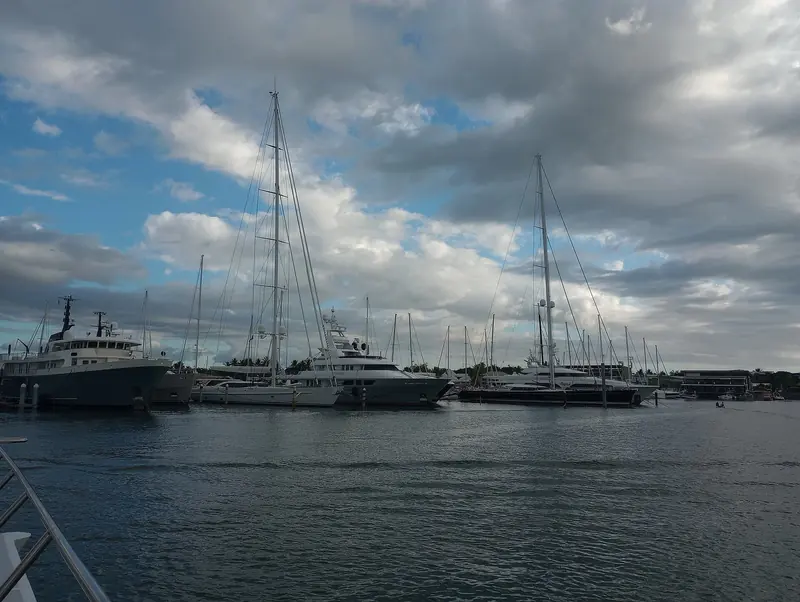
| Fiji comprises more than 332 islands, 110 of them permanently inhabited | |
| Official cyclone season runs 1 November to 30 April, monitored jointly by the Fiji Meteorological Service, the Australian Bureau of Meteorology and New Zealand's MetService; most yacht insurers restrict cover from 1 November to 1 May | |
| Ports of entry | Suva, Lautoka, Savusavu, Vuda, Levuka and Denarau; masters must give 48 hours' pre-arrival notice to customs, immigration, health and biosecurity |
|---|---|
| The cruising permit is issued free by the iTaukei Affairs Board, followed by a customs coastal clearance that ends the need to clear in and out of each region visited | |
| Standard customs clearance is FJD 85.02 for a yacht and FJD 193.12 for a superyacht; after-hours rates run to FJD 172.87 and FJD 487.60 | |
| Visiting yachts stay duty-free for 18 months, extendable by 6 months to a 24-month maximum, provided the vessel stays privately owned and is not chartered | |
| The Superyacht Charter Decree, passed in April 2010, first opened Fiji to legal foreign-flagged commercial charter; 32 superyachts visited in its first year, generating FJD 1.7 million | |
| A July 2022 easing cut the minimum eligible vessel length from 24 metres to 18 metres and the minimum weekly charter fee from USD 55,000 to USD 30,000 | |
| A Short-Term Charter Permit costs FJD 3,600 for six months, renewable to an 18-month maximum; a Coastal Trading Permit costs FJD 3,450 per charter, plus a 5 percent tax on the gross charter fee | |
| In 2018, 4,473 yacht guests generated FJD 34.9 million in Fijian tourism spending | |
| Vuda Marina holds 80 cyclone pits that lower a hull onto its keel between tyres, tied down with straps rated to 4 tons; pits are usually fully booked by the end of July for the season starting 1 November | |
| Savusavu's Copra Shed and Waitui marina moorings held through Cyclone Ami in January 2003 without losing a yacht, but 18 foreign-owned yachts were washed ashore in Savusavu during Cyclone Winston in February 2016 | |
| There are no bareboat charter operators in Fiji; every visiting charter yacht carries a professional skipper | |
| Musket Cove Marina charges from FJD 2 a metre a day for a berth and FJD 15 a day for a mooring; lifetime yacht club membership costs FJD 1 for the captain and FJD 5 per crew member | |
Two Hubs, Six Good Months
The country is an archipelago of more than 332 islands, only 110 of them permanently inhabited, scattered across a stretch of the South Pacific roughly the size of the Aegean. Almost all of the yachting infrastructure sits in two places: the Denarau and Vuda marinas on the west coast of Viti Levu, within a short drive of Nadi's international airport and the Mamanuca and Yasawa island chains that make up the standard week-long cruising itinerary, and Savusavu on the north coast of Vanua Levu, Fiji's second-largest island, a full day's sail or a short domestic flight away.
The dry season, May to October, is when almost everything happens: charters run, the Mamanucas fill with day boats out of Denarau, and the water clears for diving on reefs such as the Great Astrolabe. The wet season that follows is also the cyclone season, and it is not a soft distinction. A yacht based in Fiji genuinely operates in two different countries depending on the month, and an owner who plans only for the dry-season half is planning for six months of a twelve-month commitment.
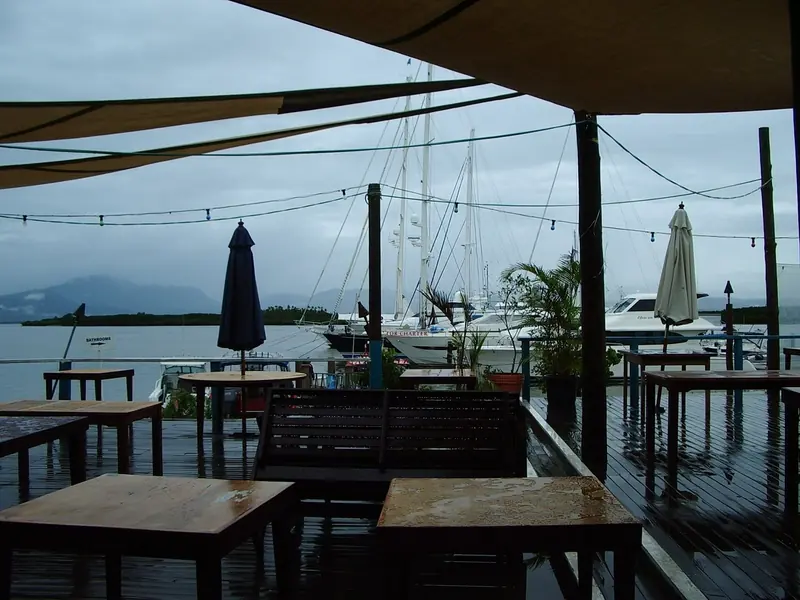
Getting In: Ports of Entry and the 48-Hour Rule
The master must submit an inward arrival form and a biosecurity declaration at least 48 hours before departure from the last port, listing every food item aboard, any live animals or plants, and the vessel's next port and itinerary. On arrival the yacht flies the yellow Q flag, contacts Port Control at the pilot station, and clears customs within 24 hours; anchoring anywhere other than a designated port of entry without written clearance is not permitted. Standard clearance runs FJD 85.02 for a yacht and FJD 193.12 for a superyacht during office hours, 0800 to 1300 and 1400 to 1630; outside those hours the same clearances cost FJD 172.87 and FJD 487.60.
Biosecurity is where most first-time visitors get caught out. Frozen poultry may only come from New Zealand, beef and lamb only from Australia or New Zealand, pork is banned without prior approval, and honey cannot be consumed anywhere in Fijian waters regardless of origin. Live animals must stay aboard at all times, cats and dogs need a rabies vaccination six to twelve months old plus a blood test a month after it, and a bond of FJD 1,500, refunded on departure, covers any pet carried aboard. None of it is unusual by Pacific standards, but a crew that provisioned in the Caribbean or the Med without checking Fiji's list first will lose food at the dock.
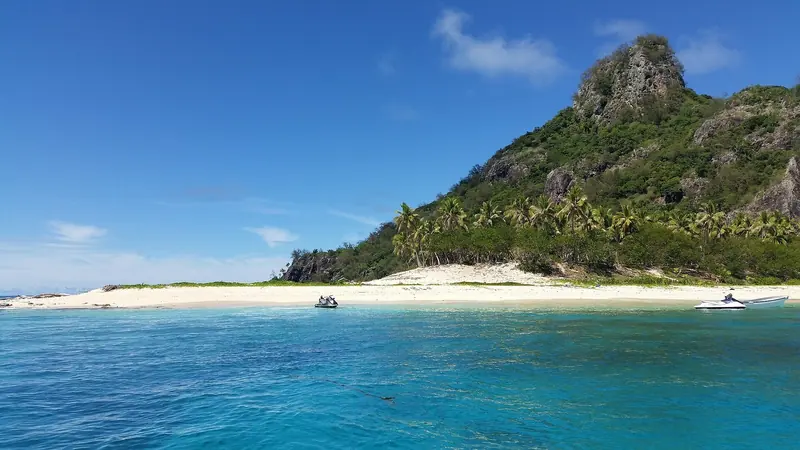
Vuda Marina lowers boats into eighty pits before each cyclone season and lets the storm pass over an empty marina instead of a crowded one.
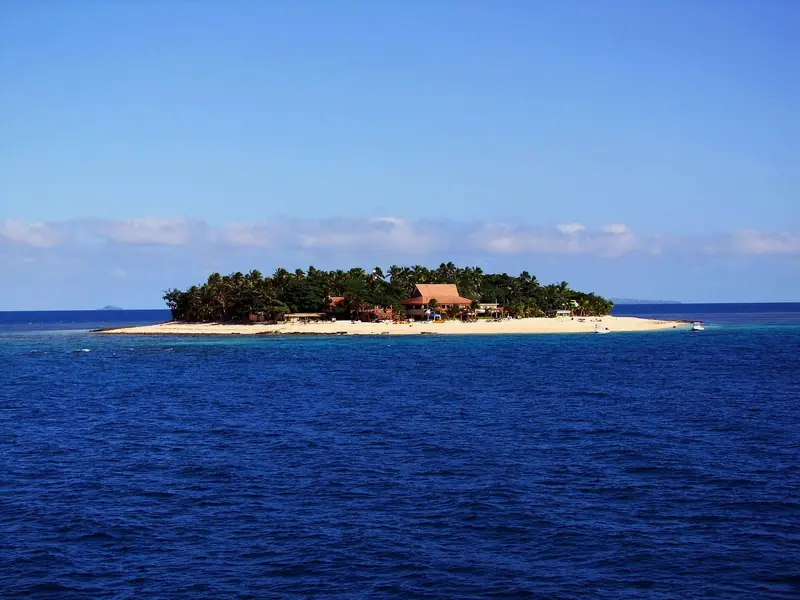
The Cruising Permit, and What It Actually Buys
The permit is obtained in person at the Board's offices in Lautoka or Suva, through the marina office at a port of entry, or through one of the registered yacht agents, AQUAM Insula, Baobab Marine / Seal Superyachts or Yacht Help, none of which is compulsory for a private cruising yacht. Once issued, the permit is taken to Customs for a coastal clearance, and from that point a yacht can move freely between Suva, Levuka, Savusavu, Lautoka, the Lau Group and Rotuma without clearing in and out at each stop, which was not always the case and remains the single biggest simplification cruisers mention.
The obligation that replaces the old region-by-region clearance is lighter but not absent: a yacht is required to report its position and cruising plans once a week for the duration of its stay. Departure works the same way in reverse, with 24 hours' notice to customs, a scan of the checkout forms sent ahead, and a requirement to sail directly from the clearance port and leave within 24 hours without stopping at another island on the way out. An agent is worth engaging for exactly this paperwork rhythm even where it is not legally required, because missing a weekly report or an outbound window creates problems a first-time visitor does not expect.
Chartering Fiji: the Decree That Opened It, and the Rules Now
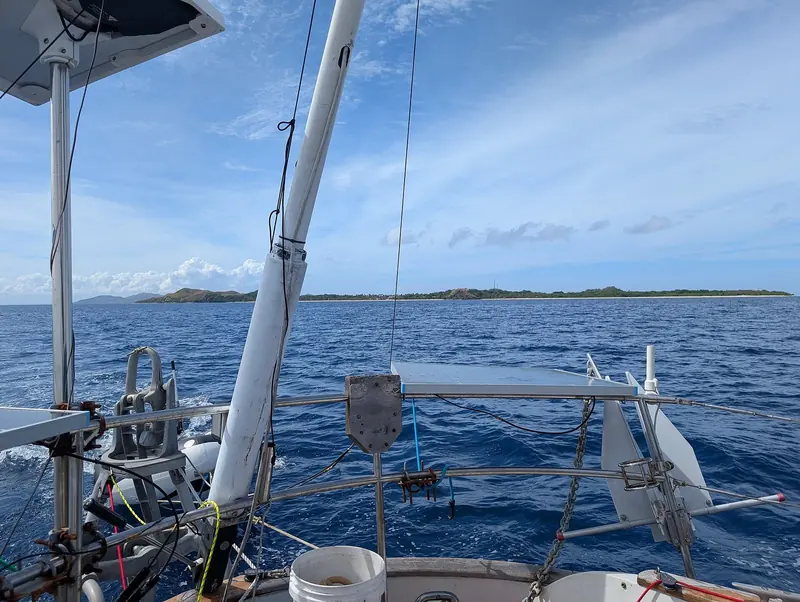
Before 2010, outdated marine and immigration law effectively closed Fiji to commercial charter by foreign-flagged yachts; the decree that year fixed clearance, crew visa and cruising-area rules in one pass, and 32 superyachts visited in its first year, generating FJD 1.7 million for the economy. A July 2022 reform lowered the bar further, cutting the minimum vessel length from 24 to 18 metres and the minimum weekly charter fee from USD 55,000 to USD 30,000, and by 2018, before the pandemic interruption, annual yacht-guest arrivals had reached 4,473, worth FJD 34.9 million to the Fijian tourism economy.
The paperwork now runs through a Short-Term Charter Permit, FJD 3,600 for six months and renewable to an 18-month maximum, plus a Coastal Trading Permit at FJD 3,450 per individual charter, plus a 5 percent tax on the gross charter fee, typically processed by an agent within about 15 working days. What has not changed is the absence of a bareboat sector: there are no bareboat charter operators in Fiji, and every visiting charter yacht, from a day sail out of Musket Cove to a two-week superyacht itinerary, carries a professional skipper, a function of the reefs as much as the regulation.
Cyclone Season, and Where a Yacht Actually Goes
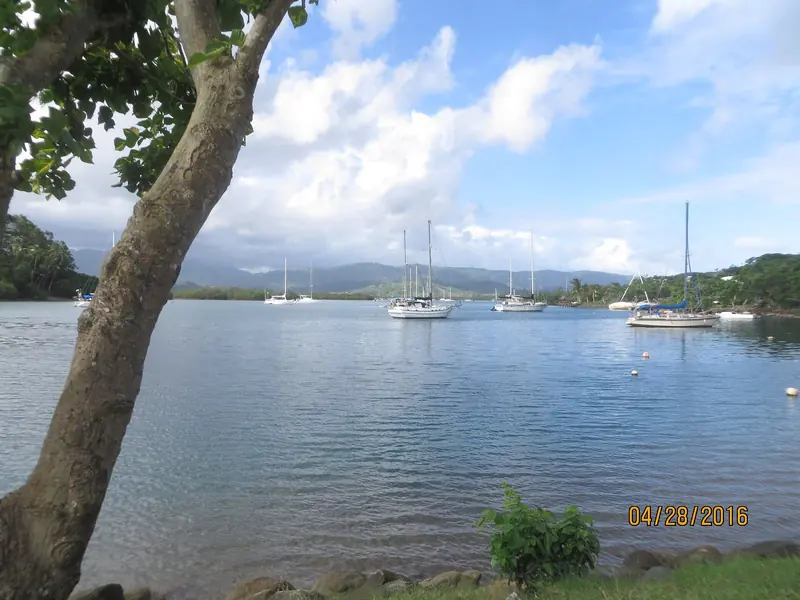
The Fiji Meteorological Service, the Australian Bureau of Meteorology and New Zealand's MetService jointly monitor the season, and most yacht insurance restricts cover for a wider window, 1 November to 1 May. Vuda Marina, on Viti Levu, built its reputation on eighty cyclone pits: a hull is lowered onto its keel between tyres and tied down with straps rated to four tons, out of the water and clear of any wave action entirely, and the pits are usually fully booked by the end of July for a season that does not start until November. Savusavu's Copra Shed and Waitui marinas offer a water-based alternative, with strong moorings that held through Cyclone Ami in January 2003 without losing a boat.
Shelter is not immunity, and Tropical Cyclone Winston in February 2016, the strongest storm ever recorded in the South Pacific, proved it. Eighteen foreign-owned yachts were washed ashore in Savusavu, where the moorings offered less protection than at Vuda. Tony Philp, who owns both Copra Shed Marina in Savusavu and Vuda Marina through the Tradewinds Marine Group, told the Fiji Times that local people had come together to try to refloat the boats, but that it would take a few weeks. An owner weighing whether to leave a yacht in Fiji through the season is weighing Vuda's pits, which have no comparable loss on record, against a mooring field that has one.
What a Berth Costs
Copra Shed's mooring rate breaks down to FJD 123 a week, FJD 492 a month or FJD 2,460 for six months, tax included, and covers use of every shore facility plus three months' complimentary membership of the Savusavu Yacht Club. Waitui, the budget option in the same anchorage, charges around FJD 18 a night for one of its 18 moorings, though some shore services there run reduced hours. Musket Cove, on Malolo Lailai in the Mamanucas, has 27 moorings at FJD 15 a day and 25 marina berths from FJD 2 a metre a day, both including VAT.
The genuinely unusual figure is the Musket Cove Yacht Club's lifetime membership: FJD 1 for the captain and FJD 5 for each crew member, granted to any yacht that sailed into Fiji from another country rather than merely between Fijian ports, and it buys resort access and a discount on the Malolo Cat ferry for life. None of these figures needs an agent or a quote request to find; Fiji's marinas are unusually transparent about price compared with the Caribbean and much of the Mediterranean, where a phone call is often the only way to learn what a berth costs.
Duty, VAT and What's Not Published
The exemption depends on three conditions holding throughout the stay: the yacht remains the sole property of a genuine visiting owner, it is on a legitimate cruise rather than abandoned in Fiji, and it earns nothing commercially while the exemption applies. Superyachts get a specific carve-out on alcohol: duty is charged only on what is actually consumed while cruising, assessed against a detailed inventory of brand, type, strength and quantity submitted on arrival and again on departure, rather than on the full onboard stock as if it had all been imported. Personal allowances for anyone aboard aged 18 or over run to 2.25 litres of spirits, 250 cigarettes and one unused item worth under FJD 1,000; excess is dutiable or held.
What genuinely is not published anywhere findable is a current, official schedule of Fiji-wide reef chart accuracy, and that omission is itself the most useful practical fact for an incoming owner. The available charts are old British Admiralty surveys and Fijian paper charts, both acknowledged by cruising guides to be inaccurate by hundreds of feet in places outside the main ports and channels, and the standing advice across every cruising resource is the same: navigate reef passages in good light with the sun high, never at dusk, and treat electronic charts as an aid rather than ground truth. No customs figure or duty rate carries the same weight for a first Fiji season as that single navigational warning.
The Honest Downside
The season genuinely is May to October; outside it, insurance tightens, the water clouds with runoff, and a cyclone can form with only days of warning inside a declared season that runs from 1 November to 30 April. The distance between the two real hubs, Denarau and Vuda on Viti Levu and Savusavu on Vanua Levu, is a full day's passage or more, and the reef-strewn water between them is exactly the kind that cruising guides warn needs eyeball navigation in good light rather than a chartplotter. There is very little marine infrastructure anywhere outside those two clusters.
And shelter is not the same as safety, whatever a marina's marketing says. Vuda's cyclone pits have no recorded loss and are the closest thing the South Pacific has to a guaranteed-safe lay-up, but they sell out by the end of July for a season that starts in November, so a late decision is not a decision at all. Savusavu's moorings, the alternative most cruisers actually use because they stay in the water and cost less, lost eighteen boats to Cyclone Winston in 2016 despite having held through Cyclone Ami in 2003. An owner basing a yacht in Fiji year-round is choosing between two shelters, one of them fully booked months in advance and neither of them a certainty.
A terra, accessi e prenotazioni
| Season | Dry season May to October is when charters and cruising run; cyclone season is declared 1 November to 30 April, with most insurance restricting cover from 1 November to 1 May |
|---|---|
| Getting there | Nadi International Airport serves Denarau and Vuda on Viti Levu; Savusavu on Vanua Levu has a short domestic flight or a full day's passage from the west coast |
| Ports of entry and clearance | Suva, Lautoka, Savusavu, Vuda, Levuka and Denarau; 48 hours' pre-arrival notice required; standard yacht clearance FJD 85.02, superyacht FJD 193.12, after-hours FJD 172.87 and FJD 487.60 |
| Cruising permit | Free, issued by the iTaukei Affairs Board within 2-3 days of arrival, followed by a customs coastal clearance; a weekly position report to customs is required for the duration of the stay |
| Duty-free stay | 18 months for a privately owned yacht, extendable by 6 months to a 24-month maximum, provided the vessel is not chartered or abandoned in Fiji |
| Commercial charter | Superyacht Charter Decree (2010), eased July 2022: minimum 18m LOA, minimum USD 30,000 weekly charter fee; Short-Term Charter Permit FJD 3,600 for 6 months (renewable to 18), Coastal Trading Permit FJD 3,450 per charter, plus 5 percent tax on the gross charter fee. No bareboat operators exist in Fiji |
| Cyclone lay-up | Vuda Marina: 80 in-ground cyclone pits, usually fully booked by end of July. Savusavu: Copra Shed Marina moorings from FJD 20.50/day, Waitui Marina from about FJD 18/night; both held through Cyclone Ami (2003) but Savusavu lost 18 yachts to Cyclone Winston (2016) |
| What is not published | No official, current schedule of Fiji-wide reef chart accuracy exists; cruising guides describe available British Admiralty and Fijian paper charts as inaccurate by hundreds of feet outside main channels |
Cosa riferiscono armatori ed equipaggi
A superyacht captain with 14 years' Pacific experience, on what makes Fiji worth the season
Fiji is one of the most rewarding cruising grounds he has experienced, said the captain, who has led the yacht Twizzle through extensive South Pacific cruising including Fiji and French Polynesia: "What makes it so special is the variety, one day you can be anchored off a perfect white beach in the Yasawas, the next you are diving soft coral walls, exploring limestone caves, hiking to waterfalls, or being welcomed into a local village."
Captain Colin Johnson, M/Y TwizzleThe marina owner whose own boats did not escape Cyclone Winston, on the honest limit of shelter
After Tropical Cyclone Winston washed 18 foreign-owned yachts ashore in Savusavu in February 2016, he told the Fiji Times that local people had come together to try to refloat the yachts, but that it would take a few weeks.
Tony Philp, owner, Copra Shed Marina and Vuda Marina
Cosa convince e cosa va valutato
Punti di forza
- A commercial charter regime that genuinely got easierThe July 2022 reform cut the minimum eligible yacht length from 24 to 18 metres and the minimum weekly charter fee from USD 55,000 to USD 30,000, opening the market to a wider range of vessels than the original 2010 decree allowed.
- A purpose-built cyclone shelter with no recorded lossVuda Marina's eighty in-ground cyclone pits, hull on keel between tyres and tied down with four-ton-rated straps, are the closest thing the South Pacific has to a guaranteed-safe lay-up, and demand fills every pit by the end of July.
- Unusually transparent pricingMusket Cove, Copra Shed and Waitui all publish their berth and mooring rates outright, which is more than most Caribbean or Mediterranean marinas offer without a direct enquiry.
Da valutare
- Shelter is not the same as safetyTropical Cyclone Winston washed 18 foreign-owned yachts ashore at Savusavu in February 2016 despite the same moorings having held through Cyclone Ami in 2003; the marina's own owner confirmed the damage to the Fiji Times.
- The country genuinely closes for half the yearThe declared cyclone season runs 1 November to 30 April and most insurance tightens from 1 November to 1 May, so a Fiji-based yacht operates on a six-month commercial calendar rather than a twelve-month one.
- Reef charts cannot be trusted at face valueAvailable charts are old British Admiralty surveys and Fijian paper charts that cruising guides describe as inaccurate by hundreds of feet outside the main channels, so passages require eyeball navigation in good light rather than reliance on electronics.
- No bareboat option, and a full day between the two hubsEvery charter yacht in Fiji carries a professional skipper, and the two real yachting clusters, west-coast Viti Levu and Savusavu on Vanua Levu, are a full day's passage apart with little infrastructure in between.
A chi si rivolge: An owner or charter guest planning a dry-season Pacific itinerary between May and October, and anyone weighing whether their yacht, crew and insurer can actually operate through a declared cyclone season rather than simply avoid it.