French Polynesia
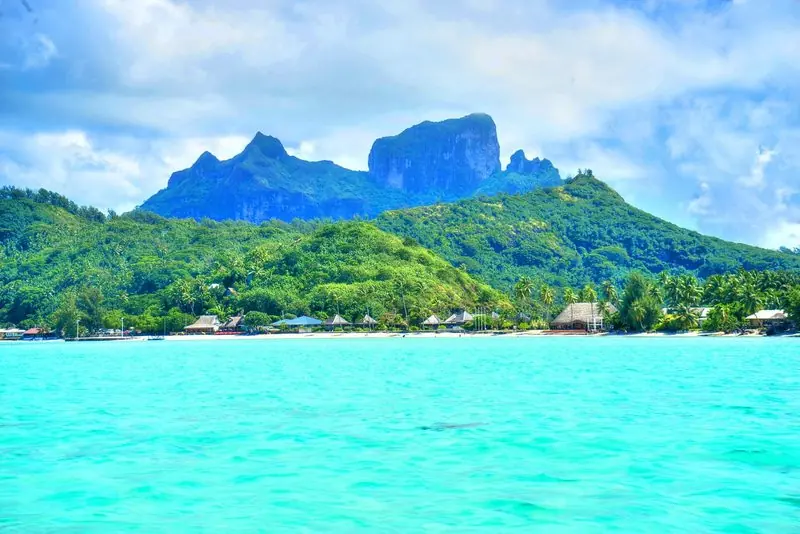
| Regione | cinque arcipelaghi nel Pacifico meridionale, 121 isole e atolli distribuiti su più di 2.000 km |
|---|---|
| Dimensioni | 3.521 chilometri quadrati di terra, popolazione di 278.786 abitanti nel 2022 con circa il 69 per cento su Tahiti |
| Stagione | stagione secca grosso modo da maggio a ottobre, stagione delle piogge e rischio cicloni da novembre ad aprile |
| Bora Bora | 125 miglia nautiche a nordovest di Papeete, un solo ingresso dall'oceano attraverso il passo di Teavanui sul lato ovest |
| Fakarava | atollo di 60 km per 21 km con una laguna di 1.112 chilometri quadrati, la seconda della Polinesia francese |
| Passo nord di Fakarava | largo 1,37 km, il più grande del territorio |
| Passo sud di Fakarava | protetto dal 2008, ospita una stima di 700 squali grigi di scogliera |
| Marchesi | circa 1.370 km a nordest di Tahiti, senza barriere frangenti, iscritte dall'UNESCO nel 2024 come Te Henua Enata |
| Porti di ingresso | Papeete e Moorea, Nuku Hiva, Hiva Oa e Ua Pou, Bora Bora, Raiatea e Huahine, Rangiroa e Fakarava, più le Australi e le Gambier |
| Ingresso | un modulo di arrivo online almeno 48 ore prima, con approvazione che secondo le testimonianze richiede da uno a tre giorni |
| Biosicurezza | un questionario online con una tassa e un'ispezione a bordo prima del nulla osta alla partenza |
| Accesso | Faa'a International a Papeete è l'unica porta d'accesso intercontinentale, con piste interne a Bora Bora, Raiatea, Rangiroa, Fakarava e quattro nelle Marchesi |
| Temporary admission | 24 consecutive months for a foreign pleasure vessel, extended to 36 consecutive months for a hull of 24 m or more, with a further three months possible for force majeure |
| End of the clock | the vessel must leave French Polynesian waters or be cleared through customs, and the regime restarts only on proof of leaving the territory and entering a foreign one, with a reported minimum of six months outside |
| Charter | permitted for foreign-flagged vessels under a licence de charter nautique from the Direction Polynesienne des Affaires Maritimes, granted by presidential decree after an advisory commission, taking several weeks with a provisional licence available |
| Charter conditions | entry in the commercial register, qualifications, insurance and guarantees, a description of the activity and a level three criminal record certificate |
| Cabotage | no bar on carrying paying guests between Polynesian islands once the charter licence is held |
| Tax | French Polynesia is outside the EU VAT territory and levies its own TVA at 5, 13 and 16 per cent, with a 1 per cent rate from 1 July 2026 for operations benefiting the remote archipelagos |
| Fuel | the duty-free diesel benefit for private pleasure vessels under temporary admission was announced for suppression at the Council of Ministers of 10 June 2026 |
| Lifting | the Papeete port slipway is rated at 800 tonnes, 60 m and 4.5 m draught, and Technimarine runs travel lifts of 300 and 75 tonnes taking hulls to about 40 m |
| Berthing | Marina Taina's published tariff documents date from 1 March 2024 and its rates are not public, checked 28 July 2026 |
Le dimensioni del posto
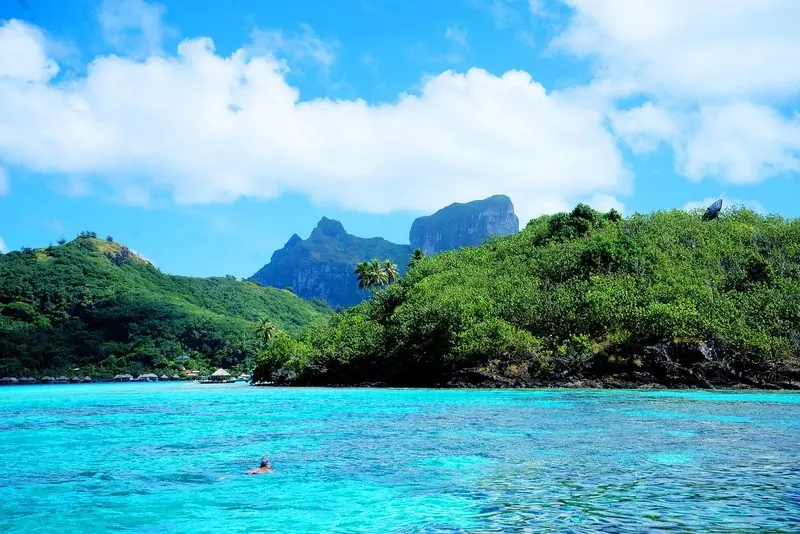
La Polinesia francese è grande come l'Europa con la superficie terrestre di una piccola provincia. Cinque arcipelaghi, 121 isole e atolli, e traversate tra loro che si misurano in giorni. Tahiti tiene circa il 69 per cento della popolazione e tutto il resto è abitato in modo rado. Il Mount Orohena su Tahiti sale a 2.241 metri, e le isole vulcaniche in generale sono ripide, verdi e drammatiche, mentre gli atolli sono anelli piatti di corallo su cui non c'è nulla più alto di una palma.
La conseguenza per un armatore è la pianificazione. Non è una costa in cui uno yacht vaga e vede che cosa capita. Le traversate sono impegnative, le finestre meteo contano e un cambio di idea può costare due giorni. La ricompensa è che gli ancoraggi, una volta raggiunti, sono buoni quanto qualunque altro sulla Terra e dentro non c'è nessuno.
Tre aree di crociera diverse
Le isole della Società sono il terzo accessibile: quattordici isole in due gruppi, con Tahiti, Moorea e Tetiaroa sopravvento e Huahine, Raiatea, Taha'a e Bora Bora sottovento. Moorea è a circa 12 miglia nautiche da Papeete. Bora Bora a 125. Raiatea e Taha'a condividono una sola laguna, il che ne fa la navigazione più facile e più protetta del territorio e la ragione per cui la flotta charter è basata lì.
Le Tuamotu, un paio di centinaia di miglia a nordest di Tahiti, sono gli atolli. Anelli di corallo con lagune dentro, in cui si entra dai passi, e qui le immersioni sono il senso di tutto il viaggio. Le Marchesi stanno circa 1.370 km più a nordest, isole vulcaniche alte senza barriere frangenti, il che significa che gli ancoraggi prendono direttamente l'onda lunga dell'oceano. Nel 2024 l'UNESCO ha iscritto le Marchesi come Te Henua Enata. Sono magnifiche e sono scomode.
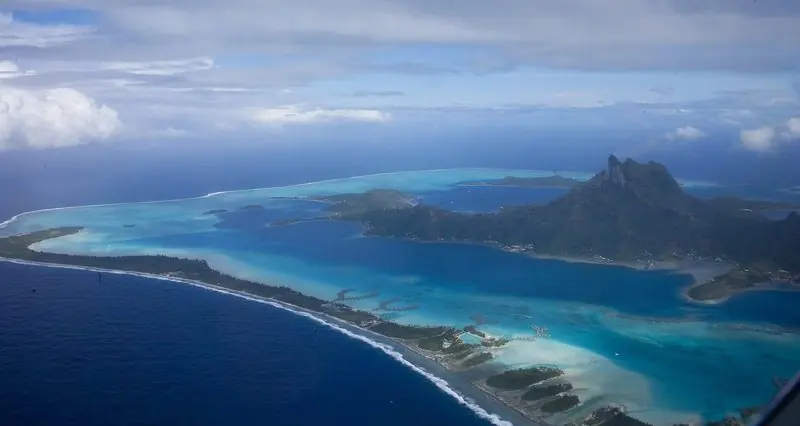
La migliore navigazione in laguna del pianeta, rifornita attraverso una sola pista a Papeete.
Una settimana, e tre settimane
Una settimana significa le Sottovento della Società e nient'altro. Gli ospiti volano a Bora Bora o a Raiatea, la barca lavora la laguna condivisa di Raiatea e Taha'a, attraversa verso Bora Bora e Huahine, e tutti tornano a casa in aereo. È una settimana davvero bella di acqua piatta in laguna, ed è quello che qui la maggior parte degli armatori fa davvero.
Tre settimane comprano le Tuamotu. Papeete o Moorea, a nordest verso Rangiroa e Fakarava per una settimana tra i passi, ritorno attraverso la Società. Aggiungere le Marchesi la trasforma in un programma di sei settimane con due traversate oceaniche di diversi giorni ciascuna. Una barca che ha attraversato il Pacifico arriva con le Marchesi già alle spalle, che è il modo abituale in cui qualcuno le vede.
I passi, e dove ci sta una barca di 50 metri
In ogni atollo si entra attraverso un passo, e il passo è il problema tecnico di quest'area. L'acqua si accumula nella laguna scavalcando la barriera e defluisce da uno o due varchi, quindi le correnti corrono forte e formano onde stazionarie contro un'onda lunga contraria. I transiti si calcolano sulla stanca. Il passo Garuae di Fakarava, largo 1,37 km, è il più facile del territorio e il più grande. Altri sono larghi poche centinaia di metri con corallo su entrambi i lati, e alcuni un grande yacht semplicemente non li tenta.
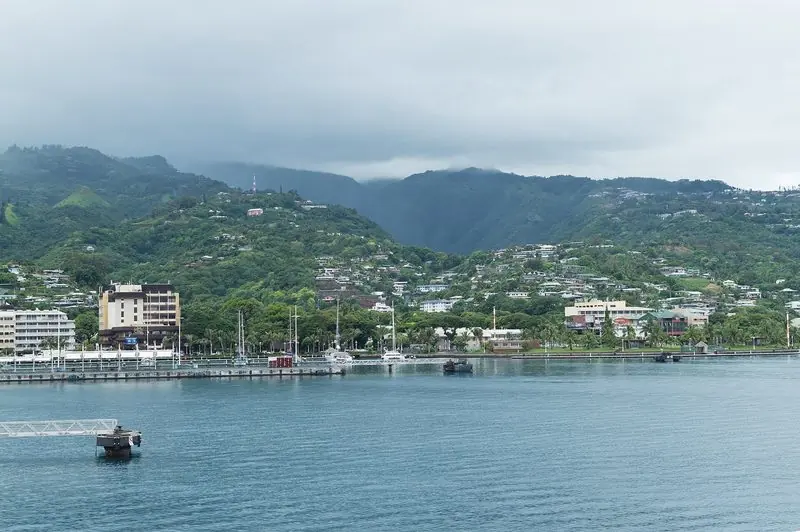
All'interno le lagune sono basse, piene di teste di corallo e in genere mal cartografate, quindi una barca di 50 metri si muove a vista con un uomo di vedetta a prua e la luce buona alle spalle. Bora Bora ha un solo ingresso dall'oceano attraverso il passo di Teavanui sul lato ovest, che prende navi da carico e navi da crociera e non presenta difficoltà. Tetiaroa non ha nessun passo navigabile, quindi uno yacht sta fuori e porta dentro in tender. L'ormeggio quasi non esiste: Marina Taina vicino a Papeete e la banchina commerciale di Papeete su accordo, più Apooiti a Raiatea. Tutto il resto è ancora o boa.
Gli ancoraggi e le immersioni che giustificano la traversata
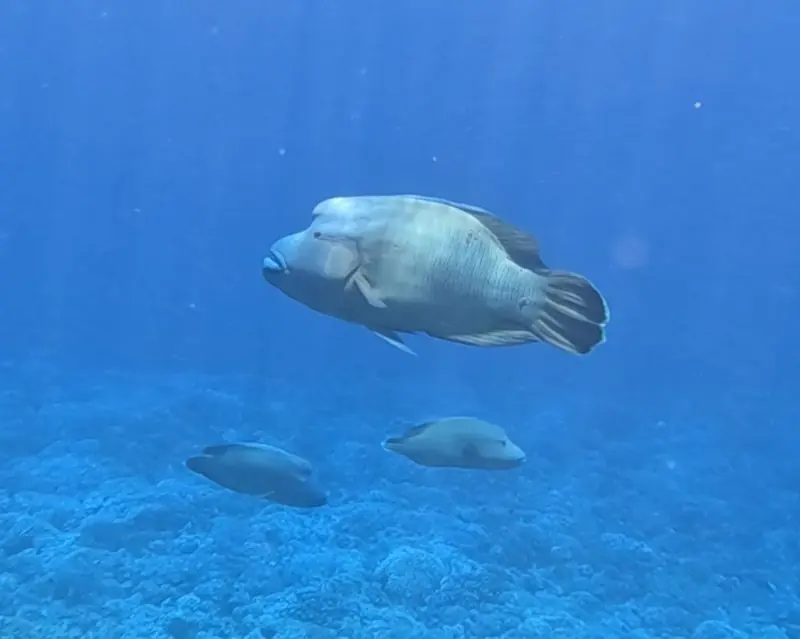
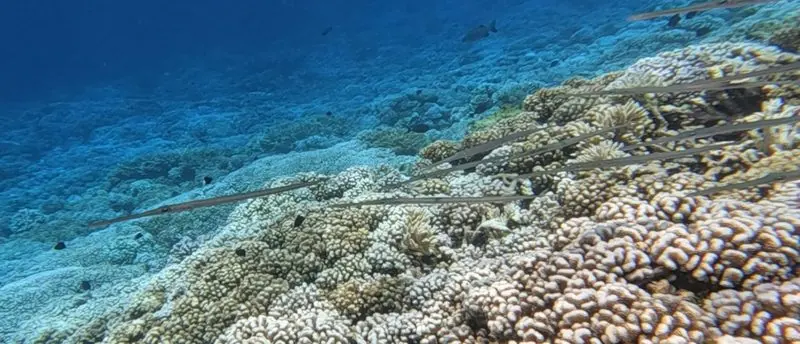
Fakarava è quella per cui la gente torna. Il passo meridionale di Tumakohua è protetto dal 2008 e ospita una stima di 700 squali grigi di scogliera, che si raccolgono nel passo in un muro che i subacquei tendono a contare invece che a descrivere. L'intero atollo è riserva della biosfera UNESCO. Il passo di Tiputa a Rangiroa ha i delfini che lavorano la corrente ed è l'altra immersione obbligata. Nessuno dei due è un posto in cui attraversare la corrente in tender con leggerezza.
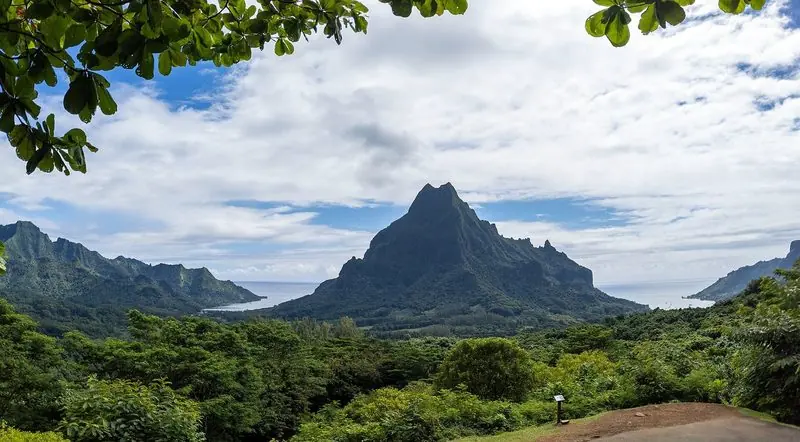
Nella Società gli ancoraggi sono più gentili. Il giardino di corallo di Taha'a, gli ancoraggi ai motu davanti a Raiatea, la baia di Opunohu a Moorea sotto le guglie vulcaniche, e la laguna di Bora Bora con i resort sui motu. Tetiaroa porta The Brando su un atollo privato ed è la tappa discreta per gli armatori che ne vogliono una. Nelle Marchesi gli ancoraggi sono Taiohae a Nuku Hiva e le baie di Fatu Hiva, e rollano tutti.
Meteo e stagione
La stagione secca va grosso modo da maggio a ottobre, con gli alisei da sudest costanti, l'umidità più bassa e l'acqua limpida. È quella la stagione di navigazione ed è quando la flotta è qui. La stagione delle piogge da novembre ad aprile porta pioggia forte, groppi e il rischio cicloni, e gli assicuratori prezzano di conseguenza. Pochissimi grandi yacht restano per tutto quel periodo.
Anche nella stagione secca gli alisei fanno sì che le traversate a nordest verso le Tuamotu e le Marchesi siano controvento e controcorrente, ed è per questo che le barche che arrivano dalle Americhe entrano col vento in poppa e ripartono verso ovest. L'onda lunga dell'oceano meridionale arriva sui passi esposti a sud durante l'inverno australe e può chiuderli. Negli stessi mesi in queste acque ci sono le megattere, che la maggior parte degli ospiti mette sopra alle immersioni.
Arrivarci e farci arrivare gli ospiti
Faa'a International a Papeete è l'unico aeroporto intercontinentale del territorio. I voli arrivano da Los Angeles, da Parigi via Los Angeles, da Auckland, da Tokyo e da una manciata di altri punti, e ogni movimento di ospiti passa da lì. Da Papeete i voli interni raggiungono Bora Bora, Raiatea, Huahine, Rangiroa, Fakarava e le quattro piste delle Marchesi, su velivoli piccoli con limiti di bagaglio veri.
L'effetto pratico è che un ospite in arrivo dall'Europa deve mettere in conto buona parte di una giornata in volo e una coincidenza interna alla fine. I jet privati arrivano a Papeete ma non alla maggior parte dei campi interni. È per questo che qui gli armatori programmano blocchi di ospiti lunghi. Nessuno viene per quattro notti.
A terra, e che cosa c'è da fare
La posizione onesta è che gli ospiti vengono per l'acqua. A terra, Bora Bora e Taha'a hanno i resort su palafitta e i loro ristoranti, Moorea ha le valli degli ananas e il belvedere sopra Opunohu, e Papeete ha una città che lavora, un mercato e le roulottes, i furgoni del cibo sul lungomare, che sono meglio di come suonano. Raiatea ha il marae di Taputapuatea, un grande sito religioso polinesiano iscritto al patrimonio dell'umanità.
Il cibo è di impronta francese e caro perché quasi tutto è importato. Poisson cru, tonno locale e mahi mahi sono le eccezioni e sono eccellenti. La vita notturna sono i bar dei resort e qualche spettacolo di danza. Quello che riempie davvero le giornate sono le immersioni, il kitesurf, il paddleboard che attraversa una laguna alle prime luci e il fatto che l'acqua è a 27 gradi e trasparente fino a 40 metri.
Carte, supporto e il difetto da dire
Le formalità sono francesi, digitalizzate e da fare in anticipo. Gli yacht presentano un modulo di arrivo online almeno 48 ore prima di arrivare, e chi naviga qui riferisce che l'approvazione richiede da uno a tre giorni. I porti di ingresso sono distribuiti in modo sensato tra gli arcipelaghi, da Nuku Hiva a nord a Mangareva nell'estremo sudest. Prima di ripartire servono un questionario di biosicurezza con la relativa tassa e un'ispezione a bordo. L'attività di charter e la posizione fiscale di uno yacht di bandiera estera qui sono questioni da specialisti e cambiano, quindi un armatore ha bisogno di un agente locale e di indicazioni aggiornate.
Il difetto è l'approvvigionamento. Il carburante si trova a Papeete, a Raiatea e in pochi punti esterni, a prezzi che riflettono la distanza, e un rifornimento grosso va organizzato in anticipo. I ricambi arrivano dalla Francia o dagli Stati Uniti e prendono settimane. Nel territorio non esiste un cantiere di refit che prenda uno yacht di 50 metri, quindi un guasto serio significa una navigazione di migliaia di miglia oppure uno specialista fatto arrivare in aereo. Fare provviste allo standard degli ospiti significa farle arrivare in volo. Un armatore deve trattare la barca come autosufficiente per tutta la stagione, perché di fatto lo è.
Temporary admission, and the clock that decides the programme
This is the number that shapes a Pacific itinerary and it is published. A foreign pleasure vessel may stay in French Polynesia under temporary admission for a maximum of 24 consecutive months, and for a hull of 24 m or more that maximum is 36 consecutive months. Force majeure can extend it by three further months. At the end of it there are only two options, and the customs administration states them plainly: leave French Polynesian waters with the vessel, or clear her through customs, which means importing her and paying what importation costs. Renewal is not automatic and is not a paperwork exercise. The regime restarts only on proof that the vessel left the territory and entered a foreign one, and the working requirement reported by local agents is a minimum of six months outside French Polynesian waters before the clock begins again.
Two consequences follow for an owner. The first is that a 50 m yacht gets three years here, which is long enough to run a genuine Pacific programme out of Papeete rather than a single season, and long enough that the boat can be left in the territory between guest blocks. The second is that the six-month exit is a real voyage in this part of the ocean, not a run across a border, so the decision to import or to leave has to be taken a year before the clock expires and not a month before. Arrival itself is now a single online declaration filed at least 48 hours ahead, with approval reported at one to three days, and a foreign-flagged vessel operating under a charter licence is admitted temporarily without a bond.
Charter: what a foreign flag may actually do here
A foreign-flagged yacht may charter in French Polynesia, and the answer is a licence rather than a flag change. The instrument is the licence de charter nautique, administered by the Direction Polynesienne des Affaires Maritimes, and the governing text applies in terms to francised vessels and to vessels under a foreign flag alike. The conditions are commercial rather than nautical: the owner or operator must be entered in the commercial register, hold the required qualifications, carry the required insurance and guarantees, produce a description of the intended activity and a level three criminal record certificate. The licence is granted by decree of the President of French Polynesia after the advisory commission on charter navigation has been consulted, which takes several weeks, and a provisional licence can be issued while the file is pending. There is no cabotage bar of the American or Turkish kind once the licence is held, which is precisely why a charter fleet exists at Raiatea and why the Leeward Societies are the accessible week.
The tax position is its own jurisdiction and no EU rule reaches it. French Polynesia is outside the European Union VAT territory entirely and levies its own TVA at 5 per cent reduced, which covers passenger transport and hotel accommodation, 13 per cent intermediate and 16 per cent standard, with a new 1 per cent rate introduced from 1 July 2026 for operations benefiting the remote archipelagos, meaning the Tuamotus, the Marquesas, the Australs and the Gambiers. A charter that starts here is taxed here, on local rates, and none of the EU charter VAT structures an owner may have used in the Mediterranean apply or are needed. The classification of a nautical charter between the 5 and 13 per cent bands is the question worth putting to the licensed local operator in writing, because it moves the number by eight points on every booking.
Fuel, the yard, and what the season actually costs
The commercial sweetener here has been fuel, and it is being taken away. Temporary admission has carried duty-free fuel and duty-free spare parts in transit, arranged through a local broker, and it is a material part of why a long Pacific programme works out of Papeete. At the Council of Ministers of 10 June 2026 the government announced that the duty-free diesel benefit for private pleasure vessels under temporary admission is to be suppressed, as part of a hydrocarbon tax package reported at XPF 3.8 billion, on the stated ground of equity between users. An owner planning a 2026 to 2027 season should price fuel duty-paid and treat any remaining exemption as a bonus rather than a budget line, and should get the current position from the agent in writing before committing to a bunkering port.
The yard position is better than the territory's reputation. The port slipway at Papeete is rated at 800 tonnes, 60 m and 4.5 m of draught, and Technimarine at Papeete runs travel lifts of 300 and 75 tonnes taking hulls to about 40 m, with Raiatea Carenage covering the leeward islands. A 50 m yacht can therefore be taken out of the water in French Polynesia, which is not true in the Maldives or the Grenadines, but capacity to lift is not capacity to refit and the paint, joinery and systems trades are not there. Berthing is the number nobody publishes: Marina Taina's tariff documents date from 1 March 2024 and its rates are not reproduced publicly, checked on 28 July 2026. Set that against Marina di Porto Cervo's published 2026 tariff of EUR 3,698 a day in the band to 40 m from 1 to 20 August, about EUR 102,000 for the month, and the shape of a Polynesian season becomes clear. There is almost no berthing line at all. There is fuel that is about to cost more, air freight for everything, and a delivery measured in weeks.
A terra, accessi e prenotazioni
| Getting there | Faa'a International on Tahiti is the only long-haul gateway, and Marina Taina is about ten minutes from it by road. Everything else in the territory is reached by inter-island flight or by the boat itself. Guest changes are therefore built around Tahiti whether the yacht wants to be there or not, and a Marquesas or Gambier itinerary means either a long repositioning leg or an internal flight for the guests. |
|---|---|
| Arriving by sea | Authorised entry points cover the Marquesas, the Australs, the Tuamotu and Gambier groups, and the Society Islands in both the Windward and Leeward groups. Check-in is required immediately on arrival, not at leisure. The exception that catches people is Moorea: you cannot clear in there, it has to be Tahiti, which matters because Moorea is the obvious first stop for anyone arriving from the west. |
| The bond, and who has to post it | Every non-EU crew member and guest needs a repatriation guarantee. That is either cash lodged with a local bank equivalent to a one-way air ticket home, reported at roughly USD 1,700 per non-EU passport, or a bond letter from a registered local agent undertaking to cover repatriation, which is a paid service typically quoted around USD 300 to USD 400. EU nationals arriving by yacht do not post a bond. Short stays of up to 30 days can have it waived. On a yacht with a mixed crew this is a per-passport cost on every rotation, not a one-off on arrival. |
| Temporary admission | A foreign yacht may stay 24 months under temporary admission without paying import duty, which is among the longest windows available anywhere and materially longer than the 18 months the EU allows. It is the reason a Pacific programme can be based here rather than merely passing through. |
| Duty-free fuel | Duty-free fuel is obtainable on most islands, and the entitlement runs six months and is renewable after that. It is arranged through an agent rather than at the pump. In a territory where every litre has crossed an ocean, this is the difference between an affordable season and an unaffordable one. |
| Where a large yacht actually berths | Marina Taina at Punaauia is the territory's premier superyacht facility, offering limited stern-to dockage with controlling depths of 4 to 15 m. Above roughly 65 m the only suitable dock in Tahiti is Papeete Port, where fuel and water come from pipes on the quay. That is the whole of it. Outside Tahiti the yacht is at anchor or on a mooring, which shapes the itinerary far more than the weather does. |
| Parts, and what they cost to land | Nothing is stocked locally at superyacht scale, so spares are air-freighted and cleared by a customs broker. Broker fees run about XPF 10,000 to XPF 25,000 per shipment depending on the courier, on top of freight and duty. Build the lead time into a refit or a warranty job here; a part that is next-day in Antibes is a week away in Papeete. |
| What is not published | There is no public rate card for superyacht dockage at either Marina Taina or Papeete Port, and no published tariff for the agent packages that in practice are compulsory. Agents quote per call and per boat. An owner cannot cost a French Polynesian season from open sources; the honest planning method is to get two agent quotes and compare them against each other. |
Cosa riferiscono armatori ed equipaggi
The duty-free fuel entitlement runs six months and is renewable, and it is arranged not found
The agent's own published account of its clearance service states that duty-free fuel can be obtained on most islands, that the entitlement is valid for six months and that it is renewable thereafter. This is the agent describing a service it sells, and it should be read as that rather than as an independent audit, but it is consistent across the agents working the territory.
Tahiti CrewClearing in without an agent is possible and is a different set of trade-offs
Published cruiser accounts set the do-it-yourself route against the agent route directly, and the recurring finding is that the agent exists to convert the bond into a letter and to unlock the fuel exemption. Owners who cleared independently report the process as workable but slower, and they pay the cash bond per non-EU passport instead of a letter fee.
Cruising WorldThe customs broker fee is small and the freight lead time is not
Broker charges for a parts shipment are quoted at XPF 10,000 to XPF 25,000 depending on courier. Crews consistently report that the fee is trivial next to the schedule cost: the constraint in French Polynesia is not the price of getting a part cleared but the number of days before it arrives.
Tahiti Crew
Cosa convince e cosa va valutato
Punti di forza
- Twenty-four months of temporary admissionSix months longer than the EU allows, and long enough to base a yacht in the Pacific across two seasons without an import event. For an owner choosing between a Mediterranean and a Pacific programme this is the single most consequential number on the page.
- Duty-free fuel across most of the territorySix-month entitlement, renewable. In a place where fuel has been shipped thousands of miles, an exemption of this kind changes the arithmetic of a long-range programme rather than merely softening it.
- The cruising ground is the pointFive archipelagos across an area the size of western Europe, with the Tuamotu atolls and the Marquesas offering anchorages that receive a handful of yachts a year rather than a handful an hour. Nothing in the Mediterranean is comparable and that is precisely why owners come.
- Clear, published entry rulesThe authorised entry ports, the immediate check-in duty and the bond regime are all stated plainly, and EU nationals are exempt from the bond outright. The paperwork is heavy but it is knowable in advance, which is not true of every remote cruising ground.
Da valutare
- The agent is not optionalBond letters, duty-free fuel, inter-island clearance and customs broking all run through a local agent. There is a do-it-yourself route, but it costs the fuel exemption and the bond waiver in practice, so the agent fee is better read as a fixed cost of the destination than as a service you can decline.
- The shore infrastructure is one marina and one quayMarina Taina takes a limited number of yachts stern-to at 4 to 15 m of depth, and anything above about 65 m has exactly one option in Tahiti. There is no second base, no alternative if the berth is taken, and no yard capability of Mediterranean type anywhere in the territory.
- Every non-EU passport is a recurring costThe repatriation bond attaches to people, not to the yacht, so a crew rotation with non-EU nationals repeats the cost and the paperwork each time. On a boat with a mixed nationality crew this is an administrative drag that owners consistently underestimate.
- You cannot clear in at the island you will arrive at firstMoorea is closed as an entry point and Tahiti is not, which forces an arrival routing that is not the natural one and puts the yacht into the territory's one congested area on day one.
- Nothing about the cost is publicNo dockage tariff, no published agent pricing. The figures that circulate for the bond and the broker fees come from agents and cruising guides rather than from an authority, and they should be re-quoted rather than relied upon.
A chi si rivolge: L'armatore disposto a impegnare una stagione intera e una barca autosufficiente, i cui ospiti vogliono immersioni e lagune deserte e accettano un volo lungo per averle.