Galicia and the Rias Baixas
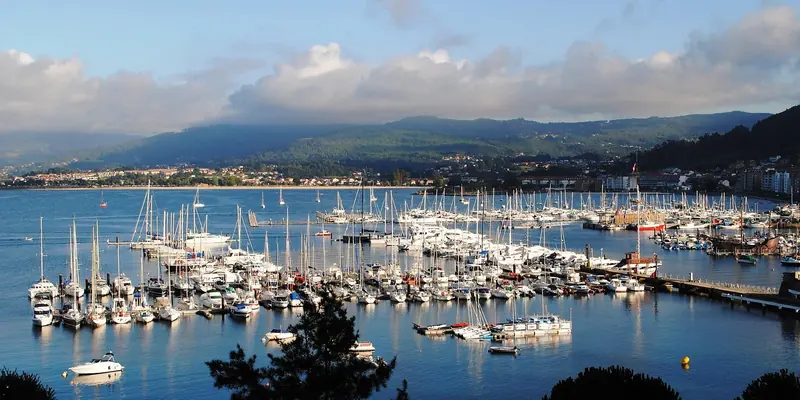
| Region | Galicia, north-west Spain; four Rias Baixas (Muros e Noia, Arousa, Pontevedra, Vigo) |
|---|---|
| Season | May to September (Nammert); reliable 12 to 15 knots from the north or north-east in summer (Yachting Monthly, 2017) |
| Tidal range | 3 to 4 metres (Beeson); about 3 m springs and 1.5 m neaps (Blackwell); streams usually under 1 knot |
| Islas Cies | navigation permit plus daily anchoring permit; 75 to 125 anchorages a day in three areas |
| Fog common in the morning and frequent off Cape Finisterre; mussel rafts hard to see at night | |
| Dated visitor berth prices | Sanxenxo 38 euros, Vigo Marina Davila 33 euros (Noonsite, February 2018); no 2026 tariff found |
| Discounts | ASNAUGA passport 15 per cent (5 euro passport); Portosin 25 per cent for four cruising clubs' members |
| Schengen | 90 days in any 180 applies to non-EU crew |
What the ground is
Chris Beeson, writing in Yachting Monthly in March 2017, calls the Ria de Muros e Noia the least developed and most attractive of the inlets and recommends the Rias Baixas as a first stop after crossing Biscay in preference to Baiona. The Ria de Arousa holds the islands of Salvora and Ons, Pontevedra has Portonovo and Sanxenxo, and Vigo has the Cies at its mouth. The Nammert pilot page, which lists the season as May to September, says boats can stay afloat all year because frost is not an issue, though storms are.
What an owner gets is a compact set of anchorages, island parks and small harbours, with a summer wind that blows from the same quarter most days. What an owner does not get is a superyacht infrastructure: berth prices are described as moderate by Nammert, the clubs are largely members' clubs, and almost every source in this research is from a cruising sailor, not a charter or brokerage desk. A larger yacht should treat the numbers on this page as a baseline from cruising sailors and confirm depths and length limits by email.
Weather, swell and fog
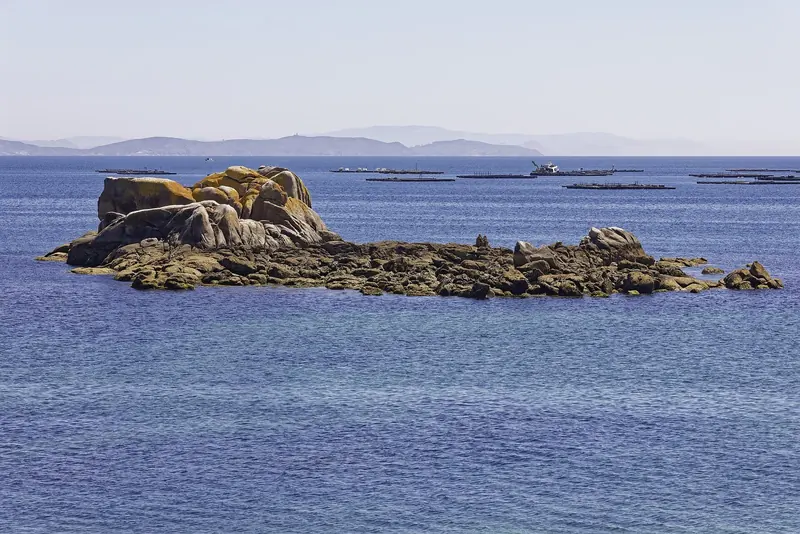
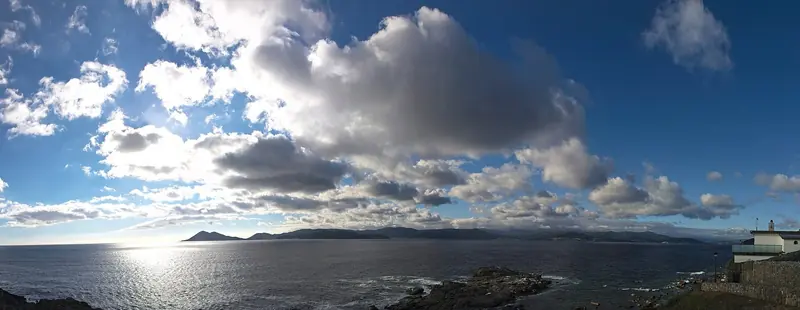
Beeson reports summer winds of 12 to 15 knots from the north or north-east, air temperatures of 24 to 28 degrees Celsius, tidal streams usually under 1 knot setting mostly south, and a range of 3 to 4 metres. He also records that north-easterlies can funnel down the rias: one afternoon showed 14 to 16 knots gusting 20, and the Ons passage saw 20 knots from the north, while a coastguard reported 30 knots about 30 miles to the north the same week. Daria Blackwell, a past Vice Commodore of the Ocean Cruising Club writing on her blog Aleria's Adventures, gives the range as about 3 metres at springs and 1.5 at neaps and says fog is common, especially in the mornings.
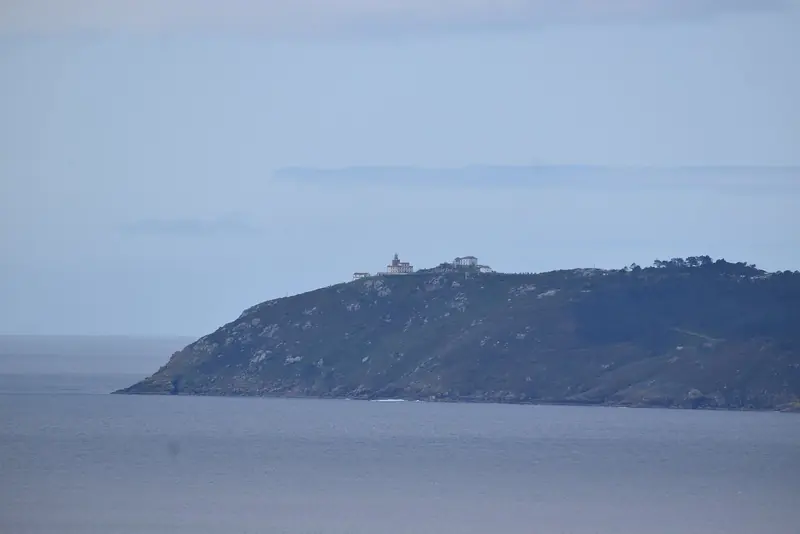
Because the summer prevailing wind is northerly, Blackwell says a southerly route through the rias is preferred. Nammert adds that outside the rias the Atlantic has a long swell, that fog is frequent off Cape Finisterre and that commercial traffic is dense on the approach routes; its advice is to run any night approach in daylight first. These are a cruising sailor's and a pilot site's observations, not a forecast: check a live forecast and a current pilot before you commit to a passage round the Cape.
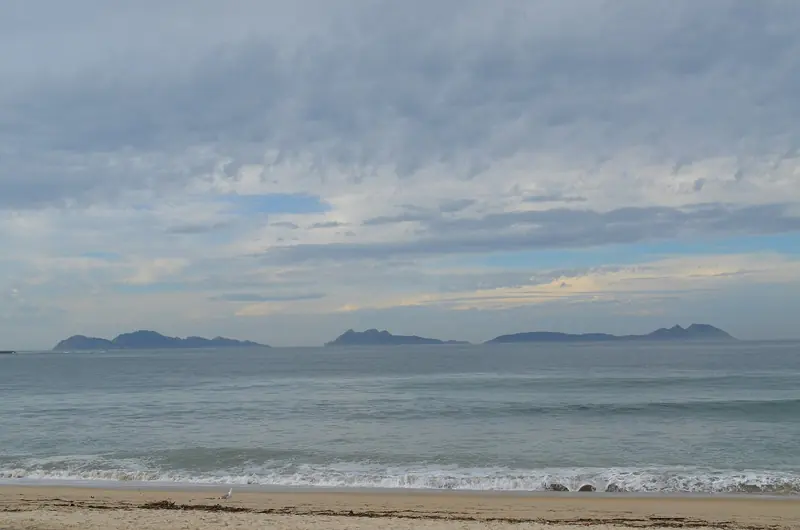
Four sheltered rias, a northerly you can set a watch by, and two permits between you and the Cies.
Hazards that are not on the weather chart
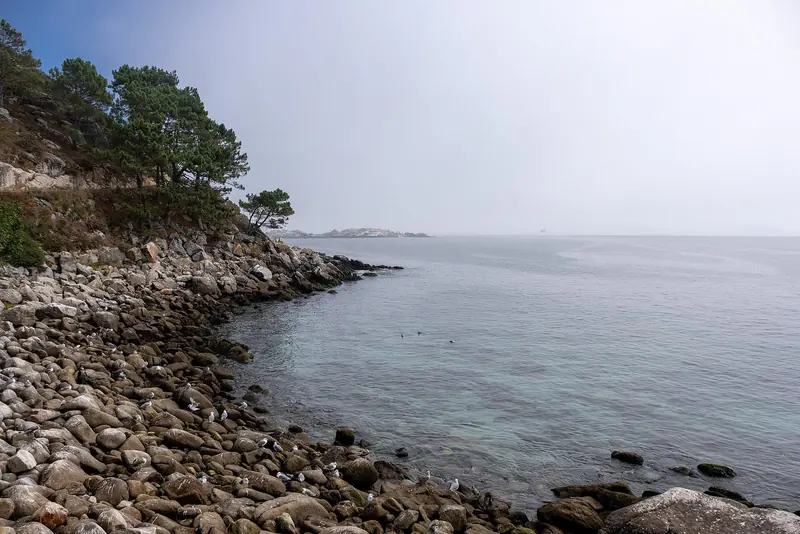
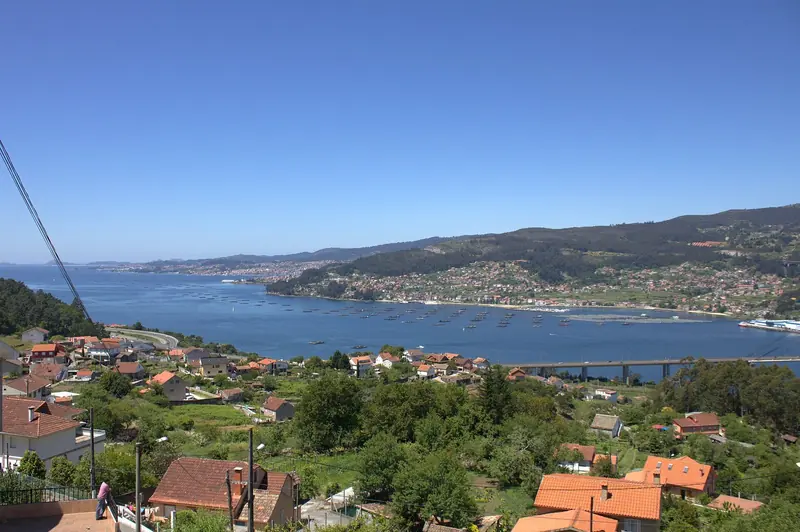
Beeson lists the Canal de Sagres between Cabo Corrubedo and the Ria de Arousa as a narrow rocky passage that Imray's pilot advises against except in calm conditions with detailed charts and local knowledge, the Pegar shoals below Salvora's lighthouse and Piedra Borron near the Islas Cies. Mussel rafts (bateas) in the Ria de Vigo are charted and fixed with gaps of about 10 metres between them; Blackwell says they are anchored in about 60 feet and navigation between them is not a problem.
Nammert is more cautious: the rafts are marked with buoys and floats but are hard to see at night, and it says collisions with unlit aquaculture installations may or may not be covered, depending on the policy. It also notes liability sums by tariff of 10, 25 and 50 million euros and that AIS or a collision warning system does not lower the deductible in these conditions. An owner with a large yacht should read the policy wording on aquaculture before arriving at night, not after.
The Cies, Ons and Salvora: permits
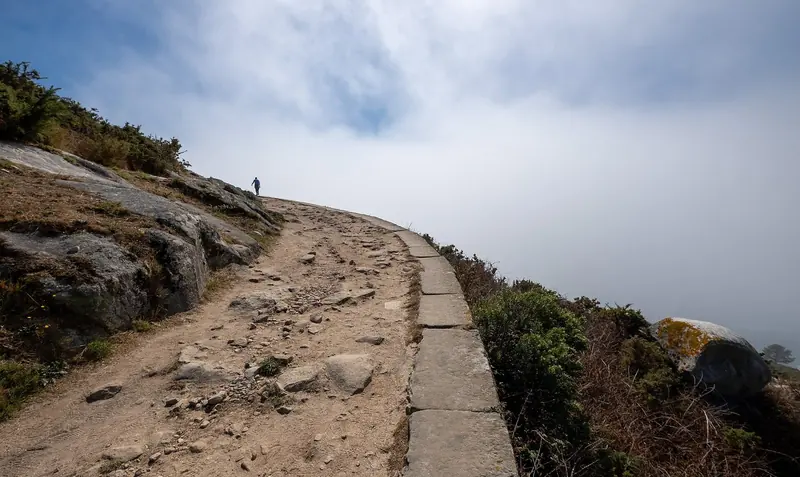
The Atlantic Islands National Park says a private boat needs a navigation permit, issued by the park, and then an anchoring permit requested online for each day you want to anchor. The page gives the cap as 75 to 125 anchorages a day across three areas, San Martino, Nosa Senora and Rodas, and says private visits are possible any day of the year. Fees, lead times and processing times are not on that page; the park office is on +34 886 21 80 90. An older Royal Cruising Club Pilotage Foundation notice reports park authorities telling a yachtsman that anchoring off Playa das Figueiras was not allowed, so keep to the three areas.
Blackwell's account of the process from her own cruises is more concrete: apply online well in advance, the permit arrives by email and is printed and carried aboard, she says it is valid for two years, and you then request specific islands and dates online with approval she describes as instant, though some days fill with tourists. She says a ranger checks passes on the water at Salvora but she never saw anyone check boats at Ons or the Cies, and that the Cies receive over a million visitors a year from one ferry line alone. Beeson says a Salvora visit requires a permit from the park too. Because the rules have changed since those accounts were written, treat the park page as the authority and your own printed permit as the proof.
Where you tie up and what it costs
Blackwell calls Real Club Nautico de Portosin a first-rate marina with laundry, showers and multilingual staff and says a supermarket delivers to the boat for orders over 50 euros. She says Baiona's Monte Real Club de Yates welcomes visitors and has a fuel dock, showers and laundry; Combarro has a new marina whose outer pontoon has 3 metres of depth; and Cambados is shallow, so boats anchor further out. Beeson says Portosin offers a 25 per cent discount to members of the Cruising Association, the Irish Cruising Club, the Royal Cruising Club and the Ocean Cruising Club, and that the ASNAUGA passport (23 clubs and more than 3,000 berths in his count, 27 clubs in hers, at 5 euros) gives 15 per cent off short stays at member clubs.
On price, the only dated figures found were a Noonsite report from February 2018 by Jan Harzem giving 38 euros a night at Sanxenxo and 33 at Marina Davila in Vigo, which are eight years old and do not say what size of boat they were quoted for. No 2026 per-metre tariff for any Galician club was found, and nothing at all was found for a yacht over about 15 metres; ask before you arrive, and do not budget from the 2018 figures. Beeson also priced mussels at about 10 euros a kilo at Portonovo market and a glass of Rioja at 2.40 euros in 2017, which is a fair indicator that ashore is cheaper than in the Channel Islands or the Solent.
Clearance and the Schengen clock
Industry coverage in 2026 says non-EU nationals are still limited to 90 days in any 180-day period, and the Nautilus Federation advises crew to be stamped out when leaving a port so they do not use up their allowance. A cruising guide quoted in the same research notes that after entering and leaving 90 days later you cannot return until you have been outside for at least another 90 days. The EU's Entry/Exit System now scans passports, which changes how days are tracked and not the rule.
One forum poster said the boat itself can stay in the EU for 18 months while the skipper stays bound by the 90/180 rule; that is anecdotal and should be verified with a local yacht agent or the Policia Nacional border office before you rely on it. A Noonsite Spain immigration page exists but its content could not be retrieved here, so the current Spanish clearance steps and the nearest port of entry for Galicia are not confirmed on this page.
A terra, accessi e prenotazioni
| Where it is | Galicia, north-west Spain: the rias from Muros e Noia in the north to Vigo and Baiona in the south, with the Cies at the mouth of the Ria de Vigo. |
|---|---|
| Season and wind | May to September. Summer usually 12 to 15 knots from the north or north-east with a sea breeze from about 14:00; funnelling gusts to 20 knots in places. |
| Tides and fog | Range 3 to 4 m (about 3 m springs, 1.5 m neaps); streams usually under 1 knot. Fog common in mornings and frequent off Cape Finisterre. |
| Cies permits | Navigation permit from the National Park, then an online anchoring permit per day. 75 to 125 anchorages a day across San Martino, Nosa Senora and Rodas. Park office +34 886 21 80 90. Fees and lead times not published on the park page. |
| Hazards | Canal de Sagres (Imray advises against except in calm), Pegar shoals below Salvora lighthouse, Piedra Borron near the Cies, mussel rafts with gaps about 10 m. |
| Berths | Portosin, Baiona (Monte Real Club de Yates, fuel dock), Vigo (Marina Davila Sport, Real Club Nautico de Vigo), Combarro (outer pontoon 3 m), Sanxenxo and Portonovo. 2018 prices: 33 to 38 euros a night, boat size not stated. |
| Discounts | ASNAUGA passport (5 euros) gives 15 per cent off short stays; Portosin gives members of the CA, ICC, RCC and OCC 25 per cent. |
| Clearance | Non-EU crew bound by 90 days in any 180. A boat admission period of 18 months was quoted on a forum and is unverified. |
| Not published | A 2026 visitor tariff at any Galician club; any maximum length limits for a large yacht; Cies permit fees and lead times. |
Cosa riferiscono armatori ed equipaggi
Rias Baixas first, then Baiona
Recommended the Rias Baixas as a first stop after crossing Biscay, calling Muros e Noia the least developed and most attractive of the inlets, and recorded 14 to 16 knots gusting 20 funnelling down one ria.
Chris Beeson, Yachting Monthly, 7 March 2017Permits are easy to get, rarely checked and sometimes full
Described the Cies and Salvora permit as an online application arriving by email, valid for two years, with instant approval for specific days though some days fill; a ranger checks at Salvora but she saw no checks at Ons or the Cies.
Daria Blackwell, Aleria's AdventuresSoutherly route, fog in the morning
Said the prevailing summer winds are northerly so a southerly route through the rias is preferred, and fog is common especially in the mornings.
Daria Blackwell, Aleria's AdventuresAnchoring off Playa das Figueiras is not allowed
A yachtsman was told by park authorities that anchoring off Playa das Figueiras was not allowed, with the permitted spots being the three listed areas.
Royal Cruising Club Pilotage Foundation notice
Cosa convince e cosa va valutato
Punti di forza
- Sheltered cruising with little tideA 3 to 4 metre range and streams usually under 1 knot make anchoring and berthing easier than on the Channel coasts.
- A reliable summer windBeeson reports 12 to 15 knots from the north or north-east most days, with a sea breeze after about 14:00.
- Discounts reduce the berth bill for cruising-club membersASNAUGA gives 15 per cent and Portosin gives 25 per cent to members of four cruising clubs.
Da valutare
- Cies access is rationedA navigation permit plus a daily anchoring permit and 75 to 125 spaces a day mean the best anchorage cannot be assumed.
- No published 2026 pricesThe only dated figures are from 2018 and do not state a boat size, so a large yacht has to ask.
- Fog, swell and Cape FinisterreFog is frequent off the Cape, swell is long outside the rias and shipping is dense on the approaches (Nammert).
- Unlit mussel rafts at nightMarked by buoys and floats but hard to see after dark, and insurance may not cover a collision.
A chi si rivolge: A sailor or smaller motor yacht arriving from Biscay or the Portuguese coast who wants sheltered, low-tide cruising with island parks and is willing to arrange permits and ask clubs for prices, not an owner who needs a published superyacht tariff.